Nickel
A metal found naturally in many plant foods: coffee, nuts, legumes, grains and chocolate.
In the body: In rats, high doses caused loss of embryos after implantation. In people allergic to nickel it can also set off skin reactions.
None of the 77 rated foods and preparations needs a cap on how often you eat it. The closest, at a serving a day, is Cashews, raw: it uses about 30% of the room left before the daily limit. 2 more reviewed foods and preparations carry it but aren’t rated by dose: shown for context, or not rated yet.
Builds up over time. Agencies set an amount you can take in every week, or every day, for life. A food measured against it shows the grams that reach it.
See also: Nickel for people who are sensitised
The limit
- The agency’s figure13 µg/kg body weight/day
- For a 70 kg adult910 µg a day
- Basistolerable daily intake (TDI): what you can take in every day for life
tolerable daily intake (TDI) (benchmark dose lower limit (BMDL10) 1.3 mg Ni/kg body weight/day, post-implantation loss in rats, UF 100); EFSA 2020 (animal benchmark dose lower limit (BMDL10)) - Average adult intake2.9–3.41 µg/kg body weight/day EFSA 2020 Table 8: adults, median across surveys of the mean chronic exposure, lower bound 2.90 to upper bound 3.41
- Source ?EFSA 2020
Reviewed foods that carry it
72 reviewed foods carry it, 70 of them rated by dose. A food counts once, as in the foods list: preparations sharing a page (raw and cooked, canned) count once; one with its own page counts apart. Below, one line for each of 79 preparations. 77 of those lines are rated by dose. 95 measurements in all. A preparation measured more than once gets one line, the measurement the dataset leads with or a stricter one, named beside the food; the others fold under it.
Grams to the limit ?
Grams of each food that reach the limit in its window, for a 70 kg adult. Fewest first: those are the foods to watch.
Known background: an average adult already takes in 2.9–3.41 µg/kg body weight/day. Where the dataset allows, the grams below are the room left after that intake (the median of the surveys’ averages where EFSA gives one, otherwise the highest); beside each, the same limit counted from zero, the food eaten alone.
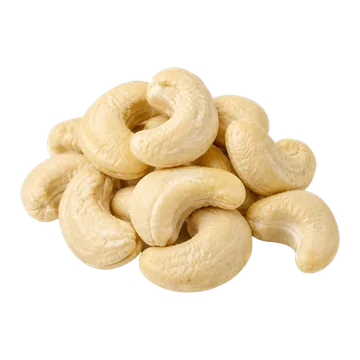 Cashews, raw
Nothing to watch: under the limit for a 30 g serving
100greaches the limit in a dayafter the highest average adult intake we found140 g eaten alone, from zeroEating it daily comes to 30 g a day, which stays within the 100 g of room left before the limit.199 µg per 30 g servingCFIA chemical residue monitoring (2016–2023) · grade A ?
How it’s rated
No cap: EFSA's 2020 tolerable daily intake for nickel is 13 µg/kg body weight/day, 910 µg a day at 70 kg. Eaten alone, about 137 g of cashews a day would reach it at the highest CFIA annual mean of 6.64 ppm (172 g at the lowest, 5.28). A 30 g serving is 199 µg, 22% of the limit, and adds 90% to the adult background median of 3.16 µg/kg body weight/day (221 µg/day): just under the doubling line at the median and over it only at the lowest survey (73-141% across the survey range).
Intake: 30 g shelled serving (HC TRA O.1) · Level in the food: 6.64 ppm (highest annual mean of 3 years (range of annual means 5.28-6.64 ppm; every sample positive, so plain means); max 8.78 ppm, n = 14)
Measured on: CFIA NCRMP annex B6 (imports) 2017-18 to 2019-20, commodity 'Nut - Cashew', 14 samples, 14 positive, 0 violations; Canada (imports); the annex states no detection limit (detection limit)
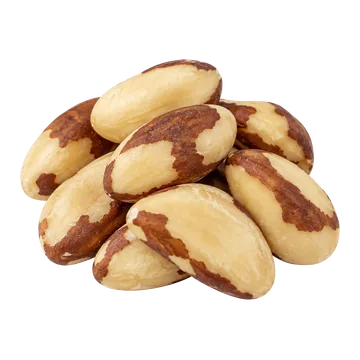 Brazil nuts, raw
Nothing to watch: under the limit for a 30 g serving
120greaches the limit in a dayafter the highest average adult intake we found170 g eaten alone, from zeroEating it daily comes to 30 g a day, which stays within the 120 g of room left before the limit.165 µg per 30 g servingCFIA chemical residue monitoring (2016–2023) · grade A ?
How it’s rated
No cap: EFSA's 2020 tolerable daily intake for nickel is 13 µg/kg body weight/day, 910 µg a day for 70 kg. Eaten alone, about 165 g of Brazil nuts a day would reach it (5.51 ppm, the highest CFIA annual mean). A 30 g serving is 165 µg, 18% of the limit, and adds 75% to the adult background median of 3.16 µg/kg body weight/day (221 µg/day), under the doubling line.
Intake: 30 g shelled serving (HC TRA O.1) · Level in the food: 5.51 ppm (highest annual mean of 2 years (imports 2019-20 to 2020-21 range 4.27-5.51 ppm, n 8, all positive; max 7.26 ppm), n = 8)
Measured on: CFIA NCRMP annex B6 (imports) 2019-20 to 2020-21, 'Nut - Brazil Nut', 8 samples, 8 positive, 0 violations; the annex states no detection limit (detection limit)
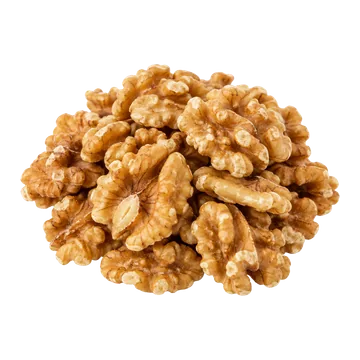 Walnuts, raw
Nothing to watch: under the limit for a 30 g serving
180greaches the limit in a dayafter the highest average adult intake we found240 g eaten alone, from zeroEating it daily comes to 30 g a day, which stays within the 180 g of room left before the limit.112.9 µg per 30 g servingUS FDA Total Diet Study (2018–2020) · grade A ?
How it’s rated
No cap: EFSA's 2020 tolerable daily intake (TDI) for nickel is 13 µg/kg body weight/day, 910 µg a day for 70 kg. Eaten alone, about 242 g of walnuts in one day would reach it (FDA mean 3,764 ppb, all 22 samples detected). A 30 g serving carries 113 µg, 12% of the TDI, and adds 51% to the median European adult background intake of 3.16 µg/kg body weight/day (221 µg/day at 70 kg; 41-80% across the survey range of 2.02-3.92), short of doubling it.
Intake: 30 g shelled serving (HC TRA O.1) · Level in the food: 3,764 µg/kg (mean; 22 of 22 samples detected (min 2,800, max 5,000 ppb), n = 22)
Measured on: US FDA TDS FY2018-2020, TDS food 403 Walnuts, shelled; reporting limit 40 ppb; USA
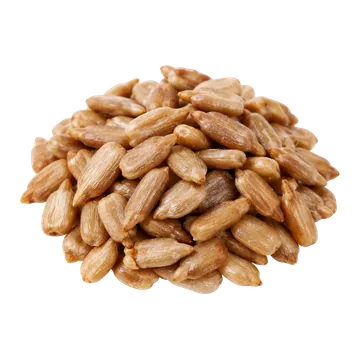 Sunflower seeds, dry-roasted
Nothing to watch: under the limit for a 30 g serving
210greaches the limit in a dayafter the highest average adult intake we found280 g eaten alone, from zeroEating it daily comes to 30 g a day, which stays within the 210 g of room left before the limit.96.4 µg per 30 g servingHealth Canada Total Diet Study, trace elements · grade A ?
How it’s rated
No cap: EFSA's 2020 tolerable daily intake for nickel is 13 µg/kg body weight/day, 910 µg a day at 70 kg. At 3.212 µg/g (Total Diet Study, 15 yearly composites), about 283 g in one day, eaten alone, would reach it. A 30 g serving carries 96 µg (1.38 µg/kg body weight), 11% of the limit, and adds +35% to +68% to EFSA's adult background (3.16 µg/kg body weight/day middle bound, surveys 2.02-3.92), under the doubling line; at 50 g the add is +59% to +114%, which straddles it.
Intake: 30 g shelled serving (HC TRA O.1) · Level in the food: 3,212 ng/g (mean of 15 annual TDS composites (2000-2004, 2006-2012, 2016-2018 (15 annual composites)); 15 of 15 detected, n = 15)
Measured on: Health Canada Total Diet Study, TDS food JJ11 "Seeds, shelled (Sunflower seeds)", as consumed, single-year composites; Canada. 1993-99 pooled composite not in the pack for nickel
 Dark chocolate
Nothing to watch: under the limit for a 40 g serving
240greaches the limit in a dayafter the highest average adult intake we found330 g eaten alone, from zeroEating it daily comes to 40 g a day, which stays within the 240 g of room left before the limit.112 µg per 40 g servingHow it’s rated
No cap: nickel is rated against EFSA's tolerable daily intake of 13 µg/kg body weight/day (2020). The average adult already takes in 22-26% of it, under half, so a food would have to reach the limit on its own to matter. Eaten alone, about 325 g a day would reach it. A 40 g serving carries 112 µg, 12.3% of the tolerable intake, and adds 47-55% to the average adult intake, below doubling it.
Intake: one 40 g serving a day, 70 kg adult (Health Canada TRA U.1, 40 g) · Level in the food: 2,800 µg/kg (mean)
Measured on: BfR MEAL Study (Food Chem X 2022, PMC9114524): MEAL food 'dark chocolate', Germany, prepared as consumed, pooled samples (1-10 pooled samples per MEAL food), ICP-MS; upper bound mean 2.800 mg/kg. Number of pooled samples is in supplement Table S6, not opened. Germany, not Canada; cocoa share of the pools not stated.
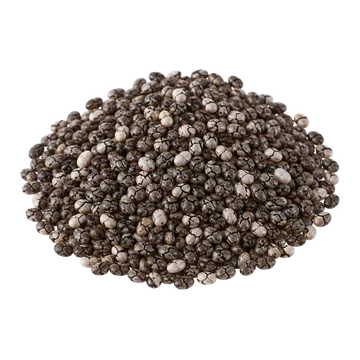 Chia seeds
Nothing to watch: under the limit for a 15 g serving
330greaches the limit in a dayafter the highest average adult intake we found440 g eaten alone, from zeroEating it daily comes to 15 g a day, which stays within the 330 g of room left before the limit.30.8 µg per 15 g servingCFIA chemical residue monitoring (2016–2023) · grade A ?
How it’s rated
No cap: EFSA's 2020 tolerable daily intake for nickel is 13 µg/kg body weight/day, 910 µg a day at 70 kg. Eaten alone, about 444 g of chia a day would reach it. A 15.0 g serving is 31 µg, 3.4% of the limit, and adds 14% to the adult background median of 3.16 µg/kg body weight/day (221 µg/day), 11-22% across the survey range.
Intake: 15 g serving (HC TRA C.5) · Level in the food: 2.05 ppm (highest annual mean (range 1.7-2.05 ppm; every one of 38 samples positive); max 4.52 ppm, n = 38)
Measured on: CFIA NCRMP annex B6 (imports) 2017-18 to 2020-21, 'Seed - Chia', 38 samples, 38 positive; the annex states no detection limit (detection limit)
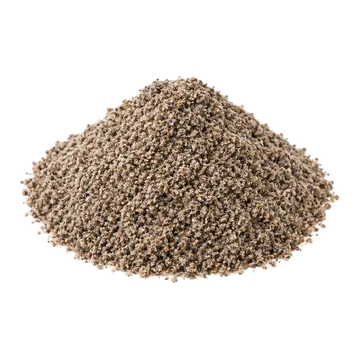 Chia seeds, ground
Nothing to watch: under the limit for a 15 g serving
330greaches the limit in a dayafter the highest average adult intake we found440 g eaten alone, from zeroEating it daily comes to 15 g a day, which stays within the 330 g of room left before the limit.30.8 µg per 15 g servingCFIA chemical residue monitoring (2016–2023) · grade A ?
How it’s rated
No cap: EFSA's 2020 tolerable daily intake for nickel is 13 µg/kg body weight/day, 910 µg/day for 70 kg. At the highest annual CFIA mean (2.05 µg/g, 38 samples), about 444 g of chia a day would reach it. A 15.0 g serving carries 31 µg, 3.4% of the limit, and adds 14% to the median adult background of 3.16 µg/kg body weight/day (221 µg/day; 11–22% across surveys), shown, not subtracted.
Intake: 15 g serving (HC TRA C.5) · Level in the food: 2.05 ppm (highest annual mean (range 1.7-2.05 ppm; every one of 38 samples positive); max 4.52 ppm, n = 38)
Measured on: CFIA NCRMP annex B6 (imports) 2017-18 to 2020-21, 'Seed - Chia', 38 samples, 38 positive; the annex states no detection limit (detection limit)
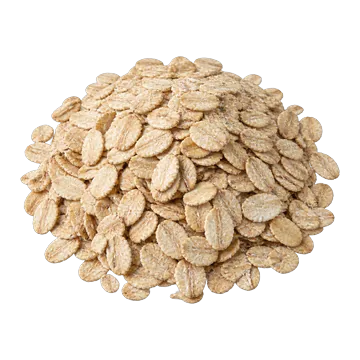 Rolled oats, dry
Nothing to watch: under the limit for a 40 g serving
360greaches the limit in a dayafter the highest average adult intake we found490 g eaten alone, from zeroEating it daily comes to 40 g a day, which stays within the 360 g of room left before the limit.75 µg per 40 g servingCFIA 2016–2017 · grade A ?
How it’s rated
No cap: a 40 g dry serving carries about 75 µg of nickel, 8.2% of EFSA's tolerable daily intake of 13 µg/kg body weight/day (910 µg at 70 kg; EFSA 2020); about 485 g of dry oats in a day would reach it on their own. Under half the limit, so it cannot trigger a cap whatever the average intake is.
Intake: one 40 g dry serving a day, 70 kg adult · Level in the food: 1,876 µg/kg (mean, n = 100)
Measured on: food-specific: CFIA 'Oatmeal' dry as sold, 2016-17 (median 1,695; P95 3,330; max 5,490); FDA TDS #51 cooked oatmeal 277 µg/kg (n=3)
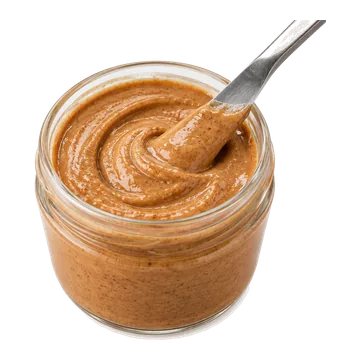 Almond butter
Nothing to watch: under the limit for a 15 g serving
More than anyone eatsNo realistic amount reaches the limit.Eating it daily comes to 15 g a day, which stays within the 760 g of room left before the limit.13.3 µg (15 g × 0.889 µg/g) per 15 g servingHow it’s rated
The counted figure is 760 g a day, about 50 servings a day.
No cap: EFSA's 2020 tolerable daily intake for nickel is 13 µg/kg body weight/day, 910 µg/day for 70 kg. At a lower-bound mean of 0.889 µg/g (CFIA, 97 samples, all positive), about 1,020 g of almond butter a day eaten alone would reach it; a 15.0 g serving carries 13.3 µg, 1.5% of the limit.
Intake: one 15.0 g serving a day, 70 kg adult · Level in the food: 0.889 µg/g (lower-bound mean over all n, n-weighted over three CFIA lines (all 97 positive); units ppm = µg/g, n = 97)
Measured on: CFIA NCRMP 'Nut - Almond' as for cadmium; max 1.88 µg/g; tolerable daily intake (TDI) from EFSA 2020
 Milk chocolate
Nothing to watch: under the limit for a 40 g serving
930greaches the limit in a dayafter the highest average adult intake we found1,300 g eaten alone, from zeroEating it daily comes to 40 g a day, which stays within the 930 g of room left before the limit.29 µg per 40 g servingHealth Canada Total Diet Study, trace elements · grade A ?
How it’s rated
No cap: nickel is rated against EFSA's tolerable daily intake of 13 µg/kg body weight/day (2020). The average adult already takes in 22-26% of it, under half, so a food would have to reach the limit on its own to matter. Eaten alone, about 1,254 g a day would reach it. A 40 g serving carries 29.0 µg, 3.2% of the tolerable intake, and adds 12.2-14.3% to the average adult intake.
Intake: one 40 g serving a day, 70 kg adult (Health Canada TRA U.1, 40 g) · Level in the food: 725.681 µg/kg (mean, n = 15)
Measured on: Health Canada TDS JJ01 'Chocolate bars (Plain chocolate bars)' (bar type not stated), 15 composites 2000-2007, 2009-2012, 2016-2018, as consumed, all detected; mean 725.7 µg/kg, median 709, range 574-885. Canada.
1 other measurement of this food
- US FDA TDS 2018-20, plain milk chocolate bar
Nothing to watch: under the limit
710greaches the limit in a dayafter the highest average adult intake we found970 g eaten alone, from zeroEating it daily comes to 40 g a day, which stays within the 710 g of room left before the limit.37.7 µg per 40 g servingUS FDA Total Diet Study (2018–2020) · grade A ?
How it’s rated
No cap: nickel is rated against EFSA's tolerable daily intake of 13 µg/kg body weight/day (2020). The average adult already takes in 22-26% of it, under half, so a food would have to reach the limit on its own to matter. Eaten alone, about 965 g a day would reach it. A 40 g serving carries 37.7 µg, 4.1% of the tolerable intake, and adds 15.8-18.6% to the average adult intake.
Intake: one 40 g serving a day, 70 kg adult (Health Canada TRA U.1, 40 g) · Level in the food: 943 µg/kg (mean, n = 3)
Measured on: US FDA TDS FY2018-2020 food #187 'Candy bar, milk chocolate, plain', 3 composites, 3 of 3 detected (reporting limit 40 ppb); mean 943 ppb (standard deviation 49; min 910; max 1,000).
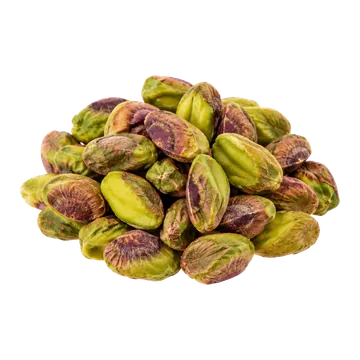 Pistachios, dry-roasted
Nothing to watch: under the limit for a 30 g serving
1,100greaches the limit in a dayafter the highest average adult intake we found1,400 g eaten alone, from zeroEating it daily comes to 30 g a day, which stays within the 1,100 g of room left before the limit.19 µg per 30 g servingCFIA chemical residue monitoring (2016–2023) · grade A ?
How it’s rated
No cap: EFSA's 2020 tolerable daily intake for nickel is 13 µg/kg body weight/day, 910 µg a day at 70 kg. At the CFIA mean of 0.634 ppm (3 samples, all positive), about 1,435 g of pistachios in one day, eaten alone, would reach it (968 g at the highest annual value, 0.94 ppm). A 30 g serving carries 19 µg, 2% of the limit, and adds 9% to EFSA's adult median background of 3.16 µg/kg body weight/day (+7% to +13% across surveys), under the doubling line; 3 samples is thin.
Intake: 30 g shelled serving (HC TRA O.1) · Level in the food: 0.634 ppm (pooled mean of positives over 3 annual annex rows (annual means 0.322, 0.94 and one more in the 0.322-0.94 range; every sample positive, so plain means); max 0.94 ppm, n = 3)
Measured on: CFIA NCRMP annex B6 (FSO sampling) 2016-17, 2017-18, 2018-19, commodity 'Nut - Pistachio', 3 samples, 3 positive; Canada; the annex states no detection limit (detection limit)
 Cookies
Nothing to watch: under the limit for a 30 g serving
1,100greaches the limit in a dayafter the highest average adult intake we found1,500 g eaten alone, from zeroEating it daily comes to 30 g a day, which stays within the 1,100 g of room left before the limit.18.3 µg per 30 g servingHealth Canada Total Diet Study, trace elements · grade A ?
How it’s rated
No cap: nickel is rated against EFSA's tolerable daily intake of 13 µg/kg body weight/day (2020). The average adult already takes in 22-26% of it, under half, so a food would have to reach the limit on its own to matter. About 1,492 g a day would reach it, eaten alone; one 30 g serving is 2.01% of it. Cocoa-bearing cookies carry 20 times the nickel of a sugar cookie.
Intake: one 30 g reference serving a day (Health Canada TRA A.10), 70 kg adult · Level in the food: 610.069 ng/g (mean, n = 16)
Measured on: food-specific: Health Canada Total Diet Study FF09 'Cookies', 16 composites, 2000-2012 and 2016-2018, Canada, as consumed (0 non-detects stored as 0)
 Soy sauce
Nothing to watch: under the limit for a 16 g serving
More than anyone eatsNo realistic amount reaches the limit.Eating it daily comes to 16 g a day, which stays within the 1,800 g of room left before the limit.6.07 µg (per tablespoon, 16 g) per 16 g servingHealth Canada Total Diet Study, trace elements · grade A ?
How it’s rated
The counted figure is 1,800 g a day, about 111 servings a day.
No cap: EFSA's 2020 tolerable daily intake for nickel is 13 µg/kg body weight/day, 910 µg a day. At 0.3794 µg/g (16 yearly composites), about 2,399 g of soy sauce a day would reach it, and a tablespoon carries 6.07 µg, 0.67% of the limit. FDA's soy sauce reads 770 ppb (3 samples).
Intake: one tablespoon (15 mL, 16 g) a day, 70 kg adult · Level in the food: 379.4 ng/g (mean (equal-weight, 16 annual composites; lower-bound mean 378.95), n = 16)
Measured on: Health Canada TDS trace elements, TDS food PP07 'Soya sauce', 16 single-year composites 2000-2018 (2000-2012, 2016, 2017, 2018), as consumed; ng/g; mean of the equal-weight annual composites, recomputed from the per-year values; non-detects at half the detection limit (detection limit) (1 of 16: 2003, detection limit 15 ng/g); no pooled 1993-99 composite exists for this code.
 Whey protein concentrate
Nothing to watch: under the limit for a 30 g serving
More than anyone eatsNo realistic amount reaches the limit.Eating it daily comes to 30 g a day, which stays within the 2,100 g of room left before the limit.9.6 µg per 30 g servingBethencourt 2023 · grade B ?
How it’s rated
The counted figure is 2,100 g a day, about 70 servings a day.
No cap: nickel is rated against EFSA's tolerable daily intake of 13 µg/kg body weight/day (2020). The average adult already takes in 22-26% of it, under half, so a food would have to reach the limit on its own to matter. The mean nickel content was 0.32 mg/kg of powder, measured in 47 whey protein supplements bought mainly in Spain and Italy, not Canada; the study does not separate concentrates from isolates. About 2,844 g of powder a day would reach the limit, eaten alone. A 30 g serving carries 9.6 µg, 1.05% of the limit, and adds 3.3% to 7.5% to the average adult's intake (128-293 µg a day, EFSA 2020); at the highest sample (1.40 mg/kg) a serving is 4.6% of the limit.
Intake: one 30 g serving a day (also the paper's first scenario), 70 kg adult · Level in the food: 0.32 mg/kg (mean of 47 whey protein supplements (Caverage), range 0.01-1.40 mg/kg, n = 47)
Measured on: Bethencourt-Barbuzano et al. 2023, Nutrients 15(16):3543 (PMC10458782): 47 whey protein supplements bought March 2021 to April 2022, mainly in Spain and Italy (declared type: 46.8% concentrate, 44.7% isolate, 8.5% hydrolysate; variants not separated in the tables); ICP-OES after dry incineration; mg/kg of powder as sold; Spain/Italy, not Canada
- Whey protein isolate
Nothing to watch: under the limit for a 30 g serving
More than anyone eatsNo realistic amount reaches the limit.Eating it daily comes to 30 g a day, which stays within the 2,100 g of room left before the limit.9.6 µg per 30 g servingBethencourt 2023 · grade B ?
How it’s rated
The counted figure is 2,100 g a day, about 70 servings a day.
No cap: nickel is rated against EFSA's tolerable daily intake of 13 µg/kg body weight/day (2020). The average adult already takes in 22-26% of it, under half, so a food would have to reach the limit on its own to matter. The mean nickel content was 0.32 mg/kg of powder, measured in 47 whey protein supplements bought mainly in Spain and Italy, not Canada; the study does not separate concentrates from isolates. About 2,844 g of powder a day would reach the limit, eaten alone. A 30 g serving carries 9.6 µg, 1.05% of the limit, and adds 3.3% to 7.5% to the average adult's intake (128-293 µg a day, EFSA 2020); at the highest sample (1.40 mg/kg) a serving is 4.6% of the limit.
Intake: one 30 g serving a day (also the paper's first scenario), 70 kg adult · Level in the food: 0.32 mg/kg (mean of 47 whey protein supplements (Caverage), range 0.01-1.40 mg/kg, n = 47)
Measured on: Bethencourt-Barbuzano et al. 2023, Nutrients 15(16):3543 (PMC10458782): 47 whey protein supplements bought March 2021 to April 2022, mainly in Spain and Italy (declared type: 46.8% concentrate, 44.7% isolate, 8.5% hydrolysate; variants not separated in the tables); ICP-OES after dry incineration; mg/kg of powder as sold; Spain/Italy, not Canada
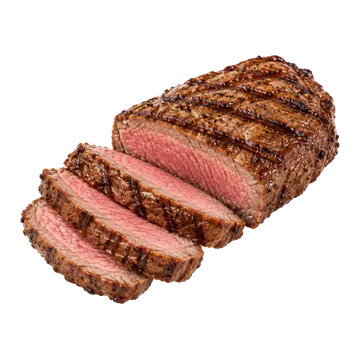 Beef steak, top loin, grilled
Nothing to watch: under the limit for a 100 g serving
2,200greaches the limit in a dayafter the highest average adult intake we found2,900 g eaten alone, from zeroEating it daily comes to 100 g a day, which stays within the 2,200 g of room left before the limit.31.209 µg per 100 g servingHow it’s rated
No cap: nickel is rated against EFSA's tolerable daily intake of 13 µg/kg body weight/day (2020). The average adult already takes in 22-26% of it, under half, so a food would have to reach the limit on its own to matter. About 2,916 g a day would reach it, eaten alone. One 100 g cooked serving carries 31.21 µg, 3.43% of the limit, and adds 13.1-15.4% to the average adult's intake.
Intake: one 100 g cooked serving a day, 70 kg adult · Level in the food: 312.094 ng/g (µg/kg) (mean (equal-weight, pooled n-weighted), n = 16)
Measured on: Health Canada TDS BB01 "Beef, steak (sirloin and T-bone)", As consumed, Nickel, 16 composites: 13 in 2000-2012 (mean 332.1, 2 non-detects) and 3 in 2016-2018 (mean 225.4); roast item BB02: pooled 251.264; detection limit (detection limit) range 0-32 ng/g
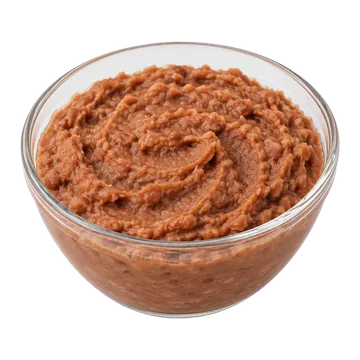 Refried beans, canned
Nothing to watch: under the limit for a 90 g serving
2,200greaches the limit in a dayafter the highest average adult intake we found3,000 g eaten alone, from zeroEating it daily comes to 90 g a day, which stays within the 2,200 g of room left before the limit.27.6 µg (90.35 g × 0.3052 µg/g) per 90 g servingHow it’s rated
No cap: EFSA's 2020 tolerable daily intake for nickel is 13 µg/kg body weight/day, 910 µg a day. At 0.3052 µg/g (canned baked beans as a proxy, 12 composites), about 2,982 g of refried beans a day, eaten alone, would reach it, and a serving carries 27.6 µg, 3.0% of the limit. FDA's canned refried beans (3 samples) average 450 µg/kg, which gives 40.7 µg a serving, 4.5%, and about 2,022 g a day.
Intake: one 90 g serving a day, 70 kg adult · Level in the food: 305.2 ng/g (mean of composites (equal-weight; 12 composites 2000-2012), n = 12)
Measured on: related product: Health Canada TDS GG01 'Baked beans, canned', as consumed, 2000-2012; tolerable daily intake (TDI) from EFSA 2020
 Popcorn, air-popped
Nothing to watch: under the limit for a 50 g serving
2,300greaches the limit in a dayafter the highest average adult intake we found3,100 g eaten alone, from zeroEating it daily comes to 50 g a day, which stays within the 2,300 g of room left before the limit.14.6 µg per 50 g servingHealth Canada Total Diet Study, trace elements · grade A ?
How it’s rated
No cap: EFSA's 2020 tolerable daily intake for nickel is 13 µg/kg body weight/day, 910 µg a day at 70 kg. At 0.2922 µg/g (Total Diet Study microwave popcorn, 15 composites), about 3,114 g in one day, eaten alone, would reach it. A 50 g serving carries 14.6 µg, 1.6% of the limit, and adds +5% to +10% to EFSA's adult background (median 3.16; surveys 2.02-3.92 µg/kg body weight/day).
Intake: 50 g popped popcorn serving (HC TRA S.1) · Level in the food: 292.2 ng/g (mean of 15 annual TDS composites (2000-2011, 2016-2018 (15 annual composites)); 15 of 15 detected, n = 15)
Measured on: Health Canada Total Diet Study, TDS food MM01 "Popcorn, microwave", as consumed (popped, with the microwave-bag fat and salt), single-year composites; Canada
 Cakes
Nothing to watch: under the limit for a 80 g serving
2,400greaches the limit in a dayafter the highest average adult intake we found3,200 g eaten alone, from zeroEating it daily comes to 80 g a day, which stays within the 2,400 g of room left before the limit.22.7 µg per 80 g servingHealth Canada Total Diet Study, trace elements · grade A ?
How it’s rated
No cap: nickel is rated against EFSA's tolerable daily intake of 13 µg/kg body weight/day (2020). The average adult already takes in 22-26% of it, under half, so a food would have to reach the limit on its own to matter. About 3,203 g a day would reach it, eaten alone; one 80 g serving is 2.50% of it. Cake nickel depends on cocoa.
Intake: one 80 g reference serving a day (Health Canada TRA A.6), 70 kg adult · Level in the food: 284.069 ng/g (mean, n = 16)
Measured on: food-specific: Health Canada Total Diet Study FF04 'Cake (Cake with icing)', 16 composites, 2000-2012 and 2016-2018, Canada, as consumed (0 non-detects stored as 0)
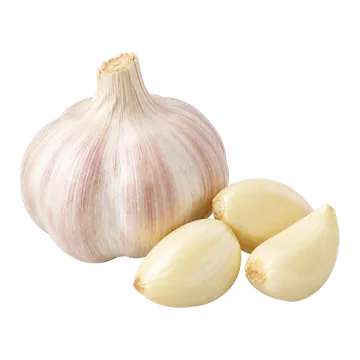 Garlic, raw
Nothing to watch: under the limit for a 4 g serving
More than anyone eatsNo realistic amount reaches the limit.Eating it daily comes to 4 g a day, which stays within the 3,100 g of room left before the limit.0.86 µg per 4 g servingUS FDA Total Diet Study (2018–2020) · grade A ?
How it’s rated
The counted figure is 3,100 g a day, about 784 servings a day.
No cap: EFSA's 2020 tolerable daily intake (TDI) for nickel is 13 µg/kg body weight/day, 910 µg a day for 70 kg. Eaten alone, about 4,252 g a day would reach it. A 4.0 g serving carries 0.86 µg (mean 214 ppb, lower bound, all 6 samples detected). Background intake is not shown.
Intake: one 4.0 g serving a day, 70 kg adult · Level in the food: 214 ppb (mean, n = 6)
Measured on: FDA TDS FY2018-2020, 'Garlic, raw', 6 samples, all detected, range 46-610 ppb (standard deviation 222)
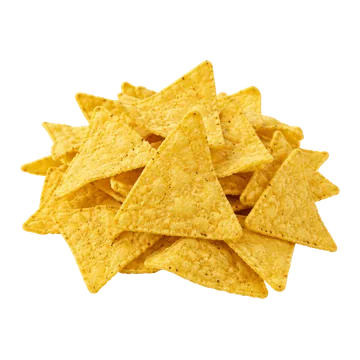 Tortilla chips
Nothing to watch: under the limit for a 50 g serving
More than anyone eatsNo realistic amount reaches the limit.Eating it daily comes to 50 g a day, which stays within the 3,500 g of room left before the limit.9.67 µg per 50 g servingHealth Canada Total Diet Study, trace elements · grade A ?
How it’s rated
The counted figure is 3,500 g a day, about 69 servings a day.
No cap: nickel is rated against EFSA's tolerable daily intake of 13 µg/kg body weight/day (2020). The average adult already takes in 22-26% of it, under half, so a food would have to reach the limit on its own to matter. A 50 g serving carries 9.67 µg, 1.06% of the limit, and adds 2.7-10.6% to the adult mean (90-361 µg/day); about 4,700 g of chips a day would reach it, eaten alone.
Intake: one 50 g reference serving a day (Health Canada TRA S.1), 70 kg adult · Level in the food: 193.5 ng/g (mean, n = 9)
Measured on: food-specific: Health Canada Total Diet Study 'Snack Food, Corn Chips' (GG27), 9 composites, 2007-2018, Canada, as consumed
1 other measurement of this food
- US FDA TDS 2018-20, tortilla chips
Nothing to watch: under the limit
More than anyone eatsNo realistic amount reaches the limit.Eating it daily comes to 50 g a day, which stays within the 4,800 g of room left before the limit.7 µg per 50 g servingUS FDA Total Diet Study (2018–2020) · grade A ?
How it’s rated
The counted figure is 4,800 g a day, about 96 servings a day.
No cap: nickel is rated against EFSA's tolerable daily intake of 13 µg/kg body weight/day (2020). The average adult already takes in 22-26% of it, under half, so a food would have to reach the limit on its own to matter. A 50 g serving carries 7.0 µg, 0.77% of the limit; about 6,500 g of chips a day would reach it, eaten alone. A second source, beside the Canadian row.
Intake: one 50 g reference serving a day (Health Canada TRA S.1), 70 kg adult · Level in the food: 140 ppb (mean, n = 3)
Measured on: food-specific: FDA Total Diet Study FY2018-2020, TDS food #67 'Chips, tortilla', 3 composites, US
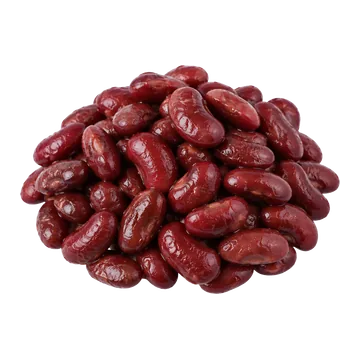 Kidney beans, canned
Nothing to watch: under the limit
More than anyone eatsNo realistic amount reaches the limit.US FDA Total Diet Study (2018–2020) · grade A ?
How it’s rated
The counted figure is 3,700 g a day, about 3,668 servings a day.
No cap: EFSA's 2020 tolerable daily intake (TDI) for nickel is 13 µg/kg body weight/day, 910 µg a day. Eaten alone, about 4,973 g a day would reach it; 100 g carries 18.3 µg, 2.0% of the daily limit. This rests on 3 FDA composites of canned kidney beans, and legumes are a nickel-rich food (Health Canada baked beans 305.2 ng/g, 12 composites).
Intake: 100 g drained beans (illustration) · Level in the food: 183 ppb (mean (3 of 3 detected; standard deviation 55, min 120, max 220), n = 3)
Measured on: food-specific: US FDA Total Diet Study FY2018-2020 elements supplement, TDS food 528 'Beans, kidney, canned, drained solids' (US, 3 samples), reporting limit 40 ppb
 Soy drink, unsweetened, fortified
Nothing to watch: under the limit for a 250 g serving
More than anyone eatsNo realistic amount reaches the limit.Eating it daily comes to 250 g a day, which stays within the 3,900 g of room left before the limit.43.5 µg per 250 g servingHealth Canada Total Diet Study, trace elements · grade A ?
How it’s rated
The counted figure is 3,900 g a day, about 15 servings a day.
No cap: EFSA's 2020 tolerable daily intake for nickel is 13 µg/kg body weight/day, 910 µg a day. At 0.174 µg/g (10 yearly composites), about 5,230 g a day (about 5 L), eaten alone, would reach it. A 250 g serving carries 43.5 µg, 4.8% of the daily limit; soy is nickel-rich by nature, and the lower threshold for nickel-sensitised people is a separate question not rated here.
Intake: one 250 mL serving (250 g) a day, 70 kg adult · Level in the food: 174 ng/g (mean (equal-weight of single-year composites), n = 10)
Measured on: Health Canada Total Diet Study, trace elements, TDS code KK07 'Soy beverage, fortified', as consumed, composites from 2006-2012 and 2016-2018 (10 single-year composites; no 1993-99 pooled composite is in this row); equal-weight mean of the composites; non-detects stored as 0 (0 non-detects for this analyte)
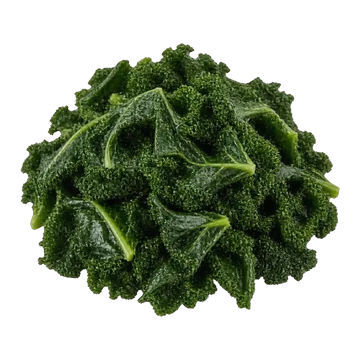 Kale, raw
Nothing to watch: under the limit for a 85 g serving
More than anyone eatsNo realistic amount reaches the limit.Eating it daily comes to 85 g a day, which stays within the 4,100 g of room left before the limit.13.9 µg (85 g × 0.1805 µg/g) per 85 g servingHow it’s rated
The counted figure is 4,100 g a day, about 48 servings a day.
No cap: EFSA's 2020 tolerable daily intake for nickel is 13 µg/kg body weight/day, 910 µg/day for 70 kg. The CFIA lower-bound mean for imported raw kale is 0.1638 µg/g (52 samples, 51 positive), so about 5,556 g a day, eaten alone, would reach it; an 85 g serving carries 13.9 µg, 1.5% of the limit.
Intake: one 85 g serving a day, 70 kg adult · Level in the food: 0.164 ppm (lower-bound mean over all n, n-weighted over three CFIA import lines (51 of 52 positive); max 0.8938 ppm, n = 52)
Measured on: CFIA NCRMP annex B2 (imports), 'Kale', fresh, 2016-17 to 2022-23 (n 37 + 13 + 2); tolerable daily intake (TDI) from EFSA 2020. Pooled n-weighted over the three import lines (2016-17 to 2018-19 n 37; 2019-20 to 2021-22 n 13; 2022-23 n 2) = n 52, as for iceberg lettuce.
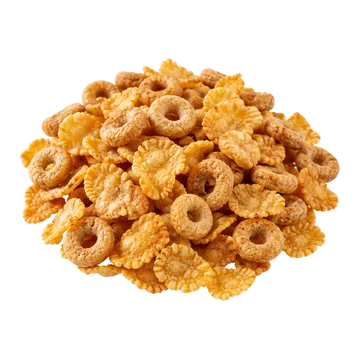 Breakfast cereal
Nothing to watch: under the limit for a 30 g serving
More than anyone eatsNo realistic amount reaches the limit.Eating it daily comes to 30 g a day, which stays within the 4,200 g of room left before the limit.4.777 µg per 30 g servingHealth Canada Total Diet Study, trace elements · grade A ?
How it’s rated
The counted figure is 4,200 g a day, about 141 servings a day.
No cap: nickel is rated against EFSA's tolerable daily intake of 13 µg/kg body weight/day (2020). The average adult already takes in 22-26% of it, under half, so a food would have to reach the limit on its own to matter. About 5,715 g of this cereal eaten alone would reach the limit in a day; one 30 g serving adds 1.6-3.7% to the average adult's intake. Source: corn-flake-type cereal (Health Canada Total Diet Study, mean of 16 composites 2000-2018). Separately, for people sensitised to nickel, EFSA set a margin of exposure against a lowest-effect level of 4.3 µg/kg body weight for acute flare-ups (not a limit) and named breakfast cereals among the main contributors to high-end acute exposure.
Intake: one 30 g serving a day (Health Canada reference amount C.3), 70 kg adult · Level in the food: 159.2 ng/g (mean, n = 16)
Measured on: Health Canada TDS FF06 "Cereal, corn (Corn flake type cereal)" (Food Name "Cold Cereals, Corn Based"), 16 composites 2000-2018, as consumed
8 other measurements of this food
- US FDA TDS 2018-20, oat rings
Nothing to watch: under the limit
270greaches the limit in a dayafter the highest average adult intake we found360 g eaten alone, from zeroEating it daily comes to 30 g a day, which stays within the 270 g of room left before the limit.75.99 µg per 30 g servingUS FDA Total Diet Study (2018–2020) · grade A ?
How it’s rated
No cap: nickel is rated against EFSA's tolerable daily intake of 13 µg/kg body weight/day (2020). The average adult already takes in 22-26% of it, under half, so a food would have to reach the limit on its own to matter. About 359 g of this cereal eaten alone would reach the limit in a day; one 30 g serving adds 25.9-59.3% to the average adult's intake. Source: oat ring cereal (FDA Total Diet Study, mean of 3 samples). Oat-ring and granola cereals sit at 1.0-2.5 mg/kg, ten to thirty times the corn-flake, shredded-wheat and rice cereals, and no source says why. Separately, for people sensitised to nickel, EFSA set a margin of exposure against a lowest-effect level of 4.3 µg/kg body weight for acute flare-ups (not a limit) and named breakfast cereals among the main contributors to high-end acute exposure.
Intake: one 30 g serving a day (Health Canada reference amount C.3), 70 kg adult · Level in the food: 2,533 ppb (mean, n = 3)
Measured on: FDA TDS FY2018-2020 #77 "Cereal, oat ring", n = 3
- US FDA TDS 2018-20, honey oat rings
Nothing to watch: under the limit
410greaches the limit in a dayafter the highest average adult intake we found560 g eaten alone, from zeroEating it daily comes to 30 g a day, which stays within the 410 g of room left before the limit.48.99 µg per 30 g servingUS FDA Total Diet Study (2018–2020) · grade A ?
How it’s rated
No cap: nickel is rated against EFSA's tolerable daily intake of 13 µg/kg body weight/day (2020). The average adult already takes in 22-26% of it, under half, so a food would have to reach the limit on its own to matter. About 557 g of this cereal eaten alone would reach the limit in a day; one 30 g serving adds 16.7-38.2% to the average adult's intake. Source: honey oat ring cereal (FDA Total Diet Study, mean of 3 samples). Oat-ring and granola cereals sit at 1.0-2.5 mg/kg, ten to thirty times the corn-flake, shredded-wheat and rice cereals, and no source says why. Separately, for people sensitised to nickel, EFSA set a margin of exposure against a lowest-effect level of 4.3 µg/kg body weight for acute flare-ups (not a limit) and named breakfast cereals among the main contributors to high-end acute exposure.
Intake: one 30 g serving a day (Health Canada reference amount C.3), 70 kg adult · Level in the food: 1,633 ppb (mean, n = 3)
Measured on: FDA TDS FY2018-2020 #513 "Cereal, oat ring, honey", n = 3
- US FDA TDS 2018-20, granola
Nothing to watch: under the limit
630greaches the limit in a dayafter the highest average adult intake we found850 g eaten alone, from zeroEating it daily comes to 30 g a day, which stays within the 630 g of room left before the limit.32.01 µg per 30 g servingUS FDA Total Diet Study (2018–2020) · grade A ?
How it’s rated
No cap: nickel is rated against EFSA's tolerable daily intake of 13 µg/kg body weight/day (2020). The average adult already takes in 22-26% of it, under half, so a food would have to reach the limit on its own to matter. About 853 g of this cereal eaten alone would reach the limit in a day; one 30 g serving adds 10.9-25.0% to the average adult's intake. Source: granola (FDA Total Diet Study, mean of 3 samples). Oat-ring and granola cereals sit at 1.0-2.5 mg/kg, ten to thirty times the corn-flake, shredded-wheat and rice cereals, and no source says why. Separately, for people sensitised to nickel, EFSA set a margin of exposure against a lowest-effect level of 4.3 µg/kg body weight for acute flare-ups (not a limit) and named breakfast cereals among the main contributors to high-end acute exposure.
Intake: one 30 g serving a day (Health Canada reference amount C.3), 70 kg adult · Level in the food: 1,067 ppb (mean, n = 3)
Measured on: FDA TDS FY2018-2020 #512 "Cereal, granola", n = 3
- Health Canada TDS 2000-18, rice and bran cereals (mixed)
Nothing to watch: under the limit
More than anyone eatsNo realistic amount reaches the limit.Eating it daily comes to 30 g a day, which stays within the 2,500 g of room left before the limit.7.968 µg per 30 g servingHealth Canada Total Diet Study, trace elements · grade A ?
How it’s rated
The counted figure is 2,500 g a day, about 84 servings a day.
No cap: nickel is rated against EFSA's tolerable daily intake of 13 µg/kg body weight/day (2020). The average adult already takes in 22-26% of it, under half, so a food would have to reach the limit on its own to matter. About 3,426 g of this cereal eaten alone would reach the limit in a day; one 30 g serving adds 2.7-6.2% to the average adult's intake. Source: rice and bran cereal (Health Canada Total Diet Study, a composite with no single grain, mean of 16 composites 2000-2018). Separately, for people sensitised to nickel, EFSA set a margin of exposure against a lowest-effect level of 4.3 µg/kg body weight for acute flare-ups (not a limit) and named breakfast cereals among the main contributors to high-end acute exposure.
Intake: one 30 g serving a day (Health Canada reference amount C.3), 70 kg adult · Level in the food: 265.6 ng/g (mean, n = 16)
Measured on: Health Canada TDS FF08 "Cereals, rice & bran (Rice crispies, all-bran, and raisin bran)" (Food Name "Cereal, Rice, Bran"; a composite, no single grain), 16 composites 2000-2018, as consumed
- US FDA TDS 2018-20, bran with raisins
Nothing to watch: under the limit
More than anyone eatsNo realistic amount reaches the limit.Eating it daily comes to 30 g a day, which stays within the 4,500 g of room left before the limit.4.5 µg per 30 g servingUS FDA Total Diet Study (2018–2020) · grade A ?
How it’s rated
The counted figure is 4,500 g a day, about 149 servings a day.
No cap: nickel is rated against EFSA's tolerable daily intake of 13 µg/kg body weight/day (2020). The average adult already takes in 22-26% of it, under half, so a food would have to reach the limit on its own to matter. About 6,067 g of this cereal eaten alone would reach the limit in a day; one 30 g serving adds 1.5-3.5% to the average adult's intake. Source: bran with raisins (FDA Total Diet Study, mean of 3 samples). Separately, for people sensitised to nickel, EFSA set a margin of exposure against a lowest-effect level of 4.3 µg/kg body weight for acute flare-ups (not a limit) and named breakfast cereals among the main contributors to high-end acute exposure.
Intake: one 30 g serving a day (Health Canada reference amount C.3), 70 kg adult · Level in the food: 150 ppb (mean, n = 3)
Measured on: FDA TDS FY2018-2020 #74 "Cereal, bran with raisins", n = 3
- US FDA TDS 2018-20, crisped rice
Nothing to watch: under the limit
More than anyone eatsNo realistic amount reaches the limit.Eating it daily comes to 30 g a day, which stays within the 5,200 g of room left before the limit.3.84 µg per 30 g servingUS FDA Total Diet Study (2018–2020) · grade A ?
How it’s rated
The counted figure is 5,200 g a day, about 175 servings a day.
No cap: nickel is rated against EFSA's tolerable daily intake of 13 µg/kg body weight/day (2020). The average adult already takes in 22-26% of it, under half, so a food would have to reach the limit on its own to matter. About 7,109 g of this cereal eaten alone would reach the limit in a day; one 30 g serving adds 1.3-3.0% to the average adult's intake. Source: crisped rice (FDA Total Diet Study, mean of 3 samples). Separately, for people sensitised to nickel, EFSA set a margin of exposure against a lowest-effect level of 4.3 µg/kg body weight for acute flare-ups (not a limit) and named breakfast cereals among the main contributors to high-end acute exposure.
Intake: one 30 g serving a day (Health Canada reference amount C.3), 70 kg adult · Level in the food: 128 ppb (mean, n = 3)
Measured on: FDA TDS FY2018-2020 #75 "Cereal, crisped rice", n = 3
- US FDA TDS 2018-20, frosted shredded wheat
Nothing to watch: under the limit
More than anyone eatsNo realistic amount reaches the limit.Eating it daily comes to 30 g a day, which stays within the 5,900 g of room left before the limit.3.42 µg per 30 g servingUS FDA Total Diet Study (2018–2020) · grade A ?
How it’s rated
The counted figure is 5,900 g a day, about 196 servings a day.
No cap: nickel is rated against EFSA's tolerable daily intake of 13 µg/kg body weight/day (2020). The average adult already takes in 22-26% of it, under half, so a food would have to reach the limit on its own to matter. About 7,982 g of this cereal eaten alone would reach the limit in a day; one 30 g serving adds 1.2-2.7% to the average adult's intake. Source: frosted shredded wheat (FDA Total Diet Study, mean of 3 samples). Separately, for people sensitised to nickel, EFSA set a margin of exposure against a lowest-effect level of 4.3 µg/kg body weight for acute flare-ups (not a limit) and named breakfast cereals among the main contributors to high-end acute exposure.
Intake: one 30 g serving a day (Health Canada reference amount C.3), 70 kg adult · Level in the food: 114 ppb (mean, n = 3)
Measured on: FDA TDS FY2018-2020 #514 "Cereal, shredded wheat, frosted", n = 3
- US FDA TDS 2018-20, corn flakes
Nothing to watch: under the limit
More than anyone eatsNo realistic amount reaches the limit.Eating it daily comes to 30 g a day, which stays within the 9,300 g of room left before the limit.2.16 µg per 30 g servingUS FDA Total Diet Study (2018–2020) · grade A ?
How it’s rated
The counted figure is 9,300 g a day, about 311 servings a day.
No cap: nickel is rated against EFSA's tolerable daily intake of 13 µg/kg body weight/day (2020). The average adult already takes in 22-26% of it, under half, so a food would have to reach the limit on its own to matter. About 12,639 g of this cereal eaten alone would reach the limit in a day; one 30 g serving adds 0.7-1.7% to the average adult's intake. Source: corn flakes (FDA Total Diet Study, mean of 3 samples). Separately, for people sensitised to nickel, EFSA set a margin of exposure against a lowest-effect level of 4.3 µg/kg body weight for acute flare-ups (not a limit) and named breakfast cereals among the main contributors to high-end acute exposure.
Intake: one 30 g serving a day (Health Canada reference amount C.3), 70 kg adult · Level in the food: 72 ppb (mean, n = 3)
Measured on: FDA TDS FY2018-2020 #71 "Cereal, corn flakes", n = 3
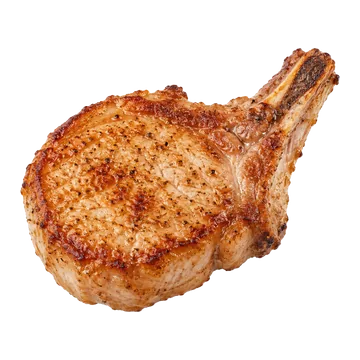 Pork chop, pan-fried
Nothing to watch: under the limit for a 100 g serving
More than anyone eatsNo realistic amount reaches the limit.Eating it daily comes to 100 g a day, which stays within the 4,200 g of room left before the limit.15.91 µg per 100 g servingHealth Canada Total Diet Study, trace elements · grade A ?
How it’s rated
The counted figure is 4,200 g a day, about 42 servings a day.
No cap: EFSA's 2020 tolerable daily intake (TDI) for nickel is 13 µg/kg body weight/day, 910 µg a day for 70 kg. Eaten alone, about 5,719 g of cooked chop a day would reach it, an upper bound because it uses the lower-bound mean of 159.13 µg/kg. Health Canada's 2000-2012 and 2016-2018 samples differ four-fold, and the FDA found no nickel in 27 of 27 pan-cooked chops (reporting limit 40 µg/kg), which agrees better with the later figure. A 100 g serving carries 15.91 µg.
Intake: 100 g cooked serving (HC TRA L.6) · Level in the food: 159.13 ng/g (µg/kg) (mean (equal-weight over composites, both label eras pooled n-weighted), n = 16)
Measured on: Health Canada TDS, BB04 Pork, fresh, as consumed. 13 composites 2000-2012 (mean 185.6, 4 non-detects, detection limit (detection limit) up to 100) and 3 composites 2016-2018 (mean 44.43, 0 non-detects)
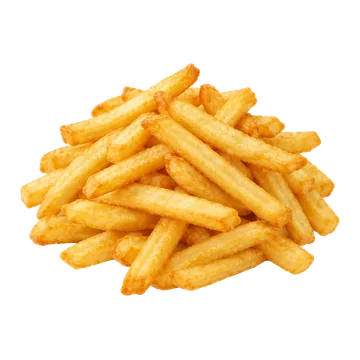 French fries, restaurant
Nothing to watch: under the limit for a 70 g serving
More than anyone eatsNo realistic amount reaches the limit.Eating it daily comes to 70 g a day, which stays within the 4,400 g of room left before the limit.10.68 µg per 70 g servingHealth Canada Total Diet Study, trace elements · grade A ?
How it’s rated
The counted figure is 4,400 g a day, about 63 servings a day.
No cap: nickel is rated against EFSA's tolerable daily intake of 13 µg/kg body weight/day (2020). The average adult already takes in 22-26% of it, under half, so a food would have to reach the limit on its own to matter. A 70 g serving adds 4.5-5.3% to the average adult's intake; about 5,962 g of fries a day would reach the limit, eaten alone. For nickel-sensitised people EFSA's acute line is 0.143 µg/kg body weight per sitting (10 µg at 70 kg); a serving here is 10.7 µg.
Intake: one 70 g serving a day (Health Canada TRA P.1), 70 kg adult · Level in the food: 152.64 µg/kg (mean, n = 16)
Measured on: Health Canada TDS NN02 'Fast Food, French Fries', 16 composites 2000-2018, As consumed; 1 below detection limit (detection limit) (137, 2001) stored as 0
1 other measurement of this food
- US FDA TDS 2018-20, fast-food fries
Nothing to watch: under the limit
More than anyone eatsNo realistic amount reaches the limit.Eating it daily comes to 70 g a day, which stays within the 4,800 g of room left before the limit.9.87 µg per 70 g servingUS FDA Total Diet Study (2018–2020) · grade A ?
How it’s rated
The counted figure is 4,800 g a day, about 68 servings a day.
No cap: nickel is rated against EFSA's tolerable daily intake of 13 µg/kg body weight/day (2020). The average adult already takes in 22-26% of it, under half, so a food would have to reach the limit on its own to matter. A 70 g serving adds 4.1-4.9% to the average adult's intake; about 6,454 g of fries a day would reach the limit, eaten alone. For nickel-sensitised people EFSA's acute line is 0.143 µg/kg body weight per sitting (10 µg at 70 kg); a serving here is 9.9 µg.
Intake: one 70 g serving a day (Health Canada TRA P.1), 70 kg adult · Level in the food: 141 µg/kg (mean, n = 27)
Measured on: US FDA TDS FY2018-FY2020, food 258 'Potatoes, French fries, fast-food', 27 samples, 27 detects, RL 40 ppb, standard deviation 47, range 69-290
 Ice cream, vanilla
Nothing to watch: under the limit for a 105 g serving
More than anyone eatsNo realistic amount reaches the limit.Eating it daily comes to 105 g a day, which stays within the 4,500 g of room left before the limit.15.595 µg per 105 g servingHealth Canada Total Diet Study, trace elements · grade A ?
How it’s rated
The counted figure is 4,500 g a day, about 43 servings a day.
No cap: nickel is rated against EFSA's tolerable daily intake of 13 µg/kg body weight/day (2020). The average adult already takes in 22-26% of it, under half, so a food would have to reach the limit on its own to matter. Eaten alone, about 6,121 g of ice cream a day would reach it.
Intake: one 188 mL (3/4 cup; 104.9 g) serving, 70 kg adult · Level in the food: 148.662 µg/kg (mean (equal-weight, 16 composites, two era rows combined), n = 16)
Measured on: Health Canada TDS trace elements, TDS food AA07 Ice cream (vanilla and chocolate): 2000-2012: n = 13, mean 154.1 ng/g; 2016-2018: n = 3, mean 125.1 ng/g
 Processed cheese slices
Nothing to watch: under the limit for a 30 g serving
More than anyone eatsNo realistic amount reaches the limit.Eating it daily comes to 30 g a day, which stays within the 5,000 g of room left before the limit.4.067 µg per 30 g servingHealth Canada Total Diet Study, trace elements · grade A ?
How it’s rated
The counted figure is 5,000 g a day, about 165 servings a day.
No cap: nickel is rated against EFSA's tolerable daily intake of 13 µg/kg body weight/day (2020). The average adult already takes in 22-26% of it, under half, so a food would have to reach the limit on its own to matter. Eaten alone, about 6,713 g of this cheese a day would reach it.
Intake: one 30 g serving, 70 kg adult · Level in the food: 135.567 µg/kg (mean (equal-weight, 16 composites, two era rows combined), n = 16)
Measured on: Health Canada TDS trace elements, TDS food AA11 Cheese, processed: 2000-2012: n = 13, mean 161.8 ng/g; 2016-2018: n = 3, mean 21.89 ng/g
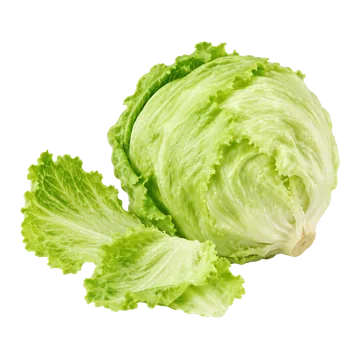 Iceberg lettuce, raw
Nothing to watch: under the limit for a 85 g serving
More than anyone eatsNo realistic amount reaches the limit.Eating it daily comes to 85 g a day, which stays within the 5,700 g of room left before the limit.9.97 µg (85 g × 0.1173 µg/g) per 85 g servingCFIA chemical residue monitoring (2016–2023) · grade B ?
How it’s rated
The counted figure is 5,700 g a day, about 67 servings a day.
No cap: EFSA's 2020 tolerable daily intake for nickel is 13 µg/kg body weight/day, 910 µg/day for 70 kg. The CFIA lower-bound mean for imported head lettuce is 0.1173 µg/g (158 samples, 149 positive), so about 7,758 g a day, eaten alone, would reach it; a serving is 1.1% of the limit. FDA's raw iceberg mean is lower, 80 µg/kg (17 of 27 detected).
Intake: one 85 g serving a day, 70 kg adult · Level in the food: 0.117 µg/g (lower-bound mean over all n (149 of 158 positive; max 0.98 ppm), n = 158)
Measured on: CFIA NCRMP annex B2 (imports), 'Lettuce - head', fresh, 2017-18 to 2022-23. Pooled as an n-weighted mean of the annex rows' lower-bound means over all n, 4 import lines (2017-18+2018-19 n 102; 2019-20+2020-21 n 26; 2021-22 n 17; 2022-23 n 13) = n 158; domestic n 41 (4 lines). Years pooled: 2017-18 to 2022-23, no single-year composite mixed with a multi-year one without n weighting.
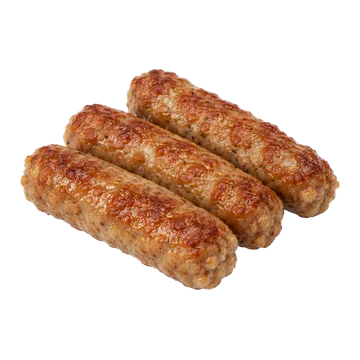 Pork sausage, pan-fried
Nothing to watch: under the limit for a 55 g serving
More than anyone eatsNo realistic amount reaches the limit.Eating it daily comes to 55 g a day, which stays within the 6,500 g of room left before the limit.5.697 µg per 55 g servingHow it’s rated
The counted figure is 6,500 g a day, about 118 servings a day.
No cap: nickel is rated against EFSA's tolerable daily intake of 13 µg/kg body weight/day (2020). The average adult already takes in 22-26% of it, under half, so a food would have to reach the limit on its own to matter. About 8,786 g a day would reach it, eaten alone. One 55 g cooked serving carries 5.70 µg, 0.63% of the limit, and adds 2.4-2.8% to the average adult's intake.
Intake: one 55 g cooked serving a day, 70 kg adult · Level in the food: 103.579 ng/g (µg/kg) (mean (equal-weight, pooled n-weighted), n = 16)
Measured on: Health Canada TDS BB11 "Wieners & sausages (wieners, and fresh sausage)", As consumed, Nickel, 16 composites: 13 in 2000-2012 (mean 117.0, 1 non-detect) and 3 in 2016-2018 (mean 45.42); detection limit (detection limit) range 0-26 ng/g
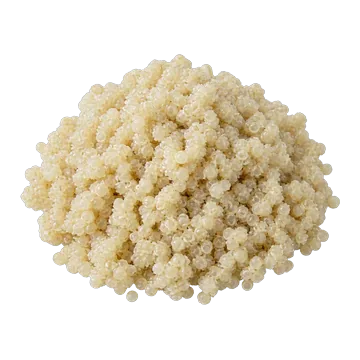 Quinoa, cooked
Nothing to watch: under the limit for a 140 g serving
More than anyone eatsNo realistic amount reaches the limit.Eating it daily comes to 140 g a day, which stays within the 6,700 g of room left before the limit.14 µg per 140 g servingUS FDA Total Diet Study (2018–2020) · grade A ?
How it’s rated
The counted figure is 6,700 g a day, about 48 servings a day.
No cap: a 140 g cooked serving carries about 14 µg of nickel, 1.5% of EFSA's tolerable daily intake of 13 µg/kg body weight/day (910 µg at 70 kg; EFSA 2020). Under half the limit, so it cannot trigger a cap whatever the average intake is.
Intake: one 140 g cooked serving a day, 70 kg adult · Level in the food: 100 µg/kg (mean, n = 3)
Measured on: food-specific agency data: FDA TDS FY2018-2020 #522 'Quinoa, cooked', 3 composites
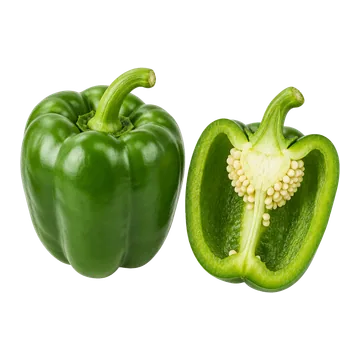 Green pepper, raw
Nothing to watch: under the limit for a 85 g serving
More than anyone eatsNo realistic amount reaches the limit.Eating it daily comes to 85 g a day, which stays within the 6,800 g of room left before the limit.8.43 µg per 85 g servingHow it’s rated
The counted figure is 6,800 g a day, about 80 servings a day.
No cap: nickel is rated against EFSA's tolerable daily intake of 13 µg/kg body weight/day (2020). The average adult already takes in 22-26% of it, under half, so a food would have to reach the limit on its own to matter. The limit is 910 µg a day for a 70 kg adult; about 9,176 g a day of green pepper would reach it, eaten alone, and a serving carries 8.4 µg, 0.93% of it. FDA found green bell pepper at 54 ppb (11 of 27 detected).
Intake: one 85 g serving a day (Health Canada TRA V.1), 70 kg adult · Level in the food: 99.17 ng/g (mean (equal-weight of composites; pooled by n), n = 16)
Measured on: Health Canada Total Diet Study, food GG15 'Peppers (Raw, green pepper)', as consumed: 13 composites 2000-2012 (107.9 ng/g, 1 non-detect) and 3 composites 2016-2018 (61.33).
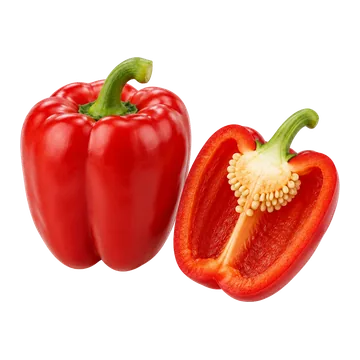 Red pepper, raw
Nothing to watch: under the limit for a 85 g serving
More than anyone eatsNo realistic amount reaches the limit.Eating it daily comes to 85 g a day, which stays within the 6,800 g of room left before the limit.8.43 µg per 85 g servingHow it’s rated
The counted figure is 6,800 g a day, about 80 servings a day.
No cap: nickel is rated against EFSA's tolerable daily intake of 13 µg/kg body weight/day (2020). The average adult already takes in 22-26% of it, under half, so a food would have to reach the limit on its own to matter. The limit is 910 µg a day for a 70 kg adult; about 9,176 g a day of green pepper would reach it, eaten alone, and a serving carries 8.4 µg, 0.93% of it. FDA found green bell pepper at 54 ppb (11 of 27 detected).
Intake: one 85 g serving a day (Health Canada TRA V.1), 70 kg adult · Level in the food: 99.17 ng/g (mean (equal-weight of composites; pooled by n), n = 16)
Measured on: Health Canada Total Diet Study, food GG15 'Peppers (Raw, green pepper)', as consumed: 13 composites 2000-2012 (107.9 ng/g, 1 non-detect) and 3 composites 2016-2018 (61.33).
 Peaches, raw
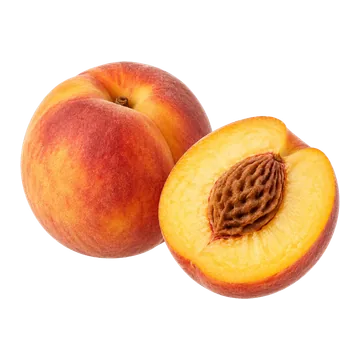
Nothing to watch: under the limit for a 140 g serving
More than anyone eatsNo realistic amount reaches the limit.Eating it daily comes to 140 g a day, which stays within the 6,800 g of room left before the limit.13.779 µg per 140 g servingHealth Canada Total Diet Study, trace elements · grade A ?
How it’s rated
The counted figure is 6,800 g a day, about 49 servings a day.
No cap: EFSA's 2020 tolerable daily intake for nickel is 13 µg/kg body weight/day, 910 µg/day for 70 kg. Health Canada's Total Diet Study mean is 0.09842 µg/g (16 composites, none non-detect), so about 9,246 g a day, eaten alone, would reach it; one 140 g serving carries 13.8 µg. CFIA fresh peach is about half this figure (74.5 ng/g, 217 samples).
Intake: one 140 g serving a day (HC TRA J.1), 70 kg adult · Level in the food: 98.42 ng/g (mean of 16 single-year composites (equal weight), n = 16)
Measured on: Health Canada Total Diet Study, food code HH13 "Peaches" (the pack gives no fresh/canned qualifier), As consumed, composites of 2000-2012 and 2016-2018 (16 single-year composites), Canada; equal-weight mean; non-detects stored as 0; the 1993-99 pooled composite is a separate row and is not averaged in
 Asparagus, cooked
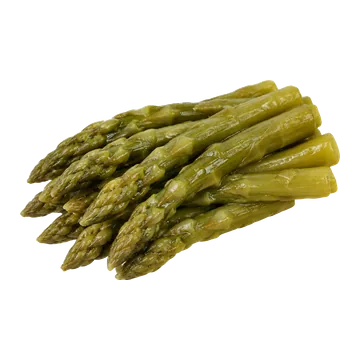
Nothing to watch: under the limit for a 85 g serving
More than anyone eatsNo realistic amount reaches the limit.Eating it daily comes to 85 g a day, which stays within the 7,000 g of room left before the limit.8.2 µg per 85 g servingHealth Canada Total Diet Study, trace elements · grade A ?
How it’s rated
The counted figure is 7,000 g a day, about 82 servings a day.
No cap: EFSA's 2020 tolerable daily intake for nickel is 13 µg/kg body weight/day, 910 µg/day for 70 kg. At 96.43 µg/kg in cooked asparagus (Health Canada Total Diet Study, 11 composites, lower bound), about 9,437 g a day eaten alone would reach it; an 85 g serving carries 8.2 µg. Other sources of nickel are not counted.
Intake: one 85 g serving a day, 70 kg adult · Level in the food: 96.43 µg/kg (mean (equal-weight of single-year composites), n = 11)
Measured on: Health Canada Total Diet Study trace elements, TDS food GG23 'Asparagus (Cooked asparagus)', as consumed, Canada; 11 single-year composites (2005-2012, 2016, 2017, 2018); non-detects stored as 0 (none occurred), so a lower bound
 Cantaloupe, raw
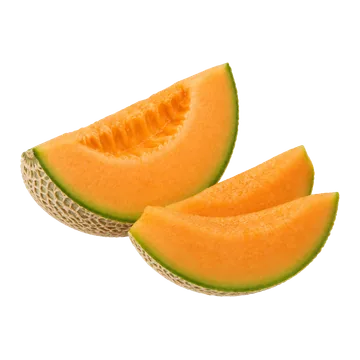
Nothing to watch: under the limit for a 150 g serving
More than anyone eatsNo realistic amount reaches the limit.Eating it daily comes to 150 g a day, which stays within the 7,300 g of room left before the limit.13.87 µg per 150 g servingHealth Canada Total Diet Study, trace elements · grade B ?
How it’s rated
The counted figure is 7,300 g a day, about 48 servings a day.
No cap: EFSA's 2020 tolerable daily intake for nickel is 13 µg/kg body weight/day, 910 µg a day for 70 kg. Eaten alone, about 9,841 g a day would reach it, on a lower-bound Health Canada mean of 0.09247 µg/g (cantaloupe and watermelon composites). One 150 g serving holds 13.9 µg, about 1.5% of the day's limit.
Intake: one serving a day, 70 kg adult · Level in the food: 92.47 ng/g (mean (equal-weight of composites; pooled by n), n = 16)
Measured on: Health Canada TDS, HH12 Melons (cantaloupe and watermelon): 13 composites 2000-2012 (95.01 ng/g, 1 non-detect) and 3 composites 2016-2018 (81.46 ng/g), as consumed.
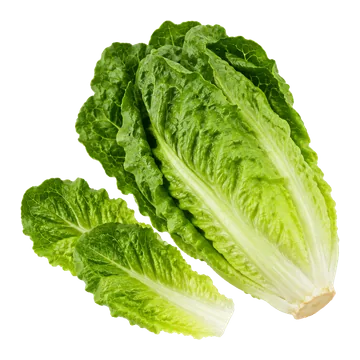 Romaine lettuce, raw
Nothing to watch: under the limit for a 85 g serving
More than anyone eatsNo realistic amount reaches the limit.Eating it daily comes to 85 g a day, which stays within the 7,400 g of room left before the limit.7.69 µg per 85 g servingHow it’s rated
The counted figure is 7,400 g a day, about 87 servings a day.
No cap: nickel is rated against EFSA's tolerable daily intake of 13 µg/kg body weight/day (2020). The average adult already takes in 22-26% of it, under half, so a food would have to reach the limit on its own to matter. The limit is 910 µg a day for a 70 kg adult; about 10,063 g a day of lettuce would reach it, eaten alone, and a serving carries 7.7 µg, 0.84% of it. FDA found iceberg at 80 ppb (17 of 27 detected) and leaf at 54 ppb (18 of 27).
Intake: one 85 g serving a day (Health Canada TRA V.1), 70 kg adult · Level in the food: 90.43 ng/g (mean (equal-weight of composites; pooled by n), n = 16)
Measured on: Health Canada Total Diet Study, food GG11 'Lettuce (Iceburg and romaine)', as consumed: 13 composites 2000-2012 (96.26 ng/g, 1 non-detect) and 3 composites 2016-2018 (65.19).
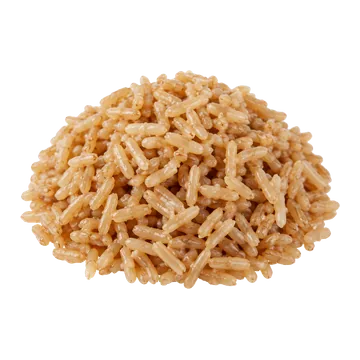 Brown rice, cooked
Nothing to watch: under the limit for a 140 g serving
More than anyone eatsNo realistic amount reaches the limit.Eating it daily comes to 140 g a day, which stays within the 7,500 g of room left before the limit.12.6 µg per 140 g servingUS FDA Total Diet Study (2018–2020) · grade A ?
How it’s rated
The counted figure is 7,500 g a day, about 53 servings a day.
No cap: EFSA's 2020 tolerable daily intake (TDI) for nickel is 13 µg/kg body weight/day, 910 µg a day for 70 kg. Eaten alone, about 10,111 g of cooked brown rice a day would reach it. The FDA mean is 90 µg/kg (27 samples, 26 detected, maximum 180); a serving carries 12.6 µg, 1.4% of the daily limit. Brown rice carries about three times as much nickel as white rice.
Intake: one 140 g cooked serving a day, 70 kg adult · Level in the food: 90 ppb (mean (26 of 27 detected; standard deviation 34, max 180), n = 27)
Measured on: food-specific: US FDA Total Diet Study FY2018-2020 elements supplement, TDS food 402 'Rice, brown, cooked' (as eaten, US), 27 samples, reporting limit stated per analyte, reporting limit 40 ppb; FDA does not state how the one non-detect enters the mean
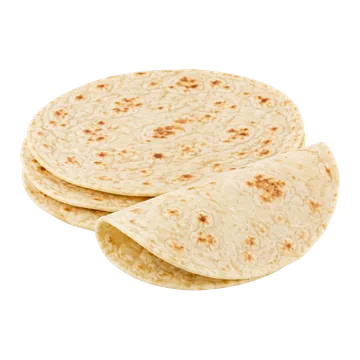 Flour tortillas
Nothing to watch: under the limit for a 55 g serving
More than anyone eatsNo realistic amount reaches the limit.Eating it daily comes to 55 g a day, which stays within the 8,000 g of room left before the limit.4.62 µg per 55 g servingUS FDA Total Diet Study (2018–2020) · grade A ?
How it’s rated
The counted figure is 8,000 g a day, about 145 servings a day.
No cap: EFSA's 2020 tolerable daily intake for nickel is 13 µg/kg body weight/day, 910 µg a day for 70 kg. Eaten alone, about 10,833 g of tortilla a day would reach it (FDA mean 0.084 µg/g, 27 of 27 detected). One serving carries 4.62 µg, 0.5% of the daily limit.
Intake: one 55 g serving a day, 70 kg adult · Level in the food: 84 ppb (mean (27 of 27 detected; standard deviation 24, min 54, max 180), n = 27)
Measured on: food-specific: US FDA Total Diet Study FY2018-2020 elements supplement, TDS food 63 'Tortilla, flour' (US, 27 samples; the table does not say how the tortillas were prepared or heated), reporting limit 40 ppb
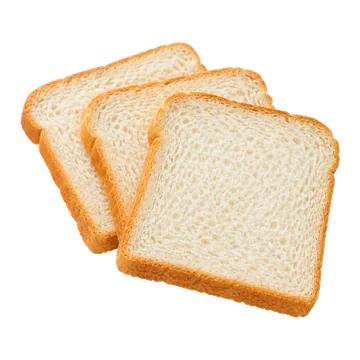 White bread
Nothing to watch: under the limit for a 75 g serving
More than anyone eatsNo realistic amount reaches the limit.Eating it daily comes to 75 g a day, which stays within the 8,700 g of room left before the limit.5.81 µg per 75 g servingHealth Canada Total Diet Study, trace elements · grade A ?
How it’s rated
The counted figure is 8,700 g a day, about 116 servings a day.
No cap: nickel is rated against EFSA's tolerable daily intake of 13 µg/kg body weight/day (2020). The average adult already takes in 22-26% of it, under half, so a food would have to reach the limit on its own to matter. About 11,753 g a day would reach it, eaten alone; one 75 g serving is 0.64% of it.
Intake: one 75 g reference serving a day (Health Canada TRA A.1), 70 kg adult · Level in the food: 77.43 ng/g (mean, n = 16)
Measured on: food-specific: Health Canada Total Diet Study FF01 'Bread, white', 16 composites (2 non-detects stored as 0), 2000-2012 and 2016-2018, Canada, as consumed
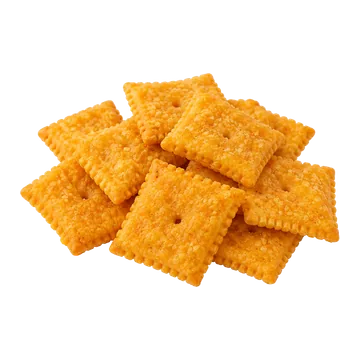 Crackers
Nothing to watch: under the limit for a 30 g serving
More than anyone eatsNo realistic amount reaches the limit.Eating it daily comes to 30 g a day, which stays within the 8,700 g of room left before the limit.2.32 µg per 30 g servingHealth Canada Total Diet Study, trace elements · grade A ?
How it’s rated
The counted figure is 8,700 g a day, about 290 servings a day.
No cap: nickel is rated against EFSA's tolerable daily intake of 13 µg/kg body weight/day (2020). The average adult already takes in 22-26% of it, under half, so a food would have to reach the limit on its own to matter. A 30 g serving is 2.3 µg, 0.25% of the limit; about 11,788 g a day would reach it, eaten alone.
Intake: one 30 g reference serving a day (Health Canada TRA A.12), 70 kg adult · Level in the food: 77.196 ng/g (mean, n = 16)
Measured on: food-specific: Health Canada Total Diet Study FF10 'Crackers (soda crackers)', 16 composites, 2000-2012 and 2016-2018, Canada, as consumed (2 non-detects stored as 0)
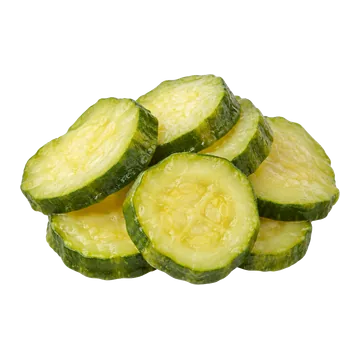 Zucchini, cooked
Nothing to watch: under the limit for a 85 g serving
More than anyone eatsNo realistic amount reaches the limit.Eating it daily comes to 85 g a day, which stays within the 9,700 g of room left before the limit.5.87 µg per 85 g servingUS FDA Total Diet Study (2018–2020) · grade A ?
How it’s rated
The counted figure is 9,700 g a day, about 114 servings a day.
No cap: EFSA's 2020 tolerable daily intake (TDI) for nickel is 13 µg/kg body weight/day, 910 µg a day for 70 kg. Eaten alone, about 13,188 g of boiled zucchini a day would reach it, on the lower-bound FDA mean of 69 ppb (27 samples, 13 detects, maximum 450 ppb; a few samples carry the mean). One 85 g serving holds 5.9 µg, about 0.6% of the day's limit.
Intake: one serving a day, 70 kg adult · Level in the food: 69 µg/kg (mean, n = 27)
Measured on: FDA Total Diet Study FY2018-2020, TDS food 407 'Zucchini, fresh/frozen, boiled' (US), 27 samples, 13 detects, reporting limit 40 ppb, standard deviation 107, max 450 ppb.
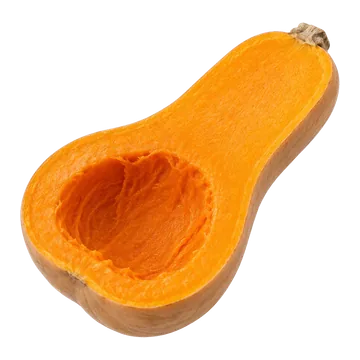 Butternut squash, baked
Nothing to watch: under the limit for a 85 g serving
More than anyone eatsNo realistic amount reaches the limit.Eating it daily comes to 85 g a day, which stays within the 9,900 g of room left before the limit.5.78 µg per 85 g servingUS FDA Total Diet Study (2018–2020) · grade A ?
How it’s rated
The counted figure is 9,900 g a day, about 116 servings a day.
No cap: EFSA's 2020 tolerable daily intake for nickel is 13 µg/kg body weight/day, 910 µg a day. At the FDA mean of 68 µg/kg (27 boiled samples, 13 detected), about 13,382 g of squash a day, eaten alone, would reach it, and an 85 g serving carries 5.78 µg. CFIA's raw squash is higher at 101 µg/kg, about 9,000 g a day; the FDA data are boiled, not baked.
Intake: one 85 g serving a day (HC TRA V.1), 70 kg adult · Level in the food: 68 µg/kg (mean (standard deviation 109, max 480, 13 of 27 detects, reporting limit 40 ppb), n = 27)
Measured on: US FDA Total Diet Study FY2018-FY2020, TDS food 126 "Squash, winter, fresh/frozen, boiled", n 27 samples, United States. BOILED not baked (no baked winter-squash entry in the elements summary); the summary prints mean N/A when all 27 are non-detects, and does not state how non-detects enter a partial mean.
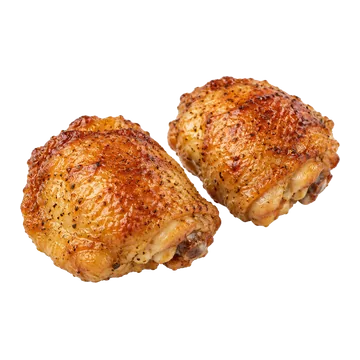 Chicken thigh, roasted
Nothing to watch: under the limit for a 100 g serving
More than anyone eatsNo realistic amount reaches the limit.Eating it daily comes to 100 g a day, which stays within the 10,000 g of room left before the limit.6.449 µg per 100 g servingHow it’s rated
The counted figure is 10,000 g a day, about 104 servings a day.
No cap: nickel is rated against EFSA's tolerable daily intake of 13 µg/kg body weight/day (2020). The average adult already takes in 22-26% of it, under half, so a food would have to reach the limit on its own to matter. About 14,111 g a day would reach it, eaten alone. One 100 g cooked serving carries 6.45 µg, 0.71% of the limit, and adds 2.7-3.2% to the average adult's intake.
Intake: one 100 g cooked serving a day, 70 kg adult · Level in the food: 64.488 ng/g (µg/kg) (mean (equal-weight, pooled n-weighted), n = 16)
Measured on: Health Canada TDS CC02 "Poultry, chicken & turkey (roast chicken and turkey)", As consumed, Nickel, 16 composites: 13 in 2000-2012 (mean 77.44, 1 non-detect) and 3 in 2016-2018 (mean 8.363); detection limit (detection limit) range 0-26 ng/g
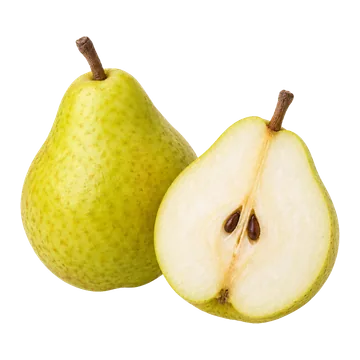 Pears, raw
Nothing to watch: under the limit for a 140 g serving
More than anyone eatsNo realistic amount reaches the limit.Eating it daily comes to 140 g a day, which stays within the 11,000 g of room left before the limit.8.752 µg per 140 g servingHealth Canada Total Diet Study, trace elements · grade A ?
How it’s rated
The counted figure is 11,000 g a day, about 77 servings a day.
No cap: EFSA's 2020 tolerable daily intake for nickel is 13 µg/kg body weight/day, 910 µg/day for 70 kg. Health Canada's Total Diet Study mean is 0.0625156 µg/g (16 composites, non-detects stored as zero), so about 14,556 g a day, eaten alone, would reach it; one 140 g serving carries 8.75 µg. CFIA fresh pear is close (57.2 ng/g, 353 samples).
Intake: one 140 g serving a day (HC TRA J.1), 70 kg adult · Level in the food: 62.52 ng/g (mean of single-year composites, n-weighted over two sets (67.61 n 13; 40.44 n 3), n = 16)
Measured on: Health Canada Total Diet Study, food code HH14 Pears (set 1 "Fresh, raw pears" 2000-2012, set 2 "Fresh, raw" 2016-2018), As consumed, Canada; the two single-year sets are combined here by composite count (n-weighted); non-detects stored as 0; the 1993-99 pooled composite is a separate row and is not averaged in
 Honey
Nothing to watch: under the limit for a 20 g serving
More than anyone eatsNo realistic amount reaches the limit.Eating it daily comes to 20 g a day, which stays within the 11,000 g of room left before the limit.1.248 µg per 20 g servingHealth Canada Total Diet Study, trace elements · grade A ?
How it’s rated
The counted figure is 11,000 g a day, about 538 servings a day.
No cap: EFSA's 2020 tolerable daily intake (TDI) for nickel is 13 µg/kg body weight/day, 910 µg a day for 70 kg. Eaten alone, about 14,600 g of honey a day would reach it (a lower-bound mean, so an upper bound on grams). A serving carries 1.25 µg, 0.14% of the daily limit. Background intake is not subtracted.
Intake: one 20 g serving a day (HC TRA U.8), 70 kg adult · Level in the food: 62.38 µg/kg (mean (equal-weight, 16 composites: 13 composites 2000-2012 at 73 and 3 composites 2016-2018 at 16.36), n = 16)
Measured on: Health Canada Total Diet Study, TDS food JJ04 'Honey, bottled', as consumed, Canada, 2000-2012 and 2016-2018; non-detects stored as 0 (1 of 16; detection limit (detection limit) up to 39 ng/g)
 Orange juice
Nothing to watch: under the limit for a 262 g serving
More than anyone eatsNo realistic amount reaches the limit.Eating it daily comes to 262 g a day, which stays within the 11,000 g of room left before the limit.16.01 µg per 262 g servingHow it’s rated
The counted figure is 11,000 g a day, about 42 servings a day.
No cap: EFSA's 2020 tolerable daily intake (TDI) for nickel is 13 µg/kg body weight/day, 910 µg a day for 70 kg. Eaten alone, about 14,891 g a day would reach it; a serving carries 16.01 µg, 1.8% of the daily limit. Allergic contact dermatitis in nickel-sensitised people is a separate EFSA endpoint and was not scored. Background intake is not shown.
Intake: one 250 mL glass (262 g) a day, 70 kg adult · Level in the food: 61.11 µg/kg (mean (pooled by sample count), n = 16)
Measured on: Health Canada TDS HH08 Citrus juice, frozen (Orange Juice, frozen conc), as consumed: 13 composites 2000-2012 mean 72.07 ng/g (0 non-detects) plus 3 composites 1999/2016-2018 under the bilingual label mean 13.63 ng/g (0 non-detects); pooled by sample count. Juice made from frozen concentrate, reconstituted: the as-consumed basis.
 Soybean oil
Nothing to watch: under the limit for a 9.2 g serving
More than anyone eatsNo realistic amount reaches the limit.Eating it daily comes to 9 g a day, which stays within the 11,000 g of room left before the limit.US FDA Total Diet Study (2018–2020) · grade A ?
How it’s rated
The counted figure is 11,000 g a day, about 1,215 servings a day.
No cap: nickel is rated against EFSA's tolerable daily intake of 13 µg/kg body weight/day (2020). The average adult already takes in 22-26% of it, under half, so a food would have to reach the limit on its own to matter. All 3 FDA Total Diet Study composites of vegetable oil were below the 60 ppb reporting limit, so at least 15,167 g a day, eaten alone, would reach the limit. EFSA's pooled category of animal and vegetable fats and oils, shown beside it, averages 100 (lower bound) to 213 (upper bound) µg/kg.
Intake: one 9.21 g (10 mL) serving a day, 70 kg adult · Level in the food: 60 ppb (all 3 composites non-detect; the value stored is the reporting limit (60 ppb), which is the upper bound, n = 3)
Measured on: FDA Total Diet Study FY2018-2020, food 379 'Oil, vegetable', nickel: 0 of 3 composites above the 60 ppb reporting limit.
1 other measurement of this food
- EFSA 2020, European animal and vegetable fats and oils
Nothing to watch: under the limit
More than anyone eatsNo realistic amount reaches the limit.Eating it daily comes to 9 g a day, which stays within the 6,700 g of room left before the limit.How it’s rated
The counted figure is 6,700 g a day, about 729 servings a day.
No cap: nickel is rated against EFSA's tolerable daily intake of 13 µg/kg body weight/day (2020). The average adult already takes in 22-26% of it, under half, so a food would have to reach the limit on its own to matter. A serving carries 0.9-2.0 µg, 0.1-0.2% of the limit; about 9,100 g (lower bound) to 4,272 g (upper bound) of fats and oils eaten alone in a day would reach it. The figure is EFSA's category for animal and vegetable fats and oils together (85% below detection), not refined vegetable oil alone.
Intake: one 9.21 g (10 mL) serving a day, 70 kg adult · Level in the food: 100 µg/kg (mean (lower bound 100; upper bound 213 stored in scope), n = 1343)
Measured on: EFSA 2020 Table 7, FoodEx level 1 'Animal and vegetable fats and oils' (animal and vegetable fats together; mean lower bound 100 and upper bound 213 µg/kg; 85% left-censored; P95 180 lower bound, 1,000 upper bound µg/kg); European data
 Black tea, brewed
Nothing to watch: under the limit for a 250 g serving
More than anyone eatsNo realistic amount reaches the limit.Eating it daily comes to 250 g a day, which stays within the 12,000 g of room left before the limit.14.5 µg per 250 g servingHow it’s rated
The counted figure is 12,000 g a day, about 46 servings a day.
No cap: nickel is rated against EFSA's tolerable daily intake of 13 µg/kg body weight/day (2020). The average adult already takes in 22-26% of it, under half, so a food would have to reach the limit on its own to matter. Eaten alone, about 15,710 g a day would reach it, and one cup is 1.6% of the limit. For nickel-sensitised people one cup is about 0.21 µg/kg body weight, against EFSA's acute lowest-observed-adverse-effect level (LOAEL) of 4.3 µg/kg body weight; EFSA counts a margin of exposure of 30 as low concern, and this gives near 21 (Foodtopsy's own calculation; EFSA notes that its fasting-study basis overestimates).
Intake: one 250 mL (250 g) cup a day, 70 kg adult · Level in the food: 57.9 ng/g (mean (equal-weight), n = 16)
Measured on: Canadian TDS (Health Canada, open.canada.ca dataset 83934503-cfae-4773-b258-e336896c2c53), item KK06 'Tea (Black tea)', Basis for Result 'As consumed', Intended Use 'Ready-to-eat', composites 1999 (average of 1993-99) and 2000-2012, 2016-2018, Canadian cities; the brewing recipe is not stated in the record; 16 composites 2000-2018, 1 non-detect (detection limit (detection limit) 39); lower bound 56.7, upper bound 59.1; recent 2016-18 mean 41.1. FDA TDS #197: mean 54 ppb (42-73), RL 20, n = 3
 Green tea, brewed
Nothing to watch: under the limit for a 250 g serving
More than anyone eatsNo realistic amount reaches the limit.Eating it daily comes to 250 g a day, which stays within the 12,000 g of room left before the limit.13.5 µg per 250 g servingUS FDA Total Diet Study (2018–2020) · grade A ?
How it’s rated
The counted figure is 12,000 g a day, about 50 servings a day.
No cap: EFSA's 2020 tolerable daily intake for nickel is 13 µg/kg body weight/day, 910 µg/day for 70 kg. FDA brewed bag tea averages 54 µg/kg (3 composites, all detected; tea type not stated, so not specific to green), which puts the limit at about 16,852 g a day (67 cups), eaten alone. One cup carries 13.5 µg, 1.5% of the daily limit.
Intake: one 250 mL (250 g) cup a day, 70 kg adult · Level in the food: 54 ppb (mean of 3 composites (standard deviation 17; min 42, max 73), n = 3)
Measured on: FDA Total Diet Study FY2018-FY2020, TDS food 197 'Tea, brewed from tea bag', n = 3 composites, 3/3 detected, USA; tea type not stated (there is no green-tea TDS item); reporting limit 20 ppb. Black tea assumed to dominate the bag-tea composites; not green-specific.
 Kiwi, raw
Nothing to watch: under the limit for a 140 g serving
More than anyone eatsNo realistic amount reaches the limit.Eating it daily comes to 140 g a day, which stays within the 13,000 g of room left before the limit.7.08 µg per 140 g servingHealth Canada Total Diet Study, trace elements · grade A ?
How it’s rated
The counted figure is 13,000 g a day, about 95 servings a day.
No cap: EFSA's 2020 tolerable daily intake (TDI) for nickel is 13 µg/kg body weight/day, 910 µg a day for 70 kg. Eaten alone, about 17,995 g a day would reach it, an upper bound on grams since non-detects count as zero. A serving carries 7.0798 µg. Background intake is not subtracted.
Intake: one 140 g serving a day, 70 kg adult · Level in the food: 50.57 µg/kg (mean, n = 13)
Measured on: Health Canada Canadian Total Diet Study, trace elements, TDS food HH20 'Kiwi fruit (Fresh, raw kiwi)', composites 2000-2012 (13 composites, 1 non-detect), as consumed.
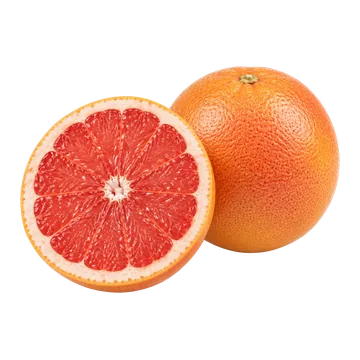 Grapefruit, raw
Nothing to watch: under the limit for a 140 g serving
More than anyone eatsNo realistic amount reaches the limit.Eating it daily comes to 140 g a day, which stays within the 13,000 g of room left before the limit.7.03 µg per 140 g servingHow it’s rated
The counted figure is 13,000 g a day, about 95 servings a day.
No cap: EFSA's 2020 tolerable daily intake (TDI) for nickel is 13 µg/kg body weight/day, 910 µg a day for 70 kg. Eaten alone, about 18,118 g a day would reach it; a 140 g serving carries 7.03 µg, 0.8% of the daily limit. The Health Canada composite covers grapefruit and oranges together. Allergic contact dermatitis in nickel-sensitised people is a separate EFSA endpoint and was not scored. Background intake is not shown.
Intake: one 140 g serving a day, 70 kg adult · Level in the food: 50.23 µg/kg (mean (pooled by sample count), n = 16)
Measured on: Health Canada TDS HH07 Citrus fruit, raw (Oranges and grapefruit), as consumed: 13 composites 2000-2012 mean 55.43 ng/g (2 non-detects) plus 3 composites 1999/2016-2018 under the bilingual label mean 27.68 ng/g (0 non-detects); pooled by sample count. The composite names grapefruit and oranges together; grapefruit alone is not separated.
 Mandarins, raw
Nothing to watch: under the limit for a 140 g serving
More than anyone eatsNo realistic amount reaches the limit.Eating it daily comes to 140 g a day, which stays within the 13,000 g of room left before the limit.7.03 µg per 140 g servingHow it’s rated
The counted figure is 13,000 g a day, about 95 servings a day.
No cap: EFSA's 2020 tolerable daily intake (TDI) for nickel is 13 µg/kg body weight/day, 910 µg a day for 70 kg. Eaten alone, about 18,118 g a day would reach it; a serving carries 7.03 µg, 0.8% of the daily limit. The Health Canada composite covers oranges and grapefruit. Allergic contact dermatitis in nickel-sensitised people is a separate EFSA endpoint and was not scored. Background intake is not shown.
Intake: one 140 g serving a day, 70 kg adult · Level in the food: 50.23 µg/kg (mean (pooled by sample count), n = 16)
Measured on: Health Canada TDS HH07 Citrus fruit, raw (Oranges and grapefruit), as consumed: 13 composites 2000-2012 mean 55.43 ng/g (2 non-detects) plus 3 composites 1999/2016-2018 under the bilingual label mean 27.68 ng/g (0 non-detects); pooled by sample count. PROXY: no TDS food code names mandarins; HH07 is the citrus composite 'Oranges and grapefruit', used as the nearest as-consumed citrus fruit.
- Pies
Nothing to watch: under the limit for a 110 g serving
More than anyone eatsNo realistic amount reaches the limit.Eating it daily comes to 110 g a day, which stays within the 17,000 g of room left before the limit.4.45 µg per 110 g servingHealth Canada Total Diet Study, trace elements · grade A ?
How it’s rated
The counted figure is 17,000 g a day, about 151 servings a day.
No cap: nickel is rated against EFSA's tolerable daily intake of 13 µg/kg body weight/day (2020). The average adult already takes in 22-26% of it, under half, so a food would have to reach the limit on its own to matter. About 22,511 g a day would reach it, eaten alone; one 110 g serving is 0.49% of it.
Intake: one 110 g reference serving a day (Health Canada TRA A.22), 70 kg adult · Level in the food: 40.425 ng/g (mean, n = 16)
Measured on: food-specific: Health Canada Total Diet Study FF17 'Pie, apple', 16 composites, 2000-2012 and 2016-2018, Canada, as consumed (2 non-detects stored as 0)
 Coffee creamer, flavoured liquid
Nothing to watch: under the limit for a 15.2 g serving
More than anyone eatsNo realistic amount reaches the limit.Eating it daily comes to 15 g a day, which stays within the 17,000 g of room left before the limit.0.61 µg (at the reporting limit, 40 ppb) per 15.2 g servingUS FDA Total Diet Study (2018–2020) · grade A ?
How it’s rated
The counted figure is 17,000 g a day, about 1,104 servings a day.
No cap: nickel is rated against EFSA's tolerable daily intake of 13 µg/kg body weight/day (2020). The average adult already takes in 22-26% of it, under half, so a food would have to reach the limit on its own to matter. None was detected (3 samples, limit 40 ppb); at that limit a serving is at most 0.07% of it, and at least 22,750 g a day would reach it.
Intake: one 15.2 g (15 mL) serving a day, 70 kg adult · Level in the food: 40 ppb (all 3 composites non-detect; the value stored is the reporting limit (40 ppb), which is the upper bound, n = 3)
Measured on: US FDA Total Diet Study FY2018-2020, TDS food 168, 3 samples; no Canadian creamer item.
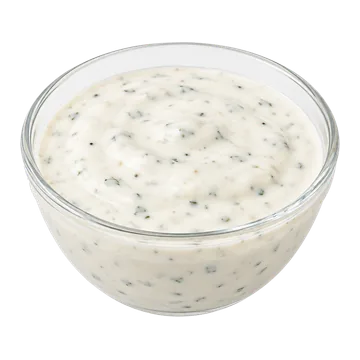 Ranch dressing
Nothing to watch: under the limit for a 30.4 g serving
More than anyone eatsNo realistic amount reaches the limit.Eating it daily comes to 30 g a day, which stays within the 18,000 g of room left before the limit.1.132 µg per 30.4 g servingHow it’s rated
The counted figure is 18,000 g a day, about 593 servings a day.
No cap: nickel is rated against EFSA's tolerable daily intake of 13 µg/kg body weight/day (2020). The average adult already takes in 22-26% of it, under half, so a food would have to reach the limit on its own to matter. The limit is 910 µg a day for a 70 kg adult; about 24,433 g a day of dressing would reach it, eaten alone, and a serving carries 1.13 µg, 0.12% of it. FDA found ranch and Italian dressing not detected (reporting limits 40 and 60 ppb).
Intake: one 30.4 g (30 mL) serving a day, 70 kg adult · Level in the food: 37.25 ng/g (mean (equal-weight of composites; two sets pooled by n), n = 8)
Measured on: Health Canada Total Diet Study, food II07 'Salad Dressing', as consumed: 5 composites 2008-2012 (36.27 ng/g) and 3 composites 2016-2018 (38.87), pooled by n.
 Cucumber, raw
Nothing to watch: under the limit for a 85 g serving
More than anyone eatsNo realistic amount reaches the limit.Eating it daily comes to 85 g a day, which stays within the 20,000 g of room left before the limit.2.86 µg per 85 g servingHealth Canada Total Diet Study, trace elements · grade B ?
How it’s rated
The counted figure is 20,000 g a day, about 235 servings a day.
No cap: EFSA's 2020 tolerable daily intake for nickel is 13 µg/kg body weight/day, 910 µg a day for 70 kg. Eaten alone, about 27,029 g a day would reach it, on a lower-bound Health Canada mean of 0.03367 µg/g for a fresh-and-pickled composite.
Intake: one serving a day, 70 kg adult · Level in the food: 33.67 ng/g (mean (equal-weight of composites; pooled by n), n = 16)
Measured on: Health Canada TDS, GG10 'Cucumbers (Fresh and pickled)': 13 composites 2000-2012 (37.83 ng/g, 2 non-detects) and 3 composites 2016-2018 (15.63 ng/g), as consumed.
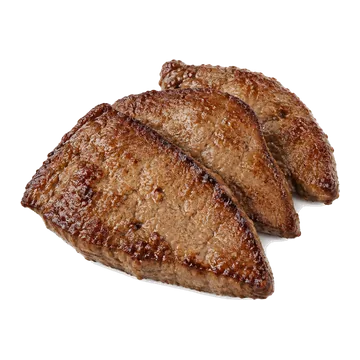 Beef liver, pan-fried
Nothing to watch: under the limit for a 100 g serving
More than anyone eatsNo realistic amount reaches the limit.Eating it daily comes to 100 g a day, which stays within the 20,000 g of room left before the limit.3.3 µg per 100 g servingHow it’s rated
The counted figure is 20,000 g a day, about 203 servings a day.
No cap: EFSA's 2020 tolerable daily intake for nickel is 13 µg/kg body weight/day, 910 µg a day. Eaten alone, about 27,600 g of liver a day would reach it, on a lower-bound Health Canada mean of 33.0 µg/kg (16 composites).
Intake: 100 g cooked serving · Level in the food: 33 ng/g (µg/kg) (mean (equal-weight over composites, both label eras pooled n-weighted), n = 16)
Measured on: Health Canada TDS, BB10 beef or veal liver, as consumed: 31.84 ng/g (13 composites, 4 non-detects stored as 0) and 38.05 ng/g (3 composites)
 Celery, raw
Nothing to watch: under the limit for a 85 g serving
More than anyone eatsNo realistic amount reaches the limit.Eating it daily comes to 85 g a day, which stays within the 23,000 g of room left before the limit.2.46 µg per 85 g servingHealth Canada Total Diet Study, trace elements · grade A ?
How it’s rated
The counted figure is 23,000 g a day, about 273 servings a day.
No cap: EFSA's 2020 tolerable daily intake for nickel is 13 µg/kg body weight/day, 910 µg a day for 70 kg. Eaten alone, about 31,489 g a day would reach it, on a lower-bound Health Canada mean of 28.9 µg/kg.
Intake: one 85 g serving a day, 70 kg adult · Level in the food: 28.9 µg/kg (mean (equal-weight, two sets pooled by n), n = 16)
Measured on: Health Canada TDS GG08 celery, as consumed: 2000-2012 n 13 (2 non-detects) and 2016-2018 n 3; lower bound
 Half-and-half cream
Nothing to watch: under the limit for a 15.3 g serving
More than anyone eatsNo realistic amount reaches the limit.Eating it daily comes to 15 g a day, which stays within the 23,000 g of room left before the limit.0.442 µg per 15.3 g servingHealth Canada Total Diet Study, trace elements · grade A ?
How it’s rated
The counted figure is 23,000 g a day, about 1,522 servings a day.
No cap: nickel is rated against EFSA's tolerable daily intake of 13 µg/kg body weight/day (2020). The average adult already takes in 22-26% of it, under half, so a food would have to reach the limit on its own to matter. Eaten alone, about 31,573 g of cream a day would reach it.
Intake: one 15 mL serving, 70 kg adult · Level in the food: 28.822 µg/kg (mean (equal-weight, 16 composites, two era rows combined), n = 16)
Measured on: Health Canada TDS trace elements, AA06 'Cream' (n = 13, mean 34.92 ng/g) and 'Cream/Crème' (n = 3, mean 2.398 ng/g); the two eras differ 15-fold (note)
- Heavy cream
Nothing to watch: under the limit for a 15.1 g serving
More than anyone eatsNo realistic amount reaches the limit.Eating it daily comes to 15 g a day, which stays within the 23,000 g of room left before the limit.0.435 µg per 15.1 g servingHealth Canada Total Diet Study, trace elements · grade A ?
How it’s rated
The counted figure is 23,000 g a day, about 1,542 servings a day.
No cap: nickel is rated against EFSA's tolerable daily intake of 13 µg/kg body weight/day (2020). The average adult already takes in 22-26% of it, under half, so a food would have to reach the limit on its own to matter. Eaten alone, about 31,573 g of cream a day would reach it.
Intake: one 15 mL serving, 70 kg adult · Level in the food: 28.822 µg/kg (mean (equal-weight, 16 composites, two era rows combined), n = 16)
Measured on: Health Canada TDS trace elements, AA06 'Cream' (n = 13, mean 34.92 ng/g) and 'Cream/Crème' (n = 3, mean 2.398 ng/g); the two eras differ 15-fold (note)
 Mango, raw
Nothing to watch: under the limit for a 140 g serving
More than anyone eatsNo realistic amount reaches the limit.Eating it daily comes to 140 g a day, which stays within the 28,000 g of room left before the limit.3.36 µg per 140 g servingUS FDA Total Diet Study (2018–2020) · grade B ?
How it’s rated
The counted figure is 28,000 g a day, about 200 servings a day.
No cap: EFSA's 2020 tolerable daily intake (TDI) for nickel is 13 µg/kg body weight/day, 910 µg a day for 70 kg. Eaten alone, about 37,917 g a day would reach it, an upper bound on grams since non-detects count as zero. A serving carries 3.36 µg. The mean is soft: 4 of the 6 FDA samples were non-detects at a 40 ppb limit. Background intake is not subtracted.
Intake: one 140 g serving a day, 70 kg adult · Level in the food: 24 µg/kg (mean, n = 6)
Measured on: FDA Total Diet Study FY2018-2020, TDS food 412 'Mango, fresh/frozen', US, 6 samples, 2 detects, reporting limit 40 ppb, max 100 ppb.
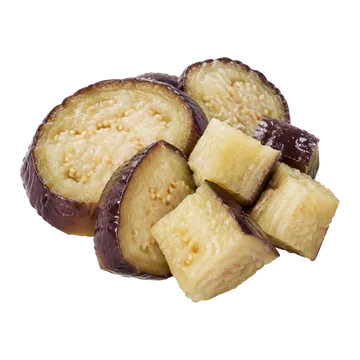 Eggplant, cooked
Nothing to watch: under the limit for a 85 g serving
More than anyone eatsNo realistic amount reaches the limit.Eating it daily comes to 85 g a day, which stays within the 28,000 g of room left before the limit.2.01 µg (raw basis) per 85 g servingCFIA chemical residue monitoring (2016–2023) · grade B ?
How it’s rated
The counted figure is 28,000 g a day, about 335 servings a day.
No cap: EFSA's 2020 tolerable daily intake for nickel is 13 µg/kg body weight/day, 910 µg/day for 70 kg. At 0.02364 µg/g (CFIA lower-bound mean, raw eggplant, 124 samples), about 38,489 g a day, eaten alone, would reach it, and because non-detects count as zero that is an upper bound on grams; one 85 g serving carries 2.01 µg. The FDA boiled samples (all non-detect at 40 µg/kg) are shown beside it, and nickel-sensitised people are not rated here.
Intake: one 85 g serving a day (HC TRA V.1), 70 kg adult · Level in the food: 23.6 µg/kg (lower-bound mean over all n, pooled by n (6 annex sets), n = 124)
Measured on: CFIA National Chemical Residue Monitoring Program metals, RAW fresh eggplant (commodity "Eggplant"), Annex B1 domestic and B2 import pooled by n over 6 annex sets: 2016-17 to 2018-19 [ppm], 2019-20 to 2021-22 [ppm], 2022-23 [µg/g]; Canada. Statistic: lower-bound mean over all n (non-detects as 0), recomputed from each set's n x lower bound mean. RAW BASIS: not a boiled-eggplant figure; no cooked-basis metals source exists (no TDS code, not in FDA TDS FY2018-20).
1 other measurement of this food
- US FDA TDS 2018-20, boiled and peeled
Nothing to watch: under the limit
More than anyone eatsNo realistic amount reaches the limit.Eating it daily comes to 85 g a day, which stays within the 17,000 g of room left before the limit.3.4 µg (upper bound, at the reporting limit) per 85 g servingUS FDA Total Diet Study (2018–2020) · grade A ?
How it’s rated
The counted figure is 17,000 g a day, about 197 servings a day.
No cap: EFSA's 2020 tolerable daily intake for nickel is 13 µg/kg body weight/day, 910 µg/day for 70 kg. All 6 FDA samples of boiled, peeled eggplant were non-detect, so the 40 µg/kg reporting limit stands in as an upper bound: at least 22,750 g a day, eaten alone, would reach the limit (a floor on grams). One 85 g serving carries at most 3.4 µg; this is shown beside the CFIA raw figure.
Intake: one 85 g serving a day (HC TRA V.1), 70 kg adult · Level in the food: 40 µg/kg (reporting limit (all 6 samples non-detect), n = 6)
Measured on: US FDA Total Diet Study FY2018-FY2020, TDS food 265 "Eggplant, fresh, peeled, boiled", n 6 samples, United States. COOKED basis (boiled, peeled). The summary prints mean N/A when every sample is a non-detect and does not state how non-detects enter a partial mean.
 Shrimp, cooked
Nothing to watch: under the limit for a 100 g serving
More than anyone eatsNo realistic amount reaches the limit.Eating it daily comes to 100 g a day, which stays within the 34,000 g of room left before the limit.1.97 µg per 100 g servingHealth Canada Total Diet Study, trace elements · grade A ?
How it’s rated
The counted figure is 34,000 g a day, about 340 servings a day.
No cap: EFSA's 2020 tolerable daily intake (TDI) for nickel is 13 µg/kg body weight/day, 910 µg a day for 70 kg. Eaten alone, about 46,100 g of cooked shrimp a day would reach it. Health Canada's mean is 19.72 ng/g (13 composites, 3 non-detects, so the mean is imprecise), and a serving carries 1.97 µg.
Intake: 100 g cooked (HC TRA I.3), one serving a day · Level in the food: 19.72 ng/g (mean of composites, n = 13)
Measured on: Health Canada Total Diet Study, DD04 'Shellfish (cooked shrimp)', as consumed, 13 composites 2000-2012, 3 non-detects (detection limit (detection limit) up to 456 ng/g, so the mean is imprecise); bilingual name 15.16 ng/g, n=3
 Coffee, brewed
Nothing to watch: under the limit for a 250 g serving
More than anyone eatsNo realistic amount reaches the limit.Eating it daily comes to 250 g a day, which stays within the 35,000 g of room left before the limit.4.8 µg per 250 g servingHealth Canada Total Diet Study, trace elements · grade A ?
How it’s rated
The counted figure is 35,000 g a day, about 140 servings a day.
No cap: nickel is rated against EFSA's tolerable daily intake of 13 µg/kg body weight/day (2020). The average adult already takes in 22-26% of it, under half, so a food would have to reach the limit on its own to matter. Eaten alone, about 47,490 g a day would reach it. A cup carries 4.80 µg, 0.53% of the limit, and adds 1.6% to 3.7% to the average adult's intake of 128-293 µg/day. For nickel-sensitised people EFSA counts a margin of exposure of 30 as low concern; the mean cup gives 62.8 and the highest composite (54.4 µg/kg) 22.1.
Intake: one 250 mL cup (250.25 g) a day, 70 kg adult · Level in the food: 19.162 µg/kg (mean (equal-weight), n = 16)
Measured on: Health Canada TDS KK04 coffee, as consumed, composites 2000-2018; 2 non-detects (detection limit (detection limit) 38, 39) stored as 0
1 other measurement of this food
- US FDA TDS 2018-20, brewed from ground, 3 samples
Nothing to watch: under the limit
More than anyone eatsNo realistic amount reaches the limit.Eating it daily comes to 250 g a day, which stays within the 21,000 g of room left before the limit.8 µg per 250 g servingUS FDA Total Diet Study (2018–2020) · grade A ?
How it’s rated
The counted figure is 21,000 g a day, about 84 servings a day.
No cap: nickel is rated against EFSA's tolerable daily intake of 13 µg/kg body weight/day (2020). The average adult already takes in 22-26% of it, under half, so a food would have to reach the limit on its own to matter. Eaten alone, about 28,440 g a day would reach it. A cup carries 8.0 µg, 0.88% of the limit, and adds 2.7% to 6.3% to the average adult's intake of 128-293 µg/day. For nickel-sensitised people EFSA counts a margin of exposure of 30 as low concern; the mean cup gives 37.6 and the highest sample (40 µg/kg) 30.1. This rests on only 3 samples.
Intake: one 250 mL cup (250.25 g) a day, 70 kg adult · Level in the food: 32 µg/kg (mean (standard deviation 9.3; range 22-40), n = 3)
Measured on: FDA TDS FY2018-2020, #305 'Coffee, brewed from ground', 3 samples, all detected, reporting limit 20 ppb
 Cherries, raw
Nothing to watch: under the limit for a 140 g serving
More than anyone eatsNo realistic amount reaches the limit.Eating it daily comes to 140 g a day, which stays within the 39,000 g of room left before the limit.2.391 µg per 140 g servingCFIA chemical residue monitoring (2016–2023) · grade B ?
How it’s rated
The counted figure is 39,000 g a day, about 281 servings a day.
No cap: EFSA's 2020 tolerable daily intake for nickel is 13 µg/kg body weight/day, 910 µg/day for 70 kg. At a lower-bound mean of 17.077 ng/g (CFIA, 108 samples, 37.0% non-detects), about 53,289 g a day eaten alone would reach it, an upper bound; a 140 g serving carries 2.39 µg.
Intake: one 140 g serving a day (HC TRA J.1), 70 kg adult · Level in the food: 17.077 ng/g (lower-bound mean over all n, n = 108)
Measured on: CFIA NCRMP annexes B1 (domestic) and B2 (import), fresh cherry commodity 'Cherry', 2016-17 to 2022-23, Canada; n 108 and positives 68 pooled by the script; lower-bound mean over all n (non-detects as 0); targeted inspection, not a random survey
 Pineapple, raw
Nothing to watch: under the limit for a 140 g serving
More than anyone eatsNo realistic amount reaches the limit.Eating it daily comes to 140 g a day, which stays within the 45,000 g of room left before the limit.2.1 µg per 140 g servingUS FDA Total Diet Study (2018–2020) · grade A ?
How it’s rated
The counted figure is 45,000 g a day, about 320 servings a day.
No cap: EFSA's 2020 tolerable daily intake (TDI) for nickel is 13 µg/kg body weight/day, 910 µg a day for 70 kg. Eaten alone, about 60,667 g of raw pineapple a day would reach it; that treats non-detects as zero, so it is an upper bound. The FDA mean is 15 µg/kg in 27 samples (74.1% non-detects), and a 140 g serving carries 2.1 µg.
Intake: one 140 g serving a day, 70 kg adult · Level in the food: 15 µg/kg (mean, n = 27)
Measured on: FDA Total Diet Study FY2018-2020, TDS food 396 'Pineapple, raw/frozen', US, 27 samples, 7 detects, reporting limit 40 ppb, max 91 ppb.
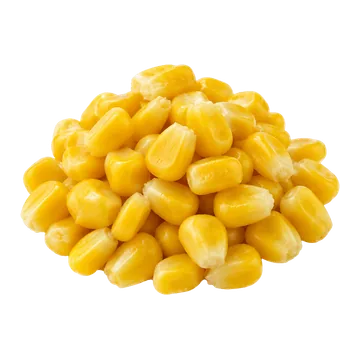 Sweet corn, frozen, cooked
Nothing to watch: under the limit for a 85 g serving
More than anyone eatsNo realistic amount reaches the limit.Eating it daily comes to 85 g a day, which stays within the 48,000 g of room left before the limit.1.19 µg per 85 g servingUS FDA Total Diet Study (2018–2020) · grade A ?
How it’s rated
The counted figure is 48,000 g a day, about 564 servings a day.
No cap: EFSA's 2020 tolerable daily intake for nickel is 13 µg/kg body weight/day, 910 µg a day for 70 kg. Eaten alone, about 65,000 g a day would reach it, on an FDA mean of 14 ppb for boiled frozen corn (5 of 27 detected, reporting limit 40 ppb, non-detects counted as zero). With mostly non-detects, the grams are an upper bound.
Intake: one 85 g serving a day, 70 kg adult · Level in the food: 14 ppb (mean, n = 27)
Measured on: FDA TDS FY2018-2020, 'Corn, frozen, boiled', 27 samples, 5 detected, 22 non-detects (reporting limit 40 ppb), max 160 ppb; mean treats non-detects as zero (lower bound)
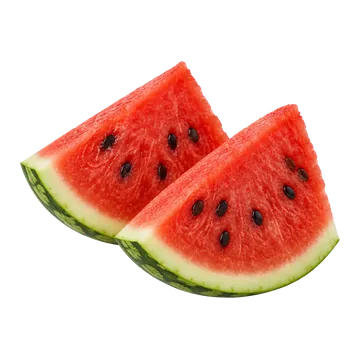 Watermelon, raw
Nothing to watch: under the limit for a 150 g serving
More than anyone eatsNo realistic amount reaches the limit.Eating it daily comes to 150 g a day, which stays within the 48,000 g of room left before the limit.2.1 µg per 150 g servingUS FDA Total Diet Study (2018–2020) · grade A ?
How it’s rated
The counted figure is 48,000 g a day, about 320 servings a day.
No cap: EFSA's 2020 tolerable daily intake (TDI) for nickel is 13 µg/kg body weight/day, 910 µg a day for 70 kg. Eaten alone, about 65,000 g of watermelon a day would reach it, on the lower-bound FDA mean of 0.014 µg/g (27 samples, 74.1% non-detects counted as zero; the 40 ppb reporting limit is above the mean). A serving carries 2.1 µg.
Intake: one serving a day, 70 kg adult · Level in the food: 14 µg/kg (mean, n = 27)
Measured on: FDA Total Diet Study FY2018-2020, TDS food 81 'Watermelon, raw/frozen', 27 samples, 7 detects, reporting limit 40 ppb, standard deviation 25, max 79 ppb.
 Cola
Nothing to watch: under the limit for a 391 g serving
More than anyone eatsNo realistic amount reaches the limit.Eating it daily comes to 391 g a day, which stays within the 63,000 g of room left before the limit.4.16 µg per 391 g servingHealth Canada Total Diet Study, trace elements · grade B ?
How it’s rated
The counted figure is 63,000 g a day, about 161 servings a day.
No cap: nickel is rated against EFSA's tolerable daily intake of 13 µg/kg body weight/day (2020). The average adult already takes in 22-26% of it, under half, so a food would have to reach the limit on its own to matter. Eaten alone, about 85,439 g a day would reach it (non-detects counted as zero, so the true figure is lower). One serving carries 4.16 µg, 0.46% of the tolerable intake, and adds 1.4% to 3.3% to the average adult intake of 128-293 µg/day.
Intake: one 375 mL reference amount (391.0 g at 1.0427 g/mL) a day, 70 kg adult · Level in the food: 10.651 µg/kg (mean (equal-weight, 16 composites), n = 16)
Measured on: Health Canada Total Diet Study trace elements, TDS code KK05 'Soft drinks, canned (Cola and lemon-lime (reg and diet))': ONE category composite covering regular AND diet cola and lemon-lime, so it is not cola-regular-specific (grade B). Composites 2000-2012 (n=13) and 2016-2018 (n=3), as consumed, equal-weight mean of all composites; non-detects stored as 0
 Diet cola
Nothing to watch: under the limit for a 375 g serving
More than anyone eatsNo realistic amount reaches the limit.Eating it daily comes to 375 g a day, which stays within the 63,000 g of room left before the limit.4 µg per 375 g servingHealth Canada Total Diet Study, trace elements · grade B ?
How it’s rated
The counted figure is 63,000 g a day, about 168 servings a day.
No cap: nickel is rated against EFSA's tolerable daily intake of 13 µg/kg body weight/day (2020). The average adult already takes in 22-26% of it, under half, so a food would have to reach the limit on its own to matter. Eaten alone, about 85,439 g a day would reach it (non-detects counted as zero, so the true figure is lower). One serving carries 4.00 µg, 0.44% of the tolerable intake, and adds 1.4-3.1% to the average adult intake of 128-293 µg/day.
Intake: one 375 mL reference amount (375.4 g at 1.00101 g/mL) a day, 70 kg adult · Level in the food: 10.651 µg/kg (mean (equal-weight, 16 composites), n = 16)
Measured on: Health Canada Total Diet Study trace elements, TDS code KK05 'Soft drinks, canned (Cola and lemon-lime (reg and diet))': ONE category composite covering regular AND diet cola and lemon-lime, so it is not cola-regular-specific (grade B). Composites 2000-2012 (n=13) and 2016-2018 (n=3), as consumed, equal-weight mean of all composites; non-detects stored as 0
 Mayonnaise
Nothing to watch: under the limit for a 14 g serving
More than anyone eatsNo realistic amount reaches the limit.Eating it daily comes to 14 g a day, which stays within the 73,000 g of room left before the limit.0.129 µg (mean, non-detects counted as zero) per 14 g servingHow it’s rated
The counted figure is 73,000 g a day, about 5,209 servings a day.
No cap: nickel is rated against EFSA's tolerable daily intake of 13 µg/kg body weight/day (2020). The average adult already takes in 22-26% of it, under half, so a food would have to reach the limit on its own to matter. A serving carries 0.129 µg, 0.014% of the limit; about 98,496 g a day would reach it, eaten alone. FDA Total Diet Study: 0 of 3 samples detected (reporting limit 40 ppb).
Intake: one 13.95 g (15 mL) serving a day, 70 kg adult · Level in the food: 9.239 ng/g (mean (equal-weight of composites; two sets pooled by n), n = 16)
Measured on: Health Canada Total Diet Study, food II04 'Mayonnaise', as consumed: 13 composites 2000-2012 (mean 9.443 ng/g, 4 non-detects) and 3 composites 2016-2018 (8.355, 0 non-detects), pooled by n.
 Ground turkey, 93% lean, cooked
Nothing to watch: under the limit for a 60 g serving
More than anyone eatsNo realistic amount reaches the limit.Eating it daily comes to 60 g a day, which stays within the 75,000 g of room left before the limit.0.534 µg per 60 g servingUS FDA Total Diet Study (2018–2020) · grade A ?
How it’s rated
The counted figure is 75,000 g a day, about 1,257 servings a day.
No cap: EFSA's 2020 tolerable daily intake (TDI) for nickel is 13 µg/kg body weight/day, 910 µg a day. Eaten alone, about 102,247 g of pan-cooked ground turkey a day would reach it. The FDA mean is 8.9 ppb across 27 composites (85.2% non-detects), so the mean is uncertain and its bound is not stated. A serving carries 0.534 µg.
Intake: 60 g cooked serving (HC TRA L.7) · Level in the food: 8.9 ppb (mean (27 composites; 4 detected, 23 non-detects; standard deviation 22, max 79 ppb), n = 27)
Measured on: US FDA TDS FY2018-2020, TDS food 390 'Turkey, ground, pan-cooked', reporting limit 40 ppb
 Bacon, pan-fried
Nothing to watch: under the limit for a 15 g serving
More than anyone eatsNo realistic amount reaches the limit.Eating it daily comes to 15 g a day, which stays within the 97,000 g of room left before the limit.0.103 µg per 15 g servingUS FDA Total Diet Study (2018–2020) · grade A ?
How it’s rated
The counted figure is 97,000 g a day, about 6,486 servings a day.
No cap: EFSA's 2020 tolerable daily intake for nickel is 13 µg/kg body weight/day, 910 µg a day for 70 kg. On the FDA value (6.9 µg/kg, a lower-bound mean), eaten alone about 131,884 g a day would reach it, an upper bound on the grams. On Health Canada's cured-pork mean (1,375 µg/kg, shared with ham) it would be 662 g a day. The two datasets differ about 200-fold and the cause is not established; 89% of FDA results fall below a reporting limit of 40 ppb, so the FDA mean rests on 3 detects and is a weak guide.
Intake: one 15 g reference serving a day, 70 kg adult · Level in the food: 6.9 µg/kg (mean of 27 composites (FDA), n = 27)
Measured on: US FDA Total Diet Study FY2018-2020, TDS food 20 'Pork bacon, oven-cooked', n 27 composites, as prepared; non-detects counted as zero (inferred, see notes); 3 detects, 24 non-detects, max 90 ppb, RL 40 ppb
1 other measurement of this food
- Health Canada TDS 2000-18, ham and bacon (cured pork)
Nothing to watch: under the limit
490greaches the limit in a dayafter the highest average adult intake we found660 g eaten alone, from zeroEating it daily comes to 15 g a day, which stays within the 490 g of room left before the limit.20.6 µg per 15 g servingHealth Canada Total Diet Study, trace elements · grade A ?
How it’s rated
No cap: shown beside the FDA figure, EFSA's 2020 tolerable daily intake for nickel is 13 µg/kg body weight/day, 910 µg a day for 70 kg. On Health Canada's cured-pork composites (ham and bacon, mean 1.375 µg/g), eaten alone about 662 g a day would reach it. The composites run from 0 to 6,965 µg/kg, and the FDA finds about 900 times less, which points to method or handling rather than the product.
Intake: one 15 g reference serving a day, 70 kg adult · Level in the food: 1,375.46 µg/kg (mean (equal-weight of composites; two label eras pooled by n), n = 16)
Measured on: Health Canada TDS food BB05 'Pork, cured (ham and bacon)', as consumed, Canada; 2000-2012 n 13 (mean 1407, 1 non-detect) + 2016-2018 n 3 (mean 1240) pooled by n (n 16); the 2003 composite is a non-detect stored as 0
 Mushrooms, raw
Nothing to watch: under the limit for a 85 g serving
More than anyone eatsNo realistic amount reaches the limit.Eating it daily comes to 85 g a day, which stays within the 110,000 g of room left before the limit.0.53 µg per 85 g servingHealth Canada Total Diet Study, trace elements · grade A ?
How it’s rated
The counted figure is 110,000 g a day, about 1,262 servings a day.
No cap: EFSA's 2020 tolerable daily intake (TDI) for nickel is 13 µg/kg body weight/day, 910 µg a day for 70 kg. Eaten alone, about 145,311 g a day would reach it; a serving carries 0.53 µg. Background intake is not shown.
Intake: one 85 g serving a day, 70 kg adult · Level in the food: 6.26 µg/kg (mean (equal-weight, two sets pooled by n), n = 16)
Measured on: Health Canada TDS GG12 mushrooms, as consumed: 2000-2012 n 13 (4 non-detects) and 2016-2018 n 3; lower bound
 Cod, baked
Nothing to watch: under the limit for a 100 g serving
More than anyone eatsNo realistic amount reaches the limit.Eating it daily comes to 100 g a day, which stays within the 390,000 g of room left before the limit.0.17 µg per 100 g servingUS FDA Total Diet Study (2018–2020) · grade A ?
How it’s rated
The counted figure is 390,000 g a day, about 3,949 servings a day.
No cap: EFSA's 2020 tolerable daily intake for nickel is 13 µg/kg body weight/day, 910 µg a day. On the FDA mean of 1.7 ppb for baked cod, about 535,000 g a day would reach it. The mean is uncertain: only 1 of 27 composites had a detect, at a reporting limit of 40 ppb.
Intake: 100 g cooked serving (HC TRA I.3) · Level in the food: 1.7 ppb (mean (27 composites; 1 detected, 26 non-detects; max 46 ppb), n = 27)
Measured on: US FDA TDS FY2018-2020, TDS food 387 'Cod, baked', reporting limit 40 ppb
 Ham, sliced
Nothing to watch: under the limit for a 55 g serving
More than anyone eatsNo realistic amount reaches the limit.Eating it daily comes to 55 g a day, which stays within the 450,000 g of room left before the limit.0.083 µg per 55 g servingUS FDA Total Diet Study (2018–2020) · grade B ?
How it’s rated
The counted figure is 450,000 g a day, about 8,137 servings a day.
No cap: EFSA's 2020 tolerable daily intake (TDI) for nickel is 13 µg/kg body weight/day, 910 µg a day for 70 kg. On the FDA figure for baked ham (mean 1.5 ppb, 27 samples, 1 detect), eaten alone about 606,667 g a day would reach it; that is an upper bound on grams, since the mean rests on a single result. Shown beside it: Health Canada's cured pork (ham and bacon) mean of 1,375 µg/kg would reach the limit at about 662 g a day. The two datasets differ about 900-fold; the cause is not established.
Intake: one 55 g reference serving a day, 70 kg adult · Level in the food: 1.5 µg/kg (mean of 27 composites (FDA, baked ham; 1 detect), n = 27)
Measured on: Health Canada TDS food BB05 'Pork, cured (ham and bacon)', as consumed, Canada; 2000-2012 n 13 (mean 1407, 1 non-detect) + 2016-2018 n 3 (mean 1240) pooled by n (n 16); the 2003 composite is a non-detect stored as 0
1 other measurement of this food
- Health Canada TDS 2000-18, ham and bacon (cured pork)
Nothing to watch: under the limit
490greaches the limit in a dayafter the highest average adult intake we found660 g eaten alone, from zeroEating it daily comes to 55 g a day, which stays within the 490 g of room left before the limit.75.7 µg per 55 g servingHealth Canada Total Diet Study, trace elements · grade A ?
How it’s rated
No cap: shown beside the FDA figure. EFSA's 2020 tolerable daily intake for nickel is 13 µg/kg body weight/day, 910 µg a day for 70 kg. On Health Canada's cured pork composites (ham and bacon) the mean is 1.375 µg/g, so about 662 g a day, eaten alone, would reach it; a 55 g serving carries 75.7 µg. The composites run from 0 to 6,965 µg/kg, and the FDA finds about 900 times less; the cause is not established.
Intake: one 55 g reference serving a day, 70 kg adult · Level in the food: 1,375.46 µg/kg (mean (equal-weight of composites; two label eras pooled by n), n = 16)
Measured on: Health Canada TDS food BB05 'Pork, cured (ham and bacon)', as consumed, Canada; 2000-2012 n 13 (mean 1407, 1 non-detect) + 2016-2018 n 3 (mean 1240) pooled by n (n 16); the 2003 composite is a non-detect stored as 0
 Deli turkey breast
Nothing to watch: under the limit for a 55 g serving
No gram figure for this foodWe have no measurement of this in this food, so there is no gram figure.US FDA Total Diet Study (2018–2020) · grade B ?
How it’s rated
No cap: EFSA's 2020 tolerable daily intake (TDI) for nickel is 13 µg/kg body weight/day, 910 µg a day. All 3 FDA composites were below the 40 ppb reporting limit, so there is no concentration to compute from and the grams figure is only bounded: above 22,750 g a day. For information, Health Canada's proxy for bologna and pastrami (not turkey) is 29.46 µg/kg (n 13) and 24.69 (n 3), pooled 28.6 µg/kg, which would give 31,856 g a day.
Intake: not applicable (flag)
Measured on: US FDA Total Diet Study FY2018-2020, TDS food 543 'Luncheon meat, turkey', n 3 composites, as prepared; non-detects counted as zero (inferred, see notes); 0 of 3 detected, RL 40 ppb
Sources
- Bethencourt-Barbuzano E, et al. Whey Protein Dietary Supplements: Metal Exposure Assessment and Risk Characterization. Nutrients 2023;15(16):3543 (PMC10458782) · doi:10.3390/nu15163543 · PMID 37630733
bethencourt-2023· full text read · CC BY - BfR MEAL Study: mercury, cadmium, lead and nickel in 356 foods prepared as consumed in Germany. Food Chemistry: X 2022, doi:10.1016/j.fochx.2022.100326 · PMID 35601214 · pmc.ncbi.nlm.nih.gov
bfr-meal-2022-hg-cd-pb-ni· full text read · open access (PMC) - CFIA, National Chemical Residue Monitoring Program, Annex B results summaries 2016-17 to 2022-23, Table B-1 domestic and B-2 imported (open.canada.ca datasets 95a14ca0, c87af563, a2ea8989, 9e5211c8, a5cb7c3c, 6567ac46, cf149850); positives-only means, no detection limits stated; pooled by us
cfia-ncrmp-annex-b-2016-2023· dataset · Government of Canada terms (Crown copyright) - CFIA, National Chemical Residue Monitoring Program, Annex B1 (domestic) and B2 (import) results summaries 2016-17 to 2022-23 (open.canada.ca); rows Watermelon, Melon - Cantaloupe, Cucumber, Zucchini
cfia-ncrmp-annexes-2016-2023· secondary source · Government of Canada terms (Crown copyright) - CFIA, Pesticides and Metals in Grain Products and Ready-to-Eat Meals, April 1, 2016 to March 31, 2017
cfia-pesticides-metals-2016-2017· dataset · Open Government Licence - Canada - EFSA CONTAM Panel (2020). Update of the risk assessment of nickel in food and drinking water. EFSA Journal 18(11):6268 (PMC7643711) · doi:10.2903/j.efsa.2020.6268 · doi.org
efsa-2020-nickel· full text read · CC BY (EFSA Journal) - US FDA. Total Diet Study elements FY2018-FY2020 summary (media159749).
fda-tds-elements-fy2018-2020· dataset · US public domain - US FDA, Total Diet Study FY2018–FY2020 Elements Report Supplement
fda-tds-fy2018-2020· dataset · US government work (17 USC 105), public domain - Health Canada, Canadian Total Diet Study – Trace Elements (2005–2018 composites)
hc-tds-trace-elements· dataset · Open Government Licence – Canada 2.0 - Health Canada. Total Diet Study trace elements, open.canada.ca dataset 83934503, English resource 9c988c19-07ae-4aa4-8496-84658b6b0c45; composites pooled as an equal-weight mean per TDS food code, non-detects stored as 0.
hc-tds-trace-elements-open-canada· secondary source · Open Government Licence - Canada