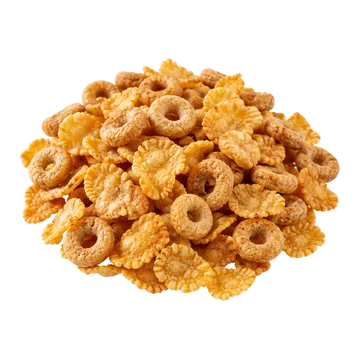
Breakfast cereal
Checked by us One serving: 30 g (about 1 cup) · 120 kcal
Lots of vitamin B12 and folate. Rich in 5 more nutrients: see Good for. Some of that may be added by the maker and depends on the brand: check your label.
Go easy: inorganic arsenic can add up.
Worth knowing for some people: gluten; gluten cross-contact.
Good for
How we counted this
What one serving (30 g) gives you.
Your body needs enough of each of these. Past enough, more doesn’t help. Amounts are what the food databases list, not what your body absorbs, unless a row says it was measured.
The words: “A lot” means one serving gives 20% or more of Health Canada’s daily amount, “Some” 10% to 19%, “A little” 2% to 9%, “Almost none” under 2%. Strongest word first; within a word, protein and fibre lead, then the biggest share. ?
A milligram (mg) is a thousandth of a gram, and a microgram (µg) a thousandth of a milligram: 1,000 µg make 1 mg.
- A lot
Vitamin B12
Your body needs it to make red blood cells and keep nerves working.
Some or all may be added by the maker, so it varies by brand: check your label.
Learn more
1.56 µg in one serving: 65% of the 2.4 µg a day.
Source: How much of it gets in hasn’t been measured for this food yet. NIH Office of Dietary Supplements, vitamin B12 fact sheet for health professionals
- A lot
Folate
Your body needs it to make DNA and to divide new cells.
Some or all may be added by the maker, so it varies by brand: check your label.
Learn more
207 µg in one serving: 52% of the 400 µg a day.
Source: How much of it gets in hasn’t been measured for this food yet. NIH Office of Dietary Supplements, folate fact sheet for health professionals
- A lot
Vitamin B6
Helps you use protein, and your brain needs it to make its chemical messengers.
Some or all may be added by the maker, so it varies by brand: check your label.
Learn more
0.51 mg in one serving: 39% of the 1.3 mg a day.
Source: How much of it gets in hasn’t been measured for this food yet. NIH Office of Dietary Supplements, vitamin B6 fact sheet for health professionals
- A lot
Riboflavin (B2)
Your cells use it to make energy and handle fats. It also helps turn tryptophan into niacin and activate vitamin B6.
Some or all may be added by the maker, so it varies by brand: check your label.
Learn more
0.45 mg in one serving: 35% of the 1.3 mg a day men need, 41% of the 1.1 mg women need. The word follows the smaller share, which is the share of the higher amount. ?
Source: How much of it gets in hasn’t been measured for this food yet. NIH Office of Dietary Supplements, riboflavin fact sheet for health professionals
- A lot
Thiamin (B1)
Your cells use it to get energy from food, and so to grow and work.
Some or all may be added by the maker, so it varies by brand: check your label.
Learn more
0.39 mg in one serving: 33% of the 1.2 mg a day men need, 35% of the 1.1 mg women need. The word follows the smaller share, which is the share of the higher amount. ?
Source: How much of it gets in hasn’t been measured for this food yet. NIH Office of Dietary Supplements, thiamin fact sheet for health professionals
- A lot
Iron
Carries oxygen in your blood.
Some or all may be added by the maker, so it varies by brand: check your label.
Learn more
4.65 mg in one serving: 58% of the 8 mg a day men need, 26% of the 18 mg women need. The word follows the smaller share, which is the share of the higher amount. ?
Listed amount only. 1 absorption study of this nutrient is on file for this food, but none is quoted yet. Each one is in The numbers, with the reason. See the studies
Source: NIH Office of Dietary Supplements, iron fact sheet for health professionals
- A lot
Vitamin A
Your eyes need it to see in dim light.
Some or all may be added by the maker, so it varies by brand: check your label.
Learn more
Getting enough matters; more than enough doesn’t sharpen your sight.
224 µg in one serving: 25% of the 900 µg a day men need, 32% of the 700 µg women need. The word follows the smaller share, which is the share of the higher amount. ?
Source: How much of it gets in hasn’t been measured for this food yet. NIH Office of Dietary Supplements, vitamin A fact sheet for health professionals
14 more nutrients below “a lot”
- A little
Selenium
Your thyroid uses it to make its hormones.
Some or all may be added by the maker, so it varies by brand: check your label.
Learn more
5.19 µg in one serving: 9% of the 55 µg a day.
Source: How much of it gets in hasn’t been measured for this food yet. NIH Office of Dietary Supplements, selenium fact sheet for health professionals
- A little
Vitamin D
Your body needs it to absorb calcium and keep your bones hard.
Some or all may be added by the maker, so it varies by brand: check your label.
Learn more
Your skin also makes it in sunlight, so food is only one of its sources.
1.02 µg in one serving: 7% of the 15 µg a day.
Source: How much of it gets in hasn’t been measured for this food yet. NIH Office of Dietary Supplements, vitamin D fact sheet for health professionals
- A little
Fibre
Keeps your gut moving.
Learn more
1.56 g in one serving: 4% of the 38 g a day men need, 6% of the 25 g women need. The word follows the smaller share, which is the share of the higher amount. ?
Source: How much of it gets in hasn’t been measured for this food yet. Institute of Medicine 2005, Dietary Reference Intakes for Energy, Carbohydrate, Fiber, Fat, Fatty Acids, Cholesterol, Protein, and Amino Acids
- A little
Protein
Your muscles, and every other tissue, are built and repaired from it.
Learn more
2.1 g in one serving: 4% of the 56 g a day men need, 5% of the 46 g women need. The word follows the smaller share, which is the share of the higher amount. ?
Source: How much of it gets in hasn’t been measured for this food yet. Institute of Medicine 2005, Dietary Reference Intakes for Energy, Carbohydrate, Fiber, Fat, Fatty Acids, Cholesterol, Protein, and Amino Acids
- A little
Zinc
Your immune system and healing wounds depend on it.
Some or all may be added by the maker, so it varies by brand: check your label.
Learn more
0.3 mg in one serving: 3% of the 11 mg a day men need, 4% of the 8 mg women need. The word follows the smaller share, which is the share of the higher amount. ?
Listed amount only. 1 absorption study of this nutrient is on file for this food, but none is quoted yet. Each one is in The numbers, with the reason. See the studies
Source: NIH Office of Dietary Supplements, zinc fact sheet for health professionals
- A little
Magnesium
Your muscles and nerves need it to work.
Some or all may be added by the maker, so it varies by brand: check your label.
Learn more
10.8 mg in one serving: 3% of the 400 mg a day men need, 3% of the 310 mg women need. The word follows the smaller share, which is the share of the higher amount. ?
Source: How much of it gets in hasn’t been measured for this food yet. NIH Office of Dietary Supplements, magnesium fact sheet for health professionals
- A little
Omega-3: ALA
The one omega-3 your body can’t make: it must come from food. Your cells build it into their membranes and burn it for energy.
Learn more
26.7 mg in one serving: 2% of the 1,600 mg a day men need, 2% of the 1,100 mg women need. The word follows the smaller share, which is the share of the higher amount. ?
Source: How much of it gets in hasn’t been measured for this food yet. NIH Office of Dietary Supplements, omega-3 fatty acids fact sheet for health professionals
- A little
Potassium
Your nerves, muscles and kidneys need it to work.
Some or all may be added by the maker, so it varies by brand: check your label.
Learn more
53.1 mg in one serving: 2% of the 3,400 mg a day men need, 2% of the 2,600 mg women need. The word follows the smaller share, which is the share of the higher amount. ?
Source: How much of it gets in hasn’t been measured for this food yet. NIH Office of Dietary Supplements, potassium fact sheet for health professionals
- Almost none
Choline
Your cells need it for their membranes, and to make acetylcholine, a messenger for memory, mood and muscle control.
Some or all may be added by the maker, so it varies by brand: check your label.
Learn more
5.58 mg in one serving: 1% of the 550 mg a day men need, 1% of the 425 mg women need. The word follows the smaller share, which is the share of the higher amount. ?
Source: How much of it gets in hasn’t been measured for this food yet. NIH Office of Dietary Supplements, choline fact sheet for health professionals
- Almost none
Vitamin E
Shields the fats in your cells from damage; your immune system uses it too.
Some or all may be added by the maker, so it varies by brand: check your label.
Learn more
0.15 mg in one serving: 1% of the 15 mg a day.
Source: How much of it gets in hasn’t been measured for this food yet. NIH Office of Dietary Supplements, vitamin E fact sheet for health professionals
- Almost none
Calcium
Builds your bones and teeth.
Some or all may be added by the maker, so it varies by brand: check your label.
Learn more
5.7 mg in one serving: 1% of the 1,000 mg a day.
Source: How much of it gets in hasn’t been measured for this food yet. NIH Office of Dietary Supplements, calcium fact sheet for health professionals
- Almost none
Vitamin K1
Your blood needs it to clot.
Some or all may be added by the maker, so it varies by brand: check your label.
Learn more
0.42 µg in one serving: under 1% of the 120 µg a day men need, under 1% of the 90 µg women need. The word follows the smaller share, which is the share of the higher amount. ?
Source: How much of it gets in hasn’t been measured for this food yet. NIH Office of Dietary Supplements, vitamin K fact sheet for health professionals
- Almost none
Vitamin C
Your body makes collagen with it, which wounds need to heal. It also helps you absorb iron from plants.
Some or all may be added by the maker, so it varies by brand: check your label.
Learn more
0.06 mg in one serving: under 1% of the 90 mg a day men need, under 1% of the 75 mg women need. The word follows the smaller share, which is the share of the higher amount. ?
Source: How much of it gets in hasn’t been measured for this food yet. NIH Office of Dietary Supplements, vitamin C fact sheet for health professionals
- Almost none
Omega-3: EPA + DHA
Long-chain omega-3s, built into your cell membranes. DHA is concentrated in your brain and retinas.
Learn more
0 mg in one serving: under 1% of the 250 mg a day.
Health Canada sets no daily amount for these fats, so the daily figure here is the European Food Safety Authority’s.
Source: How much of it gets in hasn’t been measured for this food yet. NIH Office of Dietary Supplements, omega-3 fatty acids fact sheet for health professionals
Missing from our databases for this food, so left out, not counted as zero: niacin.
Watch out
How we counted this
Long, high exposure raises the risk of skin cancer.
Learn more
+35–176% a serving a day adds to an average adult’s intake from all food
That share is for one serving, 30 g (about 1 cup), every day. Eaten once a week instead, the same serving adds a seventh as much: 5–25%, not 35–176%.
No amount of inorganic arsenic is proven harmless, so we compare with what people already take in instead of counting to a limit. We flag a food only when a daily serving would double that average.
“Go easy” here because agencies’ estimates of what an average adult takes in differ, and against the lowest of them a serving a day can double it.
One serving carries 3.69 µg
How we got this
The dataset’s rating: Go easy: can double average intake
May exceed: whether a daily serving doubles intake depends on where in EFSA's range of adult averages a person sits (EFSA 2021: 0.03-0.15 µg/kg body weight/day, 2.1-10.5 µg/day). 30 g of rice flakes at a mean of 123 µg/kg (lower bound; 113 European samples, 5% below detection, counted as zero) carries 3.69 µg, which adds 35% at the top of that range and 176% at the bottom, more than doubling it. No safe threshold is set for inorganic arsenic. Rice-based cereals carry 4 to 7 times the inorganic arsenic of corn flakes and of breakfast cereals in general.
EFSA, Chronic dietary exposure to inorganic arsenic. EFSA J 2021;19(1):6380 · grade A
Long, high exposure raises the risk of skin cancer.
Learn more
+29–143% a serving a day adds to an average adult’s intake from all food
That share is for one serving, 30 g (about 1 cup), every day. Eaten once a week instead, the same serving adds a seventh as much: 4.1–20%, not 29–143%.
No amount of inorganic arsenic is proven harmless, so we compare with what people already take in instead of counting to a limit. We flag a food only when a daily serving would double that average.
“Go easy” here because agencies’ estimates of what an average adult takes in differ, and against the lowest of them a serving a day can double it.
One serving carries 3 µg
How we got this
The dataset’s rating: Go easy: can double average intake
May exceed: whether a daily serving doubles intake depends on where in EFSA's range of adult averages a person sits (EFSA 2021: 0.03-0.15 µg/kg body weight/day, 2.1-10.5 µg/day). 30 g of loose popped breakfast rice at a mean of 100 µg/kg (lower bound; 62 European samples, 19% below detection, counted as zero) carries 3.00 µg, which adds 29% at the top of that range and 143% at the bottom, more than doubling it. No safe threshold is set for inorganic arsenic. Rice-based cereals carry 4 to 7 times the inorganic arsenic of corn flakes and of breakfast cereals in general.
EFSA, Chronic dietary exposure to inorganic arsenic. EFSA J 2021;19(1):6380 · grade A
Long, high exposure raises the risk of skin cancer.
Learn more
+27–134% a serving a day adds to an average adult’s intake from all food
That share is for one serving, 30 g (about 1 cup), every day. Eaten once a week instead, the same serving adds a seventh as much: 3.8–19%, not 27–134%.
No amount of inorganic arsenic is proven harmless, so we compare with what people already take in instead of counting to a limit. We flag a food only when a daily serving would double that average.
“Go easy” here because agencies’ estimates of what an average adult takes in differ, and against the lowest of them a serving a day can double it.
One serving carries 2.82 µg
How we got this
The dataset’s rating: Go easy: can double average intake
May exceed: whether a daily serving doubles intake depends on where in EFSA's range of adult averages a person sits (EFSA 2021: 0.03-0.15 µg/kg body weight/day, 2.1-10.5 µg/day). 30 g of popped rice with sugar at a mean of 94 µg/kg (lower bound; 8 European samples, none below detection) carries 2.82 µg, which adds 27% at the top of that range and 134% at the bottom, more than doubling it. No safe threshold is set for inorganic arsenic. Rice-based cereals carry 4 to 7 times the inorganic arsenic of corn flakes and of breakfast cereals in general.
EFSA, Chronic dietary exposure to inorganic arsenic. EFSA J 2021;19(1):6380 · grade A
You’d need about 4.7 servings in a day of this food alone to use up what the highest average adult intake we found leaves under the limit.
Learn more
One serving carries 4.54 µg
How we got this
A serving a day adds 9.3–22% to what an average adult already takes in: a share of that intake, not of the limit. With that serving every day, an average adult would be at about 77–85% of the limit.
The highest average adult intake we found already takes up about 70% of the limit. One serving a day fits in the room left.
Counted from zero, with no allowance for what adults already take in from other food, 460 g a day would reach the limit.
Why this rating: Eating it daily comes to 30 g a day, which stays within the 140 g of room left before the limit.
general_acute: 3,700 g in one sitting.
The dataset’s rating: Nothing to watch: under the limit
No cap: EFSA's group tolerable daily intake is 1 µg/kg body weight/day for deoxynivalenol and its three modified forms (3-Ac-DON, 15-Ac-DON, DON-3-glucoside). About 462 g of this cereal eaten alone would reach it in a day, and one 30 g serving adds 9.3-21.6% to the average adult's intake of 0.3-0.7 µg/kg body weight/day. CFIA measured deoxynivalenol only, so the true sum is higher and the true grams figure lower. Mean of 196 retail samples (CFIA targeted survey 2010-2011; 4% not detected, counted as zero). Acute check: EFSA's group acute reference dose is 8 µg/kg body weight per eating occasion (560 µg for 70 kg); a 30 g serving at the mean holds 4.5 µg, at the highest sample 62 µg.
2 other measurements of this food, same verdict
You’d need about 10 servings in a day of this food alone to use up what the highest average adult intake we found leaves under the limit.
Learn more
One serving carries 2 µg
How we got this
A serving a day adds 4.1–9.5% to what an average adult already takes in: a share of that intake, not of the limit. With that serving every day, an average adult would be at about 73–77% of the limit.
The highest average adult intake we found already takes up about 70% of the limit. One serving a day fits in the room left.
Counted from zero, with no allowance for what adults already take in from other food, 1,000 g a day would reach the limit.
Why this rating: Eating it daily comes to 30 g a day, which stays within the 310 g of room left before the limit.
general_acute: 8,400 g in one sitting.
The dataset’s rating: Nothing to watch: under the limit
No cap: EFSA's group tolerable daily intake is 1 µg/kg body weight/day for deoxynivalenol and its three modified forms (3-Ac-DON, 15-Ac-DON, DON-3-glucoside). About 1,048 g of this cereal eaten alone would reach it in a day, and one 30 g serving adds 4.1-9.5% to the average adult's intake of 0.3-0.7 µg/kg body weight/day. CFIA measured deoxynivalenol only, so the true sum is higher and the true grams figure lower. Mean of 312 retail samples labelled "Cereal - Other" (CFIA targeted survey 2011-2012; 10% not detected, counted as zero); whether that label matches the survey's breakfast-cereal group is not settled. It is a different survey year from the 2010-2011 figure and is not averaged with it. Acute check: EFSA's group acute reference dose is 8 µg/kg body weight per eating occasion (560 µg for 70 kg); a 30 g serving at the mean holds 2.0 µg, at the highest sample 12 µg.
You’d need about 6 servings in a day of this food alone to use up what the highest average adult intake we found leaves under the limit.
Learn more
One serving carries 3.46 µg
How we got this
A serving a day adds 7.1–17% to what an average adult already takes in: a share of that intake, not of the limit. With that serving every day, an average adult would be at about 75–82% of the limit.
The highest average adult intake we found already takes up about 70% of the limit. One serving a day fits in the room left.
Counted from zero, with no allowance for what adults already take in from other food, 610 g a day would reach the limit.
Why this rating: Eating it daily comes to 30 g a day, which stays within the 180 g of room left before the limit.
general_acute: 4,900 g in one sitting.
The dataset’s rating: Nothing to watch: under the limit
No cap: EFSA's group tolerable daily intake is 1 µg/kg body weight/day for deoxynivalenol and its three modified forms (3-Ac-DON, 15-Ac-DON, DON-3-glucoside). About 607 g of this cereal eaten alone would reach it in a day, and one 30 g serving adds 7.1-16.5% to the average adult's intake of 0.3-0.7 µg/kg body weight/day. CFIA measured deoxynivalenol only, so the true sum is higher and the true grams figure lower. Mean of 11 retail samples of corn-based cereal (CFIA targeted survey 2011-2012; 9% not detected, counted as zero); with so few samples it is indicative only. Acute check: EFSA's group acute reference dose is 8 µg/kg body weight per eating occasion (560 µg for 70 kg); a 30 g serving at the mean holds 3.5 µg, at the highest sample 7 µg.
You’d need about 5 servings a day, every day, of this food alone to double the inorganic arsenic an average adult already gets. No dose is known to be safe, so doubling is where we flag.
Learn more
A serving a day adds 4.9–24% to what an average adult already takes in. There is no limit to take a share of.
One serving carries 0.51 µg
How we got this
The dataset’s rating: Nothing to watch: doesn’t double average intake
No cap: no safe threshold is set for inorganic arsenic; EFSA's 2024 reference point is a benchmark dose lower limit (BMDL05) of 0.06 µg/kg body weight/day (skin cancer), and a margin of exposure near 1 raises a concern. Judged by what a daily serving adds to the average adult's intake. EFSA 2021 puts the adult average at 0.03-0.15 µg/kg body weight/day (2.1-10.5 µg/day). 30 g of breakfast cereals in general at a mean of 17 µg/kg (lower bound; 16 European samples, 31% below detection, counted as zero) carries 0.51 µg, adding 5-24%, short of doubling it.
EFSA, Chronic dietary exposure to inorganic arsenic. EFSA J 2021;19(1):6380 · grade A
3 other measurements of this food, same verdict
You’d need about 4 servings a day, every day, of this food alone to double the inorganic arsenic an average adult already gets. No dose is known to be safe, so doubling is where we flag.
Learn more
A serving a day adds 6–30% to what an average adult already takes in. There is no limit to take a share of.
One serving carries 0.63 µg
How we got this
The dataset’s rating: Nothing to watch: doesn’t double average intake
No cap: no safe threshold is set for inorganic arsenic; EFSA's 2024 reference point is a benchmark dose lower limit (BMDL05) of 0.06 µg/kg body weight/day (skin cancer), and a margin of exposure near 1 raises a concern. Judged by what a daily serving adds to the average adult's intake. EFSA 2021 puts the adult average at 0.03-0.15 µg/kg body weight/day (2.1-10.5 µg/day). 30 g of corn flakes at a mean of 21 µg/kg (lower bound; 11 European samples, 45% below detection, counted as zero) carries 0.63 µg, adding 6-30%, short of doubling it.
EFSA, Chronic dietary exposure to inorganic arsenic. EFSA J 2021;19(1):6380 · grade A
You’d need about 2 servings a day, every day, of this food alone to double the inorganic arsenic an average adult already gets. No dose is known to be safe, so doubling is where we flag.
Learn more
A serving a day adds 15–74% to what an average adult already takes in. There is no limit to take a share of.
One serving carries 1.56 µg
How we got this
The dataset’s rating: Nothing to watch: doesn’t double average intake
No cap: no safe threshold is set for inorganic arsenic; EFSA's 2024 reference point is a benchmark dose lower limit (BMDL05) of 0.06 µg/kg body weight/day (skin cancer), and a margin of exposure near 1 raises a concern. Judged by what a daily serving adds to the average adult's intake. EFSA 2021 puts the adult average at 0.03-0.15 µg/kg body weight/day (2.1-10.5 µg/day). 30 g of mixed cereal flakes at a mean of 52 µg/kg (lower bound; 6 European samples, 33% below detection, counted as zero) carries 1.56 µg, adding 15-74%, short of doubling it.
EFSA, Chronic dietary exposure to inorganic arsenic. EFSA J 2021;19(1):6380 · grade A
You’d need about 2 servings a day, every day, of this food alone to double the inorganic arsenic an average adult already gets. No dose is known to be safe, so doubling is where we flag.
Learn more
A serving a day adds 13–66% to what an average adult already takes in. There is no limit to take a share of.
One serving carries 1.38 µg
How we got this
The dataset’s rating: Nothing to watch: doesn’t double average intake
No cap: no safe threshold is set for inorganic arsenic; EFSA's 2024 reference point is a benchmark dose lower limit (BMDL05) of 0.06 µg/kg body weight/day (skin cancer), and a margin of exposure near 1 raises a concern. Judged by what a daily serving adds to the average adult's intake. EFSA 2021 puts the adult average at 0.03-0.15 µg/kg body weight/day (2.1-10.5 µg/day). 30 g of rice flakes with chocolate at a mean of 46 µg/kg (lower bound; 7 European samples, none below detection) carries 1.38 µg, adding 13-66%, short of doubling it. Rice-based cereals carry 4 to 7 times the inorganic arsenic of corn flakes and of breakfast cereals in general.
EFSA, Chronic dietary exposure to inorganic arsenic. EFSA J 2021;19(1):6380 · grade A
You’d need about 8 servings a day, every day, of this food alone to double the acrylamide an average adult already gets. No dose is known to be safe, so doubling is where we flag.
Learn more
A serving a day adds 5.8–13% to what an average adult already takes in. There is no limit to take a share of.
One serving carries 3.65 µg
How we got this
The dataset’s rating: Nothing to watch: doesn’t double average intake
No cap: no safe threshold is set for acrylamide (EFSA 2015 benchmark dose lower limit (BMDL10) 0.17 mg/kg body weight/day for tumours in mice). Judged by what a daily serving adds to the average adult's intake (EFSA: 0.4-0.9 µg/kg body weight/day, 28-63 µg/day): 30 g at 121.8 µg/kg (sample-weighted mean of 13 branded cereals, 43 samples; Health Canada 2012) carries 3.65 µg, adding 6-13% against the EFSA average and 18-33% against the Canadian adult mean of 0.157-0.288 µg/kg body weight/day (11-20 µg/day, Health Canada 2012). Under the doubling line either way. The pooled mean is Foodtopsy's own, not an agency figure.
Health Canada. Health Canada's Revised Exposure Assessment of Acrylamide in Food (2012), Appendix 1 and Table 2; page details 2020-12-24 · grade A
11 other measurements of this food, same verdict
You’d need about 4 servings a day, every day, of this food alone to double the acrylamide an average adult already gets. No dose is known to be safe, so doubling is where we flag.
Learn more
A serving a day adds 11–26% to what an average adult already takes in. There is no limit to take a share of.
One serving carries 7.19 µg
How we got this
The dataset’s rating: Nothing to watch: doesn’t double average intake
No cap: no safe threshold is set for acrylamide (EFSA 2015 benchmark dose lower limit (BMDL10) 0.17 mg/kg body weight/day for tumours in mice). Judged by what a daily serving adds to the average adult's intake (EFSA: 0.4-0.9 µg/kg body weight/day, 28-63 µg/day): a 30 g serving at the mean of 239.7 ppb carries 7.2 µg, adding 11-26%, under the doubling line. FDA survey of cereals sampled in 2011 (176 samples of 75 products, as sold, no milk; instant and steel-cut oatmeals removed as hot cereals). 13 samples were below the 10 ppb quantification limit.
You’d need about 8 servings a day, every day, of this food alone to double the acrylamide an average adult already gets. No dose is known to be safe, so doubling is where we flag.
Learn more
A serving a day adds 6–13% to what an average adult already takes in. There is no limit to take a share of.
One serving carries 3.75 µg
How we got this
The dataset’s rating: Nothing to watch: doesn’t double average intake
No cap: no safe threshold is set for acrylamide (EFSA 2015 benchmark dose lower limit (BMDL10) 0.17 mg/kg body weight/day for tumours in mice). Judged by what a daily serving adds to the average adult's intake (EFSA: 0.4-0.9 µg/kg body weight/day, 28-63 µg/day): a 30 g serving at the mean of 125.1 ppb carries 3.8 µg, adding 6-13%, under the doubling line. FDA survey of cereals sampled in 2015 (40 samples of 20 products, as sold, no milk). 19 samples were below the 10 ppb quantification limit.
You’d need about 6 servings a day, every day, of this food alone to double the acrylamide an average adult already gets. No dose is known to be safe, so doubling is where we flag.
Learn more
A serving a day adds 7.7–17% to what an average adult already takes in. There is no limit to take a share of.
One serving carries 4.83 µg
How we got this
The dataset’s rating: Nothing to watch: doesn’t double average intake
No cap: no safe threshold is set for acrylamide (EFSA 2015 benchmark dose lower limit (BMDL10) 0.17 mg/kg body weight/day for tumours in mice). Judged by what a daily serving adds to the average adult's intake (EFSA: 0.4-0.9 µg/kg body weight/day, 28-63 µg/day): a 30 g serving at the mean of 161 µg/kg carries 4.8 µg, adding 8-17%, under the doubling line. European data, not Canadian: EFSA 2015 (Table 6), breakfast cereals excluding porridge, 1,230 samples from 2007-2012; 14.0% below detection.
EFSA CONTAM Panel (2015) Scientific Opinion on acrylamide in food. EFSA Journal 13(6):4104 · grade A
You’d need about 9 servings a day, every day, of this food alone to double the acrylamide an average adult already gets. No dose is known to be safe, so doubling is where we flag.
Learn more
A serving a day adds 5.4–12% to what an average adult already takes in. There is no limit to take a share of.
One serving carries 3.42 µg
How we got this
The dataset’s rating: Nothing to watch: doesn’t double average intake
No cap: no safe threshold is set for acrylamide (EFSA 2015 benchmark dose lower limit (BMDL10) 0.17 mg/kg body weight/day for tumours in mice). Judged by what a daily serving adds to the average adult's intake (EFSA: 0.4-0.9 µg/kg body weight/day, 28-63 µg/day): a 30 g serving at the mean of 114 µg/kg carries 3.4 µg, adding 5-12%, far from doubling it. A 2025 study of 60 ready-to-eat breakfast cereals bought in Spain (not Canadian): range from below 15 µg/kg to 569 µg/kg, with 2 of 60 below the quantification limit. The highest sample, a puffed wheat-based cereal at 569 µg/kg, would give 17 µg a day.
You’d need about 14 servings a day, every day, of this food alone to double the acrylamide an average adult already gets. No dose is known to be safe, so doubling is where we flag.
Learn more
A serving a day adds 3.4–7.6% to what an average adult already takes in. There is no limit to take a share of.
One serving carries 2.14 µg
How we got this
The dataset’s rating: Nothing to watch: doesn’t double average intake
No cap: no safe threshold is set for acrylamide (EFSA 2015 benchmark dose lower limit (BMDL10) 0.17 mg/kg body weight/day for tumours in mice). Judged by what a daily serving adds to the average adult's intake (EFSA: 0.4-0.9 µg/kg body weight/day, 28-63 µg/day): a 30 g serving at the mean of 71.38 ppb carries 2.1 µg, adding 3-8%, under the doubling line. Corn flakes: FDA Total Diet Study results from 2003-2006 (13 results, non-detects counted as zero), kept as a trend row, not averaged with the newer surveys.
US FDA, Survey Data on Acrylamide in Food: Total Diet Study Results (FY2003-FY2006), page snapshot · grade B
You’d need about 19 servings a day, every day, of this food alone to double the acrylamide an average adult already gets. No dose is known to be safe, so doubling is where we flag.
Learn more
A serving a day adds 2.4–5.4% to what an average adult already takes in. There is no limit to take a share of.
One serving carries 1.53 µg
How we got this
The dataset’s rating: Nothing to watch: doesn’t double average intake
No cap: no safe threshold is set for acrylamide (EFSA 2015 benchmark dose lower limit (BMDL10) 0.17 mg/kg body weight/day for tumours in mice). Judged by what a daily serving adds to the average adult's intake (EFSA: 0.4-0.9 µg/kg body weight/day, 28-63 µg/day): a 30 g serving at the mean of 50.85 ppb carries 1.5 µg, adding 2-5%, under the doubling line. Crisped rice: FDA Total Diet Study results from 2003-2006 (13 results, non-detects counted as zero), kept as a trend row, not averaged with the newer surveys.
US FDA, Survey Data on Acrylamide in Food: Total Diet Study Results (FY2003-FY2006), page snapshot · grade B
You’d need about 6 servings a day, every day, of this food alone to double the acrylamide an average adult already gets. No dose is known to be safe, so doubling is where we flag.
Learn more
A serving a day adds 8.5–19% to what an average adult already takes in. There is no limit to take a share of.
One serving carries 5.32 µg
How we got this
The dataset’s rating: Nothing to watch: doesn’t double average intake
No cap: no safe threshold is set for acrylamide (EFSA 2015 benchmark dose lower limit (BMDL10) 0.17 mg/kg body weight/day for tumours in mice). Judged by what a daily serving adds to the average adult's intake (EFSA: 0.4-0.9 µg/kg body weight/day, 28-63 µg/day): a 30 g serving at the mean of 177.5 ppb carries 5.3 µg, adding 8-19%, under the doubling line. Oat ring cereal: FDA Total Diet Study results from 2003-2006 (13 results, non-detects counted as zero), kept as a trend row, not averaged with the newer surveys.
US FDA, Survey Data on Acrylamide in Food: Total Diet Study Results (FY2003-FY2006), page snapshot · grade B
You’d need about 8 servings a day, every day, of this food alone to double the acrylamide an average adult already gets. No dose is known to be safe, so doubling is where we flag.
Learn more
A serving a day adds 5.9–13% to what an average adult already takes in. There is no limit to take a share of.
One serving carries 3.72 µg
How we got this
The dataset’s rating: Nothing to watch: doesn’t double average intake
No cap: no safe threshold is set for acrylamide (EFSA 2015 benchmark dose lower limit (BMDL10) 0.17 mg/kg body weight/day for tumours in mice). Judged by what a daily serving adds to the average adult's intake (EFSA: 0.4-0.9 µg/kg body weight/day, 28-63 µg/day): a 30 g serving at the mean of 124.1 ppb carries 3.7 µg, adding 6-13%, under the doubling line. Raisin bran: FDA Total Diet Study results from 2003-2006 (13 results, non-detects counted as zero), kept as a trend row, not averaged with the newer surveys.
US FDA, Survey Data on Acrylamide in Food: Total Diet Study Results (FY2003-FY2006), page snapshot · grade B
You’d need about 7 servings a day, every day, of this food alone to double the acrylamide an average adult already gets. No dose is known to be safe, so doubling is where we flag.
Learn more
A serving a day adds 6.5–15% to what an average adult already takes in. There is no limit to take a share of.
One serving carries 4.08 µg
How we got this
The dataset’s rating: Nothing to watch: doesn’t double average intake
No cap: no safe threshold is set for acrylamide (EFSA 2015 benchmark dose lower limit (BMDL10) 0.17 mg/kg body weight/day for tumours in mice). Judged by what a daily serving adds to the average adult's intake (EFSA: 0.4-0.9 µg/kg body weight/day, 28-63 µg/day): a 30 g serving at the mean of 135.8 ppb carries 4.1 µg, adding 6-15%, under the doubling line. Shredded wheat: FDA Total Diet Study results from 2003-2006 (13 results, non-detects counted as zero), kept as a trend row, not averaged with the newer surveys.
US FDA, Survey Data on Acrylamide in Food: Total Diet Study Results (FY2003-FY2006), page snapshot · grade B
You’d need about 20 servings a day, every day, of this food alone to double the acrylamide an average adult already gets. No dose is known to be safe, so doubling is where we flag.
Learn more
A serving a day adds 2.3–5.2% to what an average adult already takes in. There is no limit to take a share of.
One serving carries 1.45 µg
How we got this
The dataset’s rating: Nothing to watch: doesn’t double average intake
No cap: no safe threshold is set for acrylamide (EFSA 2015 benchmark dose lower limit (BMDL10) 0.17 mg/kg body weight/day for tumours in mice). Judged by what a daily serving adds to the average adult's intake (EFSA: 0.4-0.9 µg/kg body weight/day, 28-63 µg/day): a 30 g serving at the mean of 48.23 ppb carries 1.4 µg, adding 2-5%, under the doubling line. Granola with raisins: FDA Total Diet Study results from 2003-2006 (13 results, non-detects counted as zero), kept as a trend row, not averaged with the newer surveys.
US FDA, Survey Data on Acrylamide in Food: Total Diet Study Results (FY2003-FY2006), page snapshot · grade B
You’d need about 38 servings a day, every day, of this food alone to double the acrylamide an average adult already gets. No dose is known to be safe, so doubling is where we flag.
Learn more
A serving a day adds 1.2–2.7% to what an average adult already takes in. There is no limit to take a share of.
One serving carries 0.74 µg
How we got this
The dataset’s rating: Nothing to watch: doesn’t double average intake
No cap: no safe threshold is set for acrylamide (EFSA 2015 benchmark dose lower limit (BMDL10) 0.17 mg/kg body weight/day for tumours in mice). Judged by what a daily serving adds to the average adult's intake (EFSA: 0.4-0.9 µg/kg body weight/day, 28-63 µg/day): a 30 g serving at the mean of 24.77 ppb carries 0.7 µg, adding 1-3%, under the doubling line. Presweetened fruit-flavoured cereal: FDA Total Diet Study results from 2003-2006 (13 results, non-detects counted as zero), kept as a trend row, not averaged with the newer surveys.
US FDA, Survey Data on Acrylamide in Food: Total Diet Study Results (FY2003-FY2006), page snapshot · grade B
Checked for nickel, cadmium, ochratoxin A and lead: fine at normal amounts.
You’d need more than 100 servings in a day of this food alone to use up what the highest average adult intake we found leaves under the limit.
Learn more
One serving carries 4.78 µg
How we got this
A serving a day adds 2–2.4% to what an average adult already takes in: a share of that intake, not of the limit. With that serving every day, an average adult would be at about 27% of the limit.
The highest average adult intake we found already takes up about 26% of the limit. One serving a day fits in the room left.
Counted from zero, with no allowance for what adults already take in from other food, 5,700 g a day would reach the limit.
Why this rating: Eating it daily comes to 30 g a day, which stays within the 4,200 g of room left before the limit.
The dataset’s rating: Nothing to watch: under the limit
No cap: nickel is rated against EFSA's tolerable daily intake of 13 µg/kg body weight/day (2020). The average adult already takes in 22-26% of it, under half, so a food would have to reach the limit on its own to matter. About 5,715 g of this cereal eaten alone would reach the limit in a day; one 30 g serving adds 1.6-3.7% to the average adult's intake. Source: corn-flake-type cereal (Health Canada Total Diet Study, mean of 16 composites 2000-2018). Separately, for people sensitised to nickel, EFSA set a margin of exposure against a lowest-effect level of 4.3 µg/kg body weight for acute flare-ups (not a limit) and named breakfast cereals among the main contributors to high-end acute exposure.
Health Canada, Canadian Total Diet Study – Trace Elements (2005–2018 composites) · grade A
8 other measurements of this food, same verdict
You’d need about 83 servings in a day of this food alone to use up what the highest average adult intake we found leaves under the limit.
Learn more
One serving carries 7.97 µg
How we got this
A serving a day adds 3.3–3.9% to what an average adult already takes in: a share of that intake, not of the limit. With that serving every day, an average adult would be at about 27% of the limit.
The highest average adult intake we found already takes up about 26% of the limit. One serving a day fits in the room left.
Counted from zero, with no allowance for what adults already take in from other food, 3,400 g a day would reach the limit.
Why this rating: Eating it daily comes to 30 g a day, which stays within the 2,500 g of room left before the limit.
The dataset’s rating: Nothing to watch: under the limit
No cap: nickel is rated against EFSA's tolerable daily intake of 13 µg/kg body weight/day (2020). The average adult already takes in 22-26% of it, under half, so a food would have to reach the limit on its own to matter. About 3,426 g of this cereal eaten alone would reach the limit in a day; one 30 g serving adds 2.7-6.2% to the average adult's intake. Source: rice and bran cereal (Health Canada Total Diet Study, a composite with no single grain, mean of 16 composites 2000-2018). Separately, for people sensitised to nickel, EFSA set a margin of exposure against a lowest-effect level of 4.3 µg/kg body weight for acute flare-ups (not a limit) and named breakfast cereals among the main contributors to high-end acute exposure.
Health Canada, Canadian Total Diet Study – Trace Elements (2005–2018 composites) · grade A
You’d need more than 100 servings in a day of this food alone to use up what the highest average adult intake we found leaves under the limit.
Learn more
One serving carries 2.16 µg
How we got this
A serving a day adds 0.7–1.7% to what an average adult already takes in: a share of that intake, not of the limit. With that serving every day, an average adult would be at about 26–27% of the limit.
The highest average adult intake we found already takes up about 26% of the limit. One serving a day fits in the room left.
Counted from zero, with no allowance for what adults already take in from other food, 13,000 g a day would reach the limit.
Why this rating: Eating it daily comes to 30 g a day, which stays within the 9,300 g of room left before the limit.
The dataset’s rating: Nothing to watch: under the limit
No cap: nickel is rated against EFSA's tolerable daily intake of 13 µg/kg body weight/day (2020). The average adult already takes in 22-26% of it, under half, so a food would have to reach the limit on its own to matter. About 12,639 g of this cereal eaten alone would reach the limit in a day; one 30 g serving adds 0.7-1.7% to the average adult's intake. Source: corn flakes (FDA Total Diet Study, mean of 3 samples). Separately, for people sensitised to nickel, EFSA set a margin of exposure against a lowest-effect level of 4.3 µg/kg body weight for acute flare-ups (not a limit) and named breakfast cereals among the main contributors to high-end acute exposure.
US FDA, Total Diet Study FY2018–FY2020 Elements Report Supplement · grade A
You’d need more than 100 servings in a day of this food alone to use up what the highest average adult intake we found leaves under the limit.
Learn more
One serving carries 4.5 µg
How we got this
A serving a day adds 1.9–2.2% to what an average adult already takes in: a share of that intake, not of the limit. With that serving every day, an average adult would be at about 27% of the limit.
The highest average adult intake we found already takes up about 26% of the limit. One serving a day fits in the room left.
Counted from zero, with no allowance for what adults already take in from other food, 6,100 g a day would reach the limit.
Why this rating: Eating it daily comes to 30 g a day, which stays within the 4,500 g of room left before the limit.
The dataset’s rating: Nothing to watch: under the limit
No cap: nickel is rated against EFSA's tolerable daily intake of 13 µg/kg body weight/day (2020). The average adult already takes in 22-26% of it, under half, so a food would have to reach the limit on its own to matter. About 6,067 g of this cereal eaten alone would reach the limit in a day; one 30 g serving adds 1.5-3.5% to the average adult's intake. Source: bran with raisins (FDA Total Diet Study, mean of 3 samples). Separately, for people sensitised to nickel, EFSA set a margin of exposure against a lowest-effect level of 4.3 µg/kg body weight for acute flare-ups (not a limit) and named breakfast cereals among the main contributors to high-end acute exposure.
US FDA, Total Diet Study FY2018–FY2020 Elements Report Supplement · grade A
You’d need more than 100 servings in a day of this food alone to use up what the highest average adult intake we found leaves under the limit.
Learn more
One serving carries 3.84 µg
How we got this
A serving a day adds 1.6–1.9% to what an average adult already takes in: a share of that intake, not of the limit. With that serving every day, an average adult would be at about 27% of the limit.
The highest average adult intake we found already takes up about 26% of the limit. One serving a day fits in the room left.
Counted from zero, with no allowance for what adults already take in from other food, 7,100 g a day would reach the limit.
Why this rating: Eating it daily comes to 30 g a day, which stays within the 5,200 g of room left before the limit.
The dataset’s rating: Nothing to watch: under the limit
No cap: nickel is rated against EFSA's tolerable daily intake of 13 µg/kg body weight/day (2020). The average adult already takes in 22-26% of it, under half, so a food would have to reach the limit on its own to matter. About 7,109 g of this cereal eaten alone would reach the limit in a day; one 30 g serving adds 1.3-3.0% to the average adult's intake. Source: crisped rice (FDA Total Diet Study, mean of 3 samples). Separately, for people sensitised to nickel, EFSA set a margin of exposure against a lowest-effect level of 4.3 µg/kg body weight for acute flare-ups (not a limit) and named breakfast cereals among the main contributors to high-end acute exposure.
US FDA, Total Diet Study FY2018–FY2020 Elements Report Supplement · grade A
You’d need about 9 servings in a day of this food alone to use up what the highest average adult intake we found leaves under the limit.
Learn more
One serving carries 76 µg
How we got this
A serving a day adds 32–37% to what an average adult already takes in: a share of that intake, not of the limit. With that serving every day, an average adult would be at about 35–36% of the limit.
The highest average adult intake we found already takes up about 26% of the limit. One serving a day fits in the room left.
Counted from zero, with no allowance for what adults already take in from other food, 360 g a day would reach the limit.
Why this rating: Eating it daily comes to 30 g a day, which stays within the 270 g of room left before the limit.
The dataset’s rating: Nothing to watch: under the limit
No cap: nickel is rated against EFSA's tolerable daily intake of 13 µg/kg body weight/day (2020). The average adult already takes in 22-26% of it, under half, so a food would have to reach the limit on its own to matter. About 359 g of this cereal eaten alone would reach the limit in a day; one 30 g serving adds 25.9-59.3% to the average adult's intake. Source: oat ring cereal (FDA Total Diet Study, mean of 3 samples). Oat-ring and granola cereals sit at 1.0-2.5 mg/kg, ten to thirty times the corn-flake, shredded-wheat and rice cereals, and no source says why. Separately, for people sensitised to nickel, EFSA set a margin of exposure against a lowest-effect level of 4.3 µg/kg body weight for acute flare-ups (not a limit) and named breakfast cereals among the main contributors to high-end acute exposure.
US FDA, Total Diet Study FY2018–FY2020 Elements Report Supplement · grade A
You’d need about 21 servings in a day of this food alone to use up what the highest average adult intake we found leaves under the limit.
Learn more
One serving carries 32 µg
How we got this
A serving a day adds 13–16% to what an average adult already takes in: a share of that intake, not of the limit. With that serving every day, an average adult would be at about 30% of the limit.
The highest average adult intake we found already takes up about 26% of the limit. One serving a day fits in the room left.
Counted from zero, with no allowance for what adults already take in from other food, 850 g a day would reach the limit.
Why this rating: Eating it daily comes to 30 g a day, which stays within the 630 g of room left before the limit.
The dataset’s rating: Nothing to watch: under the limit
No cap: nickel is rated against EFSA's tolerable daily intake of 13 µg/kg body weight/day (2020). The average adult already takes in 22-26% of it, under half, so a food would have to reach the limit on its own to matter. About 853 g of this cereal eaten alone would reach the limit in a day; one 30 g serving adds 10.9-25.0% to the average adult's intake. Source: granola (FDA Total Diet Study, mean of 3 samples). Oat-ring and granola cereals sit at 1.0-2.5 mg/kg, ten to thirty times the corn-flake, shredded-wheat and rice cereals, and no source says why. Separately, for people sensitised to nickel, EFSA set a margin of exposure against a lowest-effect level of 4.3 µg/kg body weight for acute flare-ups (not a limit) and named breakfast cereals among the main contributors to high-end acute exposure.
US FDA, Total Diet Study FY2018–FY2020 Elements Report Supplement · grade A
You’d need about 14 servings in a day of this food alone to use up what the highest average adult intake we found leaves under the limit.
Learn more
One serving carries 49 µg
How we got this
A serving a day adds 21–24% to what an average adult already takes in: a share of that intake, not of the limit. With that serving every day, an average adult would be at about 32–33% of the limit.
The highest average adult intake we found already takes up about 26% of the limit. One serving a day fits in the room left.
Counted from zero, with no allowance for what adults already take in from other food, 560 g a day would reach the limit.
Why this rating: Eating it daily comes to 30 g a day, which stays within the 410 g of room left before the limit.
The dataset’s rating: Nothing to watch: under the limit
No cap: nickel is rated against EFSA's tolerable daily intake of 13 µg/kg body weight/day (2020). The average adult already takes in 22-26% of it, under half, so a food would have to reach the limit on its own to matter. About 557 g of this cereal eaten alone would reach the limit in a day; one 30 g serving adds 16.7-38.2% to the average adult's intake. Source: honey oat ring cereal (FDA Total Diet Study, mean of 3 samples). Oat-ring and granola cereals sit at 1.0-2.5 mg/kg, ten to thirty times the corn-flake, shredded-wheat and rice cereals, and no source says why. Separately, for people sensitised to nickel, EFSA set a margin of exposure against a lowest-effect level of 4.3 µg/kg body weight for acute flare-ups (not a limit) and named breakfast cereals among the main contributors to high-end acute exposure.
US FDA, Total Diet Study FY2018–FY2020 Elements Report Supplement · grade A
You’d need more than 100 servings in a day of this food alone to use up what the highest average adult intake we found leaves under the limit.
Learn more
One serving carries 3.42 µg
How we got this
A serving a day adds 1.4–1.7% to what an average adult already takes in: a share of that intake, not of the limit. With that serving every day, an average adult would be at about 27% of the limit.
The highest average adult intake we found already takes up about 26% of the limit. One serving a day fits in the room left.
Counted from zero, with no allowance for what adults already take in from other food, 8,000 g a day would reach the limit.
Why this rating: Eating it daily comes to 30 g a day, which stays within the 5,900 g of room left before the limit.
The dataset’s rating: Nothing to watch: under the limit
No cap: nickel is rated against EFSA's tolerable daily intake of 13 µg/kg body weight/day (2020). The average adult already takes in 22-26% of it, under half, so a food would have to reach the limit on its own to matter. About 7,982 g of this cereal eaten alone would reach the limit in a day; one 30 g serving adds 1.2-2.7% to the average adult's intake. Source: frosted shredded wheat (FDA Total Diet Study, mean of 3 samples). Separately, for people sensitised to nickel, EFSA set a margin of exposure against a lowest-effect level of 4.3 µg/kg body weight for acute flare-ups (not a limit) and named breakfast cereals among the main contributors to high-end acute exposure.
US FDA, Total Diet Study FY2018–FY2020 Elements Report Supplement · grade A
You’d need more than 100 servings a day, every day, of this food alone to use up what an average adult’s intake leaves under the limit.
Learn more
One serving carries 0.06 µg
How we got this
A serving a day adds 0.3% to what an average adult already takes in: a share of that intake, not of the limit. With that serving every day, an average adult would be at about 71% of the limit.
An average adult already takes in about 71% of the limit. One serving a day fits in the room left.
Counted from zero, with no allowance for what adults already take in from other food, 91,000 g a week would reach the limit.
Why this rating: Eating it daily comes to 210 g a week, which stays within the 27,000 g of room left before the limit.
The dataset’s rating: Nothing to watch: under the limit
A daily serving adds 0.32% to an average adult's cadmium intake (EFSA 2012 adult median, 1.77 µg/kg body weight/week; Canadian adults in 2007: 1.2-1.75), far from doubling it, so no cap.
Health Canada, Canadian Total Diet Study – Trace Elements (2005–2018 composites) · grade A
8 other measurements of this food, same verdict
You’d need about 12 servings a day, every day, of this food alone to use up what an average adult’s intake leaves under the limit.
Learn more
One serving carries 0.6 µg
How we got this
A serving a day adds 3.4% to what an average adult already takes in: a share of that intake, not of the limit. With that serving every day, an average adult would be at about 73% of the limit.
An average adult already takes in about 71% of the limit. One serving a day fits in the room left.
Counted from zero, with no allowance for what adults already take in from other food, 8,800 g a week would reach the limit.
Why this rating: Eating it daily comes to 210 g a week, which stays within the 2,600 g of room left before the limit.
The dataset’s rating: Nothing to watch: under the limit
A daily serving adds 3.4% to an average adult's cadmium intake (EFSA 2012 adult median, 1.77 µg/kg body weight/week; Canadian adults in 2007: 1.2-1.75), far from doubling it, so no cap.
US FDA, Total Diet Study FY2018–FY2020 Elements Report Supplement · grade A
You’d need about 15 servings a day, every day, of this food alone to use up what an average adult’s intake leaves under the limit.
Learn more
One serving carries 0.48 µg
How we got this
A serving a day adds 2.7% to what an average adult already takes in: a share of that intake, not of the limit. With that serving every day, an average adult would be at about 73% of the limit.
An average adult already takes in about 71% of the limit. One serving a day fits in the room left.
Counted from zero, with no allowance for what adults already take in from other food, 11,000 g a week would reach the limit.
Why this rating: Eating it daily comes to 210 g a week, which stays within the 3,200 g of room left before the limit.
The dataset’s rating: Nothing to watch: under the limit
A daily serving adds 2.7% to an average adult's cadmium intake (EFSA 2012 adult median, 1.77 µg/kg body weight/week; Canadian adults in 2007: 1.2-1.75), far from doubling it, so no cap.
US FDA, Total Diet Study FY2018–FY2020 Elements Report Supplement · grade A
You’d need about 6.2 servings a day, every day, of this food alone to use up what an average adult’s intake leaves under the limit.
Learn more
One serving carries 1.14 µg
How we got this
A serving a day adds 6.4% to what an average adult already takes in: a share of that intake, not of the limit. With that serving every day, an average adult would be at about 75% of the limit.
An average adult already takes in about 71% of the limit. One serving a day fits in the room left.
Counted from zero, with no allowance for what adults already take in from other food, 4,600 g a week would reach the limit.
Why this rating: Eating it daily comes to 210 g a week, which stays within the 1,300 g of room left before the limit.
The dataset’s rating: Nothing to watch: under the limit
A daily serving adds 6.4% to an average adult's cadmium intake (EFSA 2012 adult median, 1.77 µg/kg body weight/week; Canadian adults in 2007: 1.2-1.75), far from doubling it, so no cap.
US FDA, Total Diet Study FY2018–FY2020 Elements Report Supplement · grade A
You’d need about 19 servings a day, every day, of this food alone to use up what an average adult’s intake leaves under the limit.
Learn more
One serving carries 0.39 µg
How we got this
A serving a day adds 2.2% to what an average adult already takes in: a share of that intake, not of the limit. With that serving every day, an average adult would be at about 72% of the limit.
An average adult already takes in about 71% of the limit. One serving a day fits in the room left.
Counted from zero, with no allowance for what adults already take in from other food, 13,000 g a week would reach the limit.
Why this rating: Eating it daily comes to 210 g a week, which stays within the 3,900 g of room left before the limit.
The dataset’s rating: Nothing to watch: under the limit
A daily serving adds 2.2% to an average adult's cadmium intake (EFSA 2012 adult median, 1.77 µg/kg body weight/week; Canadian adults in 2007: 1.2-1.75), far from doubling it, so no cap.
US FDA, Total Diet Study FY2018–FY2020 Elements Report Supplement · grade A
You’d need about 11 servings a day, every day, of this food alone to use up what an average adult’s intake leaves under the limit.
Learn more
One serving carries 0.66 µg
How we got this
A serving a day adds 3.7% to what an average adult already takes in: a share of that intake, not of the limit. With that serving every day, an average adult would be at about 73% of the limit.
An average adult already takes in about 71% of the limit. One serving a day fits in the room left.
Counted from zero, with no allowance for what adults already take in from other food, 8,000 g a week would reach the limit.
Why this rating: Eating it daily comes to 210 g a week, which stays within the 2,300 g of room left before the limit.
The dataset’s rating: Nothing to watch: under the limit
A daily serving adds 3.7% to an average adult's cadmium intake (EFSA 2012 adult median, 1.77 µg/kg body weight/week; Canadian adults in 2007: 1.2-1.75), far from doubling it, so no cap.
US FDA, Total Diet Study FY2018–FY2020 Elements Report Supplement · grade A
You’d need about 6.2 servings a day, every day, of this food alone to use up what an average adult’s intake leaves under the limit.
Learn more
One serving carries 1.2 µg
How we got this
A serving a day adds 6.8% to what an average adult already takes in: a share of that intake, not of the limit. With that serving every day, an average adult would be at about 76% of the limit.
An average adult already takes in about 71% of the limit. One serving a day fits in the room left.
Counted from zero, with no allowance for what adults already take in from other food, 4,400 g a week would reach the limit.
Why this rating: Eating it daily comes to 210 g a week, which stays within the 1,300 g of room left before the limit.
The dataset’s rating: Nothing to watch: under the limit
A daily serving adds 6.8% to an average adult's cadmium intake (EFSA 2012 adult median, 1.77 µg/kg body weight/week; Canadian adults in 2007: 1.2-1.75), far from doubling it, so no cap.
US FDA, Total Diet Study FY2018–FY2020 Elements Report Supplement · grade A
You’d need about 6.2 servings a day, every day, of this food alone to use up what an average adult’s intake leaves under the limit.
Learn more
One serving carries 1.18 µg
How we got this
A serving a day adds 6.7% to what an average adult already takes in: a share of that intake, not of the limit. With that serving every day, an average adult would be at about 76% of the limit.
An average adult already takes in about 71% of the limit. One serving a day fits in the room left.
Counted from zero, with no allowance for what adults already take in from other food, 4,500 g a week would reach the limit.
Why this rating: Eating it daily comes to 210 g a week, which stays within the 1,300 g of room left before the limit.
The dataset’s rating: Nothing to watch: under the limit
A daily serving adds 6.7% to an average adult's cadmium intake (EFSA 2012 adult median, 1.77 µg/kg body weight/week; Canadian adults in 2007: 1.2-1.75), far from doubling it, so no cap.
Health Canada, Canadian Total Diet Study – Trace Elements (2005–2018 composites) · grade A
You’d need more than 100 servings a day, every day, of this food alone to use up what an average adult’s intake leaves under the limit.
Learn more
One serving carries 0.04 µg
How we got this
A serving a day adds 0.2% to what an average adult already takes in: a share of that intake, not of the limit. With that serving every day, an average adult would be at about 71% of the limit.
An average adult already takes in about 71% of the limit. One serving a day fits in the room left.
Counted from zero, with no allowance for what adults already take in from other food, 130,000 g a week would reach the limit.
Why this rating: Eating it daily comes to 210 g a week, which stays within the 39,000 g of room left before the limit.
The dataset’s rating: Nothing to watch: under the limit
A daily serving adds 0.22% to an average adult's cadmium intake (EFSA 2012 adult median, 1.77 µg/kg body weight/week; Canadian adults in 2007: 1.2-1.75), far from doubling it, so no cap.
US FDA, Total Diet Study FY2018–FY2020 Elements Report Supplement · grade A
You’d need about 14 servings a day, every day, of this food alone to double the ochratoxin A an average adult already gets. No dose is known to be safe, so doubling is where we flag.
Learn more
A serving a day adds 2.1–7.6% to what an average adult already takes in. There is no limit to take a share of.
One serving carries 8.78 ng
How we got this
The dataset’s rating: Nothing to watch: doesn’t double average intake
No cap: no safe threshold is set for ochratoxin A (EFSA 2020 reference point: benchmark dose lower limit (BMDL10) 14.5 µg/kg body weight/day for kidney tumours in rats). Judged by what a daily serving adds to the average adult's intake (EFSA 2020: 1.66-6.03 ng/kg body weight/day, 116-422 ng/day): a 30 g serving at the mean of 0.2927 ng/g carries 8.8 ng, adding 2.1-7.6%, far from doubling it. Mean of 609 retail samples (CFIA, taken between 2012 and 2014; 41% not detected, counted as zero).
5 other measurements of this food, same verdict
You’d need about 14 servings a day, every day, of this food alone to double the ochratoxin A an average adult already gets. No dose is known to be safe, so doubling is where we flag.
Learn more
A serving a day adds 2.1–7.6% to what an average adult already takes in. There is no limit to take a share of.
One serving carries 8.78 ng
How we got this
The dataset’s rating: Nothing to watch: doesn’t double average intake
No cap: no safe threshold is set for ochratoxin A (EFSA 2020 reference point: benchmark dose lower limit (BMDL10) 14.5 µg/kg body weight/day for kidney tumours in rats). Judged by what a daily serving adds to the average adult's intake (EFSA 2020: 1.66-6.03 ng/kg body weight/day, 116-422 ng/day): a 30 g serving at the mean of 0.2926 ng/g carries 8.8 ng, adding 2.1-7.6%, far from doubling it. Mean of 196 retail samples (CFIA targeted survey 2010-2011; 38% not detected, counted as zero), a separate survey year not averaged with the later one.
You’d need more than 100 servings a day, every day, of this food alone to double the ochratoxin A an average adult already gets. No dose is known to be safe, so doubling is where we flag.
Learn more
A serving a day adds 0.1–0.2% to what an average adult already takes in. There is no limit to take a share of.
One serving carries 0.27 ng
How we got this
The dataset’s rating: Nothing to watch: doesn’t double average intake
No cap: no safe threshold is set for ochratoxin A (EFSA 2020 reference point: benchmark dose lower limit (BMDL10) 14.5 µg/kg body weight/day for kidney tumours in rats). Judged by what a daily serving adds to the average adult's intake (EFSA 2020: 1.66-6.03 ng/kg body weight/day, 116-422 ng/day): a 30 g serving at the mean of 0.009 ng/g carries 0.3 ng, adding 0.1-0.2%, far from doubling it. Health Canada Total Diet Study 2008-2009, cold corn-based cereals: 2 composites (0.007 and 0.011 ng/g).
You’d need about 35 servings a day, every day, of this food alone to double the ochratoxin A an average adult already gets. No dose is known to be safe, so doubling is where we flag.
Learn more
A serving a day adds 0.8–2.9% to what an average adult already takes in. There is no limit to take a share of.
One serving carries 3.32 ng
How we got this
The dataset’s rating: Nothing to watch: doesn’t double average intake
No cap: no safe threshold is set for ochratoxin A (EFSA 2020 reference point: benchmark dose lower limit (BMDL10) 14.5 µg/kg body weight/day for kidney tumours in rats). Judged by what a daily serving adds to the average adult's intake (EFSA 2020: 1.66-6.03 ng/kg body weight/day, 116-422 ng/day): a 30 g serving at the mean of 0.1105 ng/g carries 3.3 ng, adding 0.8-2.9%, far from doubling it. Health Canada Total Diet Study 2008-2009: 2 composites (0.11 and 0.111 ng/g). Health Canada's two files label this food differently: one calls it a cold oat-based cereal, the other quick-cook oatmeal, a hot cereal outside this category. Which is right is not settled.
You’d need about 15 servings a day, every day, of this food alone to double the ochratoxin A an average adult already gets. No dose is known to be safe, so doubling is where we flag.
Learn more
A serving a day adds 1.9–6.8% to what an average adult already takes in. There is no limit to take a share of.
One serving carries 7.95 ng
How we got this
The dataset’s rating: Nothing to watch: doesn’t double average intake
No cap: no safe threshold is set for ochratoxin A (EFSA 2020 reference point: benchmark dose lower limit (BMDL10) 14.5 µg/kg body weight/day for kidney tumours in rats). Judged by what a daily serving adds to the average adult's intake (EFSA 2020: 1.66-6.03 ng/kg body weight/day, 116-422 ng/day): a 30 g serving at the mean of 0.265 ng/g carries 8.0 ng, adding 1.9-6.8%, far from doubling it. Health Canada Total Diet Study 2008-2009, rice and bran cereal: 2 composites (0.266 and 0.264 ng/g), against 0.009 ng/g for the corn-based cereal.
You’d need about 22 servings a day, every day, of this food alone to double the ochratoxin A an average adult already gets. No dose is known to be safe, so doubling is where we flag.
Learn more
A serving a day adds 1.3–4.6% to what an average adult already takes in. There is no limit to take a share of.
One serving carries 5.4 ng
How we got this
The dataset’s rating: Nothing to watch: doesn’t double average intake
No cap: no safe threshold is set for ochratoxin A (EFSA 2020 reference point: benchmark dose lower limit (BMDL10) 14.5 µg/kg body weight/day for kidney tumours in rats). Judged by what a daily serving adds to the average adult's intake (EFSA 2020: 1.66-6.03 ng/kg body weight/day, 116-422 ng/day): a 30 g serving at the mean of 0.18 µg/kg carries 5.4 ng, adding 1.3-4.6%, far from doubling it. European data, not Canadian, shown beside the Canadian rows: EFSA 2020 (Table 16) lower-bound mean for breakfast cereals across 1,882 samples (upper bound 0.44 µg/kg).
EFSA CONTAM Panel, Risk assessment of ochratoxin A in food. EFSA J 2020;18:e6113 · grade A
You’d need more than 100 servings a day, every day, of this food alone to double the lead an average adult already gets. No dose is known to be safe, so doubling is where we flag.
Learn more
A serving a day adds 0.2% to what an average adult already takes in. There is no limit to take a share of.
One serving carries 0.07 µg
How we got this
The dataset’s rating: Nothing to watch: doesn’t double average intake
No cap: a daily 30 g serving carries 0.070 µg and adds 0.20% to the average adult's lead intake of 35 µg/day (EFSA), far from doubling it. No safe threshold is set for lead. Health Canada Total Diet Study, corn-flake-type cereal: mean of 17 composites (1999-2018), range 0 to 9.3 ng/g.
Health Canada, Canadian Total Diet Study – Trace Elements (2005–2018 composites) · grade A
6 other measurements of this food, same verdict
You’d need more than 100 servings a day, every day, of this food alone to double the lead an average adult already gets. No dose is known to be safe, so doubling is where we flag.
Learn more
A serving a day adds 0.5% to what an average adult already takes in. There is no limit to take a share of.
One serving carries 0.18 µg
How we got this
The dataset’s rating: Nothing to watch: doesn’t double average intake
No cap: a daily 30 g serving carries 0.184 µg and adds 0.50% to the average adult's lead intake of 35 µg/day (EFSA), far from doubling it. No safe threshold is set for lead. Health Canada Total Diet Study, rice and bran cereal (a composite, no single grain): mean of 17 composites (1999-2018), range 0.99 to 22.13 ng/g.
Health Canada, Canadian Total Diet Study – Trace Elements (2005–2018 composites) · grade A
You’d need more than 100 servings a day, every day, of this food alone to double the lead an average adult already gets. No dose is known to be safe, so doubling is where we flag.
Learn more
A serving a day adds 0.1% to what an average adult already takes in. There is no limit to take a share of.
One serving carries 0.05 µg
How we got this
The dataset’s rating: Nothing to watch: doesn’t double average intake
No cap: a daily 30 g serving carries 0.045 µg and adds 0.10% to the average adult's lead intake of 35 µg/day (EFSA), far from doubling it. No safe threshold is set for lead. FDA Total Diet Study, corn flakes: mean 1.5 ppb in 3 samples, 1 detected (reporting limit 4 ppb).
US FDA, Total Diet Study FY2018–FY2020 Elements Report Supplement · grade A
You’d need more than 100 servings a day, every day, of this food alone to double the lead an average adult already gets. No dose is known to be safe, so doubling is where we flag.
Learn more
A serving a day adds 0.6% to what an average adult already takes in. There is no limit to take a share of.
One serving carries 0.21 µg
How we got this
The dataset’s rating: Nothing to watch: doesn’t double average intake
No cap: a daily 30 g serving carries 0.213 µg and adds 0.60% to the average adult's lead intake of 35 µg/day (EFSA), far from doubling it. No safe threshold is set for lead. FDA Total Diet Study, bran with raisins: mean 7.1 ppb in 3 samples, 2 detected (reporting limit 4 ppb).
US FDA, Total Diet Study FY2018–FY2020 Elements Report Supplement · grade A
You’d need more than 100 servings a day, every day, of this food alone to double the lead an average adult already gets. No dose is known to be safe, so doubling is where we flag.
Learn more
A serving a day adds 0.1% to what an average adult already takes in. There is no limit to take a share of.
One serving carries 0.05 µg
How we got this
The dataset’s rating: Nothing to watch: doesn’t double average intake
No cap: a daily 30 g serving carries 0.045 µg and adds 0.10% to the average adult's lead intake of 35 µg/day (EFSA), far from doubling it. No safe threshold is set for lead. FDA Total Diet Study, crisped rice: mean 1.5 ppb in 3 samples, 1 detected (reporting limit 4 ppb).
US FDA, Total Diet Study FY2018–FY2020 Elements Report Supplement · grade A
You’d need more than 100 servings a day, every day, of this food alone to double the lead an average adult already gets. No dose is known to be safe, so doubling is where we flag.
Learn more
A serving a day adds 0.3% to what an average adult already takes in. There is no limit to take a share of.
One serving carries 0.11 µg
How we got this
The dataset’s rating: Nothing to watch: doesn’t double average intake
No cap: a daily 30 g serving carries 0.108 µg and adds 0.30% to the average adult's lead intake of 35 µg/day (EFSA), far from doubling it. No safe threshold is set for lead. FDA Total Diet Study, oat ring cereal: mean 3.6 ppb in 3 samples, 2 detected (reporting limit 4 ppb).
US FDA, Total Diet Study FY2018–FY2020 Elements Report Supplement · grade A
You’d need more than 100 servings a day, every day, of this food alone to double the lead an average adult already gets. No dose is known to be safe, so doubling is where we flag.
Learn more
A serving a day adds 0.5% to what an average adult already takes in. There is no limit to take a share of.
One serving carries 0.19 µg
How we got this
The dataset’s rating: Nothing to watch: doesn’t double average intake
No cap: a daily 30 g serving carries 0.192 µg and adds 0.50% to the average adult's lead intake of 35 µg/day (EFSA), far from doubling it. No safe threshold is set for lead. FDA Total Diet Study, honey oat ring cereal: mean 6.4 ppb in 3 samples, all detected (reporting limit 4 ppb).
US FDA, Total Diet Study FY2018–FY2020 Elements Report Supplement · grade A
For some people
Flagged for people with coeliac disease: cereals made from wheat, barley (malt) or rye contain gluten, and corn flakes made with barley malt are not gluten-free.
Flagged for people with coeliac disease: oats are commonly cross-contaminated with wheat or barley in the field and mill, so only oat cereals labelled gluten-free are safe.
Worth knowing
No limit applies, so none is rated.
Sugar
6.6 g of sugar in a 30 g serving, natural and added together.
Learn more
Shown, not rated. The food tables we read give total sugar, and few give added sugar, so the site can’t yet tell sugar added in making a food from the sugar in fruit or milk.
Also checked (nothing to act on) · 13
Noted for context, or not measured in this food yet.
Context only (total arsenic). Inorganic share not measured in this sheet.
Context only (total arsenic). Inorganic share not measured in this sheet.
Context only (total arsenic). Inorganic share not measured in this sheet.
Context only (total arsenic has no reference value). The inorganic share is rated on the inorganic arsenic rows from EFSA 2021.
Context only (total arsenic has no reference value). The inorganic share is rated on the inorganic arsenic rows from EFSA 2021.
Context only (total arsenic). Inorganic share not measured in this sheet.
Context only (total arsenic). Inorganic share not measured in this sheet.
Context only (total arsenic). Inorganic share not measured in this sheet.
Context only (total arsenic). Inorganic share not measured in this sheet.
Not measured in this food yet. Not rated: the only level found, 16-30 µg/kg, covers bread and rolls, raw pasta, breakfast cereals and fine bakery wares together, not breakfast cereal alone. No safe threshold is set for furan: EFSA 2017 gives a benchmark dose lower limit (BMDL10) of 0.064 mg/kg body weight/day (bile-duct lesions in rats), needs a margin of exposure of 100 or higher for that effect, and concluded that the calculated margins indicate a health concern. For scale only, 30 g at 16-30 µg/kg would add 0.5-0.9 µg a day, against JECFA-quoted adult mean exposures of 0.25-1.17 µg/kg body weight/day (17-82 µg/day).
Not measured in this food yet. Not rated: EFSA's 2023 acceptable daily intake for glyphosate is 0.5 mg/kg body weight/day (acute reference dose 1.5 mg/kg body weight), but no measured level in breakfast cereal as eaten has been found. CFIA's 2015-2017 tests cover ingredients, not cereal: mean 0.192 µg/g in oatmeal and 1.93 µg/g in wheat bran, the highest. For scale only, at that wheat-bran mean the limit would be reached at about 18 kg of the ingredient a day. A Lebanese study (2026) of 21 breakfast cereals reports a median of 44.45 ppb, but its method (ELISA) is less specific than the mass-spectrometry methods, so it is a pointer, not a figure.
Not measured in this food yet. Not rated: all 3 FDA Total Diet Study samples of granola were below the reporting limit (4 ppb), so no mean can be stated. A 30 g serving could carry at most 0.12 µg, 0.3% of the average adult's lead intake of 35 µg/day (EFSA), an upper bound that assumes every sample sat at the limit. No safe threshold is set for lead.
Not measured in this food yet. Not rated: all 3 FDA Total Diet Study samples of frosted shredded wheat were below the reporting limit (4 ppb), so no mean can be stated. A 30 g serving could carry at most 0.12 µg, 0.3% of the average adult's lead intake of 35 µg/day (EFSA), an upper bound that assumes every sample sat at the limit. No safe threshold is set for lead.
Better options
How we counted this
“Better” here always means better at something the row names: more of one nutrient, more nutrients per serving, or the goal you pick. It never means better in every way.
Every amount below is for the same weight, 30 g, the size of one serving of this food, so a swap compares like with like. A serving of another food can be bigger or smaller.
No swaps for vitamin B12 and folate: they may be added to this food, so its amount varies by brand.
Not compared: this food’s score counts added vitamins and minerals, and those vary by brand. Compare labels instead.
Your goal
Your goal changes only this list, not what the food gives you or what to watch.
Not compared: this food’s score counts added vitamins and minerals, and those vary by brand. Compare labels instead.
Building muscle: more protein and more calories, per 100 g.
Bacon, pan-fried would lead this list, but it’s left out (Worth knowing: dioxins and dioxin-like PCBs).
Why some foods aren’t suggested
Left out: Bacon, pan-fried (Worth knowing: dioxins and dioxin-like PCBs).
Bring a tracker export or describe your usual week. The same rules check all of it.
The numbers
Open every value
Name in the database: Breakfast cereal, ready-to-eat (category row; dry, as sold, eaten without milk)
How the serving was set: 30 g = 1 cup (Health Canada C.3: ready-to-eat breakfast cereals, puffed and coated, flaked, extruded, without fruit or nuts, weighing 20 g to 42 g per 250 mL). Other forms: C.2 15 g (puffed, uncoated, under 20 g per 250 mL); C.4 55 g (fruit and nut type, granola, biscuit type)
Listed nutrients, per 100 g
For each nutrient, the value this page uses is marked “used”. A row marked “second database” is another database’s figure for a matching food, kept so you can see how far databases disagree (they can differ in the samples analysed, lab methods and rounding). Its own cells are worked out from it, but none of the page’s words or scores are.
| Nutrient | Per serving | Per 100 calories | How | Source | Grade | |
|---|---|---|---|---|---|---|
| Omega-3: ALA | 0.089 g | 0.03 g | 0.02 g | listed used | US food database (USDA SR Legacy) #174663 | C |
| Calcium · may be added · varies by brand, check your label | 19 mg | 5.7 mg | 4.76 mg | listed used | US food database (USDA SR Legacy) #174663 | C |
| Carbohydrate | 82 g | 24.6 g | 20.55 g | listed used | US food database (USDA SR Legacy) #174663 | C |
| Choline · may be added · varies by brand, check your label | 18.6 mg | 5.58 mg | 4.66 mg | listed used | US food database (USDA SR Legacy) #174663 | C |
| Energy | 399 kcal | 119.7 kcal | – | FDC Energy (kcal) used | US food database (USDA SR Legacy) | – |
| Omega-3: EPA + DHA | 0 g | 0 g | 0 g | listed used | US food database (USDA SR Legacy) #174663 | C |
| Fat | 5.4 g | 1.62 g | 1.35 g | listed used | US food database (USDA SR Legacy) #174663 | C |
| Cholesterol | 0 mg | 0 mg | 0 mg | listed used | US food database (USDA SR Legacy) #174663 | C |
| Fatty acids, total saturated | 0.7 g | 0.21 g | 0.18 g | listed used | US food database (USDA SR Legacy) #174663 | C |
| Fibre | 5.2 g | 1.56 g | 1.3 g | listed used | US food database (USDA SR Legacy) #174663 | C |
| Folate · may be added · varies by brand, check your label | 690 µg | 207 µg | 172.93 µg | listed used | US food database (USDA SR Legacy) #174663 | C |
| Iron · may be added · varies by brand, check your label | 15.5 mg | 4.65 mg | 3.88 mg | listed used | US food database (USDA SR Legacy) #174663 | C |
| Magnesium · may be added · varies by brand, check your label | 36 mg | 10.8 mg | 9.02 mg | listed used | US food database (USDA SR Legacy) #174663 | C |
| Phosphorus · may be added · varies by brand, check your label | 140 mg | 42 mg | 35.09 mg | listed used | US food database (USDA SR Legacy) #174663 | C |
| Potassium · may be added · varies by brand, check your label | 177 mg | 53.1 mg | 44.36 mg | listed used | US food database (USDA SR Legacy) #174663 | C |
| Protein | 7 g | 2.1 g | 1.75 g | listed used | US food database (USDA SR Legacy) #174663 | C |
| Riboflavin (B2) · may be added · varies by brand, check your label | 1.5 mg | 0.45 mg | 0.38 mg | listed used | US food database (USDA SR Legacy) #174663 | C |
| Selenium · may be added · varies by brand, check your label | 17.3 µg | 5.19 µg | 4.34 µg | listed used | US food database (USDA SR Legacy) #174663 | C |
| Sodium | 483 mg | 144.9 mg | 121.05 mg | listed used | US food database (USDA SR Legacy) #174663 | C |
| Sugars | 21.9 g | 6.57 g | 5.49 g | listed used | US food database (USDA SR Legacy) #174663 | C |
| Thiamin (B1) · may be added · varies by brand, check your label | 1.3 mg | 0.39 mg | 0.33 mg | listed used | US food database (USDA SR Legacy) #174663 | C |
| Vitamin A · may be added · varies by brand, check your label | 748 µg | 224.4 µg | 187.47 µg | listed used | US food database (USDA SR Legacy) #174663 | C |
| Vitamin B12 · may be added · varies by brand, check your label | 5.2 µg | 1.56 µg | 1.3 µg | listed used | US food database (USDA SR Legacy) #174663 | C |
| Vitamin B6 · may be added · varies by brand, check your label | 1.7 mg | 0.51 mg | 0.43 mg | listed used | US food database (USDA SR Legacy) #174663 | C |
| Vitamin C · may be added · varies by brand, check your label | 0.2 mg | 0.06 mg | 0.05 mg | listed used | US food database (USDA SR Legacy) #174663 | C |
| Vitamin D · may be added · varies by brand, check your label | 3.4 µg | 1.02 µg | 0.85 µg | listed used | US food database (USDA SR Legacy) #174663 | C |
| Vitamin E · may be added · varies by brand, check your label | 0.5 mg | 0.15 mg | 0.13 mg | listed used | US food database (USDA SR Legacy) #174663 | C |
| Vitamin K1 · may be added · varies by brand, check your label | 1.4 µg | 0.42 µg | 0.35 µg | listed used | US food database (USDA SR Legacy) #174663 | C |
| Water | 2.9 g | 0.87 g | 0.73 g | listed used | US food database (USDA SR Legacy) #174663 | C |
| Zinc · may be added · varies by brand, check your label | 1 mg | 0.3 mg | 0.25 mg | listed used | US food database (USDA SR Legacy) #174663 | C |
| Nutrient | Per 100 g | Per serving | Per 100 calories | How | Source | Grade |
|---|---|---|---|---|---|---|
| Beta-carotene · may be added · varies by brand, check your label | 50 µg | 15 µg | 12.53 µg | listed used | US food database (USDA SR Legacy) #174663 | C |
| Copper · may be added · varies by brand, check your label | 0.14 mg | 0.04 mg | 0.04 mg | listed used | US food database (USDA SR Legacy) #174663 | C |
| Ash | 2.7 g | 0.81 g | 0.68 g | listed used | US food database (USDA SR Legacy) #174663 | C |
| Alcohol, ethyl | 0 g | 0 g | 0 g | listed used | US food database (USDA SR Legacy) #174663 | C |
| Caffeine | 0 mg | 0 mg | 0 mg | listed used | US food database (USDA SR Legacy) #174663 | C |
| Theobromine | 0 mg | 0 mg | 0 mg | listed used | US food database (USDA SR Legacy) #174663 | C |
| Energy | 1,670 kj | 501 kj | 418.55 kj | listed used | US food database (USDA SR Legacy) #174663 | C |
| Fluoride, F | 0 µg | 0 µg | 0 µg | from SR Legacy used | US food database (USDA SR Legacy) #173884 | C |
| Vitamin A, IU | 2,586 iu | 775.8 iu | 648.12 iu | listed used | US food database (USDA SR Legacy) #174663 | C |
| Carotene, alpha | 32 µg | 9.6 µg | 8.02 µg | listed used | US food database (USDA SR Legacy) #174663 | C |
| Vitamin D (D2 + D3), International Units | 138 iu | 41.4 iu | 34.59 iu | listed used | US food database (USDA SR Legacy) #174663 | C |
| Vitamin D3 (cholecalciferol) | 3.4 µg | 1.02 µg | 0.85 µg | listed used | US food database (USDA SR Legacy) #174663 | C |
| Cryptoxanthin, beta | 0 µg | 0 µg | 0 µg | listed used | US food database (USDA SR Legacy) #174663 | C |
| Lycopene | 0 µg | 0 µg | 0 µg | listed used | US food database (USDA SR Legacy) #174663 | C |
| Vitamin K (Dihydrophylloquinone) | 0 µg | 0 µg | 0 µg | from SR Legacy used | US food database (USDA SR Legacy) #173884 | C |
| Folic acid | 671 µg | 201.3 µg | 168.17 µg | listed used | US food database (USDA SR Legacy) #174663 | C |
| Folate, food | 19 µg | 5.7 µg | 4.76 µg | listed used | US food database (USDA SR Legacy) #174663 | C |
| Folate, DFE | 1,159 µg | 347.7 µg | 290.48 µg | listed used | US food database (USDA SR Legacy) #174663 | C |
| Vitamin E, added | 0 mg | 0 mg | 0 mg | listed used | US food database (USDA SR Legacy) #174663 | C |
| Vitamin B-12, added | 5.2 µg | 1.56 µg | 1.3 µg | listed used | US food database (USDA SR Legacy) #174663 | C |
| Fatty acids, total trans | 0 g | 0 g | 0 g | listed used | US food database (USDA SR Legacy) #174663 | C |
| SFA 4:0 | 0.001 g | 0 g | 0 g | listed used | US food database (USDA SR Legacy) #174663 | C |
| SFA 6:0 | 0 g | 0 g | 0 g | listed used | US food database (USDA SR Legacy) #174663 | C |
| SFA 8:0 | 0 g | 0 g | 0 g | listed used | US food database (USDA SR Legacy) #174663 | C |
| SFA 10:0 | 0 g | 0 g | 0 g | listed used | US food database (USDA SR Legacy) #174663 | C |
| SFA 12:0 | 0.002 g | 0 g | 0 g | listed used | US food database (USDA SR Legacy) #174663 | C |
| SFA 14:0 | 0.003 g | 0 g | 0 g | listed used | US food database (USDA SR Legacy) #174663 | C |
| SFA 16:0 | 0.562 g | 0.17 g | 0.14 g | listed used | US food database (USDA SR Legacy) #174663 | C |
| SFA 18:0 | 0.13 g | 0.04 g | 0.03 g | listed used | US food database (USDA SR Legacy) #174663 | C |
| MUFA 18:1 | 2.678 g | 0.8 g | 0.67 g | listed used | US food database (USDA SR Legacy) #174663 | C |
| PUFA 18:2 | 1.611 g | 0.48 g | 0.4 g | listed used | US food database (USDA SR Legacy) #174663 | C |
| PUFA 18:3 | 0.089 g | 0.03 g | 0.02 g | listed used | US food database (USDA SR Legacy) #174663 | C |
| PUFA 20:4 | 0 g | 0 g | 0 g | listed used | US food database (USDA SR Legacy) #174663 | C |
| PUFA 22:6 n-3 (DHA) | 0 g | 0 g | 0 g | listed used | US food database (USDA SR Legacy) #174663 | C |
| MUFA 16:1 | 0.005 g | 0 g | 0 g | listed used | US food database (USDA SR Legacy) #174663 | C |
| PUFA 18:4 | 0 g | 0 g | 0 g | listed used | US food database (USDA SR Legacy) #174663 | C |
| MUFA 20:1 | 0.015 g | 0 g | 0 g | listed used | US food database (USDA SR Legacy) #174663 | C |
| PUFA 20:5 n-3 (EPA) | 0 g | 0 g | 0 g | listed used | US food database (USDA SR Legacy) #174663 | C |
| MUFA 22:1 | 0.002 g | 0 g | 0 g | listed used | US food database (USDA SR Legacy) #174663 | C |
| PUFA 22:5 n-3 (DPA) | 0 g | 0 g | 0 g | listed used | US food database (USDA SR Legacy) #174663 | C |
| Fatty acids, total monounsaturated | 2.7 g | 0.81 g | 0.68 g | listed used | US food database (USDA SR Legacy) #174663 | C |
| Fatty acids, total polyunsaturated | 1.7 g | 0.51 g | 0.43 g | listed used | US food database (USDA SR Legacy) #174663 | C |
| Lutein + zeaxanthin | 787 µg | 236.1 µg | 197.24 µg | listed used | US food database (USDA SR Legacy) #174663 | C |
| Manganese · may be added · varies by brand, check your label | 3.563 mg | 1.07 mg | 0.89 mg | from SR Legacy used | US food database (USDA SR Legacy) #173884 | C |
| Niacin (B3, preformed) · may be added · varies by brand, check your label | 17.2 mg | 5.16 mg | 4.31 mg | listed used | US food database (USDA SR Legacy) #174663 | C |
| Retinol · may be added · varies by brand, check your label | 743 µg | 222.9 µg | 186.22 µg | listed used | US food database (USDA SR Legacy) #174663 | C |
Change the amount to rescale the first column. Nutrients a database doesn't list are missing, not zero.
Absorption studies
Studies of how much of a nutrient gets in; those done in animals are marked. This page quotes a figure only from a study that passes our screen: adults, graded A, of this food in this preparation, with a test dose on record and a source that has passed our evidence check. The exception is calcium on our calcium card: its figure comes from the card’s own study, checked with the card, and is marked “used” even where that study misses a step of this screen. The others are listed so nothing is hidden, each with the first check it fails.
No study of this food passes the screen yet, so no absorption figure is quoted.
| Study | Nutrient | Absorbed | Test dose | People | Grade | On this page |
|---|---|---|---|---|---|---|
| Zheng 1993: zinc from a ready-to-eat high-fibre breakfast cereal (whole-gut lavage) high-fibre RTE cereal (brand not stated) · ready-to-eat high-fibre breakfast cereal as the test food; brand, whether milk was added and the exact preparation not stated abstract only | Zinc | 14.7 % | 4 mg | 8 | A | Not used: we haven’t confirmed how the food was prepared in this study. |
| Fairweather-Tait 1995: iron from Weetabix whole-wheat breakfast cereal, infants (erythrocyte incorporation, extrinsic 57Fe/58Fe ferrous sulfate label) Weetabix (whether its own iron is fortified is not stated) · Weetabix whole-wheat breakfast cereal labelled extrinsically with enriched ferrous sulfate and fed with an ascorbic-acid-free drink (the 3.0% is the baseline figure; "a 2-fold increase" with a 50 mg ascorbic acid drink) · load not reported abstract only | Iron | 3 % | not reported | 10 | A | Not used: we haven’t confirmed how the food was prepared in this study. |
Hazard rows as the dataset rates them
- Acrylamide · Nothing to watch: doesn’t double average intake · No cap: no safe threshold is set for acrylamide (EFSA 2015 benchmark dose lower limit (BMDL10) 0.17 mg/kg body weight/day for tumours in mice). Judged by what a daily serving adds to the average adult's intake (EFSA: 0.4-0.9 µg/kg body weight/day, 28-63 µg/day): a 30 g serving at the mean of 239.7 ppb carries 7.2 µg, adding 11-26%, under the doubling line. FDA survey of cereals sampled in 2011 (176 samples of 75 products, as sold, no milk; instant and steel-cut oatmeals removed as hot cereals). 13 samples were below the 10 ppb quantification limit. · FDA 2011–2015 · A
- Acrylamide · Nothing to watch: doesn’t double average intake · No cap: no safe threshold is set for acrylamide (EFSA 2015 benchmark dose lower limit (BMDL10) 0.17 mg/kg body weight/day for tumours in mice). Judged by what a daily serving adds to the average adult's intake (EFSA: 0.4-0.9 µg/kg body weight/day, 28-63 µg/day): a 30 g serving at the mean of 125.1 ppb carries 3.8 µg, adding 6-13%, under the doubling line. FDA survey of cereals sampled in 2015 (40 samples of 20 products, as sold, no milk). 19 samples were below the 10 ppb quantification limit. · FDA 2011–2015 · A
- Acrylamide · Nothing to watch: doesn’t double average intake · No cap: no safe threshold is set for acrylamide (EFSA 2015 benchmark dose lower limit (BMDL10) 0.17 mg/kg body weight/day for tumours in mice). Judged by what a daily serving adds to the average adult's intake (EFSA: 0.4-0.9 µg/kg body weight/day, 28-63 µg/day): a 30 g serving at the mean of 161 µg/kg carries 4.8 µg, adding 8-17%, under the doubling line. European data, not Canadian: EFSA 2015 (Table 6), breakfast cereals excluding porridge, 1,230 samples from 2007-2012; 14.0% below detection. · EFSA 2015 · A
- Acrylamide · Nothing to watch: doesn’t double average intake · No cap: no safe threshold is set for acrylamide (EFSA 2015 benchmark dose lower limit (BMDL10) 0.17 mg/kg body weight/day for tumours in mice). Judged by what a daily serving adds to the average adult's intake (EFSA: 0.4-0.9 µg/kg body weight/day, 28-63 µg/day): a 30 g serving at the mean of 114 µg/kg carries 3.4 µg, adding 5-12%, far from doubling it. A 2025 study of 60 ready-to-eat breakfast cereals bought in Spain (not Canadian): range from below 15 µg/kg to 569 µg/kg, with 2 of 60 below the quantification limit. The highest sample, a puffed wheat-based cereal at 569 µg/kg, would give 17 µg a day. · Mesias 2025 · B
- Acrylamide · Nothing to watch: doesn’t double average intake · No cap: no safe threshold is set for acrylamide (EFSA 2015 benchmark dose lower limit (BMDL10) 0.17 mg/kg body weight/day for tumours in mice). Judged by what a daily serving adds to the average adult's intake (EFSA: 0.4-0.9 µg/kg body weight/day, 28-63 µg/day): a 30 g serving at the mean of 71.38 ppb carries 2.1 µg, adding 3-8%, under the doubling line. Corn flakes: FDA Total Diet Study results from 2003-2006 (13 results, non-detects counted as zero), kept as a trend row, not averaged with the newer surveys. · FDA 2003–2006 · B
- Acrylamide · Nothing to watch: doesn’t double average intake · No cap: no safe threshold is set for acrylamide (EFSA 2015 benchmark dose lower limit (BMDL10) 0.17 mg/kg body weight/day for tumours in mice). Judged by what a daily serving adds to the average adult's intake (EFSA: 0.4-0.9 µg/kg body weight/day, 28-63 µg/day): a 30 g serving at the mean of 50.85 ppb carries 1.5 µg, adding 2-5%, under the doubling line. Crisped rice: FDA Total Diet Study results from 2003-2006 (13 results, non-detects counted as zero), kept as a trend row, not averaged with the newer surveys. · FDA 2003–2006 · B
- Acrylamide · Nothing to watch: doesn’t double average intake · No cap: no safe threshold is set for acrylamide (EFSA 2015 benchmark dose lower limit (BMDL10) 0.17 mg/kg body weight/day for tumours in mice). Judged by what a daily serving adds to the average adult's intake (EFSA: 0.4-0.9 µg/kg body weight/day, 28-63 µg/day): a 30 g serving at the mean of 177.5 ppb carries 5.3 µg, adding 8-19%, under the doubling line. Oat ring cereal: FDA Total Diet Study results from 2003-2006 (13 results, non-detects counted as zero), kept as a trend row, not averaged with the newer surveys. · FDA 2003–2006 · B
- Acrylamide · Nothing to watch: doesn’t double average intake · No cap: no safe threshold is set for acrylamide (EFSA 2015 benchmark dose lower limit (BMDL10) 0.17 mg/kg body weight/day for tumours in mice). Judged by what a daily serving adds to the average adult's intake (EFSA: 0.4-0.9 µg/kg body weight/day, 28-63 µg/day): a 30 g serving at the mean of 124.1 ppb carries 3.7 µg, adding 6-13%, under the doubling line. Raisin bran: FDA Total Diet Study results from 2003-2006 (13 results, non-detects counted as zero), kept as a trend row, not averaged with the newer surveys. · FDA 2003–2006 · B
- Acrylamide · Nothing to watch: doesn’t double average intake · No cap: no safe threshold is set for acrylamide (EFSA 2015 benchmark dose lower limit (BMDL10) 0.17 mg/kg body weight/day for tumours in mice). Judged by what a daily serving adds to the average adult's intake (EFSA: 0.4-0.9 µg/kg body weight/day, 28-63 µg/day): a 30 g serving at the mean of 135.8 ppb carries 4.1 µg, adding 6-15%, under the doubling line. Shredded wheat: FDA Total Diet Study results from 2003-2006 (13 results, non-detects counted as zero), kept as a trend row, not averaged with the newer surveys. · FDA 2003–2006 · B
- Acrylamide · Nothing to watch: doesn’t double average intake · No cap: no safe threshold is set for acrylamide (EFSA 2015 benchmark dose lower limit (BMDL10) 0.17 mg/kg body weight/day for tumours in mice). Judged by what a daily serving adds to the average adult's intake (EFSA: 0.4-0.9 µg/kg body weight/day, 28-63 µg/day): a 30 g serving at the mean of 48.23 ppb carries 1.4 µg, adding 2-5%, under the doubling line. Granola with raisins: FDA Total Diet Study results from 2003-2006 (13 results, non-detects counted as zero), kept as a trend row, not averaged with the newer surveys. · FDA 2003–2006 · B
- Acrylamide · Nothing to watch: doesn’t double average intake · No cap: no safe threshold is set for acrylamide (EFSA 2015 benchmark dose lower limit (BMDL10) 0.17 mg/kg body weight/day for tumours in mice). Judged by what a daily serving adds to the average adult's intake (EFSA: 0.4-0.9 µg/kg body weight/day, 28-63 µg/day): a 30 g serving at the mean of 24.77 ppb carries 0.7 µg, adding 1-3%, under the doubling line. Presweetened fruit-flavoured cereal: FDA Total Diet Study results from 2003-2006 (13 results, non-detects counted as zero), kept as a trend row, not averaged with the newer surveys. · FDA 2003–2006 · B
- Acrylamide · Nothing to watch: doesn’t double average intake · No cap: no safe threshold is set for acrylamide (EFSA 2015 benchmark dose lower limit (BMDL10) 0.17 mg/kg body weight/day for tumours in mice). Judged by what a daily serving adds to the average adult's intake (EFSA: 0.4-0.9 µg/kg body weight/day, 28-63 µg/day): 30 g at 121.8 µg/kg (sample-weighted mean of 13 branded cereals, 43 samples; Health Canada 2012) carries 3.65 µg, adding 6-13% against the EFSA average and 18-33% against the Canadian adult mean of 0.157-0.288 µg/kg body weight/day (11-20 µg/day, Health Canada 2012). Under the doubling line either way. The pooled mean is Foodtopsy's own, not an agency figure. · Health Canada 2012 · A
- Arsenic, all forms · Context · Context only (total arsenic). Inorganic share not measured in this sheet. · US FDA Total Diet Study (2018–2020) · A
- Arsenic, all forms · Context · Context only (total arsenic). Inorganic share not measured in this sheet. · US FDA Total Diet Study (2018–2020) · A
- Arsenic, all forms · Context · Context only (total arsenic). Inorganic share not measured in this sheet. · US FDA Total Diet Study (2018–2020) · A
- Arsenic, all forms · Context · Context only (total arsenic has no reference value). The inorganic share is rated on the inorganic arsenic rows from EFSA 2021. · Health Canada Total Diet Study, trace elements · A
- Arsenic, all forms · Context · Context only (total arsenic has no reference value). The inorganic share is rated on the inorganic arsenic rows from EFSA 2021. · Health Canada Total Diet Study, trace elements · A
- Arsenic, all forms · Context · Context only (total arsenic). Inorganic share not measured in this sheet. · US FDA Total Diet Study (2018–2020) · A
- Arsenic, all forms · Context · Context only (total arsenic). Inorganic share not measured in this sheet. · US FDA Total Diet Study (2018–2020) · A
- Arsenic, all forms · Context · Context only (total arsenic). Inorganic share not measured in this sheet. · US FDA Total Diet Study (2018–2020) · A
- Arsenic, all forms · Context · Context only (total arsenic). Inorganic share not measured in this sheet. · US FDA Total Diet Study (2018–2020) · A
- Cadmium · Nothing to watch: under the limit · A daily serving adds 3.4% to an average adult's cadmium intake (EFSA 2012 adult median, 1.77 µg/kg body weight/week; Canadian adults in 2007: 1.2-1.75), far from doubling it, so no cap. · US FDA Total Diet Study (2018–2020) · A
- Cadmium · Nothing to watch: under the limit · A daily serving adds 2.7% to an average adult's cadmium intake (EFSA 2012 adult median, 1.77 µg/kg body weight/week; Canadian adults in 2007: 1.2-1.75), far from doubling it, so no cap. · US FDA Total Diet Study (2018–2020) · A
- Cadmium · Nothing to watch: under the limit · A daily serving adds 6.4% to an average adult's cadmium intake (EFSA 2012 adult median, 1.77 µg/kg body weight/week; Canadian adults in 2007: 1.2-1.75), far from doubling it, so no cap. · US FDA Total Diet Study (2018–2020) · A
- Cadmium · Nothing to watch: under the limit · A daily serving adds 2.2% to an average adult's cadmium intake (EFSA 2012 adult median, 1.77 µg/kg body weight/week; Canadian adults in 2007: 1.2-1.75), far from doubling it, so no cap. · US FDA Total Diet Study (2018–2020) · A
- Cadmium · Nothing to watch: under the limit · A daily serving adds 3.7% to an average adult's cadmium intake (EFSA 2012 adult median, 1.77 µg/kg body weight/week; Canadian adults in 2007: 1.2-1.75), far from doubling it, so no cap. · US FDA Total Diet Study (2018–2020) · A
- Cadmium · Nothing to watch: under the limit · A daily serving adds 6.8% to an average adult's cadmium intake (EFSA 2012 adult median, 1.77 µg/kg body weight/week; Canadian adults in 2007: 1.2-1.75), far from doubling it, so no cap. · US FDA Total Diet Study (2018–2020) · A
- Cadmium · Nothing to watch: under the limit · A daily serving adds 0.32% to an average adult's cadmium intake (EFSA 2012 adult median, 1.77 µg/kg body weight/week; Canadian adults in 2007: 1.2-1.75), far from doubling it, so no cap. · Health Canada Total Diet Study, trace elements · A
- Cadmium · Nothing to watch: under the limit · A daily serving adds 6.7% to an average adult's cadmium intake (EFSA 2012 adult median, 1.77 µg/kg body weight/week; Canadian adults in 2007: 1.2-1.75), far from doubling it, so no cap. · Health Canada Total Diet Study, trace elements · A
- Cadmium · Nothing to watch: under the limit · A daily serving adds 0.22% to an average adult's cadmium intake (EFSA 2012 adult median, 1.77 µg/kg body weight/week; Canadian adults in 2007: 1.2-1.75), far from doubling it, so no cap. · US FDA Total Diet Study (2018–2020) · A
- Gluten (celiac disease) · Worth knowing · Flagged for people with coeliac disease: cereals made from wheat, barley (malt) or rye contain gluten, and corn flakes made with barley malt are not gluten-free. · Health Canada, priority allergens · C
- Deoxynivalenol (vomitoxin) · Nothing to watch: under the limit · No cap: EFSA's group tolerable daily intake is 1 µg/kg body weight/day for deoxynivalenol and its three modified forms (3-Ac-DON, 15-Ac-DON, DON-3-glucoside). About 462 g of this cereal eaten alone would reach it in a day, and one 30 g serving adds 9.3-21.6% to the average adult's intake of 0.3-0.7 µg/kg body weight/day. CFIA measured deoxynivalenol only, so the true sum is higher and the true grams figure lower. Mean of 196 retail samples (CFIA targeted survey 2010-2011; 4% not detected, counted as zero). Acute check: EFSA's group acute reference dose is 8 µg/kg body weight per eating occasion (560 µg for 70 kg); a 30 g serving at the mean holds 4.5 µg, at the highest sample 62 µg. · CFIA 2010 · A
- Deoxynivalenol (vomitoxin) · Nothing to watch: under the limit · No cap: EFSA's group tolerable daily intake is 1 µg/kg body weight/day for deoxynivalenol and its three modified forms (3-Ac-DON, 15-Ac-DON, DON-3-glucoside). About 1,048 g of this cereal eaten alone would reach it in a day, and one 30 g serving adds 4.1-9.5% to the average adult's intake of 0.3-0.7 µg/kg body weight/day. CFIA measured deoxynivalenol only, so the true sum is higher and the true grams figure lower. Mean of 312 retail samples labelled "Cereal - Other" (CFIA targeted survey 2011-2012; 10% not detected, counted as zero); whether that label matches the survey's breakfast-cereal group is not settled. It is a different survey year from the 2010-2011 figure and is not averaged with it. Acute check: EFSA's group acute reference dose is 8 µg/kg body weight per eating occasion (560 µg for 70 kg); a 30 g serving at the mean holds 2.0 µg, at the highest sample 12 µg. · CFIA 2011 · B
- Deoxynivalenol (vomitoxin) · Nothing to watch: under the limit · No cap: EFSA's group tolerable daily intake is 1 µg/kg body weight/day for deoxynivalenol and its three modified forms (3-Ac-DON, 15-Ac-DON, DON-3-glucoside). About 607 g of this cereal eaten alone would reach it in a day, and one 30 g serving adds 7.1-16.5% to the average adult's intake of 0.3-0.7 µg/kg body weight/day. CFIA measured deoxynivalenol only, so the true sum is higher and the true grams figure lower. Mean of 11 retail samples of corn-based cereal (CFIA targeted survey 2011-2012; 9% not detected, counted as zero); with so few samples it is indicative only. Acute check: EFSA's group acute reference dose is 8 µg/kg body weight per eating occasion (560 µg for 70 kg); a 30 g serving at the mean holds 3.5 µg, at the highest sample 7 µg. · CFIA 2011 · B
- Furan · Not rated yet · Not rated: the only level found, 16-30 µg/kg, covers bread and rolls, raw pasta, breakfast cereals and fine bakery wares together, not breakfast cereal alone. No safe threshold is set for furan: EFSA 2017 gives a benchmark dose lower limit (BMDL10) of 0.064 mg/kg body weight/day (bile-duct lesions in rats), needs a margin of exposure of 100 or higher for that effect, and concluded that the calculated margins indicate a health concern. For scale only, 30 g at 16-30 µg/kg would add 0.5-0.9 µg a day, against JECFA-quoted adult mean exposures of 0.25-1.17 µg/kg body weight/day (17-82 µg/day). · EFSA 2017 · B
- Gluten cross-contact · Worth knowing · Flagged for people with coeliac disease: oats are commonly cross-contaminated with wheat or barley in the field and mill, so only oat cereals labelled gluten-free are safe. · Health Canada, priority allergens · C
- Glyphosate residues · Not rated yet · Not rated: EFSA's 2023 acceptable daily intake for glyphosate is 0.5 mg/kg body weight/day (acute reference dose 1.5 mg/kg body weight), but no measured level in breakfast cereal as eaten has been found. CFIA's 2015-2017 tests cover ingredients, not cereal: mean 0.192 µg/g in oatmeal and 1.93 µg/g in wheat bran, the highest. For scale only, at that wheat-bran mean the limit would be reached at about 18 kg of the ingredient a day. A Lebanese study (2026) of 21 breakfast cereals reports a median of 44.45 ppb, but its method (ELISA) is less specific than the mass-spectrometry methods, so it is a pointer, not a figure. · EFSA 2023 · B
- Inorganic arsenic · Nothing to watch: doesn’t double average intake · No cap: no safe threshold is set for inorganic arsenic; EFSA's 2024 reference point is a benchmark dose lower limit (BMDL05) of 0.06 µg/kg body weight/day (skin cancer), and a margin of exposure near 1 raises a concern. Judged by what a daily serving adds to the average adult's intake. EFSA 2021 puts the adult average at 0.03-0.15 µg/kg body weight/day (2.1-10.5 µg/day). 30 g of breakfast cereals in general at a mean of 17 µg/kg (lower bound; 16 European samples, 31% below detection, counted as zero) carries 0.51 µg, adding 5-24%, short of doubling it. · EFSA 2021 · A
- Inorganic arsenic · Nothing to watch: doesn’t double average intake · No cap: no safe threshold is set for inorganic arsenic; EFSA's 2024 reference point is a benchmark dose lower limit (BMDL05) of 0.06 µg/kg body weight/day (skin cancer), and a margin of exposure near 1 raises a concern. Judged by what a daily serving adds to the average adult's intake. EFSA 2021 puts the adult average at 0.03-0.15 µg/kg body weight/day (2.1-10.5 µg/day). 30 g of corn flakes at a mean of 21 µg/kg (lower bound; 11 European samples, 45% below detection, counted as zero) carries 0.63 µg, adding 6-30%, short of doubling it. · EFSA 2021 · A
- Inorganic arsenic · Nothing to watch: doesn’t double average intake · No cap: no safe threshold is set for inorganic arsenic; EFSA's 2024 reference point is a benchmark dose lower limit (BMDL05) of 0.06 µg/kg body weight/day (skin cancer), and a margin of exposure near 1 raises a concern. Judged by what a daily serving adds to the average adult's intake. EFSA 2021 puts the adult average at 0.03-0.15 µg/kg body weight/day (2.1-10.5 µg/day). 30 g of mixed cereal flakes at a mean of 52 µg/kg (lower bound; 6 European samples, 33% below detection, counted as zero) carries 1.56 µg, adding 15-74%, short of doubling it. · EFSA 2021 · A
- Inorganic arsenic · Go easy: can double average intake · May exceed: whether a daily serving doubles intake depends on where in EFSA's range of adult averages a person sits (EFSA 2021: 0.03-0.15 µg/kg body weight/day, 2.1-10.5 µg/day). 30 g of rice flakes at a mean of 123 µg/kg (lower bound; 113 European samples, 5% below detection, counted as zero) carries 3.69 µg, which adds 35% at the top of that range and 176% at the bottom, more than doubling it. No safe threshold is set for inorganic arsenic. Rice-based cereals carry 4 to 7 times the inorganic arsenic of corn flakes and of breakfast cereals in general. · EFSA 2021 · A
- Inorganic arsenic · Nothing to watch: doesn’t double average intake · No cap: no safe threshold is set for inorganic arsenic; EFSA's 2024 reference point is a benchmark dose lower limit (BMDL05) of 0.06 µg/kg body weight/day (skin cancer), and a margin of exposure near 1 raises a concern. Judged by what a daily serving adds to the average adult's intake. EFSA 2021 puts the adult average at 0.03-0.15 µg/kg body weight/day (2.1-10.5 µg/day). 30 g of rice flakes with chocolate at a mean of 46 µg/kg (lower bound; 7 European samples, none below detection) carries 1.38 µg, adding 13-66%, short of doubling it. Rice-based cereals carry 4 to 7 times the inorganic arsenic of corn flakes and of breakfast cereals in general. · EFSA 2021 · A
- Inorganic arsenic · Go easy: can double average intake · May exceed: whether a daily serving doubles intake depends on where in EFSA's range of adult averages a person sits (EFSA 2021: 0.03-0.15 µg/kg body weight/day, 2.1-10.5 µg/day). 30 g of loose popped breakfast rice at a mean of 100 µg/kg (lower bound; 62 European samples, 19% below detection, counted as zero) carries 3.00 µg, which adds 29% at the top of that range and 143% at the bottom, more than doubling it. No safe threshold is set for inorganic arsenic. Rice-based cereals carry 4 to 7 times the inorganic arsenic of corn flakes and of breakfast cereals in general. · EFSA 2021 · A
- Inorganic arsenic · Go easy: can double average intake · May exceed: whether a daily serving doubles intake depends on where in EFSA's range of adult averages a person sits (EFSA 2021: 0.03-0.15 µg/kg body weight/day, 2.1-10.5 µg/day). 30 g of popped rice with sugar at a mean of 94 µg/kg (lower bound; 8 European samples, none below detection) carries 2.82 µg, which adds 27% at the top of that range and 134% at the bottom, more than doubling it. No safe threshold is set for inorganic arsenic. Rice-based cereals carry 4 to 7 times the inorganic arsenic of corn flakes and of breakfast cereals in general. · EFSA 2021 · A
- Lead · Nothing to watch: doesn’t double average intake · No cap: a daily 30 g serving carries 0.070 µg and adds 0.20% to the average adult's lead intake of 35 µg/day (EFSA), far from doubling it. No safe threshold is set for lead. Health Canada Total Diet Study, corn-flake-type cereal: mean of 17 composites (1999-2018), range 0 to 9.3 ng/g. · Health Canada Total Diet Study, trace elements · A
- Lead · Nothing to watch: doesn’t double average intake · No cap: a daily 30 g serving carries 0.184 µg and adds 0.50% to the average adult's lead intake of 35 µg/day (EFSA), far from doubling it. No safe threshold is set for lead. Health Canada Total Diet Study, rice and bran cereal (a composite, no single grain): mean of 17 composites (1999-2018), range 0.99 to 22.13 ng/g. · Health Canada Total Diet Study, trace elements · A
- Lead · Nothing to watch: doesn’t double average intake · No cap: a daily 30 g serving carries 0.045 µg and adds 0.10% to the average adult's lead intake of 35 µg/day (EFSA), far from doubling it. No safe threshold is set for lead. FDA Total Diet Study, corn flakes: mean 1.5 ppb in 3 samples, 1 detected (reporting limit 4 ppb). · US FDA Total Diet Study (2018–2020) · A
- Lead · Nothing to watch: doesn’t double average intake · No cap: a daily 30 g serving carries 0.213 µg and adds 0.60% to the average adult's lead intake of 35 µg/day (EFSA), far from doubling it. No safe threshold is set for lead. FDA Total Diet Study, bran with raisins: mean 7.1 ppb in 3 samples, 2 detected (reporting limit 4 ppb). · US FDA Total Diet Study (2018–2020) · A
- Lead · Nothing to watch: doesn’t double average intake · No cap: a daily 30 g serving carries 0.045 µg and adds 0.10% to the average adult's lead intake of 35 µg/day (EFSA), far from doubling it. No safe threshold is set for lead. FDA Total Diet Study, crisped rice: mean 1.5 ppb in 3 samples, 1 detected (reporting limit 4 ppb). · US FDA Total Diet Study (2018–2020) · A
- Lead · Nothing to watch: doesn’t double average intake · No cap: a daily 30 g serving carries 0.108 µg and adds 0.30% to the average adult's lead intake of 35 µg/day (EFSA), far from doubling it. No safe threshold is set for lead. FDA Total Diet Study, oat ring cereal: mean 3.6 ppb in 3 samples, 2 detected (reporting limit 4 ppb). · US FDA Total Diet Study (2018–2020) · A
- Lead · Not rated yet · Not rated: all 3 FDA Total Diet Study samples of granola were below the reporting limit (4 ppb), so no mean can be stated. A 30 g serving could carry at most 0.12 µg, 0.3% of the average adult's lead intake of 35 µg/day (EFSA), an upper bound that assumes every sample sat at the limit. No safe threshold is set for lead. · US FDA Total Diet Study (2018–2020) · A
- Lead · Nothing to watch: doesn’t double average intake · No cap: a daily 30 g serving carries 0.192 µg and adds 0.50% to the average adult's lead intake of 35 µg/day (EFSA), far from doubling it. No safe threshold is set for lead. FDA Total Diet Study, honey oat ring cereal: mean 6.4 ppb in 3 samples, all detected (reporting limit 4 ppb). · US FDA Total Diet Study (2018–2020) · A
- Lead · Not rated yet · Not rated: all 3 FDA Total Diet Study samples of frosted shredded wheat were below the reporting limit (4 ppb), so no mean can be stated. A 30 g serving could carry at most 0.12 µg, 0.3% of the average adult's lead intake of 35 µg/day (EFSA), an upper bound that assumes every sample sat at the limit. No safe threshold is set for lead. · US FDA Total Diet Study (2018–2020) · A
- Nickel · Nothing to watch: under the limit · No cap: nickel is rated against EFSA's tolerable daily intake of 13 µg/kg body weight/day (2020). The average adult already takes in 22-26% of it, under half, so a food would have to reach the limit on its own to matter. About 5,715 g of this cereal eaten alone would reach the limit in a day; one 30 g serving adds 1.6-3.7% to the average adult's intake. Source: corn-flake-type cereal (Health Canada Total Diet Study, mean of 16 composites 2000-2018). Separately, for people sensitised to nickel, EFSA set a margin of exposure against a lowest-effect level of 4.3 µg/kg body weight for acute flare-ups (not a limit) and named breakfast cereals among the main contributors to high-end acute exposure. · Health Canada Total Diet Study, trace elements · A
- Nickel · Nothing to watch: under the limit · No cap: nickel is rated against EFSA's tolerable daily intake of 13 µg/kg body weight/day (2020). The average adult already takes in 22-26% of it, under half, so a food would have to reach the limit on its own to matter. About 3,426 g of this cereal eaten alone would reach the limit in a day; one 30 g serving adds 2.7-6.2% to the average adult's intake. Source: rice and bran cereal (Health Canada Total Diet Study, a composite with no single grain, mean of 16 composites 2000-2018). Separately, for people sensitised to nickel, EFSA set a margin of exposure against a lowest-effect level of 4.3 µg/kg body weight for acute flare-ups (not a limit) and named breakfast cereals among the main contributors to high-end acute exposure. · Health Canada Total Diet Study, trace elements · A
- Nickel · Nothing to watch: under the limit · No cap: nickel is rated against EFSA's tolerable daily intake of 13 µg/kg body weight/day (2020). The average adult already takes in 22-26% of it, under half, so a food would have to reach the limit on its own to matter. About 12,639 g of this cereal eaten alone would reach the limit in a day; one 30 g serving adds 0.7-1.7% to the average adult's intake. Source: corn flakes (FDA Total Diet Study, mean of 3 samples). Separately, for people sensitised to nickel, EFSA set a margin of exposure against a lowest-effect level of 4.3 µg/kg body weight for acute flare-ups (not a limit) and named breakfast cereals among the main contributors to high-end acute exposure. · US FDA Total Diet Study (2018–2020) · A
- Nickel · Nothing to watch: under the limit · No cap: nickel is rated against EFSA's tolerable daily intake of 13 µg/kg body weight/day (2020). The average adult already takes in 22-26% of it, under half, so a food would have to reach the limit on its own to matter. About 6,067 g of this cereal eaten alone would reach the limit in a day; one 30 g serving adds 1.5-3.5% to the average adult's intake. Source: bran with raisins (FDA Total Diet Study, mean of 3 samples). Separately, for people sensitised to nickel, EFSA set a margin of exposure against a lowest-effect level of 4.3 µg/kg body weight for acute flare-ups (not a limit) and named breakfast cereals among the main contributors to high-end acute exposure. · US FDA Total Diet Study (2018–2020) · A
- Nickel · Nothing to watch: under the limit · No cap: nickel is rated against EFSA's tolerable daily intake of 13 µg/kg body weight/day (2020). The average adult already takes in 22-26% of it, under half, so a food would have to reach the limit on its own to matter. About 7,109 g of this cereal eaten alone would reach the limit in a day; one 30 g serving adds 1.3-3.0% to the average adult's intake. Source: crisped rice (FDA Total Diet Study, mean of 3 samples). Separately, for people sensitised to nickel, EFSA set a margin of exposure against a lowest-effect level of 4.3 µg/kg body weight for acute flare-ups (not a limit) and named breakfast cereals among the main contributors to high-end acute exposure. · US FDA Total Diet Study (2018–2020) · A
- Nickel · Nothing to watch: under the limit · No cap: nickel is rated against EFSA's tolerable daily intake of 13 µg/kg body weight/day (2020). The average adult already takes in 22-26% of it, under half, so a food would have to reach the limit on its own to matter. About 359 g of this cereal eaten alone would reach the limit in a day; one 30 g serving adds 25.9-59.3% to the average adult's intake. Source: oat ring cereal (FDA Total Diet Study, mean of 3 samples). Oat-ring and granola cereals sit at 1.0-2.5 mg/kg, ten to thirty times the corn-flake, shredded-wheat and rice cereals, and no source says why. Separately, for people sensitised to nickel, EFSA set a margin of exposure against a lowest-effect level of 4.3 µg/kg body weight for acute flare-ups (not a limit) and named breakfast cereals among the main contributors to high-end acute exposure. · US FDA Total Diet Study (2018–2020) · A
- Nickel · Nothing to watch: under the limit · No cap: nickel is rated against EFSA's tolerable daily intake of 13 µg/kg body weight/day (2020). The average adult already takes in 22-26% of it, under half, so a food would have to reach the limit on its own to matter. About 853 g of this cereal eaten alone would reach the limit in a day; one 30 g serving adds 10.9-25.0% to the average adult's intake. Source: granola (FDA Total Diet Study, mean of 3 samples). Oat-ring and granola cereals sit at 1.0-2.5 mg/kg, ten to thirty times the corn-flake, shredded-wheat and rice cereals, and no source says why. Separately, for people sensitised to nickel, EFSA set a margin of exposure against a lowest-effect level of 4.3 µg/kg body weight for acute flare-ups (not a limit) and named breakfast cereals among the main contributors to high-end acute exposure. · US FDA Total Diet Study (2018–2020) · A
- Nickel · Nothing to watch: under the limit · No cap: nickel is rated against EFSA's tolerable daily intake of 13 µg/kg body weight/day (2020). The average adult already takes in 22-26% of it, under half, so a food would have to reach the limit on its own to matter. About 557 g of this cereal eaten alone would reach the limit in a day; one 30 g serving adds 16.7-38.2% to the average adult's intake. Source: honey oat ring cereal (FDA Total Diet Study, mean of 3 samples). Oat-ring and granola cereals sit at 1.0-2.5 mg/kg, ten to thirty times the corn-flake, shredded-wheat and rice cereals, and no source says why. Separately, for people sensitised to nickel, EFSA set a margin of exposure against a lowest-effect level of 4.3 µg/kg body weight for acute flare-ups (not a limit) and named breakfast cereals among the main contributors to high-end acute exposure. · US FDA Total Diet Study (2018–2020) · A
- Nickel · Nothing to watch: under the limit · No cap: nickel is rated against EFSA's tolerable daily intake of 13 µg/kg body weight/day (2020). The average adult already takes in 22-26% of it, under half, so a food would have to reach the limit on its own to matter. About 7,982 g of this cereal eaten alone would reach the limit in a day; one 30 g serving adds 1.2-2.7% to the average adult's intake. Source: frosted shredded wheat (FDA Total Diet Study, mean of 3 samples). Separately, for people sensitised to nickel, EFSA set a margin of exposure against a lowest-effect level of 4.3 µg/kg body weight for acute flare-ups (not a limit) and named breakfast cereals among the main contributors to high-end acute exposure. · US FDA Total Diet Study (2018–2020) · A
- Ochratoxin A · Nothing to watch: doesn’t double average intake · No cap: no safe threshold is set for ochratoxin A (EFSA 2020 reference point: benchmark dose lower limit (BMDL10) 14.5 µg/kg body weight/day for kidney tumours in rats). Judged by what a daily serving adds to the average adult's intake (EFSA 2020: 1.66-6.03 ng/kg body weight/day, 116-422 ng/day): a 30 g serving at the mean of 0.2927 ng/g carries 8.8 ng, adding 2.1-7.6%, far from doubling it. Mean of 609 retail samples (CFIA, taken between 2012 and 2014; 41% not detected, counted as zero). · CFIA ochratoxin A survey (2012–2022) · A
- Ochratoxin A · Nothing to watch: doesn’t double average intake · No cap: no safe threshold is set for ochratoxin A (EFSA 2020 reference point: benchmark dose lower limit (BMDL10) 14.5 µg/kg body weight/day for kidney tumours in rats). Judged by what a daily serving adds to the average adult's intake (EFSA 2020: 1.66-6.03 ng/kg body weight/day, 116-422 ng/day): a 30 g serving at the mean of 0.2926 ng/g carries 8.8 ng, adding 2.1-7.6%, far from doubling it. Mean of 196 retail samples (CFIA targeted survey 2010-2011; 38% not detected, counted as zero), a separate survey year not averaged with the later one. · CFIA 2010 · A
- Ochratoxin A · Nothing to watch: doesn’t double average intake · No cap: no safe threshold is set for ochratoxin A (EFSA 2020 reference point: benchmark dose lower limit (BMDL10) 14.5 µg/kg body weight/day for kidney tumours in rats). Judged by what a daily serving adds to the average adult's intake (EFSA 2020: 1.66-6.03 ng/kg body weight/day, 116-422 ng/day): a 30 g serving at the mean of 0.009 ng/g carries 0.3 ng, adding 0.1-0.2%, far from doubling it. Health Canada Total Diet Study 2008-2009, cold corn-based cereals: 2 composites (0.007 and 0.011 ng/g). · Health Canada Total Diet Study, ochratoxin A (2008–2009) · A
- Ochratoxin A · Nothing to watch: doesn’t double average intake · No cap: no safe threshold is set for ochratoxin A (EFSA 2020 reference point: benchmark dose lower limit (BMDL10) 14.5 µg/kg body weight/day for kidney tumours in rats). Judged by what a daily serving adds to the average adult's intake (EFSA 2020: 1.66-6.03 ng/kg body weight/day, 116-422 ng/day): a 30 g serving at the mean of 0.1105 ng/g carries 3.3 ng, adding 0.8-2.9%, far from doubling it. Health Canada Total Diet Study 2008-2009: 2 composites (0.11 and 0.111 ng/g). Health Canada's two files label this food differently: one calls it a cold oat-based cereal, the other quick-cook oatmeal, a hot cereal outside this category. Which is right is not settled. · Health Canada Total Diet Study, ochratoxin A (2008–2009) · A
- Ochratoxin A · Nothing to watch: doesn’t double average intake · No cap: no safe threshold is set for ochratoxin A (EFSA 2020 reference point: benchmark dose lower limit (BMDL10) 14.5 µg/kg body weight/day for kidney tumours in rats). Judged by what a daily serving adds to the average adult's intake (EFSA 2020: 1.66-6.03 ng/kg body weight/day, 116-422 ng/day): a 30 g serving at the mean of 0.265 ng/g carries 8.0 ng, adding 1.9-6.8%, far from doubling it. Health Canada Total Diet Study 2008-2009, rice and bran cereal: 2 composites (0.266 and 0.264 ng/g), against 0.009 ng/g for the corn-based cereal. · Health Canada Total Diet Study, ochratoxin A (2008–2009) · A
- Ochratoxin A · Nothing to watch: doesn’t double average intake · No cap: no safe threshold is set for ochratoxin A (EFSA 2020 reference point: benchmark dose lower limit (BMDL10) 14.5 µg/kg body weight/day for kidney tumours in rats). Judged by what a daily serving adds to the average adult's intake (EFSA 2020: 1.66-6.03 ng/kg body weight/day, 116-422 ng/day): a 30 g serving at the mean of 0.18 µg/kg carries 5.4 ng, adding 1.3-4.6%, far from doubling it. European data, not Canadian, shown beside the Canadian rows: EFSA 2020 (Table 16) lower-bound mean for breakfast cereals across 1,882 samples (upper bound 0.44 µg/kg). · EFSA 2020 · A
- Wheat allergy · Worth knowing · Flagged for people with a wheat allergy: wheat is a Health Canada priority food allergen. Many ready-to-eat cereals are wheat-based (wheat flakes, bran flakes, shredded wheat), and others carry wheat, barley malt or oats by cross-contact. · Health Canada, priority allergens · C
Oxalate, phytate and gut-tolerance measurements
- fodmap excess fructose: fructose in excess of glucose 0.56 g/100 g as eaten g/100 g · as eaten (dry cereal) · dry ready-to-eat cereal as sold · grade A · Biesiekierski 2012
- fodmap excess fructose: fructose in excess of glucose 0.32 g/100 g as eaten g/100 g · as eaten (dry cereal) · dry ready-to-eat cereal as sold · grade A · Biesiekierski 2012
- fodmap excess fructose: fructose in excess of glucose 0.12 g/100 g as eaten g/100 g · as eaten (dry cereal) · dry ready-to-eat cereal as sold · grade A · Biesiekierski 2012
- fodmap excess fructose: gluten-containing breakfast cereals, group mean 0.09 +/- 0.15 g/100 g edible portion (gluten-free group 0.00 +/- 0.00) g/100 g edible portion · as sold, dry · breakfast cereals, Spanish supermarket (group of the 25 gluten-containing / 25 gluten-free products) · grade B · Matias 2024
- fodmap fructan: 2.35 g/100 g as eaten (0.76 g per 32.5 g portion; the thesis prose gives the per-portion figure) g/100 g · as eaten (dry cereal), per 100 g · dry ready-to-eat cereal as sold, eaten without milk · grade A · Biesiekierski 2012
- fodmap fructan: 1.07 g/100 g as eaten (0.32 g per 30 g portion; the thesis prose gives the per-portion figure) g/100 g · as eaten (dry cereal), per 100 g · dry ready-to-eat cereal as sold, eaten without milk · grade A · Biesiekierski 2012
- fodmap fructan: 0.32 +/- 0.01 % fresh weight in rolled oats (0.48 g per 159 g portion, as printed) % fresh weight · fresh weight · rolled oats, dry (a hot-cereal ingredient, outside the category) · grade B · Ferjancic 2024
- fodmap fructan: 1.26 g/100 g as eaten (0.69 g per 55 g portion; the thesis prose gives the per-portion figure) g/100 g · as eaten (dry cereal), per 100 g · dry ready-to-eat cereal as sold, eaten without milk · grade A · Biesiekierski 2012
- fodmap fructan: 1.74 g/100 g as eaten (0.96 g per 55 g portion; the thesis prose gives the per-portion figure) g/100 g · as eaten (dry cereal), per 100 g · dry ready-to-eat cereal as sold, eaten without milk · grade A · Biesiekierski 2012
- fodmap fructan: 1.08 g/100 g as eaten (0.59 g per 55 g portion; the thesis prose gives the per-portion figure) g/100 g · as eaten (dry cereal), per 100 g · dry ready-to-eat cereal as sold, eaten without milk · grade A · Biesiekierski 2012
- fodmap fructan: ND (not detected) in corn flakes; limit of detection not in the table % fresh weight · fresh weight (dry cereal) · corn flakes (dry, as sold) · grade A · Ferjancic 2024
- fodmap fructan: 0.32 g/100 g as eaten (0.11 g per 34 g portion; the thesis prose gives the per-portion figure) g/100 g · as eaten (dry cereal), per 100 g · dry ready-to-eat cereal as sold, eaten without milk · grade A · Biesiekierski 2012
- fodmap fructan: 2.04 g/100 g as eaten (0.61 g per 30 g portion; the thesis prose gives the per-portion figure) g/100 g · as eaten (dry cereal), per 100 g · dry ready-to-eat cereal as sold, eaten without milk · grade A · Biesiekierski 2012
- fodmap fructan: 1.04 g/100 g as eaten (0.31 g per 30 g portion; the thesis prose gives the per-portion figure) g/100 g · as eaten (dry cereal), per 100 g · dry ready-to-eat cereal as sold, eaten without milk · grade A · Biesiekierski 2012
- fodmap fructan: 2.05 g/100 g as eaten (0.62 g per 30 g portion; the thesis prose gives the per-portion figure) g/100 g · as eaten (dry cereal), per 100 g · dry ready-to-eat cereal as sold, eaten without milk · grade A · Biesiekierski 2012
- fodmap fructan: gluten-containing breakfast cereals, group mean 0.36 +/- 0.17 g/100 g edible portion (gluten-free group 0.29 +/- 0.23) g/100 g edible portion · as sold, dry · breakfast cereals, Spanish supermarket (group of the 25 gluten-containing / 25 gluten-free products) · grade B · Matias 2024
- fodmap fructan: kestose 0.73 g/100 g and raffinose 1.21 g/100 g in WHEAT BRAN (ingredient of bran cereals), HPAEC-PAD; the FOS here is DP3-5 only, not total fructan g/100 g · as is · wheat bran as an ingredient, Italian retail · grade B · Natale 2025
- fodmap gos: raffinose 0.34 g/100 g as eaten (stachyose not detected or trace) g/100 g · as eaten (dry cereal) · dry ready-to-eat cereal as sold · grade A · Biesiekierski 2012
- fodmap gos: raffinose 1.32 g/100 g as eaten (stachyose not detected or trace) g/100 g · as eaten (dry cereal) · dry ready-to-eat cereal as sold · grade A · Biesiekierski 2012
- fodmap gos: raffinose 0.34 g/100 g as eaten (stachyose not detected or trace) g/100 g · as eaten (dry cereal) · dry ready-to-eat cereal as sold · grade A · Biesiekierski 2012
- fodmap gos: raffinose 0.33 g/100 g as eaten (stachyose not detected or trace) g/100 g · as eaten (dry cereal) · dry ready-to-eat cereal as sold · grade A · Biesiekierski 2012
- fodmap gos: raffinose 0.52 g/100 g as eaten (stachyose not detected or trace) g/100 g · as eaten (dry cereal) · dry ready-to-eat cereal as sold · grade A · Biesiekierski 2012
- fodmap gos: raffinose 0.28 g/100 g as eaten (stachyose not detected or trace) g/100 g · as eaten (dry cereal) · dry ready-to-eat cereal as sold · grade A · Biesiekierski 2012
- fodmap gos: raffinose 0.31 g/100 g as eaten (stachyose not detected or trace) g/100 g · as eaten (dry cereal) · dry ready-to-eat cereal as sold · grade A · Biesiekierski 2012
- fodmap gos: gluten-containing breakfast cereals, group mean 0.11 +/- 0.04 (raffinose) g/100 g edible portion (gluten-free group 0.11 +/- 0.08) g/100 g edible portion · as sold, dry · breakfast cereals, Spanish supermarket (group of the 25 gluten-containing / 25 gluten-free products) · grade B · Matias 2024
- lactose: none detected in any of the nine cereals g/100 g · as eaten · dry ready-to-eat cereal as sold · grade A · Biesiekierski 2012
Sources
- Biesiekierski JR (2012) PhD thesis, Monash University (FODMAPs in the diet and gut), chapter 4 Tables 4.2-4.4; the data of Biesiekierski JR, Rosella O, Rose R, et al. (2011) J Hum Nutr Diet, PMID 21332832 · bridges.monash.edu
biesiekierski-2012-thesis· full text read · licence not recorded - CFIA, Food Safety Action Plan Targeted Survey - Deoxynivalenol in Selected Foods - 2011-2012, open.canada.ca dataset 30484e10-f94e-4580-999f-3dc54eb75106 (resource cef65485-68e2-4580-8bd4-aa47c5a84c96); report page "2011-2012 Deoxynivalenol in Selected Foods"
cfia-don-2011-12· dataset · Open Government Licence - Canada - CFIA, Food Safety Action Plan Targeted Survey - Ochratoxin A and Deoxynivalenol in Selected Foods - 2010-2011, open.canada.ca dataset 4c43a389-245b-4c6c-a28a-c88235064e1b (resource b87d36bc-a568-4dc5-8391-9d8afdbf6048); report page inspection.canada.ca "2010-2011 Ochratoxin A and Deoxynivalenol in Selected Foods"
cfia-don-ota-2010-11· dataset · Open Government Licence - Canada - CFIA, Food Safety Action Plan Targeted Survey - Ochratoxin A in Selected Foods, 2012-2018 and 2019-2022
cfia-ota-2012-2022· dataset · Open Government Licence - Canada 2.0 (as for the other CFIA datasets; not checked on this page) - EFSA CONTAM Panel (2015) Scientific Opinion on acrylamide in food. EFSA Journal 13(6):4104 · doi:10.2903/j.efsa.2015.4104
efsa-2015-acrylamide· abstract only · EFSA Journal: CC BY-ND 4.0 - EFSA CONTAM Panel (2017) Risks for public health related to the presence of furan and methylfurans in food. EFSA Journal 15(10):5005 · doi:10.2903/j.efsa.2017.5005
efsa-2017-furan· full text read · CC BY-ND (as published) - EFSA CONTAM Panel, Risk assessment of ochratoxin A in food. EFSA J 2020;18:e6113 · doi:10.2903/j.efsa.2020.6113 · PMID 37649524
efsa-2020-ota· abstract only · EFSA Journal, open access - EFSA, Chronic dietary exposure to inorganic arsenic. EFSA J 2021;19(1):6380 · doi:10.2903/j.efsa.2021.6380 · PMID 33537067
efsa-2021-iars-exposure· full text read · EFSA Journal, open access (Wiley, CC BY-ND per PMC) - EFSA. Peer review of the pesticide risk assessment of the active substance glyphosate. EFSA Journal 2023;21:8164 · doi:10.2903/j.efsa.2023.8164
efsa-2023-glyphosate· full text read · licence not recorded - Fairweather-Tait S, Fox T, et al. The bioavailability of iron in different weaning foods and the enhancing effect of a fruit drink containing ascorbic acid. Pediatr Res 1995 Apr · doi:10.1203/00006450-199504000-00001 · PMID 7596676
fairweather-tait-1995· abstract only · licence not recorded - US FDA, Survey Data on Acrylamide in Food: Individual Food Products (2011 data media/130926; 2015 data media/130927), xlsx
fda-acrylamide-2011-2015· dataset · US government work (public domain) - US FDA, Survey Data on Acrylamide in Food: Total Diet Study Results (FY2003-FY2006), page snapshot
fda-acrylamide-tds-2003-2006· page · US government work (public domain) - US FDA, Total Diet Study FY2018–FY2020 Elements Report Supplement
fda-tds-fy2018-2020· dataset · US government work (17 USC 105), public domain - USDA FoodData Central, SR Legacy, 2018-04
fdc-sr-legacy-2018-04· dataset · CC0 1.0 (public domain) - Ferjancic B, et al. Fructan content of selected foods in Slovenia (AOAC 2011.25 method), 2024, Table 1 (PMC11327153)
ferjancic-2024· full text read · licence not recorded - Health Canada. Health Canada's Revised Exposure Assessment of Acrylamide in Food (2012), Appendix 1 and Table 2; page details 2020-12-24
hc-acrylamide-2012· full text read · Open Government Licence - Canada - Health Canada, Common food allergens (priority allergens list)
hc-priority-allergens· page · Government of Canada terms (Crown copyright; not OGL) - Health Canada, Canadian Total Diet Study - Ochratoxin A (OTA) 2008-2009, open.canada.ca dataset 71fa9c90-f690-4928-9239-69b4ecbeccee (resource 237fe2c2-2f86-4ef4-b11d-485a28f8a57a, French)
hc-tds-ota-2008-09· dataset · Open Government Licence - Canada - Health Canada, Canadian Total Diet Study – Trace Elements (2005–2018 composites)
hc-tds-trace-elements· dataset · Open Government Licence – Canada 2.0 - Matias S, Perez-Junkera G, et al. FODMAP content like-by-like comparison in Spanish gluten-free and gluten-containing cereal-based products. Plant Foods Hum Nutr 2024 Jun · PMID 38642193
matias-2024· full text read · CC BY (Europe PMC licence field, PMC11178640) - Mesias M, Garcia A, et al. Two decades of monitoring acrylamide in breakfast cereals: impact of market reformulation and compliance with EU regulation. Food Chemistry: X 2025 Oct · doi:10.1016/j.fochx.2025.103039 · PMID 41036459
mesias-2025· full text read · open access (journal) - Natale A, Fiori F, et al. Quantification of naturally occurring prebiotics in selected foods. Nutrients 2025 (doi 10.3390/nu17040683) · PMID 40005011
natale-2025· full text read · CC BY (Europe PMC licence field, PMC11858256) - Zheng JJ, Mason JB, et al. Measurement of zinc bioavailability from beef and a ready-to-eat high-fiber breakfast cereal in humans: application of a whole-gut lavage technique. Am J Clin Nutr 1993 Dec · PMID 8249876
zheng-1993· abstract only · licence not recorded
Body map 2026-10-25.1: each nutrient’s job comes from an agency fact sheet, linked beside it under Good for.
The plain words: “a lot” means one serving (100 g when the food has no serving size) gives at least 20% of the daily amount (the reference intake), “some” at least 10%, “a little” at least 2% (the cut-offs are ours, one set for every page: 20% and 10% are borrowed from the US labelling terms “high” and “good source” and applied to Health Canada’s daily amount, whereas Health Canada’s own shopper rule says 15%; provisional: they may change in a later method version). The daily amount is Health Canada’s Dietary Reference Intake for adults 19–30; where men and women need different amounts we use the higher one (protein: 56 g for men, 46 g for women). The percentage printed under each nutrient is the printed amount as a share of that daily amount, rounded to the nearest whole number, and the word is read from that percentage, so the amount, the percentage and the word always agree. Calcium with a measured absorption is scaled by how well it gets in compared with milk.
The scale: “Nothing to watch” means a serving a day stays under the limit at ordinary amounts; “Go easy” means a serving a day can push past the limit for adults who already take in the most, or fewer than 2 servings reach it; “Limit it” means once a week or less. The dataset’s own rating is under “How we got this”. Provisional: the scale may change in a later method version.
Measured absorption under Good for: grade-A studies in adults that tested this preparation of this food, as a share of the listed amount (the share digested, for protein), quoted once each source has passed our evidence check; animal studies and other variants stay in the table above. Provisional: this screen may change in a later method version.