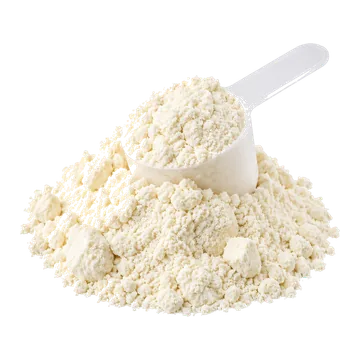
Whey protein isolate
Checked by us One serving: 30 g (about 1 scoop)
Too little nutrient data to say what it’s good for.
Nothing to watch.
Good for
How we counted this
What one serving (30 g) gives you.
Too few nutrient values to say. Missing nutrients are left out, not counted as zero.
Watch out
How we counted this
Aluminum
Nothing to watchYou’d need about 46 servings a day, every day, of this food alone to reach the limit.
Learn more
One serving carries 216 µg
How we got this
A serving a day adds 1.4–11% to what an average adult already takes in: a share of that intake, not of the limit.
9,700 g a week reaches the limit
The dataset’s rating: Nothing to watch: under the limit
No cap: EFSA's tolerable weekly intake for aluminium is 1 mg/kg body weight/week (70 mg a week for 70 kg). In 47 whey protein supplements bought mainly in Spain and Italy, not Canada, the mean was 7.19 mg/kg of powder; about 9,736 g a week would reach the limit, eaten alone. A 30 g serving a day carries 215.7 µg, 2.16% of the weekly limit, and adds 1.4% to 10.8% to the average adult's intake (0.2-1.5 mg/kg body weight/week, EFSA 2008); at the highest sample (35.22 mg/kg), 10.6%.
Bethencourt-Barbuzano E, et al. Whey Protein Dietary Supplements: Metal Exposure Assessment and Risk Characterization. Nutrients 2023;15(16):3543 (PMC10458782) · grade B
Checked for cadmium, nickel and lead: fine at normal amounts.
Cadmium
Nothing to watchYou’d need about 4.8 servings a day, every day, of this food alone to use up what an average adult’s intake leaves under the limit.
Learn more
One serving carries 1.46 µg
How we got this
A serving a day adds 8.2% to what an average adult already takes in: a share of that intake, not of the limit. With that serving every day, an average adult would be at about 77% of the limit.
An average adult already takes in about 71% of the limit. One serving a day fits in the room left.
Counted from zero, with no allowance for what adults already take in from other food, 3,600 g a week would reach the limit.
Why this rating: Eating it daily comes to 210 g a week, which stays within the 1,000 g of room left before the limit.
The dataset’s rating: Nothing to watch: under the limit
A daily serving adds 8.2% to an average adult's cadmium intake (EFSA 2012 adult median, 1.77 µg/kg body weight/week; Canadian adults in 2007: 1.2-1.75), far from doubling it, so no cap.
Nickel
Nothing to watchYou’d need about 70 servings in a day of this food alone to use up what the highest average adult intake we found leaves under the limit.
Learn more
One serving carries 9.6 µg
How we got this
A serving a day adds 4–4.7% to what an average adult already takes in: a share of that intake, not of the limit. With that serving every day, an average adult would be at about 27% of the limit.
The highest average adult intake we found already takes up about 26% of the limit. One serving a day fits in the room left.
Counted from zero, with no allowance for what adults already take in from other food, 2,800 g a day would reach the limit.
Why this rating: Eating it daily comes to 30 g a day, which stays within the 2,100 g of room left before the limit.
The dataset’s rating: Nothing to watch: under the limit
No cap: nickel is rated against EFSA's tolerable daily intake of 13 µg/kg body weight/day (2020). The average adult already takes in 22-26% of it, under half, so a food would have to reach the limit on its own to matter. The mean nickel content was 0.32 mg/kg of powder, measured in 47 whey protein supplements bought mainly in Spain and Italy, not Canada; the study does not separate concentrates from isolates. About 2,844 g of powder a day would reach the limit, eaten alone. A 30 g serving carries 9.6 µg, 1.05% of the limit, and adds 3.3% to 7.5% to the average adult's intake (128-293 µg a day, EFSA 2020); at the highest sample (1.40 mg/kg) a serving is 4.6% of the limit.
Bethencourt-Barbuzano E, et al. Whey Protein Dietary Supplements: Metal Exposure Assessment and Risk Characterization. Nutrients 2023;15(16):3543 (PMC10458782) · grade B
Lead
Nothing to watchYou’d need about 48 servings a day, every day, of this food alone to double the lead an average adult already gets. No dose is known to be safe, so doubling is where we flag.
Learn more
A serving a day adds 2.1% to what an average adult already takes in. There is no limit to take a share of.
One serving carries 0.75 µg
How we got this
The dataset’s rating: Nothing to watch: doesn’t double average intake
No cap: a 30 g serving at the lower-bound mean of 0.0251 µg/g carries 0.75 µg, 2.1% of EFSA's adult average lead intake of 35 µg a day (20% at the highest sample, 0.237 µg/g), far below doubling it. No safe threshold is set for lead. The samples cover protein powders of all types, not whey alone.
Also measured in it
Figures from the dataset. None has a limit to be rated against, so none is a verdict.
Lactose: 0.5–1 g per 100 g, so about 0.15–0.3 g in a 30 g serving. · U.S · grade C
Also checked (nothing to act on) · 2
Noted for context, or not measured in this food yet.
Shown as context, not rated: CFIA measured total arsenic, not the inorganic arsenic EFSA rates. The samples cover all protein powders, not whey alone.
Context only: total mercury, not methylmercury, so no methylmercury limit applies. Category of all protein types.
Better options
How we counted this
“Better” here always means better at something the row names: more of one nutrient, more nutrients per serving, or the goal you pick. It never means better in every way.
Every amount below is for the same weight, 30 g, the size of one serving of this food, so a swap compares like with like. A serving of another food can be bigger or smaller.
Not enough nutrient values for this food to compare it.
Your goal
Your goal changes only this list, not what the food gives you or what to watch.
Not enough nutrient values for this food to compare it.
Not enough nutrient values for this food to compare it.
Bring a tracker export or describe your usual week. The same rules check all of it.
The numbers
Open every value
Name in the database: Whey protein powder, isolate
How the serving was set: 1 scoop or serving, about 30 g (CNF scoop 28.67 g; no Health Canada reference amount for protein powder)
Listed nutrients, per 100 g
For each nutrient, the value this page uses is marked “used”. A row marked “second database” is another database’s figure for a matching food, kept so you can see how far databases disagree (they can differ in the samples analysed, lab methods and rounding). Its own cells are worked out from it, but none of the page’s words or scores are.
| Nutrient | Per serving | How | Source | Grade |
|---|
Change the amount to rescale the first column. Nutrients a database doesn't list are missing, not zero.
Absorption studies
Studies of how much of a nutrient gets in; those done in animals are marked. This page quotes a figure only from a study that passes our screen: adults, graded A, of this food in this preparation, with a test dose on record and a source that has passed our evidence check. The exception is calcium on our calcium card: its figure comes from the card’s own study, checked with the card, and is marked “used” even where that study misses a step of this screen. The others are listed so nothing is hidden, each with the first check it fails.
No study of this food passes the screen yet, so no absorption figure is quoted.
| Study | Nutrient | Absorbed | Test dose | People | Grade | On this page |
|---|---|---|---|---|---|---|
| Calvez 2021: true ileal nitrogen digestibility of whey protein isolate, naso-ileal intubation in healthy volunteers whey protein isolate (WPI) · whey protein isolate in a drink taken with protein-free biscuits (brand and drying state not stated) · load not reported abstract only | Protein | 91.2 % | not reported | 7 | A | Not used: we haven’t confirmed how the food was prepared in this study. |
Hazard rows as the dataset rates them
- Aluminum · Nothing to watch: under the limit · No cap: EFSA's tolerable weekly intake for aluminium is 1 mg/kg body weight/week (70 mg a week for 70 kg). In 47 whey protein supplements bought mainly in Spain and Italy, not Canada, the mean was 7.19 mg/kg of powder; about 9,736 g a week would reach the limit, eaten alone. A 30 g serving a day carries 215.7 µg, 2.16% of the weekly limit, and adds 1.4% to 10.8% to the average adult's intake (0.2-1.5 mg/kg body weight/week, EFSA 2008); at the highest sample (35.22 mg/kg), 10.6%. · Bethencourt 2023 · B
- Arsenic, all forms · Context · Shown as context, not rated: CFIA measured total arsenic, not the inorganic arsenic EFSA rates. The samples cover all protein powders, not whey alone. · CFIA 2018 · B
- Cadmium · Nothing to watch: under the limit · A daily serving adds 8.2% to an average adult's cadmium intake (EFSA 2012 adult median, 1.77 µg/kg body weight/week; Canadian adults in 2007: 1.2-1.75), far from doubling it, so no cap. · CFIA 2018 · C
- Lead · Nothing to watch: doesn’t double average intake · No cap: a 30 g serving at the lower-bound mean of 0.0251 µg/g carries 0.75 µg, 2.1% of EFSA's adult average lead intake of 35 µg a day (20% at the highest sample, 0.237 µg/g), far below doubling it. No safe threshold is set for lead. The samples cover protein powders of all types, not whey alone. · CFIA 2018 · B
- Mercury, all forms · Context · Context only: total mercury, not methylmercury, so no methylmercury limit applies. Category of all protein types. · CFIA 2018 · B
- Milk allergy · Worth knowing · Flagged for people with a milk allergy: milk is a Health Canada priority allergen, and whey is milk protein. Health Canada lists 'whey and whey protein concentrate' among the other names for milk and says not to eat a product that lists one. No agency threshold dose is used. · Health Canada, Milk - a priority food allergen · A
- Nickel · Nothing to watch: under the limit · No cap: nickel is rated against EFSA's tolerable daily intake of 13 µg/kg body weight/day (2020). The average adult already takes in 22-26% of it, under half, so a food would have to reach the limit on its own to matter. The mean nickel content was 0.32 mg/kg of powder, measured in 47 whey protein supplements bought mainly in Spain and Italy, not Canada; the study does not separate concentrates from isolates. About 2,844 g of powder a day would reach the limit, eaten alone. A 30 g serving carries 9.6 µg, 1.05% of the limit, and adds 3.3% to 7.5% to the average adult's intake (128-293 µg a day, EFSA 2020); at the highest sample (1.40 mg/kg) a serving is 4.6% of the limit. · Bethencourt 2023 · B
Oxalate, phytate and gut-tolerance measurements
- lactose: typical composition range for WPI: 0.5% to 1.0% lactose; 'less than 1% in whey protein isolate' g/100 g · powder as sold (typical composition of the ingredient grade) · whey protein isolate, 90% protein grade (ingredient, not a retail product) · grade C · U.S
Sources
- Bethencourt-Barbuzano E, et al. Whey Protein Dietary Supplements: Metal Exposure Assessment and Risk Characterization. Nutrients 2023;15(16):3543 (PMC10458782) · doi:10.3390/nu15163543 · PMID 37630733
bethencourt-2023· full text read · CC BY - CFIA, Toxic Metals in Selected Foods, April 1, 2018 to March 31, 2019 (open data resource 0e040e20-f157-46ce-860b-186b294ce1f7, product 'Protein Powder', 3,724 rows = 196 samples x 19 analytes)
cfia-toxic-metals-2018-19· dataset · Open Government Licence - Canada - Health Canada, Milk - a priority food allergen
hc-milk-allergen· page · Government of Canada terms (Crown copyright) - Calvez J, Benoit S, Piedcoq J, et al. Very low ileal nitrogen and amino acid digestibility of zein compared to whey protein isolate in healthy volunteers. Am J Clin Nutr 2021 (published online 4 Jan 2021) · doi:10.1093/ajcn/nqaa274 · PMID 33021640
pmid:33021640· abstract only · licence not recorded - U.S. Dairy Export Council, Reference Manual for U.S. Whey and Lactose Products (URL folder '2008ReferenceManuals')
usdec-whey-manual· full text read · licence not recorded
Body map 2026-10-25.1: each nutrient’s job comes from an agency fact sheet, linked beside it under Good for.
The plain words: “a lot” means one serving (100 g when the food has no serving size) gives at least 20% of the daily amount (the reference intake), “some” at least 10%, “a little” at least 2% (the cut-offs are ours, one set for every page: 20% and 10% are borrowed from the US labelling terms “high” and “good source” and applied to Health Canada’s daily amount, whereas Health Canada’s own shopper rule says 15%; provisional: they may change in a later method version). The daily amount is Health Canada’s Dietary Reference Intake for adults 19–30; where men and women need different amounts we use the higher one (protein: 56 g for men, 46 g for women). The percentage printed under each nutrient is the printed amount as a share of that daily amount, rounded to the nearest whole number, and the word is read from that percentage, so the amount, the percentage and the word always agree. Calcium with a measured absorption is scaled by how well it gets in compared with milk.
The scale: “Nothing to watch” means a serving a day stays under the limit at ordinary amounts; “Go easy” means a serving a day can push past the limit for adults who already take in the most, or fewer than 2 servings reach it; “Limit it” means once a week or less. The dataset’s own rating is under “How we got this”. Provisional: the scale may change in a later method version.
Measured absorption under Good for: grade-A studies in adults that tested this preparation of this food, as a share of the listed amount (the share digested, for protein), quoted once each source has passed our evidence check; animal studies and other variants stay in the table above. Provisional: this screen may change in a later method version.