Glyphosate residues
A weedkiller. Traces can stay on grains, beans and lentils.
In the body: The limit rests on a 90-day dog study, with a hundredfold safety margin on top.
None of the 12 rated foods and preparations needs a cap on how often you eat it: no amount anyone really eats reaches the daily limit. 5 more reviewed foods and preparations carry it but aren’t rated by dose: shown for context, or not rated yet.
Builds up over time. Agencies set an amount you can take in every week, or every day, for life. A food measured against it shows the grams that reach it.
The limit
- The agency’s figure0.5 mg/kg body weight/day
- For a 70 kg adult35 mg a day
- Basisacceptable daily intake (ADI): what you can take in every day for life
acceptable daily intake (ADI) (EFSA 2023 peer review; no-observed-adverse-effect level (NOAEL) 53 mg/kg body weight/day from a 90-day dog study, UF 100); acute reference dose (ARfD) 1.5 mg/kg body weight (NOAEL 150 mg/kg body weight/day rabbit, UF 100) (no-observed-adverse-effect level (NOAEL)) - Average adult intake No adult mean intake is recorded.
- Source ?EFSA 2023
Reviewed foods that carry it
16 reviewed foods carry it, 11 of them rated by dose. A food counts once, as in the foods list: preparations sharing a page (raw and cooked, canned) count once; one with its own page counts apart. Below, one line for each of 17 preparations. 12 of those lines are rated by dose.
Grams to the limit ?
Grams of each food that reach the limit in its window, for a 70 kg adult. Fewest first: those are the foods to watch.
Among our foods but not yet measured for it, so no line below: lentils.
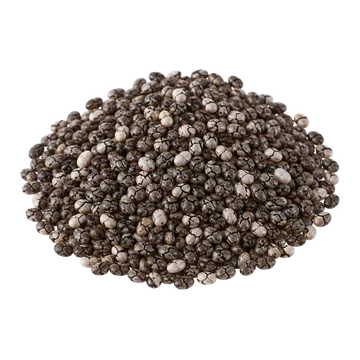 Chia seeds
Nothing to watch: under the limit for a 15 g serving
More than anyone eatsNo realistic amount reaches the limit.3.72 µg (glyphosate, at 0.248 ppm) per 15 g servingCFIA chemical residue monitoring (2016–2023) · grade A ?
How it’s rated
The counted figure is 140,000 g a day, about 9,409 servings a day.
No cap: EFSA's 2023 acceptable daily intake for glyphosate is 0.5 mg/kg body weight/day, 35,000 µg a day at 70 kg. The mean of 0.248 ppm covers positives only (2 of 9 samples), so the grams are a floor: about 141,000 g of chia a day would reach the limit. A 15.0 g serving at the highest positive mean is 3.7 µg, 0.01% of it. The two violations were of Canada's maximum residue limit, not of a health-based limit.
Intake: 15 g serving (HC TRA C.5) · Level in the food: 0.248 ppm (mean of positives, 2 of 9 samples positive (max 0.269 ppm); 2 violations, n = 9)
Measured on: CFIA NCRMP annex B6 (imports) 2020-21, glyphosate in 'Seed - Chia', 9 samples, 2 positive, 2 violations of the Canadian limit; later import line 2021-22: n 13, 2 positive, 0.0284 ppm (max 0.0343), 0 violations
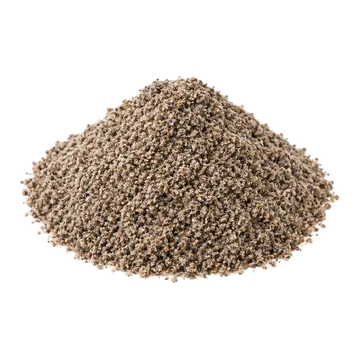 Chia seeds, ground
Nothing to watch: under the limit for a 15 g serving
More than anyone eatsNo realistic amount reaches the limit.3.72 µg (glyphosate, at 0.248 ppm) per 15 g servingCFIA chemical residue monitoring (2016–2023) · grade A ?
How it’s rated
The counted figure is 140,000 g a day, about 9,409 servings a day.
No cap: EFSA's 2023 acceptable daily intake for glyphosate is 0.5 mg/kg body weight/day, 35,000 µg/day for 70 kg. The mean of positives is 0.248 ppm (2 of 9 CFIA import samples positive, maximum 0.269 ppm), so the grams figure is a floor: about 141,000 g of chia a day. A 15.0 g serving at that level carries 3.7 µg, 0.01% of the limit. The 2 violations were of the Canadian residue limit, not of a health-based limit.
Intake: 15 g serving (HC TRA C.5) · Level in the food: 0.248 ppm (mean of positives, 2 of 9 samples positive (max 0.269 ppm); 2 violations, n = 9)
Measured on: CFIA NCRMP annex B6 (imports) 2020-21, glyphosate in 'Seed - Chia', 9 samples, 2 positive, 2 violations of the Canadian limit; later import line 2021-22: n 13, 2 positive, 0.0284 ppm (max 0.0343), 0 violations
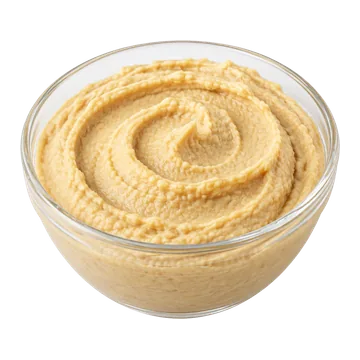 Hummus
Nothing to watch: under the limit for a 30 g serving
More than anyone eatsNo realistic amount reaches the limit.6.5 µg (30 g × 0.2164 µg/g) per 30 g servingCFIA chemical residue monitoring (2016–2023) · grade B ?
How it’s rated
The counted figure is 160,000 g a day, about 5,391 servings a day.
No cap: EFSA's 2023 acceptable daily intake for glyphosate is 0.5 mg/kg body weight/day, 35,000 µg/day for 70 kg. CFIA's category figure for chickpea products (not hummus itself; 51 samples, 31 detected) is 0.2164 µg/g at the lower bound, so about 161,700 g a day, eaten alone, would reach it; a 30 g serving carries 6.5 µg, 0.02% of the limit.
Intake: one 30 g serving a day, 70 kg adult · Level in the food: 0.216 µg/g (mean, non-detects counted as zero (31 of 51 detected; median 0.0195; max 3.18), n = 51)
Measured on: CFIA targeted survey, glyphosate 2015-2017, category 'Chickpea Products' (not hummus specifically); dried chickpeas n 52: 26 detected, mean 0.4749 µg/g, max 3.91 (dry basis)
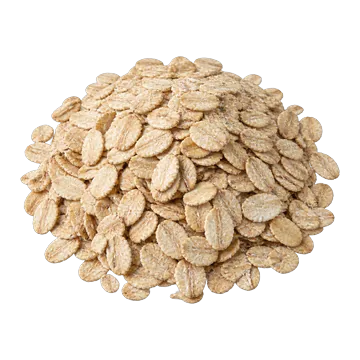 Rolled oats, dry
Nothing to watch: under the limit for a 40 g serving
More than anyone eatsNo realistic amount reaches the limit.7.7 µg per 40 g servingCFIA 2016–2017 · grade A ?
How it’s rated
The counted figure is 180,000 g a day, about 4,564 servings a day.
No cap: a 40 g dry serving carries about 7.7 µg of glyphosate, 0.02% of EFSA's acceptable daily intake of 0.5 mg/kg body weight/day (35,000 µg at 70 kg; EFSA 2023). Under half the limit, so it cannot trigger a cap whatever the average intake is.
Intake: one 40 g dry serving a day, 70 kg adult · Level in the food: 191.7 µg/kg (mean, n = 100)
Measured on: food-specific: CFIA 'Oatmeal' dry as sold, 2016-17 (median 51; P95 759; max 1,450 µg/kg; 83 of 100 detected)
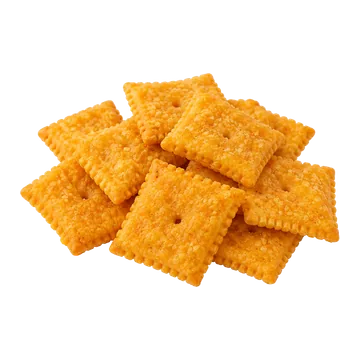 Crackers
Nothing to watch: under the limit for a 30 g serving
More than anyone eatsNo realistic amount reaches the limit.3.66 µg per 30 g servingCFIA 2018–2019 · grade A ?
How it’s rated
The counted figure is 290,000 g a day, about 9,563 servings a day.
No cap: EFSA's acceptable daily intake for glyphosate is 0.5 mg/kg body weight/day (35,000 µg/day, 2023). A 30 g serving carries 3.7 µg, 0.010% of it; about 286,885 g a day would reach it, eaten alone. No adult average intake is recorded, so only the serving's share of the limit is shown.
Intake: one 30 g reference serving a day (Health Canada TRA A.12), 70 kg adult · Level in the food: 0.122 µg/g (mean, n = 99)
Measured on: food-specific: CFIA pesticides and metals in selected foods, April 2018 - March 2019, product 'Crackers', Component = Glyphosate, 99 samples (49 + 50 rows in the two datastore resources), retail Canada; as sold
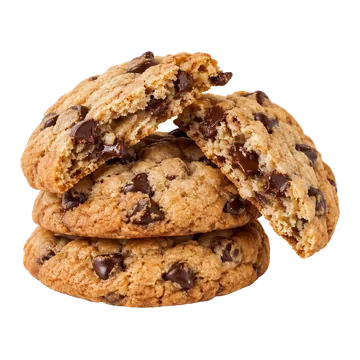 Cookies
Nothing to watch: under the limit for a 30 g serving
More than anyone eatsNo realistic amount reaches the limit.2.07 µg per 30 g servingCFIA 2016–2017 · grade A ?
How it’s rated
The counted figure is 510,000 g a day, about 16,908 servings a day.
No cap: against EFSA's acceptable daily intake for glyphosate of 0.5 mg/kg body weight/day (2023), 35,000 µg/day, about 507,384 g a day would reach it, eaten alone (an upper bound, since non-detects count as zero). One 30 g serving is 2.1 µg, 0.006% of it. No adult average intake is recorded, so only the serving's share of the limit is shown.
Intake: one 30 g reference serving a day (Health Canada TRA A.10), 70 kg adult · Level in the food: 0.069 µg/g (mean, n = 150)
Measured on: food-specific: CFIA pesticides and metals in grain products and ready-to-eat meals, April 2016 - March 2017, product 'Bakery Product - Cookie', Component = Glyphosate, 150 samples, retail Canada; as sold
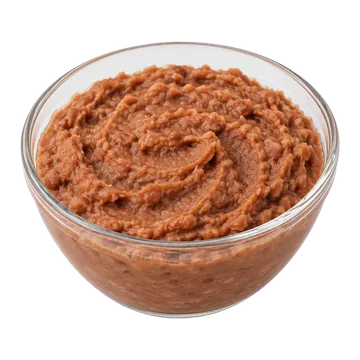 Refried beans, canned
Nothing to watch: under the limit for a 90 g serving
More than anyone eatsNo realistic amount reaches the limit.2 µg (90.35 g × 0.02238 µg/g) per 90 g servingCFIA chemical residue monitoring (2016–2023) · grade B ?
How it’s rated
The counted figure is 1,600,000 g a day, about 17,309 servings a day.
No cap: EFSA's 2023 acceptable daily intake for glyphosate is 0.5 mg/kg body weight/day, 35,000 µg a day at 70 kg. At the CFIA lower-bound mean of 0.02238 µg/g (bean products, 50 samples, 22 detected), about 1,564,000 g of refried beans a day, eaten alone, would reach it, and a serving carries 2.0 µg, 0.006% of the limit. The category is processed bean products, not refried beans specifically.
Intake: one 90 g serving a day, 70 kg adult · Level in the food: 0.022 µg/g (mean, non-detects counted as zero (22 of 50 detected; median 0; max 0.334), n = 50)
Measured on: CFIA targeted survey, glyphosate 2015-2017, category 'Bean Products' (processed bean products, not refried beans specifically); dried pinto beans n 54: 25 detected, mean 0.1589 µg/g, max 3.11 (dry basis, not converted to canned)
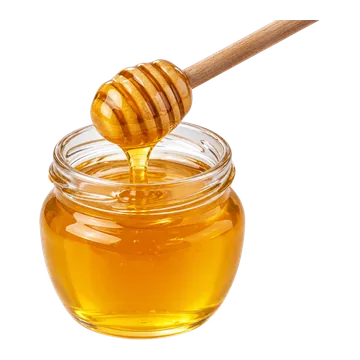 Honey
Nothing to watch: under the limit for a 20 g serving
More than anyone eatsNo realistic amount reaches the limit.0.41 µg per 20 g servingCFIA chemical residue monitoring (2016–2023) · grade A ?
How it’s rated
The counted figure is 1,700,000 g a day, about 85,366 servings a day.
No cap: EFSA's 2023 acceptable daily intake (ADI) for glyphosate is 0.5 mg/kg body weight/day, 35,000 µg a day for 70 kg. At 0.0205 µg/g in Canadian honey (CFIA 2022–23: 121 tests, 73 positive), about 1,706,000 g a day eaten alone would reach it, an upper bound on grams; at the worst single sample (0.644 µg/g, from a second program), about 54,000 g. A serving carries 0.41 µg, 0.0012% of the daily limit. Background intake is not subtracted.
Intake: one 20 g serving a day (HC TRA U.8), 70 kg adult · Level in the food: 0.021 µg/g (lower bound mean over all tests (positives x mean of positives ÷ tests: 73 x 0.034 ÷ 121); mean of positives 0.034, max 0.460, n = 121)
Measured on: CFIA NCRMP 2022-23, Table B-1 (domestic), honey, 'Polar pesticides group A' program, glyphosate; 121 tests, 73 positives, 2 violations; reporting units µg/g; Canadian-produced honey; no detection limit stated (lowest positive 0.004)
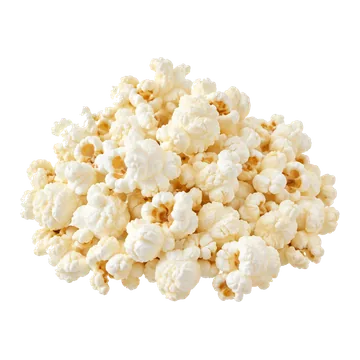 Popcorn, air-popped
Nothing to watch: under the limit for a 50 g serving
More than anyone eatsNo realistic amount reaches the limit.0.058 µg (glyphosate, lower bound) per 50 g servingCFIA 2015–2017 · grade A ?
How it’s rated
The counted figure is 30,000,000 g a day, about 602,410 servings a day.
No cap: EFSA's 2023 acceptable daily intake for glyphosate is 0.5 mg/kg body weight/day, 35,000 µg a day at 70 kg. At the CFIA lower-bound mean of 0.001162 µg/g (50 samples, 3 detected), about 30,120,482 g of popcorn in one day would reach it, an upper bound; at the highest sample, 0.0203 µg/g, 1.7 million g. A 50 g serving carries 0.06 µg; whether kernels or popped popcorn were sampled is not stated.
Intake: 50 g popped popcorn serving (HC TRA S.1) · Level in the food: 0.001 µg/g (mean (nondetects counted as zero); 3 of 50 samples detected, max 0.0203 µg/g; mean of the 3 positives about 0.019 µg/g (Foodtopsy's arithmetic), n = 50)
Measured on: CFIA targeted survey, glyphosate testing 2015-2017, commodity "Popcorn", 50 samples; Canada; whether kernels or popped product is not stated in the pack (kernels most likely)
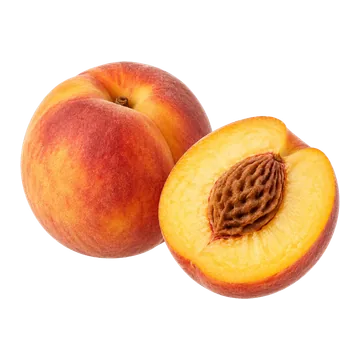 Peaches, raw
Nothing to watch: under the limit for a 140 g serving
More than anyone eatsNo realistic amount reaches the limit.0.136 µg (glyphosate) per 140 g servingCFIA 2015–2017 · grade B ?
How it’s rated
The counted figure is 36,000,000 g a day, about 257,573 servings a day.
No cap: EFSA's 2023 acceptable daily intake for glyphosate is 0.5 mg/kg body weight/day, 35,000 µg/day for 70 kg. CFIA's 2015–2017 survey found 2 of 17 fresh peach samples positive (maximum 0.0106 µg/g); the mean of 0.0009706 µg/g counts non-detects as zero, so the roughly 36,060,169 g a day to reach the limit is an upper bound. A 140 g serving carries 0.136 µg, and the sample is small.
Intake: one 140 g serving a day (HC TRA J.1), 70 kg adult · Level in the food: 0.001 µg/g (mean over all samples (non-detects as 0), 2 of 17 detects, n = 17)
Measured on: CFIA glyphosate testing 2015-2017 targeted survey, fresh peach, n 17, Canada; detects 2, max 0.0106 µg/g
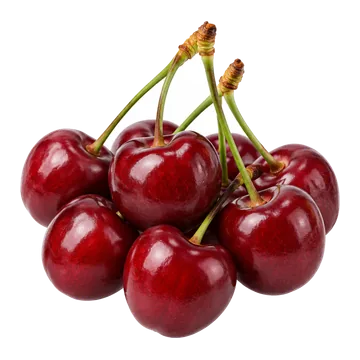 Cherries, raw
Nothing to watch: under the limit for a 140 g serving
More than anyone eatsNo realistic amount reaches the limit.0.036 µg (glyphosate) per 140 g servingCFIA 2015–2017 · grade B ?
How it’s rated
The counted figure is 140,000,000 g a day, about 982,318 servings a day.
No cap: EFSA's 2023 acceptable daily intake for glyphosate is 0.5 mg/kg body weight/day, 35,000 µg/day for 70 kg. CFIA found it in 1 of 11 fresh cherry samples (maximum 0.0028 µg/g), a lower-bound mean of 0.0002545 µg/g, so on that figure 137,524,558 g a day eaten alone would be needed to reach it, an upper bound; a 140 g serving carries 0.0356 µg. Eleven samples is very small.
Intake: one 140 g serving a day (HC TRA J.1), 70 kg adult · Level in the food: 0 µg/g (mean over all samples (non-detects as 0), 1 of 11 detects, n = 11)
Measured on: CFIA glyphosate testing 2015-2017 targeted survey, fresh cherry, n 11, 1 detect (max 0.0028 µg/g), Canada
 Soy drink, unsweetened, fortified
Nothing to watch: under the limit for a 250 g serving
More than anyone eatsNo realistic amount reaches the limit.0.026 µg per 250 g servingCFIA 2015–2017 · grade A ?
How it’s rated
The counted figure is 340,000,000 g a day, about 1,372,549 servings a day.
No cap: EFSA's acceptable daily intake for glyphosate is 0.5 mg/kg body weight/day, 35,000 µg a day at 70 kg. At the CFIA lower-bound mean of 0.102 µg/kg (50 samples, 1 detected, maximum 5.1 µg/kg), about 343,137,255 g of soy drink a day would reach it, an upper bound, and 6,862,745 g at the detected maximum. A serving carries 0.03 µg at the mean.
Intake: one 250 mL serving (250 g) a day, 70 kg adult · Level in the food: 0.102 µg/kg (mean of all samples, non-detects stored as 0 (CFIA 2015-2017 glyphosate survey, RAW; n 50, 1 detect, max 5.1 µg/kg), n = 50)
Measured on: CFIA 2015-2017 Glyphosate Testing Data, product 'Beverage - Soy' (retail soy beverage as sold); Canada. Glyphosate parent compound; the AMPA metabolite is not in this row
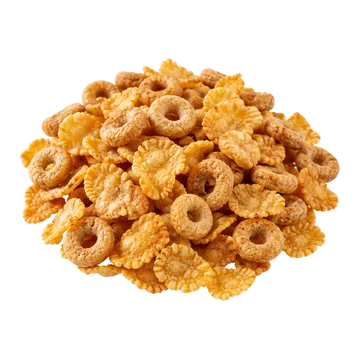 Breakfast cereal
Not rated yet for a 30 g serving
No gram figure for this foodWe have no measurement of this in this food, so there is no gram figure.How it’s rated
Not rated: EFSA's 2023 acceptable daily intake for glyphosate is 0.5 mg/kg body weight/day (acute reference dose 1.5 mg/kg body weight), but no measured level in breakfast cereal as eaten has been found. CFIA's 2015-2017 tests cover ingredients, not cereal: mean 0.192 µg/g in oatmeal and 1.93 µg/g in wheat bran, the highest. For scale only, at that wheat-bran mean the limit would be reached at about 18 kg of the ingredient a day. A Lebanese study (2026) of 21 breakfast cereals reports a median of 44.45 ppb, but its method (ELISA) is less specific than the mass-spectrometry methods, so it is a pointer, not a figure.
Intake: one 30 g serving a day (Health Canada reference amount C.3), 70 kg adult
Measured on: No ready-to-eat breakfast-cereal figure found in agency data. CFIA 2015-2017 glyphosate data has product classes Oatmeal, Grain - Oat, Bran - Wheat etc. (ingredients and hot cereal), none for RTE cereal. No as-eaten concentration was found
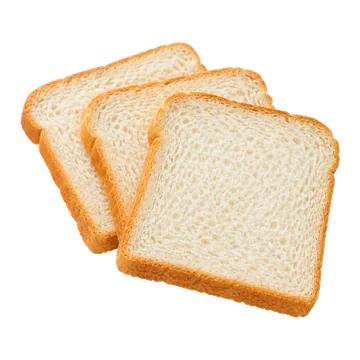 White bread
Not rated yet for a 75 g serving
No gram figure for this foodWe have no measurement of this in this food, so there is no gram figure.CFIA 2018–2019 · grade B ?
How it’s rated
Not rated: no glyphosate result for bread was found. CFIA's 2018-19 pesticide survey has results for crackers and crispbread but no bread product, and its 2015-16 glyphosate survey did not test bread. With no level in bread as eaten, no grams to the limit can be worked out against the acceptable daily intake (EFSA 2023, 0.5 mg/kg body weight/day).
Intake: not computed
Measured on: CFIA glyphosate and pesticide surveys: no bread result found
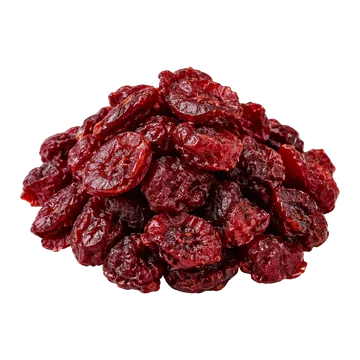 Dried cranberries, sweetened
Context for a 40 g serving
No gram figure for this foodShown for context, not rated by dose: “How it’s rated” says why, so there is no gram figure here.CFIA 2015–2017 · grade B ?
How it’s rated
Glyphosate is shown as context here (no grams figure); nothing detected in 9 + 21 cranberry samples. The figure is for the fruit before drying and sweetening, so it says nothing about the dried product's concentration, but a non-detect before drying cannot rise by concentration.
Intake: one 40 g serving a day, 70 kg adult · Level in the food: 0 µg/g (mean (all 9 samples non-detect), n = 9)
Measured on: CFIA 2015-2017 glyphosate testing data, product 'Cranberry' (form not stated, presumably fresh or frozen), 9 samples, 0 detects; NCRMP annexes 2016-17 to 2021-22 'Glyphosate Screen' on cranberry: 21 samples, 0 positives.
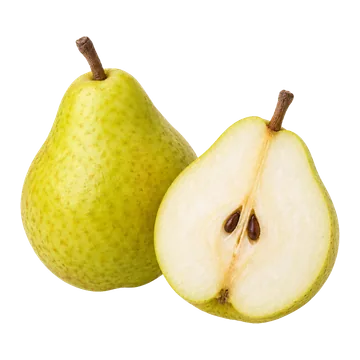 Pears, raw
Context for a 140 g serving
No gram figure for this foodShown for context, not rated by dose: “How it’s rated” says why, so there is no gram figure here.CFIA 2015–2017 · grade B ?
How it’s rated
Context: no detection in 25 samples, so no concentration to put into the acceptable daily intake (ADI) arithmetic (limit not applied; the detection limit was not stated in the pack). The NCRMP screens found glyphosate in 3 of 50 pear samples (2016-17 to 2021-22).
Intake: not applicable (context) · Level in the food: 0 µg/g (mean over all samples (non-detects as 0), n = 25)
Measured on: CFIA glyphosate testing 2015-2017 targeted survey, fresh pear, n 25, none detected, Canada
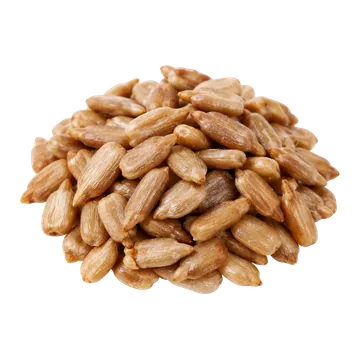 Sunflower seeds, dry-roasted
Context for a 30 g serving
No gram figure for this foodShown for context, not rated by dose: “How it’s rated” says why, so there is no gram figure here.CFIA chemical residue monitoring (2016–2023) · grade A ?
How it’s rated
Context only: one positive in 12 screens and no concentration to compute against the acceptable daily intake (ADI) (EFSA 2023, 0.5 mg/kg body weight/day); not rated. Sunflower is a crop where pre-harvest glyphosate use is common, which is why it is listed. A concentration would need the CFIA annex row.
Intake: not applicable
Measured on: CFIA NCRMP glyphosate screens, 'Seed - Sunflower': domestic 2022-23 n 3 (1 positive), imports 2021-22 n 6 (0) and 2022-23 n 2 (0); targeted glyphosate survey 2015-17 n 1 (0); Canada. The positive's concentration is not in the pack
Sources
- CFIA, 2015-2017 Glyphosate Testing Data, open.canada.ca dataset 906cd35c-d396-4999-9a9f-f5351796661f (resource 11318cc2-f9ef-4774-8b54-4716c18cc340)
cfia-glyphosate-2015-2017· dataset · Open Government Licence - Canada - CFIA, National Chemical Residue Monitoring Program, Annex B results summaries 2016-17 to 2022-23, Table B-1 domestic and B-2 imported (open.canada.ca datasets 95a14ca0, c87af563, a2ea8989, 9e5211c8, a5cb7c3c, 6567ac46, cf149850); positives-only means, no detection limits stated; pooled by us
cfia-ncrmp-annex-b-2016-2023· dataset · Government of Canada terms (Crown copyright) - CFIA, Pesticides and Metals in Grain Products and Ready-to-Eat Meals, April 1, 2016 to March 31, 2017
cfia-pesticides-metals-2016-2017· dataset · Open Government Licence - Canada - CFIA, Pesticides and Metals in Selected Foods, April 1 2018 - March 31 2019 (open data, datastore resources 35516ebc-f2f1-4e4b-9843-f57e8fa36ce6 and 4a09e067-7e19-481e-933a-847b761b5ec4)
cfia-pesticides-metals-2018-2019· dataset · Open Government Licence - Canada 2.0 - EFSA. Peer review of the pesticide risk assessment of the active substance glyphosate. EFSA Journal 2023;21:8164 · doi:10.2903/j.efsa.2023.8164
efsa-2023-glyphosate· full text read · licence not recorded