Deoxynivalenol (vomitoxin)
In the body: High doses upset the stomach.
None of the 12 rated foods and preparations needs a cap on how often you eat it. The closest, at a serving a day, is whole-wheat bread: it uses about 46% of the room left before the daily limit. Stricter limits apply to some groups; each food below shows them.
Builds up over time. Agencies set an amount you can take in every week, or every day, for life. A food measured against it shows the grams that reach it.
The limit
- The agency’s figure1 µg/kg body weight/day
- For a 70 kg adult70 µg a day
- Basistolerable daily intake (TDI): what you can take in every day for life
group tolerable daily intake (TDI) (DON + 3-Ac-DON + 15-Ac-DON + DON-3-glucoside) - Average adult intake0.3–0.7 µg/kg body weight/day EFSA 2017 adults: mean chronic exposure, minimum lower bound to maximum upper bound; group acute reference dose (ARfD) 8 µg/kg body weight per eating occasion
- Source ?EFSA 2017
Reviewed foods that carry it
11 reviewed foods carry it, 11 of them rated by dose. A food counts once, as in the foods list: preparations sharing a page (raw and cooked, canned) count once; one with its own page counts apart. Below, one line for each of 12 preparations. 12 of those lines are rated by dose. 16 measurements in all. A preparation measured more than once gets one line, the measurement the dataset leads with or a stricter one, named beside the food; the others fold under it.
Grams to the limit ?
Grams of each food that reach the limit in its window, for a 70 kg adult. Fewest first: those are the foods to watch.
Known background: an average adult already takes in 0.3–0.7 µg/kg body weight/day. Where the dataset allows, the grams below are the room left after that intake (the median of the surveys’ averages where EFSA gives one, otherwise the highest); beside each, the same limit counted from zero, the food eaten alone.
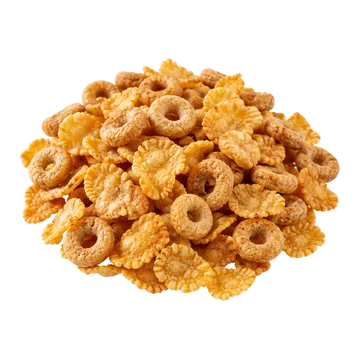 Breakfast cereal
Nothing to watch: under the limit for a 30 g serving
140greaches the limit in a dayafter the highest average adult intake we found460 g eaten alone, from zerogeneral acute: 3,700 g in one sitting, eaten alone Their limit is counted per sitting, not per day.Eating it daily comes to 30 g a day, which stays within the 140 g of room left before the limit.4.541 µg per 30 g servingHow it’s rated
No cap: EFSA's group tolerable daily intake is 1 µg/kg body weight/day for deoxynivalenol and its three modified forms (3-Ac-DON, 15-Ac-DON, DON-3-glucoside). About 462 g of this cereal eaten alone would reach it in a day, and one 30 g serving adds 9.3-21.6% to the average adult's intake of 0.3-0.7 µg/kg body weight/day. CFIA measured deoxynivalenol only, so the true sum is higher and the true grams figure lower. Mean of 196 retail samples (CFIA targeted survey 2010-2011; 4% not detected, counted as zero). Acute check: EFSA's group acute reference dose is 8 µg/kg body weight per eating occasion (560 µg for 70 kg); a 30 g serving at the mean holds 4.5 µg, at the highest sample 62 µg.
Intake: one 30 g serving a day (Health Canada reference amount C.3), 70 kg adult · Level in the food: 151.4 ng/g (mean, n = 196)
Measured on: CFIA targeted survey 2010-2011, products "Cereal - Adult" (162) and "Cereal - Children" (34) = breakfast cereals (the report counts 197 breakfast cereals); retail, Canada; origin mix [('CANADA', 127), ('UNITED STATES', 44), ('UNKNOWN', 18)]. Mean computed here from the open sample-level data (equal weight, non-detects stored as 0 = lower bound)
2 other measurements of this food
- CFIA 2011-12, corn cereals only
Nothing to watch: under the limit
180greaches the limit in a dayafter the highest average adult intake we found610 g eaten alone, from zerogeneral acute: 4,900 g in one sitting, eaten alone Their limit is counted per sitting, not per day.Eating it daily comes to 30 g a day, which stays within the 180 g of room left before the limit.3.459 µg per 30 g servingHow it’s rated
No cap: EFSA's group tolerable daily intake is 1 µg/kg body weight/day for deoxynivalenol and its three modified forms (3-Ac-DON, 15-Ac-DON, DON-3-glucoside). About 607 g of this cereal eaten alone would reach it in a day, and one 30 g serving adds 7.1-16.5% to the average adult's intake of 0.3-0.7 µg/kg body weight/day. CFIA measured deoxynivalenol only, so the true sum is higher and the true grams figure lower. Mean of 11 retail samples of corn-based cereal (CFIA targeted survey 2011-2012; 9% not detected, counted as zero); with so few samples it is indicative only. Acute check: EFSA's group acute reference dose is 8 µg/kg body weight per eating occasion (560 µg for 70 kg); a 30 g serving at the mean holds 3.5 µg, at the highest sample 7 µg.
Intake: one 30 g serving a day (Health Canada reference amount C.3), 70 kg adult · Level in the food: 115.3 ng/g (mean, n = 11)
Measured on: CFIA targeted survey 2011-2012, product "Cereal - Corn" (11 samples), retail Canada; corn-based cereals. Mean computed here, nd = 0 (lower bound). Base-grain row for corn (n is small)
- CFIA 2011-12, cereals sold as "other"
Nothing to watch: under the limit
310greaches the limit in a dayafter the highest average adult intake we found1,000 g eaten alone, from zerogeneral acute: 8,400 g in one sitting, eaten alone Their limit is counted per sitting, not per day.Eating it daily comes to 30 g a day, which stays within the 310 g of room left before the limit.2.003 µg per 30 g servingHow it’s rated
No cap: EFSA's group tolerable daily intake is 1 µg/kg body weight/day for deoxynivalenol and its three modified forms (3-Ac-DON, 15-Ac-DON, DON-3-glucoside). About 1,048 g of this cereal eaten alone would reach it in a day, and one 30 g serving adds 4.1-9.5% to the average adult's intake of 0.3-0.7 µg/kg body weight/day. CFIA measured deoxynivalenol only, so the true sum is higher and the true grams figure lower. Mean of 312 retail samples labelled "Cereal - Other" (CFIA targeted survey 2011-2012; 10% not detected, counted as zero); whether that label matches the survey's breakfast-cereal group is not settled. It is a different survey year from the 2010-2011 figure and is not averaged with it. Acute check: EFSA's group acute reference dose is 8 µg/kg body weight per eating occasion (560 µg for 70 kg); a 30 g serving at the mean holds 2.0 µg, at the highest sample 12 µg.
Intake: one 30 g serving a day (Health Canada reference amount C.3), 70 kg adult · Level in the food: 66.77 ng/g (mean, n = 312)
Measured on: CFIA targeted survey 2011-2012, product "Cereal - Other" (312 samples), retail Canada. NOT confirmed to be the report's 255 "breakfast cereals" (the dataset has 312 rows under this label; the mapping is unresolved). Mean computed here, nd = 0 (lower bound)
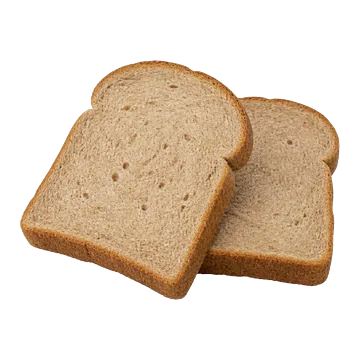 Whole-wheat bread
Nothing to watch: under the limit for a 75 g serving
160greaches the limit in a dayafter the highest average adult intake we found540 g eaten alone, from zerogeneral acute: 4,300 g in one sitting, eaten alone Their limit is counted per sitting, not per day.Eating it daily comes to 75 g a day, which stays within the 160 g of room left before the limit.9.75 µg per 75 g servingCFIA 2011–2012 · grade B ?
How it’s rated
Group tolerable daily intake 1 µg/kg body weight/day (70 µg/day at 70 kg). A serving is 0.139 µg/kg body weight, 13.9% of it. EFSA's adult average is 0.3-0.7 µg/kg body weight/day, so average plus serving stays under the limit (0.44-0.84) and the serving adds 20-46%, short of doubling: no cap either way.
Intake: one 75 g serving a day, 70 kg adult · Level in the food: 129.97 µg/kg (mean, n = 53)
Measured on: category: CFIA FSAP targeted survey 2011-2012, product 'Bakery Product - Bread' (48 Canadian, 5 US); 4 of 53 results = 0 (non-detects stored as 0, no detection limit (detection limit) published); median 105, max 410; DON only, modified forms not included
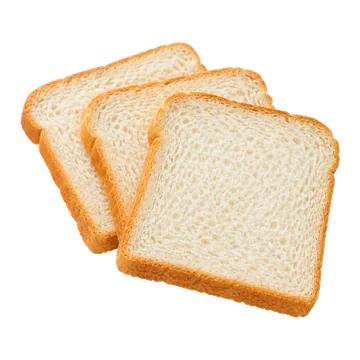 White bread
Nothing to watch: under the limit for a 75 g serving
160greaches the limit in a dayafter the highest average adult intake we found540 g eaten alone, from zerogeneral acute: 4,300 g in one sitting, eaten alone Their limit is counted per sitting, not per day.Eating it daily comes to 75 g a day, which stays within the 160 g of room left before the limit.9.75 µg per 75 g servingHow it’s rated
No cap: EFSA's group tolerable daily intake for deoxynivalenol (2017) is 1 µg/kg body weight/day, 70 µg/day. About 539 g of bread a day would reach it, eaten alone (an upper bound). One 75 g serving is 9.75 µg, 13.9% of the daily limit and 20-46% of the adult mean (0.3-0.7 µg/kg body weight/day, 21-49 µg/day); the mean plus a serving stays under 1.0 µg/kg body weight/day. At the highest sample (410 ng/g) a serving is 30.7 µg, 44% of the limit.
Intake: one 75 g reference serving a day (Health Canada TRA A.1), 70 kg adult · Level in the food: 129.974 ng/g (mean, n = 53)
Measured on: food-specific: CFIA Food Safety Action Plan targeted survey DON in selected foods 2011-2012, 'Bakery Product - Bread' (all bread, not white only), retail Canada (48 Canadian, 5 US), April 2011 onward; as sold
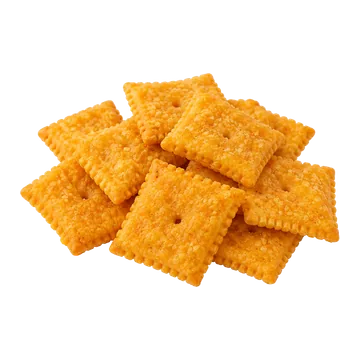 Crackers
Nothing to watch: under the limit for a 30 g serving
170greaches the limit in a dayafter the highest average adult intake we found580 g eaten alone, from zerogeneral acute: 4,600 g in one sitting, eaten alone Their limit is counted per sitting, not per day.Eating it daily comes to 30 g a day, which stays within the 170 g of room left before the limit.3.61 µg per 30 g servingCFIA 2018–2019 · grade A ?
How it’s rated
No cap: EFSA's group tolerable daily intake for deoxynivalenol is 1 µg/kg body weight/day (70 µg/day). A 30 g serving carries 3.61 µg, 5.2% of it, and adds 7-17% to the adult mean (0.3-0.7 µg/kg body weight/day); about 581 g of crackers a day would reach the limit, eaten alone. At the highest sample (790 ng/g) a serving is 23.7 µg, 34% of it.
Intake: one 30 g reference serving a day (Health Canada TRA A.12), 70 kg adult · Level in the food: 120.495 ng/g (mean, n = 101)
Measured on: food-specific: CFIA multi-mycotoxin survey April 2018 - March 2019, product 'Crackers' (all crackers), retail Canada (21 US, 7 Canadian, 5 Italian, 54 origin unknown; sampled mid-2018 to early 2019); as sold
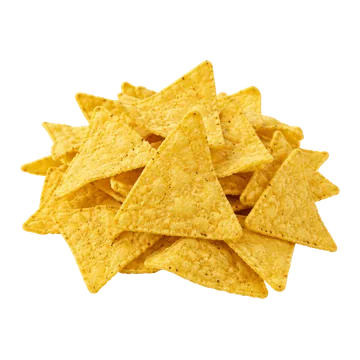 Tortilla chips
Nothing to watch: under the limit for a 50 g serving
220greaches the limit in a dayafter the highest average adult intake we found730 g eaten alone, from zerogeneral acute: 5,900 g in one sitting, eaten alone Their limit is counted per sitting, not per day.Eating it daily comes to 50 g a day, which stays within the 220 g of room left before the limit.4.78 µg per 50 g servingCFIA 2010–2011 · grade A ?
How it’s rated
No cap: EFSA's group tolerable daily intake for deoxynivalenol is 1 µg/kg body weight/day (70 µg/day). A 50 g serving carries 4.78 µg, 6.8% of it, and adds 9.7-22.7% to the adult mean (21-49 µg/day), under doubling; about 733 g a day would reach the limit, eaten alone. One sample at 1,440 ng/g would put a serving at 72 µg, 103% of it: an observed extreme, not the basis of the rating. This 2010-11 row is 17 times the 2018-19 row; both are shown, neither is averaged, and the older one is flagged for recency.
Intake: one 50 g reference serving a day (Health Canada TRA S.1), 70 kg adult · Level in the food: 95.5 ng/g (mean, n = 58)
Measured on: food-specific: CFIA FSAP Targeted Survey - Ochratoxin A and Deoxynivalenol in Selected Foods, 2010-2011, product 'Chips - Corn', retail Canada (39 domestic, 16 import, 3 unknown), samples 2010-10-11 to 2011-03-11; as sold
1 other measurement of this food
- CFIA 2018-19, 18 corn chip samples
Nothing to watch: under the limit
More than anyone eatsNo realistic amount reaches the limit.general acute: 100,000 g in one sitting, eaten alone Their limit is counted per sitting, not per day.Eating it daily comes to 50 g a day, which stays within the 3,800 g of room left before the limit.0.278 µg per 50 g servingCFIA 2018–2019 · grade A ?
How it’s rated
The counted figure is 3,800 g a day, about 76 servings a day.
No cap: EFSA's group tolerable daily intake for deoxynivalenol is 1 µg/kg body weight/day (70 µg/day, 2017). A 50 g serving carries 0.278 µg, 0.40% of it, and adds 0.6-1.3% to the adult mean (0.3-0.7 µg/kg body weight/day = 21-49 µg/day). No more than about 12,600 g of chips a day would reach the limit, eaten alone; for a single sitting (acute reference dose 8 µg/kg body weight, 560 µg), about 100,000 g.
Intake: one 50 g reference serving a day (Health Canada TRA S.1), 70 kg adult · Level in the food: 5.556 ng/g (mean, n = 18)
Measured on: food-specific: CFIA Multi-Mycotoxins ... April 2018-March 2019, 'Chips - Corn', retail Canada; as sold
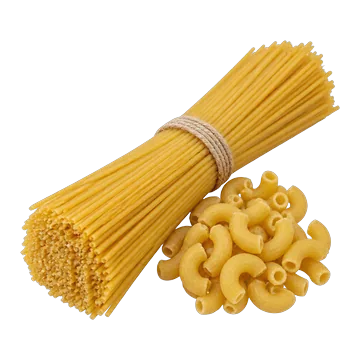 Pasta, dry
Nothing to watch: under the limit for a 85 g serving
250greaches the limit in a dayafter the highest average adult intake we found830 g eaten alone, from zerogeneral acute: 6,600 g in one sitting, eaten alone Their limit is counted per sitting, not per day.Eating it daily comes to 85 g a day, which stays within the 250 g of room left before the limit.7.21 µg per 85 g servingCFIA 2018–2019 · grade A ?
How it’s rated
85 g x 84.8 µg/kg = 7.21 µg = 0.103 µg/kg body weight, 10.3% of the group tolerable daily intake (1.0 µg/kg body weight/day, EFSA 2017). EFSA's adult average, 0.3-0.7 µg/kg body weight/day, plus the serving stays under the limit (0.40-0.80), and the serving adds 15-34%: no cap. Boiling moves deoxynivalenol into the cooking water (60% retained in five cooked dry pastas in a Dutch test), so cooked pasta carries less. Health Canada has no limit for it in pasta; CFIA and Health Canada found the 2018-19 levels 'not expected to pose a concern'.
Intake: one 85 g dry serving a day, 70 kg adult (DON as sold; no cooking loss credited) · Level in the food: 84.8 µg/kg (mean, n = 62)
Measured on: food-specific: CFIA multi-mycotoxin survey 2018-2019, product 'Pasta - Dry' (as sold), 62 samples, 42 detected; non-detects stored as 0 and no detection limit (detection limit) published, so this is a lower bound. All pasta types (dry, fresh, other; n = 128): mean 78.75, median 30, P95 286.5 (linear interpolation; the 'lower' percentile convention gives 280), max 1,280 (a fresh pasta); dry: P95 337 (linear interpolation; the 'lower' convention gives 280), max 540. Domestic 79.6 / import 63.6 (n = 45 / 56). 3-Ac-DON and 15-Ac-DON not detected in any of the 128
 Pasta, cooked
Nothing to watch: under the limit for a 215 g serving
590greaches the limit in a dayafter the highest average adult intake we found2,000 g eaten alone, from zerogeneral acute: 16,000 g in one sitting, eaten alone Their limit is counted per sitting, not per day.Eating it daily comes to 215 g a day, which stays within the 590 g of room left before the limit.7.63 µg per 215 g servingCFIA 2018–2019 · grade A ?
How it’s rated
Same occurrence as the dry row, applied to the dry weight of the cooked serving (215 g cooked is about 90 g dry). 85 g x 84.8 µg/kg = 7.21 µg = 0.103 µg/kg body weight, 10.3% of the group tolerable daily intake (1.0 µg/kg body weight/day, EFSA 2017). EFSA's adult average, 0.3-0.7 µg/kg body weight/day, plus the serving stays under the limit (0.40-0.80), and the serving adds 15-34%: no cap.
Intake: one 215 g cooked serving (about 90 g dry by SR water contents), 70 kg adult; as-sold concentration, no cooking loss credited (upper bound) · Level in the food: 84.8 µg/kg (mean, n = 62)
Measured on: food-specific: CFIA multi-mycotoxin survey 2018-2019, product 'Pasta - Dry' (as sold), 62 samples, 42 detected; non-detects stored as 0 and no detection limit (detection limit) published, so this is a lower bound. All pasta types (dry, fresh, other; n = 128): mean 78.75, median 30, P95 286.5 (linear interpolation; the 'lower' percentile convention gives 280), max 1,280 (a fresh pasta); dry: P95 337 (linear interpolation; the 'lower' convention gives 280), max 540. Domestic 79.6 / import 63.6 (n = 45 / 56). 3-Ac-DON and 15-Ac-DON not detected in any of the 128
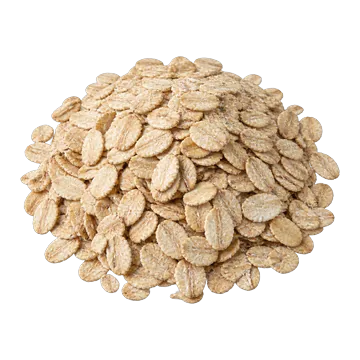 Rolled oats, dry
Nothing to watch: under the limit for a 40 g serving
850greaches the limit in a dayafter the highest average adult intake we found2,800 g eaten alone, from zerogeneral acute: 23,000 g in one sitting, eaten alone Their limit is counted per sitting, not per day.Eating it daily comes to 40 g a day, which stays within the 850 g of room left before the limit.0.99 µg per 40 g servingCFIA 2011–2012 · grade B ?
How it’s rated
A bound, not an estimate: 1.4% of the group tolerable daily intake (1 µg/kg body weight/day) on the CFIA mean, 3.7% on EFSA's oat-milling mean, 5.5% at the CFIA maximum. Under half the tolerable intake on every reading, so it cannot trigger a cap whatever the average intake is. Acute: 0.014 µg/kg body weight against the group acute reference dose of 8 µg/kg body weight per eating occasion.
Intake: one 40 g dry serving a day, 70 kg adult · Level in the food: 24.8 µg/kg (mean, n = 9)
Measured on: category: CFIA 2011-12 'Oat Products' (n=9, 1.1-95.9 µg/kg); EFSA 2017 'Oat milling products' MB 65.4 (lower bound 58.5-upper bound 72.7) µg/kg, n=225, 47% left-censored
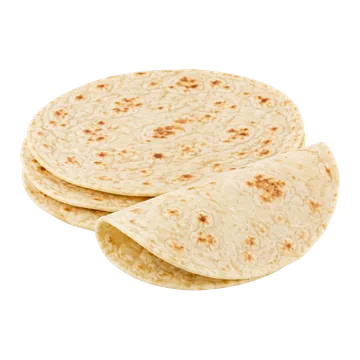 Flour tortillas
Nothing to watch: under the limit for a 55 g serving
1,300greaches the limit in a dayafter the highest average adult intake we found4,200 g eaten alone, from zerogeneral acute: 33,000 g in one sitting, eaten alone Their limit is counted per sitting, not per day.Eating it daily comes to 55 g a day, which stays within the 1,300 g of room left before the limit.0.924 µg per 55 g servingPubMed 40555889 · grade B ?
How it’s rated
No cap: EFSA's 2017 group tolerable daily intake for deoxynivalenol is 1 µg/kg body weight/day, 70 µg/day. In Turkish retail wheat tortillas (n 16, 1 positive at 158 µg/kg; mean 16.8 µg/kg, lower bound 9.9, upper bound 23.8), about 4,167 g a day eaten alone would reach it (2,941 g at the upper bound); one 55 g serving carries 0.92 µg, 1.3% of the daily limit. This is eight times lower than the bread-category figure (129.97 µg/kg, CFIA 2011-12), which suggests that figure overstates tortilla DON, but one positive in 16 wheat samples is a thin base.
Intake: one 55 g serving a day (HC TRA A.2), 70 kg adult · Level in the food: 16.8 µg/kg (mean of 16 wheat tortillas (1 positive, 158 µg/kg; lower bound 9.9, upper bound 23.8), n = 16)
Measured on: Tortilla-specific, Turkish retail, 84 commercial tortillas of which 16 'wheat tortillas' (also whole wheat n 17, maize n 13); HPLC; samples as packaged (refrigerated), as sold. Not Canadian; the CFIA bread category is shown beside it as the Canadian stand-in.
1 other measurement of this food
- CFIA 2011-12, bread category standing in for tortillas
Nothing to watch: under the limit
160greaches the limit in a dayafter the highest average adult intake we found540 g eaten alone, from zerogeneral acute: 4,300 g in one sitting, eaten alone Their limit is counted per sitting, not per day.Eating it daily comes to 55 g a day, which stays within the 160 g of room left before the limit.7.15 µg per 55 g servingHow it’s rated
No cap: EFSA's 2017 group tolerable daily intake for deoxynivalenol is 1 µg/kg body weight/day, 70 µg/day. The figure is a proxy, the CFIA bread category (2011-2012, 53 samples, mean 129.97 ng/g), because the survey has no tortilla product. Eaten alone, about 539 g of tortilla a day would reach it (an upper bound, since the mean is a lower-bound concentration); one 55 g serving carries 7.15 µg, 10% of the daily limit, and 1.3% of the acute limit of 8 µg/kg body weight per sitting. Flour mixes carry more ('Flour - Wheat', 24 samples, averages 339.9 ng/g; 'Wheat Products', 85 samples, 159.8), so a tortilla made from flour could sit above bread; no sourced dough-to-tortilla ratio exists, so none is applied.
Intake: one 55 g serving a day, 70 kg adult · Level in the food: 129.97 ng/g (mean (non-detects as 0; 4 of 53 results are 0; max 410), n = 53)
Measured on: category value, NOT tortilla: CFIA targeted survey 2011-2012, product 'Bakery Product - Bread' (53 samples; the file has no tortilla or wrap product), Canada retail; ng/g = µg/kg
 Cookies
Nothing to watch: under the limit for a 30 g serving
More than anyone eatsNo realistic amount reaches the limit.general acute: 41,000 g in one sitting, eaten alone Their limit is counted per sitting, not per day.Eating it daily comes to 30 g a day, which stays within the 1,500 g of room left before the limit.0.41 µg per 30 g servingHow it’s rated
The counted figure is 1,500 g a day, about 51 servings a day.
No cap: EFSA's group tolerable daily intake for deoxynivalenol (2017) is 1 µg/kg body weight/day, 70 µg/day. About 5,122 g of cookies a day would reach it, eaten alone (an upper bound). A 30 g serving is 0.41 µg, 0.59% of it and +0.8-2.0% of the adult mean (21-49 µg/day); at the maximum (37.7 ng/g), 1.1 µg, 1.6%. Only 3 samples.
Intake: one 30 g reference serving a day (Health Canada TRA A.10), 70 kg adult · Level in the food: 13.667 ng/g (mean, n = 3)
Measured on: food-specific but THIN: CFIA targeted survey DON in selected foods 2011-2012, 'Bakery Product - Cookie', n 3, retail Canada; as sold
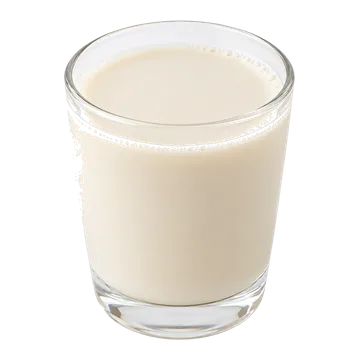 Oat drink, unsweetened, fortified
Nothing to watch: under the limit for a 250 g serving
2,300greaches the limit in a dayafter the highest average adult intake we found7,800 g eaten alone, from zerogeneral acute: 62,000 g in one sitting, eaten alone Their limit is counted per sitting, not per day.Eating it daily comes to 250 g a day, which stays within the 2,300 g of room left before the limit.2.25 µg (at the highest value) per 250 g servingPavlenko 2024 · grade B ?
How it’s rated
No cap: EFSA's 2017 group tolerable daily intake for deoxynivalenol is 1 µg/kg body weight/day, 70 µg/day for 70 kg (acute 8 µg/kg body weight, 560 µg per eating occasion). The highest value among oat drinks in a Latvian and Lithuanian retail survey was 9 µg/kg, so about 7,778 g a day (62,222 g in a sitting) would reach it, and a serving carries 2.25 µg, 3.2% of the daily limit; that is a floor for a European maximum, not a figure for the drink in general. A German survey of 31 oat drinks reached 19.4 µg/L (3,608 g a day, a serving 6.9% of the limit).
Intake: one 250 mL serving (250 g) a day, 70 kg adult · Level in the food: 9 µg/kg (highest single value (± 2 measurement standard deviation) among the oat beverages of the survey; the number of oat samples and the mean are in Table S2, not obtained)
Measured on: Pavlenko et al. 2024, retail plant-based drinks bought in Riga and Kaunas, LC-MS/MS; 72 beverages in all, oat drinks the most contaminated group; DON alone (not the sum with 3-Ac-DON, 15-Ac-DON and DON-3-glucoside that the tolerable daily intake (TDI) covers, so the group value is at least this)
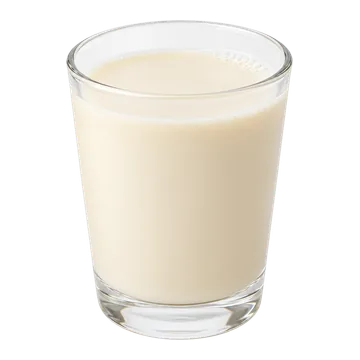 Soy drink, unsweetened, fortified
Nothing to watch: under the limit for a 250 g serving
More than anyone eatsNo realistic amount reaches the limit.general acute: 280,000 g in one sitting, eaten alone Their limit is counted per sitting, not per day.Eating it daily comes to 250 g a day, which stays within the 11,000 g of room left before the limit.0.5 µg (at the highest value) per 250 g servingPavlenko 2024 · grade B ?
How it’s rated
The counted figure is 11,000 g a day, about 42 servings a day.
No cap: EFSA's 2017 group tolerable daily intake for deoxynivalenol is 1 µg/kg body weight/day, 70 µg a day, with an acute reference dose of 8 µg/kg body weight per eating occasion, 560 µg. At the highest value found, 2.0 µg/kg (retail drinks in Riga and Kaunas), 35,000 g a day would reach the daily limit and 280,000 g in a sitting the acute one; a serving at that maximum carries 0.5 µg, 0.7%. This is a European maximum, not a Canadian mean, and a German survey found lower values (maximum 0.17 µg/L).
Intake: one 250 mL serving (250 g) a day, 70 kg adult · Level in the food: 2 µg/kg (highest single value (± 0.3 measurement standard deviation) among the soy beverages of the survey; sample count and mean in Table S2, not obtained)
Measured on: Pavlenko et al. 2024, retail plant-based drinks bought in Riga and Kaunas, LC-MS/MS; 72 beverages in all; soy drinks had DON, ZEA, ENNB and ENNB1 at low concentrations; DON alone, not the sum the tolerable daily intake (TDI) covers
Sources
- CFIA, Food Safety Action Plan Targeted Survey - Deoxynivalenol in Selected Foods - 2011-2012, open.canada.ca dataset 30484e10-f94e-4580-999f-3dc54eb75106 (resource cef65485-68e2-4580-8bd4-aa47c5a84c96); report page "2011-2012 Deoxynivalenol in Selected Foods"
cfia-don-2011-12· dataset · Open Government Licence - Canada - CFIA, Food Safety Action Plan Targeted Survey - Deoxynivalenol in Selected Foods - 2011-2012
cfia-don-2011-2012· dataset · Open Government Licence - Canada - CFIA, Food Safety Action Plan Targeted Survey - Ochratoxin A and Deoxynivalenol in Selected Foods - 2010-2011, open.canada.ca dataset 4c43a389-245b-4c6c-a28a-c88235064e1b (resource b87d36bc-a568-4dc5-8391-9d8afdbf6048); report page inspection.canada.ca "2010-2011 Ochratoxin A and Deoxynivalenol in Selected Foods"
cfia-don-ota-2010-11· dataset · Open Government Licence - Canada - CFIA, Multi-Mycotoxins in Corn Products, Crackers, Other Grain Products, Pasta and Gluten-Free Products, 2018–2019
cfia-multimyco-2018-2019· dataset · Open Government Licence – Canada 2.0 - CFIA, Food Safety Action Plan Targeted Survey - Ochratoxin A and Deoxynivalenol in Selected Foods - 2010-2011 (open data, datastore resource b87d36bc-a568-4dc5-8391-9d8afdbf6048)
cfia-ota-don-2010-2011· dataset · Open Government Licence - Canada 2.0 - EFSA CONTAM Panel (2017) Risks to human and animal health related to the presence of deoxynivalenol and its acetylated and modified forms in food and feed. EFSA Journal 15(9):4718 · doi:10.2903/j.efsa.2017.4718 · PMID 32625635
efsa-2017-don· full text read · EFSA Journal: CC BY-ND 4.0 - Pavlenko R, Berzina Z, Reinholds I, Bartkiene E, Bartkevics V. An Occurrence Study of Mycotoxins in Plant-Based Beverages Using Liquid Chromatography-Mass Spectrometry. Toxins 2024;16(1):53 · doi:10.3390/toxins16010053 · PMID 38251269
pavlenko2024-mycotoxins-plant-drinks· full text read · CC BY 4.0 - Afacan FO, Odabas E, Yussuf NH, Kabak B. Co-occurrence and risk assessment of ochratoxin A and deoxynivalenol in tortillas. Mycotoxin Res 2025;41(3):475-484 · doi:10.1007/s12550-025-00596-z · PMID 40555889
pmid:40555889· full text read · CC BY 4.0