Acrylamide
Forms when starchy foods are fried, baked or roasted at high heat: fries, chips, toast, coffee.
In the body: It damages DNA and caused tumours in animal studies, so no level is shown to be harmless. What matters is how much a food adds.
No intake of it is known to be safe, so there’s no grams figure. Each food shows what a daily serving adds to an average adult’s intake. The one that stands out: French fries, restaurant. A daily serving adds 47–105%, depending on how much you already take in. The other rated foods and preparations add 49% or less. 2 more reviewed foods and preparations carry it but aren’t rated by dose: shown for context, or not rated yet.
The evidence behind this: Acrylamide: the same food, cooked differently
No safe level known.
The reference point, not a limit
The agency starts from a dose linked to an effect in studies, in people or in animals, and judges the margin between that dose and what people take in.
- Reference point0.17 mg/kg body weight/day
- That dose, for a 70 kg adult12 mg a day
Not a safe amount or an allowance: harm can’t be ruled out below it. - Basisbenchmark dose (BMDL): the lower estimate of the dose that produced a set size of effect in studies; the number after it is that size (BMDL10 is 10%, BMDL01 is 1%). A starting point rather than a limit
benchmark dose lower limit (BMDL10) (tumours) (animal benchmark dose lower limit (BMDL10)) - Margin of exposure that raises concern ?10,000
A margin below this counts as a concern. A margin of exposure is the dose that caused effects in studies divided by what people take in: the smaller it is, the closer people’s intake sits to that dose. - Average adult intake0.4–0.9 µg/kg body weight/day EFSA adult average intake
- Source ?EFSA 2015
Reviewed foods that carry it
22 reviewed foods carry it, 21 of them rated by dose. A food counts once, as in the foods list: preparations sharing a page (raw and cooked, canned) count once; one with its own page counts apart. Below, one line for each of 29 preparations. 27 of those lines are rated by dose. 59 measurements in all. A preparation measured more than once gets one line, the measurement the dataset leads with or a stricter one, named beside the food; the others fold under it.
How often you can eat it ?
No grams figure for Acrylamide: there is no limit to count grams against. Each food shows the method’s rating instead: how much a daily serving adds to the average adult’s intake.
One realistic serving each, rated by dose, not by presence. The most restrictive rating comes first, then the largest dose per serving.
Named above but not among the foods we review, so no line below: potato chips.
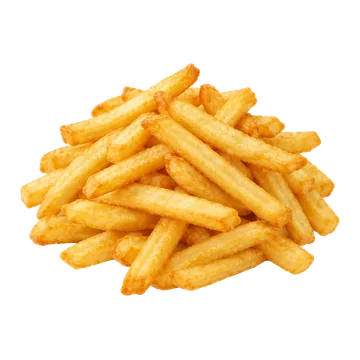 French fries, restaurant
Go easy: can double average intake
29.33 µgper servingadds 46.6–104.8 % to an average adult’s intake (a share of that intake, not of a limit)DOI 10.1080/19440049.2024.2379388 · grade A ?
How it’s rated
May exceed: no safe threshold is set for acrylamide. A 70 g serving adds 46.6-104.8% to EFSA's adult mean intake (0.4-0.9 µg/kg body weight/day = 28-63 µg/day, 2015), so the top of the range reaches doubling. Against Health Canada's lower adult mean (11-20 µg/day) it is 145-267%. At the 2014 survey mean alone (358 µg/kg) the range is 39.8-89.5%, below the line.
Intake: one 70 g serving (Health Canada TRA P.1, "70 g prepared"), 70 kg adult · Level in the food: 419 µg/kg (mean, n = 27)
Measured on: Health Canada convenience samples, ready-to-eat fries from 3 national fast-food chains (8 outlets), Ottawa, 2009 and 2014 pooled; isotope-dilution LC-MS/MS, detection limit (detection limit) about 3, quantification limit (quantification limit) 10 ng/g
5 other measurements of this food
- US FDA 2011-15 (Abt 2019), ready-to-eat potato products
Go easy: can double average intake
29.29 µgper servingadds 46.5–104.6 % to an average adult’s intake (a share of that intake, not of a limit)DOI 10.1080/19440049.2019.1637548 · grade B ?
How it’s rated
May exceed: no safe threshold is set for acrylamide. A 70 g serving adds 46.5-104.6% to EFSA's adult mean intake (0.4-0.9 µg/kg body weight/day = 28-63 µg/day, 2015), so the top of the range reaches doubling. Against Health Canada's lower adult mean (11-20 µg/day) it is 145-266%. A secondary citation, in a category wider than fries (hash browns, puffs).
Intake: one 70 g serving (Health Canada TRA P.1, "70 g prepared"), 70 kg adult · Level in the food: 418.4 µg/kg (mean)
Measured on: US FDA 2011-2015 survey as reported by Abt et al. 2019: "ready-to-eat French fries/potato products" (shoestring potatoes, hash browns, potato puffs, cut fries, curly fries); standard deviation 303.5 Scope note: the category is "ready-to-eat French fries/potato products" (shoestring potatoes, hash browns, potato puffs, cut and curly fries), a fries-and-potato-products category, not fries alone.
- US FDA 2011-15, restaurant and take-out fries
Nothing to watch: doesn’t double average intake
27.81 µgper servingadds 44.1–99.3 % to an average adult’s intake (a share of that intake, not of a limit)FDA 2011–2015 · grade B ?
How it’s rated
No cap, though only just: no safe threshold is set for acrylamide. A 70 g serving adds 44.1-99.3% to EFSA's adult mean intake (0.4-0.9 µg/kg body weight/day = 28-63 µg/day, 2015), the top of the range a hair under doubling. Against Health Canada's lower adult mean (11-20 µg/day) it is 138-253%; the band rests on EFSA's average.
Intake: one 70 g serving (Health Canada TRA P.1, "70 g prepared"), 70 kg adult · Level in the food: 397.3 µg/kg (mean, n = 76)
Measured on: US FDA individual-product survey 2011-2015, spreadsheets media130926 (58 results) and media130927 (18 results), category "French Fries and Other Potato Foods (Restaurant and Take-Out)", fries only. Derived from the individual results; quantification limit (quantification limit) 10 ppb
- EFSA 2015, European ready-to-eat fries (2010 on)
Nothing to watch: doesn’t double average intake
21.56 µgper servingadds 34.2–77 % to an average adult’s intake (a share of that intake, not of a limit)How it’s rated
No cap: no safe threshold is set for acrylamide, and a serving stays under doubling. A 70 g serving adds 34.2-77.0% to EFSA's adult mean intake (0.4-0.9 µg/kg body weight/day = 28-63 µg/day, 2015). Against Health Canada's lower mean (11-20 µg/day) it is 107-196%; the band rests on EFSA's average. At the old 100 g default the same mean (308 µg/kg) gives 48.9-110%.
Intake: one 70 g serving (Health Canada TRA P.1, "70 g prepared"), 70 kg adult · Level in the food: 308 µg/kg (mean, n = 877)
Measured on: EFSA CONTAM 2015, Table 6 row 1.1 "French fries and potato fried, fresh or pre-cooked, sold as ready-to-eat", European countries, samples taken from 2010 onwards (EEA); lower bound 302 / upper bound 314; P95 904 µg/kg
- EFSA 2015, European deep-fried fries (home and pro mixed)
Nothing to watch: doesn’t double average intake
17.01 µgper servingadds 27–60.8 % to an average adult’s intake (a share of that intake, not of a limit)How it’s rated
No cap: no safe threshold is set for acrylamide, and a serving stays under doubling. A 70 g serving adds 27.0-60.8% to EFSA's adult mean intake (0.4-0.9 µg/kg body weight/day = 28-63 µg/day, 2015). Against Health Canada's lower mean (11-20 µg/day) it is 84-155%; the band rests on EFSA's average.
Intake: one 70 g serving (Health Canada TRA P.1, "70 g prepared"), 70 kg adult · Level in the food: 243 µg/kg (mean, n = 411)
Measured on: EFSA CONTAM 2015, Appendix B Table B1, "French fries: Deep fried"; lower bound 238 / upper bound 249; P95 632. Europe; home versus professional deep-frying is not split
- Normandin 2013, Montreal adolescents' fries (contrast)
Not rated yet
73.71 µgper servingadds 117–263.2 % to an average adult’s intake (a share of that intake, not of a limit)DOI 10.1016/j.fct.2013.03.005 · grade B ?
How it’s rated
Not rated: this is a contrast figure from Normandin 2013 (one city, an adolescent-diet sample, known only from its abstract), not used to rate fries. At its level a 70 g serving would add 117.0-263.2% to EFSA's adult mean intake (0.4-0.9 µg/kg body weight/day = 28-63 µg/day, 2015), or 366-671% against Health Canada's lower mean (11-20 µg/day): the whole range sits above the doubling line.
Intake: one 70 g serving (Health Canada TRA P.1, "70 g prepared"), 70 kg adult · Level in the food: 1,053 µg/kg (mean)
Measured on: Normandin et al. 2013, Montreal: foods most often eaten by 196 adolescents (10-17 y), 146 food samples analysed; "deep-fried french fries"; standard deviation 657; sampling place and per-food n not in the abstract
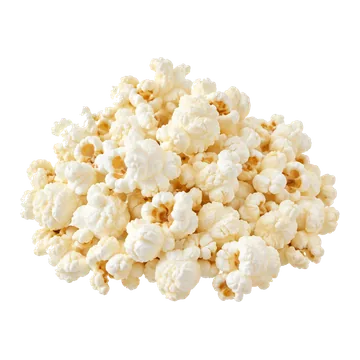 Popcorn, air-popped
Nothing to watch: doesn’t double average intake
13.9 µgper servingacrylamideadds 22–49 % to an average adult’s intake (a share of that intake, not of a limit)PubMed 39608630 · grade B ?
How it’s rated
No cap: no safe limit is set for acrylamide; EFSA's 2015 reference point is a benchmark dose lower limit (BMDL10) of 0.17 mg/kg body weight/day. A 50 g serving at the Spanish mean of 277 µg/kg (91 samples) carries 13.9 µg, 0.20 µg/kg body weight/day, adding +22% to +49% to EFSA's adult mean exposure of 0.4-0.9 µg/kg body weight/day, under the doubling line. That mean covers all cooking methods and microwave bags run higher; FDA's air-popped brand read 40 ppb (2 µg a serving), so the air-popped value is probably lower.
Intake: 50 g popped popcorn serving (HC TRA S.1) · Level in the food: 277 µg/kg (mean ± standard deviation 277 ± 119 µg/kg over 91 samples; only 2 below the quantification limit (60 µg/kg); microwave popcorn notably higher than ready-to-eat or popcorn-maker, n = 91)
Measured on: Sebastia 2025, Spain: 91 popcorn samples from supermarkets, grocery stores and cinemas by flavour and cooking method (ready-to-eat, popcorn maker, microwave); LC-MS/MS; as eaten. The mean is across all methods, not air-popped alone
- French fries, frozen, oven-baked
Nothing to watch: doesn’t double average intake
12.85 µgper servingadds 20.4–45.9 % to an average adult’s intake (a share of that intake, not of a limit)DOI 10.1080/19440049.2024.2379388 · grade A ?
How it’s rated
No cap: no safe threshold is set for acrylamide, and a serving stays under doubling. A 70 g serving adds 20.4-45.9% to EFSA's adult mean intake (0.4-0.9 µg/kg body weight/day = 28-63 µg/day, 2015). Against Health Canada's lower mean (11-20 µg/day) it is 64-117%; the band rests on EFSA's average. Home oven-baked from frozen.
Intake: one 70 g serving (Health Canada TRA P.1, "70 g prepared"), 70 kg adult · Level in the food: 183.6 µg/kg (mean)
Measured on: Health Canada, frozen potato fries (sweet potato excluded) baked in the lab to the label (218 or 232 °C), Ottawa, 2009, 2010 and 2020 surveys; quantification limit (quantification limit) 10 ng/g (1.0 in 2020)
4 other measurements of this food
- EFSA 2015, European oven-baked fries
Nothing to watch: doesn’t double average intake
17.99 µgper servingadds 28.6–64.2 % to an average adult’s intake (a share of that intake, not of a limit)How it’s rated
No cap: no safe threshold is set for acrylamide, and a serving stays under doubling. A 70 g serving adds 28.6-64.2% to EFSA's adult mean intake (0.4-0.9 µg/kg body weight/day = 28-63 µg/day, 2015). Against Health Canada's lower mean (11-20 µg/day) it is 89-164%; the band rests on EFSA's average.
Intake: one 70 g serving (Health Canada TRA P.1, "70 g prepared"), 70 kg adult · Level in the food: 257 µg/kg (mean, n = 161)
Measured on: EFSA CONTAM 2015, Appendix B Table B1, "French fries: Baked in the oven"; lower bound 254 / upper bound 260; P95 1,035
- EFSA 2015, European fries fried then prepared as eaten
Nothing to watch: doesn’t double average intake
16.73 µgper servingadds 26.6–59.8 % to an average adult’s intake (a share of that intake, not of a limit)How it’s rated
No cap: no safe threshold is set for acrylamide, and a serving stays under doubling. A 70 g serving adds 26.6-59.8% to EFSA's adult mean intake (0.4-0.9 µg/kg body weight/day = 28-63 µg/day, 2015). Against Health Canada's lower mean (11-20 µg/day) it is 83-152%; the band rests on EFSA's average.
Intake: one 70 g serving (Health Canada TRA P.1, "70 g prepared"), 70 kg adult · Level in the food: 239 µg/kg (mean, n = 557)
Measured on: EFSA CONTAM 2015, Table 6 row 1.3 "French fries and potato fried, fresh or pre-cooked, sold as fresh or pre-cooked, prepared as consumed", European countries, 2010 onwards; lower bound 236 / upper bound 242; P95 656
- US FDA 2011-15 (Abt 2019), frozen products baked at home
Nothing to watch: doesn’t double average intake
14.42 µgper servingadds 22.9–51.5 % to an average adult’s intake (a share of that intake, not of a limit)DOI 10.1080/19440049.2019.1637548 · grade B ?
How it’s rated
No cap: no safe threshold is set for acrylamide, and a serving stays under doubling. A 70 g serving adds 22.9-51.5% to EFSA's adult mean intake (0.4-0.9 µg/kg body weight/day = 28-63 µg/day, 2015). Against Health Canada's lower mean (11-20 µg/day) it is 72-131%; the band rests on EFSA's average. A secondary citation, in a category wider than fries (hash browns, puffs).
Intake: one 70 g serving (Health Canada TRA P.1, "70 g prepared"), 70 kg adult · Level in the food: 206 µg/kg (mean)
Measured on: US FDA 2011-2015 survey as reported by Abt et al. 2019: frozen products of the same category, baked by consumers; standard deviation 279.7 Scope note: the category is "ready-to-eat French fries/potato products" (shoestring potatoes, hash browns, potato puffs, cut and curly fries), a fries-and-potato-products category, not fries alone.
- US FDA 2011-15, frozen fries prepared per label
Nothing to watch: doesn’t double average intake
12.73 µgper servingadds 20.2–45.5 % to an average adult’s intake (a share of that intake, not of a limit)FDA 2011–2015 · grade B ?
How it’s rated
No cap: no safe threshold is set for acrylamide, and a serving stays under doubling. A 70 g serving adds 20.2-45.5% to EFSA's adult mean intake (0.4-0.9 µg/kg body weight/day = 28-63 µg/day, 2015). Against Health Canada's lower mean (11-20 µg/day) it is 63-116%; the band rests on EFSA's average.
Intake: one 70 g serving (Health Canada TRA P.1, "70 g prepared"), 70 kg adult · Level in the food: 181.8 µg/kg (mean, n = 74)
Measured on: US FDA individual-product survey 2011-2015, same spreadsheets, category "French Fries and Other Potato Foods (Consumer)" (frozen products bought in stores and prepared per label, fried or baked as indicated), fries only. Derived from the individual results; quantification limit (quantification limit) 10 ppb
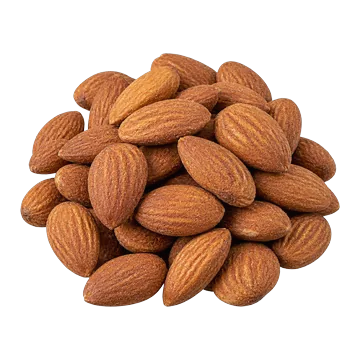 Almonds, dry-roasted
Nothing to watch: doesn’t double average intake
10.7 µgper serving0.153 µg/kg body weightadds 17–38 % to an average adult’s intake (a share of that intake, not of a limit)CFIA 2013–2015 · grade B ?
How it’s rated
Adds 17-38% to EFSA's adult mean 0.4-0.9 µg/kg body weight/day; below the doubling line
Intake: one 30 g serving a day, 70 kg adult · Level in the food: 356 ng/g (µg/kg) (mean, n = 25)
Measured on: RELATED PRODUCT: CFIA 2013-2015 'Butter - Almond' (dry-roasted almond paste); median 330, range 15-940. No whole roasted almonds in the survey. Not applicable to raw almonds
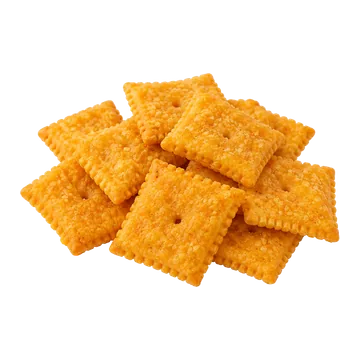 Crackers
Nothing to watch: doesn’t double average intake
9.82 µgper servingadds 15.6–35.1 % to an average adult’s intake (a share of that intake, not of a limit)CFIA 2013–2015 · grade A ?
How it’s rated
No cap: no safe threshold is set for acrylamide; EFSA (2015) counts a margin of exposure of 10,000 on a benchmark dose lower limit (BMDL10) of 0.17 mg/kg body weight/day as low concern. A 30 g serving (9.82 µg) adds 15.6-35.1% to EFSA's adult mean (0.4-0.9 µg/kg body weight/day = 28-63 µg/day), under doubling. Against Health Canada's lower mean (11-20 µg/day) it adds 49-89%, the nearest it comes to the cap. The highest sample (1600 ng/g) gives 48.0 µg, 76-171% of EFSA's mean.
Intake: one 30 g reference serving a day (Health Canada TRA A.12), 70 kg adult · Level in the food: 327.458 ng/g (mean, n = 72)
Measured on: food-specific: CFIA FSAP targeted survey acrylamide 2013-2015, product 'Crackers' (excludes 'Cracker Chips' and 'Crispbread/Crouton'), retail Canada; as sold
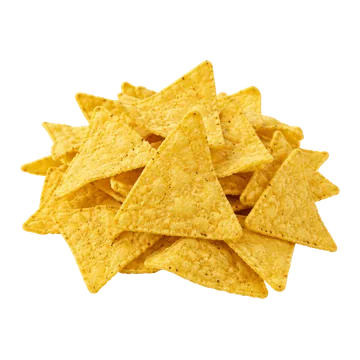 Tortilla chips
Nothing to watch: doesn’t double average intake
8.6 µgper servingadds 13.7–30.7 % to an average adult’s intake (a share of that intake, not of a limit)CFIA 2013–2015 · grade A ?
How it’s rated
No cap: no safe threshold is set for acrylamide; EFSA (2015) counts a margin of exposure of 10,000 on a benchmark dose lower limit (BMDL10) of 0.17 mg/kg body weight/day as low concern. A 50 g serving is 8.6 µg (0.123 µg/kg body weight) and adds 14-31% to EFSA's adult mean intake (0.4-0.9 µg/kg body weight/day), under doubling. The serving alone has a margin of about 1380; the average adult's is 189-425, both far below 10,000. Based on three samples.
Intake: one 50 g reference serving a day (Health Canada TRA S.1), 70 kg adult · Level in the food: 172 ng/g (mean, n = 3)
Measured on: food-specific: CFIA FSAP Targeted Survey - Acrylamide 2013-2015, product 'Chips - Corn', 3 retail samples (2013-07-22 import unknown origin 66 ng/g; 2014-10-29 US 220; 2014-12-30 US 230), Canada; as sold
2 other measurements of this food
- US FDA product survey 2015, 39 tortilla chip results
Nothing to watch: doesn’t double average intake
12.76 µgper servingadds 20.2–45.6 % to an average adult’s intake (a share of that intake, not of a limit)How it’s rated
No cap: no safe threshold is set for acrylamide; EFSA (2015) counts a margin of exposure of 10,000 on a benchmark dose lower limit (BMDL10) of 0.17 mg/kg body weight/day as low concern. A 50 g serving is 12.8 µg (0.182 µg/kg body weight) and adds 20-46% to EFSA's adult mean intake (0.4-0.9 µg/kg body weight/day), under doubling. The serving alone has a margin of about 930; the average adult's is 189-425, both far below 10,000.
Intake: one 50 g reference serving a day (Health Canada TRA S.1), 70 kg adult · Level in the food: 255.1 ppb (mean, n = 39)
Measured on: food-specific: FDA Survey Data on Acrylamide in Food, individual food products, data from 2015 (collected 2011-2015 programme), category 'Tortilla Chips', 39 results on 24 products, US retail; as sold
- US FDA product survey 2011, 22 tortilla chip results
Nothing to watch: doesn’t double average intake
7.91 µgper servingadds 12.6–28.2 % to an average adult’s intake (a share of that intake, not of a limit)How it’s rated
No cap: no safe threshold is set for acrylamide; EFSA (2015) counts a margin of exposure of 10,000 on a benchmark dose lower limit (BMDL10) of 0.17 mg/kg body weight/day as low concern. A 50 g serving is 7.9 µg (0.113 µg/kg body weight) and adds 13-28% to EFSA's adult mean intake (0.4-0.9 µg/kg body weight/day), under doubling. The serving alone has a margin of about 1500; the average adult's is 189-425, both far below 10,000.
Intake: one 50 g reference serving a day (Health Canada TRA S.1), 70 kg adult · Level in the food: 158.2 ppb (mean, n = 22)
Measured on: food-specific: FDA Survey Data on Acrylamide in Food, individual food products, data from 2011, category 'Tortilla Chips', 22 results on 9 products, US retail; as sold
 Cookies
Nothing to watch: doesn’t double average intake
7.92 µgper servingadds 12.6–28.3 % to an average adult’s intake (a share of that intake, not of a limit)CFIA 2013–2015 · grade A ?
How it’s rated
No cap: no safe threshold is set for acrylamide (EFSA 2015 benchmark dose lower limit (BMDL10) 0.17 mg/kg body weight/day; a margin of exposure of 10,000 is low concern). One 30 g serving is 7.92 µg, 0.113 µg/kg body weight: +12.6-28.3% of EFSA's adult mean (0.4-0.9 µg/kg body weight/day, 28-63 µg/day) and +39-72% of Health Canada's (0.157-0.288 µg/kg body weight/day, 11-20 µg/day). At the highest sample (930 ng/g) a serving is 27.9 µg, +44-100% of EFSA's mean. At the mean, a serving stays under the doubling line against EFSA's mean.
Intake: one 30 g reference serving a day (Health Canada TRA A.10), 70 kg adult · Level in the food: 264.059 ng/g (mean, n = 51)
Measured on: food-specific: CFIA FSAP targeted survey acrylamide 2013-2015, 'Bakery Product - Cookie', retail Canada; as sold
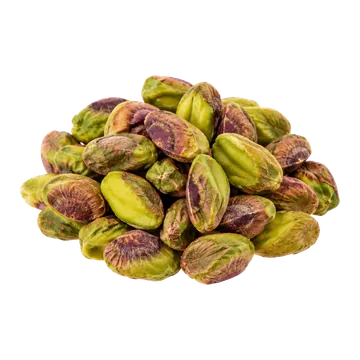 Pistachios, dry-roasted
Nothing to watch: doesn’t double average intake
6.1 µgper servingacrylamide (at 204 µg/kg)adds 9.7–22 % to an average adult’s intake (a share of that intake, not of a limit)PubMed 32566205 · grade C ?
How it’s rated
No cap: no safe limit is set for acrylamide; EFSA's 2015 reference point is a benchmark dose lower limit (BMDL10) of 0.17 mg/kg body weight/day. A 30 g serving at 204 µg/kg carries 6.1 µg (0.09 µg/kg body weight/day), and at 594 µg/kg 17.8 µg (0.25); against EFSA's adult mean exposure of 0.4-0.9 µg/kg body weight/day that adds +10% to +64%, under the doubling line. Those values come from lab roasting in Iran, so the true retail range is unknown; a 44-nut commercial survey found acrylamide from not detected up to 123.6 µg/kg across all nuts, below every cell of the roasting grid.
Intake: 30 g shelled serving (HC TRA O.1) · Level in the food: 204 µg/kg (lowest hot-air unsalted cell of the roasting grid (the "Minimum" column of Table 3, i.e. the mildest condition tested; hot-air range 204-594 µg/kg); the grid's lowest unsalted cell is microwave 119, raw kernels 57; no mean or n per cell stated (corrected by checker, 2026-10-21))
Measured on: Asadi 2020, Iran: pistachio kernels roasted in the lab (hot air, infrared, microwave; salted and unsalted); UHPLC-UV, detection limit (detection limit) 30, quantification limit (quantification limit) 100 µg/kg; experimental grid, not retail product. Raw pistachios 57 ± 0.86, sun-dried 93 ± 1.07 µg/kg
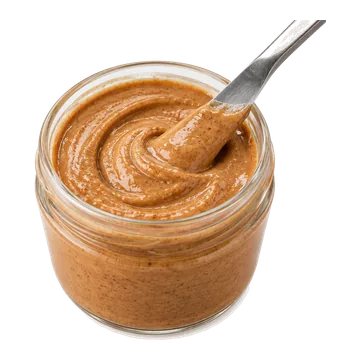 Almond butter
Nothing to watch: doesn’t double average intake
5.34 µgper serving15 g × 356 ng/gadds 8.5–19 % to an average adult’s intake (a share of that intake, not of a limit)CFIA 2013–2015 · grade B ?
How it’s rated
No cap: no safe level of acrylamide is set (EFSA 2015 benchmark), so the rating rests on what a serving adds to average intake. The CFIA mean for almond butter itself is 356 µg/kg (25 retail samples, range 15–940), so a 15.0 g serving carries 5.3 µg, which adds 8.5–19% to EFSA's adult mean intake of 0.4–0.9 µg/kg body weight/day (28–63 µg/day at 70 kg), under doubling. The highest sample alone would give 14 µg a serving, 22–50% of average intake.
Intake: one 15.0 g serving a day, 70 kg adult · Level in the food: 356 ng/g (µg/kg) (mean (median 330; range 15-940; all 25 quantified), n = 25)
Measured on: CFIA FSAP targeted survey, acrylamide 2013-2015, product 'Butter - Almond' (the product itself): 25 retail samples 2013-2015; origins Canada 9, United States 5, unknown 11
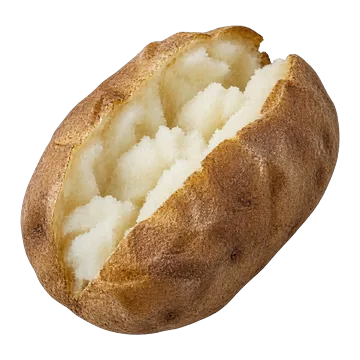 Potato, baked
Nothing to watch: doesn’t double average intake
5.1 µgper servingadds 8.1–18.2 % to an average adult’s intake (a share of that intake, not of a limit)FDA 2003–2006 · grade A ?
How it’s rated
No safe threshold. A serving adds 8.1-18.2% to EFSA's average adult intake (0.4-0.9 µg/kg body weight/day), short of doubling it, so no cap. The serving alone gives 0.073 µg/kg body weight/day, a margin of exposure of 2,332 against EFSA's benchmark dose lower limit (BMDL10) of 170 µg/kg body weight/day (level of concern 10,000). Range 17-102 µg/kg, median 32.
Intake: one 110 g serving a day, 70 kg adult · Level in the food: 46.4 µg/kg (mean, n = 13)
Measured on: food-specific: FDA TDS #137 'Potato, baked (w/ peel)', 13 composites FY03–FY06 (each a composite of 3 samples); quantification limit (quantification limit) 10 µg/kg
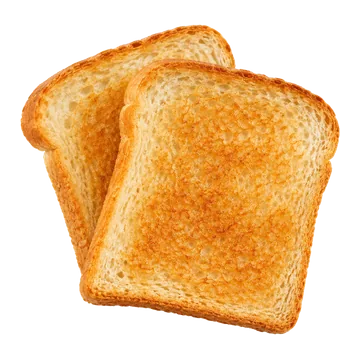 White bread, toasted
Nothing to watch: doesn’t double average intake
4.61 µgper servingadds 7.3–16.5 % to an average adult’s intake (a share of that intake, not of a limit)Health Canada 2012 · grade A ?
How it’s rated
No cap: no safe threshold is set for acrylamide. The 61.5 µg/kg figure is the plain average of two brands at medium toasting (38 and 85), a pair that spans 2.2 times, so neither is the number. 75 g of medium toast is 4.6 µg: +7.3-16.5% of EFSA's adult mean (28-63 µg/day) and +23-42% of Health Canada's (11-20 µg/day). Dark toast (Weston 83, Dempster's 134; mean 108.5) is 8.1 µg: +13-29% (EFSA) and +40-74% (Health Canada). That stays under the doubling line against EFSA's mean at every level; against Health Canada's lower mean, dark toast reaches it.
Intake: one 75 g reference serving of bread (weighed as sold) a day, 70 kg adult · Level in the food: 61.5 ng/g (mean of two brand means (DERIVED), n = 3)
Measured on: food-specific: Health Canada acrylamide monitoring programme (2009-2010), Appendix 1, 'Enriched white bread - medium toasting', Weston (n 2, mean 38, range 34-41) and Dempster's (n 1, 85); cafeteria belt toaster; µg/kg as consumed
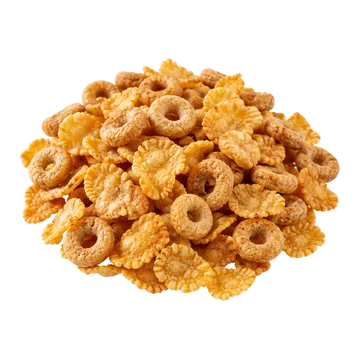 Breakfast cereal
Nothing to watch: doesn’t double average intake
3.65 µgper servingadds 5.8–13 % to an average adult’s intake (a share of that intake, not of a limit)Health Canada 2012 · grade A ?
How it’s rated
No cap: no safe threshold is set for acrylamide (EFSA 2015 benchmark dose lower limit (BMDL10) 0.17 mg/kg body weight/day for tumours in mice). Judged by what a daily serving adds to the average adult's intake (EFSA: 0.4-0.9 µg/kg body weight/day, 28-63 µg/day): 30 g at 121.8 µg/kg (sample-weighted mean of 13 branded cereals, 43 samples; Health Canada 2012) carries 3.65 µg, adding 6-13% against the EFSA average and 18-33% against the Canadian adult mean of 0.157-0.288 µg/kg body weight/day (11-20 µg/day, Health Canada 2012). Under the doubling line either way. The pooled mean is Foodtopsy's own, not an agency figure.
Intake: one 30 g serving a day (Health Canada reference amount C.3), 70 kg adult · Level in the food: 121.8 µg/kg (mean, n = 43)
Measured on: Health Canada Revised Exposure Assessment of Acrylamide in Food (August 2012), Appendix 1 (as-consumed basis; Health Canada acrylamide monitoring program phases 1-2, retail Canada): 13 branded ready-to-eat cereals (Honey Nut Cheerios, Oatmeal Crisp, Whole Grain Cheerios, Corn Flakes, Froot Loops, Frosted Flakes, Mini-Wheats, Rice Krispies, Special K, Raisin Bran, Life, Honeycomb, Shreddies), 43 samples. Sample-weighted mean of the printed brand means: OUR computation, not an agency category figure. Baby puffs, cereal bars and rice snacks listed after them are excluded
11 other measurements of this food
- US FDA product survey 2011, 176 cereals as sold
Nothing to watch: doesn’t double average intake
7.192 µgper servingadds 11.4–25.7 % to an average adult’s intake (a share of that intake, not of a limit)FDA 2011–2015 · grade A ?
How it’s rated
No cap: no safe threshold is set for acrylamide (EFSA 2015 benchmark dose lower limit (BMDL10) 0.17 mg/kg body weight/day for tumours in mice). Judged by what a daily serving adds to the average adult's intake (EFSA: 0.4-0.9 µg/kg body weight/day, 28-63 µg/day): a 30 g serving at the mean of 239.7 ppb carries 7.2 µg, adding 11-26%, under the doubling line. FDA survey of cereals sampled in 2011 (176 samples of 75 products, as sold, no milk; instant and steel-cut oatmeals removed as hot cereals). 13 samples were below the 10 ppb quantification limit.
Intake: one 30 g serving a day (Health Canada reference amount C.3), 70 kg adult · Level in the food: 239.7 ppb (mean, n = 176)
Measured on: FDA individual-product survey, sampled 2011, category "Cereals" with the plain/instant oatmeal and oats rows removed (12 rows removed): 176 samples of 75 products, as sold, no milk
- US FDA TDS 2003-06, oat rings
Nothing to watch: doesn’t double average intake
5.324 µgper servingadds 8.5–19 % to an average adult’s intake (a share of that intake, not of a limit)FDA 2003–2006 · grade B ?
How it’s rated
No cap: no safe threshold is set for acrylamide (EFSA 2015 benchmark dose lower limit (BMDL10) 0.17 mg/kg body weight/day for tumours in mice). Judged by what a daily serving adds to the average adult's intake (EFSA: 0.4-0.9 µg/kg body weight/day, 28-63 µg/day): a 30 g serving at the mean of 177.5 ppb carries 5.3 µg, adding 8-19%, under the doubling line. Oat ring cereal: FDA Total Diet Study results from 2003-2006 (13 results, non-detects counted as zero), kept as a trend row, not averaged with the newer surveys.
Intake: one 30 g serving a day (Health Canada reference amount C.3), 70 kg adult · Level in the food: 177.5 ppb (mean, n = 13)
Measured on: FDA Total Diet Study acrylamide tables FY2003-FY2006, TDS food "Oat ring cereal", 13 market-basket results (4 baskets in FY03-05, 1 in FY06)
- EFSA 2015, European breakfast cereals 2007-12
Nothing to watch: doesn’t double average intake
4.83 µgper servingadds 7.7–17.2 % to an average adult’s intake (a share of that intake, not of a limit)How it’s rated
No cap: no safe threshold is set for acrylamide (EFSA 2015 benchmark dose lower limit (BMDL10) 0.17 mg/kg body weight/day for tumours in mice). Judged by what a daily serving adds to the average adult's intake (EFSA: 0.4-0.9 µg/kg body weight/day, 28-63 µg/day): a 30 g serving at the mean of 161 µg/kg carries 4.8 µg, adding 8-17%, under the doubling line. European data, not Canadian: EFSA 2015 (Table 6), breakfast cereals excluding porridge, 1,230 samples from 2007-2012; 14.0% below detection.
Intake: one 30 g serving a day (Health Canada reference amount C.3), 70 kg adult · Level in the food: 161 µg/kg (mean, n = 1230)
Measured on: EFSA 2015 Table 6, FoodEx category 5 "Breakfast cereals" (excluding porridge), European samples 2007-2012; MB mean [lower bound-upper bound] 161 [157-164], P95 552. Sub-categories (MB mean): bran products and whole-grain cereals 211; wheat and rye based 170; maize, oat, spelt, barley and rice based 102
- US FDA TDS 2003-06, shredded wheat
Nothing to watch: doesn’t double average intake
4.075 µgper servingadds 6.5–14.6 % to an average adult’s intake (a share of that intake, not of a limit)FDA 2003–2006 · grade B ?
How it’s rated
No cap: no safe threshold is set for acrylamide (EFSA 2015 benchmark dose lower limit (BMDL10) 0.17 mg/kg body weight/day for tumours in mice). Judged by what a daily serving adds to the average adult's intake (EFSA: 0.4-0.9 µg/kg body weight/day, 28-63 µg/day): a 30 g serving at the mean of 135.8 ppb carries 4.1 µg, adding 6-15%, under the doubling line. Shredded wheat: FDA Total Diet Study results from 2003-2006 (13 results, non-detects counted as zero), kept as a trend row, not averaged with the newer surveys.
Intake: one 30 g serving a day (Health Canada reference amount C.3), 70 kg adult · Level in the food: 135.8 ppb (mean, n = 13)
Measured on: FDA Total Diet Study acrylamide tables FY2003-FY2006, TDS food "Shredded wheat cereal", 13 market-basket results (4 baskets in FY03-05, 1 in FY06)
- US FDA product survey 2015, 40 cereals as sold
Nothing to watch: doesn’t double average intake
3.754 µgper servingadds 6–13.4 % to an average adult’s intake (a share of that intake, not of a limit)FDA 2011–2015 · grade A ?
How it’s rated
No cap: no safe threshold is set for acrylamide (EFSA 2015 benchmark dose lower limit (BMDL10) 0.17 mg/kg body weight/day for tumours in mice). Judged by what a daily serving adds to the average adult's intake (EFSA: 0.4-0.9 µg/kg body weight/day, 28-63 µg/day): a 30 g serving at the mean of 125.1 ppb carries 3.8 µg, adding 6-13%, under the doubling line. FDA survey of cereals sampled in 2015 (40 samples of 20 products, as sold, no milk). 19 samples were below the 10 ppb quantification limit.
Intake: one 30 g serving a day (Health Canada reference amount C.3), 70 kg adult · Level in the food: 125.1 ppb (mean, n = 40)
Measured on: FDA individual-product survey, sampled 2015, category "Cereals" with the plain/instant oatmeal and oats rows removed (0 rows removed): 40 samples of 20 products, as sold, no milk
- US FDA TDS 2003-06, raisin bran
Nothing to watch: doesn’t double average intake
3.722 µgper servingadds 5.9–13.3 % to an average adult’s intake (a share of that intake, not of a limit)FDA 2003–2006 · grade B ?
How it’s rated
No cap: no safe threshold is set for acrylamide (EFSA 2015 benchmark dose lower limit (BMDL10) 0.17 mg/kg body weight/day for tumours in mice). Judged by what a daily serving adds to the average adult's intake (EFSA: 0.4-0.9 µg/kg body weight/day, 28-63 µg/day): a 30 g serving at the mean of 124.1 ppb carries 3.7 µg, adding 6-13%, under the doubling line. Raisin bran: FDA Total Diet Study results from 2003-2006 (13 results, non-detects counted as zero), kept as a trend row, not averaged with the newer surveys.
Intake: one 30 g serving a day (Health Canada reference amount C.3), 70 kg adult · Level in the food: 124.1 ppb (mean, n = 13)
Measured on: FDA Total Diet Study acrylamide tables FY2003-FY2006, TDS food "Raisin bran cereal", 13 market-basket results (4 baskets in FY03-05, 1 in FY06)
- Spanish study 2025, 60 cereals bought in Spain
Nothing to watch: doesn’t double average intake
3.42 µgper servingadds 5.4–12.2 % to an average adult’s intake (a share of that intake, not of a limit)Mesias 2025 · grade B ?
How it’s rated
No cap: no safe threshold is set for acrylamide (EFSA 2015 benchmark dose lower limit (BMDL10) 0.17 mg/kg body weight/day for tumours in mice). Judged by what a daily serving adds to the average adult's intake (EFSA: 0.4-0.9 µg/kg body weight/day, 28-63 µg/day): a 30 g serving at the mean of 114 µg/kg carries 3.4 µg, adding 5-12%, far from doubling it. A 2025 study of 60 ready-to-eat breakfast cereals bought in Spain (not Canadian): range from below 15 µg/kg to 569 µg/kg, with 2 of 60 below the quantification limit. The highest sample, a puffed wheat-based cereal at 569 µg/kg, would give 17 µg a day.
Intake: one 30 g serving a day (Health Canada reference amount C.3), 70 kg adult · Level in the food: 114 µg/kg (mean, n = 60)
Measured on: Mesias 2025, 60 ready-to-eat breakfast cereals bought in Spain in 2025 (not Canadian). By main cereal: maize 54 (corn flakes 69, extruded corn 39), oat 71 (rolled oats non-detectable to extruded oat 187), spelt 140, wheat 202 (33 in biscuits to 569 in puffed), rye 41 (one sample). By format: rolled 31, extruded 60, granola 78, flakes 104, puffed 284
- US FDA TDS 2003-06, corn flakes
Nothing to watch: doesn’t double average intake
2.142 µgper servingadds 3.4–7.6 % to an average adult’s intake (a share of that intake, not of a limit)FDA 2003–2006 · grade B ?
How it’s rated
No cap: no safe threshold is set for acrylamide (EFSA 2015 benchmark dose lower limit (BMDL10) 0.17 mg/kg body weight/day for tumours in mice). Judged by what a daily serving adds to the average adult's intake (EFSA: 0.4-0.9 µg/kg body weight/day, 28-63 µg/day): a 30 g serving at the mean of 71.38 ppb carries 2.1 µg, adding 3-8%, under the doubling line. Corn flakes: FDA Total Diet Study results from 2003-2006 (13 results, non-detects counted as zero), kept as a trend row, not averaged with the newer surveys.
Intake: one 30 g serving a day (Health Canada reference amount C.3), 70 kg adult · Level in the food: 71.38 ppb (mean, n = 13)
Measured on: FDA Total Diet Study acrylamide tables FY2003-FY2006, TDS food "Corn flakes cereal", 13 market-basket results (4 baskets in FY03-05, 1 in FY06)
- US FDA TDS 2003-06, crisped rice
Nothing to watch: doesn’t double average intake
1.525 µgper servingadds 2.4–5.4 % to an average adult’s intake (a share of that intake, not of a limit)FDA 2003–2006 · grade B ?
How it’s rated
No cap: no safe threshold is set for acrylamide (EFSA 2015 benchmark dose lower limit (BMDL10) 0.17 mg/kg body weight/day for tumours in mice). Judged by what a daily serving adds to the average adult's intake (EFSA: 0.4-0.9 µg/kg body weight/day, 28-63 µg/day): a 30 g serving at the mean of 50.85 ppb carries 1.5 µg, adding 2-5%, under the doubling line. Crisped rice: FDA Total Diet Study results from 2003-2006 (13 results, non-detects counted as zero), kept as a trend row, not averaged with the newer surveys.
Intake: one 30 g serving a day (Health Canada reference amount C.3), 70 kg adult · Level in the food: 50.85 ppb (mean, n = 13)
Measured on: FDA Total Diet Study acrylamide tables FY2003-FY2006, TDS food "Crisped rice cereal", 13 market-basket results (4 baskets in FY03-05, 1 in FY06)
- US FDA TDS 2003-06, granola with raisins
Nothing to watch: doesn’t double average intake
1.447 µgper servingadds 2.3–5.2 % to an average adult’s intake (a share of that intake, not of a limit)FDA 2003–2006 · grade B ?
How it’s rated
No cap: no safe threshold is set for acrylamide (EFSA 2015 benchmark dose lower limit (BMDL10) 0.17 mg/kg body weight/day for tumours in mice). Judged by what a daily serving adds to the average adult's intake (EFSA: 0.4-0.9 µg/kg body weight/day, 28-63 µg/day): a 30 g serving at the mean of 48.23 ppb carries 1.4 µg, adding 2-5%, under the doubling line. Granola with raisins: FDA Total Diet Study results from 2003-2006 (13 results, non-detects counted as zero), kept as a trend row, not averaged with the newer surveys.
Intake: one 30 g serving a day (Health Canada reference amount C.3), 70 kg adult · Level in the food: 48.23 ppb (mean, n = 13)
Measured on: FDA Total Diet Study acrylamide tables FY2003-FY2006, TDS food "Granola w/ raisins", 13 market-basket results (4 baskets in FY03-05, 1 in FY06)
- US FDA TDS 2003-06, presweetened fruit cereal
Nothing to watch: doesn’t double average intake
0.743 µgper servingadds 1.2–2.7 % to an average adult’s intake (a share of that intake, not of a limit)FDA 2003–2006 · grade B ?
How it’s rated
No cap: no safe threshold is set for acrylamide (EFSA 2015 benchmark dose lower limit (BMDL10) 0.17 mg/kg body weight/day for tumours in mice). Judged by what a daily serving adds to the average adult's intake (EFSA: 0.4-0.9 µg/kg body weight/day, 28-63 µg/day): a 30 g serving at the mean of 24.77 ppb carries 0.7 µg, adding 1-3%, under the doubling line. Presweetened fruit-flavoured cereal: FDA Total Diet Study results from 2003-2006 (13 results, non-detects counted as zero), kept as a trend row, not averaged with the newer surveys.
Intake: one 30 g serving a day (Health Canada reference amount C.3), 70 kg adult · Level in the food: 24.77 ppb (mean, n = 13)
Measured on: FDA Total Diet Study acrylamide tables FY2003-FY2006, TDS food "Fruit-flavored cereal, presweetened", 13 market-basket results (4 baskets in FY03-05, 1 in FY06)
 Dark chocolate
Nothing to watch: doesn’t double average intake
3.45 µgper servingadds 5.5–12.3 % to an average adult’s intake (a share of that intake, not of a limit)CFIA 2013–2015 · grade B ?
How it’s rated
No cap: no safe threshold is set for acrylamide (EFSA 2015). A daily 40 g serving carries 3.45 µg, or 0.049 µg/kg body weight/day. Against the average adult intake of 0.4-0.9 µg/kg body weight/day that adds 5.5-12.3%, far from doubling it. The survey does not say which kind of chocolate, so the same figure sits on both chocolate rows.
Intake: one 40 g serving a day, 70 kg adult (Health Canada TRA U.1, 40 g) · Level in the food: 86.22 ng/g (mean, n = 132)
Measured on: CFIA Food Safety Action Plan targeted survey, acrylamide in selected foods, 2013-2015: product 'Chocolate' (132 samples; the survey does not say milk or dark); non-detects stored as 0 (7 of 132), so the mean is a lower bound. Median 50.5, P95 about 290, max 370 ng/g. Canada.
 Milk chocolate
Nothing to watch: doesn’t double average intake
3.45 µgper servingadds 5.5–12.3 % to an average adult’s intake (a share of that intake, not of a limit)CFIA 2013–2015 · grade B ?
How it’s rated
No cap: no safe threshold is set for acrylamide (EFSA 2015). A daily 40 g serving carries 3.45 µg, or 0.049 µg/kg body weight/day. Against the average adult intake of 0.4-0.9 µg/kg body weight/day that adds 5.5-12.3%, far from doubling it. The survey does not say which kind of chocolate, so the same figure sits on both chocolate rows.
Intake: one 40 g serving a day, 70 kg adult (Health Canada TRA U.1, 40 g) · Level in the food: 86.22 ng/g (mean, n = 132)
Measured on: CFIA Food Safety Action Plan targeted survey, acrylamide in selected foods, 2013-2015: product 'Chocolate' (132 samples; the survey does not say milk or dark); non-detects stored as 0 (7 of 132), so the mean is a lower bound. Median 50.5, P95 about 290, max 370 ng/g. Canada.
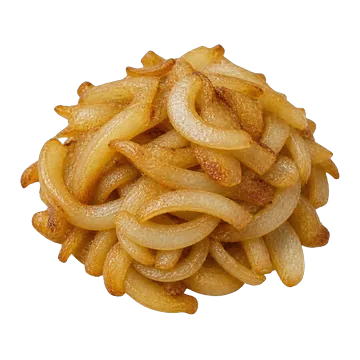 Onions, sautéed
Nothing to watch: doesn’t double average intake
3.1 µgper servingadds 4.9–10.9 % to an average adult’s intake (a share of that intake, not of a limit)PubMed 32231929 · grade B ?
How it’s rated
No safe threshold (EFSA benchmark dose lower limit (BMDL10) 0.17 mg/kg body weight/day; adult average 0.4-0.9 µg/kg body weight/day, 28-63 µg/day at 70 kg). At the mean, 36 µg/kg, an 85 g serving carries 3.1 µg, adding 4.9-10.9%; at the median, 14 µg/kg, 1.2 µg (+1.9-4.2%): far from doubling, so no cap. The single highest sample (420 µg/kg, 36 µg per 85 g) would add 57-127%; the rating uses the mean, and the maximum is shown so the spread is visible.
Intake: one 85 g serving a day of stir-fried onion, 70 kg adult · Level in the food: 36 µg/kg (mean (survey, Japan, as eaten), n = 58)
Measured on: food-specific but not Canadian: 58 home-cooked stir-fried onion samples collected from volunteers in Japan (stir-fried before simmering in curry, stew and Niku-jaga); median 14 ng/g, mean 36 ng/g, maximum 420 ng/g; detection limit (detection limit) 3 ng/g, quantification limit (quantification limit) 8 ng/g; 1 sample (2%) below the detection limit, 15 (26%) below quantification limit
 Coffee, brewed
Nothing to watch: doesn’t double average intake
3 µgper servingadds 4.8–11 % to an average adult’s intake (a share of that intake, not of a limit)Health Canada 2012 · grade A ?
How it’s rated
No cap: a daily cup of Tim Hortons coffee (mean 12 µg/kg, range 11-14, from 6 samples in Health Canada's 2009-2010 monitoring) carries 3.0 µg of acrylamide. That adds 14.9% to 27.3% to the average adult's 11.0-20.2 µg/day, below the doubling line. No safe threshold is set for acrylamide. Ready-to-drink coffee is 12.3% of the average adult's dietary acrylamide exposure.
Intake: one 250 mL cup (250.25 g) a day, 70 kg adult · Level in the food: 12 µg/kg (mean per brand as printed: '12' (range 11-14), n = 6)
Measured on: Health Canada acrylamide monitoring program 2009-2010, Appendix 1 of the 2012 revised exposure assessment: restaurant coffee, Tim Hortons; 'on an as-consumed basis', µg/kg of food
8 other measurements of this food
- Second French total diet study, quoted by EFSA 2015
Nothing to watch: doesn’t double average intake
9.26 µgper servingadds 15–33 % to an average adult’s intake (a share of that intake, not of a limit)How it’s rated
No cap: the French Total Diet Study mean for brewed coffee is 37 µg/kg, so a cup carries 9.26 µg of acrylamide. That adds 45.8% to 84.1% to the average adult's 11.0-20.2 µg/day: below the doubling line, but close to it at the low end of the Canadian intake range. No safe threshold is set for acrylamide. The figure is taken from EFSA's 2015 opinion, which quotes the study, not from the study itself.
Intake: one 250 mL cup (250.25 g) a day, 70 kg adult · Level in the food: 37 µg/kg (mean (as quoted))
Measured on: Second French Total Diet Study (Sirot 2012), 'brewed coffee', prepared as consumed; QUOTED BY EFSA's 2015 opinion (secondary: the TDS itself not opened)
- Starbucks coffee, Health Canada 2009-10
Nothing to watch: doesn’t double average intake
3 µgper servingadds 4.8–11 % to an average adult’s intake (a share of that intake, not of a limit)Health Canada 2012 · grade A ?
How it’s rated
No cap: a daily cup of Starbucks coffee (mean 12 µg/kg, range below 10 to 15, from 6 samples in Health Canada's 2009-2010 monitoring) carries 3.0 µg of acrylamide. That adds 14.9% to 27.3% to the average adult's 11.0-20.2 µg/day, below the doubling line. No safe threshold is set for acrylamide. Ready-to-drink coffee is 12.3% of the average adult's dietary acrylamide exposure.
Intake: one 250 mL cup (250.25 g) a day, 70 kg adult · Level in the food: 12 µg/kg (mean per brand as printed: '12' (range <10-15), n = 6)
Measured on: Health Canada acrylamide monitoring program 2009-2010, Appendix 1 of the 2012 revised exposure assessment: restaurant coffee, Starbucks; 'on an as-consumed basis', µg/kg of food
- US FDA TDS 2003-06, coffee brewed from ground
Nothing to watch: doesn’t double average intake
2.48 µgper servingadds 3.9–8.9 % to an average adult’s intake (a share of that intake, not of a limit)FDA 2002–2006 · grade A ?
How it’s rated
No cap: in FDA Total Diet Study composites for ground coffee (2003-2006), 5 of 13 were detected (11, 12, 17, 21 and 28 µg/kg). Counting non-detects at half the 10 ppb quantitation limit gives a mean of 9.9 µg/kg, so a cup carries 2.48 µg of acrylamide: 12.3% to 22.5% of the average adult's 11.0-20.2 µg/day. At the lower and upper bounds (6.8 and 13.0 µg/kg) a cup carries 1.7 to 3.3 µg, 8% to 30%. Either way it stays below the doubling line. No safe threshold is set for acrylamide.
Intake: one 250 mL cup (250.25 g) a day, 70 kg adult · Level in the food: 9.9 µg/kg (mean of 13 composites, ND = quantification limit/2 (lower bound 6.8, upper bound 13.0), n = 13)
Measured on: FDA Total Diet Study FY2003-FY2006, TDS #305 'Coffee, from ground' (the FY18-20 file names it 'Coffee, brewed from ground'): FY03 ND ND 12 ND; FY04 21 ND ND 17; FY05 11 ND 28 ND; FY06 ND; quantification limit (quantification limit) 10 ppb
- McDonald's coffee, Health Canada 2009-10
Nothing to watch: rated by margin of exposure
Health Canada 2012 · grade A ?
How it’s rated
No cap: the mean for McDonald's coffee (6 samples, Health Canada 2009-2010) is printed as below 10 µg/kg, the detection limit, so no value is stored. At the limit a cup would carry at most 2.5 µg of acrylamide, at most 12.4% to 22.7% of the average adult's 11.0-20.2 µg/day, below the doubling line. No safe threshold is set for acrylamide. Health Canada counted results below the detection limit as the limit.
Intake: one 250 mL cup (250.25 g) a day, 70 kg adult
Measured on: Health Canada acrylamide monitoring program 2009-2010, Appendix 1 of the 2012 revised exposure assessment: restaurant coffee, McDonald's; 'on an as-consumed basis', µg/kg of food
- Second Cup coffee, Health Canada 2009-10
Nothing to watch: rated by margin of exposure
Health Canada 2012 · grade A ?
How it’s rated
No cap: the mean for Second Cup coffee (4 samples, Health Canada 2009-2010) is printed as below 10 µg/kg, the detection limit, so no value is stored. At the limit a cup would carry at most 2.5 µg of acrylamide, at most 12.4% to 22.7% of the average adult's 11.0-20.2 µg/day, below the doubling line. No safe threshold is set for acrylamide. Health Canada counted results below the detection limit as the limit.
Intake: one 250 mL cup (250.25 g) a day, 70 kg adult
Measured on: Health Canada acrylamide monitoring program 2009-2010, Appendix 1 of the 2012 revised exposure assessment: restaurant coffee, Second Cup; 'on an as-consumed basis', µg/kg of food
- Folgers Classic roast ground, Health Canada 2009-10
Nothing to watch: rated by margin of exposure
Health Canada 2012 · grade A ?
How it’s rated
No cap: the mean for Folgers Classic roast ground coffee, prepared (4 samples, Health Canada 2009-2010), is printed as below 10 µg/kg, the detection limit, so no value is stored. At the limit a cup would carry at most 2.5 µg of acrylamide, at most 12.4% to 22.7% of the average adult's 11.0-20.2 µg/day, below the doubling line. No safe threshold is set for acrylamide. Health Canada counted results below the detection limit as the limit.
Intake: one 250 mL cup (250.25 g) a day, 70 kg adult
Measured on: Health Canada acrylamide monitoring program 2009-2010, Appendix 1 of the 2012 revised exposure assessment: Classic roast ground coffee, Folgers, prepared; 'on an as-consumed basis', µg/kg of food
- Maxwell House Original ground, Health Canada 2009-10
Nothing to watch: rated by margin of exposure
Health Canada 2012 · grade A ?
How it’s rated
No cap: the mean for Maxwell House Original roast ground coffee, prepared (4 samples, Health Canada 2009-2010), is printed as below 10 µg/kg, the detection limit, so no value is stored. At the limit a cup would carry at most 2.5 µg of acrylamide, at most 12.4% to 22.7% of the average adult's 11.0-20.2 µg/day, below the doubling line. No safe threshold is set for acrylamide. Health Canada counted results below the detection limit as the limit.
Intake: one 250 mL cup (250.25 g) a day, 70 kg adult
Measured on: Health Canada acrylamide monitoring program 2009-2010, Appendix 1 of the 2012 revised exposure assessment: Maxwell House Original roast ground coffee, Kraft, prepared; 'on an as-consumed basis', µg/kg of food
- Lab brews, strong recipe, 8 filter methods (contrast)
Not rated yet
23.3 µgper servingadds 37–83 % to an average adult’s intake (a share of that intake, not of a limit)PubMed 37891967 · grade B ?
How it’s rated
Not rated: contrast only. These are laboratory brews at about 77 g of coffee per litre, a strong recipe, not market coffee, so they are not used to rate coffee. The average of 8 filter methods (light roast) is 93.1 µg/L, or 23.3 µg of acrylamide a cup: 115% to 211% of the average adult's 11.0-20.2 µg/day, which would more than double it if this were the true cup. The lowest brew (24.7 µg/L) is 31% to 56% and the highest (174.7 µg/L) 216% to 397%. No safe threshold is set for acrylamide.
Intake: one 250 mL cup (250.25 g) a day, 70 kg adult · Level in the food: 93.1 µg/L (average of 8 methods, light roast (medium 90.2; dark 53.1; range of 24 brews 24.7-174.7), n = 8)
Measured on: Santanatoglia 2023, Antioxidants 12:1888, laboratory brews: 8 filter methods x 3 coffees (Ethiopia natural light, Kenya washed medium, Starbucks Blond dark), triplicate, HPLC-MS/MS, ng/mL = µg/L; recipes 8-25 g coffee
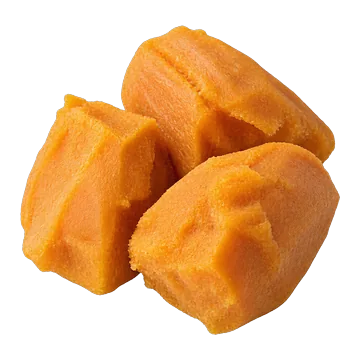 Sweet potato, boiled
Nothing to watch: doesn’t double average intake
2.97 µgper servingadds 4.7–10.6 % to an average adult’s intake (a share of that intake, not of a limit)CFIA 2013–2015 · grade B ?
How it’s rated
Adds 4.7-10.6% to the EFSA adult mean of 0.4-0.9 µg/kg body weight/day (28-63 µg/day at 70 kg); even the highest composite (78 µg/kg, 8.6 µg per serving) would add 14-31%, under a doubling. Zeros are stored as results in the CFIA file (non-detects presumably), so the mean is a lower bound
Intake: one 110 g serving a day, 70 kg adult · Level in the food: 27 µg/kg (mean, n = 11)
Measured on: related food: CFIA 2013-2015 "Infant Food - Puree - Sweet Potato" (commercial, heat-processed, puréed); results 0 (x2), 12, 13, 17, 19, 20, 27, 53, 58, 78 ng/g
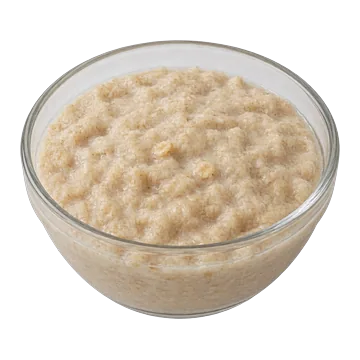 Oatmeal, cooked with water
Nothing to watch: doesn’t double average intake
2.5 µgper servingadds 3.9–8.8 % to an average adult’s intake (a share of that intake, not of a limit)FDA 2003–2006 · grade A ?
How it’s rated
Rated AT the quantification limit (quantification limit) as an upper bound: +3.9-8.8% of EFSA's adult average (0.4-0.9 µg/kg body weight/day); actual is lower. Boiling in water forms little acrylamide; the oats' kilning is the only heat step
Intake: one 250 mL (247.3 g) cooked serving a day, 70 kg adult · Level in the food: 10 µg/kg (reporting limit, n = 3)
Measured on: food-specific: FDA TDS #51 'Oatmeal, plain, cooked' (FY03 two baskets, FY05 one basket), all non-detect, quantification limit (quantification limit) 10 µg/kg; cold oat ring cereal 121-240 µg/kg (not porridge)
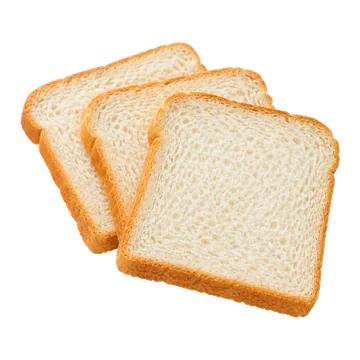 White bread
Nothing to watch: doesn’t double average intake
2.5 µgper servingadds 4–8.9 % to an average adult’s intake (a share of that intake, not of a limit)CFIA 2013–2015 · grade B ?
How it’s rated
No cap: no safe threshold is set for acrylamide (EFSA 2015 benchmark dose lower limit (BMDL10) 0.17 mg/kg body weight/day; a margin of exposure of 10,000 is low concern). A 75 g serving is 2.50 µg, 0.036 µg/kg body weight: +4.0-8.9% of EFSA's adult mean (0.4-0.9 µg/kg body weight/day, 28-63 µg/day) and +12-23% of Health Canada's (0.157-0.288 µg/kg body weight/day, 11-20 µg/day), under doubling it. Health Canada's 2012 assessment ranks bread (toasted 6.4%, untoasted 4.0%) among the top contributors.
Intake: one 75 g reference serving a day (Health Canada TRA A.1), 70 kg adult · Level in the food: 33.388 ng/g (mean, n = 129)
Measured on: food-specific: CFIA FSAP targeted survey acrylamide 2013-2015, 'Bakery Product - Bread' (all bread, untoasted, as sold), retail Canada
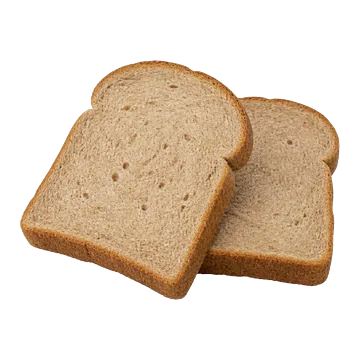 Whole-wheat bread
Nothing to watch: doesn’t double average intake
2.5 µgper servingadds 4–8.9 % to an average adult’s intake (a share of that intake, not of a limit)CFIA 2013–2015 · grade B ?
How it’s rated
Adds 4-9% to EFSA's average adult acrylamide intake (0.4-0.9 µg/kg body weight/day), so no cap. On its own the serving gives a margin of exposure of about 4,750 against the benchmark dose lower limit (BMDL10) of 170 µg/kg body weight/day (level of concern 10,000).
Intake: one 75 g serving a day, 70 kg adult · Level in the food: 33.39 µg/kg (mean, n = 129)
Measured on: category: CFIA FSAP targeted survey 2013-2015, product 'Bakery Product - Bread' (all bread types; no whole-wheat split); 17 of 129 results = 0 (non-detects stored as 0); median 24, max 910; mean without the 910 outlier 26.5
- Coffee, brewed, decaffeinated
Nothing to watch: doesn’t double average intake
1.6 µgper servingadds 2.5–5.7 % to an average adult’s intake (a share of that intake, not of a limit)FDA 2002–2006 · grade A ?
How it’s rated
No cap: of 13 FDA Total Diet Study composites of decaffeinated ground coffee (2003-2006), 84.6% were below the 10 ppb quantitation limit. Counting those at half the limit gives a mean of 6.4 µg/kg, so a cup carries 1.6 µg of acrylamide: 7.9% to 14.5% of the average adult's 11.0-20.2 µg/day, well below the doubling line. No safe threshold is set for acrylamide. In EFSA's consultation text for dry roasted coffee, decaffeinated is 319 µg/kg against 245 for regular, so decaf is not lower in acrylamide.
Intake: one 250 mL cup (250.75 g) a day, 70 kg adult · Level in the food: 6.4 µg/kg (mean of 13 composites, ND = quantification limit/2 (lower bound 2.2, upper bound 10.6), n = 13)
Measured on: FDA TDS FY2003-FY2006, TDS #381 'Decaffeinated coffee, from ground': FY03 ND x4; FY04 ND 11 ND 17; FY05 ND x4; FY06 ND; quantification limit (quantification limit) 10 ppb
 Pies
Nothing to watch: doesn’t double average intake
1.25 µgper servingadds 2–4.5 % to an average adult’s intake (a share of that intake, not of a limit)CFIA 2013–2015 · grade B ?
How it’s rated
No cap: no safe threshold is set for acrylamide (EFSA 2015 benchmark dose lower limit (BMDL10) 0.17 mg/kg body weight/day; a margin of exposure of 10,000 is low concern). A 110 g serving is 1.25 µg, 0.018 µg/kg body weight: +2.0-4.5% of EFSA's adult mean (28-63 µg/day) and +6-11% of Health Canada's (11-20 µg/day). At the highest sample (23 ng/g), 2.5 µg: +4-9% of EFSA's. Low in every source; only 5 samples.
Intake: one 110 g reference serving a day (Health Canada TRA A.22), 70 kg adult · Level in the food: 11.4 ng/g (mean, n = 5)
Measured on: food-specific but VERY THIN: CFIA FSAP targeted survey acrylamide 2013-2015, 'Bakery Product - Pie', n 5, retail Canada; as sold
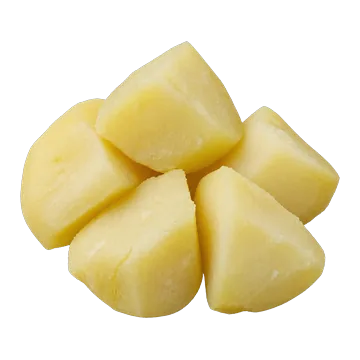 Potato, boiled
Nothing to watch: doesn’t double average intake
1.1 µgper servingadds 1.7–3.9 % to an average adult’s intake (a share of that intake, not of a limit)FDA 2003–2006 · grade A ?
How it’s rated
Upper bound only (both composites non-detect, quantification limit (quantification limit) 10 µg/kg): at most +1.7–3.9% of average intake; true value likely lower. Acrylamide forms above about 120 °C, so boiling is low.
Intake: one 110 g serving a day, 70 kg adult · Level in the food: 10 µg/kg (reporting limit, n = 2)
Measured on: food-specific: FDA TDS #136 'Potato, boiled (w/out peel)', 2 composites FY03 (both ND, quantification limit (quantification limit) 10 µg/kg)
- Cakes
Nothing to watch: doesn’t double average intake
0.9 µgper servingadds 1.4–3.2 % to an average adult’s intake (a share of that intake, not of a limit)CFIA 2013–2015 · grade B ?
How it’s rated
No cap: no safe threshold is set for acrylamide (EFSA 2015 benchmark dose lower limit (BMDL10) 0.17 mg/kg body weight/day; a margin of exposure of 10,000 is low concern). A 80 g serving is 0.90 µg, 0.013 µg/kg body weight: +1.4-3.2% of EFSA's adult mean (0.4-0.9 µg/kg body weight/day, 28-63 µg/day) and +4-8% of Health Canada's (0.157-0.288 µg/kg body weight/day, 11-20 µg/day). At the highest sample (42 ng/g), 3.4 µg: +5-12% of EFSA's. Low: under doubling.
Intake: one 80 g reference serving a day (Health Canada TRA A.6), 70 kg adult · Level in the food: 11.273 ng/g (mean, n = 11)
Measured on: food-specific but THIN: CFIA FSAP targeted survey acrylamide 2013-2015, 'Bakery Product - Cake', n 11, retail Canada; as sold
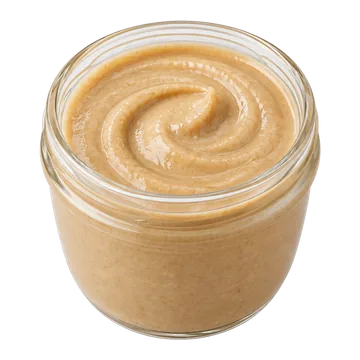 Tahini
Nothing to watch: doesn’t double average intake
0.82 µgper serving15 g × 54.4 ng/gadds 1.3–2.9 % to an average adult’s intake (a share of that intake, not of a limit)CFIA 2013–2015 · grade A ?
How it’s rated
No cap: no safe threshold is set for acrylamide. A 15.0 g serving at the CFIA mean of 54.4 µg/kg (12 retail samples, range 37-89, all quantified) carries 0.82 µg, 1.3-2.9% of EFSA's adult mean intake of 0.4-0.9 µg/kg body weight/day (28-63 µg a day at 70 kg), far from doubling. Almond butter in the same survey averages 356 ng/g.
Intake: one 15.0 g serving a day, 70 kg adult · Level in the food: 54.4 ng/g (µg/kg) (mean (median 53.5; range 37-89; all 12 quantified), n = 12)
Measured on: CFIA FSAP targeted survey, acrylamide 2013-2015, product 'Tahini' (the product itself, from roasted kernels): 12 retail samples
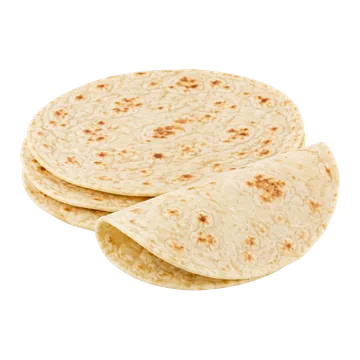 Flour tortillas
Nothing to watch: doesn’t double average intake
0.615 µgper servingadds 1–2.2 % to an average adult’s intake (a share of that intake, not of a limit)CFIA 2013–2015 · grade B ?
How it’s rated
No cap: EFSA's 2015 reference point for acrylamide is a benchmark dose lower limit (BMDL10) of 0.17 mg/kg body weight/day, judged by a margin of exposure; there is no grams figure. One serving carries 0.615 µg, 0.0088 µg/kg body weight/day, which is 1.0-2.2% of the adult mean exposure of 0.4-0.9 µg/kg body weight/day (EFSA 2015). The CFIA mean is 11.18 ng/g across 11 tortilla, wrap and pita samples. A tortilla warmed or toasted could be higher (white bread toasted 61.5 ng/g in Health Canada's 2012 assessment); no tortilla toasting figure was found.
Intake: one 55 g serving a day, 70 kg adult · Level in the food: 11.18 ng/g (mean of 11 samples (non-detects as 0: 5 zeros; 7, 7, 9, 19, 25, 56), n = 11)
Measured on: CFIA targeted survey 2013-2015, product 'Bakery Product - Tortilla/Wrap/Pita' (11 samples: 8 origin unknown, 2 Canada, 1 US; pita is included), as sold
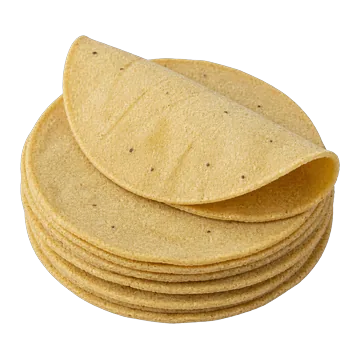 Corn tortillas
Nothing to watch: doesn’t double average intake
0.55 µgper servingadds 0.9–2.2 % to an average adult’s intake (a share of that intake, not of a limit)FDA 2002–2006 · grade B ?
How it’s rated
adds 0.9–2.2%
Intake: one 55 g serving a day, 70 kg adult · Level in the food: 10 µg/kg (single product, n = 1)
Measured on: one corn tortilla brand at the quantification limit (quantification limit) (FDA 2002–06); CFIA tortilla/wrap/pita category 11.2 (n = 11)
Flags and context, not rated by dose
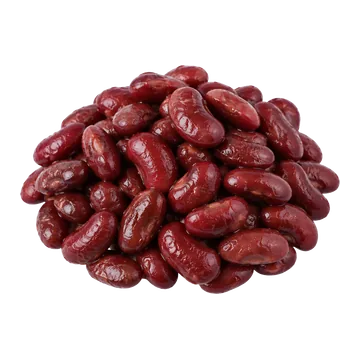 Kidney beans, canned
Nothing to watch: rated by margin of exposure
How it’s rated
No cap: no safe threshold is set for acrylamide, so no grams figure. Both FDA results for canned dark red kidney beans (2015) were below the 10 ppb limit of quantitation, so no contribution to intake is computed; canned beans are not fried or baked.
Intake: 100 g drained beans (illustration) · Level in the food: 10 ppb (reporting limit (limit of quantitation; both results below it), n = 2)
Measured on: US FDA individual-food survey 2015, 'Bush's Best Dark Red Kidney Beans' (canned; 2 results, both '<10')
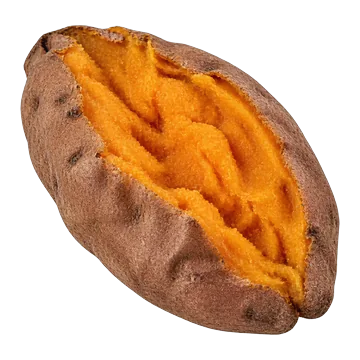 Sweet potato, baked
Worth knowing
FDA 2002–2006 · grade B ?
How it’s rated
Flagged, not rated: baking forms acrylamide, and one sample (not detected) is too thin to rate a hot-baked root. Sweet potato chips and crackers are high (CFIA 14-930 µg/kg chips, 460 crackers; Health Canada 2024: sweet potato chips the highest mean) but are other products. Boiling or steaming is the mitigation.
Intake: one 110 g serving a day, 70 kg adult
Measured on: food-specific but one restaurant sample: FDA 2004 'Smokey John's Bar-B-Q Baked Sweet Potatoes' ND; limit of detection not stated on the page
Sources
- CFIA, FSAP Targeted Survey – Acrylamide 2013–2015
cfia-acrylamide-2013-2015· dataset · Open Government Licence – Canada 2.0 - Normandin L et al. Dietary exposure to acrylamide in adolescents from a Canadian urban center. Food Chem Toxicol 2013;57:75-83. · doi:10.1016/j.fct.2013.03.005 · PMID 23517909
doi:10.1016/j.fct.2013.03.005· abstract only · journal copyright - Abt E et al. Acrylamide levels and dietary exposure from foods in the United States, an update based on 2011-2015 data. Food Addit Contam A 2019;36(10):1475-1490. · doi:10.1080/19440049.2019.1637548 · PMID 31318642
doi:10.1080/19440049.2019.1637548· abstract only · journal copyright - Hossain Z, Zhao T, Becalski A, Schneider J, Feng SY, Rawn DFK. Trends in acrylamide content in selected potato/sweet potato products on the Canadian market. Food Addit Contam A 2024. · doi:10.1080/19440049.2024.2379388 · PMID 39008692
doi:10.1080/19440049.2024.2379388· full text read · CC BY-NC-ND 4.0 - EFSA CONTAM Panel (2015) Scientific Opinion on acrylamide in food. EFSA Journal 13(6):4104 · doi:10.2903/j.efsa.2015.4104
efsa-2015-acrylamide· abstract only · EFSA Journal: CC BY-ND 4.0 - US FDA, acrylamide in individual food products 2002–2006
fda-acrylamide-2002-2006· dataset · US government work (17 USC 105), public domain - US FDA, Survey Data on Acrylamide in Food: Individual Food Products, data from 2011 (xlsx media/130926)
fda-acrylamide-2011· dataset · US Government work (public domain) - US FDA, Survey Data on Acrylamide in Food: Individual Food Products (2011 data media/130926; 2015 data media/130927), xlsx
fda-acrylamide-2011-2015· dataset · US government work (public domain) - US FDA, Survey Data on Acrylamide in Food: Individual Food Products, data from 2015 (xlsx media/130927; page content current as of 2024-03-05)
fda-acrylamide-2015· dataset · US Government work (public domain) - US FDA. Survey Data on Acrylamide in Food: Individual Food Products (spreadsheets media130926 and media130927).
fda-acrylamide-individual-products-2011-2015· secondary source · US public domain - US FDA, Survey Data on Acrylamide in Food: Total Diet Study Results (FY2003-FY2006), page snapshot
fda-acrylamide-tds-2003-2006· page · US government work (public domain) - US FDA, Survey Data on Acrylamide in Food: Total Diet Study Results (Tables 1–4, FY03–FY06; updated October 2006)
fda-acrylamide-tds-fy2003-2006· dataset · US government work (17 USC 105), public domain - US FDA, Survey Data on Acrylamide in Food: Total Diet Study Results (FY03-FY06)
fda-tds-acrylamide-2003-2006· page · US government work (17 USC 105), public domain - Health Canada. Health Canada's Revised Exposure Assessment of Acrylamide in Food (2012), Appendix 1 and Table 2; page details 2020-12-24
hc-acrylamide-2012· full text read · Open Government Licence - Canada - Mesias M, Garcia A, et al. Two decades of monitoring acrylamide in breakfast cereals: impact of market reformulation and compliance with EU regulation. Food Chemistry: X 2025 Oct · doi:10.1016/j.fochx.2025.103039 · PMID 41036459
mesias-2025· full text read · open access (journal) - Yoshida M, Isamu M, Chiku K. Acrylamide in stir-fried potato and onion for simmered dishes in Japan. Food Saf (Tokyo) 2017 Jun · doi:10.14252/foodsafetyfscj.2017005 · PMID 32231929
pmid:32231929· abstract only · abstract only (PubMed) - Asadi S, Aalami M, Shoeibi S, Kashaninejad M, Ghorbani M, Delavar M. Effects of different roasting methods on formation of acrylamide in pistachio. Food Sci Nutr 2020;8(6):2875-2881 · doi:10.1002/fsn3.1588 · PMID 32566205
pmid:32566205· secondary source · CC BY (Europe PMC licence field, PMC7300066) - Santanatoglia A et al. Effect of brewing methods on acrylamide content and antioxidant activity: eight different filter coffee preparations. Antioxidants 2023;12:1888 · doi:10.3390/antiox12101888 · PMID 37891967
pmid:37891967· full text read · CC BY 4.0 - Sebastia A, Fernandez-Matarredona C, Castagnini JM, et al. Acrylamide content in popcorn from Spanish market: Risk assessment. Food Chem Toxicol 2025;196:115145 · doi:10.1016/j.fct.2024.115145 · PMID 39608630
pmid:39608630· secondary source · licence not recorded