Furan
Forms when food is heated, most of all in coffee and in food heated in sealed cans and jars.
In the body: In rats it injured the liver’s bile ducts and, at higher doses, caused liver tumours.
No intake of it is known to be safe, so there’s no grams figure. Each food shows what a daily serving adds to an average adult’s intake. The one that stands out: Coffee, brewed, decaffeinated. A daily serving adds 25–173%, depending on how much you already take in. Also Coffee, brewed: 18–126%. The other rated foods and preparations add 63% or less. One more reviewed food or preparation carries it but isn’t rated yet.
No safe level known.
The reference point, not a limit
The agency starts from a dose linked to an effect in studies, in people or in animals, and judges the margin between that dose and what people take in.
- Reference point0.064 mg/kg body weight/day
- That dose, for a 70 kg adult4.48 mg a day
Not a safe amount or an allowance: harm can’t be ruled out below it. - Basisbenchmark dose (BMDL): the lower estimate of the dose that produced a set size of effect in studies; the number after it is that size (BMDL10 is 10%, BMDL01 is 1%). A starting point rather than a limit
benchmark dose lower limit (BMDL10), EFSA CONTAM 2017 (non-neoplastic); neoplastic BMDL10 1.31 mg/kg body weight/day (benchmark dose lower limit (BMDL10) for cholangiofibrosis in male rats, 2 years, corrected for 5 days a week) - Margin of exposure that raises concern ?100
A margin below this counts as a concern. A margin of exposure is the dose that caused effects in studies divided by what people take in: the smaller it is, the closer people’s intake sits to that dose. - Average adult intake0.11–0.75 µg/kg body weight/day EFSA 2017: adult chronic exposure 0.11 (min lower bound) to 0.75 (max upper bound) µg/kg body weight/day; coffee the main adult source; MOEs 584 (min lower bound) to 65 (max upper bound) at the mean. Methylfurans (2-MF, 3-MF) add but have no reference point.
- Source ?EFSA 2017
Reviewed foods that carry it
2 reviewed foods carry it, 1 of them rated by dose. A food counts once, as in the foods list: preparations sharing a page (raw and cooked, canned) count once; one with its own page counts apart. Below, one line for each of 4 preparations. 3 of those lines are rated by dose.
How often you can eat it ?
No grams figure for Furan: there is no limit to count grams against. Each food shows the method’s rating instead: how much a daily serving adds to the average adult’s intake.
One realistic serving each, rated by dose, not by presence. The most restrictive rating comes first, then the largest dose per serving.
 Coffee, brewed, decaffeinated
Go easy: can double average intake
13.3 µgper servingadds 25.3–172.7 % to an average adult’s intake (a share of that intake, not of a limit)Becalski 2016 · grade A ?
How it’s rated
May exceed: furan has no safe level set for its cancer effect, so a cup is judged by what it adds to the average adult's intake. Commercially brewed decaffeinated coffee in Canada (mean 53.1 µg/kg, 12 samples) gives 13.3 µg of furan a cup, or 0.190 µg/kg body weight. That adds 25% to EFSA's highest adult average (0.75 µg/kg body weight/day) and 173% to its lowest (0.11), so at the low end a daily cup more than doubles average intake. At that low end total intake stays under the non-cancer limit the dataset carries (benchmark dose lower limit (BMDL10) 64 µg/kg body weight/day, with a margin of 100).
Intake: one 250 mL cup (250.75 g) a day, 70 kg adult · Level in the food: 53.1 µg/kg (mean, n = 12)
Measured on: Becalski 2016, commercially brewed decaffeinated coffee, Canada; EFSA 2017 Table D.2 n=12, range 6.63-121
- Coffee, brewed
Go easy: can double average intake
9.68 µgper servingadds 18.4–125.7 % to an average adult’s intake (a share of that intake, not of a limit)Becalski 2016 · grade A ?
How it’s rated
May exceed: furan has no safe level set for its cancer effect, so a cup is judged by what it adds to the average adult's intake. Commercially brewed regular coffee (mean 38.7 µg/kg, 16 samples from 3 national chains in one Canadian city) gives 9.68 µg of furan a cup, or 0.138 µg/kg body weight. That adds 18% to EFSA's highest adult average (0.75 µg/kg body weight/day) and 126% to its lowest (0.11), so at the low end a daily cup more than doubles average intake. At that low end total intake stays under the non-cancer limit the dataset carries (benchmark dose lower limit (BMDL10) 64 µg/kg body weight/day, with a margin of 100). Coffee is already the main adult source of furan in EFSA's data, and 2-methylfuran (172 µg/kg) adds to it with no reference point.
Intake: one 250 mL cup (250.25 g) a day, 70 kg adult · Level in the food: 38.7 µg/kg (mean, n = 16)
Measured on: Becalski 2016, commercially brewed regular (medium or bold roast) coffee from 3 national chains, one Canadian city; EFSA 2017 Table D.2: n=16, range 25.1-69.5 µg/kg; all analytes detected
 Espresso
Nothing to watch: doesn’t double average intake
4.78 µgper servingadds 9.1–62.1 % to an average adult’s intake (a share of that intake, not of a limit)Becalski 2016 · grade A ?
How it’s rated
No cap: no safe threshold is set for furan. A 30 mL espresso (mean 157 µg/kg, 12 samples, Canada) carries 4.78 µg, or 0.068 µg/kg body weight, which adds 9% to 62% to EFSA's adult average intake of 0.75 to 0.11 µg/kg body weight/day: below the doubling line.
Intake: one 30 mL espresso (30.43 g) a day, 70 kg adult · Level in the food: 157 µg/kg (mean, n = 12)
Measured on: Becalski 2016, commercially brewed espresso, Canada; EFSA 2017 Table D.2 n=12, range 34.9-352
Flags and context, not rated by dose
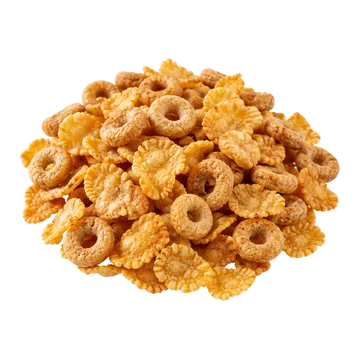 Breakfast cereal
Not rated yet
How it’s rated
Not rated: the only level found, 16-30 µg/kg, covers bread and rolls, raw pasta, breakfast cereals and fine bakery wares together, not breakfast cereal alone. No safe threshold is set for furan: EFSA 2017 gives a benchmark dose lower limit (BMDL10) of 0.064 mg/kg body weight/day (bile-duct lesions in rats), needs a margin of exposure of 100 or higher for that effect, and concluded that the calculated margins indicate a health concern. For scale only, 30 g at 16-30 µg/kg would add 0.5-0.9 µg a day, against JECFA-quoted adult mean exposures of 0.25-1.17 µg/kg body weight/day (17-82 µg/day).
Intake: one 30 g serving a day (Health Canada reference amount C.3), 70 kg adult
Measured on: EFSA 2017 furan opinion: "breakfast cereals" (n = 67 samples in the occurrence set) are named among foods with comparable means of 16-30 µg/kg; no breakfast-cereal-only mean is given in the text read
Sources
- Becalski A, Halldorson T, Hayward S, Roscoe V. Furan, 2-methylfuran and 3-methylfuran in coffee on the Canadian market. J Food Compos Anal 2016;47:113-119 · doi:10.1016/j.jfca.2016.01.006
becalski2016-furan-coffee· abstract only · Elsevier - EFSA CONTAM Panel (2017) Risks for public health related to the presence of furan and methylfurans in food. EFSA Journal 15(10):5005 · doi:10.2903/j.efsa.2017.5005
efsa-2017-furan· full text read · CC BY-ND (as published)