Histamine
Forms in some fish as they spoil, faster when they are kept warm, and in fermented foods.
In the body: A big dose in one meal brings on flushing, headache and an upset stomach.
The one to watch: cooked farmed salmon. About 200 g, eaten alone, reaches the one-meal limit. Also raw farmed salmon, at about 200 g on the same count. The rest stay under it at a serving a day. The one with the least room, cheddar, has about 250 g, eaten alone. 23 more reviewed foods and preparations carry it but aren’t rated by dose: shown for context, or not rated yet.
Too much in one go. Harm from one big portion. A food measured against the agency’s dose shows the grams that reach it in one sitting.
The limit
Reviewed foods that carry it
36 reviewed foods carry it, 18 of them rated by dose. A food counts once, as in the foods list: preparations sharing a page (raw and cooked, canned) count once; one with its own page counts apart. Below, one line for each of 42 preparations. 19 of those lines are rated by dose.
Grams to the limit ?
Grams of each food that reach the limit in its window, for a 70 kg adult. Fewest first: those are the foods to watch.
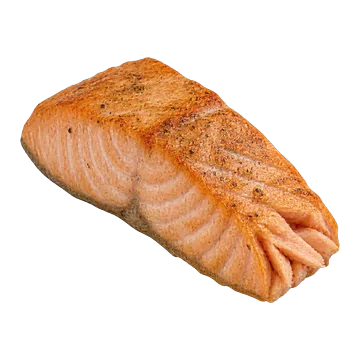 Farmed salmon, cooked
Go easy: within 2 servings of the limit for a 100 g serving
200greaches the limit in one mealCounted from zero: this food eaten alone.25.6 mg per 100 g servingMadejska 2022 · grade B ?
How it’s rated
Rated on the dose in one meal: even the worst raw batch measured carries about half the 50 mg per-meal dose in 100 g, and most batches are below the 2.13 mg/kg detection limit. Salmonids have little free histidine (under 1,000 mg/kg, FAO/WHO).
Intake: one 100 g serving, 70 kg adult; EFSA dose 50 mg per meal · Level in the food: 256.1 mg/kg (single product, n = 28)
Measured on: highest positive raw Atlantic salmon batch at Polish smokehouse suppliers (28 raw batches); not a cooked measurement
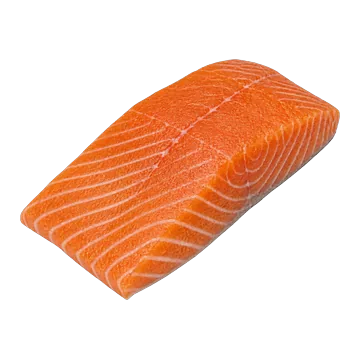 Farmed salmon, raw
Go easy: within 2 servings of the limit for a 125 g serving
200greaches the limit in one mealCounted from zero: this food eaten alone.32 mg per 125 g servingMadejska 2022 · grade B ?
How it’s rated
Rated on the dose in one meal: the worst raw batch measured carries less than the 50 mg per-meal dose in 125 g; most batches are below the 2.13 mg/kg detection limit.
Intake: one 125 g raw serving, 70 kg adult; EFSA dose 50 mg per meal · Level in the food: 256.1 mg/kg (single product, n = 28)
Measured on: highest positive raw Atlantic salmon batch at Polish smokehouse suppliers (28 raw batches); not a cooked measurement
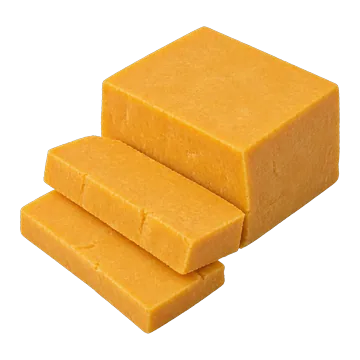 Cheddar
Nothing to watch: under the limit for a 30 g serving
250greaches the limit in one mealCounted from zero: this food eaten alone.6.1 mg per 30 g servingSanchezperez 2021 · grade B ?
How it’s rated
6.1 mg per 30 g serving at this level, 12.2% of EFSA's 50 mg per meal for healthy adults: no flag for healthy adults. People with histamine intolerance, and people taking isoniazid, whose label says to avoid histamine-containing foods such as tuna, keep a separate flag.
Intake: one 30 g serving, 70 kg adult · Level in the food: 203.3 mg/kg (P95, n = 80)
Measured on: category: cured, semi-cured and grated cheese, Spanish market (not cheddar-specific)
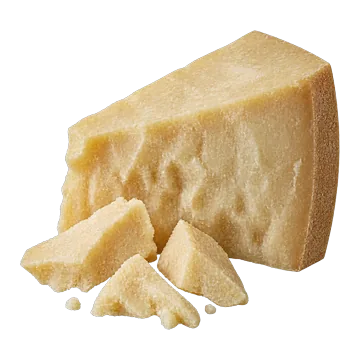 Parmesan
Nothing to watch: under the limit for a 15 g serving
310greaches the limit in one mealCounted from zero: this food eaten alone.2.44 mg per 15 g servingPawulgruba 2025 · grade A ?
How it’s rated
2.44 mg per 15 g serving at this level, 4.9% of EFSA's 50 mg per meal for healthy adults: no flag for healthy adults. People with histamine intolerance, and people taking isoniazid, whose label says to avoid histamine-containing foods such as tuna, keep a separate flag.
Intake: one 15.0 g serving, 70 kg adult · Level in the food: 163 mg/kg (max, n = 7)
Measured on: food-specific: Parmigiano Reggiano, Polish retail market, n = 7 (range 53.0-163 mg/kg)
 Sauerkraut
Nothing to watch: under the limit for a 30 g serving
520greaches the limit in one mealCounted from zero: this food eaten alone.2.886 mg (highest retail sample, 96.2 mg/kg) per 30 g servingHow it’s rated
The highest retail sample: 30 g x 96.2 mg/kg = 2.9 mg, 5.8% of EFSA's 50 mg per-meal no-effect level for healthy adults; at EFSA's mean (39.4-42.6) 1.2-1.3 mg (2.4-2.6%): no flag for healthy adults. A 250 g plate at the highest value would be 24 mg (48%). EFSA's level for people with histamine intolerance is 'below detectable limits'. EFSA found sauerkraut rarely implicated in poisoning.
Intake: one 30 g serving (EFSA no-effect level is per meal) · Level in the food: 30.3 mg/kg (mean, n = 14)
Measured on: food-specific, retail: 14 Polish commercial samples, 2.79-96.20 mg/kg (one <quantification limit (quantification limit)); EFSA class 'fermented vegetables' (n = 9) mean 39.4-42.6, P95 92
 Soy sauce
Nothing to watch: under the limit for a 16 g serving
More than anyone eatsNo realistic amount reaches the limit.0.93 mg (histamine per tablespoon (16 g) at the median) per 16 g servingHow it’s rated
The counted figure is 860 g in one meal, about 54 servings a day.
No cap: EFSA's 2011 no-effect level for histamine is 50 mg per person per meal. At the median of 10 Korean brands, 58.33 mg/kg, about 857 g of soy sauce in one meal would reach it, and 157 g at the highest brand (318.46 mg/kg). A tablespoon carries 0.93 mg at the median to 5.10 mg at the highest brand, 1.9% to 10.2% of the level; no Canadian survey was found.
Intake: one tablespoon (15 mL, 16 g) a day, 70 kg adult · Level in the food: 58.33 mg/kg (median of 10 commercial brands (min 11.25, max 318.46), n = 10)
Measured on: Korean market 2021, top-selling soy sauce brands S1-S10 (each a pool of samples from eight cities), HPLC, mg/kg wet weight; the study analysed 50 brands (n = 292) across five seasonings. Korean soy sauces are mostly brewed soy-and-wheat; no Canadian soy-sauce histamine survey found.
 Eggplant, cooked
Nothing to watch: under the limit for a 85 g serving
1,300greaches the limit in one mealCounted from zero: this food eaten alone.3.35 mg (histamine, fresh basis) per 85 g servingSanchezperez 2018 · grade B ?
How it’s rated
No cap: EFSA's 2011 no-effect level is 50 mg of histamine per person per meal for healthy adults. At the mean of 39.42 mg/kg fresh eggplant (23 samples, range 4.17–100.6), about 1,268 g in one meal would reach it, and 497 g at the maximum; one 85 g serving carries 3.4 mg at the mean and 8.6 mg at the maximum. These are fresh-weight figures, and no measurement of boiled eggplant was found.
Intake: one 85 g serving as a single meal (HC TRA V.1) · Level in the food: 39.42 mg/kg (mean of reported values (standard deviation 30.66; range 4.17-100.6), n = 23)
Measured on: Sanchez-Perez et al. 2018 review, Table 1: eggplant, mg/kg fresh weight, n 23 (the eggplant row carries the # marker = the authors' own database of Spanish market products, not a compiled study). FRESH basis; the effect of boiling on eggplant histamine was not found.
 Feta
Nothing to watch: under the limit for a 30 g serving
More than anyone eatsNo realistic amount reaches the limit.0.8 mg per 30 g servingWhitebrined 2025 · grade A ?
How it’s rated
The counted figure is 1,900 g in one meal, about 62 servings a day.
0.8 mg per 30 g serving at this level, 1.6% of EFSA's 50 mg per meal for healthy adults: no flag for healthy adults. People with histamine intolerance, and people taking isoniazid, whose label says to avoid histamine-containing foods such as tuna, keep a separate flag.
Intake: one 30 g serving, 70 kg adult · Level in the food: 26.76 mg/kg (max, n = 3)
Measured on: food-specific: feta, counter-sold, n = 3 (26.76, ND, ND mg/kg); other white brined cheeses not histamine-positive
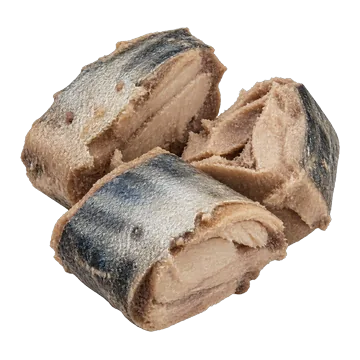 Mackerel, canned
Nothing to watch: under the limit for a 55 g serving
More than anyone eatsNo realistic amount reaches the limit.0.77 mg (at 14 mg/kg) per 55 g servingPubMed 35112003 · grade A ?
How it’s rated
The counted figure is 3,600 g in one meal, about 65 servings a day.
Polish positives: at most 0.77 mg per 55 g = 1.5% of 50 mg. The Serbian worst subsample (412 mg/kg) = 22.7 mg per 55 g = 45% of 50 mg; 2 of 13 lots failed the EC criterion (m 100, M 200 mg/kg). Canning keeps whatever histamine the raw fish had. No cap for healthy adults; person-specific flag as for the raw row.
Intake: one 55 g drained serving · Level in the food: 14 mg/kg (maximum of positives, n = 9)
Measured on: food-specific: Polish canned Atlantic mackerel (3 of 9 positive, 3.4-14.0, HPLC-DAD); Serbian canned mackerel (13 lots, LC-MS/MS, species unstated, max 412, 2 lots non-compliant)
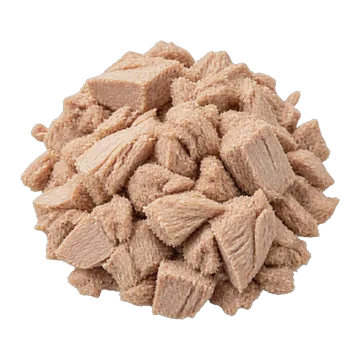 Light tuna, canned in water
Nothing to watch: under the limit for a 55 g serving
More than anyone eatsNo realistic amount reaches the limit.0.39 mg per 55 g servingHow it’s rated
The counted figure is 7,100 g in one meal, about 129 servings a day.
Rated on the dose in one meal: 50 mg per person per meal for healthy adults (EFSA 2011). 55 g at the mean is 0.8%; at the maximum, 20.97 mg/kg, 2.3%; at Health Canada's 100 mg/kg limit 11%; at 200 mg/kg 22%: no flag for healthy adults. People with histamine intolerance, and people taking isoniazid, whose label says to avoid histamine-containing foods such as tuna, keep a separate flag.
Intake: one 55 g serving a day, 70 kg adult · Level in the food: 7.05 mg/kg (mean, n = 30)
Measured on: food-specific: Tunç 2025, 30 canned tuna, Ankara supermarkets, ELISA; 19 positive; mean 7.05 (inferred over positives), range 2.62-20.97. Category row (Sánchez-Pérez 2021) mean 10.03, P95 20.39, max 657.05 (a sardine)
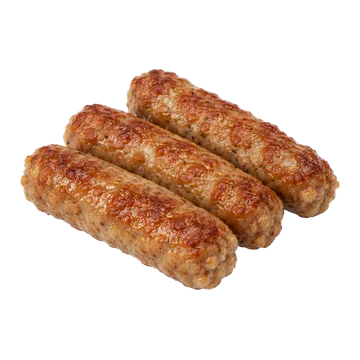 Pork sausage, pan-fried
Nothing to watch: under the limit for a 55 g serving
More than anyone eatsNo realistic amount reaches the limit.0.242 mg (histamine per 55 g, 4.4 mg/kg × 0.055 kg) per 55 g servingHow it’s rated
The counted figure is 11,000 g in one meal, about 207 servings a day.
No cap: this uses EFSA's 'Other meat products' category (cooked ham, mortadella-type sausages) as a stand-in, not fresh pork sausage. It is rated on a single meal against 50 mg of histamine per person, the top of the 25 to 50 mg range at which EFSA saw no adverse effects in healthy volunteers. At the category mean of 4.4 mg/kg a 55 g serving carries 0.24 mg, 0.5% of that level; about 11,364 g eaten alone in one meal would reach it (12,821 g at the lower-bound mean of 3.9). The category's highest sample, 212 mg/kg, would reach it in 236 g, so one sample in the 75 could do so in four 55 g servings. People with histamine intolerance are a person-specific matter, not rated: EFSA says only levels below detectable limits can be considered safe for them.
Intake: one 55 g cooked serving a meal, adult (50 mg per person per meal, no body weight) · Level in the food: 4.4 mg/kg (mean (n = 75; P95 4.8, max 212), n = 75)
Measured on: EFSA 2011 Table 10, sub-category "Other meat products" (the report: "including cooked ham, mortadella-type of sausages"), European data; mean 3.9 (lower bound) to 4.4 (upper bound) mg/kg; median <1; P95 4.8; max 212. A category figure for finished cooked meat products, NOT fresh pork sausage, NOT fermented sausage (fermented sausages, n = 374: mean 23.0-23.6, P95 149, max 400 mg/kg)
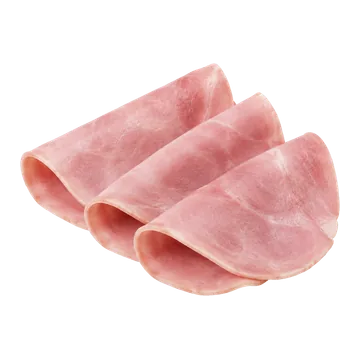 Ham, sliced
Nothing to watch: under the limit for a 55 g serving
More than anyone eatsNo realistic amount reaches the limit.0.242 mg per 55 g servingHow it’s rated
The counted figure is 11,000 g in one meal, about 207 servings a day.
No cap: EFSA's 2011 level for histamine is 50 mg per person per meal, with no body-weight scaling. At the upper-bound mean of 4.4 mg/kg, about 11,364 g in one meal would reach it, eaten alone; at the maximum sample (212 mg/kg) it is 236 g. A 55 g serving carries 0.24 mg, 0.5% of the limit at the mean. The figures are for a category (cooked ham, mortadella-type sausages), not ham alone.
Intake: one 55 g reference serving a day, 70 kg adult · Level in the food: 4.4 mg/kg (mean (n 75; lower bound 3.9, upper bound 4.4; median <1, P95 4.8, max 212), n = 75)
Measured on: EFSA BIOHAZ 2011 EU occurrence data, category 'other meat products (including cooked ham, mortadella-type of sausages)'; a category figure, not ham alone
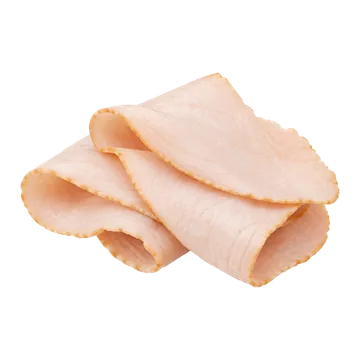 Deli turkey breast
Nothing to watch: under the limit for a 55 g serving
More than anyone eatsNo realistic amount reaches the limit.0.242 mg per 55 g servingHow it’s rated
The counted figure is 11,000 g in one meal, about 207 servings a day.
No cap: the reference point is EFSA's 2011 level of 50 mg of histamine per meal. This is a related-food figure: EFSA's category 'other meat products' (cooked ham, mortadella-type sausages; no turkey), mean 4.4 mg/kg at the upper bound (3.9 lower bound) in 75 samples, 80% non-detects, maximum 212 mg/kg. A serving carries 0.242 mg. Eaten alone, about 11,364 g in one meal would reach 50 mg at the upper-bound mean, and 236 g at the maximum.
Intake: one 55 g reference serving a day, 70 kg adult · Level in the food: 4.4 mg/kg (mean (n 75; lower bound 3.9, upper bound 4.4; median <1, P95 4.8, max 212); PROXY category, n = 75)
Measured on: EFSA BIOHAZ 2011 EU, category 'other meat products (including cooked ham, mortadella-type of sausages)'; no turkey in the category name: a related-food figure
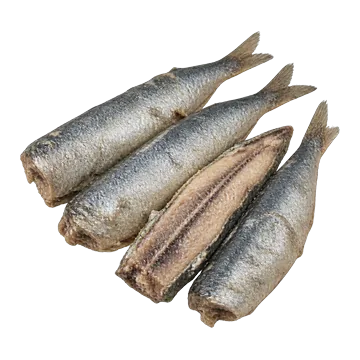 Sardines, canned in oil
Nothing to watch: under the limit for a 55 g serving
More than anyone eatsNo realistic amount reaches the limit.0.22 mg per 55 g servingHow it’s rated
The counted figure is 12,000 g in one meal, about 222 servings a day.
Rated on the dose in one meal: EFSA's 50 mg per person per meal (EFSA 2011, as given in its abstract: "50 mg histamine for healthy individuals, but below detectable limits for those with histamine intolerance"). 55 g at the mean of the positive samples, 4.09 mg/kg, carries 0.22 mg, 0.4% (about 0.2% on the mean of all 30, about 1.5); at the 95th percentile, 20 mg/kg, 2.2%; at 200 mg/kg 22%; at the 657 mg/kg outlier 72%. A compliant can: no flag for healthy adults. People with histamine intolerance, and people taking isoniazid, whose label says to avoid histamine-containing foods such as tuna, keep a separate flag.
Intake: one 55 g serving a day, 70 kg adult · Level in the food: 4.09 mg/kg (mean, n = 30)
Measured on: food-specific: Tunç 2025, 30 canned sardines, Ankara supermarkets, ELISA; 19 of 30 not detected; mean 4.09 is of the 11 positive samples (Table 1: 30 (11)); mean over all 30 about 1.5 with non-detects at 0. Category row (Sánchez-Pérez 2021, preserved/semi-preserved fish n=151) mean 10.03, P95 20.39, max 657.05 (one canned sardine)
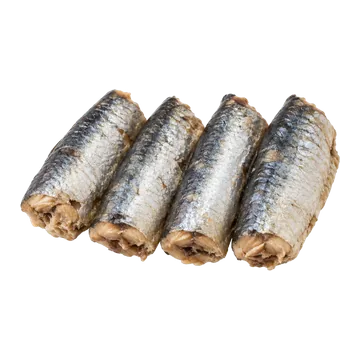 Sardines, canned in water
Nothing to watch: under the limit for a 55 g serving
More than anyone eatsNo realistic amount reaches the limit.0.22 mg per 55 g servingHow it’s rated
The counted figure is 12,000 g in one meal, about 222 servings a day.
No cap: rated on the dose in one meal, EFSA's 50 mg of histamine per person per meal (EFSA 2011). A 55 g portion at the mean of the positive samples, 4.09 mg/kg, carries 0.22 mg, 0.4% of that; at the 95th percentile (20 mg/kg) 2.2%, at 200 mg/kg 22%, and at the 657 mg/kg outlier 72%. Eaten alone it would take about 12.2 kg in one meal to reach 50 mg at the positive mean, so the level is never reached. 19 of 30 canned sardine samples (Ankara, 2025) had none detected. A compliant can carries no flag for healthy adults; people with histamine intolerance, and people taking isoniazid, whose label says to avoid histamine-containing foods, keep a separate flag.
Intake: one 55 g serving a day, 70 kg adult · Level in the food: 4.09 mg/kg (mean, n = 30)
Measured on: food-specific: Tunç 2025, 30 canned sardines, Ankara supermarkets, ELISA; 19 of 30 not detected; mean 4.09 is of the 11 positive samples (Table 1: 30 (11)); mean over all 30 about 1.5 with non-detects at 0. Category row (Sánchez-Pérez 2021, preserved/semi-preserved fish n=151) mean 10.03, P95 20.39, max 657.05 (one canned sardine)
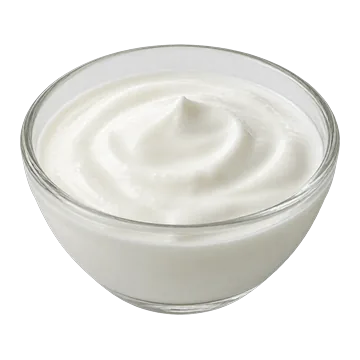 Plain yogurt, whole milk
Nothing to watch: under the limit for a 115 g serving
More than anyone eatsNo realistic amount reaches the limit.0.35 mg per 115 g servingMoniente 2023 · grade A ?
How it’s rated
The counted figure is 16,000 g in one meal, about 142 servings a day.
No cap for healthy adults: EFSA's no-effect level is 50 mg of histamine per meal. The highest of 16 cow's-milk yogurts measured 3.05 mg/kg (14 had none detected), so a 115 g serving carries at most 0.35 mg, 0.7% of it. Sheep's-milk yogurts in the same study reached 17.16 mg/kg (1.97 mg per serving, 3.9%). EFSA's level for people with histamine intolerance is 'below detectable limits'.
Intake: one 115 g serving a day, 70 kg adult · Level in the food: 3.054 mg/kg (max (2 of 16 cow's-milk yogurts quantified; 14 not detected), n = 16)
Measured on: food-specific measured (Spain, 2023); cow's milk yogurts
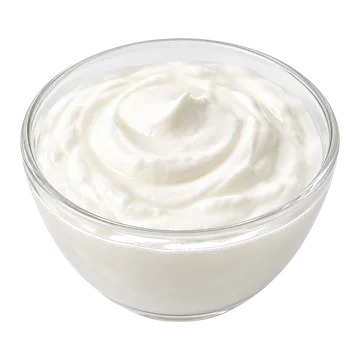 Greek yogurt, plain, nonfat
Nothing to watch: under the limit for a 115 g serving
More than anyone eatsNo realistic amount reaches the limit.0.35 mg per 115 g servingMoniente 2023 · grade B ?
How it’s rated
The counted figure is 16,000 g in one meal, about 142 servings a day.
No cap for healthy adults: EFSA's no-effect level is 50 mg of histamine per meal. The highest of 16 cow's-milk yogurts measured 3.05 mg/kg (14 had none detected), so a 115 g serving carries at most 0.35 mg, 0.7% of it. Sheep's-milk yogurts in the same study reached 17.16 mg/kg (1.97 mg per serving, 3.9%). EFSA's level for people with histamine intolerance is 'below detectable limits'.
Intake: one 115 g serving a day, 70 kg adult · Level in the food: 3.054 mg/kg (max (2 of 16 cow's-milk yogurts quantified; 14 not detected), n = 16)
Measured on: food-specific measured (Spain, 2023); cow's milk yogurts
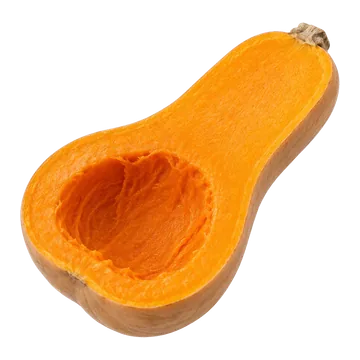 Butternut squash, baked
Nothing to watch: under the limit for a 85 g serving
More than anyone eatsNo realistic amount reaches the limit.0.024 mg (histamine, fresh) per 85 g servingSanchezperez 2018 · grade B ?
How it’s rated
The counted figure is 180,000 g in one meal, about 2,101 servings a day.
No cap: EFSA's 2011 no-effect level for histamine is 50 mg per person per meal. At the mean of 0.28 mg/kg in pumpkin (12 samples, fresh), about 178,571 g in one meal would reach it, and 26,316 g at the highest value, 1.90 mg/kg. Histamine appeared in only a few samples, all under 2 mg/kg.
Intake: one 85 g serving as a single meal · Level in the food: 0.28 mg/kg (mean (standard deviation 0.54; nd-1.90), n = 12)
Measured on: Sanchez-Perez et al. 2018 review, Table 1: PUMPKIN (not butternut specifically), mg/kg fresh weight, n 12; fresh basis, not baked.
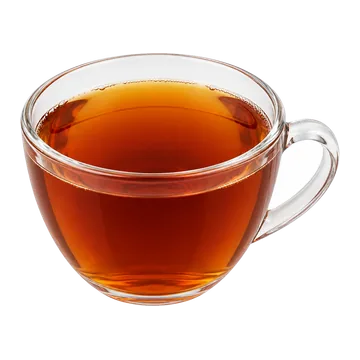 Black tea, brewed
Nothing to watch: under the limit for a 250 g serving
More than anyone eatsNo realistic amount reaches the limit.0.005 mg (per cup, at the highest sample) per 250 g servingSpizzirri 2016 · grade A ?
How it’s rated
The counted figure is 2,500,000 g in one meal, about 10,000 servings a day.
No cap: EFSA's no-effect level is 50 mg of histamine per meal. In 14 black-tea infusions from Italy, histamine was detected in 9 (11.1 to 20.0 µg/L) and not detected in 5, so a cup at the highest level carries 0.005 mg. About 2,500,000 g of tea would be needed to reach the limit, which is not a level that matters. A second survey (9 teas) found none.
Intake: one 250 mL (250 g) cup a day, 70 kg adult · Level in the food: 20 µg/L (maximum of 14 black-tea infusions, n = 14)
Measured on: Spizzirri 2016: 14 black-tea products (Italy), infusions per ISO 3103 (2 g leaves, 70 mL boiling distilled water, 20 min, made up to 100 mL); histamine detected in 9 (11.1-20.0 µg/L), not detected in 5
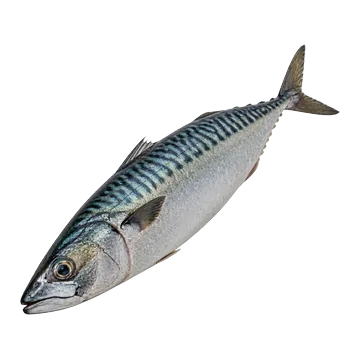 Mackerel, raw
Nothing to watch: under the limit for a 125 g serving
No gram figure for this foodWe have no measurement of this in this food, so there is no gram figure.PubMed 35112003 · grade A ?
How it’s rated
At the detection limit a 125 g serving carries at most 0.26 mg, 0.5% of EFSA's 50 mg per meal: fish kept cold does not approach the dose, so no flag for healthy adults. Poor handling changes that: whole mackerel held 24 h at 22 °C reached 1,090 mg/kg, 136 mg per 125 g, 273% of 50 mg. Health Canada's maximum level is 100 mg/kg (12.5 mg per serving, 25%); the FDA (Nov 2024) uses 35 ppm for decomposition and 200 ppm for health, quality thresholds rather than doses. People with histamine intolerance, and people taking isoniazid, whose label says to avoid histamine-containing foods such as tuna, keep a separate flag.
Intake: one 125 g raw serving
Measured on: food-specific: Polish raw Atlantic mackerel, HPLC-DAD, detection limit (detection limit) 2.1 mg/kg
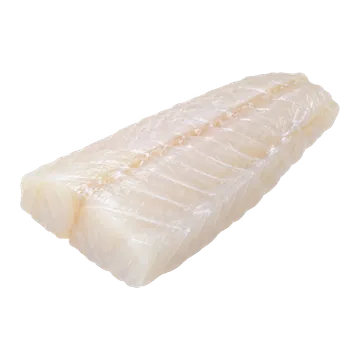 Cod, raw
Nothing to watch: under the limit for a 125 g serving
No gram figure for this foodWe have no measurement of this in this food, so there is no gram figure.Pawulgruba 2014 · grade A ?
How it’s rated
No cap: EFSA's 2011 no-effect level for histamine is 50 mg per person per meal. In a Polish retail study, 2 of 5 fresh cod samples were positive (1.8 and 3.2 mg/kg; the other 3 below the 1.3 mg/kg limit of detection) and 1 of 6 smoked cod at 4.3 mg/kg. At the highest fresh value, 3.2 mg/kg, about 15.6 kg of fish in one meal would be needed to reach it. Cod is a non-scombroid fish, and spoiled or badly stored fish would differ.
Intake: 125 g raw (HC TRA I.3); histamine limit is per person per meal, not per body weight
Measured on: Pawul-Gruba et al. 2014, fresh fish bought in Poland, HPLC-DAD, detection limit (detection limit) 1.3 and quantification limit (quantification limit) 1.8 mg/kg; cod is a non-scombroid fish
 Green tea, brewed
Nothing to watch: under the limit for a 250 g serving
No gram figure for this foodWe have no measurement of this in this food, so there is no gram figure.Spizzirri 2016 · grade A ?
How it’s rated
No cap: EFSA's 2011 no-effect level is 50 mg of histamine per person per meal. Histamine was not detected in any of 7 green-tea infusions (Italy), so no grams figure is computed; even the black-tea maximum of 20 µg/L would give 5 µg a cup, 0.01% of 50 mg.
Intake: one 250 mL (250 g) cup a day, 70 kg adult
Measured on: Spizzirri 2016, Calabria, Italy: 7 commercial green teas (5 conventional, 2 organic; two instant), 2.00 g leaf in 70 mL boiling water 20 min, made to 100 mL; LC-UV, mean of 3 replicates; the detection limit is not given in Table 6 ('ND'). Black teas in the same table: histamine ND to 20.0 µg/L.
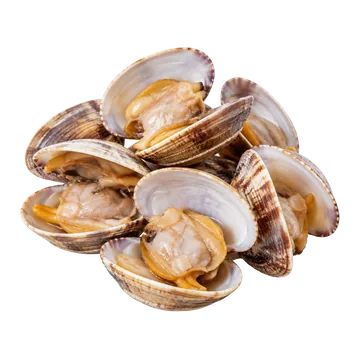 Clams, cooked
Not rated yet for a 100 g serving
No gram figure for this foodWe have no measurement of this in this food, so there is no gram figure.PubMed 21183430 · grade C ?
How it’s rated
Not rated: EFSA's 2011 no-effect level for histamine is 50 mg per person per meal, but no measured histamine figure for cooked clams was found, so there is no grams figure.
Intake: 100 g cooked (HC TRA I.3), one serving a day
Measured on: no measured histamine figure for cooked clams found (PubMed "histamine mussels" and "biogenic amines bivalve molluscs histamine" returned no clam values)
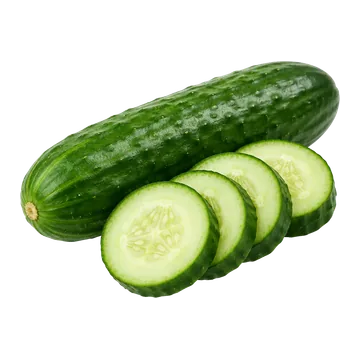 Cucumber, raw
Not rated yet for a 85 g serving
No gram figure for this foodWe have no measurement of this in this food, so there is no gram figure.DOI 10.3390/foods7120205 · grade A ?
How it’s rated
Not rated: EFSA's 2011 no-effect level for histamine is 50 mg per meal, and histamine was not detected in 10 Spanish market cucumber samples (Sanchez-Perez 2018), so there is no amount to compare and none is needed.
Intake: one serving a day, 70 kg adult
Measured on: Sanchez-Perez 2018 Table 1, own database of Spanish market products (marked #): cucumber n 10, histamine not detected (nd).
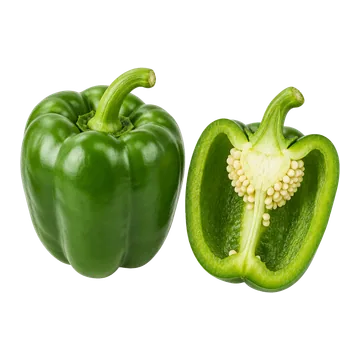 Green pepper, raw
Not rated yet for a 85 g serving
No gram figure for this foodWe have no measurement of this in this food, so there is no gram figure.DOI 10.3390/foods7120205 · grade A ?
How it’s rated
Not rated: histamine was not detected in 9 green pepper samples (Spanish market products), but the detection limit is not stated, so no amount of pepper can be set against the 50 mg per meal level. Putrescine, another amine, is high in green pepper (mean 90.04 mg/kg), and a 2021 paper raises a possible interference with histamine breakdown: a hypothesis, not a measurement.
Intake: 50 mg per person per meal (no body weight)
Measured on: Sanchez-Perez 2018 Table 1: 'Pepper (green)' n 9, histamine nd, tyramine nd, putrescine 90.04 (41.65) mg/kg (11.7-148.9); 'Pepper (red)' n 8, nd, nd, putrescine 2.42 (2.21). Authors' own database of Spanish market products; method and detection limit (detection limit) not in this paper.
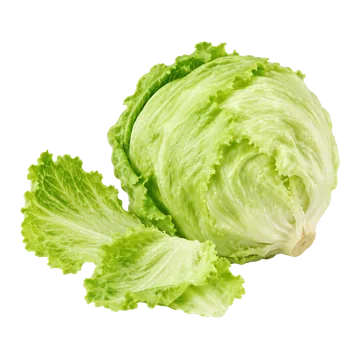 Iceberg lettuce, raw
Not rated yet for a 85 g serving
No gram figure for this foodWe have no measurement of this in this food, so there is no gram figure.DOI 10.3390/foods7120205 · grade A ?
How it’s rated
Not rated: histamine was not detected in 4 lettuce samples (Spanish market products), but the detection limit is not stated, and a non-detect gives no concentration, so no amount of lettuce can be set against the 50 mg per meal level.
Intake: 50 mg per person per meal (no body weight)
Measured on: Sanchez-Perez 2018 Table 1, 'Lettuce' n 4, histamine nd, tyramine nd (and putrescine 2.85 +/- 0.75 mg/kg): data from the authors' own database of Spanish market products; method and detection limit (detection limit) not in this paper.
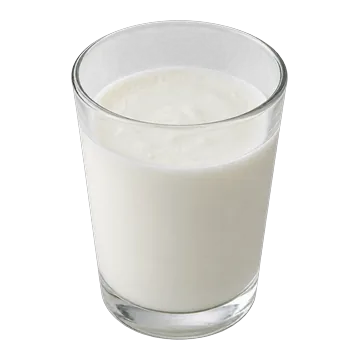 Kefir, low-fat
Not rated yet for a 193 g serving
No gram figure for this foodWe have no measurement of this in this food, so there is no gram figure.How it’s rated
Not rated: no measured histamine value for kefir has been found yet. A value would be read against EFSA's 50 mg per meal for healthy adults (EFSA 2011); for people with histamine intolerance EFSA gives no amount above 'below detectable limits'.
Intake: not applicable (no value)
Measured on: Not found: no histamine value for kefir has been read. The one kefir survey located (Özdestan and Üren 2010, Eur Food Res Technol 231:101-107) is behind a publisher login; a study of probiotic fermented milks (Costa 2015) is not kefir.
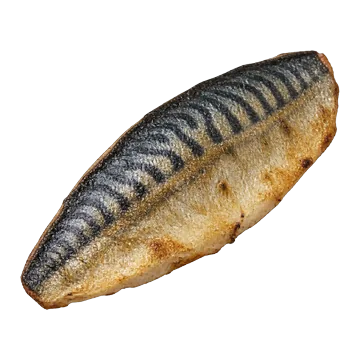 Mackerel, cooked
Not rated yet for a 100 g serving
No gram figure for this foodWe have no measurement of this in this food, so there is no gram figure.CFIA, Food Safety Facts on Scombroid Poisoning · grade B ?
How it’s rated
No cooked-mackerel histamine measurement found. The raw-fish evidence and the heat-stability statement apply; no number is asserted for this row.
Intake: one 100 g cooked serving
Measured on: missing for cooked mackerel; raw measurements carry through (heat-stable)
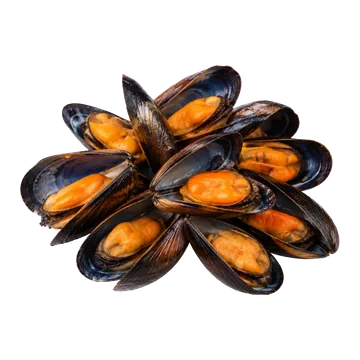 Mussels, cooked
Not rated yet for a 100 g serving
No gram figure for this foodWe have no measurement of this in this food, so there is no gram figure.PubMed 21183430 · grade C ?
How it’s rated
Not rated: EFSA's 2011 no-effect level is 50 mg of histamine per person per meal, but no measured histamine figure for fresh cooked mussels was found, so there is no grams figure. Mediterranean mussel stored for 24 h at room temperature showed raised histamine, which is a storage effect.
Intake: 100 g cooked (HC TRA I.3), one serving a day
Measured on: no measured histamine figure for fresh cooked mussels found; Mediterranean mussel stored 24 h at room temperature raised histamine, with decomposed mussels showing the highest endotoxin load linked to histamine alone (abstract, PMID 21183430, no number in the abstract)
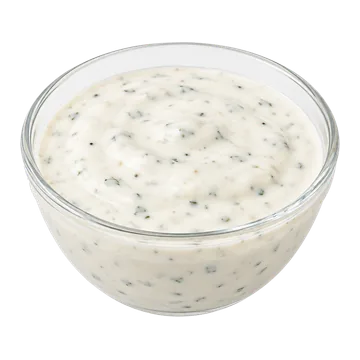 Ranch dressing
Not rated yet for a 30.4 g serving
No gram figure for this foodWe have no measurement of this in this food, so there is no gram figure.How it’s rated
Not rated: no measured histamine in a salad dressing was found, and none is estimated from an ingredient, so nothing can be set against the 50 mg per meal level. A vinegar survey gives total biogenic amines of 23.35-1,445.2 µg/L, but its abstract does not itemise histamine. The ingredients that could carry it are vinegar, parmesan, anchovy and fermented items.
Intake: one 30.4 g (30 mL) serving a day, 70 kg adult
Measured on: Vinegar, parmesan, anchovy and fermented ingredients (plan line).
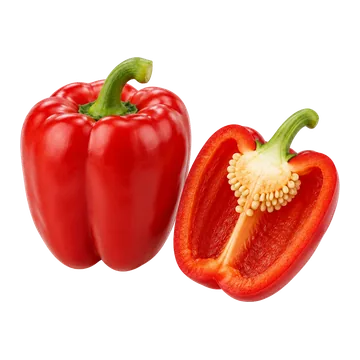 Red pepper, raw
Not rated yet for a 85 g serving
No gram figure for this foodWe have no measurement of this in this food, so there is no gram figure.DOI 10.3390/foods7120205 · grade A ?
How it’s rated
Not rated: histamine was not detected in 8 red pepper samples (Spanish market products), but the detection limit is not stated, so no amount of pepper can be set against the 50 mg per meal level. Putrescine in red pepper is low (2.42 mg/kg; green 90.04), so the possible interference with histamine breakdown raised for green pepper does not apply to red on these data.
Intake: 50 mg per person per meal (no body weight)
Measured on: Sanchez-Perez 2018 Table 1: 'Pepper (red)' n 8, histamine nd, tyramine nd, putrescine 2.42 (2.21) mg/kg (0.59-5.35). Green pepper in the same table (n 9): putrescine 90.04 (41.65), also nd for histamine. Authors' own database of Spanish market products; method and detection limit (detection limit) not in this paper.
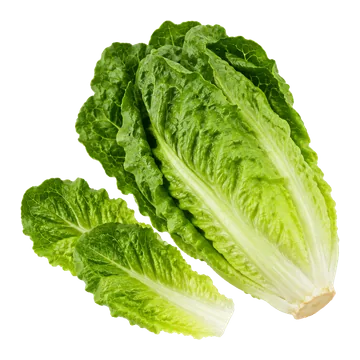 Romaine lettuce, raw
Not rated yet for a 85 g serving
No gram figure for this foodWe have no measurement of this in this food, so there is no gram figure.DOI 10.3390/foods7120205 · grade A ?
How it’s rated
Not rated: histamine was not detected in 4 lettuce samples (Spanish market products), but the detection limit is not stated, and a non-detect gives no concentration, so no amount of lettuce can be set against the 50 mg per meal level.
Intake: 50 mg per person per meal (no body weight)
Measured on: Sanchez-Perez 2018 Table 1, 'Lettuce' n 4, histamine nd, tyramine nd (and putrescine 2.85 +/- 0.75 mg/kg): data from the authors' own database of Spanish market products; method and detection limit (detection limit) not in this paper.
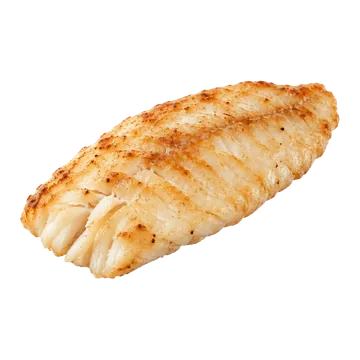 Tilapia, cooked
Not rated yet for a 100 g serving
No gram figure for this foodWe have no measurement of this in this food, so there is no gram figure.PubMed 31803558 · grade C ?
How it’s rated
Not rated: EFSA's 2011 no-effect level for histamine is 50 mg per person per meal, but no measured histamine value for cooked tilapia was found. A 2019 case report describes scombroid poisoning after tilapia, a single event rather than a measurement, and a 2016 survey of frozen fillets found up to 9.6 mg/100 g in pangasius but gives no tilapia value; fresh farmed salmon, the nearest proxy, reads 1.5 mg/kg.
Intake: 100 g cooked (HC TRA I.3), one serving a day
Measured on: no measured histamine figure for cooked tilapia found; a 2019 case report describes scombroid poisoning after tilapia (PMID 31803558); a 2016 survey of frozen tilapia and pangasius fillets exported to Poland and Germany found histamine at up to 9.6 mg/100 g in pangasius, but the abstract gives no tilapia histamine value (PMID 25907121)
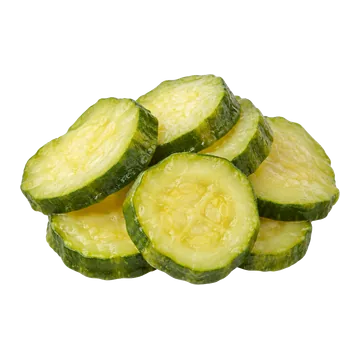 Zucchini, cooked
Not rated yet for a 85 g serving
No gram figure for this foodWe have no measurement of this in this food, so there is no gram figure.DOI 10.3390/foods7120205 · grade A ?
How it’s rated
Not rated: EFSA's 2011 level of concern is 50 mg of histamine per meal, but histamine was not detected in any of 41 courgette samples (a Spanish market database, Sanchez-Perez 2018), so there is no grams figure. Preparation is not stated, presumably raw; this is not a cooked-form measurement.
Intake: one serving a day, 70 kg adult
Measured on: Sanchez-Perez 2018 Table 1, own database of Spanish market products (marked #): courgette n 41, histamine not detected (nd).
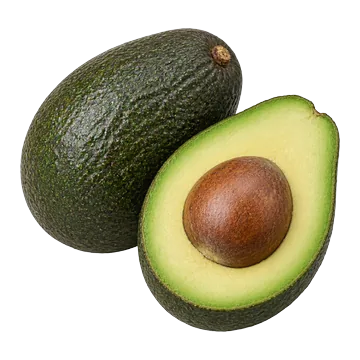 Avocado, raw
Context for a 30 g serving
No gram figure for this foodShown for context, not rated by dose: “How it’s rated” says why, so there is no gram figure here.Sanchezperez 2021 · grade B ?
How it’s rated
Shown as context: EFSA's no-effect level is 50 mg histamine per meal (EFSA 2011). Not detected in 10 samples (Spain 5, Brazil 5); one reported 23 mg/kg of unexplained origin would be 0.7 mg per 30 g.
Intake: one 30 g serving · Level in the food: 0 mg/kg (ND (n = 5, Spain); compiled range nd-23, n = 5)
Measured on: not stated in the draft
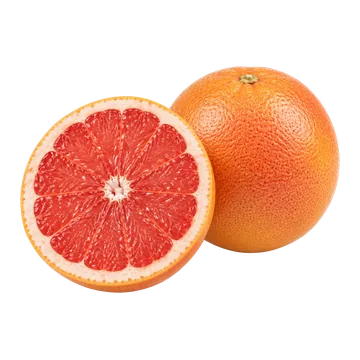 Grapefruit, raw
Context for a 140 g serving
No gram figure for this foodShown for context, not rated by dose: “How it’s rated” says why, so there is no gram figure here.Sanchezperez 2018 · grade B ?
How it’s rated
Context only. Histamine not detected in the fruit; the juice maximum (1.74 mg/kg) would need 28,700 g to reach 50 mg, so it does not bind. Tyramine not detected in either.
Intake: one 140 g serving a day, 70 kg adult · Level in the food: 0 mg/kg (nd (n = 2); grapefruit juice mean 0.31 (standard deviation 0.58), range nd-1.74, n 10, n = 2)
Measured on: Grapefruit fruit (own Spanish database) not detected; grapefruit juice (Preti data quoted by Sánchez-Pérez 2018) up to 1.74 mg/kg, a hygiene artefact absent in the fruit.
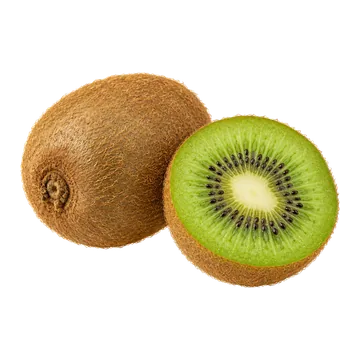 Kiwi, raw
Context for a 140 g serving
No gram figure for this foodShown for context, not rated by dose: “How it’s rated” says why, so there is no gram figure here.Sanchezperez 2018 · grade B ?
How it’s rated
Shown as context, not rated: EFSA's 2011 level for histamine is 50 mg per person per meal. At 1.9 mg/kg, a 140 g serving gives 0.27 mg, about 0.5% of that line. The review lists kiwi, with avocado and some juices, as the only fresh fruit in which histamine has been reported at all, and not in every study (in a Spanish market sample of 13, histamine was not detected).
Intake: one 140 g serving a day, 70 kg adult · Level in the food: 0 mg/kg (not detected (n 13, Spain); one other study 1.9 mg/kg, n = 13)
Measured on: Sanchez-Perez 2018 Table 2, fresh kiwi, 13 samples from the authors' own Spanish market database: histamine and tyramine not detected, putrescine 2.49 mg/kg. A second cited study (ref 54, n not stated) reports histamine 1.9 (standard deviation 0.1) mg/kg and putrescine 3.1.
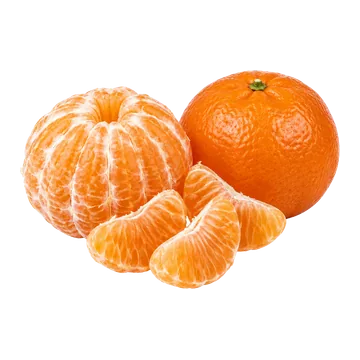 Mandarins, raw
Context for a 140 g serving
No gram figure for this foodShown for context, not rated by dose: “How it’s rated” says why, so there is no gram figure here.Sanchezperez 2018 · grade B ?
How it’s rated
Context only. Histamine not detected in 21 mandarins, so the 50 mg per meal limit does not bind. Tyramine mean 0.94 mg/kg (max 5.76).
Intake: not applicable (context) · Level in the food: 0 mg/kg (nd (n = 21; no range reported); tyramine mean 0.94, nd-5.76, n = 21)
Measured on: Spanish market mandarins (Sánchez-Pérez 2018, own database), fresh weight.
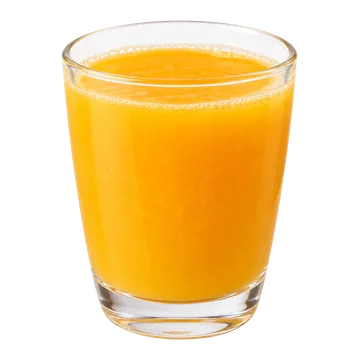 Orange juice
Context for a 262 g serving
No gram figure for this foodShown for context, not rated by dose: “How it’s rated” says why, so there is no gram figure here.Sanchezperez 2018 · grade B ?
How it’s rated
Context only. 50 mg per meal at the highest value (1.32 mg/kg) would need 37,900 g, so it does not bind. Tyramine not detected.
Intake: one 250 mL glass (262 g) a day, 70 kg adult · Level in the food: 0.46 mg/kg (mean (standard deviation 0.41), range nd-1.32, n = 11)
Measured on: Orange juice, Preti et al. data quoted by Sánchez-Pérez 2018; own database n 3 not detected. Histamine in juice is a hygiene artefact, absent in the fruit.
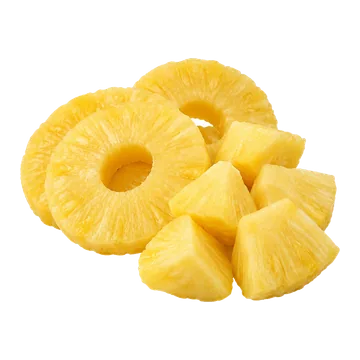 Pineapple, raw
Context for a 140 g serving
No gram figure for this foodShown for context, not rated by dose: “How it’s rated” says why, so there is no gram figure here.Sanchezperez 2018 · grade B ?
How it’s rated
Shown as context, not rated: EFSA (2011) gives 50 mg of histamine per person per meal as the level of concern, but none was detected in 6 fresh pineapple samples from Spain, so no grams figure is given. Pineapple juice did show 2.44 mg/kg (n 12), which the authors attribute to poor hygiene in processing; that is not this food.
Intake: one 140 g serving a day, 70 kg adult · Level in the food: 0 mg/kg (not detected (n 6, Spain); putrescine 4.20 mg/kg, n = 6)
Measured on: Sanchez-Perez 2018 Table 2, fresh pineapple, 6 samples from the authors' own Spanish market database; histamine and tyramine not detected.
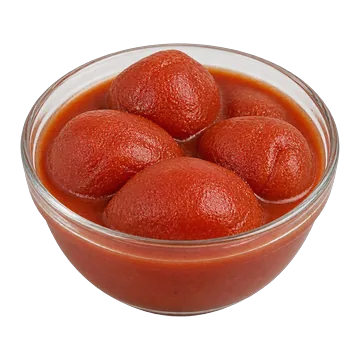 Tomatoes, canned
Context for a 125 g serving
No gram figure for this foodShown for context, not rated by dose: “How it’s rated” says why, so there is no gram figure here.Sanchezperez 2018 · grade B ?
How it’s rated
Shown as context: against EFSA's no-effect level of 50 mg histamine per meal for healthy people (EFSA 2011), a 125 g serving of crushed tomato carries about 0.15 mg at the mean of three products and 0.40 mg at the highest, under 1%. No canned whole tomato was found measured, so crushed tomato stands in. Histamine intolerance is person-specific, and no tomato dose-response was found.
Intake: one 125 mL serving a day (Health Canada V.1; 125 g at 1 g/mL), 70 kg adult · Level in the food: 1.22 mg/kg (mean of 3 crushed-tomato products (range 0.24-3.17), standing in for canned, n = 3)
Measured on: No canned whole or diced tomato was found measured. Crushed tomato, Spanish market products (Sanchez-Perez 2018, the authors' own database, n 3, method not printed); related Greek products by a validated method (Tsiasioti 2022): sauce 1.8, juice 0.81-0.94, ketchup 1.0-1.1 mg/kg
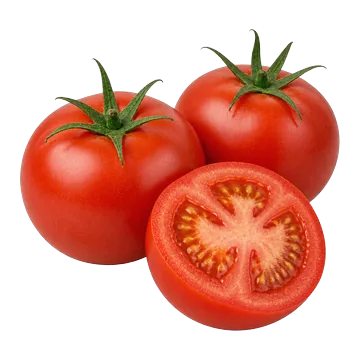 Tomatoes, raw
Context for a 85 g serving
No gram figure for this foodShown for context, not rated by dose: “How it’s rated” says why, so there is no gram figure here.Tsiasioti 2022 · grade A ?
How it’s rated
Shown as context: against EFSA's no-effect level of 50 mg histamine per meal for healthy people (EFSA 2011), a raw serving carries about 0.1 to 1.5 mg, under 3%; a 30 g serving of double-concentrated paste at 10.6 mg/kg would be 0.3 mg. Histamine intolerance is person-specific, and no tomato dose-response was found.
Intake: one 85 g serving a day (Health Canada V.1), 70 kg adult · Level in the food: 1 mg/kg (mean of 5 (Tsiasioti); own-database mean 2.51, max 17.07 (Sanchez-Perez, n 53), n = 5)
Measured on: validated measurement in fresh tomatoes (5 samples, Greece) and Spanish own-database values (n 53); paste 2.7-10.6 mg/kg
Sources
- CFIA, Food Safety Facts on Scombroid Poisoning (date modified 2012-03-20)
cfia-scombroid-fact-sheet· full text read · Government of Canada terms - Sanchez-Perez S et al. Biogenic amines in plant-origin foods: are they frequently underestimated in low-histamine diets? Foods 2018;7(12):205. · doi:10.3390/foods7120205
doi:10.3390/foods7120205· full text read · licence not recorded - EFSA BIOHAZ Panel (2011) Scientific Opinion on risk based control of biogenic amine formation in fermented foods. EFSA Journal 9(10):2393 · doi:10.2903/j.efsa.2011.2393
efsa-2011-histamine· secondary source · EFSA Journal: CC BY (not re-checked) - Madejska A, Pawul-Gruba M, Osek J. Histamine content in selected production stages of fish products. J Vet Res 2022;66(4):599-604 · doi:10.2478/jvetres-2022-0063 · PMID 36846046
madejska2022-histamine· full text read · CC BY-NC-ND 3.0 - Moniente M, Botello-Morte L, García-Gonzalo D, Virto R, Pagán R, Ferreira V, Ontanón I. Combination of SPE and fluorescent detection of AQC-derivatives for the determination at sub-mg/L levels of biogenic amines in dairy products. Food Res Int 2023;165:112448 · doi:10.1016/j.foodres.2022.112448
moniente2023· full text read · repository copy; licence not checked - Pawul-Gruba M, Michalski M, Osek J. Determination of histamine in fresh and smoked fish commercially available in Poland. Bull Vet Inst Pulawy 2014;58(2):301-304. · doi:10.2478/bvip-2014-0046
pawulgruba2014· full text read · open access (De Gruyter Sciendo) - Pawul-Gruba M, Denis E, Kiljanek T, Osek J. Prevalence of biogenic amines and their relation to the bacterial content in ripened cheeses on the retail market in Poland. Foods 2025;14:2478 · doi:10.3390/foods14142478 · PMID 40724300
pawulgruba2025· full text read · CC BY 4.0 (MDPI; licence line not re-checked) - Determination of biogenic amines and endotoxin in squid, musky octopus, Norway lobster, and mussel stored at room temperature. Arh Hig Rada Toksikol 2010 (PMID 21183430)
pmid:21183430· abstract only · licence not recorded - Ordóñez JL, Callejón RM, Morales ML, García-Parrilla MC. A survey of biogenic amines in vinegars. Food Chem 2013 · doi:10.1016/j.foodchem.2013.05.087 · PMID 23871015
pmid:23871015· abstract only · licence not recorded - Tilapia Consumption and Scombroid Poisoning (case report). Cureus 2019 (PMID 31803558)
pmid:31803558· abstract only · CC BY (Europe PMC licence field, PMC6874284) - Pawul-Gruba M, Osek J. Identification of Histamine in Fish and Fish Products in Poland During 2014-2018. J Vet Res 2021;65(4):483-486 · doi:10.2478/jvetres-2021-0066 · PMID 35112003
pmid:35112003· full text read · CC BY-NC-ND 3.0 - Sánchez-Pérez S et al. 2018, Foods 7:205, Table 1 (histamine in plant foods; PMC6306728)
sanchezperez2018· full text read · CC BY 4.0 - Sánchez-Pérez S et al. 2021, Nutrients 13:1395, Table 1 (histamine)
sanchezperez2021· full text read · CC BY 4.0 - Shi B, Moon B. Monitoring and risk assessment of biogenic amines in Korean commercial fermented seasonings. Heliyon 2023;9:e18906 · doi:10.1016/j.heliyon.2023.e18906 · PMID 37588612
shi2023-korean-seasonings· secondary source · CC BY-NC-ND 4.0 - Spizzirri UG, Picci N, Restuccia D, et al. Extraction Efficiency of Different Solvents and LC-UV Determination of Biogenic Amines in Tea Leaves and Infusions. J Anal Methods Chem 2016 · doi:10.1155/2016/8715287 · PMID 27555979
spizzirri2016· full text read · CC BY (PMC open access) - Tsiasioti, Tzanavaras, Castellari (first three authors per the XML; initials not recorded). Simple and reliable determination of the histamine content of selected Greek vegetables and related products in the frame of "low histamine diet". Foods 2022;11(20):3234 (published 17 Oct 2022) · doi:10.3390/foods11203234 · PMID 37430983
tsiasioti2022· full text read · CC BY 4.0 (MDPI) - Tunç S, Demirhan B, Er Demirhan BE. Investigation of Histamine, Physicochemical Quality, and Potential Health Risks in Various Canned Fish Products. Foods 2025;14(13):2314 · doi:10.3390/foods14132314
tunc2025· full text read · not checked - Buňková L, Riemel J, Purevdorj K, Vinter Š, Míšková Z, Jančová P. Biogenic Amines in White Brined Cheeses. Foods 2025;14(3):369 · doi:10.3390/foods14030369 · PMID 39941962
whitebrined2025· full text read · CC BY 4.0 (MDPI; licence line not re-checked)