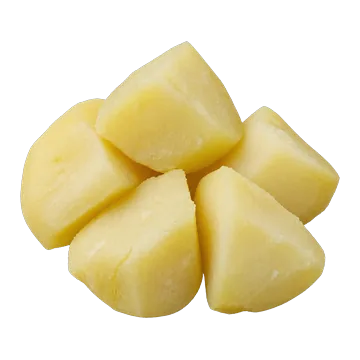
Potato, boiled
Checked by us One serving: 110 g (about ⅔ cup) · 95 kcal
Lots of vitamin B6.
Go easy on big portions: potato glycoalkaloids (solanine).
Good for
How we counted this
What one serving (110 g) gives you.
Your body needs enough of each of these. Past enough, more doesn’t help. Amounts are what the food databases list, not what your body absorbs, unless a row says it was measured.
The words: “A lot” means one serving gives 20% or more of Health Canada’s daily amount, “Some” 10% to 19%, “A little” 2% to 9%, “Almost none” under 2%. Strongest word first; within a word, protein and fibre lead, then the biggest share. ?
A milligram (mg) is a thousandth of a gram, and a microgram (µg) a thousandth of a milligram: 1,000 µg make 1 mg.
- A lot
Vitamin B6
Helps you use protein, and your brain needs it to make its chemical messengers.
Learn more
0.3 mg in one serving: 23% of the 1.3 mg a day.
Source: How much of it gets in hasn’t been measured for this food yet. NIH Office of Dietary Supplements, vitamin B6 fact sheet for health professionals
21 more nutrients below “a lot”
- Some
Niacin (B3, niacin equivalents)
More than 400 of your enzymes need it to work.
Learn more
1.94 mg in one serving: 12% of the 16 mg a day men need, 14% of the 14 mg women need. The word follows the smaller share, which is the share of the higher amount. ?
Source: How much of it gets in hasn’t been measured for this food yet. NIH Office of Dietary Supplements, niacin fact sheet for health professionals
- Some
Potassium
Your nerves, muscles and kidneys need it to work.
Learn more
361 mg in one serving: 11% of the 3,400 mg a day men need, 14% of the 2,600 mg women need. The word follows the smaller share, which is the share of the higher amount. ?
Listed amount only. 1 absorption study of this nutrient is on file for this food, but none is quoted yet. Each one is in The numbers, with the reason. See the studies
Source: NIH Office of Dietary Supplements, potassium fact sheet for health professionals
- A little
Vitamin C
Your body makes collagen with it, which wounds need to heal. It also helps you absorb iron from plants.
Learn more
8.14 mg in one serving: 9% of the 90 mg a day men need, 11% of the 75 mg women need. The word follows the smaller share, which is the share of the higher amount. ?
Source: How much of it gets in hasn’t been measured for this food yet. NIH Office of Dietary Supplements, vitamin C fact sheet for health professionals
- A little
Thiamin (B1)
Your cells use it to get energy from food, and so to grow and work.
Learn more
0.11 mg in one serving: 9% of the 1.2 mg a day men need, 10% of the 1.1 mg women need. The word follows the smaller share, which is the share of the higher amount. ?
Source: How much of it gets in hasn’t been measured for this food yet. NIH Office of Dietary Supplements, thiamin fact sheet for health professionals
- A little
Magnesium
Your muscles and nerves need it to work.
Learn more
22 mg in one serving: 6% of the 400 mg a day men need, 7% of the 310 mg women need. The word follows the smaller share, which is the share of the higher amount. ?
Source: How much of it gets in hasn’t been measured for this food yet. NIH Office of Dietary Supplements, magnesium fact sheet for health professionals
- A little
Fibre
Keeps your gut moving.
Learn more
1.98 g in one serving: 5% of the 38 g a day men need, 8% of the 25 g women need. The word follows the smaller share, which is the share of the higher amount. ?
Source: How much of it gets in hasn’t been measured for this food yet. Institute of Medicine 2005, Dietary Reference Intakes for Energy, Carbohydrate, Fiber, Fat, Fatty Acids, Cholesterol, Protein, and Amino Acids
- A little
Protein
Your muscles, and every other tissue, are built and repaired from it.
Learn more
1.88 g in one serving: 3% of the 56 g a day men need, 4% of the 46 g women need. The word follows the smaller share, which is the share of the higher amount. ?
Listed amount only. 1 absorption study of this nutrient is on file for this food, but none is quoted yet. Each one is in The numbers, with the reason. See the studies
- A little
Zinc
Your immune system and healing wounds depend on it.
Learn more
0.3 mg in one serving: 3% of the 11 mg a day men need, 4% of the 8 mg women need. The word follows the smaller share, which is the share of the higher amount. ?
Listed amount only. 1 absorption study of this nutrient is on file for this food, but none is quoted yet. Each one is in The numbers, with the reason. See the studies
Source: NIH Office of Dietary Supplements, zinc fact sheet for health professionals
- A little
Choline
Your cells need it for their membranes, and to make acetylcholine, a messenger for memory, mood and muscle control.
Learn more
14.5 mg in one serving: 3% of the 550 mg a day men need, 3% of the 425 mg women need. The word follows the smaller share, which is the share of the higher amount. ?
Source: How much of it gets in hasn’t been measured for this food yet. NIH Office of Dietary Supplements, choline fact sheet for health professionals
- A little
Folate
Your body needs it to make DNA and to divide new cells.
Learn more
9.9 µg in one serving: 2% of the 400 µg a day.
Source: How much of it gets in hasn’t been measured for this food yet. NIH Office of Dietary Supplements, folate fact sheet for health professionals
- A little
Vitamin K1
Your blood needs it to clot.
Learn more
2.42 µg in one serving: 2% of the 120 µg a day men need, 3% of the 90 µg women need. The word follows the smaller share, which is the share of the higher amount. ?
Source: How much of it gets in hasn’t been measured for this food yet. NIH Office of Dietary Supplements, vitamin K fact sheet for health professionals
- A little
Iron
Carries oxygen in your blood.
Learn more
0.34 mg in one serving: 4% of the 8 mg a day men need, 2% of the 18 mg women need. The word follows the smaller share, which is the share of the higher amount. ?
Listed amount only. 3 absorption studies of this nutrient are on file for this food, but none is quoted yet. Each one is in The numbers, with the reason. See the studies
Source: NIH Office of Dietary Supplements, iron fact sheet for health professionals
- A little
Riboflavin (B2)
Your cells use it to make energy and handle fats. It also helps turn tryptophan into niacin and activate vitamin B6.
Learn more
0.02 mg in one serving: 2% of the 1.3 mg a day men need, 2% of the 1.1 mg women need. The word follows the smaller share, which is the share of the higher amount. ?
Source: How much of it gets in hasn’t been measured for this food yet. NIH Office of Dietary Supplements, riboflavin fact sheet for health professionals
- Almost none
Calcium
Builds your bones and teeth.
Learn more
8.8 mg in one serving: 1% of the 1,000 mg a day.
Source: How much of it gets in hasn’t been measured for this food yet. NIH Office of Dietary Supplements, calcium fact sheet for health professionals
- Almost none
Omega-3: ALA
The one omega-3 your body can’t make: it must come from food. Your cells build it into their membranes and burn it for energy.
Learn more
11 mg in one serving: 1% of the 1,600 mg a day men need, 1% of the 1,100 mg women need. The word follows the smaller share, which is the share of the higher amount. ?
Source: How much of it gets in hasn’t been measured for this food yet. NIH Office of Dietary Supplements, omega-3 fatty acids fact sheet for health professionals
- Almost none
Selenium
Your thyroid uses it to make its hormones.
Learn more
0.33 µg in one serving: 1% of the 55 µg a day.
Source: How much of it gets in hasn’t been measured for this food yet. NIH Office of Dietary Supplements, selenium fact sheet for health professionals
- Almost none
Vitamin E
Shields the fats in your cells from damage; your immune system uses it too.
Learn more
0.01 mg in one serving: under 1% of the 15 mg a day.
Source: How much of it gets in hasn’t been measured for this food yet. NIH Office of Dietary Supplements, vitamin E fact sheet for health professionals
- Almost none
Omega-3: EPA + DHA
Long-chain omega-3s, built into your cell membranes. DHA is concentrated in your brain and retinas.
Learn more
0 mg in one serving: under 1% of the 250 mg a day.
Health Canada sets no daily amount for these fats, so the daily figure here is the European Food Safety Authority’s.
Source: How much of it gets in hasn’t been measured for this food yet. NIH Office of Dietary Supplements, omega-3 fatty acids fact sheet for health professionals
- Almost none
Vitamin A
Your eyes need it to see in dim light.
Learn more
Getting enough matters; more than enough doesn’t sharpen your sight.
0 µg in one serving: under 1% of the 900 µg a day men need, under 1% of the 700 µg women need. The word follows the smaller share, which is the share of the higher amount. ?
Source: How much of it gets in hasn’t been measured for this food yet. NIH Office of Dietary Supplements, vitamin A fact sheet for health professionals
- Almost none
Vitamin B12
Your body needs it to make red blood cells and keep nerves working.
Learn more
0 µg in one serving: under 1% of the 2.4 µg a day.
Source: How much of it gets in hasn’t been measured for this food yet. NIH Office of Dietary Supplements, vitamin B12 fact sheet for health professionals
- Almost none
Vitamin D
Your body needs it to absorb calcium and keep your bones hard.
Learn more
Your skin also makes it in sunlight, so food is only one of its sources.
0 µg in one serving: under 1% of the 15 µg a day.
Source: How much of it gets in hasn’t been measured for this food yet. NIH Office of Dietary Supplements, vitamin D fact sheet for health professionals
Watch out
How we counted this
A big dose in one meal upsets the stomach.
Learn more
140 g in one sitting reaches the working limit
This working limit is the lowest dose that caused effects, cut by the margin the agency treats as no concern. How we got it is under “How we got this”.
You’d need about 1.3 servings in one sitting of this food alone to reach the limit.
“Go easy” here because fewer than 2 servings at a time reach the limit; one serving on its own stays under it.
One serving carries 5.6 mg
How we got this
The dataset’s rating: Under the limit for one serving; fewer than 2 servings reach it.
Rated on the dose in one meal, at the mean: no cap. EFSA's lowest effect level is 1 mg total glycoalkaloids/kg body weight, and a margin of exposure above 10 means no concern, so the limit is 0.1 mg/kg body weight, 7 mg for 70 kg. A 110 g serving at the mean (51.2 mg/kg) carries 5.6 mg, 0.080 mg/kg body weight: a margin of 12.4, 80% of the limit. Potatoes with more go past it: at the 95th percentile (116.8 mg/kg) a serving is 12.8 mg, margin 5.4; at the highest sample (276.6) 30.4 mg, margin 2.3. One 110 g serving reaches the limit at 64 mg/kg. How potatoes are stored and trimmed decides the level: remove green parts. Peeled then boiled: EFSA's literature gives peeling a 25-75% cut (average 48%) and boiling 5-65% (average 33%). EFSA's exposure model used peeling factors of 0.25-0.75 and cooking factors of 0.35-0.95.
Cadmium
Nothing to watchYou’d need about 2.5 servings a day, every day, of this food alone to use up what an average adult’s intake leaves under the limit.
Learn more
One serving carries 2.96 µg
How we got this
A serving a day adds 17% to what an average adult already takes in: a share of that intake, not of the limit. With that serving every day, an average adult would be at about 83% of the limit.
An average adult already takes in about 71% of the limit. One serving a day fits in the room left.
Counted from zero, with no allowance for what adults already take in from other food, 6,500 g a week would reach the limit.
Why this rating: Eating it daily comes to 770 g a week, which stays within the 1,900 g of room left before the limit.
The dataset’s rating: Nothing to watch: under the limit
A daily serving adds 17% to an average adult's cadmium intake (EFSA 2012 adult median, 1.77 µg/kg body weight/week; Canadian adults in 2007: 1.2-1.75), far from doubling it, so no cap.
Health Canada, Canadian Total Diet Study – Trace Elements (2005–2018 composites) · grade A
Checked for acrylamide and lead: fine at normal amounts.
Acrylamide
Nothing to watchYou’d need about 26 servings a day, every day, of this food alone to double the acrylamide an average adult already gets. No dose is known to be safe, so doubling is where we flag.
Learn more
A serving a day adds 1.7–3.9% to what an average adult already takes in. There is no limit to take a share of.
One serving carries 1.1 µg
How we got this
The dataset’s rating: Nothing to watch: doesn’t double average intake
Upper bound only (both composites non-detect, quantification limit (LOQ) 10 µg/kg): at most +1.7–3.9% of average intake; true value likely lower. Acrylamide forms above about 120 °C, so boiling is low.
Lead
Nothing to watchYou’d need more than 100 servings a day, every day, of this food alone to double the lead an average adult already gets. No dose is known to be safe, so doubling is where we flag.
Learn more
A serving a day adds 0.9% to what an average adult already takes in. There is no limit to take a share of.
One serving carries 0.3 µg
How we got this
The dataset’s rating: Nothing to watch: doesn’t double average intake
adds 0.9% to average intake (35 µg/day, EFSA 2012 mean). Mean without the 1999 composite 2.53 µg/kg; recent 3 composites (2016–2018) 0.40 µg/kg (declining).
Health Canada, Canadian Total Diet Study – Trace Elements (2005–2018 composites) · grade A
Worth knowing
No limit applies, so none is rated.
Sugar
1 g of sugar in a 110 g serving, natural and added together.
Learn more
Shown, not rated. The food tables we read give total sugar, and few give added sugar, so the site can’t yet tell sugar added in making a food from the sugar in fruit or milk.
Also measured in it
Figures from the dataset. None has a limit to be rated against, so none is a verdict.
Phytate: 3 mg per 100 g as eaten. · PubMed 37059395 · grade A
Phytate (also written InsP6, IP6 or phytic acid), the form in which plants store phosphorus, is found in whole grains, beans and nuts. It binds zinc in the gut and lowers how much zinc and plant (non-heme) iron you absorb. No limit applies.
Source: NIH Office of Dietary Supplements, Zinc fact sheet · NIH Office of Dietary Supplements, Iron fact sheet
Tyramine: 0.58–5 mg per kg fresh weight, so about 0.064–0.55 mg in a 110 g serving. · Sanchezperez 2018 · grade B
For scale, EFSA found no reported ill effects at 6 mg of tyramine in a meal for people on the older MAO-inhibitor antidepressants, 50 mg for those on the newer ones and 600 mg for healthy people not taking them, based on limited data. EFSA 2011
Better options
How we counted this
“Better” here always means better at something the row names: more of one nutrient, more nutrients per serving, or the goal you pick. It never means better in every way.
Every amount below is for the same weight, 110 g, the size of one serving of this food, so a swap compares like with like. A serving of another food can be bigger or smaller.
A food is listed only if it gives clearly more: at least a fifth more than this food, and at least 10% of the daily amount more.
More of what it’s good for
For vitamin B6: no other starchy sides we’ve checked give clearly more, in the same 110 g.
More nutrients per serving, counted together
The other starchy sides we’ve checked with more nutrients per serving than this one, counting at most 100 kcal. One score ranks them all, so the same few often lead.
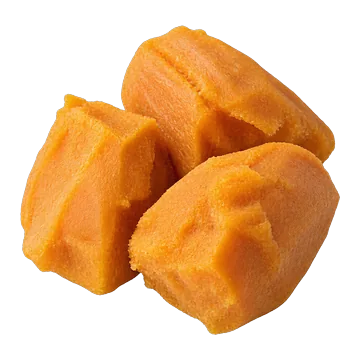 Sweet potato, boiledMore vitamin A (866 µg vs 0 µg)
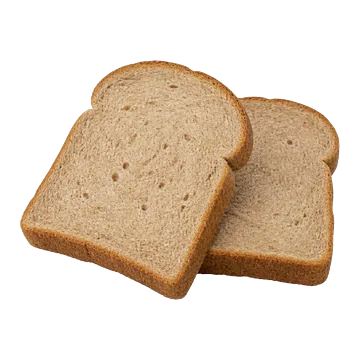 Whole-wheat bread
- More selenium (28.4 µg vs 0.33 µg)
- More thiamin (0.43 mg vs 0.11 mg)
- More niacin (6.06 mg vs 1.94 mg)
2 foods out of the 5 other starchy sides we’ve checked and could compare give clearly more nutrients per serving.
Where the calcium card measured that less calcium gets in than from milk, calcium counts for less; everything else is as listed.
Your goal
Your goal changes only this list, not what the food gives you or what to watch.
Losing weight: fewer calories, and more nutrients, protein and fibre for each calorie.
- Sweet potato, boiledMore vitamin A (866 µg vs 0 µg)
- Whole-wheat bread
- More fibre (6.6 g vs 1.98 g)
- More selenium (28.4 µg vs 0.33 µg)
- More thiamin (0.43 mg vs 0.11 mg)
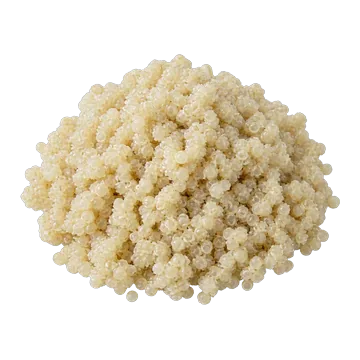 Quinoa, cooked
- More magnesium (70.4 mg vs 22 mg)
- Less vitamin B6 (0.14 mg vs 0.3 mg)
Building muscle: more protein and more calories, per 100 g. In a typical diet most protein comes from other foods; among starchy sides, these help most.
- Whole-wheat bread12.3 g protein · 254 kcal per 100 g
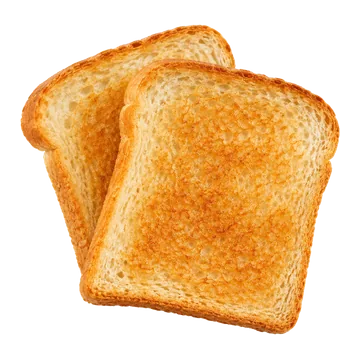 White bread, toasted9 g protein · 290 kcal per 100 g
- Quinoa, cooked4.4 g protein · 120 kcal per 100 g
Why some foods aren’t suggested
Left out: Sweet potato, baked (Worth knowing: acrylamide).
Bring a tracker export or describe your usual week. The same rules check all of it.
The numbers
Open every value
Name in the database: Potato, boiled without skin, flesh
How the serving was set: 110 g (Health Canada P.3, potatoes plain, fresh or frozen)
Listed nutrients, per 100 g
For each nutrient, the value this page uses is marked “used”. A row marked “second database” is another database’s figure for a matching food, kept so you can see how far databases disagree (they can differ in the samples analysed, lab methods and rounding). Its own cells are worked out from it, but none of the page’s words or scores are.
| Nutrient | Per serving | Per 100 calories | How | Source | Grade | |
|---|---|---|---|---|---|---|
| Omega-3: ALA | 0.01 g | 0.01 g | 0.01 g | listed used | US food database (USDA SR Legacy) #170440 | C |
| Calcium | 8 mg | 8.8 mg | 9.3 mg | listed used | US food database (USDA SR Legacy) #170440 | C |
| 6 mg | 6.6 mg | 6.98 mg | second database · not used | UK food tables (CoFID 2021) #13-490 | C | |
| 8 mg | 8.8 mg | 9.3 mg | copy of USDA · not used | Canadian Nutrient File 2026 #2422 | C | |
| Carbohydrate | 20.01 g | 22.01 g | 23.27 g | listed used | US food database (USDA SR Legacy) #170440 | C |
| Choline | 13.2 mg | 14.52 mg | 15.35 mg | listed used | US food database (USDA SR Legacy) #170440 | C |
| Energy | 86 kcal | 94.6 kcal | – | FDC Energy (kcal) used | US food database (USDA SR Legacy) | – |
| Omega-3: EPA + DHA | 0 g | 0 g | 0 g | listed used | US food database (USDA SR Legacy) #170440 | C |
| Fat | 0.1 g | 0.11 g | 0.12 g | listed used | US food database (USDA SR Legacy) #170440 | C |
| 0.1 g | 0.11 g | 0.12 g | second database · not used | UK food tables (CoFID 2021) #13-490 | C | |
| Cholesterol | 0 mg | 0 mg | 0 mg | listed used | US food database (USDA SR Legacy) #170440 | C |
| Fatty acids, total saturated | 0.026 g | 0.03 g | 0.03 g | listed used | US food database (USDA SR Legacy) #170440 | C |
| Fibre | 1.8 g | 1.98 g | 2.09 g | listed used | US food database (USDA SR Legacy) #170440 | C |
| 1.6 g | 1.76 g | 1.86 g | second database · not used | UK food tables (CoFID 2021) #13-490 | C | |
| Folate | 9 µg | 9.9 µg | 10.47 µg | listed used | US food database (USDA SR Legacy) #170440 | C |
| 18 µg | 19.8 µg | 20.93 µg | second database · not used · 2× | UK food tables (CoFID 2021) #13-490 | C | |
| Iron | 0.31 mg | 0.34 mg | 0.36 mg | listed used | US food database (USDA SR Legacy) #170440 | C |
| 0.34 mg | 0.37 mg | 0.4 mg | second database · not used | UK food tables (CoFID 2021) #13-490 | C | |
| Magnesium | 20 mg | 22 mg | 23.26 mg | listed used | US food database (USDA SR Legacy) #170440 | C |
| 18 mg | 19.8 mg | 20.93 mg | second database · not used | UK food tables (CoFID 2021) #13-490 | C | |
| Niacin (B3, niacin equivalents) | 1.762 mg | 1.94 mg | 2.05 mg | listed used | Canadian Nutrient File 2026 #2422 | C |
| Phosphorus | 40 mg | 44 mg | 46.51 mg | listed used | US food database (USDA SR Legacy) #170440 | C |
| 31 mg | 34.1 mg | 36.05 mg | second database · not used | UK food tables (CoFID 2021) #13-490 | C | |
| Potassium | 328 mg | 360.8 mg | 381.4 mg | listed used | US food database (USDA SR Legacy) #170440 | C |
| 365 mg | 401.5 mg | 424.42 mg | second database · not used | UK food tables (CoFID 2021) #13-490 | C | |
| Protein | 1.71 g | 1.88 g | 1.99 g | listed used | US food database (USDA SR Legacy) #170440 | C |
| 1.8 g | 1.98 g | 2.09 g | second database · not used | UK food tables (CoFID 2021) #13-490 | C | |
| Riboflavin (B2) | 0.019 mg | 0.02 mg | 0.02 mg | listed used | US food database (USDA SR Legacy) #170440 | C |
| Selenium | 0.3 µg | 0.33 µg | 0.35 µg | listed used | US food database (USDA SR Legacy) #170440 | C |
| Sodium | 5 mg | 5.5 mg | 5.81 mg | listed used | US food database (USDA SR Legacy) #170440 | C |
| 1 mg | 1.1 mg | 1.16 mg | second database · not used · 5× | UK food tables (CoFID 2021) #13-490 | C | |
| Sugars | 0.89 g | 0.98 g | 1.03 g | listed used | US food database (USDA SR Legacy) #170440 | C |
| 0.8 g | 0.88 g | 0.93 g | second database · not used | UK food tables (CoFID 2021) #13-490 | C | |
| Thiamin (B1) | 0.098 mg | 0.11 mg | 0.11 mg | listed used | US food database (USDA SR Legacy) #170440 | C |
| 0.21 mg | 0.23 mg | 0.24 mg | second database · not used · 2.1× | UK food tables (CoFID 2021) #13-490 | C | |
| Vitamin A | 0 µg | 0 µg | 0 µg | listed used | US food database (USDA SR Legacy) #170440 | C |
| Vitamin B12 | 0 µg | 0 µg | 0 µg | listed used | US food database (USDA SR Legacy) #170440 | C |
| 0 µg | 0 µg | 0 µg | second database · not used | UK food tables (CoFID 2021) #13-490 | C | |
| Vitamin B6 | 0.269 mg | 0.3 mg | 0.31 mg | listed used | US food database (USDA SR Legacy) #170440 | C |
| 0.06 mg | 0.07 mg | 0.07 mg | second database · not used · 4.5× | UK food tables (CoFID 2021) #13-490 | C | |
| Vitamin C | 7.4 mg | 8.14 mg | 8.6 mg | listed used | US food database (USDA SR Legacy) #170440 | C |
| 9 mg | 9.9 mg | 10.47 mg | second database · not used | UK food tables (CoFID 2021) #13-490 | C | |
| Vitamin D | 0 µg | 0 µg | 0 µg | listed used | US food database (USDA SR Legacy) #170440 | C |
| 0 µg | 0 µg | 0 µg | second database · not used | UK food tables (CoFID 2021) #13-490 | C | |
| Vitamin E | 0.01 mg | 0.01 mg | 0.01 mg | listed used | US food database (USDA SR Legacy) #170440 | C |
| 0.01 mg | 0.01 mg | 0.01 mg | second database · not used | UK food tables (CoFID 2021) #13-490 | C | |
| Vitamin K1 | 2.2 µg | 2.42 µg | 2.56 µg | listed used | US food database (USDA SR Legacy) #170440 | C |
| Water | 77.46 g | 85.21 g | 90.07 g | listed used | US food database (USDA SR Legacy) #170440 | C |
| 78.9 g | 86.79 g | 91.74 g | second database · not used | UK food tables (CoFID 2021) #13-490 | C | |
| Zinc | 0.27 mg | 0.3 mg | 0.31 mg | listed used | US food database (USDA SR Legacy) #170440 | C |
| 0.2 mg | 0.22 mg | 0.23 mg | second database · not used | UK food tables (CoFID 2021) #13-490 | C |
| Nutrient | Per 100 g | Per serving | Per 100 calories | How | Source | Grade |
|---|---|---|---|---|---|---|
| Beta-carotene | 1 µg | 1.1 µg | 1.16 µg | listed used | US food database (USDA SR Legacy) #170440 | C |
| Copper | 0.167 mg | 0.18 mg | 0.19 mg | listed used | US food database (USDA SR Legacy) #170440 | C |
| 0.06 mg | 0.07 mg | 0.07 mg | second database · not used · 2.8× | UK food tables (CoFID 2021) #13-490 | C | |
| Ash | 0.72 g | 0.79 g | 0.84 g | listed used | US food database (USDA SR Legacy) #170440 | C |
| Sucrose | 0.18 g | 0.2 g | 0.21 g | listed used | US food database (USDA SR Legacy) #170440 | C |
| Glucose | 0.33 g | 0.36 g | 0.38 g | listed used | US food database (USDA SR Legacy) #170440 | C |
| Fructose | 0.28 g | 0.31 g | 0.33 g | listed used | US food database (USDA SR Legacy) #170440 | C |
| Maltose | 0 g | 0 g | 0 g | listed used | US food database (USDA SR Legacy) #170440 | C |
| Alcohol, ethyl | 0 g | 0 g | 0 g | listed used | US food database (USDA SR Legacy) #170440 | C |
| Caffeine | 0 mg | 0 mg | 0 mg | listed used | US food database (USDA SR Legacy) #170440 | C |
| Theobromine | 0 mg | 0 mg | 0 mg | listed used | US food database (USDA SR Legacy) #170440 | C |
| Energy | 360 kj | 396 kj | 418.6 kj | listed used | US food database (USDA SR Legacy) #170440 | C |
| Galactose | 0 g | 0 g | 0 g | listed used | US food database (USDA SR Legacy) #170440 | C |
| Vitamin A, IU | 2 iu | 2.2 iu | 2.33 iu | listed used | US food database (USDA SR Legacy) #170440 | C |
| Carotene, alpha | 0 µg | 0 µg | 0 µg | listed used | US food database (USDA SR Legacy) #170440 | C |
| Vitamin D (D2 + D3), International Units | 0 iu | 0 iu | 0 iu | listed used | US food database (USDA SR Legacy) #170440 | C |
| Cryptoxanthin, beta | 0 µg | 0 µg | 0 µg | listed used | US food database (USDA SR Legacy) #170440 | C |
| Lycopene | 0 µg | 0 µg | 0 µg | listed used | US food database (USDA SR Legacy) #170440 | C |
| Tocopherol, beta | 0 mg | 0 mg | 0 mg | listed used | US food database (USDA SR Legacy) #170440 | C |
| Tocopherol, gamma | 0 mg | 0 mg | 0 mg | listed used | US food database (USDA SR Legacy) #170440 | C |
| Tocopherol, delta | 0 mg | 0 mg | 0 mg | listed used | US food database (USDA SR Legacy) #170440 | C |
| Folic acid | 0 µg | 0 µg | 0 µg | listed used | US food database (USDA SR Legacy) #170440 | C |
| Folate, food | 9 µg | 9.9 µg | 10.47 µg | listed used | US food database (USDA SR Legacy) #170440 | C |
| Folate, DFE | 9 µg | 9.9 µg | 10.47 µg | listed used | US food database (USDA SR Legacy) #170440 | C |
| Betaine | 0.2 mg | 0.22 mg | 0.23 mg | listed used | US food database (USDA SR Legacy) #170440 | C |
| Tryptophan | 0.027 g | 0.03 g | 0.03 g | listed used | US food database (USDA SR Legacy) #170440 | C |
| Threonine | 0.062 g | 0.07 g | 0.07 g | listed used | US food database (USDA SR Legacy) #170440 | C |
| Isoleucine | 0.07 g | 0.08 g | 0.08 g | listed used | US food database (USDA SR Legacy) #170440 | C |
| Leucine | 0.103 g | 0.11 g | 0.12 g | listed used | US food database (USDA SR Legacy) #170440 | C |
| Lysine | 0.104 g | 0.11 g | 0.12 g | listed used | US food database (USDA SR Legacy) #170440 | C |
| Methionine | 0.027 g | 0.03 g | 0.03 g | listed used | US food database (USDA SR Legacy) #170440 | C |
| Cystine | 0.022 g | 0.02 g | 0.03 g | listed used | US food database (USDA SR Legacy) #170440 | C |
| Phenylalanine | 0.076 g | 0.08 g | 0.09 g | listed used | US food database (USDA SR Legacy) #170440 | C |
| Tyrosine | 0.064 g | 0.07 g | 0.07 g | listed used | US food database (USDA SR Legacy) #170440 | C |
| Valine | 0.096 g | 0.11 g | 0.11 g | listed used | US food database (USDA SR Legacy) #170440 | C |
| Arginine | 0.079 g | 0.09 g | 0.09 g | listed used | US food database (USDA SR Legacy) #170440 | C |
| Histidine | 0.038 g | 0.04 g | 0.04 g | listed used | US food database (USDA SR Legacy) #170440 | C |
| Alanine | 0.053 g | 0.06 g | 0.06 g | listed used | US food database (USDA SR Legacy) #170440 | C |
| Aspartic acid | 0.419 g | 0.46 g | 0.49 g | listed used | US food database (USDA SR Legacy) #170440 | C |
| Glutamic acid | 0.287 g | 0.32 g | 0.33 g | listed used | US food database (USDA SR Legacy) #170440 | C |
| Glycine | 0.051 g | 0.06 g | 0.06 g | listed used | US food database (USDA SR Legacy) #170440 | C |
| Proline | 0.062 g | 0.07 g | 0.07 g | listed used | US food database (USDA SR Legacy) #170440 | C |
| Serine | 0.075 g | 0.08 g | 0.09 g | listed used | US food database (USDA SR Legacy) #170440 | C |
| Vitamin E, added | 0 mg | 0 mg | 0 mg | listed used | US food database (USDA SR Legacy) #170440 | C |
| Vitamin B-12, added | 0 µg | 0 µg | 0 µg | listed used | US food database (USDA SR Legacy) #170440 | C |
| Fatty acids, total trans | 0 g | 0 g | 0 g | listed used | US food database (USDA SR Legacy) #170440 | C |
| SFA 4:0 | 0 g | 0 g | 0 g | listed used | US food database (USDA SR Legacy) #170440 | C |
| SFA 6:0 | 0 g | 0 g | 0 g | listed used | US food database (USDA SR Legacy) #170440 | C |
| SFA 8:0 | 0 g | 0 g | 0 g | listed used | US food database (USDA SR Legacy) #170440 | C |
| SFA 10:0 | 0.001 g | 0 g | 0 g | listed used | US food database (USDA SR Legacy) #170440 | C |
| SFA 12:0 | 0.003 g | 0 g | 0 g | listed used | US food database (USDA SR Legacy) #170440 | C |
| SFA 14:0 | 0.001 g | 0 g | 0 g | listed used | US food database (USDA SR Legacy) #170440 | C |
| SFA 16:0 | 0.016 g | 0.02 g | 0.02 g | listed used | US food database (USDA SR Legacy) #170440 | C |
| SFA 18:0 | 0.004 g | 0 g | 0 g | listed used | US food database (USDA SR Legacy) #170440 | C |
| MUFA 18:1 | 0.001 g | 0 g | 0 g | listed used | US food database (USDA SR Legacy) #170440 | C |
| PUFA 18:2 | 0.032 g | 0.04 g | 0.04 g | listed used | US food database (USDA SR Legacy) #170440 | C |
| PUFA 18:3 | 0.01 g | 0.01 g | 0.01 g | listed used | US food database (USDA SR Legacy) #170440 | C |
| PUFA 20:4 | 0 g | 0 g | 0 g | listed used | US food database (USDA SR Legacy) #170440 | C |
| PUFA 22:6 n-3 (DHA) | 0 g | 0 g | 0 g | listed used | US food database (USDA SR Legacy) #170440 | C |
| MUFA 16:1 | 0.001 g | 0 g | 0 g | listed used | US food database (USDA SR Legacy) #170440 | C |
| PUFA 18:4 | 0 g | 0 g | 0 g | listed used | US food database (USDA SR Legacy) #170440 | C |
| MUFA 20:1 | 0 g | 0 g | 0 g | listed used | US food database (USDA SR Legacy) #170440 | C |
| PUFA 20:5 n-3 (EPA) | 0 g | 0 g | 0 g | listed used | US food database (USDA SR Legacy) #170440 | C |
| MUFA 22:1 | 0 g | 0 g | 0 g | listed used | US food database (USDA SR Legacy) #170440 | C |
| PUFA 22:5 n-3 (DPA) | 0 g | 0 g | 0 g | listed used | US food database (USDA SR Legacy) #170440 | C |
| Fatty acids, total monounsaturated | 0.002 g | 0 g | 0 g | listed used | US food database (USDA SR Legacy) #170440 | C |
| Fatty acids, total polyunsaturated | 0.043 g | 0.05 g | 0.05 g | listed used | US food database (USDA SR Legacy) #170440 | C |
| Lactose | 0 g | 0 g | 0 g | listed used | US food database (USDA SR Legacy) #170440 | C |
| 0 g | 0 g | 0 g | second database · not used | UK food tables (CoFID 2021) #13-490 | C | |
| Lutein + zeaxanthin | 9 µg | 9.9 µg | 10.47 µg | listed used | US food database (USDA SR Legacy) #170440 | C |
| Manganese | 0.14 mg | 0.15 mg | 0.16 mg | listed used | US food database (USDA SR Legacy) #170440 | C |
| 0.12 mg | 0.13 mg | 0.14 mg | second database · not used | UK food tables (CoFID 2021) #13-490 | C | |
| Niacin (B3, preformed) | 1.312 mg | 1.44 mg | 1.53 mg | listed used | US food database (USDA SR Legacy) #170440 | C |
| 0.5 mg | 0.55 mg | 0.58 mg | second database · not used · 2.6× | UK food tables (CoFID 2021) #13-490 | C | |
| Pantothenic acid (B5) | 0.509 mg | 0.56 mg | 0.59 mg | listed used | US food database (USDA SR Legacy) #170440 | C |
| 0.43 mg | 0.47 mg | 0.5 mg | second database · not used | UK food tables (CoFID 2021) #13-490 | C | |
| Retinol | 0 µg | 0 µg | 0 µg | listed used | US food database (USDA SR Legacy) #170440 | C |
| 0 µg | 0 µg | 0 µg | second database · not used | UK food tables (CoFID 2021) #13-490 | C |
Change the amount to rescale the first column. Nutrients a database doesn't list are missing, not zero.
Absorption studies
Studies of how much of a nutrient gets in; those done in animals are marked. This page quotes a figure only from a study that passes our screen: adults, graded A, of this food in this preparation, with a test dose on record and a source that has passed our evidence check. The exception is calcium on our calcium card: its figure comes from the card’s own study, checked with the card, and is marked “used” even where that study misses a step of this screen. The others are listed so nothing is hidden, each with the first check it fails.
No study of this food passes the screen yet, so no absorption figure is quoted.
| Study | Nutrient | Absorbed | Test dose | People | Grade | On this page |
|---|---|---|---|---|---|---|
| Burgos 2023: non-biofortified yellow-fleshed variety Peruanita (boiled, peeled, mashed) Peruanita (commercial yellow-fleshed variety, Peru); not russet · tubers boiled whole 60 min, peeled and mashed, stored at −20 °C, reheated; 460 g mash a meal, no other food full text read | Iron | 16.6 % | 1 mg | 28 | A | Not used: it tested a different variety or form of the food. |
| Burgos 2023: iron-biofortified yellow-fleshed clone (boiled, peeled, mashed) clone CIP311623.75 (named M3-21.75 in Table 2), biofortified; a breeding clone, not a market potato · tubers boiled whole 60 min, peeled and mashed, stored at −20 °C, reheated; 460 g mash a meal, no other food full text read | Iron | 12.1 % | 3 mg | 28 | A | Not used: it tested a different variety or form of the food. |
| Jongstra et al. 2020: potato russet Peruanita, a yellow-fleshed Peruvian landrace; NOT russet · boiled and mashed · 0.33 mg Fe/100 g x 500 g = about 1.65 mg (derived from the paper's analysed iron per 100 g) full text read | Iron | 28.4 % | not reported | 35 | A | Not used: no test dose on record. |
| Gillooly et al. 1983: potato russet not stated · boiled 20 min in salted water (750 g vegetable in 1500 ml water with 5 g NaCl; lentils 40 min in 2500 ml), homogenised in a Waring blender to a thick soup; 100 g eaten (equivalent to 50 g uncooked vegetable); peeled before cooking · 3 mg Fe as FeSO4.7H2O (59Fe or 55Fe) mixed into 100 g puree; native iron of the vegetable not reported full text read | Iron | 11.5 % | not reported | 9 | A | Not used: no test dose on record. |
| Macdonald-Clarke et al. 2016: potato russet, 20 mEq K/day not stated; three batches (1 Washington, 2 Idaho), cultivar not named · 'nonfried white potatoes with skin'; cooking method not stated · 18.5 mEq K/day analysed (nominal 20 mEq; about 723 mg; registry plan 720 mg) added as potato to a basal diet of ~60 mEq (~2,350 mg) K; half the dose in each of two test meals at 0 h and 5 h full text read | Potassium | 94 % | not reported | 19 | B | Not used: we haven’t confirmed how the food was prepared in this study. |
| Macdonald-Clarke et al. 2016: potato russet, 40 mEq K/day not stated · 'nonfried white potatoes with skin'; cooking method not stated · 37 mEq K/day analysed (nominal 40 mEq; about 1,447 mg; registry plan 1,440 mg) added as potato to a basal diet of ~60 mEq (~2,350 mg) K; half the dose in each of two test meals at 0 h and 5 h full text read | Potassium | 95 % | not reported | 19 | B | Not used: we haven’t confirmed how the food was prepared in this study. |
| Hodgkinson et al. 2025: potato russet (pig) animal study Agria, not russet; related: not russet · Boiled potato, Agria cultivar (preparation text for the tuber rows is out of order in the PDF layout; assigned by food name) · diet protein level not read; ration 0.08 x metabolic body weight (kg^0.75) per day full text read | Protein | 70.8 % | not reported | 6 | B | Not used: we haven’t confirmed how the food was prepared in this study. |
| Liria-Dominguez 2023: regular boiled potato (cv. Amarilla) Amarilla, a regular non-biofortified commercial yellow potato (not russet) · boiled about 60 min, peeled, mashed and homogenised; 250 g portions frozen at -18 C · 1.85 mg Zn per 500 g meal ("1.85 and 2.67 mg for the 500 g of regular and biofortified meal"); 0.25 mg 67Zn tracer given with the first half. Absorbed 0.40 (0.29-0.55) / 0.49 (0.36-0.66) mg per 500 g full text read | Zinc | 25.5 % | not reported | 37 | A | Not used: no test dose on record. |
| Liria-Dominguez 2023: zinc-biofortified boiled potato (CIP311623.75) zinc-biofortified yellow potato CIP311623.75 (not a market product) · boiled about 60 min, peeled, mashed and homogenised · 2.67 mg Zn per 500 g meal ("1.85 and 2.67 mg for the 500 g of regular and biofortified meal"); 0.25 mg 67Zn tracer given with the first half. Absorbed 0.40 (0.29-0.55) / 0.49 (0.36-0.66) mg per 500 g full text read | Zinc | 20.8 % | not reported | 37 | A | Not used: no test dose on record. |
Hazard rows as the dataset rates them
- Acrylamide · Nothing to watch: doesn’t double average intake · Upper bound only (both composites non-detect, quantification limit (LOQ) 10 µg/kg): at most +1.7–3.9% of average intake; true value likely lower. Acrylamide forms above about 120 °C, so boiling is low. · FDA 2003–2006 · A
- Cadmium · Nothing to watch: under the limit · A daily serving adds 17% to an average adult's cadmium intake (EFSA 2012 adult median, 1.77 µg/kg body weight/week; Canadian adults in 2007: 1.2-1.75), far from doubling it, so no cap. · Health Canada Total Diet Study, trace elements · A
- Lead · Nothing to watch: doesn’t double average intake · adds 0.9% to average intake (35 µg/day, EFSA 2012 mean). Mean without the 1999 composite 2.53 µg/kg; recent 3 composites (2016–2018) 0.40 µg/kg (declining). · Health Canada Total Diet Study, trace elements · A
- Potato glycoalkaloids (solanine) · Go easy: within 2 servings of the limit · Rated on the dose in one meal, at the mean: no cap. EFSA's lowest effect level is 1 mg total glycoalkaloids/kg body weight, and a margin of exposure above 10 means no concern, so the limit is 0.1 mg/kg body weight, 7 mg for 70 kg. A 110 g serving at the mean (51.2 mg/kg) carries 5.6 mg, 0.080 mg/kg body weight: a margin of 12.4, 80% of the limit. Potatoes with more go past it: at the 95th percentile (116.8 mg/kg) a serving is 12.8 mg, margin 5.4; at the highest sample (276.6) 30.4 mg, margin 2.3. One 110 g serving reaches the limit at 64 mg/kg. How potatoes are stored and trimmed decides the level: remove green parts. Peeled then boiled: EFSA's literature gives peeling a 25-75% cut (average 48%) and boiling 5-65% (average 33%). EFSA's exposure model used peeling factors of 0.25-0.75 and cooking factors of 0.35-0.95. · EFSA 2020 · A
Oxalate, phytate and gut-tolerance measurements
- fodmap fructan: not detectable g/100 g · fresh weight · 'cooked potato' (cooking method not stated in the table; water content 84 %) · grade A · Ferjancic 2024
- fodmap fructan: not detected g/100 g · fresh weight and dry weight both ND · cooked potato · grade B · Ferjancic 2024
- histamine: not detected (n = 10) mg/kg · fresh weight · not stated (potato as sold; the authors' own database of Spanish market products) · grade B · Sanchezperez 2018
- histamine: not detected (nd) mg/kg · fresh weight (mg/kg or mg/L, as the review's header) · see variant · grade B · Diniz 2025
- oxalate soluble: n = 3 mg/100 g · fresh weight · boiled (peeling not stated) · grade B · Salgado 2023
- oxalate total: n = 3 mg/100 g · fresh weight · boiled (peeling not stated) · grade B · Salgado 2023
- phytate: standard deviation 1.72 (phytic acid) mg/100 g · fresh weight · boiled whole 60 min, peeled, mashed, frozen, reheated (test meal) · grade A · PubMed 37059395
- tyramine: mean 0.58 · standard deviation 0.64 · range nd–2.2 · n=10 mg/kg · fresh weight · not stated (market product); reported per kg fresh weight · grade B · Sanchezperez 2018
- tyramine: mean 5 · n not given mg/kg · fresh weight · not stated (market product); reported per kg fresh weight · grade B · Sanchezperez 2018
Sources
- Health Canada, Canadian Nutrient File 2026 (14th edition)
cnf-2026· dataset · Open Government Licence – Canada 2.0 - Public Health England, Composition of Foods Integrated Dataset (CoFID) 2021
cofid-2021· dataset · Open Government Licence v3.0 - Diniz FB, Dala-Paula BM, et al., Gloria MBA. Histamine in Brazilian Foods: A Comprehensive Review of Occurrence and Risk Assessment for Intoxication and Intolerance. Food Sci Nutr 2025;13(11):e71151. · doi:10.1002/fsn3.71151
diniz2025· full text read · CC BY 4.0 - Gillooly M, Bothwell TH, Torrance JD, MacPhail AP, Derman DP, Bezwoda WR, et al. (1983). The effects of organic acids, phytates and polyphenols on the absorption of iron from vegetables. Br J Nutr 49:331-42 · doi:10.1079/bjn19830042 · PMID 6860621
doi:10.1079/bjn19830042· full text read · licence not recorded - EFSA CONTAM Panel (2020) Risk assessment of glycoalkaloids in feed and food, in particular in potatoes and potato-derived products. EFSA Journal 18(8):6222 · doi:10.2903/j.efsa.2020.6222 · PMID 32788943
efsa-2020-glycoalkaloids· full text read · EFSA Journal: CC BY-ND 4.0 - US FDA, Survey Data on Acrylamide in Food: Total Diet Study Results (Tables 1–4, FY03–FY06; updated October 2006)
fda-acrylamide-tds-fy2003-2006· dataset · US government work (17 USC 105), public domain - USDA FoodData Central, SR Legacy, 2018-04
fdc-sr-legacy-2018-04· dataset · CC0 1.0 (public domain) - Ferjancic B, Korosec M, Kocevar Baloh A, Bertoncelj J. Fructan content in most commonly consumed Slovenian foods and estimation of daily fructan consumption. Front Nutr 2024;11:1446771. · doi:10.3389/fnut.2024.1446771 · PMID 39155934
ferjancic-2024-fnut· full text read · CC BY 4.0 - Ferjancic B et al. 2024, Fructan content in most commonly consumed Slovenian foods, Front Nutr (PMC11327153)
ferjancic2024· full text read · CC BY 4.0 - Health Canada, Canadian Total Diet Study – Trace Elements (2005–2018 composites)
hc-tds-trace-elements· dataset · Open Government Licence – Canada 2.0 - Macdonald-Clarke CJ, Martin BR, McCabe LD, McCabe GP, Lachcik PJ, Wastney M, Weaver CM. Bioavailability of potassium from potatoes and potassium gluconate: a randomized dose response trial. Am J Clin Nutr 2016;104(2):346-53. · doi:10.3945/ajcn.115.127225 · PMID 27413123
pmid:27413123· full text read · journal copyright (accepted manuscript on a university repository, read) - Jongstra R, Mwangi MN, Burgos G, Zeder C, et al. Iron absorption from iron-biofortified sweetpotato is higher than regular sweetpotato in Malawian women while iron absorption from regular and iron-biofortified potatoes is high in Peruvian women. J Nutr 2020;150(12):3094-3102 · doi:10.1093/jn/nxaa267 · PMID 33188398
pmid:33188398· full text read · Publisher copyright (journal article) - Burgos G, Liria R, Zeder C, et al. Total iron absorbed from iron-biofortified potatoes is higher than that from nonbiofortified potatoes: a randomized trial using stable iron isotopes in women from the Peruvian highlands. J Nutr 2023;153:1710–1717 · doi:10.1016/j.tjnut.2023.04.010 · PMID 37059395
pmid:37059395· full text read · Publisher copyright (journal article); open on PMC - Liria-Dominguez R, Penny M, Kroon PA, Burgos G, Dainty J, Zeder C, Zimmermann MB, King J, Mithen R, Boy E, Al-Jaiballi O, Fairweather-Tait S. Biofortified yellow-fleshed potatoes provide more absorbable zinc than a commonly consumed variety: a randomized trial using stable isotopes in women in the Peruvian highlands. J Nutr 2023;153:2893-2900. · doi:10.1016/j.tjnut.2023.08.028 · PMID 37648112
pmid:37648112· full text read · publisher copyright; <=30-word quotes only - Hodgkinson SM, Stroebinger N, Stein HH, Fanelli NS, de Vries S, van der Wielen N, et al. True ileal amino acid digestibility of human foods classified according to food type as determined in the growing pig. J Nutr 2025;155:3384-3400. · doi:10.1016/j.tjnut.2025.08.004 · PMID 40812478
pq_hodgkinson2025· full text read · CC BY (Europe PMC licence field) - Salgado N, Silva MA, Figueira ME, Costa HS, Albuquerque TG. Oxalate in Foods: Extraction Conditions, Analytical Methods, Occurrence, and Health Implications. Foods 2023;12:3201 (PMC10486698) · doi:10.3390/foods12173201 · PMID 37685134
salgado2023· full text read · CC BY 4.0 - Sánchez-Pérez S et al. 2018, Foods 7:205, Table 1 (histamine in plant foods; PMC6306728)
sanchezperez2018· full text read · CC BY 4.0
Body map 2026-10-25.1: each nutrient’s job comes from an agency fact sheet, linked beside it under Good for.
The plain words: “a lot” means one serving (100 g when the food has no serving size) gives at least 20% of the daily amount (the reference intake), “some” at least 10%, “a little” at least 2% (the cut-offs are ours, one set for every page: 20% and 10% are borrowed from the US labelling terms “high” and “good source” and applied to Health Canada’s daily amount, whereas Health Canada’s own shopper rule says 15%; provisional: they may change in a later method version). The daily amount is Health Canada’s Dietary Reference Intake for adults 19–30; where men and women need different amounts we use the higher one (protein: 56 g for men, 46 g for women). The percentage printed under each nutrient is the printed amount as a share of that daily amount, rounded to the nearest whole number, and the word is read from that percentage, so the amount, the percentage and the word always agree. Calcium with a measured absorption is scaled by how well it gets in compared with milk.
The scale: “Nothing to watch” means a serving a day stays under the limit at ordinary amounts; “Go easy” means a serving a day can push past the limit for adults who already take in the most, or fewer than 2 servings reach it; “Limit it” means once a week or less. The dataset’s own rating is under “How we got this”. Provisional: the scale may change in a later method version.
Measured absorption under Good for: grade-A studies in adults that tested this preparation of this food, as a share of the listed amount (the share digested, for protein), quoted once each source has passed our evidence check; animal studies and other variants stay in the table above. Provisional: this screen may change in a later method version.