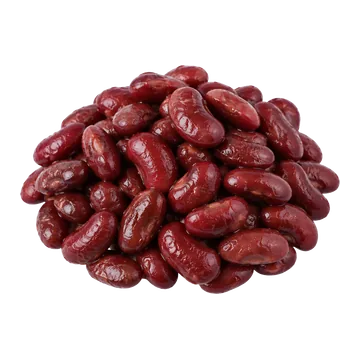
Kidney beans, cooked
Checked by us 127 kcal per 100 g
Lots of folate.
Cook dried beans well: raw or undercooked, they carry a natural toxin. Nothing else to watch.
Good for
How we counted this
What 100 g gives you: imported foods have no serving size yet.
Your body needs enough of each of these. Past enough, more doesn’t help. Amounts are what the food databases list, not what your body absorbs, unless a row says it was measured.
The words: “A lot” means one serving gives 20% or more of Health Canada’s daily amount, “Some” 10% to 19%, “A little” 2% to 9%, “Almost none” under 2%. Strongest word first; within a word, protein and fibre lead, then the biggest share. ?
A milligram (mg) is a thousandth of a gram, and a microgram (µg) a thousandth of a milligram: 1,000 µg make 1 mg.
- A lot
Folate
Your body needs it to make DNA and to divide new cells.
Learn more
130 µg in 100 g: 33% of the 400 µg a day.
Source: How much of it gets in hasn’t been measured for this food yet. NIH Office of Dietary Supplements, folate fact sheet for health professionals
21 more nutrients below “a lot”
- Some
Protein
Your muscles, and every other tissue, are built and repaired from it.
Learn more
8.67 g in 100 g: 15% of the 56 g a day men need, 19% of the 46 g women need. The word follows the smaller share, which is the share of the higher amount. ?
Listed amount only. 1 absorption study of this nutrient is on file for this food, but none is quoted yet. Each one is in The numbers, with the reason. See the studies
- Some
Fibre
Keeps your gut moving.
Learn more
6.4 g in 100 g: 17% of the 38 g a day men need, 26% of the 25 g women need. The word follows the smaller share, which is the share of the higher amount. ?
Source: How much of it gets in hasn’t been measured for this food yet. Institute of Medicine 2005, Dietary Reference Intakes for Energy, Carbohydrate, Fiber, Fat, Fatty Acids, Cholesterol, Protein, and Amino Acids
- Some
Niacin (B3, niacin equivalents)
More than 400 of your enzymes need it to work.
Learn more
2.24 mg in 100 g: 14% of the 16 mg a day men need, 16% of the 14 mg women need. The word follows the smaller share, which is the share of the higher amount. ?
Source: How much of it gets in hasn’t been measured for this food yet. NIH Office of Dietary Supplements, niacin fact sheet for health professionals
- Some
Thiamin (B1)
Your cells use it to get energy from food, and so to grow and work.
Learn more
0.16 mg in 100 g: 13% of the 1.2 mg a day men need, 15% of the 1.1 mg women need. The word follows the smaller share, which is the share of the higher amount. ?
Source: How much of it gets in hasn’t been measured for this food yet. NIH Office of Dietary Supplements, thiamin fact sheet for health professionals
- Some
Iron
Carries oxygen in your blood.
Learn more
2.22 mg in 100 g: 28% of the 8 mg a day men need, 12% of the 18 mg women need. The word follows the smaller share, which is the share of the higher amount. ?
Listed amount only. 1 absorption study of this nutrient is on file for this food, but none is quoted yet. Each one is in The numbers, with the reason. See the studies
Source: NIH Office of Dietary Supplements, iron fact sheet for health professionals
- Some
Potassium
Your nerves, muscles and kidneys need it to work.
Learn more
405 mg in 100 g: 12% of the 3,400 mg a day men need, 16% of the 2,600 mg women need. The word follows the smaller share, which is the share of the higher amount. ?
Source: How much of it gets in hasn’t been measured for this food yet. NIH Office of Dietary Supplements, potassium fact sheet for health professionals
- Some
Omega-3: ALA
The one omega-3 your body can’t make: it must come from food. Your cells build it into their membranes and burn it for energy.
Learn more
170 mg in 100 g: 11% of the 1,600 mg a day men need, 15% of the 1,100 mg women need. The word follows the smaller share, which is the share of the higher amount. ?
Source: How much of it gets in hasn’t been measured for this food yet. NIH Office of Dietary Supplements, omega-3 fatty acids fact sheet for health professionals
- Some
Magnesium
Your muscles and nerves need it to work.
Learn more
42 mg in 100 g: 11% of the 400 mg a day men need, 14% of the 310 mg women need. The word follows the smaller share, which is the share of the higher amount. ?
Source: How much of it gets in hasn’t been measured for this food yet. NIH Office of Dietary Supplements, magnesium fact sheet for health professionals
- A little
Vitamin B6
Helps you use protein, and your brain needs it to make its chemical messengers.
Learn more
0.12 mg in 100 g: 9% of the 1.3 mg a day.
Source: How much of it gets in hasn’t been measured for this food yet. NIH Office of Dietary Supplements, vitamin B6 fact sheet for health professionals
- A little
Zinc
Your immune system and healing wounds depend on it.
Learn more
1 mg in 100 g: 9% of the 11 mg a day men need, 13% of the 8 mg women need. The word follows the smaller share, which is the share of the higher amount. ?
Listed amount only. 1 absorption study of this nutrient is on file for this food, but none is quoted yet. Each one is in The numbers, with the reason. See the studies
Source: NIH Office of Dietary Supplements, zinc fact sheet for health professionals
- A little
Vitamin K1
Your blood needs it to clot.
Learn more
8.4 µg in 100 g: 7% of the 120 µg a day men need, 9% of the 90 µg women need. The word follows the smaller share, which is the share of the higher amount. ?
Source: How much of it gets in hasn’t been measured for this food yet. NIH Office of Dietary Supplements, vitamin K fact sheet for health professionals
- A little
Choline
Your cells need it for their membranes, and to make acetylcholine, a messenger for memory, mood and muscle control.
Learn more
30.5 mg in 100 g: 6% of the 550 mg a day men need, 7% of the 425 mg women need. The word follows the smaller share, which is the share of the higher amount. ?
Source: How much of it gets in hasn’t been measured for this food yet. NIH Office of Dietary Supplements, choline fact sheet for health professionals
- A little
Riboflavin (B2)
Your cells use it to make energy and handle fats. It also helps turn tryptophan into niacin and activate vitamin B6.
Learn more
0.06 mg in 100 g: 5% of the 1.3 mg a day men need, 5% of the 1.1 mg women need. The word follows the smaller share, which is the share of the higher amount. ?
Source: How much of it gets in hasn’t been measured for this food yet. NIH Office of Dietary Supplements, riboflavin fact sheet for health professionals
- A little
Calcium
Builds your bones and teeth.
Learn more
35 mg in 100 g: 4% of the 1,000 mg a day.
Source: How much of it gets in hasn’t been measured for this food yet. NIH Office of Dietary Supplements, calcium fact sheet for health professionals
- A little
Selenium
Your thyroid uses it to make its hormones.
Learn more
1.1 µg in 100 g: 2% of the 55 µg a day.
Source: How much of it gets in hasn’t been measured for this food yet. NIH Office of Dietary Supplements, selenium fact sheet for health professionals
- Almost none
Vitamin C
Your body makes collagen with it, which wounds need to heal. It also helps you absorb iron from plants.
Learn more
1.2 mg in 100 g: 1% of the 90 mg a day men need, 2% of the 75 mg women need. The word follows the smaller share, which is the share of the higher amount. ?
Source: How much of it gets in hasn’t been measured for this food yet. NIH Office of Dietary Supplements, vitamin C fact sheet for health professionals
- Almost none
Vitamin E
Shields the fats in your cells from damage; your immune system uses it too.
Learn more
0.03 mg in 100 g: under 1% of the 15 mg a day.
Source: How much of it gets in hasn’t been measured for this food yet. NIH Office of Dietary Supplements, vitamin E fact sheet for health professionals
- Almost none
Omega-3: EPA + DHA
Long-chain omega-3s, built into your cell membranes. DHA is concentrated in your brain and retinas.
Learn more
0 mg in 100 g: under 1% of the 250 mg a day.
Health Canada sets no daily amount for these fats, so the daily figure here is the European Food Safety Authority’s.
Source: How much of it gets in hasn’t been measured for this food yet. NIH Office of Dietary Supplements, omega-3 fatty acids fact sheet for health professionals
- Almost none
Vitamin A
Your eyes need it to see in dim light.
Learn more
Getting enough matters; more than enough doesn’t sharpen your sight.
0 µg in 100 g: under 1% of the 900 µg a day men need, under 1% of the 700 µg women need. The word follows the smaller share, which is the share of the higher amount. ?
Source: How much of it gets in hasn’t been measured for this food yet. NIH Office of Dietary Supplements, vitamin A fact sheet for health professionals
- Almost none
Vitamin B12
Your body needs it to make red blood cells and keep nerves working.
Learn more
0 µg in 100 g: under 1% of the 2.4 µg a day.
Source: How much of it gets in hasn’t been measured for this food yet. NIH Office of Dietary Supplements, vitamin B12 fact sheet for health professionals
- Almost none
Vitamin D
Your body needs it to absorb calcium and keep your bones hard.
Learn more
Your skin also makes it in sunlight, so food is only one of its sources.
0 µg in 100 g: under 1% of the 15 µg a day.
Source: How much of it gets in hasn’t been measured for this food yet. NIH Office of Dietary Supplements, vitamin D fact sheet for health professionals
How to handle it
Raw or undercooked, these beans carry a natural toxin, the one kidney beans are known for. The FDA’s advice for kidney beans: soak them for at least 5 hours, then boil them in fresh water for at least 30 minutes; a slow cooker doesn’t get hot enough.
Learn more
Source: US FDA, Bad Bug Book, 2nd edition (2012): Phytohaemagglutinin
How we got this
Flagged for anyone cooking dry red kidney beans: the hazard is the preparation, not the occurrence. Raw red kidney beans carry 20,000–70,000 haemagglutinating units (FDA); properly cooked beans 200–400. Four or five raw soaked beans can trigger nausea, vomiting and diarrhoea 1–3 h after eating. Health Canada's advice for dry red kidney beans: soak at least 5 h, discard the water, boil vigorously at least 10 minutes, and do not use slow cookers. No dose limit applies.
US FDA, Bad Bug Book, 2nd edition (2012): Phytohaemagglutinin (kidney bean lectin) · grade B
Watch out
How we counted this
How to handle it, just above: Cook dried beans well
Checked for cadmium and lead: fine at normal amounts.
Cadmium
Nothing to watchYou’d need about 20 servings a day, every day, of this food alone to use up what an average adult’s intake leaves under the limit.
Learn more
One serving carries 0.35 µg (per 100 g)
How we got this
A serving a day adds 2% to what an average adult already takes in: a share of that intake, not of the limit. With that serving every day, an average adult would be at about 72% of the limit.
An average adult already takes in about 71% of the limit. One serving a day fits in the room left.
Counted from zero, with no allowance for what adults already take in from other food, 49,000 g a week would reach the limit.
The dataset’s rating: Nothing to watch: under the limit
A daily serving adds 2% to an average adult's cadmium intake (EFSA 2012 adult median, 1.77 µg/kg body weight/week; Canadian adults in 2007: 1.2-1.75), far from doubling it, so no cap.
Health Canada, Canadian Total Diet Study – Trace Elements (2005–2018 composites) · grade B
Lead
Nothing to watchRated without the share a serving adds to an average adult’s intake: the dataset stores no figure to print for this measurement.
Learn more
One serving carries 0.38 µg (per 100 g)
How we got this
The dataset’s rating: Nothing to watch: rated by margin of exposure
No cap: no safe threshold is set for lead, so no grams figure. A serving carries 0.38 µg per 100 g, taken from a related product (Health Canada canned baked beans), not from boiled kidney beans; the share of the average adult's lead intake was not computed.
Health Canada, Canadian Total Diet Study – Trace Elements (2005–2018 composites) · grade B
Also measured in it
Figures from the dataset. None has a limit to be rated against, so none is a verdict.
Phytate, as the source gives it: 719 mg phytic acid per 100 g (as tabulated; basis ambiguous) (PhyFoodComp compilation for 'Kidney bean (dry seeds), Red, Whole, PROCESS = Boiling': water 62.9 g/100 g; the row's comment says 'Dry matter, convert to fresh weight', so the figure may be per 100 g of dry matter) · Bennett 2025 · grade B
Phytate (also written InsP6, IP6 or phytic acid), the form in which plants store phosphorus, is found in whole grains, beans and nuts. It binds zinc in the gut and lowers how much zinc and plant (non-heme) iron you absorb. No limit applies.
Source: NIH Office of Dietary Supplements, Zinc fact sheet · NIH Office of Dietary Supplements, Iron fact sheet
Better options
How we counted this
“Better” here always means better at something the row names: more of one nutrient, more nutrients per serving, or the goal you pick. It never means better in every way.
This food has no serving size, so every amount below is for 100 g of each food, and a swap compares like with like. A serving of another food can be bigger or smaller.
A food is listed only if it gives clearly more: at least a fifth more than this food, and at least 10% of the daily amount more.
More of what it’s good for
More folate
 Lentils, cooked181 µg in 100 g (this food: 130 µg)
 Pinto beans, cooked172 µg in 100 g (this food: 130 µg)
Amounts as listed, not adjusted for how much gets in.
More nutrients per serving, counted together
The other main-dish proteins we’ve checked with more nutrients per serving than this one, counting at most 100 kcal. One score ranks them all, so the same few often lead.
 Soybeans, cooked
- More omega-3: ALA (598 mg vs 170 mg)
- More riboflavin (0.29 mg vs 0.06 mg)
- More protein (18.2 g vs 8.67 g)
- Less folate (54 µg vs 130 µg)
- Lentils, cookedMore folate (181 µg vs 130 µg)
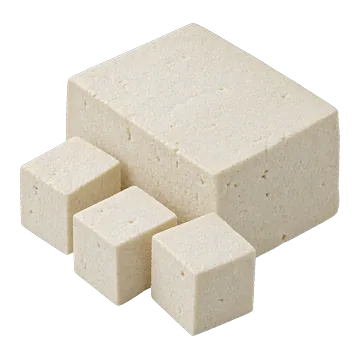 Tofu, calcium-set
- More calcium (350 mg vs 35 mg)
- More iron (5.36 mg vs 2.22 mg)
- More selenium (8.9 µg vs 1.1 µg)
- Less folate (15 µg vs 130 µg)
- Less fibre (0.3 g vs 6.4 g)
Where the calcium card measured that less calcium gets in than from milk, calcium counts for less; everything else is as listed.
Your goal
Your goal changes only this list, not what the food gives you or what to watch.
Losing weight: fewer calories, and more nutrients, protein and fibre for each calorie.
- Lentils, cookedMore folate (181 µg vs 130 µg)
- Soybeans, cooked
- More omega-3: ALA (598 mg vs 170 mg)
- More riboflavin (0.29 mg vs 0.06 mg)
- More protein (18.2 g vs 8.67 g)
- Less folate (54 µg vs 130 µg)
- Tofu, calcium-set
- More calcium (350 mg vs 35 mg)
- More iron (5.36 mg vs 2.22 mg)
- More selenium (8.9 µg vs 1.1 µg)
- Less folate (15 µg vs 130 µg)
- Less fibre (0.3 g vs 6.4 g)
Building muscle: more protein and more calories, per 100 g.
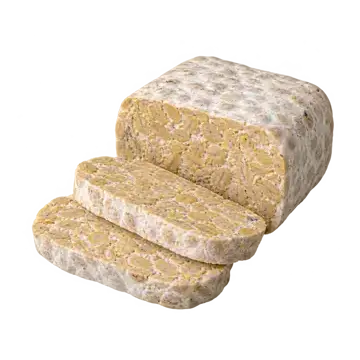 Tempeh20.3 g protein · 192 kcal per 100 g
- Soybeans, cooked18.2 g protein · 172 kcal per 100 g
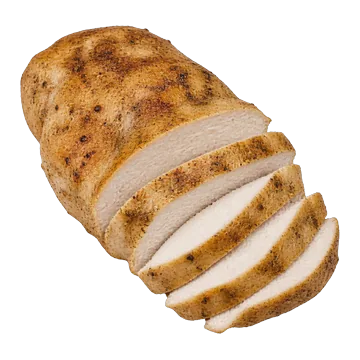 Chicken breast, roasted31 g protein · 165 kcal per 100 g
Why some foods aren’t suggested
Left out: Chicken liver, simmered (Preformed vitamin A (retinol): limit it).
Bring a tracker export or describe your usual week. The same rules check all of it.
The numbers
Open every value
Name in the database: Kidney beans, all types, cooked, boiled, without salt
How the serving was set: 125 mL cooked (Health Canada TRA K.2); 35 g dry is the paired dry amount; no gram weight for 125 mL established
Listed nutrients, per 100 g
For each nutrient, the value this page uses is marked “used”. A row marked “second database” is another database’s figure for a matching food, kept so you can see how far databases disagree (they can differ in the samples analysed, lab methods and rounding). Its own cells are worked out from it, but none of the page’s words or scores are.
| Nutrient | Per 100 calories | How | Source | Grade | |
|---|---|---|---|---|---|
| Omega-3: ALA | 0.17 g | 0.13 g | listed used | US food database (USDA SR Legacy) #173740 | C |
| Calcium | 35 mg | 27.56 mg | listed used | US food database (USDA SR Legacy) #173740 | C |
| 35 mg | 27.56 mg | copy of USDA · not used | Canadian Nutrient File 2026 #6366 | C | |
| Carbohydrate | 22.8 g | 17.95 g | listed used | US food database (USDA SR Legacy) #173740 | C |
| Choline | 30.5 mg | 24.02 mg | listed used | US food database (USDA SR Legacy) #173740 | C |
| Energy | 127 kcal | – | FDC Energy (kcal) used | US food database (USDA SR Legacy) | – |
| Omega-3: EPA + DHA | 0 g | 0 g | listed used | US food database (USDA SR Legacy) #173740 | C |
| Fat | 0.5 g | 0.39 g | listed used | US food database (USDA SR Legacy) #173740 | C |
| Cholesterol | 0 mg | 0 mg | listed used | US food database (USDA SR Legacy) #173740 | C |
| Fatty acids, total saturated | 0.073 g | 0.06 g | listed used | US food database (USDA SR Legacy) #173740 | C |
| Fibre | 6.4 g | 5.04 g | listed used | US food database (USDA SR Legacy) #173740 | C |
| Folate | 130 µg | 102.36 µg | listed used | US food database (USDA SR Legacy) #173740 | C |
| Iron | 2.22 mg | 1.75 mg | listed used | US food database (USDA SR Legacy) #173740 | C |
| Magnesium | 42 mg | 33.07 mg | listed used | US food database (USDA SR Legacy) #173740 | C |
| Niacin (B3, niacin equivalents) | 2.237 mg | 1.76 mg | listed used | Canadian Nutrient File 2026 #6366 | C |
| Phosphorus | 138 mg | 108.66 mg | listed used | US food database (USDA SR Legacy) #173740 | C |
| Potassium | 405 mg | 318.9 mg | listed used | US food database (USDA SR Legacy) #173740 | C |
| Protein | 8.67 g | 6.83 g | listed used | US food database (USDA SR Legacy) #173740 | C |
| Riboflavin (B2) | 0.058 mg | 0.05 mg | listed used | US food database (USDA SR Legacy) #173740 | C |
| Selenium | 1.1 µg | 0.87 µg | listed used | US food database (USDA SR Legacy) #173740 | C |
| Sodium | 1 mg | 0.79 mg | listed used | US food database (USDA SR Legacy) #173740 | C |
| Sugars | 0.32 g | 0.25 g | listed used | US food database (USDA SR Legacy) #173740 | C |
| Thiamin (B1) | 0.16 mg | 0.13 mg | listed used | US food database (USDA SR Legacy) #173740 | C |
| Vitamin A | 0 µg | 0 µg | listed used | US food database (USDA SR Legacy) #173740 | C |
| Vitamin B12 | 0 µg | 0 µg | listed used | US food database (USDA SR Legacy) #173740 | C |
| Vitamin B6 | 0.12 mg | 0.09 mg | listed used | US food database (USDA SR Legacy) #173740 | C |
| Vitamin C | 1.2 mg | 0.94 mg | listed used | US food database (USDA SR Legacy) #173740 | C |
| Vitamin D | 0 µg | 0 µg | listed used | US food database (USDA SR Legacy) #173740 | C |
| Vitamin E | 0.03 mg | 0.02 mg | listed used | US food database (USDA SR Legacy) #173740 | C |
| Vitamin K1 | 8.4 µg | 6.61 µg | listed used | US food database (USDA SR Legacy) #173740 | C |
| Water | 66.94 g | 52.71 g | listed used | US food database (USDA SR Legacy) #173740 | C |
| Zinc | 1 mg | 0.79 mg | listed used | US food database (USDA SR Legacy) #173740 | C |
| Nutrient | Per 100 g | Per 100 calories | How | Source | Grade |
|---|---|---|---|---|---|
| Beta-carotene | 0 µg | 0 µg | listed used | US food database (USDA SR Legacy) #173740 | C |
| Copper | 0.216 mg | 0.17 mg | listed used | US food database (USDA SR Legacy) #173740 | C |
| Ash | 1.09 g | 0.86 g | listed used | US food database (USDA SR Legacy) #173740 | C |
| Alcohol, ethyl | 0 g | 0 g | listed used | US food database (USDA SR Legacy) #173740 | C |
| Caffeine | 0 mg | 0 mg | listed used | US food database (USDA SR Legacy) #173740 | C |
| Theobromine | 0 mg | 0 mg | listed used | US food database (USDA SR Legacy) #173740 | C |
| Energy | 532 kj | 418.9 kj | listed used | US food database (USDA SR Legacy) #173740 | C |
| Vitamin A, IU | 0 iu | 0 iu | listed used | US food database (USDA SR Legacy) #173740 | C |
| Carotene, alpha | 0 µg | 0 µg | listed used | US food database (USDA SR Legacy) #173740 | C |
| Vitamin D (D2 + D3), International Units | 0 iu | 0 iu | listed used | US food database (USDA SR Legacy) #173740 | C |
| Cryptoxanthin, beta | 0 µg | 0 µg | listed used | US food database (USDA SR Legacy) #173740 | C |
| Lycopene | 0 µg | 0 µg | listed used | US food database (USDA SR Legacy) #173740 | C |
| Tocopherol, beta | 0 mg | 0 mg | listed used | US food database (USDA SR Legacy) #173740 | C |
| Tocopherol, gamma | 0.92 mg | 0.72 mg | listed used | US food database (USDA SR Legacy) #173740 | C |
| Tocopherol, delta | 0.01 mg | 0.01 mg | listed used | US food database (USDA SR Legacy) #173740 | C |
| Tocotrienol, alpha | 0 mg | 0 mg | listed used | US food database (USDA SR Legacy) #173740 | C |
| Tocotrienol, beta | 0 mg | 0 mg | listed used | US food database (USDA SR Legacy) #173740 | C |
| Tocotrienol, gamma | 0 mg | 0 mg | listed used | US food database (USDA SR Legacy) #173740 | C |
| Tocotrienol, delta | 0 mg | 0 mg | listed used | US food database (USDA SR Legacy) #173740 | C |
| Folic acid | 0 µg | 0 µg | listed used | US food database (USDA SR Legacy) #173740 | C |
| Folate, food | 130 µg | 102.36 µg | listed used | US food database (USDA SR Legacy) #173740 | C |
| Folate, DFE | 130 µg | 102.36 µg | listed used | US food database (USDA SR Legacy) #173740 | C |
| Betaine | 0.1 mg | 0.08 mg | listed used | US food database (USDA SR Legacy) #173740 | C |
| Tryptophan | 0.104 g | 0.08 g | listed used | US food database (USDA SR Legacy) #173740 | C |
| Threonine | 0.319 g | 0.25 g | listed used | US food database (USDA SR Legacy) #173740 | C |
| Isoleucine | 0.41 g | 0.32 g | listed used | US food database (USDA SR Legacy) #173740 | C |
| Leucine | 0.736 g | 0.58 g | listed used | US food database (USDA SR Legacy) #173740 | C |
| Lysine | 0.607 g | 0.48 g | listed used | US food database (USDA SR Legacy) #173740 | C |
| Methionine | 0.113 g | 0.09 g | listed used | US food database (USDA SR Legacy) #173740 | C |
| Cystine | 0.081 g | 0.06 g | listed used | US food database (USDA SR Legacy) #173740 | C |
| Phenylalanine | 0.511 g | 0.4 g | listed used | US food database (USDA SR Legacy) #173740 | C |
| Tyrosine | 0.205 g | 0.16 g | listed used | US food database (USDA SR Legacy) #173740 | C |
| Valine | 0.5 g | 0.39 g | listed used | US food database (USDA SR Legacy) #173740 | C |
| Arginine | 0.475 g | 0.37 g | listed used | US food database (USDA SR Legacy) #173740 | C |
| Histidine | 0.238 g | 0.19 g | listed used | US food database (USDA SR Legacy) #173740 | C |
| Alanine | 0.394 g | 0.31 g | listed used | US food database (USDA SR Legacy) #173740 | C |
| Aspartic acid | 1.086 g | 0.86 g | listed used | US food database (USDA SR Legacy) #173740 | C |
| Glutamic acid | 1.393 g | 1.1 g | listed used | US food database (USDA SR Legacy) #173740 | C |
| Glycine | 0.351 g | 0.28 g | listed used | US food database (USDA SR Legacy) #173740 | C |
| Proline | 0.496 g | 0.39 g | listed used | US food database (USDA SR Legacy) #173740 | C |
| Serine | 0.544 g | 0.43 g | listed used | US food database (USDA SR Legacy) #173740 | C |
| Vitamin E, added | 0 mg | 0 mg | listed used | US food database (USDA SR Legacy) #173740 | C |
| Vitamin B-12, added | 0 µg | 0 µg | listed used | US food database (USDA SR Legacy) #173740 | C |
| Fatty acids, total trans | 0 g | 0 g | listed used | US food database (USDA SR Legacy) #173740 | C |
| SFA 4:0 | 0 g | 0 g | listed used | US food database (USDA SR Legacy) #173740 | C |
| SFA 6:0 | 0 g | 0 g | listed used | US food database (USDA SR Legacy) #173740 | C |
| SFA 8:0 | 0 g | 0 g | listed used | US food database (USDA SR Legacy) #173740 | C |
| SFA 10:0 | 0 g | 0 g | listed used | US food database (USDA SR Legacy) #173740 | C |
| SFA 12:0 | 0 g | 0 g | listed used | US food database (USDA SR Legacy) #173740 | C |
| SFA 14:0 | 0 g | 0 g | listed used | US food database (USDA SR Legacy) #173740 | C |
| SFA 16:0 | 0.065 g | 0.05 g | listed used | US food database (USDA SR Legacy) #173740 | C |
| SFA 18:0 | 0.008 g | 0.01 g | listed used | US food database (USDA SR Legacy) #173740 | C |
| MUFA 18:1 | 0.039 g | 0.03 g | listed used | US food database (USDA SR Legacy) #173740 | C |
| PUFA 18:2 | 0.108 g | 0.09 g | listed used | US food database (USDA SR Legacy) #173740 | C |
| PUFA 18:3 | 0.17 g | 0.13 g | listed used | US food database (USDA SR Legacy) #173740 | C |
| PUFA 20:4 | 0 g | 0 g | listed used | US food database (USDA SR Legacy) #173740 | C |
| PUFA 22:6 n-3 (DHA) | 0 g | 0 g | listed used | US food database (USDA SR Legacy) #173740 | C |
| MUFA 16:1 | 0 g | 0 g | listed used | US food database (USDA SR Legacy) #173740 | C |
| PUFA 18:4 | 0 g | 0 g | listed used | US food database (USDA SR Legacy) #173740 | C |
| MUFA 20:1 | 0 g | 0 g | listed used | US food database (USDA SR Legacy) #173740 | C |
| PUFA 20:5 n-3 (EPA) | 0 g | 0 g | listed used | US food database (USDA SR Legacy) #173740 | C |
| MUFA 22:1 | 0 g | 0 g | listed used | US food database (USDA SR Legacy) #173740 | C |
| PUFA 22:5 n-3 (DPA) | 0 g | 0 g | listed used | US food database (USDA SR Legacy) #173740 | C |
| Fatty acids, total monounsaturated | 0.039 g | 0.03 g | listed used | US food database (USDA SR Legacy) #173740 | C |
| Fatty acids, total polyunsaturated | 0.278 g | 0.22 g | listed used | US food database (USDA SR Legacy) #173740 | C |
| Lutein + zeaxanthin | 0 µg | 0 µg | listed used | US food database (USDA SR Legacy) #173740 | C |
| Manganese | 0.43 mg | 0.34 mg | listed used | US food database (USDA SR Legacy) #173740 | C |
| Niacin (B3, preformed) | 0.578 mg | 0.46 mg | listed used | US food database (USDA SR Legacy) #173740 | C |
| Pantothenic acid (B5) | 0.22 mg | 0.17 mg | listed used | US food database (USDA SR Legacy) #173740 | C |
| Retinol | 0 µg | 0 µg | listed used | US food database (USDA SR Legacy) #173740 | C |
Change the amount to rescale the first column. Nutrients a database doesn't list are missing, not zero.
Absorption studies
Studies of how much of a nutrient gets in; those done in animals are marked. This page quotes a figure only from a study that passes our screen: adults, graded A, of this food in this preparation, with a test dose on record and a source that has passed our evidence check. The exception is calcium on our calcium card: its figure comes from the card’s own study, checked with the card, and is marked “used” even where that study misses a step of this screen. The others are listed so nothing is hidden, each with the first check it fails.
No study of this food passes the screen yet, so no absorption figure is quoted.
| Study | Nutrient | Absorbed | Test dose | People | Grade | On this page |
|---|---|---|---|---|---|---|
| Protein: true ileal indispensable amino acid digestibility of red kidney bean, dual 2H/13C stable-isotope tracer red kidney bean, Phaseolus vulgaris (market class: red) · red kidney bean meal as prepared for a typical Jamaican meal; cooking method not stated · load not reported; intrinsically 2H-labelled beans in a typical Jamaican meal with 13C-spirulina as the standard protein abstract only | Protein | 79.4 % | not reported | 10 | B | Not used: we haven’t confirmed how the food was prepared in this study. |
| Zinc, intrinsic 70Zn label in high-iron-and-zinc bean genotype meal (HFeZnB); percent zinc absorption similar in the common-bean genotype HFeZnB: a bred high-iron, high-zinc Phaseolus vulgaris genotype (not a retail kidney bean); the common bean genotype (CB) is the other arm · beans fed in single test meals; cooking and market class not stated · load not reported abstract only | Zinc | 15.2 % | not reported | 11 | B | Not used: we haven’t confirmed how the food was prepared in this study. |
| Iron, stable isotopes, normal-iron bean (Rwandan variety) fed in multiple meals with potatoes or rice normal-iron bean, similar polyphenols and PA:Fe ratio to the high-iron bean (3.8%) · bean puree or beans with potatoes or rice; market class not stated (a Rwandan common bean, not necessarily kidney) · load not reported abstract only | Iron | 6.3 % | not reported | – | B | Not used: we haven’t confirmed how the food was prepared in this study. |
Hazard rows as the dataset rates them
- Cadmium · Nothing to watch: under the limit · A daily serving adds 2% to an average adult's cadmium intake (EFSA 2012 adult median, 1.77 µg/kg body weight/week; Canadian adults in 2007: 1.2-1.75), far from doubling it, so no cap. · Health Canada Total Diet Study, trace elements · B
- Lead · Nothing to watch: rated by margin of exposure · No cap: no safe threshold is set for lead, so no grams figure. A serving carries 0.38 µg per 100 g, taken from a related product (Health Canada canned baked beans), not from boiled kidney beans; the share of the average adult's lead intake was not computed. · Health Canada Total Diet Study, trace elements · B
- Phytohaemagglutinin (raw bean lectins) · Worth knowing · Flagged for anyone cooking dry red kidney beans: the hazard is the preparation, not the occurrence. Raw red kidney beans carry 20,000–70,000 haemagglutinating units (FDA); properly cooked beans 200–400. Four or five raw soaked beans can trigger nausea, vomiting and diarrhoea 1–3 h after eating. Health Canada's advice for dry red kidney beans: soak at least 5 h, discard the water, boil vigorously at least 10 minutes, and do not use slow cookers. No dose limit applies. · FDA 2012 · B
Oxalate, phytate and gut-tolerance measurements
- fodmap fructan: 0.23 g per 88 g serve · boiled haricot beans, as eaten · haricot beans, boiled · grade B · Varney 2017
- fodmap gos: 0.96 g per 88 g serve · boiled haricot beans, as eaten (Monash analysis as tabulated by Varney 2017) · haricot beans, boiled (Phaseolus vulgaris, the species of kidney beans, but a different market class) · grade B · Varney 2017
- phytate: 719 mg phytic acid per 100 g (as tabulated; basis ambiguous) · PhyFoodComp compilation for 'Kidney bean (dry seeds), Red, Whole, PROCESS = Boiling': water 62.9 g/100 g; the row's comment says 'Dry matter, convert to fresh weight', so the figure may be per 100 g of dry matter · boiled red kidney beans, Bolivia (Cochabamba) · grade B · Bennett 2025
Sources
- Bennett T, et al. PhyFoodComp phytate food composition database, update (Zenodo 17658877)
bennett2025-phyfoodcomp· dataset · licence not recorded - Health Canada, Canadian Nutrient File 2026 (14th edition)
cnf-2026· dataset · Open Government Licence – Canada 2.0 - US FDA, Bad Bug Book, 2nd edition (2012): Phytohaemagglutinin (kidney bean lectin)
fda-bad-bug-book-2012· full text read · US government work (17 USC 105), public domain - USDA FoodData Central, SR Legacy, 2018-04
fdc-sr-legacy-2018-04· dataset · CC0 1.0 (public domain) - Health Canada, Canadian Total Diet Study – Trace Elements (2005–2018 composites)
hc-tds-trace-elements· dataset · Open Government Licence – Canada 2.0 - Donangelo CM, Woodhouse LR, King SM, Toffolo G, et al. Iron and zinc absorption from two bean (Phaseolus vulgaris L.) genotypes in young women. J Agric Food Chem 2003 · doi:10.1021/jf030151w · PMID 12903981
pmid:12903981· abstract only · Publisher copyright (journal article) - Petry N, Egli I, Gahutu JB, et al. Stable iron isotope studies in Rwandese women indicate that the common bean has limited potential as a vehicle for iron biofortification. J Nutr 2012;142(3):492-497 · doi:10.3945/jn.111.149286 · PMID 22298572
pmid:22298572· abstract only · licence not recorded - Thomas DJ, Riley C, Devi S, et al. Determination of Indispensable Amino Acid Digestibility of the Red Kidney Bean in Humans Using a Dual Stable Isotope Tracer Method. J Nutr 2023;153(10):2979-2984 · doi:10.1016/j.tjnut.2023.07.008 · PMID 37482123
pmid:37482123· abstract only · licence not recorded - Varney J, Barrett J, Scarlata K, Catsos P, Gibson PR, Muir JG. FODMAPs: food composition, defining cutoff values and international application. J Gastroenterol Hepatol 2017;32 Suppl 1:53-61 · doi:10.1111/jgh.13698 · PMID 28244665
varney2017· secondary source · Publisher copyright
Body map 2026-10-25.1: each nutrient’s job comes from an agency fact sheet, linked beside it under Good for.
The plain words: “a lot” means one serving (100 g when the food has no serving size) gives at least 20% of the daily amount (the reference intake), “some” at least 10%, “a little” at least 2% (the cut-offs are ours, one set for every page: 20% and 10% are borrowed from the US labelling terms “high” and “good source” and applied to Health Canada’s daily amount, whereas Health Canada’s own shopper rule says 15%; provisional: they may change in a later method version). The daily amount is Health Canada’s Dietary Reference Intake for adults 19–30; where men and women need different amounts we use the higher one (protein: 56 g for men, 46 g for women). The percentage printed under each nutrient is the printed amount as a share of that daily amount, rounded to the nearest whole number, and the word is read from that percentage, so the amount, the percentage and the word always agree. Calcium with a measured absorption is scaled by how well it gets in compared with milk.
The scale: “Nothing to watch” means a serving a day stays under the limit at ordinary amounts; “Go easy” means a serving a day can push past the limit for adults who already take in the most, or fewer than 2 servings reach it; “Limit it” means once a week or less. The dataset’s own rating is under “How we got this”. Provisional: the scale may change in a later method version.
Measured absorption under Good for: grade-A studies in adults that tested this preparation of this food, as a share of the listed amount (the share digested, for protein), quoted once each source has passed our evidence check; animal studies and other variants stay in the table above. Provisional: this screen may change in a later method version.