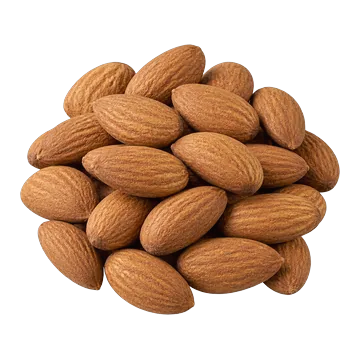
Almonds, raw
Checked by us One serving: 30 g (about 25 almonds) · 175 kcal
Lots of vitamin E and riboflavin.
Go easy: aflatoxins can add up.
Worth knowing for some people: choking risk under age 4.
Good for
How we counted this
What one serving (30 g) gives you.
Your body needs enough of each of these. Past enough, more doesn’t help. Amounts are what the food databases list, not what your body absorbs, unless a row says it was measured.
The words: “A lot” means one serving gives 20% or more of Health Canada’s daily amount, “Some” 10% to 19%, “A little” 2% to 9%, “Almost none” under 2%. Strongest word first; within a word, protein and fibre lead, then the biggest share. ?
A milligram (mg) is a thousandth of a gram, and a microgram (µg) a thousandth of a milligram: 1,000 µg make 1 mg.
- A lot
Vitamin E
Shields the fats in your cells from damage; your immune system uses it too.
Learn more
7.69 mg in one serving: 51% of the 15 mg a day.
Source: How much of it gets in hasn’t been measured for this food yet. NIH Office of Dietary Supplements, vitamin E fact sheet for health professionals
- A lot
Riboflavin (B2)
Your cells use it to make energy and handle fats. It also helps turn tryptophan into niacin and activate vitamin B6.
Learn more
0.34 mg in one serving: 26% of the 1.3 mg a day men need, 31% of the 1.1 mg women need. The word follows the smaller share, which is the share of the higher amount. ?
Source: How much of it gets in hasn’t been measured for this food yet. NIH Office of Dietary Supplements, riboflavin fact sheet for health professionals
20 more nutrients below “a lot”
- Some
Protein
Your muscles, and every other tissue, are built and repaired from it.
Learn more
6.44 g in one serving: 12% of the 56 g a day men need, 14% of the 46 g women need. The word follows the smaller share, which is the share of the higher amount. ?
Listed amount only. 1 absorption study of this nutrient is on file for this food, but none is quoted yet. Each one is in The numbers, with the reason. See the studies
- Some
Magnesium
Your muscles and nerves need it to work.
Learn more
77.3 mg in one serving: 19% of the 400 mg a day men need, 25% of the 310 mg women need. The word follows the smaller share, which is the share of the higher amount. ?
Listed amount only. 1 absorption study of this nutrient is on file for this food, but none is quoted yet. Each one is in The numbers, with the reason. See the studies
Source: NIH Office of Dietary Supplements, magnesium fact sheet for health professionals
- Some
Niacin (B3, niacin equivalents)
More than 400 of your enzymes need it to work.
Learn more
2.14 mg in one serving: 13% of the 16 mg a day men need, 15% of the 14 mg women need. The word follows the smaller share, which is the share of the higher amount. ?
Source: How much of it gets in hasn’t been measured for this food yet. NIH Office of Dietary Supplements, niacin fact sheet for health professionals
- A little
Fibre
Keeps your gut moving.
Learn more
3.23 g in one serving: 9% of the 38 g a day men need, 13% of the 25 g women need. The word follows the smaller share, which is the share of the higher amount. ?
Source: How much of it gets in hasn’t been measured for this food yet. Institute of Medicine 2005, Dietary Reference Intakes for Energy, Carbohydrate, Fiber, Fat, Fatty Acids, Cholesterol, Protein, and Amino Acids
- A little
Zinc
Your immune system and healing wounds depend on it.
Learn more
0.86 mg in one serving: 8% of the 11 mg a day men need, 11% of the 8 mg women need. The word follows the smaller share, which is the share of the higher amount. ?
Source: How much of it gets in hasn’t been measured for this food yet. NIH Office of Dietary Supplements, zinc fact sheet for health professionals
- A little
Calcium
Builds your bones and teeth.
Learn more
76.1 mg in one serving: 8% of the 1,000 mg a day.
Listed amount only. 1 absorption study of this nutrient is on file for this food, but none is quoted yet. Each one is in The numbers, with the reason. See the studies
Source: NIH Office of Dietary Supplements, calcium fact sheet for health professionals
- A little
Potassium
Your nerves, muscles and kidneys need it to work.
Learn more
220 mg in one serving: 6% of the 3,400 mg a day men need, 8% of the 2,600 mg women need. The word follows the smaller share, which is the share of the higher amount. ?
Source: How much of it gets in hasn’t been measured for this food yet. NIH Office of Dietary Supplements, potassium fact sheet for health professionals
- A little
Iron
Carries oxygen in your blood.
Learn more
1.12 mg in one serving: 14% of the 8 mg a day men need, 6% of the 18 mg women need. The word follows the smaller share, which is the share of the higher amount. ?
Listed amount only. 1 absorption study of this nutrient is on file for this food, but none is quoted yet. Each one is in The numbers, with the reason. See the studies
Source: NIH Office of Dietary Supplements, iron fact sheet for health professionals
- A little
Thiamin (B1)
Your cells use it to get energy from food, and so to grow and work.
Learn more
0.05 mg in one serving: 4% of the 1.2 mg a day men need, 5% of the 1.1 mg women need. The word follows the smaller share, which is the share of the higher amount. ?
Source: How much of it gets in hasn’t been measured for this food yet. NIH Office of Dietary Supplements, thiamin fact sheet for health professionals
- A little
Folate
Your body needs it to make DNA and to divide new cells.
Learn more
13.2 µg in one serving: 3% of the 400 µg a day.
Source: How much of it gets in hasn’t been measured for this food yet. NIH Office of Dietary Supplements, folate fact sheet for health professionals
- A little
Choline
Your cells need it for their membranes, and to make acetylcholine, a messenger for memory, mood and muscle control.
Learn more
15.6 mg in one serving: 3% of the 550 mg a day men need, 4% of the 425 mg women need. The word follows the smaller share, which is the share of the higher amount. ?
Source: How much of it gets in hasn’t been measured for this food yet. NIH Office of Dietary Supplements, choline fact sheet for health professionals
- A little
Vitamin B6
Helps you use protein, and your brain needs it to make its chemical messengers.
Learn more
0.03 mg in one serving: 2% of the 1.3 mg a day.
Source: How much of it gets in hasn’t been measured for this food yet. NIH Office of Dietary Supplements, vitamin B6 fact sheet for health professionals
- A little
Selenium
Your thyroid uses it to make its hormones.
Learn more
1.23 µg in one serving: 2% of the 55 µg a day.
Source: How much of it gets in hasn’t been measured for this food yet. NIH Office of Dietary Supplements, selenium fact sheet for health professionals
- Almost none
Omega-3: ALA
The one omega-3 your body can’t make: it must come from food. Your cells build it into their membranes and burn it for energy.
Learn more
0.9 mg in one serving: under 1% of the 1,600 mg a day men need, under 1% of the 1,100 mg women need. The word follows the smaller share, which is the share of the higher amount. ?
Source: How much of it gets in hasn’t been measured for this food yet. NIH Office of Dietary Supplements, omega-3 fatty acids fact sheet for health professionals
- Almost none
Omega-3: EPA + DHA
Long-chain omega-3s, built into your cell membranes. DHA is concentrated in your brain and retinas.
Learn more
0 mg in one serving: under 1% of the 250 mg a day.
Health Canada sets no daily amount for these fats, so the daily figure here is the European Food Safety Authority’s.
Source: How much of it gets in hasn’t been measured for this food yet. NIH Office of Dietary Supplements, omega-3 fatty acids fact sheet for health professionals
- Almost none
Vitamin A
Your eyes need it to see in dim light.
Learn more
Getting enough matters; more than enough doesn’t sharpen your sight.
0 µg in one serving: under 1% of the 900 µg a day men need, under 1% of the 700 µg women need. The word follows the smaller share, which is the share of the higher amount. ?
Source: How much of it gets in hasn’t been measured for this food yet. NIH Office of Dietary Supplements, vitamin A fact sheet for health professionals
- Almost none
Vitamin B12
Your body needs it to make red blood cells and keep nerves working.
Learn more
0 µg in one serving: under 1% of the 2.4 µg a day.
Source: How much of it gets in hasn’t been measured for this food yet. NIH Office of Dietary Supplements, vitamin B12 fact sheet for health professionals
- Almost none
Vitamin C
Your body makes collagen with it, which wounds need to heal. It also helps you absorb iron from plants.
Learn more
0 mg in one serving: under 1% of the 90 mg a day men need, under 1% of the 75 mg women need. The word follows the smaller share, which is the share of the higher amount. ?
Source: How much of it gets in hasn’t been measured for this food yet. NIH Office of Dietary Supplements, vitamin C fact sheet for health professionals
- Almost none
Vitamin D
Your body needs it to absorb calcium and keep your bones hard.
Learn more
Your skin also makes it in sunlight, so food is only one of its sources.
0 µg in one serving: under 1% of the 15 µg a day.
Source: How much of it gets in hasn’t been measured for this food yet. NIH Office of Dietary Supplements, vitamin D fact sheet for health professionals
- Almost none
Vitamin K1
Your blood needs it to clot.
Learn more
0 µg in one serving: under 1% of the 120 µg a day men need, under 1% of the 90 µg women need. The word follows the smaller share, which is the share of the higher amount. ?
Source: How much of it gets in hasn’t been measured for this food yet. NIH Office of Dietary Supplements, vitamin K fact sheet for health professionals
Watch out
How we counted this
Aflatoxins
Go easyLong exposure raises the risk of liver cancer.
Learn more
+17–253% a serving a day adds to an average adult’s intake from all food
That share is for one serving, 30 g (about 25 almonds), every day. Eaten once a week instead, the same serving adds a seventh as much: 2.4–36%, not 17–253%.
No amount of aflatoxins is proven harmless, so we compare with what people already take in instead of counting to a limit. We flag a food only when a daily serving would double that average.
“Go easy” here because agencies’ estimates of what an average adult takes in differ, and against the lowest of them a serving a day can double it.
One serving carries 39 ng (AFB1, 0.56 ng/kg body weight/day)
How we got this
The dataset’s rating: Go easy: can double average intake
May exceed: whether a daily serving doubles intake depends on where in EFSA's range of adult averages a person sits. Against the upper-bound average (1.35-3.25 ng/kg body weight/day) one serving adds 17-41%; against the lower-bound average (0.22-0.49) it adds 114-253%, more than doubling it. The almond figure (JECFA) is an upper bound only.
Cyanogenic glycosides
Worth knowingBitter almonds only: about 1 g of bitter kernel exceeds the acute reference dose. The flag is for the bitter variety, not for the sweet almonds sold as standard.
Learn more
For the usual kind, rated by dose: fine at normal amounts. You’d need about 10 servings in one sitting of this food alone to reach the limit.
Checked for cadmium and lead: fine at normal amounts.
Cadmium
Nothing to watchYou’d need about 16 servings a day, every day, of this food alone to use up what an average adult’s intake leaves under the limit.
Learn more
One serving carries 0.45 µg
How we got this
A serving a day adds 2.5% to what an average adult already takes in: a share of that intake, not of the limit. With that serving every day, an average adult would be at about 73% of the limit.
An average adult already takes in about 71% of the limit. One serving a day fits in the room left.
Counted from zero, with no allowance for what adults already take in from other food, 12,000 g a week would reach the limit.
Why this rating: Eating it daily comes to 210 g a week, which stays within the 3,400 g of room left before the limit.
The dataset’s rating: Nothing to watch: under the limit
A daily serving adds 2.5% to an average adult's cadmium intake (EFSA 2012 adult median, 1.77 µg/kg body weight/week; Canadian adults in 2007: 1.2-1.75), far from doubling it, so no cap.
US FDA, Total Diet Study FY2018–FY2020 Elements Report Supplement · grade A
Lead
Nothing to watchYou’d need more than 100 servings a day, every day, of this food alone to double the lead an average adult already gets. No dose is known to be safe, so doubling is where we flag.
Learn more
A serving a day adds 0–0.3% to what an average adult already takes in. There is no limit to take a share of.
One serving carries 0.12 µg (at the reporting limit)
How we got this
The dataset’s rating: Nothing to watch: doesn’t double average intake
Under +0.34% even at the reporting limit (0.12 µg against 35 µg/day)
US FDA, Total Diet Study FY2018–FY2020 Elements Report Supplement · grade A
For some people
Health Canada: peanuts or other nuts are not safe for children younger than four years (choking)
Measured, not rated: 115–122 mg total oxalate per 30 g serving
Learn more
We haven’t rated this food for oxalate. We count only a figure that comes from a grade A or B source and says it was measured per 100 g of the food as eaten, and none of the figures here does both.
How we got this
Not rated: no agency sets an intake limit for oxalate, so this is a value only, of interest to people who form calcium-oxalate stones. Almonds are listed at 383-407 mg total oxalate per 100 g in two secondary sources, so a 30 g serving carries about 115-122 mg.
Worth knowing
No limit applies, so none is rated.
Sugar
1.3 g of sugar in a 30 g serving, natural and added together.
Learn more
Shown, not rated. The food tables we read give total sugar, and few give added sugar, so the site can’t yet tell sugar added in making a food from the sugar in fruit or milk.
Also measured in it
Figures from the dataset. None has a limit to be rated against, so none is a verdict.
Phytate, as the source gives it: 531 mg/100 g (not stated (as-is vs dry weight unknown); form 'phytate' not defined); 14.71 micromoles phytate (InsP6) per g (not stated (as-is vs dry unknown); phytate (InsP6) itself, not phytate-P) · PubMed 28956139, PubMed 29808577 · grade A
Phytate (also written InsP6, IP6 or phytic acid), the form in which plants store phosphorus, is found in whole grains, beans and nuts. It binds zinc in the gut and lowers how much zinc and plant (non-heme) iron you absorb. No limit applies.
Source: NIH Office of Dietary Supplements, Zinc fact sheet · NIH Office of Dietary Supplements, Iron fact sheet
Tyramine: 0.11 mg per kg fresh weight, so about 0.0033 mg in a 30 g serving. (mean 0.11 · standard deviation 0.41 · range nd–2.63 · n=47) · Sanchezperez 2021 · grade B
For scale, EFSA found no reported ill effects at 6 mg of tyramine in a meal for people on the older MAO-inhibitor antidepressants, 50 mg for those on the newer ones and 600 mg for healthy people not taking them, based on limited data. EFSA 2011
Also checked (nothing to act on) · 1
Noted for context, or not measured in this food yet.
Not rated: no ochratoxin A row in the hazard reference table yet
Better options
How we counted this
“Better” here always means better at something the row names: more of one nutrient, more nutrients per serving, or the goal you pick. It never means better in every way.
Every amount below is for the same weight, 30 g, the size of one serving of this food, so a swap compares like with like. A serving of another food can be bigger or smaller.
A food is listed only if it gives clearly more: at least a fifth more than this food, and at least 10% of the daily amount more.
More of what it’s good for
For vitamin E: no other snacks or toppings we’ve checked give clearly more, in the same 30 g.
For riboflavin: no other snacks or toppings we’ve checked give clearly more, in the same 30 g.
More nutrients per serving, counted together
The other snacks or toppings we’ve checked with more nutrients per serving than this one, counting at most 100 kcal. One score ranks them all, so the same few often lead.
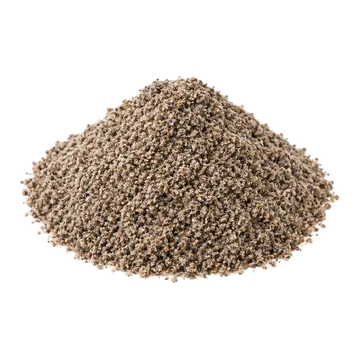 Chia seeds, ground
- More omega-3: ALA (5,349 mg vs 0.9 mg)
- More selenium (16.6 µg vs 1.23 µg)
- More fibre (10.3 g vs 3.23 g)
- Less vitamin E (0.15 mg vs 7.69 mg)
- Less riboflavin (0.05 mg vs 0.34 mg)
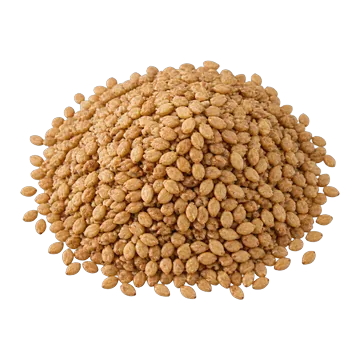 Sesame seeds, whole
- More calcium (293 mg vs 76.1 mg)
- More iron (4.37 mg vs 1.12 mg)
- More selenium (10.3 µg vs 1.23 µg)
- Less vitamin E (0.08 mg vs 7.69 mg)
- Less riboflavin (0.07 mg vs 0.34 mg)
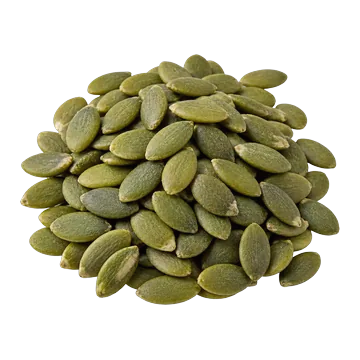 Pumpkin seeds
- More magnesium (150 mg vs 77.3 mg)
- More niacin (4.38 mg vs 2.14 mg)
- Less riboflavin (0.05 mg vs 0.34 mg)
Where the calcium card measured that less calcium gets in than from milk, calcium counts for less; everything else is as listed.
Your goal
Your goal changes only this list, not what the food gives you or what to watch.
Losing weight: fewer calories, and more nutrients, protein and fibre for each calorie.
- Chia seeds, ground
- More fibre (10.3 g vs 3.23 g)
- More omega-3: ALA (5,349 mg vs 0.9 mg)
- More selenium (16.6 µg vs 1.23 µg)
- Less vitamin E (0.15 mg vs 7.69 mg)
- Less riboflavin (0.05 mg vs 0.34 mg)
- Pumpkin seeds
- More magnesium (150 mg vs 77.3 mg)
- More niacin (4.38 mg vs 2.14 mg)
- Less riboflavin (0.05 mg vs 0.34 mg)
- Sesame seeds, whole
- More calcium (293 mg vs 76.1 mg)
- More iron (4.37 mg vs 1.12 mg)
- More selenium (10.3 µg vs 1.23 µg)
- Less vitamin E (0.08 mg vs 7.69 mg)
- Less riboflavin (0.07 mg vs 0.34 mg)
None of the 26 other snacks or toppings we could compare gives clearly more protein, and more calories, per 100 g.
Bring a tracker export or describe your usual week. The same rules check all of it.
The numbers
Open every value
Name in the database: Almonds, raw
How the serving was set: 30 g shelled (Health Canada TRA O.1, nuts and seeds not for use as snacks: whole, chopped, sliced, slivered or ground)
Listed nutrients, per 100 g
For each nutrient, the value this page uses is marked “used”. A row marked “second database” is another database’s figure for a matching food, kept so you can see how far databases disagree (they can differ in the samples analysed, lab methods and rounding). Its own cells are worked out from it, but none of the page’s words or scores are.
| Nutrient | Per serving | Per 100 calories | How | Source | Grade | |
|---|---|---|---|---|---|---|
| Omega-3: ALA | 0.003 g | 0 g | 0 g | from SR Legacy used | US food database (USDA SR Legacy) #170567 | C |
| Calcium | 253.6 mg | 76.08 mg | 43.45 mg | listed used | US food database (USDA Foundation Foods) #2346393 | C |
| 269 mg | 80.7 mg | 46.09 mg | second database · not used | UK food tables (CoFID 2021) #14-896 | C | |
| 269 mg | 80.7 mg | 46.09 mg | copy of USDA · not used | Canadian Nutrient File 2026 #2534 | C | |
| Carbohydrate | 20.035 g | 6.01 g | 3.43 g | listed used | US food database (USDA Foundation Foods) #2346393 | C |
| Choline | 52.1 mg | 15.63 mg | 8.93 mg | from SR Legacy used | US food database (USDA SR Legacy) #170567 | C |
| Energy | 583.597 kcal | 175.08 kcal | – | FDC Energy (Atwater Specific Factors) used | US food database (USDA Foundation Foods) | – |
| 579 kcal | 173.7 kcal | – | from SR Legacy · not used | US food database (USDA SR Legacy) #170567 | C | |
| Omega-3: EPA + DHA | 0 g | 0 g | 0 g | from SR Legacy used | US food database (USDA SR Legacy) #170567 | C |
| Fat | 51.09 g | 15.33 g | 8.75 g | listed used | US food database (USDA Foundation Foods) #2346393 | C |
| 49.9 g | 14.97 g | 8.55 g | second database · not used | UK food tables (CoFID 2021) #14-896 | C | |
| Cholesterol | 0 mg | 0 mg | 0 mg | from SR Legacy used | US food database (USDA SR Legacy) #170567 | C |
| Fatty acids, total saturated | 3.785 g | 1.14 g | 0.65 g | listed used | US food database (USDA Foundation Foods) #2346393 | C |
| Fibre | 10.78 g | 3.23 g | 1.85 g | listed used | US food database (USDA Foundation Foods) #2346393 | C |
| 12.5 g | 3.75 g | 2.14 g | second database · not used | UK food tables (CoFID 2021) #14-896 | C | |
| Folate | 44 µg | 13.2 µg | 7.54 µg | from SR Legacy used | US food database (USDA SR Legacy) #170567 | C |
| 44 µg | 13.2 µg | 7.54 µg | second database · not used | UK food tables (CoFID 2021) #14-896 | C | |
| Iron | 3.741 mg | 1.12 mg | 0.64 mg | listed used | US food database (USDA Foundation Foods) #2346393 | C |
| 3.71 mg | 1.11 mg | 0.64 mg | second database · not used | UK food tables (CoFID 2021) #14-896 | C | |
| Magnesium | 257.6 mg | 77.28 mg | 44.14 mg | listed used | US food database (USDA Foundation Foods) #2346393 | C |
| 270 mg | 81 mg | 46.26 mg | second database · not used | UK food tables (CoFID 2021) #14-896 | C | |
| Niacin (B3, niacin equivalents) | 7.135 mg | 2.14 mg | 1.22 mg | listed used | Canadian Nutrient File 2026 #2534 | C |
| Phosphorus | 502.9 mg | 150.87 mg | 86.17 mg | listed used | US food database (USDA Foundation Foods) #2346393 | C |
| 481 mg | 144.3 mg | 82.42 mg | second database · not used | UK food tables (CoFID 2021) #14-896 | C | |
| Potassium | 732.8 mg | 219.84 mg | 125.57 mg | listed used | US food database (USDA Foundation Foods) #2346393 | C |
| 733 mg | 219.9 mg | 125.6 mg | second database · not used | UK food tables (CoFID 2021) #14-896 | C | |
| Protein | 21.45 g | 6.44 g | 3.68 g | listed used | US food database (USDA Foundation Foods) #2346393 | C |
| 21.2 g | 6.36 g | 3.63 g | second database · not used | UK food tables (CoFID 2021) #14-896 | C | |
| Riboflavin (B2) | 1.138 mg | 0.34 mg | 0.19 mg | from SR Legacy used | US food database (USDA SR Legacy) #170567 | C |
| 1.14 mg | 0.34 mg | 0.2 mg | second database · not used | UK food tables (CoFID 2021) #14-896 | C | |
| Selenium | 4.1 µg | 1.23 µg | 0.7 µg | from SR Legacy used | US food database (USDA SR Legacy) #170567 | C |
| 4 µg | 1.2 µg | 0.69 µg | second database · not used | UK food tables (CoFID 2021) #14-896 | C | |
| Sodium | 0 mg | 0 mg | 0 mg | listed used | US food database (USDA Foundation Foods) #2346393 | C |
| 1 mg | 0.3 mg | 0.17 mg | second database · not used | UK food tables (CoFID 2021) #14-896 | C | |
| Sugars | 4.35 g | 1.31 g | 0.75 g | from SR Legacy used | US food database (USDA SR Legacy) #170567 | C |
| 4.5 g | 1.35 g | 0.77 g | second database · not used | UK food tables (CoFID 2021) #14-896 | C | |
| Thiamin (B1) | 0.161 mg | 0.05 mg | 0.03 mg | listed used | US food database (USDA Foundation Foods) #2346393 | C |
| 0.21 mg | 0.06 mg | 0.04 mg | second database · not used | UK food tables (CoFID 2021) #14-896 | C | |
| Vitamin A | 0 µg | 0 µg | 0 µg | from SR Legacy used | US food database (USDA SR Legacy) #170567 | C |
| Vitamin B12 | 0 µg | 0 µg | 0 µg | from SR Legacy used | US food database (USDA SR Legacy) #170567 | C |
| 0 µg | 0 µg | 0 µg | second database · not used | UK food tables (CoFID 2021) #14-896 | C | |
| Vitamin B6 | 0.101 mg | 0.03 mg | 0.02 mg | listed used | US food database (USDA Foundation Foods) #2346393 | C |
| 0.14 mg | 0.04 mg | 0.02 mg | second database · not used | UK food tables (CoFID 2021) #14-896 | C | |
| Vitamin C | 0 mg | 0 mg | 0 mg | from SR Legacy used | US food database (USDA SR Legacy) #170567 | C |
| 0 mg | 0 mg | 0 mg | second database · not used | UK food tables (CoFID 2021) #14-896 | C | |
| Vitamin D | 0 µg | 0 µg | 0 µg | from SR Legacy used | US food database (USDA SR Legacy) #170567 | C |
| 0 µg | 0 µg | 0 µg | second database · not used | UK food tables (CoFID 2021) #14-896 | C | |
| Vitamin E | 25.63 mg | 7.69 mg | 4.39 mg | from SR Legacy used | US food database (USDA SR Legacy) #170567 | C |
| 25.63 mg | 7.69 mg | 4.39 mg | second database · not used | UK food tables (CoFID 2021) #14-896 | C | |
| Vitamin K1 | 0 µg | 0 µg | 0 µg | listed used | US food database (USDA Foundation Foods) #2346393 | C |
| 0 µg | 0 µg | 0 µg | second database · not used | UK food tables (CoFID 2021) #14-896 | C | |
| Water | 4.261 g | 1.28 g | 0.73 g | listed used | US food database (USDA Foundation Foods) #2346393 | C |
| 4.4 g | 1.32 g | 0.75 g | second database · not used | UK food tables (CoFID 2021) #14-896 | C | |
| Zinc | 2.865 mg | 0.86 mg | 0.49 mg | listed used | US food database (USDA Foundation Foods) #2346393 | C |
| 3.1 mg | 0.93 mg | 0.53 mg | second database · not used | UK food tables (CoFID 2021) #14-896 | C |
| Nutrient | Per 100 g | Per serving | Per 100 calories | How | Source | Grade |
|---|---|---|---|---|---|---|
| Beta-carotene | 1 µg | 0.3 µg | 0.17 µg | from SR Legacy used | US food database (USDA SR Legacy) #170567 | C |
| 1 µg | 0.3 µg | 0.17 µg | second database · not used | UK food tables (CoFID 2021) #14-896 | C | |
| Copper | 0.91 mg | 0.27 mg | 0.16 mg | listed used | US food database (USDA Foundation Foods) #2346393 | C |
| 1.031 mg | 0.31 mg | 0.18 mg | second database · not used | UK food tables (CoFID 2021) #14-896 | C | |
| Energy (Atwater general) | 625.75 kcal | 187.73 kcal | 107.22 kcal | listed used | US food database (USDA Foundation Foods) #2346393 | C |
| Energy (Atwater specific) | 583.597 kcal | 175.08 kcal | 100 kcal | listed used | US food database (USDA Foundation Foods) #2346393 | C |
| Nitrogen | 4.141 g | 1.24 g | 0.71 g | listed used | US food database (USDA Foundation Foods) #2346393 | C |
| Ash | 3.164 g | 0.95 g | 0.54 g | listed used | US food database (USDA Foundation Foods) #2346393 | C |
| Starch | 0.72 g | 0.22 g | 0.12 g | from SR Legacy used | US food database (USDA SR Legacy) #170567 | C |
| Sucrose | 3.95 g | 1.19 g | 0.68 g | from SR Legacy used | US food database (USDA SR Legacy) #170567 | C |
| Glucose | 0.17 g | 0.05 g | 0.03 g | from SR Legacy used | US food database (USDA SR Legacy) #170567 | C |
| Fructose | 0.11 g | 0.03 g | 0.02 g | from SR Legacy used | US food database (USDA SR Legacy) #170567 | C |
| Maltose | 0.04 g | 0.01 g | 0.01 g | from SR Legacy used | US food database (USDA SR Legacy) #170567 | C |
| Alcohol, ethyl | 0 g | 0 g | 0 g | from SR Legacy used | US food database (USDA SR Legacy) #170567 | C |
| Caffeine | 0 mg | 0 mg | 0 mg | from SR Legacy used | US food database (USDA SR Legacy) #170567 | C |
| Theobromine | 0 mg | 0 mg | 0 mg | from SR Legacy used | US food database (USDA SR Legacy) #170567 | C |
| Energy | 2,423 kj | 726.9 kj | 415.18 kj | from SR Legacy used | US food database (USDA SR Legacy) #170567 | C |
| Galactose | 0.07 g | 0.02 g | 0.01 g | from SR Legacy used | US food database (USDA SR Legacy) #170567 | C |
| Molybdenum, Mo | 45.28 µg | 13.58 µg | 7.76 µg | listed used | US food database (USDA Foundation Foods) #2346393 | C |
| Vitamin A, IU | 2 iu | 0.6 iu | 0.34 iu | from SR Legacy used | US food database (USDA SR Legacy) #170567 | C |
| Carotene, alpha | 0 µg | 0 µg | 0 µg | from SR Legacy used | US food database (USDA SR Legacy) #170567 | C |
| Vitamin D (D2 + D3), International Units | 0 iu | 0 iu | 0 iu | from SR Legacy used | US food database (USDA SR Legacy) #170567 | C |
| Cryptoxanthin, beta | 0 µg | 0 µg | 0 µg | from SR Legacy used | US food database (USDA SR Legacy) #170567 | C |
| Lycopene | 0 µg | 0 µg | 0 µg | from SR Legacy used | US food database (USDA SR Legacy) #170567 | C |
| Tocopherol, beta | 0.23 mg | 0.07 mg | 0.04 mg | from SR Legacy used | US food database (USDA SR Legacy) #170567 | C |
| Tocopherol, gamma | 0.64 mg | 0.19 mg | 0.11 mg | from SR Legacy used | US food database (USDA SR Legacy) #170567 | C |
| Tocopherol, delta | 0.07 mg | 0.02 mg | 0.01 mg | from SR Legacy used | US food database (USDA SR Legacy) #170567 | C |
| Biotin | 57.01 µg | 17.1 µg | 9.77 µg | listed used | US food database (USDA Foundation Foods) #2346393 | C |
| Vitamin K (Menaquinone-4) | 0 µg | 0 µg | 0 µg | listed used | US food database (USDA Foundation Foods) #2346393 | C |
| Vitamin K (Dihydrophylloquinone) | 0 µg | 0 µg | 0 µg | listed used | US food database (USDA Foundation Foods) #2346393 | C |
| Folic acid | 0 µg | 0 µg | 0 µg | from SR Legacy used | US food database (USDA SR Legacy) #170567 | C |
| Folate, food | 44 µg | 13.2 µg | 7.54 µg | from SR Legacy used | US food database (USDA SR Legacy) #170567 | C |
| Folate, DFE | 44 µg | 13.2 µg | 7.54 µg | from SR Legacy used | US food database (USDA SR Legacy) #170567 | C |
| Betaine | 0.5 mg | 0.15 mg | 0.09 mg | from SR Legacy used | US food database (USDA SR Legacy) #170567 | C |
| Tryptophan | 0.208 g | 0.06 g | 0.04 g | listed used | US food database (USDA Foundation Foods) #2346393 | C |
| Threonine | 0.608 g | 0.18 g | 0.1 g | listed used | US food database (USDA Foundation Foods) #2346393 | C |
| Isoleucine | 0.774 g | 0.23 g | 0.13 g | listed used | US food database (USDA Foundation Foods) #2346393 | C |
| Leucine | 1.488 g | 0.45 g | 0.25 g | listed used | US food database (USDA Foundation Foods) #2346393 | C |
| Lysine | 0.618 g | 0.19 g | 0.11 g | listed used | US food database (USDA Foundation Foods) #2346393 | C |
| Methionine | 0.154 g | 0.05 g | 0.03 g | listed used | US food database (USDA Foundation Foods) #2346393 | C |
| Cystine | 0.215 g | 0.06 g | 0.04 g | from SR Legacy used | US food database (USDA SR Legacy) #170567 | C |
| Phenylalanine | 1.198 g | 0.36 g | 0.21 g | listed used | US food database (USDA Foundation Foods) #2346393 | C |
| Tyrosine | 0.63 g | 0.19 g | 0.11 g | listed used | US food database (USDA Foundation Foods) #2346393 | C |
| Valine | 0.916 g | 0.27 g | 0.16 g | listed used | US food database (USDA Foundation Foods) #2346393 | C |
| Arginine | 2.464 g | 0.74 g | 0.42 g | listed used | US food database (USDA Foundation Foods) #2346393 | C |
| Histidine | 0.548 g | 0.16 g | 0.09 g | listed used | US food database (USDA Foundation Foods) #2346393 | C |
| Alanine | 0.98 g | 0.29 g | 0.17 g | listed used | US food database (USDA Foundation Foods) #2346393 | C |
| Aspartic acid | 2.402 g | 0.72 g | 0.41 g | listed used | US food database (USDA Foundation Foods) #2346393 | C |
| Glutamic acid | 4.248 g | 1.27 g | 0.73 g | listed used | US food database (USDA Foundation Foods) #2346393 | C |
| Glycine | 1.434 g | 0.43 g | 0.25 g | listed used | US food database (USDA Foundation Foods) #2346393 | C |
| Proline | 1.314 g | 0.39 g | 0.23 g | listed used | US food database (USDA Foundation Foods) #2346393 | C |
| Serine | 0.99 g | 0.3 g | 0.17 g | listed used | US food database (USDA Foundation Foods) #2346393 | C |
| Hydroxyproline | 0 g | 0 g | 0 g | listed used | US food database (USDA Foundation Foods) #2346393 | C |
| Cysteine | 0.5 g | 0.15 g | 0.09 g | listed used | US food database (USDA Foundation Foods) #2346393 | C |
| Vitamin E, added | 0 mg | 0 mg | 0 mg | from SR Legacy used | US food database (USDA SR Legacy) #170567 | C |
| Vitamin B-12, added | 0 µg | 0 µg | 0 µg | from SR Legacy used | US food database (USDA SR Legacy) #170567 | C |
| Fatty acids, total trans | 0.015 g | 0 g | 0 g | from SR Legacy used | US food database (USDA SR Legacy) #170567 | C |
| SFA 4:0 | 0 g | 0 g | 0 g | from SR Legacy used | US food database (USDA SR Legacy) #170567 | C |
| SFA 6:0 | 0 g | 0 g | 0 g | from SR Legacy used | US food database (USDA SR Legacy) #170567 | C |
| SFA 8:0 | 0 g | 0 g | 0 g | from SR Legacy used | US food database (USDA SR Legacy) #170567 | C |
| SFA 10:0 | 0 g | 0 g | 0 g | from SR Legacy used | US food database (USDA SR Legacy) #170567 | C |
| SFA 12:0 | 0 g | 0 g | 0 g | from SR Legacy used | US food database (USDA SR Legacy) #170567 | C |
| SFA 14:0 | 0.003 g | 0 g | 0 g | from SR Legacy used | US food database (USDA SR Legacy) #170567 | C |
| SFA 16:0 | 3.083 g | 0.92 g | 0.53 g | from SR Legacy used | US food database (USDA SR Legacy) #170567 | C |
| SFA 18:0 | 0.704 g | 0.21 g | 0.12 g | from SR Legacy used | US food database (USDA SR Legacy) #170567 | C |
| SFA 20:0 | 0.007 g | 0 g | 0 g | from SR Legacy used | US food database (USDA SR Legacy) #170567 | C |
| MUFA 18:1 | 31.294 g | 9.39 g | 5.36 g | from SR Legacy used | US food database (USDA SR Legacy) #170567 | C |
| PUFA 18:2 | 12.324 g | 3.7 g | 2.11 g | from SR Legacy used | US food database (USDA SR Legacy) #170567 | C |
| PUFA 18:3 | 0.003 g | 0 g | 0 g | from SR Legacy used | US food database (USDA SR Legacy) #170567 | C |
| PUFA 20:4 | 0 g | 0 g | 0 g | from SR Legacy used | US food database (USDA SR Legacy) #170567 | C |
| PUFA 22:6 n-3 (DHA) | 0 g | 0 g | 0 g | from SR Legacy used | US food database (USDA SR Legacy) #170567 | C |
| SFA 22:0 | 0.001 g | 0 g | 0 g | from SR Legacy used | US food database (USDA SR Legacy) #170567 | C |
| MUFA 14:1 | 0 g | 0 g | 0 g | from SR Legacy used | US food database (USDA SR Legacy) #170567 | C |
| MUFA 16:1 | 0.239 g | 0.07 g | 0.04 g | from SR Legacy used | US food database (USDA SR Legacy) #170567 | C |
| PUFA 18:4 | 0 g | 0 g | 0 g | from SR Legacy used | US food database (USDA SR Legacy) #170567 | C |
| MUFA 20:1 | 0.005 g | 0 g | 0 g | from SR Legacy used | US food database (USDA SR Legacy) #170567 | C |
| PUFA 20:5 n-3 (EPA) | 0 g | 0 g | 0 g | from SR Legacy used | US food database (USDA SR Legacy) #170567 | C |
| MUFA 22:1 | 0 g | 0 g | 0 g | from SR Legacy used | US food database (USDA SR Legacy) #170567 | C |
| PUFA 22:5 n-3 (DPA) | 0 g | 0 g | 0 g | from SR Legacy used | US food database (USDA SR Legacy) #170567 | C |
| Stigmasterol | 4 mg | 1.2 mg | 0.69 mg | from SR Legacy used | US food database (USDA SR Legacy) #170567 | C |
| Campesterol | 5 mg | 1.5 mg | 0.86 mg | from SR Legacy used | US food database (USDA SR Legacy) #170567 | C |
| Beta-sitosterol | 130 mg | 39 mg | 22.28 mg | from SR Legacy used | US food database (USDA SR Legacy) #170567 | C |
| Fatty acids, total monounsaturated | 31.314 g | 9.39 g | 5.37 g | listed used | US food database (USDA Foundation Foods) #2346393 | C |
| Fatty acids, total polyunsaturated | 11.18 g | 3.35 g | 1.92 g | listed used | US food database (USDA Foundation Foods) #2346393 | C |
| SFA 15:0 | 0 g | 0 g | 0 g | from SR Legacy used | US food database (USDA SR Legacy) #170567 | C |
| SFA 17:0 | 0.004 g | 0 g | 0 g | from SR Legacy used | US food database (USDA SR Legacy) #170567 | C |
| SFA 24:0 | 0 g | 0 g | 0 g | from SR Legacy used | US food database (USDA SR Legacy) #170567 | C |
| TFA 16:1 t | 0.012 g | 0 g | 0 g | from SR Legacy used | US food database (USDA SR Legacy) #170567 | C |
| TFA 18:1 t | 0 g | 0 g | 0 g | from SR Legacy used | US food database (USDA SR Legacy) #170567 | C |
| TFA 18:2 t not further defined | 0.003 g | 0 g | 0 g | from SR Legacy used | US food database (USDA SR Legacy) #170567 | C |
| PUFA 18:2 CLAs | 0.002 g | 0 g | 0 g | from SR Legacy used | US food database (USDA SR Legacy) #170567 | C |
| MUFA 24:1 c | 0 g | 0 g | 0 g | from SR Legacy used | US food database (USDA SR Legacy) #170567 | C |
| PUFA 20:2 n-6 c,c | 0.002 g | 0 g | 0 g | from SR Legacy used | US food database (USDA SR Legacy) #170567 | C |
| MUFA 16:1 c | 0.227 g | 0.07 g | 0.04 g | from SR Legacy used | US food database (USDA SR Legacy) #170567 | C |
| MUFA 18:1 c | 31.294 g | 9.39 g | 5.36 g | from SR Legacy used | US food database (USDA SR Legacy) #170567 | C |
| PUFA 18:2 n-6 c,c | 12.32 g | 3.7 g | 2.11 g | from SR Legacy used | US food database (USDA SR Legacy) #170567 | C |
| PUFA 18:3 n-6 c,c,c | 0 g | 0 g | 0 g | from SR Legacy used | US food database (USDA SR Legacy) #170567 | C |
| MUFA 17:1 | 0.013 g | 0 g | 0 g | from SR Legacy used | US food database (USDA SR Legacy) #170567 | C |
| PUFA 20:3 | 0 g | 0 g | 0 g | from SR Legacy used | US food database (USDA SR Legacy) #170567 | C |
| Fatty acids, total trans-monoenoic | 0.012 g | 0 g | 0 g | from SR Legacy used | US food database (USDA SR Legacy) #170567 | C |
| Fatty acids, total trans-polyenoic | 0.003 g | 0 g | 0 g | from SR Legacy used | US food database (USDA SR Legacy) #170567 | C |
| SFA 13:0 | 0 g | 0 g | 0 g | from SR Legacy used | US food database (USDA SR Legacy) #170567 | C |
| MUFA 15:1 | 0 g | 0 g | 0 g | from SR Legacy used | US food database (USDA SR Legacy) #170567 | C |
| PUFA 18:3 n-3 c,c,c (ALA) | 0.003 g | 0 g | 0 g | from SR Legacy used | US food database (USDA SR Legacy) #170567 | C |
| Lactose | 0 g | 0 g | 0 g | from SR Legacy used | US food database (USDA SR Legacy) #170567 | C |
| 0 g | 0 g | 0 g | second database · not used | UK food tables (CoFID 2021) #14-896 | C | |
| Lutein + zeaxanthin | 1 µg | 0.3 µg | 0.17 µg | from SR Legacy used | US food database (USDA SR Legacy) #170567 | C |
| Manganese | 2.149 mg | 0.64 mg | 0.37 mg | listed used | US food database (USDA Foundation Foods) #2346393 | C |
| 2.18 mg | 0.65 mg | 0.37 mg | second database · not used | UK food tables (CoFID 2021) #14-896 | C | |
| Niacin (B3, preformed) | 3.77 mg | 1.13 mg | 0.65 mg | listed used | US food database (USDA Foundation Foods) #2346393 | C |
| 3.6 mg | 1.08 mg | 0.62 mg | second database · not used | UK food tables (CoFID 2021) #14-896 | C | |
| Pantothenic acid (B5) | 0.471 mg | 0.14 mg | 0.08 mg | from SR Legacy used | US food database (USDA SR Legacy) #170567 | C |
| 0.47 mg | 0.14 mg | 0.08 mg | second database · not used | UK food tables (CoFID 2021) #14-896 | C | |
| Retinol | 0 µg | 0 µg | 0 µg | from SR Legacy used | US food database (USDA SR Legacy) #170567 | C |
| 0 µg | 0 µg | 0 µg | second database · not used | UK food tables (CoFID 2021) #14-896 | C |
Change the amount to rescale the first column. Nutrients a database doesn't list are missing, not zero.
Absorption studies
Studies of how much of a nutrient gets in; those done in animals are marked. This page quotes a figure only from a study that passes our screen: adults, graded A, of this food in this preparation, with a test dose on record and a source that has passed our evidence check. The exception is calcium on our calcium card: its figure comes from the card’s own study, checked with the card, and is marked “used” even where that study misses a step of this screen. The others are listed so nothing is hidden, each with the first check it fails.
No study of this food passes the screen yet, so no absorption figure is quoted.
| Study | Nutrient | Absorbed | Test dose | People | Grade | On this page |
|---|---|---|---|---|---|---|
| Chai & Liebman 2004: almonds, oxalate load method (two almond treatments pooled) not stated · not stated abstract only | oxalate | 5.9 % | 120 mg | 11 | A | Not used: we haven’t confirmed how the food was prepared in this study. |
| Fine 1991: almond meal (exp. 7), MEAL-LEVEL CONTEXT, not the almonds' fraction not stated · almonds 55 g (~30 whole); raw vs roasted not stated, blanched or not not stated full text read | Calcium | 14.5 % | 287 mg | 8 | C | Not used: we haven’t confirmed how the food was prepared in this study. |
| Fine 1991: almond meal (exp. 7) (whole meal: steak, cheese, rice plus 55 g almonds) not stated · almonds 55 g (~30 whole); raw vs roasted not stated full text read | Magnesium | 26.9 % | 177 mg | 8 | C | Not used: we haven’t confirmed how the food was prepared in this study. |
| Novotny 2012: whole 'natural' almonds, metabolisable energy not stated · 'natural, whole almonds' (paper's words); raw vs roasted not stated; no mastication guidance full text read | Energy | – | 42,000 mg | 18 | A | Not used: it measures something other than the share absorbed. |
| Gebauer 2016: whole natural almonds, metabolisable energy nonpareil, one lot from the Almond Board of California (Hughson Nut) · whole natural almonds (paper's word; read here as not roasted, not confirmed as raw) full text read | Energy | – | 42,000 mg | 18 | A | Not used: it measures something other than the share absorbed. |
| Brinkley 1990: almonds, oxalate bioavailability not stated · not stated abstract only | oxalate | 2.8 % | 131 mg | 9 | A | Not used: we haven’t confirmed how the food was prepared in this study. |
| Macfarlane et al. 1988: almonds not stated · nut meals (form not stated) · load not reported full text read | Iron | 1.8 % | not reported | 137 | B | Not used: we haven’t confirmed how the food was prepared in this study. |
| Hodgkinson et al. 2025: almonds (pig) animal study Carmel Supreme almonds, US · Raw (hammer-milled) · diet protein level not read; ration 0.08 x metabolic body weight (kg^0.75) per day full text read | Protein | 72.3 % | not reported | 6 | B | Not used: we haven’t confirmed how the food was prepared in this study. |
Hazard rows as the dataset rates them
- Aflatoxins · Go easy: can double average intake · May exceed: whether a daily serving doubles intake depends on where in EFSA's range of adult averages a person sits. Against the upper-bound average (1.35-3.25 ng/kg body weight/day) one serving adds 17-41%; against the lower-bound average (0.22-0.49) it adds 114-253%, more than doubling it. The almond figure (JECFA) is an upper bound only. · JECFA 2008 · B
- Cadmium · Nothing to watch: under the limit · A daily serving adds 2.5% to an average adult's cadmium intake (EFSA 2012 adult median, 1.77 µg/kg body weight/week; Canadian adults in 2007: 1.2-1.75), far from doubling it, so no cap. · US FDA Total Diet Study (2018–2020) · A
- Choking risk under age 4 · Worth knowing · Health Canada: peanuts or other nuts are not safe for children younger than four years (choking) · Health Canada, Nutrition for Healthy Term Infants: Recommendations… · A
- Cyanogenic glycosides · Nothing to watch: under the limit · Rated on the dose in one sitting: one 30 g serving of sweet almonds is 9.6% of the acute reference dose for a 70 kg adult, so no flag. EFSA makes no allowance for slower cyanide release from almonds (a bioavailability factor of 1). · EFSA 2019 · A
- Cyanogenic glycosides · Worth knowing · Bitter almonds only: about 1 g of bitter kernel exceeds the acute reference dose. The flag is for the bitter variety, not for the sweet almonds sold as standard. · EFSA 2019 · A
- Lead · Nothing to watch: doesn’t double average intake · Under +0.34% even at the reporting limit (0.12 µg against 35 µg/day) · US FDA Total Diet Study (2018–2020) · A
- Ochratoxin A · Context · Not rated: no ochratoxin A row in the hazard reference table yet · CFIA ochratoxin A survey (2012–2022) · B
- Oxalate for kidney-stone formers · Not rated yet · Not rated: no agency sets an intake limit for oxalate, so this is a value only, of interest to people who form calcium-oxalate stones. Almonds are listed at 383-407 mg total oxalate per 100 g in two secondary sources, so a 30 g serving carries about 115-122 mg. · Siener 2021 · B
- Tree nut allergy · Worth knowing · Almonds are named among the tree nuts of the Health Canada priority food allergens · Health Canada, Tree Nuts - Priority food allergens · A
Oxalate, phytate and gut-tolerance measurements
- fodmap excess fructose: not derived: fructose 0.11-0.59 and glucose 0.42-1.47 g/100 g DW across cultivars (ranges, not paired per cultivar) g/100 g dry weight · dried, defatted samples · almond kernels defatted and dried for assay · grade B · PubMed 20033298
- fodmap gos: 0.71–2.11 g/100 g dry weight · 'g/100 g of dried weight' (samples defatted and dried) · almond kernels defatted and dried for assay (not as sold); HPLC-RI, NH2 column · grade B · PubMed 20033298
- histamine: ND in all samples mg/kg · fresh weight · not stated · grade B · Sanchezperez 2021
- histamine: not detected (nd) mg/kg · fresh weight (mg/kg or mg/L, as the review's header) · see variant · grade B · Diniz 2025
- oxalate soluble: 492–556.8 mg/100 g · fresh weight (FW) · commercial nuts (imported, or NZ-grown); gastric-soluble fraction after 2 h at 37 C in gastric juice · grade B · Ritter 2007
- oxalate soluble: 216–305 mg/100 g · fresh weight (FW) · intestinal-soluble fraction after gastric then intestinal juice incubation · grade B · Ritter 2007
- oxalate total: 383 mg/100 g · not stated · not stated · grade B · Siener 2021
- oxalate total: 407 mg/100 g · 'per 100 g serving' · not stated · grade B · Mitchell 2020
- phytate: 531 mg/100 g · not stated (as-is vs dry weight unknown); form 'phytate' not defined · whole unsoaked almonds (raw vs roasted not stated); HPLC · grade A · PubMed 28956139
- phytate: 14.71 micromoles phytate (InsP6) per g · not stated (as-is vs dry unknown); phytate (InsP6) itself, not phytate-P · raw pasteurised almonds, unsoaked; 24 h ambient soaking gave 14.01 (-4.75%) · grade A · PubMed 29808577
- phytate: 8–12 micromoles total InsPs per g · not stated · almond MEAL (and 5-14 in brown skins), six major cultivars; not the whole nut as eaten · grade B · PubMed 28372252
- tyramine: mean 0.11 · standard deviation 0.41 · range nd–2.63 · n=47 mg/kg · fresh weight · not stated · grade B · Sanchezperez 2021
- tyramine: not detected (nd) mg/kg · fresh weight · market nuts, Belo Horizonte · grade B · Diniz 2015
Sources
- CFIA, Food Safety Action Plan Targeted Survey - Ochratoxin A in Selected Foods, 2012-2018 and 2019-2022
cfia-ota-2012-2022· dataset · Open Government Licence - Canada 2.0 (as for the other CFIA datasets; not checked on this page) - Health Canada, Canadian Nutrient File 2026 (14th edition)
cnf-2026· dataset · Open Government Licence – Canada 2.0 - Public Health England, Composition of Foods Integrated Dataset (CoFID) 2021
cofid-2021· dataset · Open Government Licence v3.0 - Diniz FB. Elaboracao de tabela de aminas bioativas em alimentos e estimativa da ingestao no Brasil [MSc dissertation]. UFMG, Faculdade de Farmacia, 2015.
diniz2015· full text read · repository copy (licence not stated) - Diniz FB, Dala-Paula BM, et al., Gloria MBA. Histamine in Brazilian Foods: A Comprehensive Review of Occurrence and Risk Assessment for Intoxication and Intolerance. Food Sci Nutr 2025;13(11):e71151. · doi:10.1002/fsn3.71151
diniz2025· full text read · CC BY 4.0 - EFSA CONTAM Panel (2019). Evaluation of the health risks related to the presence of cyanogenic glycosides in foods other than raw apricot kernels. EFSA Journal 17(4):5662 · doi:10.2903/j.efsa.2019.5662
efsa-2019-cyanogenic-glycosides· full text read · EFSA Journal: CC BY-ND 4.0 (per EFSA policy; not checked on the page) - US FDA, Total Diet Study FY2018–FY2020 Elements Report Supplement
fda-tds-fy2018-2020· dataset · US government work (17 USC 105), public domain - USDA FoodData Central, Foundation Foods, release 2026-04-30
fdc-foundation-2026-04-30· dataset · CC0 1.0 (public domain) - USDA FoodData Central, SR Legacy, 2018-04
fdc-sr-legacy-2018-04· dataset · CC0 1.0 (public domain) - Health Canada, Nutrition for Healthy Term Infants: Recommendations from Six to 24 Months (Choking and aspiration)
hc-infant-nutrition-6-24m· page · Government of Canada terms (Crown copyright; not OGL) - Health Canada, Tree Nuts - Priority food allergens
hc-tree-nuts-priority-allergens· page · Government of Canada terms (Crown copyright; not OGL) - JECFA 68th meeting. Aflatoxins (pages 305-356). In: Safety evaluation of certain food additives and contaminants, WHO Food Additives Series 59, Geneva 2008
jecfa-68-aflatoxins-2008· full text read · WHO publication; reuse terms not checked - Bargagli M, Tio MC, Waikar SS, Ferraro PM. 'Dietary Oxalate Intake and Kidney Outcomes'. Nutrients 2020;12(9):2673 · doi:10.3390/nu12092673
mitchell2020-oxalate· full text read · CC BY 4.0 (per the article XML) - Chai W, Liebman M. Assessment of oxalate absorption from almonds and black beans with and without the use of an extrinsic label. J Urol 2004 (volume and pages not retrieved) · doi:10.1097/01.ju.0000135918.00761.8a · PMID 15311007
pmid:15311007· abstract only · Publisher copyright; abstract only - Fine KD, Santa Ana CA, Porter JL, Fordtran JS. Intestinal absorption of magnesium from food and supplements. J Clin Invest 1991;88(2):396-402 · doi:10.1172/jci115317 · PMID 1864954
pmid:1864954· full text read · Publisher copyright (American Society for Clinical Investigation) - Barreira JCM, Pereira JA, Oliveira MBPP, Ferreira ICFR. Sugars profiles of different chestnut (Castanea sativa Mill.) and almond (Prunus dulcis) cultivars by HPLC-RI. Plant Foods Hum Nutr 2010:38-43 (volume not confirmed here) · doi:10.1007/s11130-009-0147-7 · PMID 20033298
pmid:20033298· abstract only · Publisher copyright; abstract only - Novotny JA, Gebauer SK, Baer DJ. Discrepancy between the Atwater factor predicted and empirically measured energy values of almonds in human diets. Am J Clin Nutr 2012;96:296-301 · doi:10.3945/ajcn.112.035782 · PMID 22760558
pmid:22760558· full text read · Publisher copyright (AJCN); free in PMC - Brinkley LJ, Gregory J, Pak CY. A further study of oxalate bioavailability in foods. J Urol 1990;144(1):94-6 · doi:10.1016/s0022-5347(17)39377-1 · PMID 2359186
pmid:2359186· abstract only · Publisher copyright (journal article) - Gebauer SK, Novotny JA, Bornhorst GM, Baer DJ. Food processing and structure impact the metabolizable energy of almonds. Food Funct 2016;7:4231-4238 · doi:10.1039/c6fo01076h · PMID 27713968
pmid:27713968· full text read · CC BY 3.0 (per a search result; not checked on the publisher page) - Duong QH, Clark KD, Lapsley KG, Pegg RB. Quantification of inositol phosphates in almond meal and almond brown skins by HPLC/ESI/MS. Food Chem 2017;229:84-92 · doi:10.1016/j.foodchem.2017.02.031 · PMID 28372252
pmid:28372252· abstract only · Publisher copyright; abstract only - Taylor H, Webster K, Gray AR, Tey SL, Chisholm A, Bailey K, Kumari S, Brown RC. The effects of 'activating' almonds on consumer acceptance and gastrointestinal tolerance. Eur J Nutr 2018;57:2771-2783 · doi:10.1007/s00394-017-1543-7 · PMID 28956139
pmid:28956139· abstract only · Publisher copyright; abstract only - Lee LY, Mitchell AE. Determination of d-myo-inositol phosphates in 'activated' raw almonds using anion-exchange chromatography coupled with tandem mass spectrometry. J Sci Food Agric 2019;99:117-123 · doi:10.1002/jsfa.9151 · PMID 29808577
pmid:29808577· abstract only · Publisher copyright; abstract only - Macfarlane BJ, Bezwoda WR, Bothwell TH, Baynes RD, et al. (1988). Inhibitory effect of nuts on iron absorption. Am J Clin Nutr 47:270-4 · doi:10.1093/ajcn/47.2.270 · PMID 3341259
pmid:3341259· full text read · licence not recorded - Hodgkinson SM, Stroebinger N, Stein HH, Fanelli NS, de Vries S, van der Wielen N, et al. True ileal amino acid digestibility of human foods classified according to food type as determined in the growing pig. J Nutr 2025;155:3384-3400. · doi:10.1016/j.tjnut.2025.08.004 · PMID 40812478
pq_hodgkinson2025· full text read · CC BY (Europe PMC licence field) - Ritter MMC, Savage GP. Soluble and insoluble oxalate content of nuts. J Food Compos Anal 2007;20:169-174 · doi:10.1016/j.jfca.2006.12.001
ritter-savage-2007· abstract only · Publisher copyright (Elsevier); abstract only - Sánchez-Pérez S et al. 2021, Nutrients 13:1395, Table 1 (histamine)
sanchezperez2021· full text read · CC BY 4.0 - Siener R. Nutrition and kidney stone disease. Nutrients 2021;13(6):1917 (secondary table; sesame value attributed to Hönow & Hesse 2002, Food Chem 78:511-521) · doi:10.3390/nu13061917
siener2021-kidney-stones· full text read · CC BY 4.0 (MDPI; not checked on the page)
Body map 2026-10-25.1: each nutrient’s job comes from an agency fact sheet, linked beside it under Good for.
The plain words: “a lot” means one serving (100 g when the food has no serving size) gives at least 20% of the daily amount (the reference intake), “some” at least 10%, “a little” at least 2% (the cut-offs are ours, one set for every page: 20% and 10% are borrowed from the US labelling terms “high” and “good source” and applied to Health Canada’s daily amount, whereas Health Canada’s own shopper rule says 15%; provisional: they may change in a later method version). The daily amount is Health Canada’s Dietary Reference Intake for adults 19–30; where men and women need different amounts we use the higher one (protein: 56 g for men, 46 g for women). The percentage printed under each nutrient is the printed amount as a share of that daily amount, rounded to the nearest whole number, and the word is read from that percentage, so the amount, the percentage and the word always agree. Calcium with a measured absorption is scaled by how well it gets in compared with milk.
The scale: “Nothing to watch” means a serving a day stays under the limit at ordinary amounts; “Go easy” means a serving a day can push past the limit for adults who already take in the most, or fewer than 2 servings reach it; “Limit it” means once a week or less. The dataset’s own rating is under “How we got this”. Provisional: the scale may change in a later method version.
Measured absorption under Good for: grade-A studies in adults that tested this preparation of this food, as a share of the listed amount (the share digested, for protein), quoted once each source has passed our evidence check; animal studies and other variants stay in the table above. Provisional: this screen may change in a later method version.