Cyanogenic glycosides
Plant compounds that release cyanide when the food is chewed or crushed, as in flaxseed and bitter almonds.
In the body: They release cyanide when the food is chewed or crushed, and a big dose in one go can poison.
The one to watch: ground flaxseed. About 22 g, eaten alone, reaches the one-sitting limit. The rest stay under it at a serving a day. The one with the least room, Almond butter, has about 310 g, eaten alone. 5 more reviewed foods and preparations carry it but aren’t rated by dose: shown for context, or not rated yet.
Too much in one go. Harm from one big portion. A food measured against the agency’s dose shows the grams that reach it in one sitting.
The limit
Reviewed foods that carry it
7 reviewed foods carry it, 3 of them rated by dose. A food counts once, as in the foods list: preparations sharing a page (raw and cooked, canned) count once; one with its own page counts apart. Below, one line for each of 8 preparations. 9 measurements in all. A preparation measured more than once gets one line, the measurement the dataset leads with or a stricter one, named beside the food; the others fold under it.
Grams to the limit ?
Grams of each food that reach the limit in its window, for a 70 kg adult. Fewest first: those are the foods to watch.
Named above but not among the foods we review, so no line below: bitter almonds.
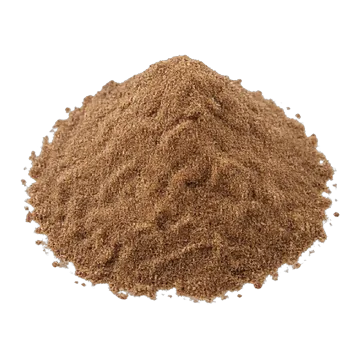 Flaxseed, ground
Go easy: can push past the limit for a 15 g serving
22greaches the limit in one sittingCounted from zero: this food eaten alone.960.5 µg (CN bioavailable-equivalent (after factor 3), at the EFSA mean 192.1 mg/kg) per 15 g servingHow it’s rated
May exceed: EFSA's acute reference dose for cyanide is 20 µg/kg body weight, 1,400 µg for 70 kg in one sitting, and for ground linseed EFSA counts a third of the cyanide against it. About 21.9 g in one sitting reaches it at EFSA's mean (192.1 mg total cyanide/kg, 58 samples) and 14 to 15 g at the Canadian Grain Commission's two means, so Health Canada's 15 g serving is 69% of the dose on EFSA's mean and 97% to 106% on the Commission's, and a tablespoon (8 g) 37% to 56%. Two servings in one sitting pass it on every mean.
Intake: one 15.0 g serving of GROUND seed (TRA C.5), once, 70 kg adult · Level in the food: 192.1 mg total CN/kg, linseed (EFSA factor 3) (mean (EFSA); CGC GC-MS mean 283.44, LC-MS mean 306.82 (n = 22, HCN equivalent), n = 58)
Measured on: food-specific agency data for linseed (EFSA database, 89% German, 2000-2016) plus Canadian Grain Commission / Health Canada comparison (n = 22); not Canadian TDS (none)
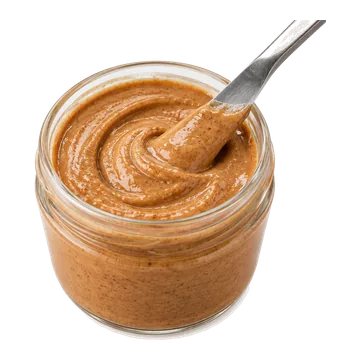 Almond butter
Nothing to watch: under the limit for a 15 g serving
310greaches the limit in one sittingCounted from zero: this food eaten alone.67.5 µg (total cyanide, 15 g × 4.5 mg/kg) per 15 g servingHow it’s rated
No cap: EFSA's 2019 acute reference dose for cyanide is 20 µg/kg body weight, 1,400 µg for a 70 kg adult in one sitting. Sweet almonds average 4.5 mg total cyanide/kg (EFSA, 35 samples, 17% non-detects), so about 311 g of sweet-almond product in one sitting would reach it. A 15.0 g serving carries 67.5 µg, 4.8% of the limit.
Intake: one 15.0 g serving a day, 70 kg adult · Level in the food: 4.5 mg total cyanide/kg (mean, n = 35)
Measured on: food-specific: EFSA 2019 Table 13 'Almond, sweet (Prunus amygdalus var. dulcis)'; acute reference dose (ARfD) 20 µg CN/kg body weight (EFSA 2016, restated 2019)
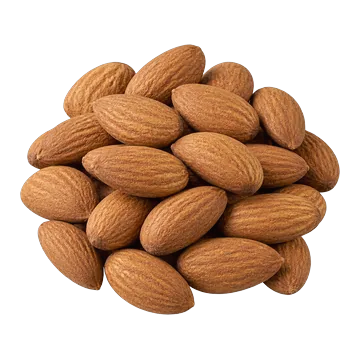 Almonds, raw
Nothing to watch: under the limit for a 30 g serving
310greaches the limit in one sittingCounted from zero: this food eaten alone.135 µg (CN, 1.9 µg/kg body weight) per 30 g servingHow it’s rated
Rated on the dose in one sitting: one 30 g serving of sweet almonds is 9.6% of the acute reference dose for a 70 kg adult, so no flag. EFSA makes no allowance for slower cyanide release from almonds (a bioavailability factor of 1).
Intake: one 30 g serving a day, 70 kg adult · Level in the food: 4.5 mg total cyanide/kg (mean, n = 35)
Measured on: food-specific: EFSA 2019 Table 13 'Almond, sweet (Prunus amygdalus var. dulcis)'; acute reference dose (ARfD) 20 µg CN/kg body weight (EFSA 2016, restated 2019)
1 other measurement of this food
- Bitter almonds only
Worth knowing
How it’s rated
Bitter almonds only: about 1 g of bitter kernel exceeds the acute reference dose. The flag is for the bitter variety, not for the sweet almonds sold as standard.
Intake: one 30 g serving a day, 70 kg adult · Level in the food: 1,437 mg total cyanide/kg (mean, n = 3)
Measured on: bitter almonds (Prunus amygdalus var. amara), n = 3; relevant only if bitter kernels are on sale as almonds
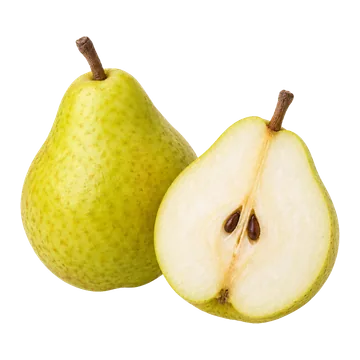 Pears, raw
Not rated yet for a 140 g serving
No gram figure for this foodWe have no measurement of this in this food, so there is no gram figure.How it’s rated
Missing: the EFSA 2019 text checked names apple seeds elsewhere but gives no pear-seed figure; seeds are not eaten with the flesh. The one-sitting limit (the acute reference dose) is 20 µg CN/kg body weight.
Intake: not applicable (core not eaten)
Measured on: Pear seeds (core), not the flesh; EFSA 2019 opinion
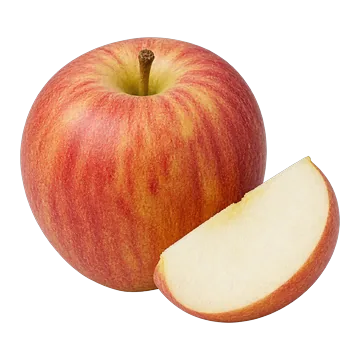 Apple (Fuji), raw
Context for a 140 g serving
No gram figure for this foodShown for context, not rated by dose: “How it’s rated” says why, so there is no gram figure here.How it’s rated
Shown as context: the seeds, not the flesh, carry cyanogenic glycosides. EFSA's acute reference dose for cyanide is 20 µg/kg body weight, 1.4 mg for 70 kg. Assuming full cyanide release (which EFSA calls over-conservative for such foods), that is about 24 mg amygdalin, or about 6 to 24 g of seeds at 4 to 1 mg/g (Foodtopsy's arithmetic). EFSA notes that 'fruit kernels are commonly not ingested'.
Intake: one 140 g serving a day, 70 kg adult
Measured on: seeds of 15 varieties (Bolarinwa 2015); apple flesh value not in the sources opened; juices 0.001 to 0.039 mg/mL (EFSA 2019)
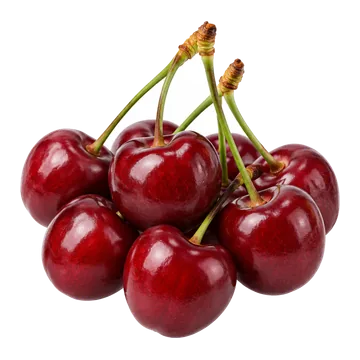 Cherries, raw
Context for a 140 g serving
No gram figure for this foodShown for context, not rated by dose: “How it’s rated” says why, so there is no gram figure here.How it’s rated
Shown as context, not rated: cherry stones hold amygdalin, which can release cyanide if the stone is eaten or chewed, and steeping cherries in alcohol extracts it. EFSA's 2019 acute reference dose is 20 µg cyanide/kg body weight per sitting, 1,400 µg for 70 kg. The flesh is not the source and no stone concentration was found, so there is no grams figure; in one case report, alcohol-steeped cherries with stones contained 4.7–15 mg/kg cyanide.
Intake: not applicable (stone not eaten) · Level in the food: 4.7 mg/kg (range 4.7 to 15 mg/kg cyanide in alcohol-steeped cherries (a case report, stones included), n = 1)
Measured on: EFSA 2019 case report: a woman ate about 300 g of alcohol-steeped cherries; lab analysis of the cherries and the spirit
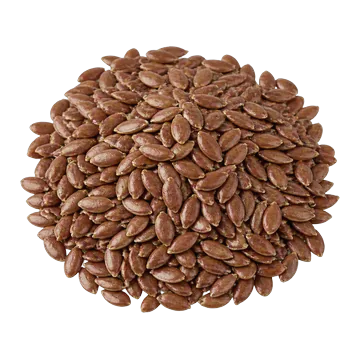 Flaxseed, whole
Context for a 30 g serving
No gram figure for this foodShown for context, not rated by dose: “How it’s rated” says why, so there is no gram figure here.How it’s rated
Shown as context: whole flaxseed largely passes through undigested, and EFSA expects very little of its cyanide to be absorbed; Austria's food agency considers harm from whole, unground seed excluded. Neither has been measured in people. Ground flaxseed is rated separately.
Intake: one 30 g serving of whole seed, 70 kg adult · Level in the food: 192.1 mg total CN/kg, linseed (EFSA factor 3) (mean (EFSA, all linseed), n = 58)
Measured on: occurrence is for linseed in general; release from intact seed not measured
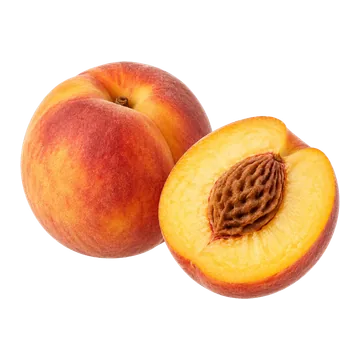 Peaches, raw
Context for a 140 g serving
No gram figure for this foodShown for context, not rated by dose: “How it’s rated” says why, so there is no gram figure here.How it’s rated
Shown as context, not rated: the hazard is the kernel in the stone, not the flesh. The acute reference dose is 20 µg cyanide/kg body weight per sitting (1,400 µg for 70 kg), but no kernel amygdalin figure was found in the EFSA opinion, so no arithmetic is done. Lee 2017 measured amygdalin in ripe peach flesh at 5.85 mg/100 g dry weight in one cultivar (0.46 and not detected in two others), against 12 to 2,312 in ripe seeds; on fresh weight the flesh figure would be about a tenth of that.
Intake: not applicable (stone not eaten)
Measured on: Peach stone kernel (not the flesh); EFSA 2019 opinion on cyanogenic glycosides in foods other than raw apricot kernels
Sources
- EFSA CONTAM Panel (2019). Evaluation of the health risks related to the presence of cyanogenic glycosides in foods other than raw apricot kernels. EFSA Journal 17(4):5662 · doi:10.2903/j.efsa.2019.5662
efsa-2019-cyanogenic-glycosides· full text read · EFSA Journal: CC BY-ND 4.0 (per EFSA policy; not checked on the page)