Aflatoxins
In the body: Long exposure raises the risk of liver cancer.
No intake of it is known to be safe, so there’s no grams figure. Each food shows what a daily serving adds to an average adult’s intake. The one that stands out: Pistachios, dry-roasted. A daily serving adds 38–564%, depending on how much you already take in. Also roasted peanuts and raw peanuts: 30–439% each. 6 more rated foods stand out the same way; the largest is roasted almonds and raw almonds, 17–253% each. The other rated foods and preparations add 50% or less. 7 more reviewed foods and preparations carry it but aren’t rated by dose: shown for context, or not rated yet.
No safe level known.
See also: Aflatoxin M1
The reference point, not a limit
The agency starts from a dose linked to an effect in studies, in people or in animals, and judges the margin between that dose and what people take in.
- Reference point0.4 µg/kg body weight/day
- That dose, for a 70 kg adult28 µg a day
Not a safe amount or an allowance: harm can’t be ruled out below it. - Basisbenchmark dose (BMDL): the lower estimate of the dose that produced a set size of effect in studies; the number after it is that size (BMDL10 is 10%, BMDL01 is 1%). A starting point rather than a limit
benchmark dose lower limit (BMDL10) AFB1 (liver tumours) (animal benchmark dose lower limit (BMDL10)) - Margin of exposure that raises concern ?10,000
A margin below this counts as a concern. A margin of exposure is the dose that caused effects in studies divided by what people take in: the smaller it is, the closer people’s intake sits to that dose. - Average adult intake0.22–3.25 ng/kg body weight/day Adult mean AFB1: 0.22–0.49 (lower bound), 1.35–3.25 (upper bound) ng/kg body weight/day
- Source ?EFSA 2020
Reviewed foods that carry it
21 reviewed foods carry it, 15 of them rated by dose. A food counts once, as in the foods list: preparations sharing a page (raw and cooked, canned) count once; one with its own page counts apart. Below, one line for each of 25 preparations. 18 of those lines are rated by dose. 29 measurements in all. A preparation measured more than once gets one line, the measurement the dataset leads with or a stricter one, named beside the food; the others fold under it.
How often you can eat it ?
No grams figure for Aflatoxins: there is no limit to count grams against. Each food shows the method’s rating instead: how much a daily serving adds to the average adult’s intake.
One realistic serving each, rated by dose, not by presence. The most restrictive rating comes first, then the largest dose per serving.
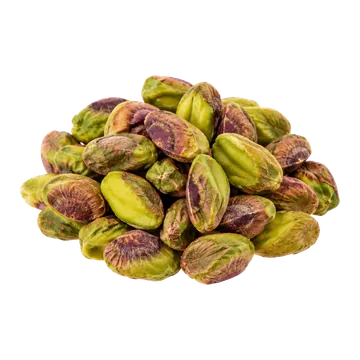 Pistachios, dry-roasted
Go easy: can double average intake
86.9 ngper servingAFB1 (lower bound)adds 38–564 % to an average adult’s intake (a share of that intake, not of a limit)How it’s rated
May exceed: no safe limit is set for aflatoxin B1; EFSA's 2020 reference point is a benchmark dose lower limit (BMDL10) of 0.4 µg/kg body weight/day. A 30 g serving adds 86.9 ng at the lower-bound mean of 2.896 µg/kg (95.9 ng on the upper bound), 1.24 ng/kg body weight/day at 70 kg. Against EFSA's adult mean exposure (lower bound 0.22-0.49, upper bound 1.35-3.25 ng/kg body weight/day) that is +253% to +564% on the lower-bound pairs and +42% to +101% on the upper-bound pairs, so the range reaches the doubling line. 84% of 6,126 European results were non-detects, and raw and processed pistachios are pooled.
Intake: 30 g shelled serving (HC TRA O.1) · Level in the food: 2.896 µg/kg (AFB1) (mean (EFSA Annex B Table B.7, "Pistachios (Pistachia vera)", AFB1); upper bound 3.196; median lower bound 0 / upper bound 0.2; P95 lower bound 7.5 / upper bound 7.5, n = 6126)
Measured on: EFSA 2020 aflatoxin occurrence database (Annex B), FoodEx level 3 tree nuts, pistachios, AFB1, European data 2006-2018; raw and processed pistachios together, kernel or in-shell basis not split
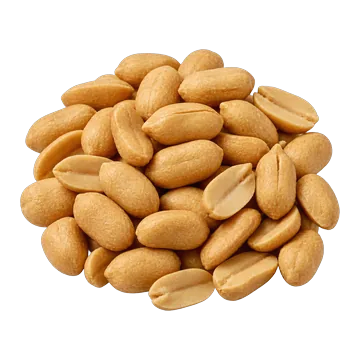 Peanuts, dry-roasted
Go easy: can double average intake
67.6 ngper servingadds 30–439 % to an average adult’s intake (a share of that intake, not of a limit)How it’s rated
AFB1 lower bound 2.25, upper bound 2.91 µg/kg (88% non-detect, so both bounds shown). One serving = 0.97-1.25 ng/kg body weight/day. Against EFSA adult mean AFB1 (lower bound 0.22-0.49, upper bound 1.35-3.25 ng/kg body weight/day) it adds +197-439% on lower bound pairs and +38-92% on upper bound pairs: the range straddles the doubling line, so by the settled rule it goes in "may exceed". Serving alone margin of exposure (MOE) vs benchmark dose lower limit (BMDL10) 0.4 µg/kg body weight/day = 321-415 (level of concern 10,000). PROPOSED band, not adopted.
Intake: one 30 g serving a day, 70 kg adult · Level in the food: 2.25 µg/kg (mean, n = 10290)
Measured on: food-specific: EFSA 2020 occurrence data, "Peanut (Arachis hypogea)", AFB1, cleaned final dataset; EFSA reports samples collected 2003-2018 but used only 2013 onwards in the assessment, and samples reported by European countries may originate from other continents; as marketed (roasting state not stated); upper bound 2.91 µg/kg
1 other measurement of this food
- CFIA retail surveys 2010-15, peanut products (context)
Context
CFIA targeted surveys: Aflatoxins 2010-2011 · grade A ?
How it’s rated
Shown beside the EFSA row, not scored: no peanut-only mean, n or per-sample list is published, so no lower bound/upper bound mean can be computed. Legal limit 15 ppb total aflatoxins in nuts and nut products (Health Canada List of Contaminants); FDA action level 20 ppb for peanuts and peanut products; the 28 ppb sample was followed up (no detectable aflatoxin in further samples of the brand) and Health Canada judged it not typical.
Intake: one 30 g serving a day, 70 kg adult
Measured on: food-specific but partial: CFIA retail surveys. 2010-11: peanut products 10 of 45 detected (0.1-28.7 ppb across all nuts); 2012-13: peanuts had the highest average detected level (3.8 ppb), one peanut sample at 28 ppb; 2014-15: aflatoxins not detected in peanuts (n not published)
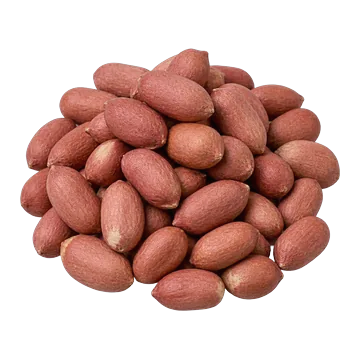 Peanuts, raw
Go easy: can double average intake
67.6 ngper servingadds 30–439 % to an average adult’s intake (a share of that intake, not of a limit)How it’s rated
AFB1 lower bound 2.25, upper bound 2.91 µg/kg (88% non-detect, so both bounds shown). One serving = 0.97-1.25 ng/kg body weight/day. Against EFSA adult mean AFB1 (lower bound 0.22-0.49, upper bound 1.35-3.25 ng/kg body weight/day) it adds +197-439% on lower bound pairs and +38-92% on upper bound pairs: the range straddles the doubling line, so by the settled rule it goes in "may exceed". Serving alone margin of exposure (MOE) vs benchmark dose lower limit (BMDL10) 0.4 µg/kg body weight/day = 321-415 (level of concern 10,000). PROPOSED band, not adopted.
Intake: one 30 g serving a day, 70 kg adult · Level in the food: 2.25 µg/kg (mean, n = 10290)
Measured on: food-specific: EFSA 2020 occurrence data, "Peanut (Arachis hypogea)", AFB1, cleaned final dataset; EFSA reports samples collected 2003-2018 but used only 2013 onwards in the assessment, and samples reported by European countries may originate from other continents; as marketed (roasting state not stated); upper bound 2.91 µg/kg
1 other measurement of this food
- CFIA retail surveys 2010-15, peanut products (context)
Context
CFIA targeted surveys: Aflatoxins 2010-2011 · grade A ?
How it’s rated
Shown beside the EFSA row, not scored: no peanut-only mean, n or per-sample list is published, so no lower bound/upper bound mean can be computed. Legal limit 15 ppb total aflatoxins in nuts and nut products (Health Canada List of Contaminants); FDA action level 20 ppb for peanuts and peanut products; the 28 ppb sample was followed up (no detectable aflatoxin in further samples of the brand) and Health Canada judged it not typical.
Intake: one 30 g serving a day, 70 kg adult
Measured on: food-specific but partial: CFIA retail surveys. 2010-11: peanut products 10 of 45 detected (0.1-28.7 ppb across all nuts); 2012-13: peanuts had the highest average detected level (3.8 ppb), one peanut sample at 28 ppb; 2014-15: aflatoxins not detected in peanuts (n not published)
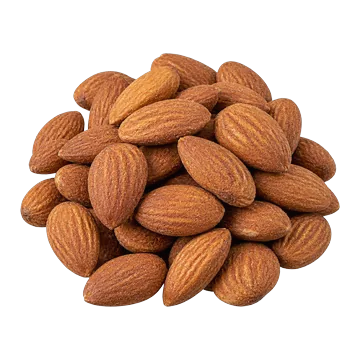 Almonds, dry-roasted
Go easy: can double average intake
39 ngper servingAFB1 (0.56 ng/kg body weight/day; raw-almond figure)adds 17–253 % to an average adult’s intake (a share of that intake, not of a limit)JECFA 2008 · grade C ?
How it’s rated
May exceed, on the raw-almond figure: no survey of roasted almonds was found, and roasting adds no aflatoxin, so raw almonds' JECFA mean stands in. Whether a daily serving doubles intake depends on where in EFSA's range of adult averages a person sits. Against the upper-bound average (1.35-3.25 ng/kg body weight/day) one serving adds 17-41%; against the lower-bound average (0.22-0.49) it adds 114-253%, more than doubling it. The almond figure (JECFA) is an upper bound only.
Intake: one 30 g serving a day, 70 kg adult · Level in the food: 1.3 µg/kg (AFB1) (raw-almond mean standing in (no roasted-almond survey found), n = 2390)
Measured on: food-specific agency data for raw almonds: JECFA 68th meeting, almonds from producing countries, 2000-2007, 'upper-bound scenario' (AFT mean 2.0 µg/kg). Not Canadian. No survey of roasted almonds was found; roasting adds no aflatoxin, so the raw figure stands in as an upper bound
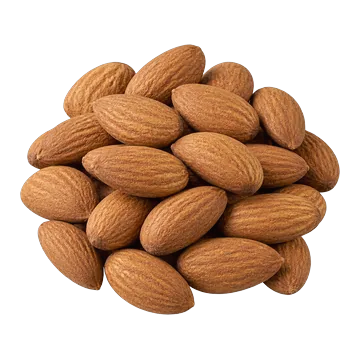 Almonds, raw
Go easy: can double average intake
39 ngper servingAFB1 (0.56 ng/kg body weight/day)adds 17–253 % to an average adult’s intake (a share of that intake, not of a limit)JECFA 2008 · grade B ?
How it’s rated
May exceed: whether a daily serving doubles intake depends on where in EFSA's range of adult averages a person sits. Against the upper-bound average (1.35-3.25 ng/kg body weight/day) one serving adds 17-41%; against the lower-bound average (0.22-0.49) it adds 114-253%, more than doubling it. The almond figure (JECFA) is an upper bound only.
Intake: one 30 g serving a day, 70 kg adult · Level in the food: 1.3 µg/kg (AFB1) (mean, n = 2390)
Measured on: food-specific agency data: JECFA 68th meeting, almonds from producing countries, 2000-2007, 'upper-bound scenario' (AFT mean 2.0 µg/kg). Not Canadian
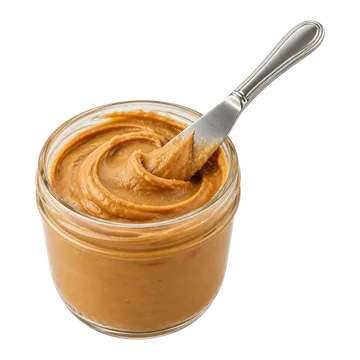 Peanut butter, smooth
Go easy: can double average intake
23.6 ngper servingadds 10–153 % to an average adult’s intake (a share of that intake, not of a limit)How it’s rated
May exceed: no safe limit is set for aflatoxin B1, so no grams figure. EFSA's 2020 occurrence data for peanut butter (352 European samples, 70% non-detect) give a mean of 1.57 µg/kg at the lower bound and 1.94 at the upper bound. A 15.0 g serving carries 23.6 ng, 0.34 ng/kg body weight/day at the lower bound. Against EFSA's adult mean aflatoxin B1 intake (lower bound 0.22–0.49, upper bound 1.35–3.25 ng/kg body weight/day), a serving adds about 69–153% on lower-bound pairs and 13–31% on upper-bound pairs, so the range reaches a doubling. These are European data, not Canadian.
Intake: one 15.0 g serving a day (Health Canada TRA O.3), 70 kg adult · Level in the food: 1.57 µg/kg (mean, n = 352)
Measured on: food-specific: EFSA 2020 occurrence data, Annex B Table_B_7/B_8, FoodEx 'Peanuts butter' (vegetable fat), AFB1, cleaned final dataset, European samples that may originate elsewhere; as marketed. lower bound 1.5724, upper bound 1.9382 µg/kg
1 other measurement of this food
- CFIA retail surveys 2010-15, peanut products (context)
Context
CFIA targeted surveys: Aflatoxins 2010-2011 · grade A ?
How it’s rated
Shown as context, not rated, beside the EFSA figure: CFIA's retail surveys report peanuts and nut products, but none names peanut butter, so no peanut-only mean can be computed. The legal limit is 15 ppb total aflatoxins in nuts and nut products (Health Canada); the FDA action level is 20 ppb for peanuts and peanut products. In 2010–11, 10 of 45 peanut products had detectable aflatoxin; in 2012–13 peanuts had the highest average detected level (3.8 ppb), with one sample at 28 ppb that was followed up (no detectable aflatoxin in further samples of the brand) and that Health Canada judged not typical.
Intake: one 15.0 g serving a day (Health Canada TRA O.3)
Measured on: food-specific but partial: CFIA retail surveys. 2010-11: peanut products 10 of 45 detected (0.1-28.7 ppb across all nuts); 2012-13: peanuts had the highest average detected level (3.8 ppb), one peanut sample at 28 ppb; 2014-15: aflatoxins not detected in peanuts (n not published)
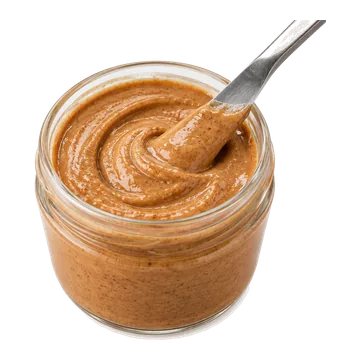 Almond butter
Go easy: can double average intake
18 ngper servingAFB1 (15 g × 1.2011 µg/kg)adds 7.9–117 % to an average adult’s intake (a share of that intake, not of a limit)How it’s rated
May exceed: no safe level of aflatoxin B1 is set; EFSA's 2020 reference point is a benchmark dose lower limit (BMDL10) of 0.4 µg/kg body weight/day. A 15.0 g serving at the upper-bound mean for almonds (1.2011 µg/kg, 1,836 EFSA results, 91.7% non-detects) carries 18 ng, 0.257 ng/kg body weight. That is 7.9–19% of the adult upper-bound average intake (1.35–3.25 ng/kg body weight/day) but 53–117% of the lower-bound average (0.22–0.49), so at the low end one serving can double intake; at the lower-bound mean of 0.8408 µg/kg it is 37–82%. The data are for whole almonds, not butter.
Intake: one 15.0 g serving a day, 70 kg adult · Level in the food: 1.201 µg/kg (mean upper bound of AFB1 for sweet almonds (mean lower bound 0.8408; 91.7% left-censored; P95 upper bound 1.0), n = 1836)
Measured on: EFSA 2020 aflatoxins opinion, Annex B Table B.7 (FoodEx level 3), 'Almond, sweet', European occurrence data 2007-2018; whole almonds, not butter
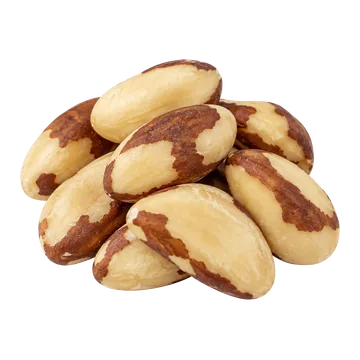 Brazil nuts, raw
Go easy: can double average intake
0.02 µgper servingAFB1 (lower bound)adds 8.8–130 % to an average adult’s intake (a share of that intake, not of a limit)How it’s rated
May exceed: no safe limit is set for aflatoxin B1; EFSA's 2020 reference point is a benchmark dose lower limit (BMDL10) of 0.4 µg/kg body weight/day. A daily 30 g serving adds 20.0 ng (lower bound) to 28.9 ng (upper bound), 0.286-0.413 ng/kg body weight/day at 70 kg. Against EFSA's adult mean exposure (lower bound 0.22-0.49, upper bound 1.35-3.25 ng/kg body weight/day) that is +58-130% on the lower-bound pairs and +13-31% on the upper-bound pairs, so the range reaches the doubling line. The mean in Brazil nuts is 0.6663 µg/kg (311 results, 25% quantified), the highest of the three nuts.
Intake: 30 g shelled serving, daily · Level in the food: 0.666 µg/kg (AFB1) (mean (EFSA Annex B Table B.7, 'Brazil nuts (Bertholletia excelsa)'); upper bound 0.9625; P95 lower bound 2.1 / upper bound 2.1, n = 311)
Measured on: EFSA 2020 aflatoxin occurrence database (European data), FoodEx level 3 Brazil nuts; aflatoxin B1; lower bound 0.6663, upper bound 0.9625 µg/kg
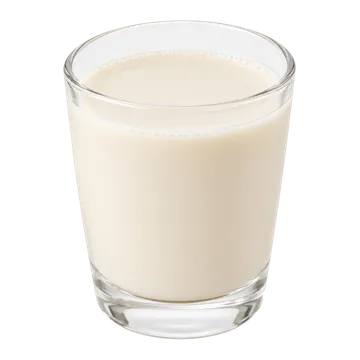 Almond drink, unsweetened, fortified
Go easy: can double average intake
0.018 µgper servingat the highest valueadds 7.7–114 % to an average adult’s intake (a share of that intake, not of a limit)Pavlenko 2024 · grade B ?
How it’s rated
May exceed: no safe level of aflatoxin is set (EFSA 2020 benchmark dose lower limit (BMDL10) 0.4 µg/kg body weight/day), so there is no grams figure. The highest aflatoxin B1 value in retail nut drinks bought in Riga and Kaunas (almond, coconut, Brazil nut and cashew pooled) was 0.07 µg/kg, so one 250 mL serving carries at most 0.0175 µg (0.25 ng/kg body weight). That adds 7.7% to EFSA's highest adult average (3.25 ng/kg body weight/day) and 114% to its lowest (0.22), so at the low end a daily glass at that highest value would double average intake. A German study of 31 nut drinks found B1 in 16 (52%) with a maximum of 0.674 µg/L, ten times that figure.
Intake: one 250 mL serving (250 g) a day, 70 kg adult · Level in the food: 0.07 µg/kg (AFB1) (highest single value (± 0.02 measurement standard deviation) among nut beverages: almond, coconut, Brazil nut and cashew drinks pooled; count of nut samples not in the text)
Measured on: Pavlenko et al. 2024, retail plant-based drinks bought in Riga and Kaunas, LC-MS/MS; 72 beverages in all; nut beverages made from almonds, coconuts, Brazil nuts and cashews; the per-sample table (Table S2) was not available
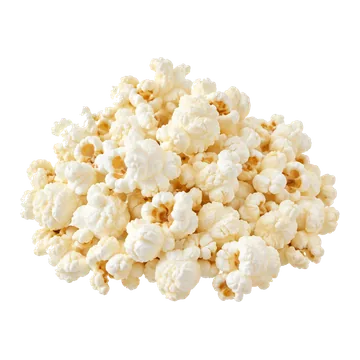 Popcorn, air-popped
Nothing to watch: doesn’t double average intake
4.2 ngper servingAFB1 (lower bound)adds 1.8–27 % to an average adult’s intake (a share of that intake, not of a limit)How it’s rated
No cap: no safe limit is set for aflatoxin B1; EFSA's 2020 reference point is a benchmark dose lower limit (BMDL10) of 0.4 µg/kg body weight/day. A 50 g serving adds 4.2 ng (lower bound) to 15.5 ng (upper bound), 0.060-0.221 ng/kg body weight/day at 70 kg: +12% to +27% on EFSA's lower-bound adult mean (0.22-0.49 ng/kg body weight/day) and +7% to +16% on the upper-bound mean (1.35-3.25), under the doubling line. 76% of the 46 European results were non-detects, a small sample.
Intake: 50 g popped popcorn serving (HC TRA S.1) · Level in the food: 0.084 µg/kg (AFB1) (mean (EFSA Annex B Table B.7, FoodEx "Snack food", "Popcorn", AFB1); upper bound 0.310; median lower bound 0 / upper bound 0.3; P95 lower bound 0.3 / upper bound 0.9, n = 46)
Measured on: EFSA 2020 aflatoxin occurrence database (Annex B), FoodEx snack food, popcorn, AFB1, European data; popped or unpopped not stated; n 46 is small
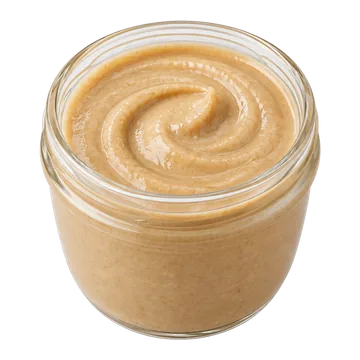 Tahini
Nothing to watch: doesn’t double average intake
4 ngper servingAFB1 (15 g × 0.265 µg/kg, upper bound)adds 1.8–26 % to an average adult’s intake (a share of that intake, not of a limit)How it’s rated
No cap: no safe threshold is set for aflatoxin B1. At the EFSA 2020 upper-bound mean of 0.265 µg/kg (20 results, all below the limit of quantification), a 15.0 g serving is 4.0 ng, 0.057 ng/kg body weight: 12-26% of the lower-bound adult average (0.22-0.49 ng/kg body weight/day) and 1.7-4.2% of the upper-bound average (1.35-3.25), under the doubling line at both ends. Twenty results is a small sample.
Intake: one 15.0 g serving a day, 70 kg adult · Level in the food: 0.265 µg/kg (mean upper bound of AFB1 (mean lower bound 0; 100% left-censored; P95 upper bound 0.75), n = 20)
Measured on: EFSA 2020 aflatoxins opinion, Annex B Table B.7, 'Sesam paste (Tahini)', European occurrence data 2007-2018; n 20 is small
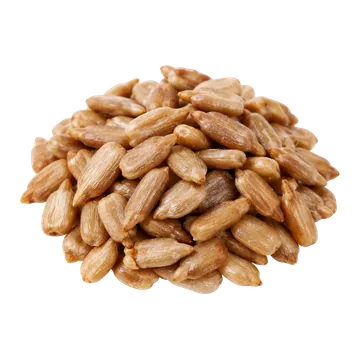 Sunflower seeds, dry-roasted
Nothing to watch: doesn’t double average intake
2.8 ngper servingAFB1 (lower bound)adds 1.2–18 % to an average adult’s intake (a share of that intake, not of a limit)How it’s rated
No cap: no safe limit is set for aflatoxin B1; EFSA's 2020 reference point is a benchmark dose lower limit (BMDL10) of 0.4 µg/kg body weight/day. A 30 g serving adds 2.8 ng (lower bound) to 16.1 ng (upper bound), 0.040-0.230 ng/kg body weight/day at 70 kg: +8% to +18% on EFSA's lower-bound adult mean (0.22-0.49) and +7% to +17% on the upper-bound mean (1.35-3.25), under the doubling line. 97% of 656 European results were non-detects.
Intake: 30 g shelled serving (HC TRA O.1) · Level in the food: 0.093 µg/kg (AFB1) (mean (EFSA Annex B Table B.7, "Sunflower seed (Helianthus annuus)", AFB1); upper bound 0.536; median 0 / upper bound 0.2; P95 lower bound 0 / upper bound 1, n = 656)
Measured on: EFSA 2020 aflatoxin occurrence database (Annex B), FoodEx oilseeds, sunflower seed, AFB1, European data; raw and processed together
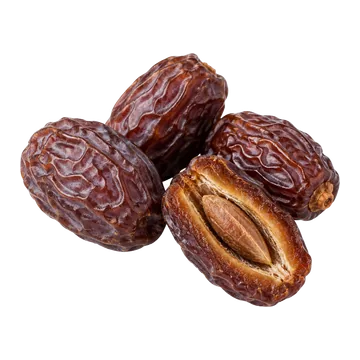 Medjool dates
Nothing to watch: doesn’t double average intake
1.42 ngper servingAFB1adds 0.62–9.2 % to an average adult’s intake (a share of that intake, not of a limit)How it’s rated
No cap: no safe level of aflatoxin B1 is set (EFSA 2020 benchmark dose lower limit (BMDL10) 0.4 µg/kg body weight/day), so there is no grams figure. The EFSA mean for dried dates is 0.03557 µg/kg lower bound (229 results, 96.07% non-detects), so a 40 g serving carries 1.42 ng (0.0203 ng/kg body weight/day), a margin of exposure of about 19,700. On the upper bound (0.2565 µg/kg, which gives every non-detect the quantification limit) the margin is about 2,700, where EFSA treats under 10,000 as of concern. Canadian retail testing found no aflatoxin in 50 date samples, with no detection limit stated; average background intake was not compared.
Intake: one 40 g serving a day, 70 kg adult · Level in the food: 0.036 µg/kg (mean aflatoxin B1, dried dates, n = 229)
Measured on: EFSA 2020 aflatoxin occurrence Annex B (European data), aflatoxin B1, FoodEx level 3 'Dried dates (Phoenix dactylifera)': 229 analytical results, 96.07% left-censored, mean lower bound 0.03557 and upper bound 0.2565 µg/kg, P95 lower bound 0 and upper bound 1 µg/kg. Fresh 'Dates' category: B1 n 182, 98.9% left-censored, mean lower bound 0.0126, upper bound 0.729 µg/kg.
 Dark chocolate
Nothing to watch: doesn’t double average intake
0.0076 µgper servingadds 3.3–49.4 % to an average adult’s intake (a share of that intake, not of a limit)Health Canada 2013 · grade A ?
How it’s rated
No cap: no safe threshold is set for aflatoxin B1 (EFSA 2020). A daily 40 g serving carries 7.6 ng, or 0.109 ng/kg body weight. Against the average adult intake (EFSA: 0.22-0.49 ng/kg body weight/day on the lower bound, 1.35-3.25 on the upper) that adds 3.3-49.4% (about 22-49% on the lower bound), below the doubling line. It is the largest share among the contaminants rated here.
Intake: one 40 g serving a day, 70 kg adult (Health Canada TRA U.1, 40 g) · Level in the food: 0.19 ng/g (mean, n = 20)
Measured on: Health Canada survey of cocoa products sampled in Canada in 2011-2012 (Mycotoxin Res 2013): aflatoxin B1 in dark chocolate (n 20); 16 of 20 above the quantification limit (quantification limit); mean quantification limit 0.07 ng/g (aflatoxin B1); mean as reported (bound not stated). Canada.
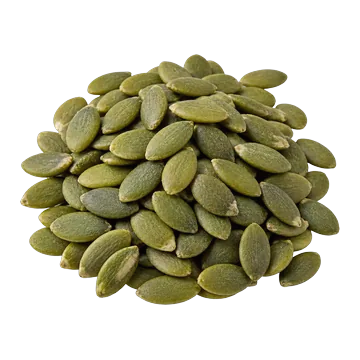 Pumpkin seeds
Nothing to watch: doesn’t double average intake
0.0046 µgper servingAFB1 (lower bound; upper bound 0.0178)adds 2–30 % to an average adult’s intake (a share of that intake, not of a limit)How it’s rated
Aflatoxin B1 from a serving, 0.066 (lower bound) to 0.255 (upper bound) ng/kg body weight/day, adds 13-30% (lower bound) and 8-19% (upper bound) to EFSA's adult average (0.22-0.49 lower bound; 1.35-3.25 upper bound ng/kg body weight/day): short of doubling it, so no cap. The average adult's margin of exposure is already under the level of concern, so the test is what a serving adds.
Intake: one 30 g serving a day, 70 kg adult · Level in the food: 0.153 µg/kg (mean, n = 406)
Measured on: food-specific: EFSA 2020 occurrence data, 'Pumpkin seeds (Cucurbita pepo var. oleifera)' (the Styrian hull-less oil pumpkin, the crop that is sold as pepitas, so it matches the hulled product though it is also the oil-pressing crop), EU monitoring samples (about 2003-2018). lower bound 0.153, upper bound 0.594 µg/kg; total aflatoxins n = 368, mean 0.266 / 1.236
 Milk chocolate
Nothing to watch: doesn’t double average intake
0.0036 µgper servingadds 1.6–23.4 % to an average adult’s intake (a share of that intake, not of a limit)Health Canada 2013 · grade A ?
How it’s rated
No cap: no safe threshold is set for aflatoxin B1 (EFSA 2020). A daily 40 g serving carries 3.6 ng, or 0.051 ng/kg body weight. Against the average adult intake (EFSA: 0.22-0.49 ng/kg body weight/day on the lower bound, 1.35-3.25 on the upper) that adds 1.6-23.4% (about 10-23% on the lower bound), below the doubling line. It is the largest share among the contaminants rated here.
Intake: one 40 g serving a day, 70 kg adult (Health Canada TRA U.1, 40 g) · Level in the food: 0.09 ng/g (mean, n = 10)
Measured on: Health Canada survey of cocoa products sampled in Canada in 2011-2012 (Mycotoxin Res 2013): aflatoxin B1 in milk chocolate (n 10); 7 of 10 above the quantification limit (quantification limit); mean quantification limit 0.07 ng/g (aflatoxin B1); mean as reported (bound not stated). Canada.
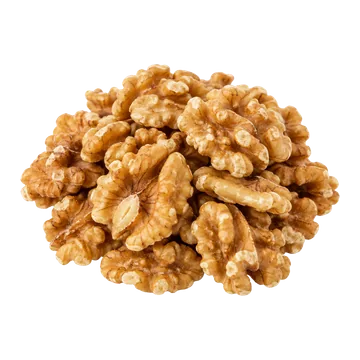 Walnuts, raw
Nothing to watch: doesn’t double average intake
0.0028 µgper servingAFB1 (lower bound)adds 1.2–18.2 % to an average adult’s intake (a share of that intake, not of a limit)How it’s rated
No cap: no safe limit is set for aflatoxin B1 (EFSA 2020 benchmark dose lower limit (BMDL10) of 0.4 µg/kg body weight/day), so no grams figure is given. Judged by what a serving adds to average intake: 30 g gives 2.8 ng (lower bound) to 14.3 ng (upper bound), 0.040-0.204 ng/kg body weight/day, which is 8-18% on EFSA's lower-bound adult mean exposures and 6-15% on the upper-bound ones, short of doubling. 96% of 1,092 European results were left-censored (mean 0.0939 µg/kg at the lower bound, 0.4765 at the upper).
Intake: 30 g shelled serving, daily · Level in the food: 0.094 µg/kg (AFB1) (mean (EFSA Annex B Table B.7, 'Walnuts (Juglans regia)'); upper bound 0.4765; P95 lower bound 0 / upper bound 1, n = 1092)
Measured on: EFSA 2020 aflatoxin occurrence database (European data), FoodEx level 3 'Walnuts (Juglans regia)'; aflatoxin B1; lower bound 0.0939, upper bound 0.4765 µg/kg
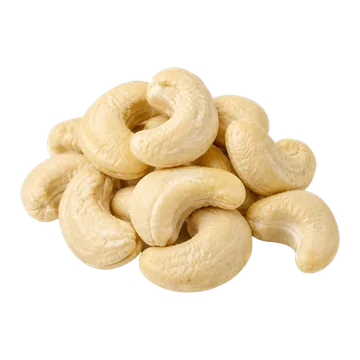 Cashews, raw
Nothing to watch: doesn’t double average intake
0.00014 µgper servingAFB1 (lower bound)adds 0.06–0.91 % to an average adult’s intake (a share of that intake, not of a limit)How it’s rated
No cap: no safe limit is set for aflatoxin B1; EFSA's 2020 reference point is a benchmark dose lower limit (BMDL10) of 0.4 µg/kg body weight/day. A 30 g serving gives 0.14 ng (lower bound) to 12.2 ng (upper bound), 0.002-0.175 ng/kg body weight/day at 70 kg, against EFSA's adult mean exposure of 0.22-0.49 (lower bound) and 1.35-3.25 (upper bound) ng/kg body weight/day: +0.4-1% on the lower-bound pairs, +5-13% on the upper-bound pairs. 99% of 616 results were left-censored, meaning below detection.
Intake: 30 g shelled serving, daily · Level in the food: 0.005 µg/kg (AFB1) (mean (EFSA Annex B Table B.7, 'Cashew nuts (Anacardium occidentale)'); upper bound 0.408; P95 lower bound 0 / upper bound 1, n = 616)
Measured on: EFSA 2020 aflatoxin occurrence database (European data), FoodEx level 3 cashew nuts; aflatoxin B1; lower bound 0.00466, upper bound 0.408 µg/kg
Flags and context, not rated by dose
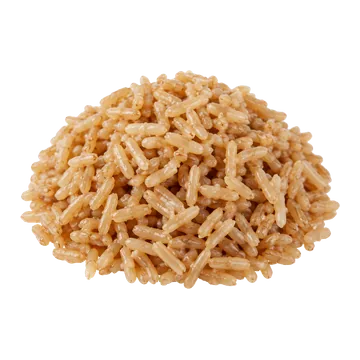 Brown rice, cooked
Worth knowing
CFIA 2015–2016 · grade B ?
How it’s rated
Flagged: no safe threshold is set for aflatoxins. The CFIA figure for rice and rice products (299 samples, 2015-2016) is an average of positive results only, 1.9 ppb, with 6 samples positive and 98% not detected, so no per-serving figure is derived. Brown rice is not reported separately.
Intake: 45 g dry rice a day · Level in the food: 1.9 ppb (average of positive results only (total aflatoxins), n = 299)
Measured on: CFIA targeted survey April 2015 to March 2016, 'rice and rice products' (299 samples: 39 domestic, 163 import, 97 origin unspecified; 6 with detectable aflatoxins; range 0 to 2.9 ppb), as sold
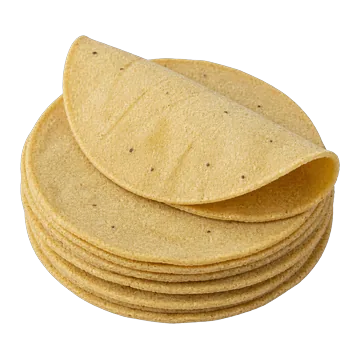 Corn tortillas
Worth knowing
3.3 ngper servingadds 1.5–21 % to an average adult’s intake (a share of that intake, not of a limit)CFIA 2018–2019 · grade B ?
How it’s rated
Rated on the lower bound only: no cap (+1.5–21% of the average adult intake). Upper bound missing because the CFIA survey publishes no detection limit (detection limit), so this stays a HOLD flag, not a final rating (accepted 2026-10-14)
Intake: one 55 g serving a day, 70 kg adult · Level in the food: 0.06 µg/kg (mean, n = 30)
Measured on: category: CFIA Corn Products AFB1 (2 of 30 detected)
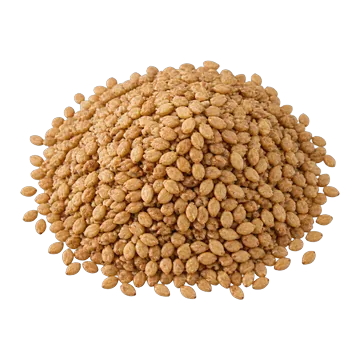 Sesame seeds, whole
Worth knowing
0 ngper servingadds 0 % to an average adult’s intake (a share of that intake, not of a limit)CFIA 2015–2016 · grade A ?
How it’s rated
Rated on the lower bound only (none detected): adds nothing to EFSA's lower-bound adult average of 0.22-0.49 ng/kg body weight/day. The upper bound is missing because the report gives no detection limit and no sesame sample count, and the method needs both bounds, so it stays a flag, as corn tortilla does.
Intake: one 30 g serving a day, 70 kg adult · Level in the food: 0 ppb (none detected (sesame seeds))
Measured on: food-specific text, but the sesame n and detection limit (detection limit) are not in the report: CFIA 'Aflatoxins in selected spices, oilseeds, rice' 2015-16 (195 oilseed samples in all, of which 4 positive, all melon seeds)
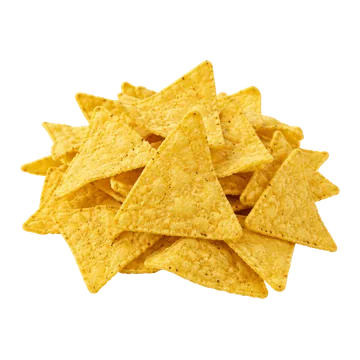 Tortilla chips
Worth knowing
0 ngper servinglower boundadds 0 % to an average adult’s intake (a share of that intake, not of a limit)CFIA 2018–2019 · grade A ?
How it’s rated
Flagged: no safe threshold is set for aflatoxins (EFSA 2020, benchmark dose lower limit (BMDL10) 0.4 µg/kg body weight/day for aflatoxin B1; a margin of exposure of 10,000 counts as low concern). None of the 18 samples had any aflatoxin, so a serving adds 0 at the lower bound. The upper bound cannot be built because the survey publishes no detection limit, so this stays a flag, not a number. Adult averages are 0.22-0.49 ng/kg body weight/day (lower bound), 1.35-3.25 (upper).
Intake: one 50 g reference serving a day (Health Canada TRA S.1), 70 kg adult · Level in the food: 0 ng/g (mean of AFB1, AFB2, AFG1, AFG2 (all zero), n = 18)
Measured on: food-specific: CFIA Multi-Mycotoxins ... April 2018-March 2019, product 'Chips - Corn', retail Canada; as sold
1 other measurement of this food
- CFIA 2012-13, tortillas and corn chips, positives only
Worth knowing
40 ngper servingif the positive average applied to every servingCFIA targeted surveys: Aflatoxins 2010-2011 · grade B ?
How it’s rated
Flagged: no safe threshold is set for aflatoxins. As an illustration only, if every serving carried the 0.8 ppb average of positive samples, 50 g would be 40 ng, 0.57 ng/kg body weight: 117-260% of the lower-bound adult mean (0.22-0.49) but 18-42% of the upper-bound mean (1.35-3.25 ng/kg body weight/day), with a margin of exposure of about 700 against the benchmark dose lower limit (BMDL10). The real category mean is lower (86% of corn products had no aflatoxin; the sub-category sample size is unpublished), so this is a flag, not a number.
Intake: one 50 g reference serving a day (Health Canada TRA S.1), 70 kg adult · Level in the food: 0.8 ppb (average of positive results only (tortillas/corn chips))
Measured on: category: CFIA Aflatoxins in Selected Corn Products, Nuts, Nut Products, Raisins, Cocoa Powder, Chili Powder and Paprika, April 2012-March 2013; sub-category 'tortillas/corn chips' (sample count and detect count for the sub-category not published)
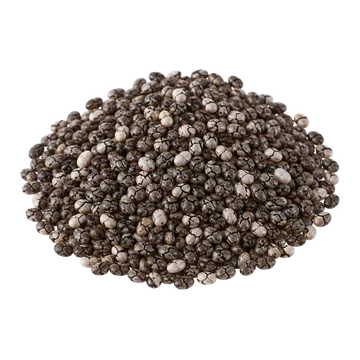 Chia seeds
Not rated yet
How it’s rated
Not rated: no chia-specific aflatoxin figure exists in EFSA's 2020 occurrence tables, and CFIA has no chia aflatoxin survey. EFSA's unspecified 'other seeds' line (n 71, aflatoxin B1 mean 4.069 µg/kg at the lower bound, 4.621 at the upper bound, 72% left-censored) is not chia and is not used; linseed (n 175) is a different seed.
Intake: 15 g serving
Measured on: no chia line in the EFSA 2020 aflatoxin occurrence tables (Annex B Table B.7); CFIA has no chia aflatoxin survey
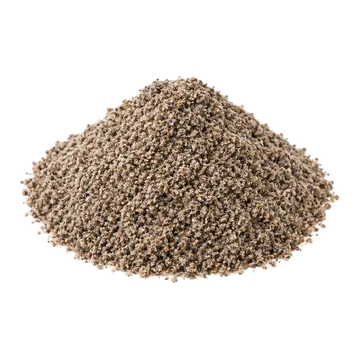 Chia seeds, ground
Not rated yet
How it’s rated
Missing, not estimated. EFSA's unspecified 'Other seeds' line (n 71, mean lower bound 4.069 / upper bound 4.621 µg/kg AFB1, 72% left-censored) is not chia and is not used; linseed (n 175, lower bound 0.0036 / upper bound 0.365) is a different seed.
Intake: 15 g serving
Measured on: no chia line in the EFSA 2020 aflatoxin occurrence tables (Annex B Table B.7); CFIA has no chia aflatoxin survey
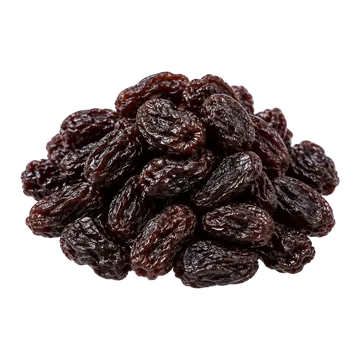 Raisins
Not rated yet
How it’s rated
Not rated: for aflatoxin B1 EFSA's 2020 benchmark dose lower limit (BMDL10) is 0.4 µg/kg body weight/day with no safe level, and the contribution to average intake was not computed. Only 1 of 98 Canadian samples (2012-2013) had detectable aflatoxin, at 0.2 ng/g; 40 g from that sample would carry at most 8 ng, 0.11 ng/kg body weight. The report does not split the aflatoxin types.
Intake: one 40 g serving a day, 70 kg adult · Level in the food: 0.2 ppb (single positive sample, n = 98)
Measured on: CFIA targeted survey April 2012 to March 2013, raisins, 98 samples (Table 1: 0 domestic, 79 imported, 19 of unspecified origin), 1 with detectable aflatoxin at 0.2 ppb; Canada has no aflatoxin limit for raisins.
Sources
- CFIA, Aflatoxins in Selected Corn Products, Nuts, Nut Products, Raisins, Cocoa Powder, Chili Powder and Paprika - April 1, 2012 to March 31, 2013
cfia-aflatoxins-2012-13· page · Government of Canada terms (Crown copyright) - CFIA, Aflatoxins in Selected Spices, Oilseeds, Rice and Rice Products, April 1, 2015 to March 31, 2016
cfia-aflatoxins-2015-2016· page · Government of Canada terms (not checked) - CFIA targeted surveys: Aflatoxins 2010-2011; Aflatoxins in selected corn products, nuts, nut products... 2012-2013; Aflatoxins in chocolate, cocoa powder, grain-based foods, nuts and nut products, spices and wine 2014-2015
cfia-aflatoxins-surveys· page · Government of Canada terms (not confirmed as OGL; no open-data CSV found) - CFIA, Multi-Mycotoxins in Corn Products, Crackers, Other Grain Products, Pasta and Gluten-Free Products, 2018–2019
cfia-multimyco-2018-2019· dataset · Open Government Licence – Canada 2.0 - EFSA CONTAM Panel (2020) Risk assessment of aflatoxins in food. EFSA Journal 18(3):6040 · doi:10.2903/j.efsa.2020.6040
efsa-2020-aflatoxins· full text read · EFSA Journal: CC BY-ND 4.0 - EFSA (2020) Annexes to the risk assessment of aflatoxins in food, Annex B (occurrence tables), Zenodo · doi:10.5281/zenodo.3607186
efsa-2020-aflatoxins-annex· dataset · CC BY 4.0 - Turcotte AM, Scott PM, Tague B (2013) Analysis of cocoa products for ochratoxin A and aflatoxins. Mycotoxin Research (Aug 2013) · doi:10.1007/s12550-013-0167-x · PMID 23564311
hc-ota-chocolate-2013· abstract only · publisher; abstract quoted - JECFA 68th meeting. Aflatoxins (pages 305-356). In: Safety evaluation of certain food additives and contaminants, WHO Food Additives Series 59, Geneva 2008
jecfa-68-aflatoxins-2008· full text read · WHO publication; reuse terms not checked - Pavlenko R, Berzina Z, Reinholds I, Bartkiene E, Bartkevics V. An Occurrence Study of Mycotoxins in Plant-Based Beverages Using Liquid Chromatography-Mass Spectrometry. Toxins 2024;16(1):53 · doi:10.3390/toxins16010053 · PMID 38251269
pavlenko2024-mycotoxins-plant-drinks· full text read · CC BY 4.0