Oxalate for kidney-stone formers
In the body: Oxalate is what most kidney stones are made of.
Not rated by dose: a flag on 19 reviewed foods, among them raw rhubarb, quinoa and Cashews, raw. The list below has a line for each of 20 preparations.
For some people. Allergies, medicines and medical conditions: a flag for the people the source names, no wider.
The reference value and where it comes from
- The agency’s figureno agency dose value
- Basisadvice for people who form calcium-oxalate stones
- Source ?Siener 2021
Reviewed foods that carry it
19 reviewed foods carry it; none is rated by dose. A food counts once, as in the foods list: preparations sharing a page (raw and cooked, canned) count once; one with its own page counts apart. Below, one line for each of 20 preparations.
How often you can eat it ?
No food here is rated by dose. Each line says why it’s listed: a flag for the people the source names, advice on handling it, or context.
Flags and context, not rated by dose
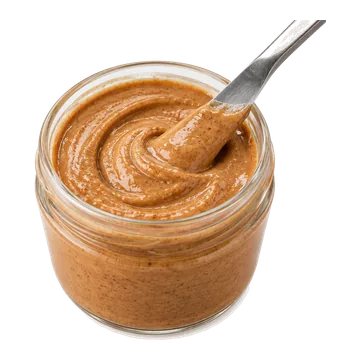 Almond butter
Not rated yet
57.5 mgper servingoxalate (15 g × 383 mg/100 g)Siener 2021 · grade B ?
How it’s rated
Not rated: no agency sets an intake limit for oxalate, so this is a value only, of interest to people who form calcium-oxalate stones. Almonds are listed at 383 mg/100 g (two secondary sources give 383–407), so a 15.0 g serving of almond butter carries about 57.5 mg, in the 'moderate' class (25–99 mg a serving) of the Oxalosis and Hyperoxaluria Foundation list. No almond-butter value exists in the sources; the whole-almond figure is carried over.
Intake: one 15.0 g serving a day, 70 kg adult · Level in the food: 383 mg/100 g (listing) (compiled value for almonds (raw); two secondary sources 383-407 mg/100 g)
Measured on: Siener 2021 Table 3 / Mitchell 2020 Table 1 as the parent row; whole almonds
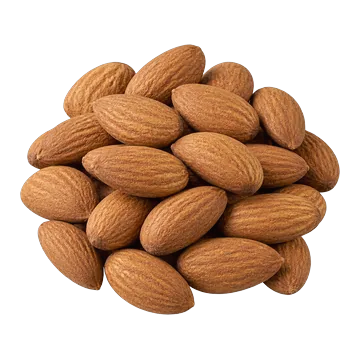 Almonds, raw
Not rated yet
114.9–122 mgper servingtotal oxalate per 30 g servingSiener 2021 · grade B ?
How it’s rated
Not rated: no agency sets an intake limit for oxalate, so this is a value only, of interest to people who form calcium-oxalate stones. Almonds are listed at 383-407 mg total oxalate per 100 g in two secondary sources, so a 30 g serving carries about 115-122 mg.
Intake: one 30 g serving a day, 70 kg adult · Level in the food: 383 mg/100 g (compiled values: 383 and 407 mg/100 g in two secondary sources)
Measured on: Total oxalate 383-407 mg/100 g in two secondary sources (Hönow & Hesse as relayed in Siener 2021 Table 3; the Harvard list as relayed in Mitchell 2020 Table 1); no primary analysis opened
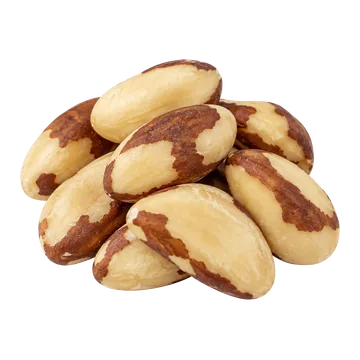 Brazil nuts, raw
Not rated yet
54.3 mgper servingoxalateOxalosis and Hyperoxaluria Foundation 2024 · grade B ?
How it’s rated
Not rated for calcium-oxalate stone formers: the only source is a patient-foundation list with no stated method (Oxalosis and Hyperoxaluria Foundation, Feb 2024), and no measured value was found. A 30 g serving carries 54.3 mg oxalate, a moderate portion by that list's own bands (25-99 mg).
Intake: 30 g serving · Level in the food: 181 mg oxalate/100 g (compiled list value)
Measured on: Oxalosis and Hyperoxaluria Foundation oxalate list (Feb 2024), 'Nuts, Brazil Nuts, raw or roasted'; no primary analysis cited
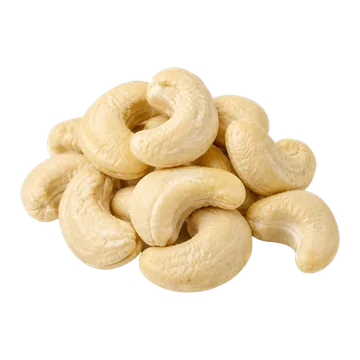 Cashews, raw
Not rated yet
74.7 mgper servingoxalateOxalosis and Hyperoxaluria Foundation 2024 · grade B ?
How it’s rated
Not rated for calcium-oxalate stone formers: the only source is a patient-foundation list with no stated method. A 30 g serving carries 74.7 mg oxalate, a moderate portion by the list's own bands (25-99 mg); the list gives 249 mg per 100 g, the highest of walnuts, cashews and Brazil nuts.
Intake: 30 g serving · Level in the food: 249 mg oxalate/100 g (compiled list value)
Measured on: Oxalosis and Hyperoxaluria Foundation oxalate list (Feb 2024), 'Nuts, Cashew, raw or roasted'; no primary analysis cited
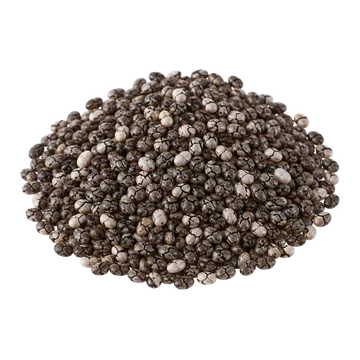 Chia seeds
Not rated yet
70.5 mgper servingoxalateOxalosis and Hyperoxaluria Foundation 2024 · grade B ?
How it’s rated
Not rated for calcium-oxalate stone formers: the only source is a patient-foundation list (one brand, no stated method). A 15.0 g serving carries 70.5 mg oxalate, a moderate portion by the list's bands (25-99 mg); 100 g would be in its very-high band.
Intake: 15 g serving · Level in the food: 470 mg oxalate/100 g (compiled list value (one brand))
Measured on: Oxalosis and Hyperoxaluria Foundation oxalate list (Feb 2024), 'Seeds, Chia, Bob's Red Mill'
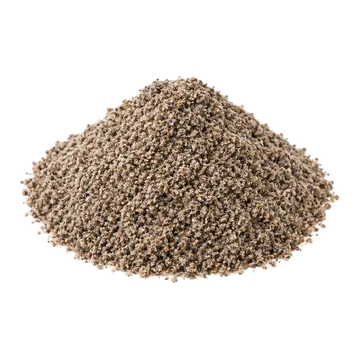 Chia seeds, ground
Not rated yet
70.5 mgper servingoxalateOxalosis and Hyperoxaluria Foundation 2024 · grade B ?
How it’s rated
Not rated: no agency sets an oxalate intake limit; this is information for people who form calcium-oxalate stones. A patient-foundation list gives 470 mg/100 g for one brand, with no stated method, so 15 g carries 70.5 mg, a moderate portion by the list's bands (25–99 mg); 100 g would fall in its very-high band.
Intake: 15 g serving · Level in the food: 470 mg/100 g (listing) (compiled list value (one brand))
Measured on: Oxalosis and Hyperoxaluria Foundation oxalate list (Feb 2024), 'Seeds, Chia, Bob's Red Mill'
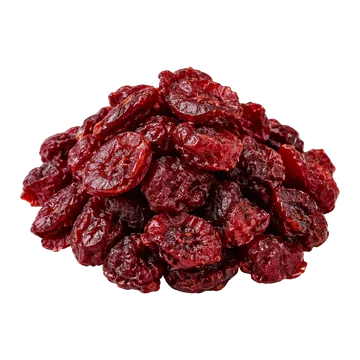 Dried cranberries, sweetened
Not rated yet
5.2 mgper servingoxalateOxalosis and Hyperoxaluria Foundation 2024 · grade C ?
How it’s rated
Not rated: no agency sets an oxalate intake limit; this is information for people who form calcium-oxalate stones. A patient-foundation list gives 13 mg/100 g for dried cranberries (Craisins), so a 40 g serving carries 5.2 mg, well under the list's 25 mg 'moderate' line; a second line for dried cranberries says 2 mg/100 g, and fresh cranberries are listed at 4 mg/100 g. The list gives no method per line.
Intake: one 40 g serving · Level in the food: 13 mg oxalate/100 g (compiled list value ('Berries, Craisins, dried'))
Measured on: Oxalosis and Hyperoxaluria Foundation oxalate list (2024), fruit table; 'Craisins, dried' 13 mg per 100 g, 5 mg per serving; a second line 'Cranberries, dried' gives 2 mg per 100 g. The list gives no method or source per line.
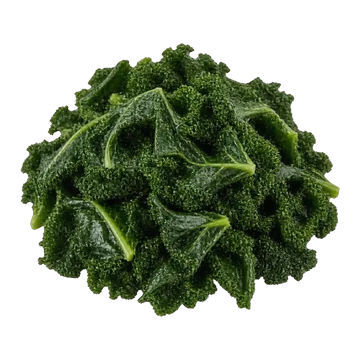 Kale, raw
Not rated yet
8.5 mgper servingoxalate (85 g × 10 mg/100 g)Oxalosis and Hyperoxaluria Foundation 2024 · grade B ?
How it’s rated
Not rated: oxalate matters to people who form oxalate stones, so it is person-specific. Raw kale is listed at 10 mg per 100 g (8.5 mg in an 85 g serving; boiled 5), in the low-oxalate class under 25 mg a serving. Sources disagree: a Korean HPLC survey found none, while a search result citing USDA suggests about 18–39 mg per 100 g (column mapping unverified).
Intake: not applicable (person-specific) · Level in the food: 10 mg/100 g (listing) (compiled list value (OHF 'Avg oxalate per 100 g'), raw kale (boiled: 5))
Measured on: Oxalosis and Hyperoxaluria Foundation oxalate list 2024, line 'Kale, Variety, Raw'; the Salgado 2023 review Table 5 lists raw kale oxalate as not detected (total, soluble), citing a Korean HPLC study
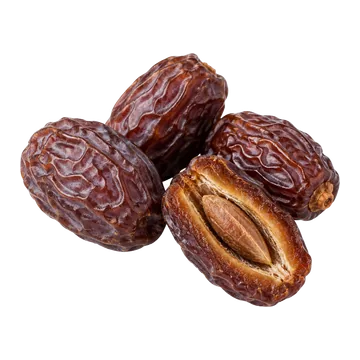 Medjool dates
Not rated yet
3.2 mgper servingoxalateOxalosis and Hyperoxaluria Foundation 2024 · grade C ?
How it’s rated
Not rated: no agency sets an oxalate intake limit; this is information for people who form calcium-oxalate stones. A patient-foundation list gives 8 mg/100 g for chopped dates, so a 40 g serving carries 3.2 mg, low on the list's own scale (under 25 mg a serving). Cultivar and method are not given.
Intake: one 40 g serving · Level in the food: 8 mg oxalate/100 g (compiled list value ('Dates, Chopped'))
Measured on: Oxalosis and Hyperoxaluria Foundation oxalate list (2024), fruit table, 'Dates, Chopped' 8 mg per 100 g, 4 mg per its serving. Cultivar and method not given.
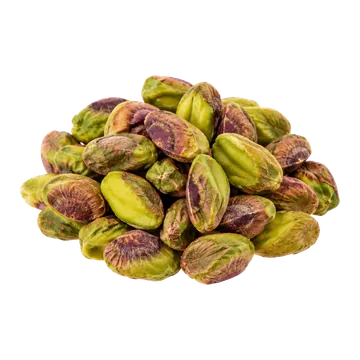 Pistachios, dry-roasted
Not rated yet
12.6 mgper servingoxalateOxalosis and Hyperoxaluria Foundation 2024 · grade B ?
How it’s rated
Not rated: the only figure is 42 mg oxalate per 100 g from a patient-foundation list (Oxalosis and Hyperoxaluria Foundation, 2024) that cites no primary analysis and states no method. For people who form calcium-oxalate stones, a 30 g serving works out to 12.6 mg, under the list's own 25 mg low-oxalate line.
Intake: 30 g serving · Level in the food: 42 mg oxalate/100 g (compiled list value ('avg oxalate per 100 g'))
Measured on: Oxalosis and Hyperoxaluria Foundation oxalate list (Feb 2024), 'Nuts, Pistachio, raw or roasted'; no primary analysis cited
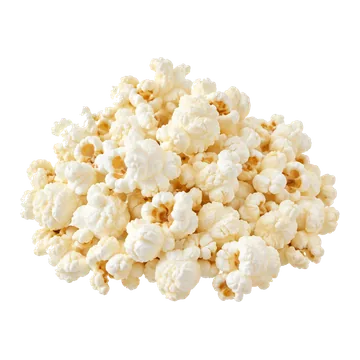 Popcorn, air-popped
Not rated yet
16.5 mgper servingoxalateOxalosis and Hyperoxaluria Foundation 2024 · grade B ?
How it’s rated
Not rated: the only figure is 33 mg oxalate per 100 g from a patient-foundation list with no stated method. For people who form calcium-oxalate stones, a 50 g popped serving works out to 16.5 mg, under the list's own 25 mg low-oxalate line.
Intake: 50 g popped serving · Level in the food: 33 mg oxalate/100 g (compiled list value ('avg oxalate per 100 g'))
Measured on: Oxalosis and Hyperoxaluria Foundation oxalate list (Feb 2024), 'Corn, Popcorn, popped'; no primary analysis cited; the list's 32 g serving of '1/4 cup' is probably unpopped kernels, so per-serving mg here is computed from the per-100 g value
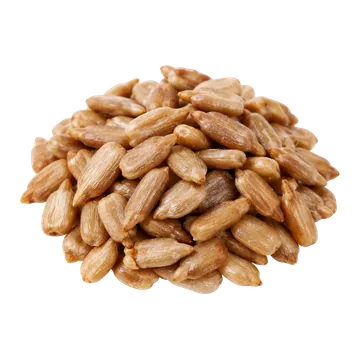 Sunflower seeds, dry-roasted
Not rated yet
9 mgper servingoxalateOxalosis and Hyperoxaluria Foundation 2024 · grade B ?
How it’s rated
Not rated: the only figure is 30 mg oxalate per 100 g from a patient-foundation list with no stated method. For people who form calcium-oxalate stones, the list gives 9 mg for its 29 g serving, under its own 25 mg low-oxalate line.
Intake: 30 g serving · Level in the food: 30 mg oxalate/100 g (compiled list value ('avg oxalate per 100 g'))
Measured on: Oxalosis and Hyperoxaluria Foundation oxalate list (Feb 2024), 'Seeds, Sunflower, raw or roasted'; no primary analysis cited
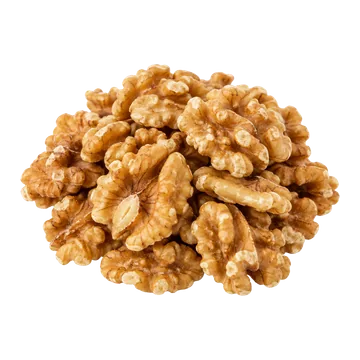 Walnuts, raw
Not rated yet
18.6 mgper servingoxalateOxalosis and Hyperoxaluria Foundation 2024 · grade B ?
How it’s rated
Not rated, for calcium-oxalate stone formers: the only figure is a patient-foundation list (Oxalosis and Hyperoxaluria Foundation, February 2024), 62 mg oxalate per 100 g, with no stated method. A 30 g serving is 18.6 mg, which the list's own bands call a low-oxalate portion (under 25 mg).
Intake: 30 g serving · Level in the food: 62 mg oxalate/100 g (compiled list value ('avg oxalate per 100 g'))
Measured on: Oxalosis and Hyperoxaluria Foundation oxalate list (Feb 2024), 'Nuts, Walnuts, raw or roasted'; no primary analysis cited
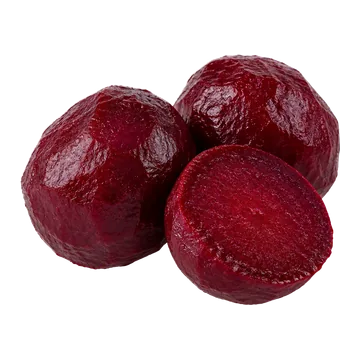 Beets, cooked
Context
31.4 mgper servingSalgado 2023 · grade B ?
How it’s rated
Shown as context, not rated: no agency sets an oxalate intake limit; this is information for people who form calcium-oxalate stones. An 85 g serving of boiled beets carries about 31 mg total oxalate (36.9 mg/100 g, from two measurements), and other boiled-beet figures give 44–65 mg, in the 'moderate' class (25–99 mg a serving) of the Oxalosis and Hyperoxaluria Foundation list.
Intake: one 85 g serving a day, 70 kg adult · Level in the food: 369 mg/kg (mean of n 2 (HPLC-enzyme-reactor, as relayed); range of boiled-beet studies 369-760 mg/kg total oxalate, n = 2)
Measured on: Boiled beetroot, total oxalate 36.9 mg/100 g FW (soluble 16.3), Hönow & Hesse as relayed in Salgado 2023 Table 5; other boiled-beet rows: 52 mg/100 g (ref 36), 76.0 (ref 32); OHF list 57 mg/100 g
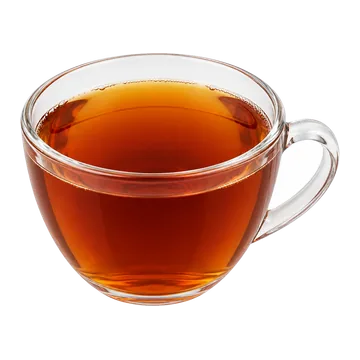 Black tea, brewed
Context
14.4 mgper servingoxalate per 250 mLSiener 2021 · grade B ?
How it’s rated
Value only: the verdict belongs to method rule 4 (oxalate cap). 14.4 mg per cup. Urinary recovery (bioavailability) 3.2% in this study (n = 10 healthy men); 0.08%, 1.9-4.7% and 2.4% in earlier studies it cites.
Intake: one 250 mL (250 g) cup a day, 70 kg adult · Level in the food: 57.5 mg/L (single brewed batch (study tea), n = 1)
Measured on: Siener & Hesse 2021: black tea brewed 12 tea bags x 1.75 g (21 g) in 1.5 L of 70 °C water, 5 min; oxalate content 57.5 mg/L (soluble oxalate in the paper's discussion)
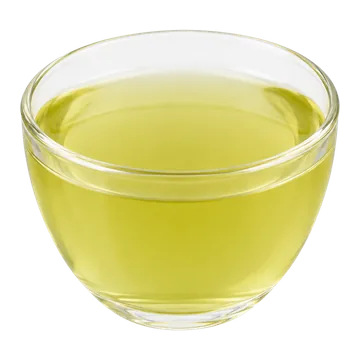 Green tea, brewed
Context
1.4 mgper servingoxalate per 250 mLCharrier 2002 · grade A ?
How it’s rated
Shown as context, not rated: oxalate matters for people who form calcium oxalate stones. Green tea averages 5.55 mg/L (4 tea bags), 1.36 mg of soluble oxalate in a 245 mL cup and about 1.4 mg per 250 mL; black tea is the oxalate-rich tea (57.5 mg/L in one batch), and green is about one seventh of it.
Intake: one 250 mL (250 g) cup a day, 70 kg adult · Level in the food: 5.55 mg/L (mean of 4 green tea bags (1.36 mg soluble oxalate per 245 mL cup), n = 4)
Measured on: Charrier 2002, Christchurch NZ, 4 green tea bags, 245 mL water at 90 C for 5 min; soluble oxalate by HPLC. 1.36 mg ÷ 0.245 L = 5.55 mg/L; per 250 mL cup 1.39 mg.
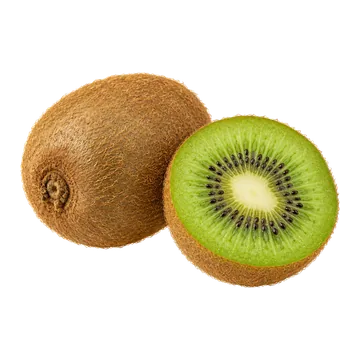 Kiwi, raw
Context
27 mgper servingtotal oxalate (about 10.6 mg soluble)PubMed 28239098 · grade B ?
How it’s rated
Shown as context, not rated: advice for people who form calcium-oxalate stones, with no dose limit. 140 g of pulp holds 27.0 mg of total oxalate (about 10.6 mg soluble), from three bulk samples of green and golden cultivars (Nguyen and Savage 2013).
Intake: one 140 g serving a day, 70 kg adult · Level in the food: 19.3 mg/100 g (total oxalate, pulp, ripe green kiwifruit (soluble 7.6 mg/100 g))
Measured on: Nguyen and Savage 2013: three bulk samples of two cultivars (green Actinidia deliciosa and golden A. chinensis) bought ripe at a local market (Christchurch, NZ); pulp is 90.4% of the edible portion; seeds hold much more (green 106.7 mg/100 g insoluble).
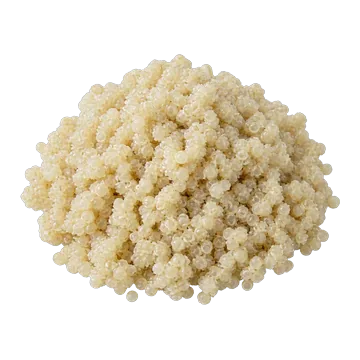 Quinoa, cooked
Context
Manzanilla 2024 · grade B ?
How it’s rated
Shown as context: relevant to people prone to calcium oxalate stones. No measured soluble or cooked value, so not rated.
Intake: n/a
Measured on: no measured cooked-quinoa oxalate; raw flour 397-715 mg/100 g (Manzanilla-Valdez 2024)
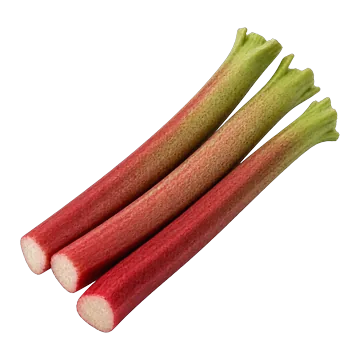 Rhubarb, raw
Context
Massey 1993 · grade B ?
How it’s rated
The oxalate-cap constraint: values recorded, no verdict. Per 140 g raw (derived arithmetic): total 745-1,381 mg, soluble 402-648 mg; per 85 g: 452-839 and 244-394. Boiled and drained (Savage): total 1,058 mg, soluble 113 mg per 140 g.
Intake: one 140 g serving a day (85 g is the alternative), 70 kg adult
Measured on: food-specific measured oxalate: see attributes (raw total 532-987 mg/100 g in the studies read, soluble 287-463; boiled-and-drained soluble about 81)
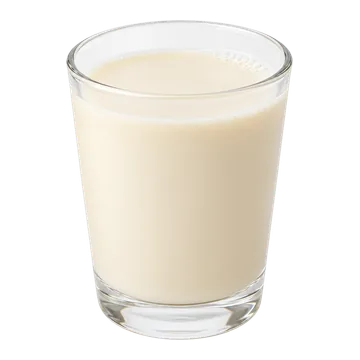 11 mgper serving
Siener 2021 · grade C ?
How it’s rated
Shown as context, not rated: no agency sets an intake limit for oxalate. The one figure found is 4.4 mg/100 mL (11 mg for a 250 mL serving), relayed in a 2021 review for a drink that is only 62% soy milk, so a plain fortified drink may differ. For comparison the dry soybean is 277 mg/100 g, so the drink is far lower per serving.
Intake: one 250 mL serving (250 g) a day, 70 kg adult · Level in the food: 44 mg/L (single value in a review table (4.4 mg/100 mL), product 'soybean drink, 62% soymilk')
Measured on: Siener 2021 review, Table 2 'Oxalate content of beverages', relaying its reference 56; a beverage containing 62% soy milk, not a plain fortified soy drink; method and year of the primary measurement not opened
Sources
- Charrier MJ, Savage GP, Vanhanen L. Oxalate content and calcium binding capacity of tea and herbal teas. Asia Pac J Clin Nutr 2002;11(4):298-301 · doi:10.1046/j.1440-6047.2002.00294.x · PMID 12495262
charrier2002· abstract only · licence not recorded - Manzanilla-Valdez ML, Boesch C, Orfila C, Montaño S. Unveiling the nutritional spectrum: a comprehensive analysis of protein quality and antinutritional factors in three varieties of quinoa. Food Chem X 2024 (published Dec 30):101814 · doi:10.1016/j.fochx.2024.101814 · PMID 39310886
manzanilla2024· full text read · CC BY-NC-ND 4.0 - Massey LK, Roman-Smith H, Sutton RA. Effect of dietary oxalate and calcium on urinary oxalate and risk of formation of calcium oxalate kidney stones. J Am Diet Assoc 1993;93(8):901-6. · doi:10.1016/0002-8223(93)91530-4 · PMID 8335871
massey1993· abstract only · Publisher copyright - Oxalosis and Hyperoxaluria Foundation. Oxalate list (022724), 2024
ohf-oxalate-list-2024· full text read · copyright OHF - Nguyen HV, Savage GP. Total, soluble and insoluble oxalate contents of ripe green and golden kiwifruit. Foods 2013;2(1):76-82 · doi:10.3390/foods2010076 · PMID 28239098
pmid:28239098· abstract only · CC BY (Europe PMC licence field, PMC5302238) - Salgado N et al. Oxalate in foods: extraction conditions, analytical methods, occurrence, and health implications. Foods 2023;12(17):3201. · doi:10.3390/foods12173201
salgado2023-foods· full text read · CC BY 4.0 - Siener R et al. 2021 (oxalate in legumes and vegetables; CC BY 4.0)
siener2021· full text read · CC BY 4.0 - Siener R. Nutrition and kidney stone disease. Nutrients 2021;13(6):1917 (secondary table; sesame value attributed to Hönow & Hesse 2002, Food Chem 78:511-521) · doi:10.3390/nu13061917
siener2021-kidney-stones· full text read · CC BY 4.0 (MDPI; not checked on the page)