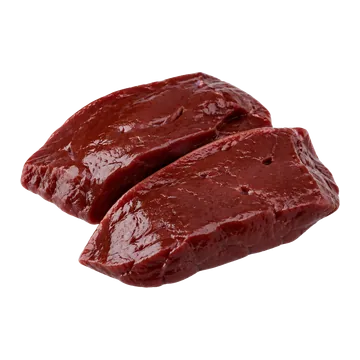
Beef liver, raw
Checked by us 135 kcal per 100 g
Protein, plus vitamin B12 and vitamin A. Rich in 8 more nutrients: see Good for.
Worth knowing: dioxins and dioxin-like PCBs, copper and preformed vitamin A.
Worth knowing for some people: alpha-gal syndrome; vitamin A in pregnancy.
Good for
How we counted this
What 100 g gives you: imported foods have no serving size yet.
Your body needs enough of each of these. Past enough, more doesn’t help. Amounts are what the food databases list, not what your body absorbs, unless a row says it was measured.
The words: “A lot” means one serving gives 20% or more of Health Canada’s daily amount, “Some” 10% to 19%, “A little” 2% to 9%, “Almost none” under 2%. Strongest word first; within a word, protein and fibre lead, then the biggest share. ?
A milligram (mg) is a thousandth of a gram, and a microgram (µg) a thousandth of a milligram: 1,000 µg make 1 mg.
- A lot
Protein
Your muscles, and every other tissue, are built and repaired from it.
Learn more
20.4 g in 100 g: 36% of the 56 g a day men need, 44% of the 46 g women need. The word follows the smaller share, which is the share of the higher amount. ?
Source: How much of it gets in hasn’t been measured for this food yet. Institute of Medicine 2005, Dietary Reference Intakes for Energy, Carbohydrate, Fiber, Fat, Fatty Acids, Cholesterol, Protein, and Amino Acids
- A lot
Vitamin B12
Your body needs it to make red blood cells and keep nerves working.
Learn more
59.3 µg in 100 g: 2471% of the 2.4 µg a day.
Source: How much of it gets in hasn’t been measured for this food yet. NIH Office of Dietary Supplements, vitamin B12 fact sheet for health professionals
- A lot
Vitamin A
Your eyes need it to see in dim light.
Eaten every day, one serving would be 165% of Health Canada’s upper level for adults (3,000 µg a day): a ceiling for daily intake, not one meal. See Watch out.
Learn more
Getting enough matters; more than enough doesn’t sharpen your sight.
4,968 µg in 100 g: 552% of the 900 µg a day men need, 710% of the 700 µg women need. The word follows the smaller share, which is the share of the higher amount. ?
Source: How much of it gets in hasn’t been measured for this food yet. NIH Office of Dietary Supplements, vitamin A fact sheet for health professionals
- A lot
Riboflavin (B2)
Your cells use it to make energy and handle fats. It also helps turn tryptophan into niacin and activate vitamin B6.
Learn more
2.76 mg in 100 g: 212% of the 1.3 mg a day men need, 251% of the 1.1 mg women need. The word follows the smaller share, which is the share of the higher amount. ?
Source: How much of it gets in hasn’t been measured for this food yet. NIH Office of Dietary Supplements, riboflavin fact sheet for health professionals
- A lot
Niacin (B3, niacin equivalents)
More than 400 of your enzymes need it to work.
Learn more
17.6 mg in 100 g: 110% of the 16 mg a day men need, 126% of the 14 mg women need. The word follows the smaller share, which is the share of the higher amount. ?
Source: How much of it gets in hasn’t been measured for this food yet. NIH Office of Dietary Supplements, niacin fact sheet for health professionals
- A lot
Vitamin B6
Helps you use protein, and your brain needs it to make its chemical messengers.
Learn more
1.08 mg in 100 g: 83% of the 1.3 mg a day.
Source: How much of it gets in hasn’t been measured for this food yet. NIH Office of Dietary Supplements, vitamin B6 fact sheet for health professionals
- A lot
Folate
Your body needs it to make DNA and to divide new cells.
Learn more
290 µg in 100 g: 73% of the 400 µg a day.
Source: How much of it gets in hasn’t been measured for this food yet. NIH Office of Dietary Supplements, folate fact sheet for health professionals
- A lot
Selenium
Your thyroid uses it to make its hormones.
Learn more
39.7 µg in 100 g: 72% of the 55 µg a day.
Source: How much of it gets in hasn’t been measured for this food yet. NIH Office of Dietary Supplements, selenium fact sheet for health professionals
- A lot
Choline
Your cells need it for their membranes, and to make acetylcholine, a messenger for memory, mood and muscle control.
Learn more
333 mg in 100 g: 61% of the 550 mg a day men need, 78% of the 425 mg women need. The word follows the smaller share, which is the share of the higher amount. ?
Source: How much of it gets in hasn’t been measured for this food yet. NIH Office of Dietary Supplements, choline fact sheet for health professionals
- A lot
Zinc
Your immune system and healing wounds depend on it.
Learn more
4 mg in 100 g: 36% of the 11 mg a day men need, 50% of the 8 mg women need. The word follows the smaller share, which is the share of the higher amount. ?
Source: How much of it gets in hasn’t been measured for this food yet. NIH Office of Dietary Supplements, zinc fact sheet for health professionals
- A lot
Iron
Carries oxygen in your blood.
Learn more
4.9 mg in 100 g: 61% of the 8 mg a day men need, 27% of the 18 mg women need. The word follows the smaller share, which is the share of the higher amount. ?
Source: How much of it gets in hasn’t been measured for this food yet. NIH Office of Dietary Supplements, iron fact sheet for health professionals
11 more nutrients below “a lot”
- Some
Thiamin (B1)
Your cells use it to get energy from food, and so to grow and work.
Learn more
0.19 mg in 100 g: 16% of the 1.2 mg a day men need, 17% of the 1.1 mg women need. The word follows the smaller share, which is the share of the higher amount. ?
Source: How much of it gets in hasn’t been measured for this food yet. NIH Office of Dietary Supplements, thiamin fact sheet for health professionals
- A little
Potassium
Your nerves, muscles and kidneys need it to work.
Learn more
313 mg in 100 g: 9% of the 3,400 mg a day men need, 12% of the 2,600 mg women need. The word follows the smaller share, which is the share of the higher amount. ?
Source: How much of it gets in hasn’t been measured for this food yet. NIH Office of Dietary Supplements, potassium fact sheet for health professionals
- A little
Vitamin D
Your body needs it to absorb calcium and keep your bones hard.
Learn more
Your skin also makes it in sunlight, so food is only one of its sources.
1.2 µg in 100 g: 8% of the 15 µg a day.
Source: How much of it gets in hasn’t been measured for this food yet. NIH Office of Dietary Supplements, vitamin D fact sheet for health professionals
- A little
Magnesium
Your muscles and nerves need it to work.
Learn more
18 mg in 100 g: 5% of the 400 mg a day men need, 6% of the 310 mg women need. The word follows the smaller share, which is the share of the higher amount. ?
Source: How much of it gets in hasn’t been measured for this food yet. NIH Office of Dietary Supplements, magnesium fact sheet for health professionals
- A little
Vitamin K1
Your blood needs it to clot.
Learn more
3.1 µg in 100 g: 3% of the 120 µg a day men need, 3% of the 90 µg women need. The word follows the smaller share, which is the share of the higher amount. ?
Source: How much of it gets in hasn’t been measured for this food yet. NIH Office of Dietary Supplements, vitamin K fact sheet for health professionals
- A little
Vitamin E
Shields the fats in your cells from damage; your immune system uses it too.
Learn more
0.38 mg in 100 g: 3% of the 15 mg a day.
Source: How much of it gets in hasn’t been measured for this food yet. NIH Office of Dietary Supplements, vitamin E fact sheet for health professionals
- Almost none
Vitamin C
Your body makes collagen with it, which wounds need to heal. It also helps you absorb iron from plants.
Learn more
1.3 mg in 100 g: 1% of the 90 mg a day men need, 2% of the 75 mg women need. The word follows the smaller share, which is the share of the higher amount. ?
Source: How much of it gets in hasn’t been measured for this food yet. NIH Office of Dietary Supplements, vitamin C fact sheet for health professionals
- Almost none
Omega-3: ALA
The one omega-3 your body can’t make: it must come from food. Your cells build it into their membranes and burn it for energy.
Learn more
16 mg in 100 g: 1% of the 1,600 mg a day men need, 1% of the 1,100 mg women need. The word follows the smaller share, which is the share of the higher amount. ?
Source: How much of it gets in hasn’t been measured for this food yet. NIH Office of Dietary Supplements, omega-3 fatty acids fact sheet for health professionals
- Almost none
Calcium
Builds your bones and teeth.
Learn more
5 mg in 100 g: 1% of the 1,000 mg a day.
Source: How much of it gets in hasn’t been measured for this food yet. NIH Office of Dietary Supplements, calcium fact sheet for health professionals
- Almost none
Omega-3: EPA + DHA
Long-chain omega-3s, built into your cell membranes. DHA is concentrated in your brain and retinas.
Learn more
0 mg in 100 g: under 1% of the 250 mg a day.
Health Canada sets no daily amount for these fats, so the daily figure here is the European Food Safety Authority’s.
Source: How much of it gets in hasn’t been measured for this food yet. NIH Office of Dietary Supplements, omega-3 fatty acids fact sheet for health professionals
- Almost none
Fibre
Keeps your gut moving.
Learn more
0 g in 100 g: under 1% of the 38 g a day men need, under 1% of the 25 g women need. The word follows the smaller share, which is the share of the higher amount. ?
Source: How much of it gets in hasn’t been measured for this food yet. Institute of Medicine 2005, Dietary Reference Intakes for Energy, Carbohydrate, Fiber, Fat, Fatty Acids, Cholesterol, Protein, and Amino Acids
Watch out
How we counted this
An average adult is already at or past the limit from other food.
Learn more
Flagged: the tolerable weekly intake for dioxins and PCBs is 42 pg a week at 70 kg (EFSA 2026, WHO 2022 toxic equivalents). On the upper-bound European mean of 0.11 pg/g (522 samples), about 382 g of raw liver a week would reach it, and a 100 g serving is 26% of the weekly limit. It pairs with the lower-bound row to give the two bounds.
1 other measurement of this food, same verdict
An average adult is already at or past the limit from other food.
Learn more
Flagged: EFSA's 2026 tolerable weekly intake for dioxins and PCBs is 0.6 pg WHO 2022 toxic equivalents/kg body weight/week, 42 pg a week at 70 kg. On the European lower-bound mean of 0.10 pg/g (522 samples, whole weight, as sampled), about 420 g of raw liver a week would reach it, an upper bound on the grams (382 g at the upper bound of 0.11). A 100 g serving carries 10 pg, 24% of the weekly limit. These are European data; Canada's CFIA survey has no liver sample.
Copper
Worth knowingRated “Limit it” on beef liver, pan-fried. Not measured on this preparation, so that’s our closest guide. See that page
Learn more
How we got this
As rated on beef liver, pan-fried: Weekly or less: EFSA's acceptable daily intake for copper is 0.07 mg/kg body weight/day, 5 mg a day for adults, set so that no copper is expected to build up in the liver. Eaten alone, about 33.6 g of cooked liver in a day would reach it (4.9 mg for 70 kg at 0.14588 mg per g); Health Canada's upper intake level is 10,000 µg/day (68.6 g). One 100 g serving carries 14.6 mg, 3.0 times EFSA's daily value and 1.5 times the Canadian level. It is a chronic daily limit. Separately, EFSA's 2024 opinion on vitamin A finds that Europeans are unlikely to exceed the vitamin A upper level if liver and offal are eaten once a month or less; that advice is about vitamin A, not copper.
Preformed vitamin A (retinol)
Worth knowingRated “Limit it” on beef liver, pan-fried. Not measured on this preparation, so that’s our closest guide. See that page
Learn more
How we got this
As rated on beef liver, pan-fried: Weekly or less: the tolerable upper intake level (UL) for preformed vitamin A is 3,000 µg RE a day (EFSA 2024; Health Canada 3,000 µg RAE, preformed only), set against birth defects. Eaten alone, about 38.8 g of cooked liver in one day would reach it if nothing else supplies retinol, and one 100 g serving is 2.6 times the daily UL. EFSA states populations are unlikely to exceed the UL if liver is eaten once a month or less. Averaged over a week, one 100 g serving (retinol 7,728 µg, USDA) is 1,104 µg a day, 37% of the daily UL; EFSA and CoFID figures run 2.2 to 2.4 times higher and average about 90% or more. Retinol in liver varies several-fold by species, feed and country, so 38.8 g is an upper bound on grams (16 to 17 g on those figures).
For some people
Measured, not rated: 219.8 mg purines
Learn more
If you have gout: avoiding organ meats such as liver, which are higher in purines, is one of the diet changes that help lower uric acid in the blood and the number of flares, according to the US National Institutes of Health (NIH).
Source: NIAMS (NIH), Gout: diagnosis, treatment, and steps to take
How we got this
Not rated for people with gout or hyperuricemia: the only reference is a Japanese dietary recommendation of 400 mg purines a day, seen through Kaneko 2014 rather than an agency document, so no reference is established. Raw beef liver measures 219.8 mg purines per 100 g (HPLC, Kaneko 2014, four purine bases). For scale only, 400 mg would be reached at about 182 g.
Listed for beef liver, pan-fried; applies here too. See that page
Flagged for people with alpha-gal syndrome: mammalian meat, including organ meats, is a trigger. The CDC's products page names organ meats; its about page lists beef, pork, lamb, venison and rabbit.
Listed for beef liver, pan-fried; applies here too. See that page
Flagged for women who are or plan to be pregnant: EFSA 2024 advises against eating liver products, and the Public Health Agency of Canada advises limiting liver. Neither states a dose; the 3,000 µg RE upper intake level (38.8 g of this liver) is the figure to count against. The agencies differ in strength, and the human data conflict on the main teratogenic metabolite, all-trans retinoic acid: Buss 1994 found it up to 20 times lower after calf liver than after a supplement of the same retinol dose, while van Vliet 2001 found it, to a lesser extent, higher after liver paste. van Vliet 2001 and Hartmann 2005 both found 13-cis metabolites higher after liver.
Better options
How we counted this
“Better” here always means better at something the row names: more of one nutrient, more nutrients per serving, or the goal you pick. It never means better in every way.
This food has no serving size, so every amount below is for 100 g of each food, and a swap compares like with like. A serving of another food can be bigger or smaller.
A food is listed only if it gives clearly more: at least a fifth more than this food, and at least 10% of the daily amount more.
More of what it’s good for
More protein
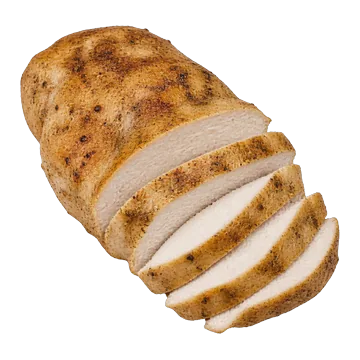 Chicken breast, roasted31 g in 100 g (this food: 20.4 g) · but less vitamin B12 and vitamin A
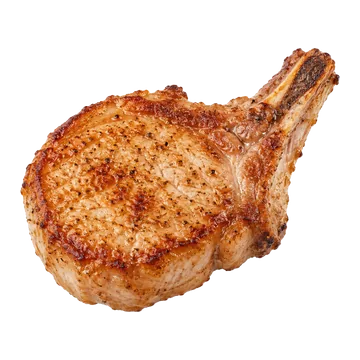 Pork chop, pan-fried27.6 g in 100 g (this food: 20.4 g) · but less vitamin B12 and vitamin AWorth knowing: dioxins and dioxin-like PCBs · this food has it tooNeeds care in handling: see its page
Amounts as listed, not adjusted for how much gets in.
For vitamin B12: Clams, cooked would lead, in the same 100 g, but is left out (Cadmium: limit it).
For vitamin A: Beef liver, pan-fried would lead, in the same 100 g, but is left out (Copper: limit it).
More nutrients per serving, counted together
The other main-dish proteins we’ve checked with more nutrients per serving than this one, counting at most 100 kcal. One score ranks them all, so the same few often lead.
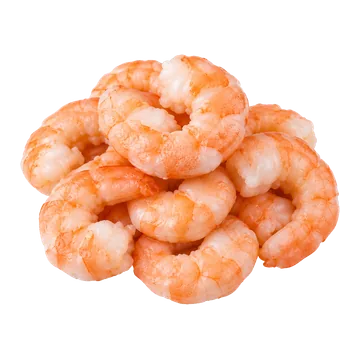 Shrimp, cooked
- More omega-3: EPA + DHA (276 mg vs 0 mg)
- More selenium (49.5 µg vs 39.7 µg)
- More vitamin E (2.2 mg vs 0.38 mg)
- Less vitamin B12 (1.66 µg vs 59.3 µg)
- Less vitamin A (90 µg vs 4,968 µg)
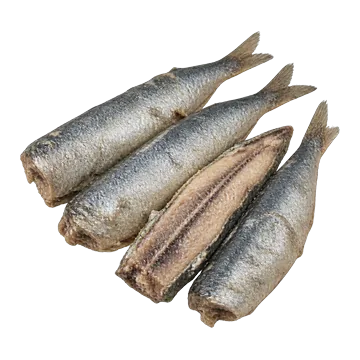 Sardines, canned in oil
- More omega-3: EPA + DHA (982 mg vs 0 mg)
- More calcium (382 mg vs 5 mg)
- More omega-3: ALA (498 mg vs 16 mg)
- Less vitamin B12 (8.94 µg vs 59.3 µg)
- Less vitamin A (32 µg vs 4,968 µg)
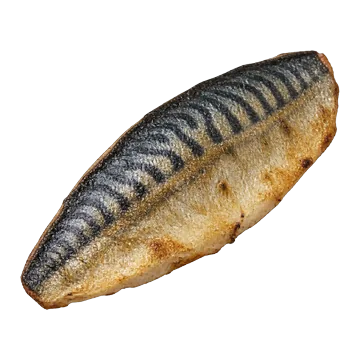 Mackerel, cooked
- More omega-3: EPA + DHA (1,203 mg vs 0 mg)
- More selenium (51.6 µg vs 39.7 µg)
- More magnesium (97 mg vs 18 mg)
- Less vitamin B12 (19 µg vs 59.3 µg)
- Less vitamin A (54 µg vs 4,968 µg)
Where the calcium card measured that less calcium gets in than from milk, calcium counts for less; everything else is as listed.
Your goal
Your goal changes only this list, not what the food gives you or what to watch.
Losing weight: fewer calories, and more nutrients, protein and fibre for each calorie.
Chicken liver, simmered would lead this list, but it’s left out (Preformed vitamin A (retinol): limit it).
Building muscle: more protein and more calories, per 100 g.
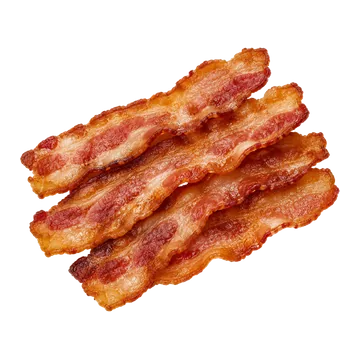 Bacon, pan-fried33.9 g protein · 468 kcal per 100 gWorth knowing: dioxins and dioxin-like PCBs · this food has it too
- Chicken breast, roasted31 g protein · 165 kcal per 100 g
- Pork chop, pan-fried27.6 g protein · 238 kcal per 100 gWorth knowing: dioxins and dioxin-like PCBs · this food has it tooNeeds care in handling: see its page
Why some foods aren’t suggested
Left out: Clams, cooked (Cadmium: limit it).
Left out: Beef liver, pan-fried (Copper: limit it).
Left out: Chicken liver, simmered (Preformed vitamin A (retinol): limit it).
Bring a tracker export or describe your usual week. The same rules check all of it.
The numbers
Open every value
Name in the database: Beef liver, raw
Listed nutrients, per 100 g
For each nutrient, the value this page uses is marked “used”. A row marked “second database” is another database’s figure for a matching food, kept so you can see how far databases disagree (they can differ in the samples analysed, lab methods and rounding). Its own cells are worked out from it, but none of the page’s words or scores are.
| Nutrient | Per 100 calories | How | Source | Grade | |
|---|---|---|---|---|---|
| Omega-3: ALA | 0.016 g | 0.01 g | listed used | US food database (USDA SR Legacy) #169451 | C |
| Calcium | 5 mg | 3.7 mg | listed used | US food database (USDA SR Legacy) #169451 | C |
| 5 mg | 3.7 mg | copy of USDA · not used | Canadian Nutrient File 2026 #2788 | C | |
| Carbohydrate | 3.89 g | 2.88 g | listed used | US food database (USDA SR Legacy) #169451 | C |
| Choline | 333.3 mg | 246.89 mg | listed used | US food database (USDA SR Legacy) #169451 | C |
| Energy | 135 kcal | – | FDC Energy (kcal) used | US food database (USDA SR Legacy) | – |
| Omega-3: EPA + DHA | 0 g | 0 g | listed used | US food database (USDA SR Legacy) #169451 | C |
| Fat | 3.63 g | 2.69 g | listed used | US food database (USDA SR Legacy) #169451 | C |
| Cholesterol | 275 mg | 203.7 mg | listed used | US food database (USDA SR Legacy) #169451 | C |
| Fatty acids, total saturated | 1.233 g | 0.91 g | listed used | US food database (USDA SR Legacy) #169451 | C |
| Fibre | 0 g | 0 g | listed used | US food database (USDA SR Legacy) #169451 | C |
| Folate | 290 µg | 214.81 µg | listed used | US food database (USDA SR Legacy) #169451 | C |
| Iron | 4.9 mg | 3.63 mg | listed used | US food database (USDA SR Legacy) #169451 | C |
| Magnesium | 18 mg | 13.33 mg | listed used | US food database (USDA SR Legacy) #169451 | C |
| Niacin (B3, niacin equivalents) | 17.558 mg | 13.01 mg | listed used | Canadian Nutrient File 2026 #2788 | C |
| Phosphorus | 387 mg | 286.67 mg | listed used | US food database (USDA SR Legacy) #169451 | C |
| Potassium | 313 mg | 231.85 mg | listed used | US food database (USDA SR Legacy) #169451 | C |
| Protein | 20.36 g | 15.08 g | listed used | US food database (USDA SR Legacy) #169451 | C |
| Riboflavin (B2) | 2.755 mg | 2.04 mg | listed used | US food database (USDA SR Legacy) #169451 | C |
| Selenium | 39.7 µg | 29.41 µg | listed used | US food database (USDA SR Legacy) #169451 | C |
| Sodium | 69 mg | 51.11 mg | listed used | US food database (USDA SR Legacy) #169451 | C |
| Sugars | 0 g | 0 g | listed used | US food database (USDA SR Legacy) #169451 | C |
| Thiamin (B1) | 0.189 mg | 0.14 mg | listed used | US food database (USDA SR Legacy) #169451 | C |
| Vitamin A | 4,968 µg | 3,680 µg | listed used | US food database (USDA SR Legacy) #169451 | C |
| Vitamin B12 | 59.3 µg | 43.93 µg | listed used | US food database (USDA SR Legacy) #169451 | C |
| Vitamin B6 | 1.083 mg | 0.8 mg | listed used | US food database (USDA SR Legacy) #169451 | C |
| Vitamin C | 1.3 mg | 0.96 mg | listed used | US food database (USDA SR Legacy) #169451 | C |
| Vitamin D | 1.2 µg | 0.89 µg | listed used | US food database (USDA SR Legacy) #169451 | C |
| Vitamin E | 0.38 mg | 0.28 mg | listed used | US food database (USDA SR Legacy) #169451 | C |
| Vitamin K1 | 3.1 µg | 2.3 µg | listed used | US food database (USDA SR Legacy) #169451 | C |
| Water | 70.81 g | 52.45 g | listed used | US food database (USDA SR Legacy) #169451 | C |
| Zinc | 4 mg | 2.96 mg | listed used | US food database (USDA SR Legacy) #169451 | C |
| Nutrient | Per 100 g | Per 100 calories | How | Source | Grade |
|---|---|---|---|---|---|
| Beta-carotene | 232 µg | 171.85 µg | listed used | US food database (USDA SR Legacy) #169451 | C |
| Copper | 9.755 mg | 7.23 mg | listed used | US food database (USDA SR Legacy) #169451 | C |
| Ash | 1.31 g | 0.97 g | listed used | US food database (USDA SR Legacy) #169451 | C |
| Alcohol, ethyl | 0 g | 0 g | listed used | US food database (USDA SR Legacy) #169451 | C |
| Caffeine | 0 mg | 0 mg | listed used | US food database (USDA SR Legacy) #169451 | C |
| Theobromine | 0 mg | 0 mg | listed used | US food database (USDA SR Legacy) #169451 | C |
| Energy | 564 kj | 417.78 kj | listed used | US food database (USDA SR Legacy) #169451 | C |
| Vitamin A, IU | 16,898 iu | 12,517.04 iu | listed used | US food database (USDA SR Legacy) #169451 | C |
| Carotene, alpha | 11 µg | 8.15 µg | listed used | US food database (USDA SR Legacy) #169451 | C |
| Vitamin D (D2 + D3), International Units | 49 iu | 36.3 iu | listed used | US food database (USDA SR Legacy) #169451 | C |
| Vitamin D3 (cholecalciferol) | 1.2 µg | 0.89 µg | listed used | US food database (USDA SR Legacy) #169451 | C |
| Cryptoxanthin, beta | 13 µg | 9.63 µg | listed used | US food database (USDA SR Legacy) #169451 | C |
| Lycopene | 0 µg | 0 µg | listed used | US food database (USDA SR Legacy) #169451 | C |
| Tocopherol, beta | 0 mg | 0 mg | listed used | US food database (USDA SR Legacy) #169451 | C |
| Tocopherol, gamma | 0.07 mg | 0.05 mg | listed used | US food database (USDA SR Legacy) #169451 | C |
| Tocopherol, delta | 0 mg | 0 mg | listed used | US food database (USDA SR Legacy) #169451 | C |
| Tocotrienol, alpha | 0 mg | 0 mg | listed used | US food database (USDA SR Legacy) #169451 | C |
| Tocotrienol, beta | 0 mg | 0 mg | listed used | US food database (USDA SR Legacy) #169451 | C |
| Tocotrienol, gamma | 0 mg | 0 mg | listed used | US food database (USDA SR Legacy) #169451 | C |
| Tocotrienol, delta | 0 mg | 0 mg | listed used | US food database (USDA SR Legacy) #169451 | C |
| Vitamin K (Dihydrophylloquinone) | 0 µg | 0 µg | listed used | US food database (USDA SR Legacy) #169451 | C |
| Folic acid | 0 µg | 0 µg | listed used | US food database (USDA SR Legacy) #169451 | C |
| Folate, food | 290 µg | 214.81 µg | listed used | US food database (USDA SR Legacy) #169451 | C |
| Folate, DFE | 290 µg | 214.81 µg | listed used | US food database (USDA SR Legacy) #169451 | C |
| Betaine | 4.4 mg | 3.26 mg | listed used | US food database (USDA SR Legacy) #169451 | C |
| Tryptophan | 0.263 g | 0.19 g | listed used | US food database (USDA SR Legacy) #169451 | C |
| Threonine | 0.869 g | 0.64 g | listed used | US food database (USDA SR Legacy) #169451 | C |
| Isoleucine | 0.967 g | 0.72 g | listed used | US food database (USDA SR Legacy) #169451 | C |
| Leucine | 1.91 g | 1.41 g | listed used | US food database (USDA SR Legacy) #169451 | C |
| Lysine | 1.607 g | 1.19 g | listed used | US food database (USDA SR Legacy) #169451 | C |
| Methionine | 0.543 g | 0.4 g | listed used | US food database (USDA SR Legacy) #169451 | C |
| Cystine | 0.376 g | 0.28 g | listed used | US food database (USDA SR Legacy) #169451 | C |
| Phenylalanine | 1.084 g | 0.8 g | listed used | US food database (USDA SR Legacy) #169451 | C |
| Tyrosine | 0.807 g | 0.6 g | listed used | US food database (USDA SR Legacy) #169451 | C |
| Valine | 1.26 g | 0.93 g | listed used | US food database (USDA SR Legacy) #169451 | C |
| Arginine | 1.241 g | 0.92 g | listed used | US food database (USDA SR Legacy) #169451 | C |
| Histidine | 0.629 g | 0.47 g | listed used | US food database (USDA SR Legacy) #169451 | C |
| Alanine | 1.164 g | 0.86 g | listed used | US food database (USDA SR Legacy) #169451 | C |
| Aspartic acid | 1.927 g | 1.43 g | listed used | US food database (USDA SR Legacy) #169451 | C |
| Glutamic acid | 2.612 g | 1.93 g | listed used | US food database (USDA SR Legacy) #169451 | C |
| Glycine | 1.164 g | 0.86 g | listed used | US food database (USDA SR Legacy) #169451 | C |
| Proline | 0.961 g | 0.71 g | listed used | US food database (USDA SR Legacy) #169451 | C |
| Serine | 0.905 g | 0.67 g | listed used | US food database (USDA SR Legacy) #169451 | C |
| Hydroxyproline | 0.046 g | 0.03 g | listed used | US food database (USDA SR Legacy) #169451 | C |
| Vitamin E, added | 0 mg | 0 mg | listed used | US food database (USDA SR Legacy) #169451 | C |
| Vitamin B-12, added | 0 µg | 0 µg | listed used | US food database (USDA SR Legacy) #169451 | C |
| Fatty acids, total trans | 0.17 g | 0.13 g | listed used | US food database (USDA SR Legacy) #169451 | C |
| SFA 4:0 | 0 g | 0 g | listed used | US food database (USDA SR Legacy) #169451 | C |
| SFA 6:0 | 0 g | 0 g | listed used | US food database (USDA SR Legacy) #169451 | C |
| SFA 8:0 | 0 g | 0 g | listed used | US food database (USDA SR Legacy) #169451 | C |
| SFA 10:0 | 0 g | 0 g | listed used | US food database (USDA SR Legacy) #169451 | C |
| SFA 12:0 | 0 g | 0 g | listed used | US food database (USDA SR Legacy) #169451 | C |
| SFA 14:0 | 0.015 g | 0.01 g | listed used | US food database (USDA SR Legacy) #169451 | C |
| SFA 16:0 | 0.312 g | 0.23 g | listed used | US food database (USDA SR Legacy) #169451 | C |
| SFA 18:0 | 0.862 g | 0.64 g | listed used | US food database (USDA SR Legacy) #169451 | C |
| SFA 20:0 | 0 g | 0 g | listed used | US food database (USDA SR Legacy) #169451 | C |
| MUFA 18:1 | 0.423 g | 0.31 g | listed used | US food database (USDA SR Legacy) #169451 | C |
| PUFA 18:2 | 0.299 g | 0.22 g | listed used | US food database (USDA SR Legacy) #169451 | C |
| PUFA 18:3 | 0.016 g | 0.01 g | listed used | US food database (USDA SR Legacy) #169451 | C |
| PUFA 20:4 | 0.141 g | 0.1 g | listed used | US food database (USDA SR Legacy) #169451 | C |
| PUFA 22:6 n-3 (DHA) | 0 g | 0 g | listed used | US food database (USDA SR Legacy) #169451 | C |
| SFA 22:0 | 0.009 g | 0.01 g | listed used | US food database (USDA SR Legacy) #169451 | C |
| MUFA 14:1 | 0 g | 0 g | listed used | US food database (USDA SR Legacy) #169451 | C |
| MUFA 16:1 | 0.036 g | 0.03 g | listed used | US food database (USDA SR Legacy) #169451 | C |
| PUFA 18:4 | 0 g | 0 g | listed used | US food database (USDA SR Legacy) #169451 | C |
| MUFA 20:1 | 0.007 g | 0.01 g | listed used | US food database (USDA SR Legacy) #169451 | C |
| PUFA 20:5 n-3 (EPA) | 0 g | 0 g | listed used | US food database (USDA SR Legacy) #169451 | C |
| MUFA 22:1 | 0 g | 0 g | listed used | US food database (USDA SR Legacy) #169451 | C |
| PUFA 22:5 n-3 (DPA) | 0 g | 0 g | listed used | US food database (USDA SR Legacy) #169451 | C |
| Fatty acids, total monounsaturated | 0.479 g | 0.35 g | listed used | US food database (USDA SR Legacy) #169451 | C |
| Fatty acids, total polyunsaturated | 0.465 g | 0.34 g | listed used | US food database (USDA SR Legacy) #169451 | C |
| SFA 15:0 | 0.007 g | 0.01 g | listed used | US food database (USDA SR Legacy) #169451 | C |
| SFA 17:0 | 0.03 g | 0.02 g | listed used | US food database (USDA SR Legacy) #169451 | C |
| PUFA 20:2 n-6 c,c | 0.01 g | 0.01 g | listed used | US food database (USDA SR Legacy) #169451 | C |
| PUFA 18:2 n-6 c,c | 0.299 g | 0.22 g | listed used | US food database (USDA SR Legacy) #169451 | C |
| PUFA 18:3 n-6 c,c,c | 0.009 g | 0.01 g | listed used | US food database (USDA SR Legacy) #169451 | C |
| MUFA 17:1 | 0.013 g | 0.01 g | listed used | US food database (USDA SR Legacy) #169451 | C |
| PUFA 20:3 | 0 g | 0 g | listed used | US food database (USDA SR Legacy) #169451 | C |
| MUFA 15:1 | 0 g | 0 g | listed used | US food database (USDA SR Legacy) #169451 | C |
| PUFA 18:3 n-3 c,c,c (ALA) | 0.007 g | 0.01 g | listed used | US food database (USDA SR Legacy) #169451 | C |
| Lutein + zeaxanthin | 0 µg | 0 µg | listed used | US food database (USDA SR Legacy) #169451 | C |
| Manganese | 0.31 mg | 0.23 mg | listed used | US food database (USDA SR Legacy) #169451 | C |
| Niacin (B3, preformed) | 13.175 mg | 9.76 mg | listed used | US food database (USDA SR Legacy) #169451 | C |
| Pantothenic acid (B5) | 7.173 mg | 5.31 mg | listed used | US food database (USDA SR Legacy) #169451 | C |
| Retinol | 4,948 µg | 3,665.19 µg | listed used | US food database (USDA SR Legacy) #169451 | C |
Change the amount to rescale the first column. Nutrients a database doesn't list are missing, not zero.
Hazard rows as the dataset rates them
- Dioxins and dioxin-like PCBs · Worth knowing · Flagged: EFSA's 2026 tolerable weekly intake for dioxins and PCBs is 0.6 pg WHO 2022 toxic equivalents/kg body weight/week, 42 pg a week at 70 kg. On the European lower-bound mean of 0.10 pg/g (522 samples, whole weight, as sampled), about 420 g of raw liver a week would reach it, an upper bound on the grams (382 g at the upper bound of 0.11). A 100 g serving carries 10 pg, 24% of the weekly limit. These are European data; Canada's CFIA survey has no liver sample. · EFSA 2026 · A
- Dioxins and dioxin-like PCBs · Worth knowing · Flagged: the tolerable weekly intake for dioxins and PCBs is 42 pg a week at 70 kg (EFSA 2026, WHO 2022 toxic equivalents). On the upper-bound European mean of 0.11 pg/g (522 samples), about 382 g of raw liver a week would reach it, and a 100 g serving is 26% of the weekly limit. It pairs with the lower-bound row to give the two bounds. · EFSA 2026 · A
- Purines and gout · Not rated yet · Not rated for people with gout or hyperuricemia: the only reference is a Japanese dietary recommendation of 400 mg purines a day, seen through Kaneko 2014 rather than an agency document, so no reference is established. Raw beef liver measures 219.8 mg purines per 100 g (HPLC, Kaneko 2014, four purine bases). For scale only, 400 mg would be reached at about 182 g. · Kaneko 2014 · B
- Safe cooking temperature · Worth knowing · Flagged for cooking: cook beef liver to 71 °C (160 °F). Health Canada's chart has no liver row; 71 °C is its figure for ground beef and for beef pieces cooked to medium. · Health Canada, safe cooking temperatures · A
Sources
- Health Canada, Canadian Nutrient File 2026 (14th edition)
cnf-2026· dataset · Open Government Licence – Canada 2.0 - EFSA CONTAM Panel (2026). Update of the risk assessment on dioxins and dioxin-like PCBs in feed and food. EFSA Journal 2026;24(6):10103. · doi:10.2903/j.efsa.2026.10103
efsa-2026-dioxins· full text read · CC BY-ND - USDA FoodData Central, SR Legacy, 2018-04
fdc-sr-legacy-2018-04· dataset · CC0 1.0 (public domain) - Health Canada, Safe cooking temperatures (published 2024-06-04; page details 2020-05-29)
hc-safe-cooking-temps· page · Government of Canada terms (Crown copyright; not OGL) - Kaneko K, et al. (2014) Total purine and purine base content of common foodstuffs for facilitating nutritional therapy for gout and hyperuricemia. Biol Pharm Bull 37(5):709-721 · doi:10.1248/bpb.b13-00967 · PMID 24553148
kaneko-2014-purines· secondary source · J-STAGE open access
Body map 2026-10-25.1: each nutrient’s job comes from an agency fact sheet, linked beside it under Good for.
The plain words: “a lot” means one serving (100 g when the food has no serving size) gives at least 20% of the daily amount (the reference intake), “some” at least 10%, “a little” at least 2% (the cut-offs are ours, one set for every page: 20% and 10% are borrowed from the US labelling terms “high” and “good source” and applied to Health Canada’s daily amount, whereas Health Canada’s own shopper rule says 15%; provisional: they may change in a later method version). The daily amount is Health Canada’s Dietary Reference Intake for adults 19–30; where men and women need different amounts we use the higher one (protein: 56 g for men, 46 g for women). The percentage printed under each nutrient is the printed amount as a share of that daily amount, rounded to the nearest whole number, and the word is read from that percentage, so the amount, the percentage and the word always agree. Calcium with a measured absorption is scaled by how well it gets in compared with milk.
The scale: “Nothing to watch” means a serving a day stays under the limit at ordinary amounts; “Go easy” means a serving a day can push past the limit for adults who already take in the most, or fewer than 2 servings reach it; “Limit it” means once a week or less. The dataset’s own rating is under “How we got this”. Provisional: the scale may change in a later method version.
Measured absorption under Good for: grade-A studies in adults that tested this preparation of this food, as a share of the listed amount (the share digested, for protein), quoted once each source has passed our evidence check; animal studies and other variants stay in the table above. Provisional: this screen may change in a later method version.