Copper
In the body: The limit keeps copper from building up in the liver.
The one to watch: Beef liver, pan-fried. About 34 g, eaten alone, reaches the daily limit. Also Oysters, canned, at about 110 g on the same count. 1 more food can push past it too. The rest stay under it at a serving a day. The one with the least room, Chicken liver, simmered, has about 990 g, eaten alone.
Builds up over time. Agencies set an amount you can take in every week, or every day, for life. A food measured against it shows the grams that reach it.
The limit
- The agency’s figure0.07 mg/kg body weight/day
- For a 70 kg adult4.9 mg a day
- Basisacceptable daily intake (ADI): what you can take in every day for life
acceptable daily intake (ADI) (EFSA Scientific Committee 2023): no copper retention in the liver expected at 5 mg/day; equals 5 mg Cu/day for adults. Health Canada DRI upper intake level (UL) for adults and pregnancy 10 mg/day (IOM 2001, liver damage) beside it (human no-observed-adverse-effect level (NOAEL) (no hepatic retention)) - Average adult intake0.015–0.024 mg/kg body weight/day EFSA 2023: adults' mean chronic intake is 0.015 to 0.022 mg/kg body weight/day across 22 surveys (1.04 to 1.62 mg/day); older adults 0.014 to 0.022; the adult 95th percentile is 0.024 to 0.037. The range shown runs from the lowest adult mean to the lowest adult 95th percentile.
- Applies toall sources (food, water, supplements)
- Source ?EFSA 2023
Reviewed foods that carry it
4 reviewed foods carry it, 4 of them rated by dose.
Grams to the limit ?
Grams of each food that reach the limit in its window, for a 70 kg adult. Fewest first: those are the foods to watch.
Known background: an average adult already takes in 0.015–0.024 mg/kg body weight/day. Where the dataset allows, the grams below are the room left after that intake (the median of the surveys’ averages where EFSA gives one, otherwise the highest); beside each, the same limit counted from zero, the food eaten alone.
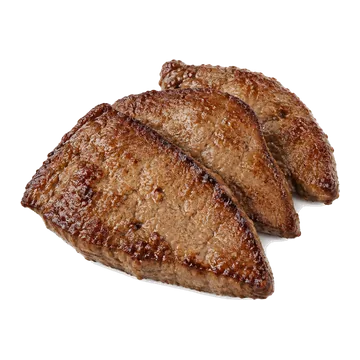 Beef liver, pan-fried
Limit it: weekly or less for a 100 g serving
34greaches the limit in a dayCounted from zero: this food eaten alone.14.6 mg per 100 g servingUS food database (USDA SR Legacy) · grade C ?
This amount varies a lot from one batch to the next: the figures we hold for this food differ twofold or more. Every figure on this site uses the same one, the food’s listed value.
How it’s rated
Weekly or less: EFSA's acceptable daily intake for copper is 0.07 mg/kg body weight/day, 5 mg a day for adults, set so that no copper is expected to build up in the liver. Eaten alone, about 33.6 g of cooked liver in a day would reach it (4.9 mg for 70 kg at 0.14588 mg per g); Health Canada's upper intake level is 10,000 µg/day (68.6 g). One 100 g serving carries 14.6 mg, 3.0 times EFSA's daily value and 1.5 times the Canadian level. It is a chronic daily limit. Separately, EFSA's 2024 opinion on vitamin A finds that Europeans are unlikely to exceed the vitamin A upper level if liver and offal are eaten once a month or less; that advice is about vitamin A, not copper.
Intake: 100 g cooked serving (HC TRA L.6) · Level in the food: 14.588 mg/100 g (listed value, n = 4)
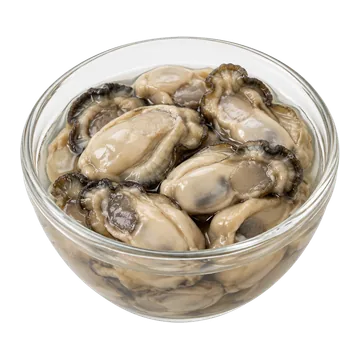 Oysters, canned
Go easy: within 2 servings of the limit for a 55 g serving
110greaches the limit in a dayCounted from zero: this food eaten alone.2.45 mg per 55 g servingUS food database (USDA SR Legacy) · grade C ?
How it’s rated
No cap: EFSA's 2023 acceptable daily intake (ADI) for copper is 0.07 mg/kg body weight/day, 4,900 µg a day at 70 kg, all sources. Eaten alone, about 110 g in one day on USDA's value would reach it, and 729 g on the CFIA sample (6.72 µg/g). A 55 g serving (2.45 mg) is 50% of the ADI on USDA's value or 8% on CFIA's. Health Canada's upper intake level is 10 mg a day.
Intake: 55 g canned (HC TRA I.4), one serving a day · Level in the food: 4.461 mg/100 g (listed value)
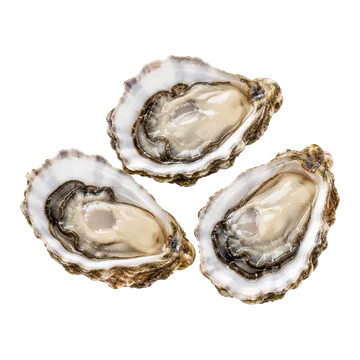 Eastern oysters, raw
Go easy: within 2 servings of the limit for a 125 g serving
170greaches the limit in a dayCounted from zero: this food eaten alone.3.57 mg per 125 g servingUS food database (USDA SR Legacy) · grade C ?
How it’s rated
No cap: EFSA's 2023 acceptable daily intake (ADI) for copper is 0.07 mg/kg body weight/day, 4,900 µg a day at 70 kg, all sources. A 125 g serving of raw eastern oysters carries 3.57 mg on the USDA listing, 73% of the ADI, and about 171 g in one day, eaten alone, would reach it; Health Canada's upper intake level of 10 mg a day would take about 350 g. Copper varies a lot between oysters: CFIA's inspection results averaged a third of the listing (8.72 µg/g, 1.09 mg a serving).
Intake: 125 g raw (HC TRA I.3), one serving a day · Level in the food: 2.858 mg/100 g (listed value)
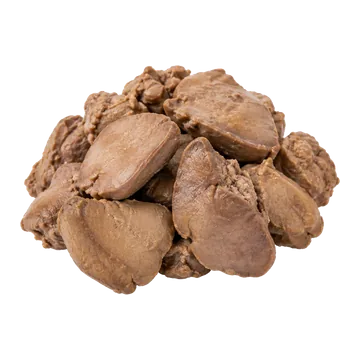 Chicken liver, simmered
Nothing to watch: under the limit for a 100 g serving
990greaches the limit in a dayCounted from zero: this food eaten alone.0.496 mg per 100 g servingUS food database (USDA SR Legacy) · grade C ?
How it’s rated
No cap: EFSA's 2023 acceptable daily intake for copper is 0.07 mg/kg body weight/day, 4.9 mg at 70 kg. Eaten alone, about 988 g of cooked chicken liver a day would reach it (Health Canada's upper level of 10 mg: 2,016 g). A 100 g serving is about 10% of the EFSA value. Beef liver is 29 times richer in copper (14.588 mg/100 g).
Intake: 100 g cooked serving (HC TRA L.6) · Level in the food: 0.496 mg/100 g (listed value, n = 4)
Sources
- EFSA Scientific Committee (2023). Re-evaluation of the existing health-based guidance values for copper and exposure assessment from all sources. EFSA Journal 21(1):7728 · doi:10.2903/j.efsa.2023.7728
efsa-2023-copper· secondary source · CC BY-ND 4.0 - USDA FoodData Central, SR Legacy, 2018-04
fdc-sr-legacy-2018-04· dataset · CC0 1.0 (public domain)