Listeria
In the body: Rare, but severe in pregnancy, in newborns, in adults over 60 and in people with weak immunity: it can reach the blood or the brain, and in pregnancy cause miscarriage or stillbirth.
Not rated by dose: a flag on 20 reviewed foods, among them cheddar, cottage cheese and mozzarella. The list below has a line for each of 21 preparations.
Pregnancy, babies and young children. Stricter agency advice for these stages of life. Gram figures elsewhere on this site count a 70 kg adult, unadjusted for pregnancy, babies or young children; the advice here is the agency’s own for them.
The reference value and where it comes from
- The agency’s figureno agency dose value
- Basisagency advice for pregnancy and other vulnerable groups (Listeria)
- Source ?Health Canada 2025
Reviewed foods that carry it
20 reviewed foods carry it; none is rated by dose. A food counts once, as in the foods list: preparations sharing a page (raw and cooked, canned) count once; one with its own page counts apart. Below, one line for each of 21 preparations. 22 measurements in all. A preparation measured more than once gets one line, the measurement the dataset leads with or a stricter one, named beside the food; the others fold under it.
How often you can eat it ?
No food here is rated by dose. Each line says why it’s listed: a flag for the people the source names, advice on handling it, or context.
Flags and context, not rated by dose
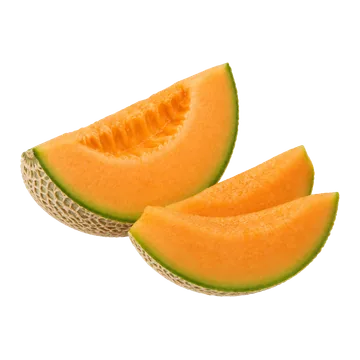 Cantaloupe, raw
Worth knowing
How it’s rated
Flagged for older adults, pregnancy and weakened immunity, and for handling: this is a single event record, not an occurrence rate. The 2011 outbreak linked to whole Rocky Ford cantaloupes from Jensen Farms, Colorado (CDC final update 2012-08-27) infected 147 persons in 28 states, with 33 outbreak-associated deaths and one miscarriage; 143 of 145 with data were hospitalised (99%). Listeria grows on cantaloupe at refrigerator temperature, so refrigeration alone cannot keep cut melon safe beyond Health Canada's four days.
Intake: one serving a day, 70 kg adult
Measured on: CDC final update (2012-08-27) of the 2011 outbreak linked to whole Rocky Ford cantaloupes from Jensen Farms, Colorado: 147 persons infected, 28 states, 33 outbreak-associated deaths, one miscarriage, 143 of 145 with data hospitalised (99%). FDA found the outbreak strains on equipment and cantaloupe at the packing facility.
 Celery, raw
Worth knowing
Cidrap 2010 · grade B ?
How it’s rated
Flag, not scored: Listeria in pre-cut celery is a vulnerable-groups (pregnancy, immunocompromised) concern under the existing listeria reference.
Intake: not applicable (flag)
Measured on: Chopped celery from a San Antonio, Texas produce plant, 2010: 10 cases, 5 fatal, 6 linked to chopped celery (CIDRAP news report, 2010-10-21). Not a Canadian record. CFIA's 2020-24 targeted survey has no celery line (fresh whole vegetables pooled).
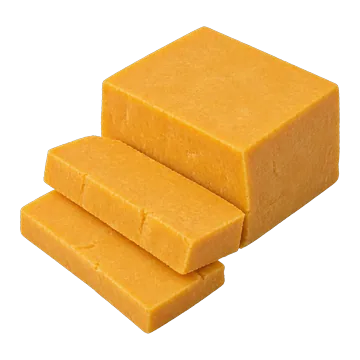 Cheddar
Worth knowing
Health Canada, Safer food choices for people at greater risk of food… · grade A ?
How it’s rated
Pasteurized cheddar is listed as a safer cheese; uncooked cheese made from unpasteurized milk is to be avoided
Intake: not applicable (flag)
Measured on: life-stage: pregnancy, 60+, children 5 and under, weakened immune system
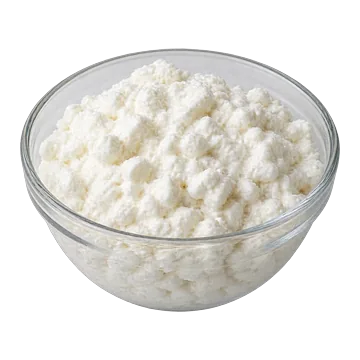 Cottage cheese
Worth knowing
Health Canada, Safe food handling for pregnant people · grade A ?
How it’s rated
Pasteurized cottage cheese is listed as safer (pregnancy page); no flag when pasteurized
Intake: not applicable (flag)
Measured on: life-stage: pregnancy, 60+, children 5 and under, weakened immune system
 Cream cheese
Worth knowing
Health Canada, Safer food choices for people at greater risk of food… · grade A ?
How it’s rated
Health Canada's page places cream cheese in the CHOOSE column (uncooked cheeses made from pasteurized milk, 'spreadable cheese, like cream cheese') and soft cheeses such as Brie, Camembert and feta in the AVOID column even when pasteurized. So the flag for cream cheese is conditional (pasteurized, from a sealed container, kept cold), unlike the soft-cheese rows.
Intake: not applicable (flag)
Measured on: life-stage advice (pregnancy and other groups at greater risk)
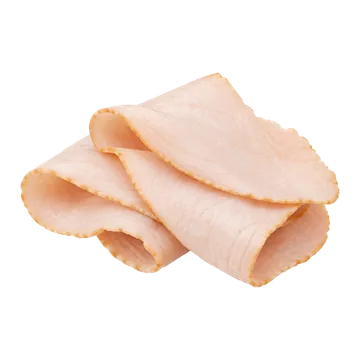 Deli turkey breast
Worth knowing
Health Canada 2025 · grade A ?
How it’s rated
Flagged for pregnancy: Health Canada's pregnancy page lists 'Non-dried deli meats, such as bologna, roast beef and turkey breast' among foods to avoid unless heated until steaming hot. In a CFIA survey (2018-2021), Listeria monocytogenes was found in 2 of 1,285 deli meat samples (ham and pastrami) and in none of 1,275 chicken or turkey breast strips; sliced deli turkey is not a named category, so its own prevalence is not reported.
Intake: not applicable (flag)
Measured on: CFIA targeted survey 2018-2021, retail Canada: deli meats n 1,285 (L. monocytogenes in 2, ham and pastrami); chicken or turkey breast strips n 1,275 (no L. monocytogenes; 1 sample with generic E. coli); turkey deli slices are not a named category
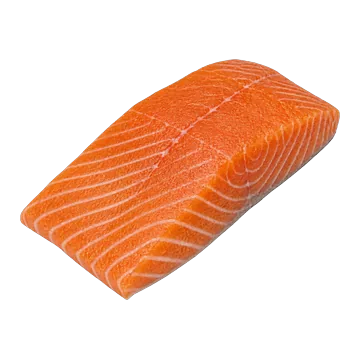 Farmed salmon, raw
Worth knowing
Health Canada 2025 · grade A ?
How it’s rated
For pregnancy: Health Canada lists 'Refrigerated smoked seafood' among foods pregnant people should avoid (safer: canned smoked seafood, or kinds that need no refrigeration until opened). The Public Health Agency of Canada also names adults 60 and over and people with weakened immune systems among those most at risk of listeriosis.
Intake: not applicable (flag)
Measured on: refrigerated smoked salmon (a different preparation: not the raw or cooked row)
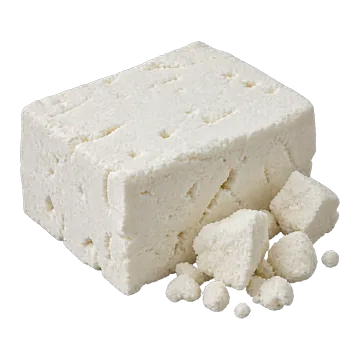 Feta
Worth knowing
Health Canada, Safer food choices for people at greater risk of food… · grade A ?
How it’s rated
Uncooked feta: avoid even if pasteurized (named); cooked, in a casserole or au gratin, is acceptable
Intake: not applicable (flag)
Measured on: life-stage: pregnancy, 60+, children 5 and under, weakened immune system
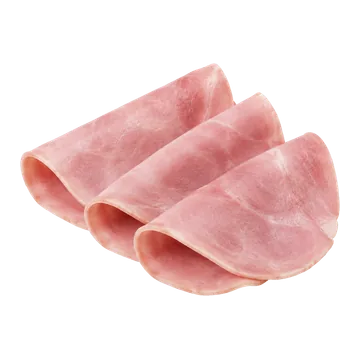 Ham, sliced
Worth knowing
How it’s rated
Flagged for pregnancy and other vulnerable groups: Health Canada's pregnancy page lists non-dried deli meats among the foods to avoid unless heated until steaming hot. This is a handling rule, not a dose. In CFIA's 2018–2021 retail survey, L. monocytogenes was found in 2 of 1,285 deli meat samples (0.16%), both in the ham and pastrami category; the count cannot be split by ham alone.
Intake: not applicable (flag)
Measured on: CFIA targeted survey 2018-2021, retail Canada, 11 cities, deli meats n 1,285 (all RTE deli types): L. monocytogenes detected in 2 samples (0.16%), both 'ham and pastrami' (category 1, zero tolerance), < 5 CFU/g overall; no Salmonella or S. aureus in the survey
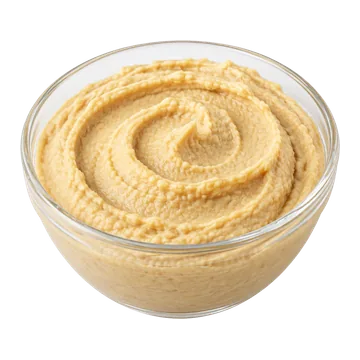 Hummus
Worth knowing
PubMed 32603372 · grade B ?
How it’s rated
Flagged for pregnancy and other vulnerable groups: Listeria grew in refrigerated hummus in an FDA laboratory study, fastest in chickpeas (a 1 log increase in 0.5 days), so chilled hummus kept past its date or above 4 °C is the exposure. This is a handling matter, not a dose, so there is no grams figure.
Intake: not applicable (flag)
Measured on: FDA laboratory study, hummus and chickpeas inoculated with L. monocytogenes (2 log CFU/g) and stored at 10 °C for 28 days; no commercial-product prevalence
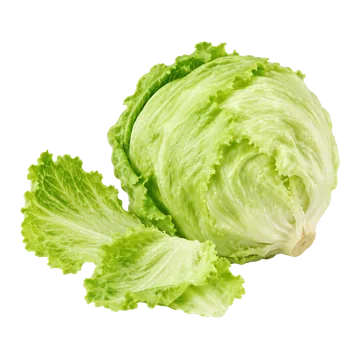 Iceberg lettuce, raw
Worth knowing
How it’s rated
Flagged for fresh-cut and bagged lettuce, not a whole head: Listeria is a matter of handling, not dose, and no agency publishes a dose basis for lettuce. CFIA's targeted surveys found 9 unsatisfactory results, all Listeria monocytogenes, in 2,488 fresh-cut ready-to-eat leafy salads (0.36%); whole leafy vegetables were not tested for Listeria, and the surveys do not split by lettuce type.
Intake: not a dose rule
Measured on: Fresh-cut ready-to-eat leafy salads, Canada, CFIA targeted surveys (interim table to 2024-03-31): without dressing kits (SB3210) 1,205 tested, 5 unsatisfactory (L. monocytogenes); with dressing kits (SB3209) 1,283 tested, 4 unsatisfactory (L. monocytogenes). 2012-14: 1 fresh-cut sample of 2,977 (0.1%) with L. monocytogenes, recalled. Whole leafy vegetables were not tested for Listeria.
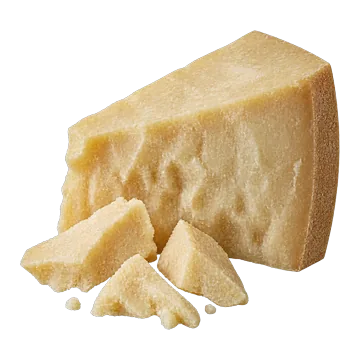 Parmesan
Worth knowing
Health Canada, Safe food handling for pregnant people · grade A ?
How it’s rated
Hard cheese such as Parmesan is listed as safer, pasteurized or not (pregnancy page)
Intake: not applicable (flag)
Measured on: life-stage: pregnancy, 60+, children 5 and under, weakened immune system
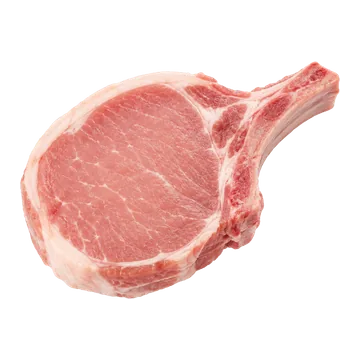 Pork chop, raw
Worth knowing
PubMed 16995521 · grade B ?
How it’s rated
Flagged for pregnancy, following Health Canada's advice on Listeria: Listeria monocytogenes was found in 24% of raw pork chops in one Edmonton retail study (abstract only; the collection year is not stated). A chop cooked to 71 °C is not the route; kitchen cross-contamination from the raw meat is.
Intake: raw handling and cross-contamination, not a serving
Measured on: Bohaychuk et al. 2006: 800 meat and poultry products from Edmonton retail across eight product types (raw ground beef, chicken legs, pork chops and five ready-to-eat products); the count of pork chops is not in the abstract
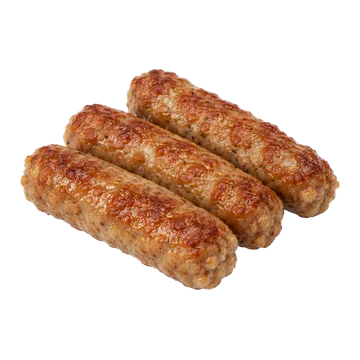 Pork sausage, pan-fried
Worth knowing
Health Canada, Safer food choices for people at greater risk of food… · grade A ?
How it’s rated
Flagged for pregnancy: Health Canada's pregnancy guidance says to cook hot dogs to a safe temperature of 74°C (165°F), not to eat them straight from the package, and to cook non-dried deli meats until steaming hot; refrigerated non-dried deli meats are to be avoided as sold. A fresh pork sausage cooked to 71°C (160°F) is inside the cooking rule. No Canadian Listeria prevalence figure for sausage is used here.
Intake: not applicable (flag)
Measured on: life-stage: pregnancy and other higher-risk groups; relevant to ready-to-eat sausage types (hot dogs, deli meats), not to a sausage cooked through
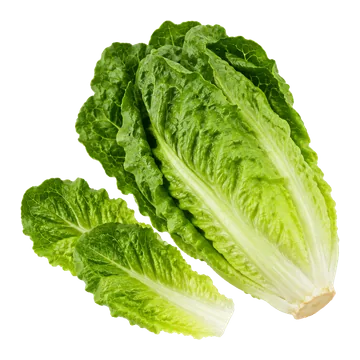 Romaine lettuce, raw
Worth knowing
How it’s rated
Flagged for fresh-cut and bagged lettuce, not a whole head: Listeria is a matter of handling, not a dose, and no agency publishes a dose basis for lettuce. CFIA's targeted surveys found 9 unsatisfactory results, all Listeria monocytogenes, in 2,488 fresh-cut ready-to-eat leafy salads (0.36%); whole leafy vegetables were not tested for Listeria. The surveys do not split by lettuce type, so romaine is not separable.
Intake: not a dose rule
Measured on: Fresh-cut ready-to-eat leafy salads, Canada, CFIA targeted surveys (interim table to 2024-03-31): without dressing kits (SB3210) 1,205 tested, 5 unsatisfactory (L. monocytogenes); with dressing kits (SB3209) 1,283 tested, 4 unsatisfactory (L. monocytogenes). 2012-14: 1 fresh-cut sample of 2,977 (0.1%) with L. monocytogenes, recalled. Whole leafy vegetables were not tested for Listeria.
 Sweet corn, frozen, cooked
Worth knowing
How it’s rated
Flag, not scored: cooking (the boiled form) kills it; relevant to pregnancy and other vulnerable groups when frozen corn is eaten without cooking.
Intake: not applicable (flag)
Measured on: Same survey (SB3126, imported frozen corn or peas, 2023/2024): L. monocytogenes was an investigative result in 7 of 247 samples (2.8%); the interim table does not state the count or the criterion in the row itself.
1 other measurement of this food
- EU outbreak 2015-18, frozen sweet corn (EFSA 2020)
Worth knowing
PubMed 32874300 · grade A ?
How it’s rated
Flag, not scored: the boiled form is cooked, which is the control EFSA names; the finding matters when frozen corn is eaten uncooked (smoothies, salads, cold fillings) and for pregnancy and other vulnerable groups. Complements the CFIA 2023/24 survey row (7 investigative results in 247 samples).
Intake: not applicable (flag)
Measured on: EFSA BIOHAZ 2020: a multi-country L. monocytogenes ST6 outbreak in the EU (2015-2018) was linked to blanched frozen vegetables; the frozen sweet corn arm (Hungarian producer) is detailed by Public Health England: 12 UK cases 2015-18 plus one in 2019, a contaminated frozen pack recovered from a patient's freezer, L. monocytogenes in 44% of 70 frozen sweet-corn samples at one distributor, and the outbreak strain in a sandwich filling made with frozen sweet corn added uncooked. EFSA: the probability of illness per serving of uncooked blanched frozen vegetables, for the elderly (65-74), is up to 3,600 times that of cooked.
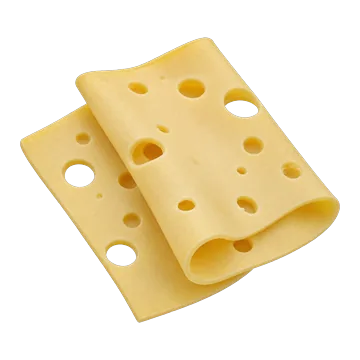 Swiss cheese
Worth knowing
Health Canada, Safer food choices for people at greater risk of food… · grade A ?
How it’s rated
Swiss is named by Health Canada as a firm cheese that may be eaten uncooked when made from pasteurized milk; uncooked cheese made from unpasteurized milk is to be avoided
Intake: not applicable (flag)
Measured on: life-stage: pregnancy, 60+, children 5 and under, weakened immune system
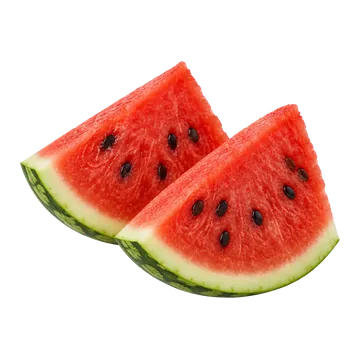 Watermelon, raw
Worth knowing
How it’s rated
Flagged for handling, and for people more vulnerable to Listeria: cut or pre-cut melon is the risk form, since Listeria grows on cut melon at refrigerator temperature; the whole fruit's rind is not eaten. In a CFIA fresh-cut fruit survey (2012-2014), L. monocytogenes was found in 10 of 2,068 samples (0.48%), and a later CFIA report found it in 1 of 1,238. Neither has a watermelon-only row.
Intake: one serving a day, 70 kg adult
Measured on: CFIA targeted surveys interim report, Table 4 (data as of 2024-03-31), 'Fresh-cut fruits (SB3211)': 1,238 samples tested, 1 positive (L. monocytogenes); the report has no watermelon-only row.
 Mozzarella, part-skim
Not rated yet
Health Canada, Safer food choices for people at greater risk of food… · grade A ?
How it’s rated
Mozzarella is not named. Low-moisture mozzarella is firm, fresh mozzarella is soft; Health Canada does not say which list either belongs on
Intake: not applicable (flag)
Measured on: life-stage: pregnancy, 60+, children 5 and under, weakened immune system
 Ice cream, vanilla
Context
CFIA 2017–2020 · grade A ?
How it’s rated
Shown as context, not rated: CFIA found no Listeria monocytogenes in any of 1,186 retail samples of multi-serve dairy ice cream, so the Canadian retail occurrence is zero. The concern is real, though: a 2015 US outbreak linked to Blue Bell Creameries products reached 10 people in 4 states, all 10 were hospitalized and three died in Kansas. CFIA classes ice cream as Category 2B, where Listeria does not grow through the shelf life, but multi-serve tubs that are repeatedly frozen and thawed may support its growth.
Intake: one 188 mL serving
Measured on: CFIA targeted survey 'Bacterial pathogens in dairy ice cream', April 1, 2017 to March 31, 2020: 1,186 retail samples of multi-serve dairy ice cream from 11 Canadian cities (95.9% domestic); single-serve bars, sandwiches and cones not sampled; Listeria monocytogenes tested in all 1,186
 Kefir, low-fat
Context
Health Canada · grade B ?
How it’s rated
Shown as context: retail kefir is made from pasteurised milk. The agency page: "Children, pregnant people, older adults, and people with a weakened immune system should avoid drinking raw or unpasteurized milk", and "Microorganisms such as Salmonella, E. coli, and Listeria have been found in raw and unpasteurized milk."
Intake: one 188 mL (193.1 g) serving a day, 70 kg adult
Measured on: agency advice (context): Health Canada raw or unpasteurized milk page; milk must be pasteurized to be sold in Canada
Sources
- CDC, 2011 Outbreak of Listeria Infections Linked to Whole Cantaloupes from Jensen Farms, Colorado (final update 2012-08-27; archive.cdc.gov)
cdc-2012-jensen-farms-listeria· page · US government work (public domain) - CFIA, Bacterial pathogens in dairy ice cream, targeted survey April 1, 2017 to March 31, 2020
cfia-ice-cream-pathogens-2017-2020· full text read · Government of Canada terms (Crown copyright) - CFIA, Food microbiology - Targeted surveys - Interim report (data as of 2024-03-31), Table 4 (hot peppers line)
cfia-micro-targeted-2020-24· full text read · Open Government Licence - Canada - CFIA, Bacterial Pathogens and Indicators in Ready-to-Eat Meat – April 1, 2018 to March 31, 2021 (Food microbiology – Targeted surveys – Final report)
cfia-rte-meat-2018-21· page · Government of Canada terms (Crown copyright) - CIDRAP News. Texas Listeria outbreak prompts produce recall. 2010-10-21
cidrap-2010-texas-listeria-celery· page · licence not recorded - Health Canada. Raw or unpasteurized milk
hc-raw-milk· full text read · Open Government Licence - Canada 2.0 - Health Canada, Safe food handling for pregnant people (published March 2025; page details 2025-06-05)
hc-safe-food-pregnant· page · Government of Canada terms (Crown copyright; not OGL) - Health Canada, Safe food handling for pregnant people (published March 2025)
hc-safe-food-pregnant-2025· page · Government of Canada terms (Crown copyright; not OGL) - Health Canada, Safer food choices for people at greater risk of food poisoning (page details 2026-09-29)
hc-safer-food-choices· page · Government of Canada terms (Crown copyright; not OGL) - Bohaychuk VM, Gensler GE, King RK, et al. (2006 Sep). Occurrence of pathogens in raw and ready-to-eat meat and poultry products collected from the retail marketplace in Edmonton, Alberta, Canada. J Food Prot · PMID 16995521
pmid:16995521· abstract only · licence not recorded - Salazar JK, Natarajan V, Stewart D, Fay M, Gonsalves LJ, Mhetras T, Sule C, Tortorello ML. Listeria monocytogenes growth kinetics in refrigerated ready-to-eat dips and dip components. PLoS One 2020;15(6):e0235472 · doi:10.1371/journal.pone.0235472 · PMID 32603372
pmid:32603372· abstract only · CC0 (Europe PMC licence field, PMC7326230) - EFSA BIOHAZ Panel. The public health risk posed by Listeria monocytogenes in frozen fruit and vegetables including herbs, blanched during processing. EFSA Journal 2020;18(4):e06092 · doi:10.2903/j.efsa.2020.6092 · PMID 32874300
pmid:32874300· abstract only · CC BY-ND (Europe PMC licence field, PMC7448082)