Caffeine
The stimulant in coffee, tea, cola and chocolate. This limit is for a habit: what you take day after day.
In the body: EFSA’s review, centred on the heart and blood vessels, found no safety concern at up to 400 mg a day, spread through the day, for healthy adults who are not pregnant or breastfeeding.
None of the 9 rated foods and preparations needs a cap on how often you eat it. The closest is Espresso: about 190 g, eaten alone, reaches the daily limit.
Builds up over time. Agencies set an amount you can take in every week, or every day, for life. A food measured against it shows the grams that reach it.
Caffeine is rated three ways: as a daily habit (this page), in one sitting, and in pregnancy. See also: Caffeine in one sitting, Caffeine in pregnancy
The limit
- The agency’s figure400 mg/day
- Basisa level of no safety concern: the habitual intake an agency found raises no concern for the people it names. Not a tolerable daily intake
EFSA 2015: habitual caffeine intake of no safety concern, non-pregnant adults (human studies; EFSA states a level of no concern, not a tolerable daily intake (TDI)) (human level of no concern) - Average adult intake37–319 mg/day EFSA 2015: adult mean daily caffeine intake from all sources, range across 16 Member States (P95 109-742). The range straddles half the value (200 mg), so each end of the range is tested on its own.
- Source ?EFSA 2015
Reviewed foods that carry it
6 reviewed foods carry it, 6 of them rated by dose. A food counts once, as in the foods list: preparations sharing a page (raw and cooked, canned) count once; one with its own page counts apart. Below, one line for each of 9 preparations. 9 of those lines are rated by dose. 11 measurements in all. A preparation measured more than once gets one line, the measurement the dataset leads with or a stricter one, named beside the food; the others fold under it.
Grams to the limit ?
Grams of each food that reach the limit in its window, for a 70 kg adult. Fewest first: those are the foods to watch.
Known background: an average adult already takes in 37–319 mg/day. Where the dataset allows, the grams below are the room left after that intake (the median of the surveys’ averages where EFSA gives one, otherwise the highest); beside each, the same limit counted from zero, the food eaten alone.
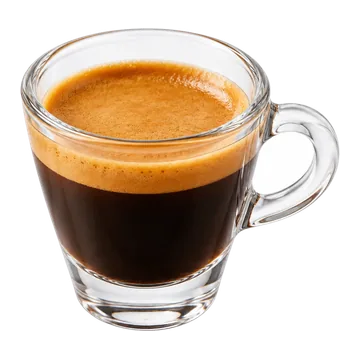 Espresso
Nothing to watch: under the limit for a 30 g serving
190greaches the limit in a dayCounted from zero: this food eaten alone.64.5 mg per 30 g servingUS food database (USDA SR Legacy) · grade B ?
How it’s rated
No cap: average adult intake spans a range, and each end is tested on its own. At the low end a daily serving keeps total intake under the limit; at the high end it adds less than double the average. A 30 mL espresso carries 64.5 mg of caffeine, 16% of the 400 mg a day that EFSA (2015) and Health Canada give for adults; eaten alone, about 189 g a day would reach it. EFSA's country averages for adult intake run from 37 to 319 mg a day, 40-94% of it from coffee, At the low end (37 mg a day) an espresso equals 174% of it, yet total intake stays under the 400 mg limit; at the high end (319 mg) it adds 20%.
Intake: one 30 mL espresso serving (30.4 g) a day, 70 kg adult · Level in the food: 2,120 mg/kg (listed mean, 2 data points, n = 2)
Measured on: FDC SR Legacy 171891 'Beverages, coffee, brewed, espresso, restaurant-prepared' (= CNF 4779, NDB 14210): 212 mg/100 g; serving 30 mL = 30.43 g (CNF density 1.01438)
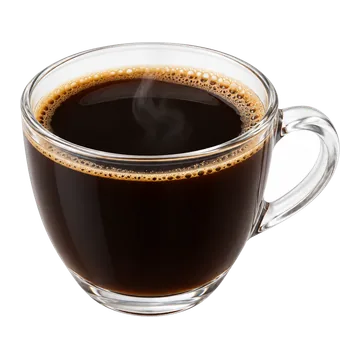 Coffee, brewed
Nothing to watch: under the limit for a 250 g serving
700greaches the limit in a dayCounted from zero: this food eaten alone.142.4 mg per 250 g servingHealth Canada 2025 · grade B ?
How it’s rated
No cap: average adult intake spans a range, and each end is tested on its own. At the low end a daily serving keeps total intake under the limit; at the high end it adds less than double the average. Health Canada lists brewed coffee at 135 mg per 237 mL cup, which is 142.4 mg for the 250 mL cup assumed here: 36% of the 400 mg a day limit for adults (EFSA 2015, Health Canada); eaten alone, about 703 g a day would reach it. EFSA's country averages for adult intake run from 37 to 319 mg a day, 40-94% of it from coffee, At the low end (37 mg a day) a cup equals 385% of it, yet total intake stays under the 400 mg limit; at the high end (319 mg) it adds 45%.
Intake: one 250 mL cup (250.25 g) a day, 70 kg adult · Level in the food: 569 mg/kg (agency average per cup (method not stated))
Measured on: Health Canada 'Caffeine in Foods', Table 2, Coffee, Brewed, 8 oz / 237 mL (1 cup) = 135 mg; 237 mL x 1.00101 g/mL = 237.24 g
2 other measurements of this food
- USDA FoodData Central, brewed coffee, 8 data points
Nothing to watch: under the limit
1,000greaches the limit in a dayCounted from zero: this food eaten alone.100.1 mg per 250 g servingUS food database (USDA SR Legacy) · grade B ?
How it’s rated
No cap: average adult intake spans a range, and each end is tested on its own. At the low end a daily serving keeps total intake under the limit; at the high end it adds less than double the average. A cup carries 100.1 mg of caffeine, 25% of the 400 mg a day that EFSA (2015) and Health Canada give for adults; eaten alone, about 1,000 g a day would reach it. EFSA's country averages for adult intake run from 37 to 319 mg a day, 40-94% of it from coffee, so the cup is already part of that background. At the low end (37 mg a day) a cup equals 271% of it, yet total intake stays under the 400 mg limit; at the high end (319 mg) it adds 31%.
Intake: one 250 mL cup (250.25 g) a day, 70 kg adult · Level in the food: 400 mg/kg (listed mean, 8 data points (range 30-44 mg/100 g), n = 8)
Measured on: FDC SR Legacy 171890 'Beverages, coffee, brewed, prepared with tap water' (= CNF 2873, NDB 14209); 40 mg/100 g; density 1.00101 g/mL (CNF)
- US coffee-shop specialty coffees (McCusker 2003)
Nothing to watch: under the limit
1,000greaches the limit in a dayCounted from zero: this food eaten alone.99.3 mg per 250 g servingPubMed 14607010 · grade A ?
How it’s rated
No cap: average adult intake spans a range, and each end is tested on its own. At the low end a daily serving keeps total intake under the limit; at the high end it adds less than double the average. Brewed specialty coffees from US coffee shops average 188 mg for a 16-oz cup (standard deviation 36), which is 99.3 mg for the 250 mL cup assumed here: 25% of the 400 mg a day limit for adults (EFSA 2015, Health Canada); eaten alone, about 1,008 g a day would reach it. EFSA's country averages for adult intake run from 37 to 319 mg a day, 40-94% of it from coffee, At the low end (37 mg a day) a cup equals 268% of it, yet total intake stays under the 400 mg limit; at the high end (319 mg) it adds 31%.
Intake: one 250 mL cup (250.25 g) a day, 70 kg adult · Level in the food: 396.9 mg/kg (mean of brewed specialty coffees (standard deviation 36 mg per 16 oz))
Measured on: McCusker 2003: brewed specialty coffees from US coffee shops, GC-NPD; 188 mg per 16-oz cup (473.2 mL; x1.00101 = 473.7 g)
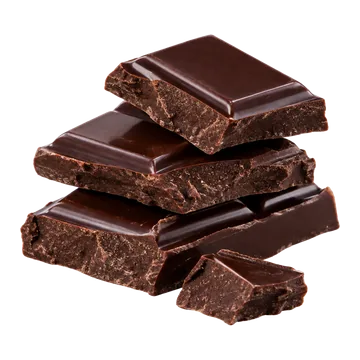 Dark chocolate
Nothing to watch: under the limit for a 40 g serving
760greaches the limit in a dayCounted from zero: this food eaten alone.21 mg per 40 g servingHow it’s rated
No cap: EFSA (2015) gives levels of no safety concern for caffeine from human studies, not a tolerable intake: 400 mg a day for healthy adults, 200 mg in a single dose, and 200 mg a day in pregnancy (Health Canada: 300 mg a day if planning pregnancy, pregnant or breastfeeding). Eaten alone, about 762 g a day would reach 400 mg, 381 g reach 200 mg, and 571 g reach 300 mg. A 40 g serving carries 21.0 mg, 5.2% of 400 mg and 10.5% of 200 mg. Average adult intake from all sources is 37-319 mg/day across 16 Member States; a daily serving adds 56.8% at the low end and 6.6% at the high end.
Intake: one 40 g serving a day, 70 kg adult (Health Canada TRA U.1, 40 g) · Level in the food: 525 mg/kg (single reported value (mean not stated))
Measured on: EFSA NDA 2015 Table 1: 'Dark chocolate' 525 mg/kg, the value used in EFSA's intake assessment (derived from Fitt et al. 2013, UK); other columns: Zucconi 2013 340; Sweden NNT 2008 650. Table units 'mg/L or mg/kg'. Europe.
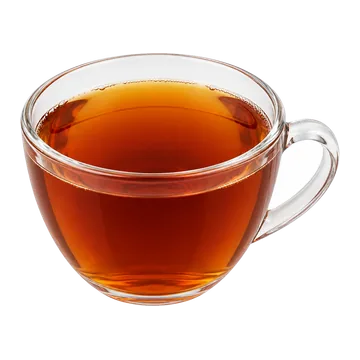 Black tea, brewed
Nothing to watch: under the limit for a 250 g serving
2,000greaches the limit in a dayCounted from zero: this food eaten alone.50 mg per 250 g servingHow it’s rated
No cap: average adult intake spans a range, and each end is tested on its own. At the low end a daily serving keeps total intake under the limit; at the high end it adds less than double the average. A cup carries 50 mg of caffeine (a USDA listing of 20 mg/100 g from 41 data points; Health Canada gives 30 to 50 mg per 237 mL). Against the 400 mg a day that EFSA (2015) and Health Canada give for adults, about 2,000 g a day (8 cups) would reach it, eaten alone; at Health Canada's figures, 1,896 to 3,160 g. At the low end of EFSA's adult averages (37 mg a day) a cup equals 135% of it, yet total intake stays under the 400 mg limit; at the high end (319 mg) it adds 15.7%. Tea is the main caffeine source in Ireland (59%) and the UK (57%).
Intake: one 250 mL (250 g) cup a day, 70 kg adult · Level in the food: 200 µg/g (mean (listing, 20 mg/100 g), n = 41)
Measured on: USDA SR Legacy FDC 173227 'tea, black, brewed, prepared with tap water', caffeine 20 mg/100 g, 41 data points. Health Canada 'Caffeine in Foods': black or green, brewed, 237 ml: 30 to 50 mg (12.7-21.1 mg/100 g)
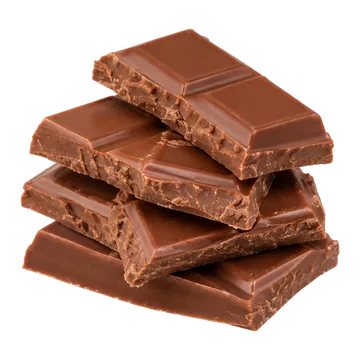 Milk chocolate
Nothing to watch: under the limit for a 40 g serving
More than anyone eatsNo realistic amount reaches the limit.7.3 mg per 40 g servingHow it’s rated
The counted figure is 2,200 g a day, about 55 servings a day.
No cap: EFSA (2015) gives levels of no safety concern for caffeine from human studies, not a tolerable intake: 400 mg a day for healthy adults, 200 mg in a single dose, and 200 mg a day in pregnancy (Health Canada: 300 mg a day if planning pregnancy, pregnant or breastfeeding). Eaten alone, about 2,186 g a day would reach 400 mg, 1,093 g reach 200 mg, and 1,639 g reach 300 mg. A 40 g serving carries 7.3 mg, 1.8% of 400 mg and 3.7% of 200 mg. Average adult intake from all sources is 37-319 mg/day across 16 Member States; a daily serving adds 19.8% at the low end and 2.3% at the high end.
Intake: one 40 g serving a day, 70 kg adult (Health Canada TRA U.1, 40 g) · Level in the food: 183 mg/kg (single reported value (mean not stated))
Measured on: EFSA NDA 2015 (EFSA J 13(5):4102) Table 1: 'Milk chocolate' 183 mg/kg in the Zucconi et al. (2013) column; 150 mg/kg Sweden NNT 2008; the 'used in the intake assessment' cell is empty for milk chocolate (the generic 'chocolate bar' used was 111 mg/kg). Table units 'mg/L or mg/kg'. Europe.
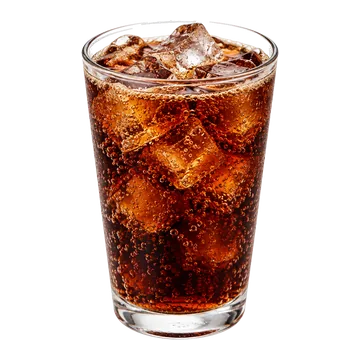 Diet cola
Nothing to watch: under the limit for a 375 g serving
2,800greaches the limit in a dayCounted from zero: this food eaten alone.52.8 mg per 375 g servingHealth Canada 2025 · grade B ?
How it’s rated
No cap: average adult intake spans a range, and each end is tested on its own. At the low end a daily serving keeps total intake under the limit; at the high end it adds less than double the average. Average adult caffeine intake from all sources runs from 36.5 to 319.4 mg a day across countries. At the low end of that range one 375 g serving (52.8 mg, 13% of 400 mg) equals 145% of it, but total intake stays under the limit; at the high end it adds 16.5%. Eaten alone, about 2,843 g a day would reach 400 mg.
Intake: one 375 mL reference amount (375.4 g at 1.00101 g/mL) a day, 70 kg adult · Level in the food: 140.8 mg/L (diet cola, 1.00101 g/mL) (upper end of Health Canada's range for 'Cola beverage, diet' (39 to 50 mg per 355 mL), converted to mg/L; n not stated)
Measured on: Health Canada 'Caffeine in Foods' Table 2 (page details 2025-04-02), average amounts, Canada; method and n not stated
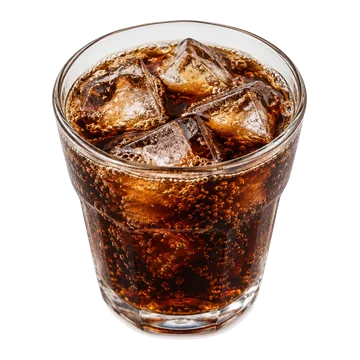 Cola
Nothing to watch: under the limit for a 391 g serving
More than anyone eatsNo realistic amount reaches the limit.48.6 mg per 391 g servingHealth Canada 2025 · grade B ?
How it’s rated
The counted figure is 3,200 g a day, about 8 servings a day.
No cap: average adult intake spans a range, and each end is tested on its own. At the low end a daily serving keeps total intake under the limit; at the high end it adds less than double the average. Average adult caffeine intake from all sources runs from 36.5 to 319.4 mg a day across countries. At the low end of that range one serving equals 133% of it, but total intake stays under the limit; at the high end it adds 15.2%. Health Canada's caffeine table: a regular cola can carries 36 to 46 mg of caffeine; at the upper end, 124.3 µg/g, 3,220 g of cola reach 400 mg in a day (4,110 g at the lower end). One 391 g serving carries 48.6 mg, 12.2% of 400 mg.
Intake: one 375 mL reference amount (391.0 g at 1.0427 g/mL) a day, 70 kg adult · Level in the food: 129.6 mg/L (cola, 1.0427 g/mL) (upper end of Health Canada's average range (36 to 46 mg per 355 mL can))
Measured on: Health Canada 'Caffeine in foods' Table 2 (average amounts): 'Cola beverage, regular', 355 mL (1 can), 36 to 46 mg; upper end stored, converted at 1.0427 g/mL
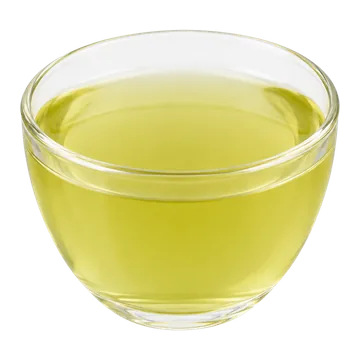 Green tea, brewed
Nothing to watch: under the limit for a 250 g serving
More than anyone eatsNo realistic amount reaches the limit.30 mg per 250 g servingHow it’s rated
The counted figure is 3,300 g a day, about 13 servings a day.
No cap: 400 mg/day is the safe intake for healthy adults (EFSA 2015 and Health Canada). At 120 µg/g (a USDA listing, 6 data points), about 3,333 g a day (13.3 cups) would reach it, and 1,896–3,160 g at Health Canada's 30–50 mg per 237 mL. A 30 mg cup (20–45 mg at USDA minimum and maximum) is 9.4% to 81% of EFSA's adult average intake (319 and 37 mg/day, the two ends of the survey range): at the low end a cup nearly doubles it, yet the total stays far under the limit.
Intake: one 250 mL (250 g) cup a day, 70 kg adult · Level in the food: 120 µg/g (mean (database listing, 12 mg/100 g; 6 data points, min 8, max 18 mg/100 g), n = 6)
Measured on: USDA SR Legacy 2018-04, FDC 171917 'Beverages, tea, green, brewed, regular' (NDB 14278), per 100 g of brewed tea; a USDA listing, not agency survey data for Canadian cups. Health Canada's own range for 'Tea Black or green, brewed' is 30 to 50 mg per 237 mL (0.127-0.211 mg/mL).
- Coffee, brewed, decaffeinated
Nothing to watch: under the limit for a 250 g serving
More than anyone eatsNo realistic amount reaches the limit.2.5 mg per 250 g servingUS food database (USDA SR Legacy) · grade B ?
How it’s rated
The counted figure is 40,000 g a day, about 160 servings a day.
No cap: a decaf cup carries 2.5 mg of caffeine, 1% of the 400 mg a day that EFSA (2015) and Health Canada give for adults, and adds 1% to 7% to the average adult's intake. Eaten alone, about 40,000 g a day would reach the limit. Measured decaf varies: Health Canada gives 3 mg per 237 mL, and a study of ten shops found 0 to 13.9 mg per 16 oz, so a decaf cup is 3-14 mg and the listing's 2.5 mg is the low end.
Intake: one 250 mL cup (250.75 g) a day, 70 kg adult · Level in the food: 10 mg/kg (listed value (no data points recorded))
Measured on: FDC SR Legacy 171889 'Beverages, coffee, brewed, prepared with tap water, decaffeinated' (= CNF 4981, NDB 14201): 1 mg/100 g
Sources
- EFSA NDA Panel (2015) Scientific Opinion on the safety of caffeine. EFSA Journal 13(5):4102 (adopted 23 April 2015) · doi:10.2903/j.efsa.2015.4102
efsa-2015-caffeine· full text read · EFSA (publisher terms) - EFSA. EFSA explains risk assessment: Caffeine (corporate publication summarising the NDA Panel's 2015 scientific opinion on the safety of caffeine) · doi:10.2805/618813
efsa-2015-caffeine-explains· full text read · licence not recorded - USDA FoodData Central, SR Legacy, 2018-04
fdc-sr-legacy-2018-04· dataset · CC0 1.0 (public domain) - Health Canada, Caffeine in Foods (page details 2025-04-02): Table 1 recommended maximum daily intake; Table 2 average caffeine in food and drink
hc-caffeine-foods-2025· full text read · Government of Canada terms - McCusker RR, Goldberger BA, Cone EJ. Caffeine content of specialty coffees. J Anal Toxicol 2003;27:520 · PMID 14607010
pmid:14607010· abstract only · publisher