Tyramine
In the body: With monoamine oxidase inhibitor (MAOI) antidepressants, even a little tyramine can spike blood pressure. In the few studies available, healthy people not taking them showed no harm from 600 mg in one meal.
Not rated by dose: a flag on 8 reviewed foods, among them Milk chocolate, avocado and sauerkraut. The list below has a line for each of 9 preparations.
For some people. Allergies, medicines and medical conditions: a flag for the people the source names, no wider.
See also: Tyramine and MAO inhibitors
A figure for some people, not for everyone
It applies to the people this page is about, as the source names them. Who they are, and any figure for everyone else, is under Basis.
Reviewed foods that carry it
8 reviewed foods carry it; none is rated by dose. A food counts once, as in the foods list: preparations sharing a page (raw and cooked, canned) count once; one with its own page counts apart. Below, one line for each of 9 preparations. 10 measurements in all. A preparation measured more than once gets one line, the measurement the dataset leads with or a stricter one, named beside the food; the others fold under it.
How often you can eat it ?
No food here is rated by dose. Each line says why it’s listed: a flag for the people the source names, advice on handling it, or context.
Flags and context, not rated by dose
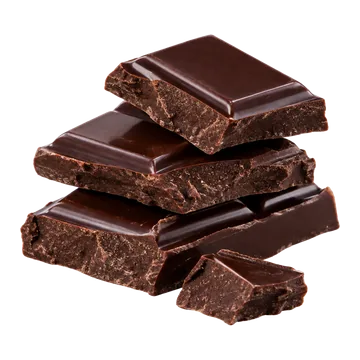 Dark chocolate
Worth knowing
How it’s rated
Flagged for people taking Parnate, as its label puts it: the label lists chocolate among tyramine-rich foods to avoid. Measured tyramine is low: Spanish retail chocolate averaged 3.70 mg/kg (n = 15, maximum 5.81), about 0.15 mg per 40 g, and histamine was not detected; a study of cocoa-based products found 1.7-31.7 µg/g. The label and the measurements disagree in scale; the flag follows the label.
Intake: not applicable (flag)
Measured on: person-specific: people taking an MAO inhibitor (tranylcypromine label); the label names 'chocolate' without a type, so the flag applies to both milk and dark
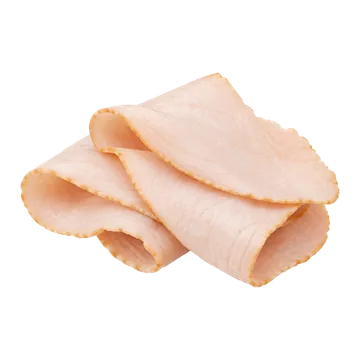 Deli turkey breast
Worth knowing
0.89 mgper servingHow it’s rated
Flagged for people taking monoamine oxidase inhibitor (MAOI) medicines, for whom 6 mg of tyramine per meal is the level of concern. This is a related-food figure: EFSA's 'other meat products' category (mean 16.2 mg/kg, 75 samples, maximum 292). For information, about 370 g at the mean, 90 g at the 95th percentile (67 mg/kg) and 21 g at the maximum would reach 6 mg.
Intake: one 55 g reference serving a day, 70 kg adult · Level in the food: 16.2 mg/kg (mean (n 75; lower bound 16.1, upper bound 16.2; median 4.9, P95 67, max 292); PROXY category, n = 75)
Measured on: EFSA 2011 EU, category 'other meat products (including cooked ham…)'; related food
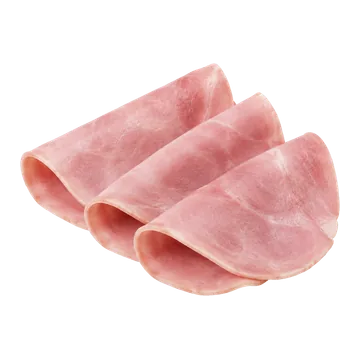 Ham, sliced
Worth knowing
0.89 mgper servingHow it’s rated
Flagged for people taking MAO inhibitors: EFSA (2011) gives 6 mg of tyramine per meal as a no-effect level. For information, 6 mg ÷ 16.2 mg/kg is 370 g at the mean, 90 g at the 95th percentile (67) and 21 g at the maximum (292); a 55 g serving carries 0.89 mg at the mean. These are category figures (cooked ham among other meat products). In the dry-cured ham category, a 55 g serving at the 95th percentile (149 mg/kg) is 8.2 mg, above the 6 mg level.
Intake: one 55 g reference serving a day, 70 kg adult · Level in the food: 16.2 mg/kg (mean (n 75; lower bound 16.1, upper bound 16.2; median 4.9, P95 67, max 292), n = 75)
Measured on: EFSA BIOHAZ 2011 EU occurrence data, category 'other meat products (including cooked ham…)'; a category figure
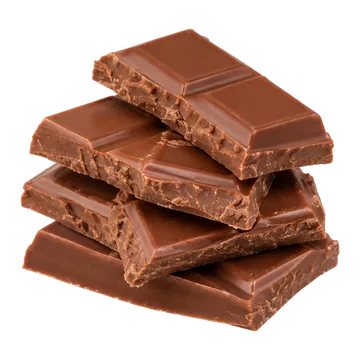 Milk chocolate
Worth knowing
How it’s rated
Flagged for people taking Parnate, as its label puts it: the label lists chocolate among tyramine-rich foods to avoid. Measured tyramine is low: Spanish retail chocolate averaged 3.70 mg/kg (n = 15, maximum 5.81), about 0.15 mg per 40 g, and histamine was not detected; a study of cocoa-based products found 1.7-31.7 µg/g. The label and the measurements disagree in scale; the flag follows the label.
Intake: not applicable (flag)
Measured on: person-specific: people taking an MAO inhibitor (tranylcypromine label); the label names 'chocolate' without a type, so the flag applies to both milk and dark
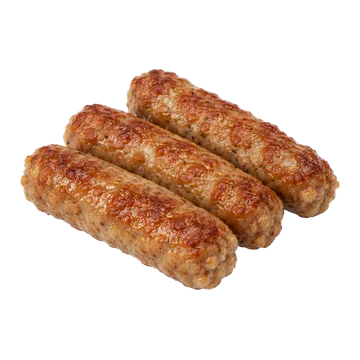 Pork sausage, pan-fried
Worth knowing
0.888 mgper servingtyramine per 55 g at the mean (3.69 mg at P95; 16.1 mg at the max)How it’s rated
Flagged for people on monoamine oxidase inhibitor (MAOI) drugs. EFSA's no-effect level per meal is 600 mg tyramine for people not on MAOIs, 50 mg on third-generation MAOIs, 6 mg on classical MAOIs. Grams use EFSA's 'Other meat products' category (cooked ham, mortadella-type sausages), not fresh sausage: at the mean of 16.15 mg/kg, 371 g reach 6 mg; 90 g at the 95th percentile (67 mg/kg); 21 g at the maximum (292 mg/kg). A 55 g serving at the mean is 0.89 mg, 15% of that; fermented sausage at its mean (136 mg/kg) is 7.5 mg, above it.
Intake: one 55 g cooked serving a meal · Level in the food: 16.15 mg/kg (mean (n = 75; median 4.9, P95 67, max 292), n = 75)
Measured on: EFSA 2011 Table 11, sub-category "Other meat products" (cooked ham, mortadella-type sausages), mean 16.1 (lower bound) to 16.2 (upper bound) mg/kg, 27% non-detect; NOT fresh pork sausage; fermented sausages (n = 369): mean 136, median 99, P95 397, max 1,740 mg/kg
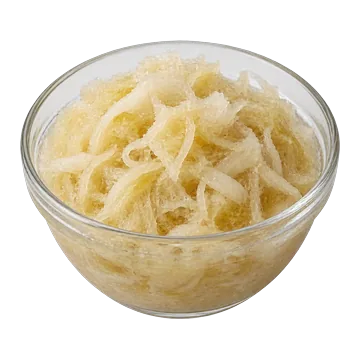 Sauerkraut
Worth knowing
2.53 mgper servinghighest retail sampleopenFDA drug labels: Nardil · grade A ?
How it’s rated
Flagged for people taking monoamine oxidase inhibitor (MAOI) antidepressants: the US labels for phenelzine (Nardil), tranylcypromine (Parnate) and isocarboxazid (Marplan) list sauerkraut among foods to avoid. EFSA no-effect levels per meal: 600 mg tyramine for healthy people, 50 mg on third-generation MAOIs, 6 mg on classical MAOIs. 30 g at the highest retail value carries 2.5 mg (42% of the 6 mg line); 100 g 8.4 mg; 250 g 21 mg.
Intake: one 30 g serving; also 250 g and 100 g · Level in the food: 37.3 mg/kg (mean, n = 14)
Measured on: food-specific, retail: 14 Polish samples 6.87-84.42 mg/kg; Walker 1996 7.75 mg per 250 g; Gajewska 1991 up to 8.0 mg/100 g; EFSA class mean 45-47.4 mg/kg
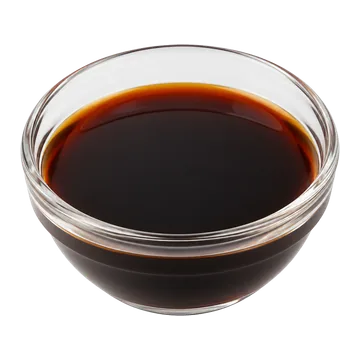 Soy sauce
Worth knowing
How it’s rated
Flagged for people on classical MAO inhibitors: the label of the drug tranylcypromine (Parnate, 2025) names soy sauce among foods to avoid. This is a label warning, not a measured dose; the measured tyramine amounts are on the separate tyramine line.
Intake: one tablespoon (15 mL, 16 g) a day, 70 kg adult
Measured on: Drug label (PARNATE, tranylcypromine), DailyMed SPL set b72d8187..., published 2025-07-07: soy sauce named among foods to avoid.
1 other measurement of this food
- Korea 2021, 10 brands measured
Not rated yet
0.32 mgper servingtyramine per tablespoon (16 g) at the medianHow it’s rated
Not rated: for people on classical MAO inhibitors, EFSA's 2011 no-effect level is 6 mg tyramine per meal. A tablespoon of soy sauce carries 0.32 mg at the median of 10 Korean brands to 1.83 mg at the highest, 5% to 31% of that level, and 52 g of the highest brand would reach it. This is a person-specific threshold, so no grams-to-limit rating is made.
Intake: one tablespoon (15 mL, 16 g) a day, 70 kg adult · Level in the food: 20.05 mg/kg (median of 10 commercial brands (min below quantification limit, max 114.41), n = 10)
Measured on: Same Korean 2021 brand set as the histamine row.
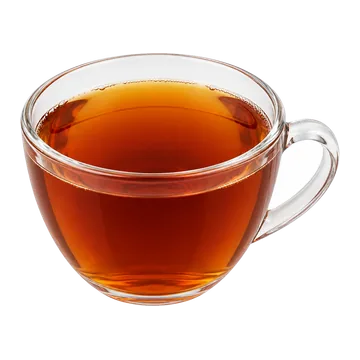 Black tea, brewed
Not rated yet
Sanchez perez2021 · grade B ?
How it’s rated
The two sources disagree and the second does not say whether it is leaf or beverage, so no per-cup figure is made. Person-specific (MAOI) flag only; no MAOI guidance names tea in the sources read.
Intake: one 250 mL (250 g) cup a day, 70 kg adult
Measured on: Spizzirri 2016: tyramine not detected in any of 14 black-tea infusions or leaves. Sanchez-Perez 2021 Table 1: 'Tea' n = 9, tyramine 5.07 (3.80) mg/kg or L, ND-10.08, basis (leaf or beverage) not stated
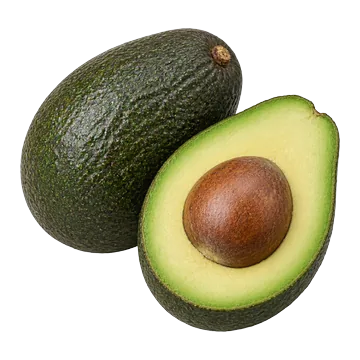 Avocado, raw
Context
PubMed 7297422 · grade B ?
How it’s rated
One case report of hypertensive crisis with tranylcypromine after avocados (Generali 1981, abstract only); measured tyramine is low (~0.05 mg per 30 g, max 5.44 mg/kg), so the mechanism is not established by the amine data.
Intake: not applicable (flag) · Level in the food: 1.81 mg/kg (mean (standard deviation 2.06; max 5.44), n = 5)
Measured on: person-specific: MAO inhibitor therapy
Sources
- PARNATE (tranylcypromine sulfate) tablet, film coated [Advanz Pharma (US) Corp.], DailyMed SPL set id b72d8187-dfcc-4ea0-b5e9-c0be95b69a27, version 11, published Jul 07, 2025, section 7.2 and Table 5
dailymed-parnate· full text read · Product label (manufacturer copyright) - EFSA BIOHAZ Panel (2011) Scientific Opinion on risk based control of biogenic amine formation in fermented foods. EFSA Journal 9(10):2393 · doi:10.2903/j.efsa.2011.2393
efsa-2011-histamine· secondary source · EFSA Journal: CC BY (not re-checked) - openFDA drug labels: Nardil (phenelzine) effective 2025-06-06; tranylcypromine 2024-12-20 and 2025-07-25; Marplan (isocarboxazid) 2026-04-21
openfda-mao-labels· secondary source · US government data (label text: manufacturer copyright) - Generali JA, Hogan LC, McFarlane M. Hypertensive crisis resulting from avocados and a MAO inhibitor. Drug Intell Clin Pharm 1981;15:904-906 · PMID 7297422
pmid:7297422· abstract only · licence not recorded - Sanchez-Perez S, Comas-Baste O, et al. Low-Histamine Diets: Is the Exclusion of Foods Justified by Their Histamine Content? Nutrients 2021;13(5):1395 · doi:10.3390/nu13051395 · PMID 33919293
sanchez-perez2021· full text read · CC BY (PMC open access) - Shi B, Moon B. Monitoring and risk assessment of biogenic amines in Korean commercial fermented seasonings. Heliyon 2023;9:e18906 · doi:10.1016/j.heliyon.2023.e18906 · PMID 37588612
shi2023-korean-seasonings· secondary source · CC BY-NC-ND 4.0