3-MCPD and its esters
Forms when vegetable oils are refined at high heat.
In the body: Acts on the kidneys.
None of the 14 rated foods and preparations needs a cap on how often you eat it. The closest, at a serving a day, is Cakes: it uses about 12% of the room left before the daily limit.
Builds up over time. Agencies set an amount you can take in every week, or every day, for life. A food measured against it shows the grams that reach it.
See also: Glycidyl esters (glycidol)
The limit
- The agency’s figure2 µg/kg body weight/day
- For a 70 kg adult140 µg a day
- Basistolerable daily intake (TDI): what you can take in every day for life
tolerable daily intake (TDI) for 3-MCPD and its fatty acid esters (as 3-MCPD; EFSA 2018 update) - Average adult intake0.2–0.7 µg/kg body weight/day EFSA 2018 update: mean exposure of adults
- Source ?DOI 10.2903/j.efsa.2018.5083
Reviewed foods that carry it
11 reviewed foods carry it, 11 of them rated by dose. A food counts once, as in the foods list: preparations sharing a page (raw and cooked, canned) count once; one with its own page counts apart. Below, one line for each of 14 preparations. 14 of those lines are rated by dose. 22 measurements in all. A preparation measured more than once gets one line, the measurement the dataset leads with or a stricter one, named beside the food; the others fold under it.
Grams to the limit ?
Grams of each food that reach the limit in its window, for a 70 kg adult. Fewest first: those are the foods to watch.
Known background: an average adult already takes in 0.2–0.7 µg/kg body weight/day. Where the dataset allows, the grams below are the room left after that intake (the median of the surveys’ averages where EFSA gives one, otherwise the highest); beside each, the same limit counted from zero, the food eaten alone.
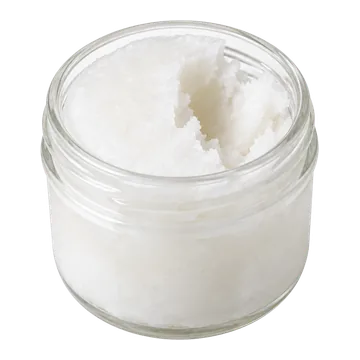 Coconut oil
Nothing to watch: under the limit for a 10 g serving
150greaches the limit in a dayafter the highest average adult intake we found230 g eaten alone, from zeroEating it daily comes to 10 g a day, which stays within the 150 g of room left before the limit.6.08 µg (3-MCPD equivalents) per 10 g servingDOI 10.2903/j.efsa.2016.4426 · grade A ?
How it’s rated
No cap: EFSA's 2018 group tolerable daily intake for 3-MCPD and its fatty acid esters is 2 µg/kg body weight/day, 140 µg/day for 70 kg. EU coconut oil averages 608 µg/kg (EFSA 2016, 204 results, middle bound), so about 230 g a day eaten alone would reach it. One 10.0 g serving carries 6.08 µg, 4.3% of the limit, and adds 12.4–43.4% to the average adult's intake of 0.2–0.7 µg/kg body weight/day (14–49 µg/day), shown, not subtracted.
Intake: one 10.0 g serving a day, 70 kg adult · Level in the food: 608 µg/kg (mean, middle bound (lower bound-upper bound not printed; no left-censored results); median 590; P95 1,050, n = 204)
Measured on: EFSA CONTAM 2016, 3-MCPD from esters (expressed as 3-MCPD), 'Coconut oil/fat*' in the fats-and-oils data set, 204 results from EU Member States 2009-2015, quantification limit (quantification limit) 100-150 µg/kg. Includes refined and probably some virgin oil; the mix is not stated.
1 other measurement of this food
- Health Canada pilot, one refined brand
Nothing to watch: under the limit
280greaches the limit in a dayafter the highest average adult intake we found430 g eaten alone, from zeroEating it daily comes to 10 g a day, which stays within the 280 g of room left before the limit.3.24 µg (3-MCPD equivalents) per 10 g servingDOI 10.1016/j.jfca.2014.09.002 · grade B ?
How it’s rated
No cap: same limit as the EFSA row (140 µg/day for 70 kg), shown beside it. Health Canada's pilot found a mean of 324 ng/g of 3-MCPD in one refined coconut oil brand (315 in 2011, 333 in 2013), only two analyses of one product, so about 432 g a day eaten alone would reach the limit. One 10.0 g serving carries 3.24 µg, 2.3% of the limit, and adds 6.6–23.1% to average intake. Unrefined (virgin) coconut oils had no detectable 3-MCPD.
Intake: one 10.0 g serving a day, 70 kg adult · Level in the food: 324 ng/g (mean of 2 analyses of 1 refined coconut oil (315 in 2011, 333 in 2013), as 3-MCPD equivalents, n = 2)
Measured on: Health Canada pilot survey (Becalski et al. 2015), Ottawa retail, 2011 and 2013; one refined coconut oil brand analysed in each year; GC-MS indirect method; 3-MCPD equivalents (ng/g). Unrefined (virgin) coconut oil A and B: 3-MCPD not detected.
 Soybean oil
Nothing to watch: under the limit for a 9.2 g serving
230greaches the limit in a dayafter the highest average adult intake we found360 g eaten alone, from zeroEating it daily comes to 9 g a day, which stays within the 230 g of room left before the limit.3.629 µg (3-MCPD equivalents) per 9.2 g servingDOI 10.2903/j.efsa.2016.4426 · grade A ?
How it’s rated
No cap: the tolerable daily intake for 3-MCPD and its fatty acid esters is 2 µg/kg body weight/day (EFSA 2018), 140 µg a day for 70 kg. EFSA's European mean for soybean oil (191 results) is 394 µg/kg, so about 355 g of oil eaten alone in a day would reach it (153 g at the 95th percentile, 914 µg/kg). A serving carries 3.63 µg, 2.6% of it, and adds 7.4-25.9% to the average adult's 0.2-0.7 µg/kg body weight/day (14-49 µg/day), which is under half the limit. European data, shown beside the Canadian figures, not averaged with them.
Intake: one 9.21 g (10 mL) serving a day, 70 kg adult · Level in the food: 394 µg/kg (mean (arithmetic), middle bound; median 330; P95 914, n = 191)
Measured on: EFSA 2016 (EFSA J 14(5):4426), Table 11, food group 'Soya bean oil', 3-MCPD (from esters), expressed as free moiety (= 3-MCPD equivalents), European occurrence data 2010-2015, quantification limit (quantification limit) (100-150) µg/kg, 4% left-censored. NOT Canadian: kept beside the Canadian Becalski rows, never averaged.
2 other measurements of this food
- Singapore 2019-20, 36 refined vegetable oils of all kinds
Nothing to watch: under the limit
79greaches the limit in a dayafter the highest average adult intake we found120 g eaten alone, from zeroEating it daily comes to 9 g a day, which stays within the 79 g of room left before the limit.10.61 µg (3-MCPD esters, basis not stated) per 9.2 g servingDOI 10.3390/foods12234331 · grade B ?
How it’s rated
No cap, on a rough figure: the only refined-oil category mean with a sample count comes from Singapore retail (2019-20, 36 refined oils, mean 1,152.1 µg/kg). A serving carries 10.6 µg, 7.6% of the 140 µg tolerable daily intake. The table does not say whether the figure is as 3-MCPD equivalents, so no grams figure is given. It mixes oils, and palm olein and rice bran pull the mean up, so it is not a seed-oil average.
Intake: one 9.21 g (10 mL) serving a day, 70 kg adult · Level in the food: 1,152.1 µg/kg (category mean, n = 36)
Measured on: Shi 2023 (Singapore retail, 2019-20): 'Refined vegetable oils', 36 samples (olive pure and extra light, sunflower, groundnut, coconut, avocado, canola, soybean, grapeseed, rice bran, palm olein, vegetable oil); range 78.0-9,592.7 µg/kg. Unrefined vegetable oils (n = 24): mean 97.4.
- Health Canada pilot, mixed vegetable oils, none detected
Nothing to watch: under the limit
More than anyone eatsNo realistic amount reaches the limit.Eating it daily comes to 9 g a day, which stays within the 910 g of room left before the limit.DOI 10.1016/j.jfca.2014.09.002 · grade B ?
How it’s rated
The counted figure is 910 g a day, about 99 servings a day.
No cap: for two brands of generic mixed vegetable oil, all 4 Health Canada pilot-survey analyses (Ottawa retail, 2011 and 2013) were not detected or under the 100 ng/g reporting limit. Eaten alone, at least 1,400 g a day would reach the tolerable daily intake of 140 µg a day; that is a floor, since every analysis is at or below the reporting limit. It is shown beside brand A (1,220 ng/g, where 115 g would reach the limit) so the category is not read from the worst brand alone. What 'mixed vegetable' contains is not stated, and soybean is not confirmed.
Intake: one 9.21 g (10 mL) serving a day, 70 kg adult · Level in the food: 100 ng/g (upper limit: all 4 analyses (2 brands x 2 years) n.d. or <100, n = 4)
Measured on: Health Canada pilot survey, Ottawa retail, generic 'mixvegetable oil' brands B and C, 2011 and 2013, 3-MCPD equivalents: B n.d. and n.d.; C '<100 (90)' and '<100 (50)'. Composition of 'mixvegetable' not stated (NOT confirmed soybean).
- Canola oil
Nothing to watch: under the limit for a 9.2 g serving
390greaches the limit in a dayafter the highest average adult intake we found610 g eaten alone, from zeroEating it daily comes to 9 g a day, which stays within the 390 g of room left before the limit.2.125 µg (3-MCPD equivalents) per 9.2 g servingDOI 10.1016/j.jfca.2014.09.002 · grade B ?
How it’s rated
No cap: the tolerable daily intake for 3-MCPD and its fatty acid esters is 2 µg/kg body weight/day (EFSA 2018), 140 µg a day for 70 kg. About 607 g of canola oil eaten alone in a day would reach it (461 g at the highest single analysis, 304 ng/g). A serving carries 2.13 µg, 1.5% of it, and adds 4.3-15.2% to the average adult's 0.2-0.7 µg/kg body weight/day (14-49 µg/day), which is under half the limit. Health Canada pilot survey, two brands bought in Ottawa in 2011 and 2013.
Intake: one 9.21 g (10 mL) serving a day, 70 kg adult · Level in the food: 230.75 ng/g (mean of 4 analyses (2 brands x 2 years), n = 4)
Measured on: Health Canada pilot survey, Ottawa retail, canola oil (refined) brands A and B, each bought in 2011 and 2013: 3-MCPD equivalents 191 and 304 (A), 218 and 210 (B) ng/g. Unrefined canola oil A and B: not detected.
1 other measurement of this food
- EFSA 2016, European rapeseed oils 2010-15
Nothing to watch: under the limit
390greaches the limit in a dayafter the highest average adult intake we found600 g eaten alone, from zeroEating it daily comes to 9 g a day, which stays within the 390 g of room left before the limit.2.137 µg (3-MCPD equivalents) per 9.2 g servingDOI 10.2903/j.efsa.2016.4426 · grade A ?
How it’s rated
No cap: the tolerable daily intake for 3-MCPD and its fatty acid esters is 2 µg/kg body weight/day (EFSA 2018), 140 µg a day for 70 kg. EFSA's European mean for rapeseed oil (294 results) is 232 µg/kg, so about 603 g of oil eaten alone in a day would reach it (222 g at the 95th percentile, 630 µg/kg). A serving carries 2.14 µg, 1.5% of it, and adds 4.4-15.3% to the average adult's 0.2-0.7 µg/kg body weight/day (14-49 µg/day), which is under half the limit. European data, shown beside the Canadian figures, not averaged with them. The mean is close to the Canadian retail mean for the same oil type (231 ng/g).
Intake: one 9.21 g (10 mL) serving a day, 70 kg adult · Level in the food: 232 µg/kg (mean (arithmetic), middle bound; median 180; P95 630, n = 294)
Measured on: EFSA 2016 (EFSA J 14(5):4426), Table 11, food group 'Rapeseed oil', 3-MCPD (from esters), expressed as free moiety (= 3-MCPD equivalents), European occurrence data 2010-2015, quantification limit (quantification limit) (100-150) µg/kg, 16% left-censored. NOT Canadian: kept beside the Canadian Becalski rows, never averaged.
 Cookies
Nothing to watch: under the limit for a 30 g serving
460greaches the limit in a dayafter the highest average adult intake we found700 g eaten alone, from zeroEating it daily comes to 30 g a day, which stays within the 460 g of room left before the limit.6 µg per 30 g servingDOI 10.2903/j.efsa.2016.4426 · grade B ?
How it’s rated
No cap: EFSA's group tolerable daily intake for 3-MCPD and its fatty acid esters is 2 µg/kg body weight/day (2018), 140 µg/day. About 700 g of cookies a day would reach it, eaten alone. One 30 g serving is 6.0 µg, 4.3% of the daily limit and +12-43% of the adult mean (EFSA 2018 update, adults: 0.2 to 0.7 µg/kg body weight/day, 14-49 µg/day), short of doubling it. EFSA names cookies a main contributor to 3-MCPD exposure in toddlers and infants; this rating is for adults.
Intake: one 30 g reference serving a day (Health Canada TRA A.10), 70 kg adult · Level in the food: 200 µg/kg (mean, n = 36)
Measured on: category: EFSA 2016 occurrence data set, 'Cookies' (Table 17, total 3-MCPD, European data submitted to 2015), 11% left-censored; as sold
- Sunflower oil
Nothing to watch: under the limit for a 9.2 g serving
More than anyone eatsNo realistic amount reaches the limit.Eating it daily comes to 9 g a day, which stays within the 490 g of room left before the limit.1.702 µg (3-MCPD equivalents) per 9.2 g servingDOI 10.1016/j.jfca.2014.09.002 · grade B ?
How it’s rated
The counted figure is 490 g a day, about 53 servings a day.
No cap: the tolerable daily intake for 3-MCPD and its fatty acid esters is 2 µg/kg body weight/day (EFSA 2018), 140 µg a day for 70 kg. About 758 g of sunflower oil eaten alone in a day would reach it (551 g at the highest single analysis, 254 ng/g). A serving carries 1.70 µg, 1.2% of it, and adds 3.5-12.2% to the average adult's 0.2-0.7 µg/kg body weight/day (14-49 µg/day), which is under half the limit. Health Canada pilot survey, two brands bought in Ottawa in 2011 and 2013. One result under the 100 ng/g reporting limit is used as listed, which changes little.
Intake: one 9.21 g (10 mL) serving a day, 70 kg adult · Level in the food: 184.75 ng/g (mean of 4 analyses (2 brands x 2 years), n = 4)
Measured on: Health Canada pilot survey, Ottawa retail, sunflower oil brands A and B (refined), 2011 and 2013: 245 and <100 (listed 90) for A; 150 and 254 for B. Unrefined sunflower oil A: not detected.
1 other measurement of this food
- EFSA 2016, European sunflower oils 2010-15
Nothing to watch: under the limit
170greaches the limit in a dayafter the highest average adult intake we found270 g eaten alone, from zeroEating it daily comes to 9 g a day, which stays within the 170 g of room left before the limit.4.798 µg (3-MCPD equivalents) per 9.2 g servingDOI 10.2903/j.efsa.2016.4426 · grade A ?
How it’s rated
No cap: the tolerable daily intake for 3-MCPD and its fatty acid esters is 2 µg/kg body weight/day (EFSA 2018), 140 µg a day for 70 kg. EFSA's European mean for sunflower seed oil (596 results) is 521 µg/kg, so about 269 g of oil eaten alone in a day would reach it (93 g at the 95th percentile, 1510 µg/kg). A serving carries 4.80 µg, 3.4% of it, and adds 9.8-34.3% to the average adult's 0.2-0.7 µg/kg body weight/day (14-49 µg/day), which is under half the limit. European data, shown beside the Canadian figures, not averaged with them. The mean is 2.8 times the Canadian retail mean for the same oil type (185 ng/g).
Intake: one 9.21 g (10 mL) serving a day, 70 kg adult · Level in the food: 521 µg/kg (mean (arithmetic), middle bound; median 410; P95 1510, n = 596)
Measured on: EFSA 2016 (EFSA J 14(5):4426), Table 11, food group 'Sunflower seed oil', 3-MCPD (from esters), expressed as free moiety (= 3-MCPD equivalents), European occurrence data 2010-2015, quantification limit (quantification limit) (90-150) µg/kg, 7% left-censored. NOT Canadian: kept beside the Canadian Becalski rows, never averaged.
- Corn oil
Nothing to watch: under the limit for a 9.2 g serving
More than anyone eatsNo realistic amount reaches the limit.Eating it daily comes to 9 g a day, which stays within the 510 g of room left before the limit.1.658 µg (3-MCPD equivalents) per 9.2 g servingDOI 10.1016/j.jfca.2014.09.002 · grade B ?
How it’s rated
The counted figure is 510 g a day, about 55 servings a day.
No cap: the tolerable daily intake for 3-MCPD and its fatty acid esters is 2 µg/kg body weight/day (EFSA 2018), 140 µg a day for 70 kg. About 778 g of corn oil eaten alone in a day would reach it (586 g at the highest single analysis, 239 ng/g). A serving carries 1.66 µg, 1.2% of it, and adds 3.4-11.8% to the average adult's 0.2-0.7 µg/kg body weight/day (14-49 µg/day), which is under half the limit. Health Canada pilot survey, one brand bought in Ottawa in 2011 and 2013.
Intake: one 9.21 g (10 mL) serving a day, 70 kg adult · Level in the food: 180 ng/g (mean of 2 analyses (1 brand x 2 years), n = 2)
Measured on: Health Canada pilot survey, Ottawa retail, ONE corn oil brand, 2011 (239 ng/g) and 2013 (121 ng/g), 3-MCPD equivalents.
1 other measurement of this food
- EFSA 2016, European maize oils 2010-15
Nothing to watch: under the limit
180greaches the limit in a dayafter the highest average adult intake we found280 g eaten alone, from zeroEating it daily comes to 9 g a day, which stays within the 180 g of room left before the limit.4.633 µg (3-MCPD equivalents) per 9.2 g servingDOI 10.2903/j.efsa.2016.4426 · grade A ?
How it’s rated
No cap: the tolerable daily intake for 3-MCPD and its fatty acid esters is 2 µg/kg body weight/day (EFSA 2018), 140 µg a day for 70 kg. EFSA's European mean for maize oil (38 results) is 503 µg/kg, so about 278 g of oil eaten alone in a day would reach it. A serving carries 4.63 µg, 3.3% of it, and adds 9.5-33.1% to the average adult's 0.2-0.7 µg/kg body weight/day (14-49 µg/day), which is under half the limit. European data, shown beside the Canadian figures, not averaged with them. The mean is 2.8 times the Canadian retail mean for the same oil type (180 ng/g).
Intake: one 9.21 g (10 mL) serving a day, 70 kg adult · Level in the food: 503 µg/kg (mean (arithmetic), middle bound; median 430; P95 not reported, n = 38)
Measured on: EFSA 2016 (EFSA J 14(5):4426), Table 11, food group 'Maize oil', 3-MCPD (from esters), expressed as free moiety (= 3-MCPD equivalents), European occurrence data 2010-2015, quantification limit (quantification limit) (100-150) µg/kg, 3% left-censored. NOT Canadian: kept beside the Canadian Becalski rows, never averaged.
 Cakes
Nothing to watch: under the limit for a 80 g serving
660greaches the limit in a dayafter the highest average adult intake we found1,000 g eaten alone, from zeroEating it daily comes to 80 g a day, which stays within the 660 g of room left before the limit.11 µg per 80 g servingDOI 10.2903/j.efsa.2016.4426 · grade B ?
How it’s rated
No cap: EFSA's group tolerable daily intake for 3-MCPD and its fatty acid esters is 2 µg/kg body weight/day (2018), 140 µg/day. About 1,014 g of cake a day would reach it, eaten alone. One 80 g serving is 11.0 µg, 7.9% of the daily limit and +22-79% of the adult mean (EFSA 2018 update, adults: 0.2 to 0.7 µg/kg body weight/day, 14-49 µg/day), so even at the lowest adult mean (79%) it stays under doubling. The data are 13 European samples of rich cakes.
Intake: one 80 g reference serving a day (Health Canada TRA A.6), 70 kg adult · Level in the food: 138 µg/kg (mean, n = 13)
Measured on: category: EFSA 2016 occurrence data set, 'Fatty cake products' (an ad hoc group, Table 17, total 3-MCPD, N 13, European data submitted to 2015), 8% left-censored; as sold
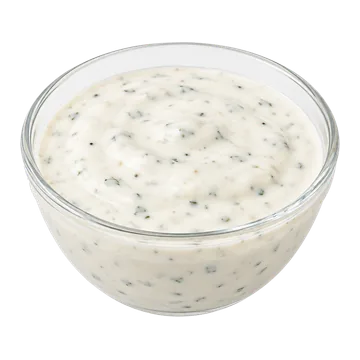 Ranch dressing
Nothing to watch: under the limit for a 30.4 g serving
660greaches the limit in a dayafter the highest average adult intake we found1,000 g eaten alone, from zeroEating it daily comes to 30 g a day, which stays within the 660 g of room left before the limit.4.19 µg (3-MCPD equivalents, EFSA dressing model, 137.9 µg/kg) per 30.4 g servingDOI 10.2903/j.efsa.2016.4426 · grade B ?
How it’s rated
No cap: EFSA's tolerable daily intake for 3-MCPD, esters included, is 2 µg/kg body weight/day (2018). No measured ester level for a dressing was found, so this uses EFSA's own dressing model: dressings with 25-50% oil carry 35% of the oil's level, 137.9 µg/kg, and 1,015 g of dressing a day would reach the limit, eaten alone. The average adult takes in 0.2-0.7 µg/kg body weight/day (EFSA 2018), under half the limit, so a food would have to reach it on its own to matter.
Intake: one 30.4 g (30 mL) serving a day, 70 kg adult · Level in the food: 137.9 µg/kg (EFSA's dressing model: dressings with 25-50% oil carry 35% of the oil's occurrence (0.35 x 394 µg/kg), n = 191)
Measured on: Derived from EFSA 2016 Table 11 'Soya bean oil': N = 191, 4% left-censored, mean 394 µg/kg MB (392-396), median 330, P95 914 (3-MCPD from esters, as free 3-MCPD, Europe 2010-2015), multiplied by 0.4454 = total lipid 44.54 g/100 g in USDA SR 173592 ranch dressing (n = 18, 38.6-48.3). No measured ester figure for a dressing exists in any source opened. Assumes soybean oil as the oil type, provisionally (ranch Foundation fatty acids: linoleic 22.8, alpha-linolenic 3.06 g/100 g, the soybean ratio). Other dressings by the same arithmetic: Caesar (SR 169055, fat 57.85 g, calculated) 227.9 µg/kg; Italian (SR 171019, fat 21.12 g, n = 12) 83.2 µg/kg.
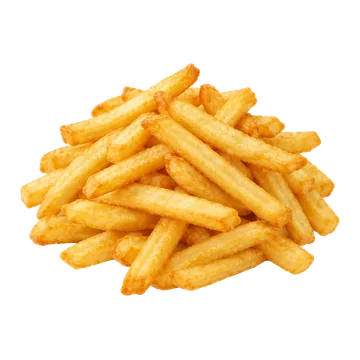 French fries, restaurant
Nothing to watch: under the limit for a 70 g serving
660greaches the limit in a dayafter the highest average adult intake we found1,000 g eaten alone, from zeroEating it daily comes to 70 g a day, which stays within the 660 g of room left before the limit.9.59 µg per 70 g servingHow it’s rated
No cap: EFSA's group tolerable daily intake for 3-MCPD and its fatty acid esters is 2 µg/kg body weight/day (2018), 140 µg/day at 70 kg. A serving carries 9.6 µg, 6.9% of it; about 1,022 g of fries a day would reach it, eaten alone. The average adult takes in 0.2-0.7 µg/kg body weight/day (14-49 µg/day), 10-35% of the limit, and the serving adds 19.6-68.5% to that, under doubling. The fries measured were German food-service fries. The BfR finds the limit not exceeded for adults but clearly exceeded for children and infants in some scenarios.
Intake: one 70 g serving a day (Health Canada TRA P.1), 70 kg adult · Level in the food: 137 µg/kg (mean, n = 67)
Measured on: BfR Opinion 020/2020, project data (SGS, Germany, 2016): 'French fries, outside the home', N = 67; sum of free (26) and bound (111) 3-MCPD; lower bound 137 / upper bound 140 µg/kg; median of bound 90, P95 of bound 469; quantification limit (quantification limit) 5 (free), 10 (esters) µg/kg
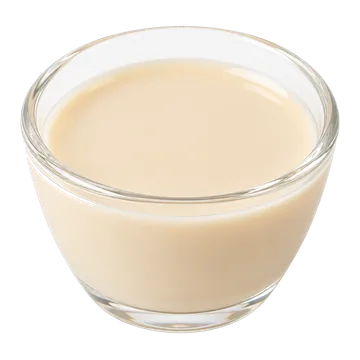 Coffee creamer, flavoured liquid
Nothing to watch: under the limit for a 15.2 g serving
750greaches the limit in a dayafter the highest average adult intake we found1,200 g eaten alone, from zeroEating it daily comes to 15 g a day, which stays within the 750 g of room left before the limit.1.83 µg (3-MCPDEs, basis not stated) per 15.2 g servingDOI 10.3390/foods12234331 · grade B ?
How it’s rated
No cap: this is one Singapore creamer (2023) at 120.7 µg/kg, and the paper does not say whether that is per kg of creamer or of its fat, so no grams figure is given. For orientation only, if it were on the food's weight, about 1,160 g a day would reach the tolerable daily intake (140 µg for 70 kg), and a serving would carry 1.83 µg, 1.3% of it.
Intake: one 15.2 g (15 mL) serving a day, 70 kg adult · Level in the food: 120.7 µg/kg (single sample (n = 1 product), n = 1)
Measured on: Shi et al. 2023 (Foods 12:4331), Singapore retail: one commercial creamer, '3-MCPDEs' 120.7 µg/kg and glycidyl esters 94.9 µg/kg, 100% positive. The paper attributes it to 'refined palm oil stated as one of the ingredients'. Whether the creamer is liquid or powder, and whether the µg/kg refers to the food or to the extracted fat, are not stated; the analyte is expressed in equimolar 3-MCPD (AOCS Cd 29c-13: 'The results were expressed in equimolar quantities of 3-MCPD for 3-MCPDE').
1 other measurement of this food
- EFSA 2016, derived from palm oil and the creamer's fat share
Nothing to watch: under the limit
230greaches the limit in a dayafter the highest average adult intake we found360 g eaten alone, from zeroEating it daily comes to 15 g a day, which stays within the 230 g of room left before the limit.5.98 µg (3-MCPD equivalents, derived) per 15.2 g servingDOI 10.2903/j.efsa.2016.4426 · grade B ?
How it’s rated
No cap. Derived, not measured: EFSA's palm-oil occurrence times the creamer's fat share (palm is the conservative oil; coconut oil would give 1,706 g). The tolerable daily intake for 3-MCPD and its fatty acid esters is 2 µg/kg body weight/day (EFSA 2018), 140 µg for 70 kg; about 356 g of creamer eaten alone would reach it. A serving carries 5.98 µg, 4.3% of it, and adds 12-43% to the average adult's 14-49 µg/day, already under half the limit.
Intake: one 15.2 g (15 mL) serving a day, 70 kg adult · Level in the food: 393.1 µg/kg (DERIVED, not measured: EFSA mean 3-MCPD (from esters) in palm oil/fat x fat share of the creamer (0.135), n = 501)
Measured on: Derived from EFSA 2016 'palm oil/fat': N = 501, <1% left-censored, mean 2,912 µg/kg (lower bound and upper bound equal), 3-MCPD from esters as free 3-MCPD, Europe 2010-2015, x 0.135 = total fat 13.5 g/100 g of SR 173453 (a CALCULATED record). Assumes palm oil, because the only labelled creamer seen (Shi 2023, Singapore) lists refined palm oil; no source says what a Canadian 'non-dairy' creamer contains (were it coconut or palm kernel oil instead, the SR 1068 'lauric acid oil' class: EFSA coconut oil 608, palm kernel oil 624 µg/kg, giving 82.1 µg/kg and 1,706 g). EFSA's average-oil model excluded palm and coconut and does not transfer.
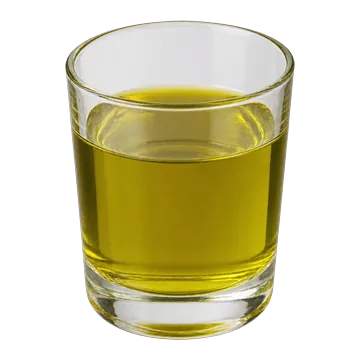 Olive oil, extra virgin
Nothing to watch: under the limit for a 9.1 g serving
More than anyone eatsNo realistic amount reaches the limit.Eating it daily comes to 9 g a day, which stays within the 930 g of room left before the limit.0.883 µg ((unrefined category mean); refined-category mean 10.4) per 9.1 g servingDOI 10.3390/foods12234331 · grade B ?
How it’s rated
The counted figure is 930 g a day, about 103 servings a day.
No cap: EFSA's tolerable daily intake for 3-MCPD is 2 µg/kg body weight/day (EFSA 2018). A serving at the unrefined-oil category mean is 0.63% of it (the refined-oil mean, 7.5%). For olive oil itself, a Spanish study found no detectable levels in extra virgin oil; a Brazilian study found esters from none up to 1.16 mg/kg in 'extra virgin' oil and 0.28-3.77 mg/kg in blended 'olive oil', and read the quantifiable esters in extra virgin oil as likely adulteration with refined oil.
Intake: one 9.07 g (10 mL) serving a day, 70 kg adult · Level in the food: 97.4 micrograms/kg (mean, n = 24)
Measured on: category mean, Singapore market (Shi 2023): UNREFINED vegetable oils n = 24 (include extra virgin olive, sunflower, groundnut, coconut, flaxseed, avocado oil), range <quantification limit (quantification limit)-1171.8; refined vegetable oils n = 36 (include pure and extra-light olive oil) mean 1152.1, range 78.0-9592.7. NOT olive-specific
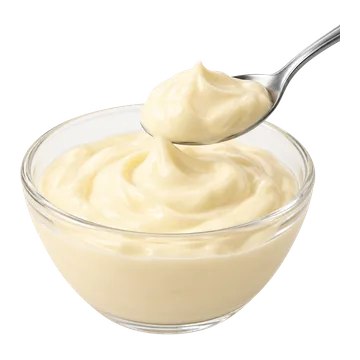 Mayonnaise
Nothing to watch: under the limit for a 14 g serving
More than anyone eatsNo realistic amount reaches the limit.Eating it daily comes to 14 g a day, which stays within the 1,200 g of room left before the limit.1.02 µg (free 3-MCPD) per 14 g servingDOI 10.1016/j.toxrep.2024.101725 · grade A ?
How it’s rated
The counted figure is 1,200 g a day, about 89 servings a day.
No cap: measured in mayonnaise itself, but in Iran, and only the free form of 3-MCPD, not the esters, so it understates the group that the tolerable daily intake (2 µg/kg body weight/day) covers. A serving carries 1.02 µg, 0.7% of the limit, and about 1,909 g a day eaten alone would reach it, an upper figure for that reason. The study's own risk assessment found a hazard index below 1. Shown beside the derived estimate, not averaged with it.
Intake: one 13.95 g (15 mL) serving a day, 70 kg adult · Level in the food: 73.3 µg/kg (mean of six brand means (high-fat mayonnaise; 10 batches per brand per type), n = 60)
Measured on: Taghizadeh et al. 2024 (Toxicology Reports), Iranian market, six brands x 10 batches x 2 types = 120 mayonnaise samples; FREE 3-MCPD only (GC-MS after derivatisation), not the esters. High-fat brand means 0.05, 0.08, 0.04, 0.10, 0.07, 0.10 mg/kg (mean of the six brand means 0.0733 mg/kg = 73.3 µg/kg); low-fat 0.03, 0.04, 0.02, 0.03, 0.05, 0.06 (0.038). Pooling the brand means is our arithmetic, the paper gives per-brand means only. detection limit (detection limit) 0.001 ng/mg.
1 other measurement of this food
- EFSA 2016, derived from soybean oil and fat share
Nothing to watch: under the limit
310greaches the limit in a dayafter the highest average adult intake we found470 g eaten alone, from zeroEating it daily comes to 14 g a day, which stays within the 310 g of room left before the limit.4.11 µg (3-MCPD equivalents, derived) per 14 g servingDOI 10.2903/j.efsa.2016.4426 · grade B ?
How it’s rated
No cap. Derived, not measured: EFSA's soybean-oil occurrence times mayonnaise's fat share, which assumes all the fat is refined oil at the market-average ester level and so errs high. The tolerable daily intake for 3-MCPD and its fatty acid esters is 2 µg/kg body weight/day (EFSA 2018), 140 µg a day for 70 kg; about 475 g of mayonnaise eaten alone would reach it. A serving carries 4.11 µg, 2.9% of it, and adds 8-29% to the average adult's 0.2-0.7 µg/kg body weight/day (14-49 µg/day), which is already under half the limit.
Intake: one 13.95 g (15 mL) serving a day, 70 kg adult · Level in the food: 294.9 µg/kg (DERIVED, not measured: EFSA mean 3-MCPD (from esters) in soya bean oil x fat share of the mayonnaise (0.7485), n = 191)
Measured on: Derived from EFSA 2016 Table 11 'Soya bean oil': N = 191 results, 4% left-censored, mean 394 µg/kg MB (392-396), median 330, P95 914 (3-MCPD from esters, expressed as free 3-MCPD, European market 2010-2015), multiplied by 0.7485 = total lipid 74.85 g/100 g in USDA SR 171009 mayonnaise (n = 12, 74.2-76.3). No measured ester figure for mayonnaise exists in any source opened; EFSA itself modelled mayonnaise as 75% of the oil value (Table B.3). Assumes soybean oil as the oil type (provisional).
 White bread
Nothing to watch: under the limit for a 75 g serving
More than anyone eatsNo realistic amount reaches the limit.Eating it daily comes to 75 g a day, which stays within the 3,100 g of room left before the limit.2.18 µg per 75 g servingDOI 10.2903/j.efsa.2016.4426 · grade B ?
How it’s rated
The counted figure is 3,100 g a day, about 42 servings a day.
No cap: EFSA's group tolerable daily intake for 3-MCPD and its fatty acid esters is 2 µg/kg body weight/day (2018), 140 µg/day. About 4,828 g of bread a day would reach it, eaten alone (6,087 g at the lower bound of the concentration, 3,889 g at the upper). One 75 g serving is 2.18 µg, 1.6% of the daily limit and 4.4-16% of the adult mean (EFSA 2018 update, adults: 0.2 to 0.7 µg/kg body weight/day, 14-49 µg/day). The data are European, not Canadian.
Intake: one 75 g reference serving a day (Health Canada TRA A.1), 70 kg adult · Level in the food: 29 µg/kg (mean, n = 75)
Measured on: category: EFSA 2016 occurrence data set, 'Bread and bread rolls' (Table 17, total 3-MCPD, all bread, European data submitted to 2015), 55% left-censored; as sold
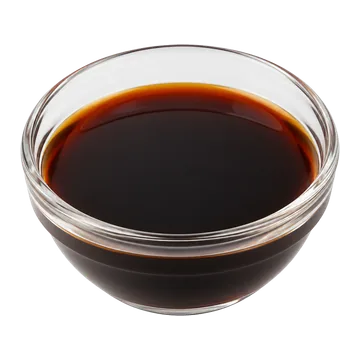 Soy sauce
Nothing to watch: under the limit for a 16 g serving
More than anyone eatsNo realistic amount reaches the limit.Eating it daily comes to 16 g a day, which stays within the 20,000 g of room left before the limit.0.072 µg (per tablespoon, 16 g) per 16 g servingDOI 10.2903/j.efsa.2016.4426 · grade A ?
How it’s rated
The counted figure is 20,000 g a day, about 1,264 servings a day.
No cap: EFSA's 2018 group tolerable daily intake for 3-MCPD is 2 µg/kg body weight/day, 140 µg a day at 70 kg. At the EFSA mean of 4.5 µg/kg for free 3-MCPD in soy sauce (469 results, 85% non-detects; bounds 1.1-7.9), about 31,111 g a day, eaten alone, would reach it, and a tablespoon carries 0.072 µg, 0.05% of the limit. The average hides a skewed spread: acid-hydrolysed-protein sauces in surveys reached up to 189 mg/kg (China, 629 samples), where a tablespoon would carry 3,024 µg, 21.6 times the limit, so product type decides this hazard.
Intake: one tablespoon (15 mL, 16 g) a day, 70 kg adult · Level in the food: 4.5 µg/kg (mean, middle bound (lower bound 1.1; upper bound 7.9); median 5 (0-10); P95 not reported, n = 469)
Measured on: EFSA CONTAM 2016, EFSA chemical occurrence database, FREE 3-MCPD in 'Soy sauce' (469 results, sampling 2009 to 2013, EU Member States; objective 58% / selective 35%; quantification limit (quantification limit) 1-30 µg/kg; 85% left-censored); free form only, so esters are not included (EFSA says the free-form data may underestimate). Mostly reported on whole weight, some on 40% dry matter.
Sources
- BfR. Possible health risks due to high concentrations of 3-MCPD and glycidyl fatty acid esters in certain foods. BfR Opinion No 020/2020, 20 April 2020. · doi:10.17590/20200420-134029
bfr-2020-opinion-020· full text read · BfR - Becalski A, Feng S, Lau BP-Y, Zhao T. A pilot survey of 2- and 3-monochloropropanediol and glycidol fatty acid esters in foods on the Canadian market 2011-2013. J Food Compos Anal 2015;37:58-66 (Health Canada) · doi:10.1016/j.jfca.2014.09.002
doi:10.1016/j.jfca.2014.09.002· full text read · Crown copyright; open-science.canada.ca copy - Taghizadeh SF et al. Analysis of 3-MCPD and 1,3-DCP occurrence in mayonnaise: A probabilistic risk assessment of dietary exposure for Iranians. Toxicol Rep 2024;13:101725 · doi:10.1016/j.toxrep.2024.101725 · PMID 39295953
doi:10.1016/j.toxrep.2024.101725· full text read · CC BY 4.0 - EFSA CONTAM Panel. Risks for human health related to the presence of 3- and 2-monochloropropanediol (MCPD), and their fatty acid esters, and glycidyl fatty acid esters in food. EFSA Journal 2016;14(5):4426 · doi:10.2903/j.efsa.2016.4426
doi:10.2903/j.efsa.2016.4426· abstract only · abstract on a university repository page - EFSA CONTAM Panel. Update of the risk assessment on 3-monochloropropane diol and its fatty acid esters. EFSA Journal 2018;16(1):5083 · doi:10.2903/j.efsa.2018.5083 · PMID 32625654
doi:10.2903/j.efsa.2018.5083· full text read · per PMC record (EFSA Journal, open access) - Shi R, Shen P, Yu W, et al. Occurrence and Dietary Exposure of 3-MCPD Esters and Glycidyl Esters in Domestically and Commercially Prepared Food in Singapore. Foods 2023 · doi:10.3390/foods12234331 · PMID 38231853
doi:10.3390/foods12234331· full text read · CC BY (MDPI; per PMC)