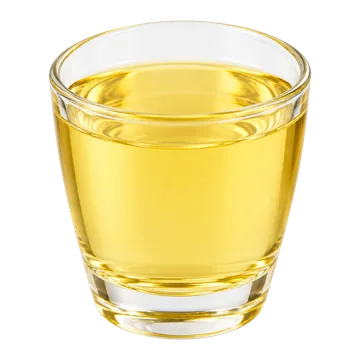
Sunflower oil
Checked by us One serving: 9.2 g (about 2 teaspoons)
Lots of vitamin E.
Nothing to watch for most people.
On warfarin? Keep your vitamin K steady.
Good for
How we counted this
What one serving (9.2 g) gives you.
Your body needs enough of each of these. Past enough, more doesn’t help. Amounts are what the food databases list, not what your body absorbs, unless a row says it was measured.
The words: “A lot” means one serving gives 20% or more of Health Canada’s daily amount, “Some” 10% to 19%, “A little” 2% to 9%, “Almost none” under 2%. Strongest word first; within a word, protein and fibre lead, then the biggest share. ?
A milligram (mg) is a thousandth of a gram, and a microgram (µg) a thousandth of a milligram: 1,000 µg make 1 mg.
- A lot
Vitamin E
Shields the fats in your cells from damage; your immune system uses it too.
Learn more
6.31 mg in one serving: 42% of the 15 mg a day.
Source: How much of it gets in hasn’t been measured for this food yet. NIH Office of Dietary Supplements, vitamin E fact sheet for health professionals
2 more nutrients below “a lot”
- Almost none
Vitamin K1
Your blood needs it to clot.
Learn more
0.64 µg in one serving: 1% of the 120 µg a day men need, 1% of the 90 µg women need. The word follows the smaller share, which is the share of the higher amount. ?
Source: How much of it gets in hasn’t been measured for this food yet. NIH Office of Dietary Supplements, vitamin K fact sheet for health professionals
- Almost none
Omega-3: EPA + DHA
Long-chain omega-3s, built into your cell membranes. DHA is concentrated in your brain and retinas.
Learn more
0.22 mg in one serving: under 1% of the 250 mg a day.
Health Canada sets no daily amount for these fats, so the daily figure here is the European Food Safety Authority’s.
Source: How much of it gets in hasn’t been measured for this food yet. NIH Office of Dietary Supplements, omega-3 fatty acids fact sheet for health professionals
Missing from our databases for this food, so left out, not counted as zero: protein, fibre, vitamin A, vitamin C, thiamin, riboflavin, niacin, vitamin B6, folate, vitamin B12, calcium, iron, magnesium, potassium, zinc, selenium, vitamin D, choline and omega-3: ALA.
Watch out
How we counted this
You’d need about 53 servings in a day of this food alone to use up what the highest average adult intake we found leaves under the limit.
Learn more
One serving carries 1.7 µg (3-MCPD equivalents)
How we got this
A serving a day adds 3.5–12% to what an average adult already takes in: a share of that intake, not of the limit. With that serving every day, an average adult would be at about 36–39% of the limit.
The highest average adult intake we found already takes up about 35% of the limit. One serving a day fits in the room left.
Counted from zero, with no allowance for what adults already take in from other food, 760 g a day would reach the limit.
Why this rating: Eating it daily comes to 9 g a day, which stays within the 490 g of room left before the limit.
The dataset’s rating: Nothing to watch: under the limit
No cap: the tolerable daily intake for 3-MCPD and its fatty acid esters is 2 µg/kg body weight/day (EFSA 2018), 140 µg a day for 70 kg. About 758 g of sunflower oil eaten alone in a day would reach it (551 g at the highest single analysis, 254 ng/g). A serving carries 1.70 µg, 1.2% of it, and adds 3.5-12.2% to the average adult's 0.2-0.7 µg/kg body weight/day (14-49 µg/day), which is under half the limit. Health Canada pilot survey, two brands bought in Ottawa in 2011 and 2013. One result under the 100 ng/g reporting limit is used as listed, which changes little.
1 other measurement of this food, same verdict
You’d need about 18 servings in a day of this food alone to use up what the highest average adult intake we found leaves under the limit.
Learn more
One serving carries 4.8 µg (3-MCPD equivalents)
How we got this
A serving a day adds 9.8–34% to what an average adult already takes in: a share of that intake, not of the limit. With that serving every day, an average adult would be at about 38–47% of the limit.
The highest average adult intake we found already takes up about 35% of the limit. One serving a day fits in the room left.
Counted from zero, with no allowance for what adults already take in from other food, 270 g a day would reach the limit.
Why this rating: Eating it daily comes to 9 g a day, which stays within the 170 g of room left before the limit.
The dataset’s rating: Nothing to watch: under the limit
No cap: the tolerable daily intake for 3-MCPD and its fatty acid esters is 2 µg/kg body weight/day (EFSA 2018), 140 µg a day for 70 kg. EFSA's European mean for sunflower seed oil (596 results) is 521 µg/kg, so about 269 g of oil eaten alone in a day would reach it (93 g at the 95th percentile, 1510 µg/kg). A serving carries 4.80 µg, 3.4% of it, and adds 9.8-34.3% to the average adult's 0.2-0.7 µg/kg body weight/day (14-49 µg/day), which is under half the limit. European data, shown beside the Canadian figures, not averaged with them. The mean is 2.8 times the Canadian retail mean for the same oil type (185 ng/g).
Glycidyl esters (glycidol)
Nothing to watchHealth Canada pilot, Ottawa retail sunflower oils, 2011-13You’d need about 5 servings a day, every day, of this food alone to double the glycidyl esters (glycidol) an average adult already gets. No dose is known to be safe, so doubling is where we flag.
Learn more
A serving a day adds 14–21% to what an average adult already takes in. There is no limit to take a share of.
One serving carries 2.88 µg (glycidol equivalents)
How we got this
The dataset’s rating: Nothing to watch: doesn’t double average intake
No cap: glycidol is a genotoxic carcinogen with no safe threshold, judged by margin of exposure (EFSA 2016: T25 10.2 mg/kg body weight/day; a margin of 25,000 or higher is low concern). A serving carries 2.88 µg, 0.0412 µg/kg body weight/day, a margin of 247,682 on its own. The average adult takes in 0.2-0.3 µg/kg body weight/day (EFSA 2016, middle bound), a margin of 51,000 to 34,000, and a serving adds 14-21% to it, short of doubling (the highest single analysis, 452 ng/g, would add up to 30%). Health Canada pilot survey, Ottawa retail, 2011 and 2013.
1 other measurement of this food, same verdict
You’d need about 6 servings a day, every day, of this food alone to double the glycidyl esters (glycidol) an average adult already gets. No dose is known to be safe, so doubling is where we flag.
Learn more
A serving a day adds 12–18% to what an average adult already takes in. There is no limit to take a share of.
One serving carries 2.48 µg (glycidol equivalents)
How we got this
The dataset’s rating: Nothing to watch: doesn’t double average intake
No cap: glycidol is a genotoxic carcinogen with no safe threshold, judged by margin of exposure (EFSA 2016: T25 10.2 mg/kg body weight/day; a margin of 25,000 or higher is low concern). A serving of sunflower seed oil carries 2.48 µg, 0.035 µg/kg body weight/day, a margin of 288,195 on its own. The average adult takes in 0.2-0.3 µg/kg body weight/day (EFSA 2016, middle bound), a margin of 51,000 to 34,000, and a serving adds 12-18% to it, short of doubling. European data (542 results, 20% below detection), shown beside the Canadian figures, not averaged with them.
Checked for mineral oil aromatic hydrocarbons: fine at normal amounts.
Mineral oil aromatic hydrocarbons (MOAH)
Nothing to watchRated without the share a serving adds to an average adult’s intake: the dataset stores no figure to print for this measurement.
Learn more
How we got this
The dataset’s rating: Nothing to watch: rated by margin of exposure
No cap: MOAH (mineral oil aromatic hydrocarbons) has no safe threshold and is judged by margin of exposure, using EFSA 2023's surrogate reference point of 0.49 mg/kg body weight/day for the 3+-ring fraction; a margin of 10,000 or higher is low concern. A serving carries 1.4-14.8 µg MOAH. If 10% of MOAH is 3+-ring (EFSA's first scenario) the serving's own margin is 23,132 at the upper bound; at 1% (second scenario), 231,318. Against EFSA's adult average total-MOAH exposure of 0.0004 to 0.006 mg/kg body weight/day, a serving adds 0.33-53.0%, short of doubling; the range is wide because it pairs the serving's lowest figure with the highest background and its highest with the lowest. European data (edible sunflower oil, 519 samples, 92% below detection), not Canadian retail.
For some people
Flagged for people on warfarin, as the label puts it: keep vitamin K intake consistent, not avoid. Sunflower oil is a poor source of vitamin K1 next to soybean and canola oils, which the Institute of Medicine puts above 100 µg per 100 g (2001). A serving of sunflower oil carries about 0.6 µg of vitamin K1, against an adequate intake of 120 µg a day for men and 90 for women. A flag for consistency, not a cap.
Learn more
Eat a steady amount, not none. This line goes on every food whose serving gives 10% or more of the daily vitamin K; a few foods below that carry it too, where a source names them. One serving here has about 0.6 µg of vitamin K1.
Also checked (nothing to act on) · 2
Noted for context, or not measured in this food yet.
Context hazard (EFSA 2023 no-observed-adverse-effect level (NOAEL) 236 mg/kg body weight/day; 'present dietary exposure to mineral oil saturated hydrocarbons (MOSH) does not raise concern'): a serving = 0.035-0.062 mg = 0.00050-0.00088 mg/kg body weight/day; MoE against the NOAEL 267,717-473,272. No cap.
Shown as context, not rated: WHO (2023) advises no more than 1% of total energy from trans fat, and Health Canada's public-health objective is less than 1%; on a 2,000 kcal diet that is 2.22 g a day. A serving carries 0.011 g, 0.5% of it. This is the trans fat formed when oil is refined, not from partially hydrogenated oil; Health Canada's 2017 notice puts non-hydrogenated refined oils at generally less than 2% of the oil.
Better options
How we counted this
“Better” here always means better at something the row names: more of one nutrient, more nutrients per serving, or the goal you pick. It never means better in every way.
Every amount below is for the same weight, 9.2 g, the size of one serving of this food, so a swap compares like with like. A serving of another food can be bigger or smaller.
A food is listed only if it gives clearly more: at least a fifth more than this food, and at least 10% of the daily amount more.
More of what it’s good for
For vitamin E: no other butters, oils and dressings we’ve checked give clearly more, in the same 9.2 g.
Not enough nutrient values for this food to compare it.
Your goal
Your goal changes only this list, not what the food gives you or what to watch.
Not enough nutrient values for this food to compare it.
Not enough nutrient values for this food to compare it.
Bring a tracker export or describe your usual week. The same rules check all of it.
The numbers
Open every value
Name in the database: Vegetable oil, sunflower (refined)
How the serving was set: 10 mL = 9.21 g (Health Canada TRA H.2 'Vegetable oil, including liquid coconut oil', 10 mL, label '2 tsp (10 mL)'; grams from USDA SR Legacy household measures: 1 cup = 218 g, 1 US cup = 236.588 mL)
Listed nutrients, per 100 g
For each nutrient, the value this page uses is marked “used”. A row marked “second database” is another database’s figure for a matching food, kept so you can see how far databases disagree (they can differ in the samples analysed, lab methods and rounding). Its own cells are worked out from it, but none of the page’s words or scores are.
| Nutrient | Per serving | How | Source | Grade | |
|---|---|---|---|---|---|
| Omega-3: EPA + DHA | 0.002 g | 0 g | listed used | US food database (USDA Foundation Foods) #1750349 | C |
| Fatty acids, total saturated | 8.991 g | 0.83 g | listed used | US food database (USDA Foundation Foods) #1750349 | C |
| Vitamin E | 68.48 mg | 6.31 mg | listed used | US food database (USDA Foundation Foods) #1750349 | C |
| 49.22 mg | 4.53 mg | second database · not used | UK food tables (CoFID 2021) #17-045 | C | |
| Vitamin K1 | 6.925 µg | 0.64 µg | listed used | US food database (USDA Foundation Foods) #1750349 | C |
| 6.3 µg | 0.58 µg | second database · not used | UK food tables (CoFID 2021) #17-045 | C |
| Nutrient | Per 100 g | Per serving | How | Source | Grade |
|---|---|---|---|---|---|
| Total fat (NLEA) | 93.187 g | 8.58 g | listed used | US food database (USDA Foundation Foods) #1750349 | C |
| Tocopherol, beta | 2.544 mg | 0.23 mg | listed used | US food database (USDA Foundation Foods) #1750349 | C |
| Tocopherol, gamma | 0.927 mg | 0.09 mg | listed used | US food database (USDA Foundation Foods) #1750349 | C |
| Tocopherol, delta | 0 mg | 0 mg | listed used | US food database (USDA Foundation Foods) #1750349 | C |
| Tocotrienol, alpha | 0 mg | 0 mg | listed used | US food database (USDA Foundation Foods) #1750349 | C |
| Tocotrienol, beta | 0 mg | 0 mg | listed used | US food database (USDA Foundation Foods) #1750349 | C |
| Tocotrienol, gamma | 0 mg | 0 mg | listed used | US food database (USDA Foundation Foods) #1750349 | C |
| Tocotrienol, delta | 0 mg | 0 mg | listed used | US food database (USDA Foundation Foods) #1750349 | C |
| Vitamin K (Menaquinone-4) | 0 µg | 0 µg | listed used | US food database (USDA Foundation Foods) #1750349 | C |
| Vitamin K (Dihydrophylloquinone) | 0 µg | 0 µg | listed used | US food database (USDA Foundation Foods) #1750349 | C |
| Fatty acids, total trans | 0.116 g | 0.01 g | listed used | US food database (USDA Foundation Foods) #1750349 | C |
| SFA 4:0 | 0.004 g | 0 g | listed used | US food database (USDA Foundation Foods) #1750349 | C |
| SFA 6:0 | 0 g | 0 g | listed used | US food database (USDA Foundation Foods) #1750349 | C |
| SFA 8:0 | 0.001 g | 0 g | listed used | US food database (USDA Foundation Foods) #1750349 | C |
| SFA 10:0 | 0.005 g | 0 g | listed used | US food database (USDA Foundation Foods) #1750349 | C |
| SFA 12:0 | 0.004 g | 0 g | listed used | US food database (USDA Foundation Foods) #1750349 | C |
| SFA 14:0 | 0.049 g | 0 g | listed used | US food database (USDA Foundation Foods) #1750349 | C |
| SFA 16:0 | 4.477 g | 0.41 g | listed used | US food database (USDA Foundation Foods) #1750349 | C |
| SFA 18:0 | 2.987 g | 0.28 g | listed used | US food database (USDA Foundation Foods) #1750349 | C |
| SFA 20:0 | 0.274 g | 0.03 g | listed used | US food database (USDA Foundation Foods) #1750349 | C |
| PUFA 20:4 | 0.002 g | 0 g | listed used | US food database (USDA Foundation Foods) #1750349 | C |
| PUFA 22:6 n-3 (DHA) | 0 g | 0 g | listed used | US food database (USDA Foundation Foods) #1750349 | C |
| SFA 22:0 | 0.82 g | 0.08 g | listed used | US food database (USDA Foundation Foods) #1750349 | C |
| PUFA 18:4 | 0 g | 0 g | listed used | US food database (USDA Foundation Foods) #1750349 | C |
| PUFA 20:5 n-3 (EPA) | 0.002 g | 0 g | listed used | US food database (USDA Foundation Foods) #1750349 | C |
| PUFA 22:5 n-3 (DPA) | 0 g | 0 g | listed used | US food database (USDA Foundation Foods) #1750349 | C |
| TFA 14:1 t | 0 g | 0 g | listed used | US food database (USDA Foundation Foods) #1750349 | C |
| Stigmasterol | 29.22 mg | 2.69 mg | listed used | US food database (USDA Foundation Foods) #1750349 | C |
| Campesterol | 33.9 mg | 3.12 mg | listed used | US food database (USDA Foundation Foods) #1750349 | C |
| Brassicasterol | 0 mg | 0 mg | listed used | US food database (USDA Foundation Foods) #1750349 | C |
| Beta-sitosterol | 204.6 mg | 18.84 mg | listed used | US food database (USDA Foundation Foods) #1750349 | C |
| Campestanol | 0.042 mg | 0 mg | listed used | US food database (USDA Foundation Foods) #1750349 | C |
| Fatty acids, total monounsaturated | 63.37 g | 5.84 g | listed used | US food database (USDA Foundation Foods) #1750349 | C |
| Fatty acids, total polyunsaturated | 20.71 g | 1.91 g | listed used | US food database (USDA Foundation Foods) #1750349 | C |
| Beta-sitostanol | 3.364 mg | 0.31 mg | listed used | US food database (USDA Foundation Foods) #1750349 | C |
| Delta-5-avenasterol | 11.41 mg | 1.05 mg | listed used | US food database (USDA Foundation Foods) #1750349 | C |
| SFA 15:0 | 0.018 g | 0 g | listed used | US food database (USDA Foundation Foods) #1750349 | C |
| SFA 17:0 | 0.029 g | 0 g | listed used | US food database (USDA Foundation Foods) #1750349 | C |
| SFA 24:0 | 0.31 g | 0.03 g | listed used | US food database (USDA Foundation Foods) #1750349 | C |
| TFA 16:1 t | 0 g | 0 g | listed used | US food database (USDA Foundation Foods) #1750349 | C |
| TFA 18:1 t | 0.035 g | 0 g | listed used | US food database (USDA Foundation Foods) #1750349 | C |
| TFA 22:1 t | 0 g | 0 g | listed used | US food database (USDA Foundation Foods) #1750349 | C |
| TFA 18:2 t not further defined | 0.082 g | 0.01 g | listed used | US food database (USDA Foundation Foods) #1750349 | C |
| PUFA 18:2 CLAs | 0.029 g | 0 g | listed used | US food database (USDA Foundation Foods) #1750349 | C |
| MUFA 24:1 c | 0.012 g | 0 g | listed used | US food database (USDA Foundation Foods) #1750349 | C |
| PUFA 20:2 n-6 c,c | 0.005 g | 0 g | listed used | US food database (USDA Foundation Foods) #1750349 | C |
| MUFA 16:1 c | 0.122 g | 0.01 g | listed used | US food database (USDA Foundation Foods) #1750349 | C |
| MUFA 18:1 c | 62.93 g | 5.8 g | listed used | US food database (USDA Foundation Foods) #1750349 | C |
| PUFA 18:2 n-6 c,c | 20.53 g | 1.89 g | listed used | US food database (USDA Foundation Foods) #1750349 | C |
| MUFA 22:1 c | 0.006 g | 0 g | listed used | US food database (USDA Foundation Foods) #1750349 | C |
| PUFA 18:3 n-6 c,c,c | 0 g | 0 g | listed used | US food database (USDA Foundation Foods) #1750349 | C |
| MUFA 17:1 | 0.039 g | 0 g | listed used | US food database (USDA Foundation Foods) #1750349 | C |
| Fatty acids, total trans-monoenoic | 0.035 g | 0 g | listed used | US food database (USDA Foundation Foods) #1750349 | C |
| Fatty acids, total trans-polyenoic | 0 g | 0 g | listed used | US food database (USDA Foundation Foods) #1750349 | C |
| MUFA 15:1 | 0 g | 0 g | listed used | US food database (USDA Foundation Foods) #1750349 | C |
| PUFA 22:2 | 0.001 g | 0 g | listed used | US food database (USDA Foundation Foods) #1750349 | C |
| SFA 11:0 | 0 g | 0 g | listed used | US food database (USDA Foundation Foods) #1750349 | C |
| PUFA 18:3 n-3 c,c,c (ALA) | 0.163 g | 0.01 g | listed used | US food database (USDA Foundation Foods) #1750349 | C |
| PUFA 20:3 n-3 | 0 g | 0 g | listed used | US food database (USDA Foundation Foods) #1750349 | C |
| PUFA 20:3 n-6 | 0 g | 0 g | listed used | US food database (USDA Foundation Foods) #1750349 | C |
| PUFA 22:4 | 0.001 g | 0 g | listed used | US food database (USDA Foundation Foods) #1750349 | C |
| PUFA 20:3 n-9 | 0 g | 0 g | listed used | US food database (USDA Foundation Foods) #1750349 | C |
| SFA 5:0 | 0 g | 0 g | listed used | US food database (USDA Foundation Foods) #1750349 | C |
| SFA 7:0 | 0 g | 0 g | listed used | US food database (USDA Foundation Foods) #1750349 | C |
| SFA 9:0 | 0 g | 0 g | listed used | US food database (USDA Foundation Foods) #1750349 | C |
| SFA 21:0 | 0.013 g | 0 g | listed used | US food database (USDA Foundation Foods) #1750349 | C |
| SFA 23:0 | 0 g | 0 g | listed used | US food database (USDA Foundation Foods) #1750349 | C |
| MUFA 12:1 | 0 g | 0 g | listed used | US food database (USDA Foundation Foods) #1750349 | C |
| MUFA 14:1 c | 0 g | 0 g | listed used | US food database (USDA Foundation Foods) #1750349 | C |
| MUFA 17:1 c | 0.039 g | 0 g | listed used | US food database (USDA Foundation Foods) #1750349 | C |
| MUFA 20:1 c | 0.256 g | 0.02 g | listed used | US food database (USDA Foundation Foods) #1750349 | C |
| TFA 20:1 t | 0 g | 0 g | listed used | US food database (USDA Foundation Foods) #1750349 | C |
| MUFA 22:1 n-9 | 0.006 g | 0 g | listed used | US food database (USDA Foundation Foods) #1750349 | C |
| MUFA 22:1 n-11 | 0 g | 0 g | listed used | US food database (USDA Foundation Foods) #1750349 | C |
| PUFA 18:2 c | 20.559 g | 1.89 g | listed used | US food database (USDA Foundation Foods) #1750349 | C |
| TFA 18:2 t | 0.082 g | 0.01 g | listed used | US food database (USDA Foundation Foods) #1750349 | C |
| PUFA 18:3 c | 0.163 g | 0.02 g | listed used | US food database (USDA Foundation Foods) #1750349 | C |
| TFA 18:3 t | 0 g | 0 g | listed used | US food database (USDA Foundation Foods) #1750349 | C |
| PUFA 20:3 c | 0 g | 0 g | listed used | US food database (USDA Foundation Foods) #1750349 | C |
| PUFA 22:3 | 0.004 g | 0 g | listed used | US food database (USDA Foundation Foods) #1750349 | C |
| PUFA 20:4c | 0.002 g | 0 g | listed used | US food database (USDA Foundation Foods) #1750349 | C |
| PUFA 20:5c | 0.002 g | 0 g | listed used | US food database (USDA Foundation Foods) #1750349 | C |
| PUFA 22:5 c | 0 g | 0 g | listed used | US food database (USDA Foundation Foods) #1750349 | C |
| PUFA 22:6 c | 0 g | 0 g | listed used | US food database (USDA Foundation Foods) #1750349 | C |
| PUFA 20:2 c | 0.005 g | 0 g | listed used | US food database (USDA Foundation Foods) #1750349 | C |
| Delta-7-Stigmastenol | 59.13 mg | 5.45 mg | listed used | US food database (USDA Foundation Foods) #1750349 | C |
| Stigmastadiene | 0 mg | 0 mg | listed used | US food database (USDA Foundation Foods) #1750349 | C |
Change the amount to rescale the first column. Nutrients a database doesn't list are missing, not zero.
Hazard rows as the dataset rates them
- Glycidyl esters (glycidol) · Nothing to watch: doesn’t double average intake · No cap: glycidol is a genotoxic carcinogen with no safe threshold, judged by margin of exposure (EFSA 2016: T25 10.2 mg/kg body weight/day; a margin of 25,000 or higher is low concern). A serving carries 2.88 µg, 0.0412 µg/kg body weight/day, a margin of 247,682 on its own. The average adult takes in 0.2-0.3 µg/kg body weight/day (EFSA 2016, middle bound), a margin of 51,000 to 34,000, and a serving adds 14-21% to it, short of doubling (the highest single analysis, 452 ng/g, would add up to 30%). Health Canada pilot survey, Ottawa retail, 2011 and 2013. · DOI 10.1016/j.jfca.2014.09.002 · B
- Glycidyl esters (glycidol) · Nothing to watch: doesn’t double average intake · No cap: glycidol is a genotoxic carcinogen with no safe threshold, judged by margin of exposure (EFSA 2016: T25 10.2 mg/kg body weight/day; a margin of 25,000 or higher is low concern). A serving of sunflower seed oil carries 2.48 µg, 0.035 µg/kg body weight/day, a margin of 288,195 on its own. The average adult takes in 0.2-0.3 µg/kg body weight/day (EFSA 2016, middle bound), a margin of 51,000 to 34,000, and a serving adds 12-18% to it, short of doubling. European data (542 results, 20% below detection), shown beside the Canadian figures, not averaged with them. · DOI 10.2903/j.efsa.2016.4426 · A
- 3-MCPD and its esters · Nothing to watch: under the limit · No cap: the tolerable daily intake for 3-MCPD and its fatty acid esters is 2 µg/kg body weight/day (EFSA 2018), 140 µg a day for 70 kg. About 758 g of sunflower oil eaten alone in a day would reach it (551 g at the highest single analysis, 254 ng/g). A serving carries 1.70 µg, 1.2% of it, and adds 3.5-12.2% to the average adult's 0.2-0.7 µg/kg body weight/day (14-49 µg/day), which is under half the limit. Health Canada pilot survey, two brands bought in Ottawa in 2011 and 2013. One result under the 100 ng/g reporting limit is used as listed, which changes little. · DOI 10.1016/j.jfca.2014.09.002 · B
- 3-MCPD and its esters · Nothing to watch: under the limit · No cap: the tolerable daily intake for 3-MCPD and its fatty acid esters is 2 µg/kg body weight/day (EFSA 2018), 140 µg a day for 70 kg. EFSA's European mean for sunflower seed oil (596 results) is 521 µg/kg, so about 269 g of oil eaten alone in a day would reach it (93 g at the 95th percentile, 1510 µg/kg). A serving carries 4.80 µg, 3.4% of it, and adds 9.8-34.3% to the average adult's 0.2-0.7 µg/kg body weight/day (14-49 µg/day), which is under half the limit. European data, shown beside the Canadian figures, not averaged with them. The mean is 2.8 times the Canadian retail mean for the same oil type (185 ng/g). · DOI 10.2903/j.efsa.2016.4426 · A
- Mineral oil aromatic hydrocarbons (MOAH) · Nothing to watch: rated by margin of exposure · No cap: MOAH (mineral oil aromatic hydrocarbons) has no safe threshold and is judged by margin of exposure, using EFSA 2023's surrogate reference point of 0.49 mg/kg body weight/day for the 3+-ring fraction; a margin of 10,000 or higher is low concern. A serving carries 1.4-14.8 µg MOAH. If 10% of MOAH is 3+-ring (EFSA's first scenario) the serving's own margin is 23,132 at the upper bound; at 1% (second scenario), 231,318. Against EFSA's adult average total-MOAH exposure of 0.0004 to 0.006 mg/kg body weight/day, a serving adds 0.33-53.0%, short of doubling; the range is wide because it pairs the serving's lowest figure with the highest background and its highest with the lowest. European data (edible sunflower oil, 519 samples, 92% below detection), not Canadian retail. · DOI 10.2903/j.efsa.2023.8215 · B
- Mineral oil saturated hydrocarbons (MOSH) · Context · Context hazard (EFSA 2023 no-observed-adverse-effect level (NOAEL) 236 mg/kg body weight/day; 'present dietary exposure to mineral oil saturated hydrocarbons (MOSH) does not raise concern'): a serving = 0.035-0.062 mg = 0.00050-0.00088 mg/kg body weight/day; MoE against the NOAEL 267,717-473,272. No cap. · DOI 10.2903/j.efsa.2023.8215 · B
- Trans fats · Context · Shown as context, not rated: WHO (2023) advises no more than 1% of total energy from trans fat, and Health Canada's public-health objective is less than 1%; on a 2,000 kcal diet that is 2.22 g a day. A serving carries 0.011 g, 0.5% of it. This is the trans fat formed when oil is refined, not from partially hydrogenated oil; Health Canada's 2017 notice puts non-hydrogenated refined oils at generally less than 2% of the oil. · US food database (USDA Foundation Foods) · C
- Vitamin K and warfarin · Worth knowing · Flagged for people on warfarin, as the label puts it: keep vitamin K intake consistent, not avoid. Sunflower oil is a poor source of vitamin K1 next to soybean and canola oils, which the Institute of Medicine puts above 100 µg per 100 g (2001). A serving of sunflower oil carries about 0.6 µg of vitamin K1, against an adequate intake of 120 µg a day for men and 90 for women. A flag for consistency, not a cap. · US food database (USDA Foundation Foods) · C
Oxalate, phytate and gut-tolerance measurements
- fodmap total: no FODMAPs by composition (an oil is ~100% fat, no carbohydrate); no search made (wave-4 brief) not stated in the draft · as sold · as sold · grade C · US food database (USDA SR Legacy)
- histamine: none found not stated in the draft · as sold · as sold · grade C · PubMed query:
Sources
- Public Health England, Composition of Foods Integrated Dataset (CoFID) 2021
cofid-2021· dataset · Open Government Licence v3.0 - Becalski A, Feng S, Lau BP-Y, Zhao T. A pilot survey of 2- and 3-monochloropropanediol and glycidol fatty acid esters in foods on the Canadian market 2011-2013. J Food Compos Anal 2015;37:58-66 (Health Canada) · doi:10.1016/j.jfca.2014.09.002
doi:10.1016/j.jfca.2014.09.002· full text read · Crown copyright; open-science.canada.ca copy - EFSA CONTAM Panel. Risks for human health related to the presence of 3- and 2-monochloropropanediol (MCPD), and their fatty acid esters, and glycidyl fatty acid esters in food. EFSA Journal 2016;14(5):4426 · doi:10.2903/j.efsa.2016.4426
doi:10.2903/j.efsa.2016.4426· abstract only · abstract on a university repository page - EFSA CONTAM Panel. Update of the risk assessment of mineral oil hydrocarbons in food. EFSA J 2023;21(9):e08215 · doi:10.2903/j.efsa.2023.8215 · PMID 37711880
doi:10.2903/j.efsa.2023.8215· full text read · CC BY - USDA FoodData Central, Foundation Foods, release 2026-04-30
fdc-foundation-2026-04-30· dataset · CC0 1.0 (public domain) - USDA FoodData Central, SR Legacy, 2018-04
fdc-sr-legacy-2018-04· dataset · CC0 1.0 (public domain) - PubMed query: (histamine OR "biogenic amines" OR tyramine) AND (vegetable oil OR "edible oils" OR "soybean oil" OR "sunflower oil"), 20 results, none relevant
pubmed-query-histamine-oils· secondary source · licence not recorded
Body map 2026-10-25.1: each nutrient’s job comes from an agency fact sheet, linked beside it under Good for.
The plain words: “a lot” means one serving (100 g when the food has no serving size) gives at least 20% of the daily amount (the reference intake), “some” at least 10%, “a little” at least 2% (the cut-offs are ours, one set for every page: 20% and 10% are borrowed from the US labelling terms “high” and “good source” and applied to Health Canada’s daily amount, whereas Health Canada’s own shopper rule says 15%; provisional: they may change in a later method version). The daily amount is Health Canada’s Dietary Reference Intake for adults 19–30; where men and women need different amounts we use the higher one (protein: 56 g for men, 46 g for women). The percentage printed under each nutrient is the printed amount as a share of that daily amount, rounded to the nearest whole number, and the word is read from that percentage, so the amount, the percentage and the word always agree. Calcium with a measured absorption is scaled by how well it gets in compared with milk.
The scale: “Nothing to watch” means a serving a day stays under the limit at ordinary amounts; “Go easy” means a serving a day can push past the limit for adults who already take in the most, or fewer than 2 servings reach it; “Limit it” means once a week or less. The dataset’s own rating is under “How we got this”. Provisional: the scale may change in a later method version.
Measured absorption under Good for: grade-A studies in adults that tested this preparation of this food, as a share of the listed amount (the share digested, for protein), quoted once each source has passed our evidence check; animal studies and other variants stay in the table above. Provisional: this screen may change in a later method version.