Glycidyl esters (glycidol)
Form when vegetable oils are refined at high heat.
In the body: They release glycidol in the gut. Glycidol caused tumours in animals and is classed as probably carcinogenic to humans.
No intake of it is known to be safe, so there’s no grams figure. Each food shows what a daily serving adds to an average adult’s intake. None of the 11 rated foods and preparations adds more than 59% per daily serving, depending on how much you already take in. The most is French fries, restaurant. 2 more reviewed foods and preparations carry it but aren’t rated by dose: shown for context, or not rated yet.
No safe level known.
See also: 3-MCPD and its esters
The reference point, not a limit
The agency starts from a dose linked to an effect in studies, in people or in animals, and judges the margin between that dose and what people take in.
- Reference point10.2 mg/kg body weight/day
- That dose, for a 70 kg adult714 mg a day
Not a safe amount or an allowance: harm can’t be ruled out below it. - Basisa dose linked to tumours in animal studies (T25), a starting point rather than a limit
T25 for glycidol (tumours; EFSA 2016, MoE approach) (animal T25) - Margin of exposure that raises concern ?25,000
A margin below this counts as a concern. A margin of exposure is the dose that caused effects in studies divided by what people take in: the smaller it is, the closer people’s intake sits to that dose. - Average adult intake0.2–0.3 µg/kg body weight/day EFSA 2016 Table 25: adults, mean exposure, middle bound (the pooled 0.1-0.5 range covers adolescents and does not set an adult band)
- Source ?DOI 10.2903/j.efsa.2016.4426
Reviewed foods that carry it
10 reviewed foods carry it, 8 of them rated by dose. A food counts once, as in the foods list: preparations sharing a page (raw and cooked, canned) count once; one with its own page counts apart. Below, one line for each of 13 preparations. 11 of those lines are rated by dose. 17 measurements in all. A preparation measured more than once gets one line, the measurement the dataset leads with or a stricter one, named beside the food; the others fold under it.
How often you can eat it ?
No grams figure for Glycidyl esters (glycidol): there is no limit to count grams against. Each food shows the method’s rating instead: how much a daily serving adds to the average adult’s intake.
One realistic serving each, rated by dose, not by presence. The most restrictive rating comes first, then the largest dose per serving.
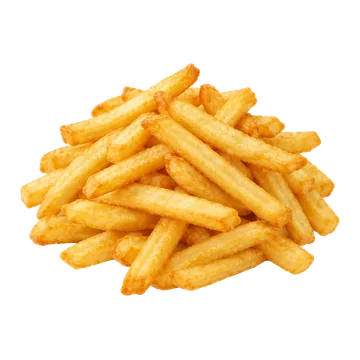 French fries, restaurant
Nothing to watch: doesn’t double average intake
8.26 µgper servingadds 39–59 % to an average adult’s intake (a share of that intake, not of a limit)How it’s rated
No cap: a 70 g serving carries 8.26 µg of glycidyl esters counted as glycidol (0.118 µg/kg body weight), which adds 39-59% to EFSA's 2016 average adult intake (0.2-0.3 µg/kg body weight/day), under doubling. No safe threshold is set for glycidol; EFSA counts a margin of exposure of 25,000 or more on a T25 of 10.2 mg/kg body weight/day as low concern.
Intake: one 70 g serving a day (Health Canada TRA P.1), 70 kg adult · Level in the food: 118 µg/kg (mean, n = 67)
Measured on: BfR Opinion 020/2020, same project data and table: bound glycidol in 'French fries, outside the home', N = 67; lower bound 118 / upper bound 119 µg/kg; median 82; P95 392; 4% below quantification limit (quantification limit)
 Cakes
Nothing to watch: doesn’t double average intake
8.16 µgper servingadds 38.9–58.3 % to an average adult’s intake (a share of that intake, not of a limit)DOI 10.2903/j.efsa.2016.4426 · grade B ?
How it’s rated
No cap: glycidol (from glycidyl esters) is genotoxic and carcinogenic, so no safe threshold is set and it is judged by margin of exposure; EFSA (2016) counts 25,000 or higher, on a T25 of 10.2 mg/kg body weight/day, as low concern. One 80 g serving is 8.2 µg, 0.117 µg/kg body weight: +39-58% of the adult mean (EFSA 2016, adults: 0.2 to 0.3 µg/kg body weight/day, 14-21 µg/day), short of doubling it. At the low end the average diet plus a serving (0.32 µg/kg body weight/day) keeps the margin of exposure at about 32,000, above 25,000. The data are 13 European samples, mean 102 against a median of 16, so a few high samples pull the mean up.
Intake: one 80 g reference serving a day (Health Canada TRA A.6), 70 kg adult · Level in the food: 102 µg/kg (mean, n = 13)
Measured on: category: EFSA 2016 occurrence data set, 'Fatty cake products' (Table 19, glycidol from glycidyl esters, N 13), 15% left-censored; as sold
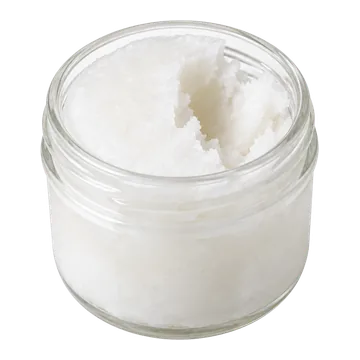 Coconut oil
Nothing to watch: doesn’t double average intake
4.76 µgper servingglycidol equivalentsadds 23–34 % to an average adult’s intake (a share of that intake, not of a limit)DOI 10.2903/j.efsa.2016.4426 · grade A ?
How it’s rated
No cap: glycidyl esters are genotoxic with no safe level, so there is no grams figure; EFSA's 2016 T25 is 10.2 mg/kg body weight/day and a margin of exposure of 25,000 or more is low concern. EU coconut oil averages 476 µg/kg as glycidol (EFSA, 184 results, middle bound), so a 10.0 g serving carries 4.76 µg (0.068 µg/kg body weight/day), a margin of 150,000 on its own. It adds 23–34% to EFSA's mean adult intake of 0.2–0.3 µg/kg body weight/day, under doubling at both ends.
Intake: one 10.0 g serving a day, 70 kg adult · Level in the food: 476 µg/kg (mean, middle bound (lower bound 472; upper bound 479); median 426; P95 1,065, n = 184)
Measured on: EFSA CONTAM 2016, glycidol (from esters, expressed as glycidol), 'Coconut oil/fat*', 184 results EU 2009-2015, 8% left-censored, quantification limit (quantification limit) 100-150 µg/kg.
1 other measurement of this food
- Health Canada pilot, one refined brand
Nothing to watch: doesn’t double average intake
11.45 µgper servingglycidol equivalentsadds 55–82 % to an average adult’s intake (a share of that intake, not of a limit)DOI 10.1016/j.jfca.2014.09.002 · grade B ?
How it’s rated
No cap: glycidyl esters are genotoxic with no safe level, so there is no grams figure; a margin of exposure of 25,000 or more is low concern (EFSA 2016 T25 10.2 mg/kg body weight/day). Health Canada's pilot of one refined brand (two analyses, 1,000 and 1,290 ng/g, mean 1,145 ng/g as glycidol), shown beside the EFSA figure, gives 11.45 µg in a 10.0 g serving (0.164 µg/kg body weight/day), a margin of 62,358 on its own. That adds 55% to 82% to EFSA's mean adult intake of 0.2–0.3 µg/kg body weight/day, under doubling at both ends. It is two analyses of one product, 2.4 times EFSA's EU mean.
Intake: one 10.0 g serving a day, 70 kg adult · Level in the food: 1,145 ng/g (mean of 2 analyses of 1 refined coconut oil (1,000 in 2011, 1,290 in 2013), as glycidol equivalents, n = 2)
Measured on: Health Canada pilot survey (Becalski et al. 2015), Ottawa retail 2011 and 2013, one refined coconut oil brand in each year; glycidol equivalents (ng/g). Unrefined coconut oil: 26 ng/g in brand A, not detected in B.
 Cookies
Nothing to watch: doesn’t double average intake
4.02 µgper servingadds 19.1–28.7 % to an average adult’s intake (a share of that intake, not of a limit)DOI 10.2903/j.efsa.2016.4426 · grade B ?
How it’s rated
No cap: glycidol (from glycidyl esters) is genotoxic and carcinogenic, so no safe threshold is set and it is judged by margin of exposure; EFSA (2016) counts 25,000 or higher, on a T25 of 10.2 mg/kg body weight/day, as low concern. One 30 g serving is 4.0 µg, 0.057 µg/kg body weight: +19-29% of the adult mean (EFSA 2016, adults: 0.2 to 0.3 µg/kg body weight/day, 14-21 µg/day), under doubling it. The serving alone gives a margin of exposure of about 178,000, against the 25,000 line.
Intake: one 30 g reference serving a day (Health Canada TRA A.10), 70 kg adult · Level in the food: 134 µg/kg (mean, n = 36)
Measured on: category: EFSA 2016 occurrence data set, 'Cookies' (Table 19, glycidol from glycidyl esters), 8% left-censored; as sold
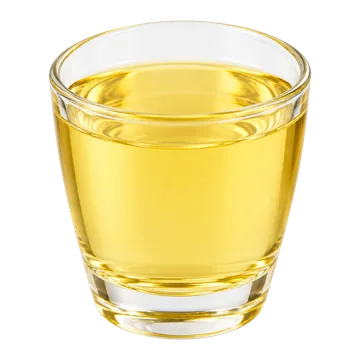 Canola oil
Nothing to watch: doesn’t double average intake
2.92 µgper servingglycidol equivalentsadds 14–21 % to an average adult’s intake (a share of that intake, not of a limit)DOI 10.1016/j.jfca.2014.09.002 · grade B ?
How it’s rated
No cap: glycidol is a genotoxic carcinogen with no safe threshold, judged by margin of exposure (EFSA 2016: T25 10.2 mg/kg body weight/day; a margin of 25,000 or higher is low concern). A serving carries 2.92 µg, 0.0417 µg/kg body weight/day, a margin of 244,750 on its own. The average adult takes in 0.2-0.3 µg/kg body weight/day (EFSA 2016, middle bound), a margin of 51,000 to 34,000, and a serving adds 14-21% to it, short of doubling (the highest single analysis, 678 ng/g, would add up to 44%). Health Canada pilot survey, Ottawa retail, 2011 and 2013.
Intake: one 9.21 g (10 mL) serving a day, 70 kg adult · Level in the food: 316.8 ng/g (mean of 4 analyses (2 brands x 2 years), n = 4)
Measured on: Health Canada pilot survey, Ottawa retail, canola oil A and B, 2011 and 2013 (glycidol equivalents 110 and 678 for A; 26 and 453 for B). Unrefined canola: not detected.
1 other measurement of this food
- EFSA 2016, European rapeseed oils 2010-15
Nothing to watch: doesn’t double average intake
1.529 µgper servingglycidol equivalentsadds 7.3–11 % to an average adult’s intake (a share of that intake, not of a limit)DOI 10.2903/j.efsa.2016.4426 · grade A ?
How it’s rated
No cap: glycidol is a genotoxic carcinogen with no safe threshold, judged by margin of exposure (EFSA 2016: T25 10.2 mg/kg body weight/day; a margin of 25,000 or higher is low concern). A serving of rapeseed oil carries 1.53 µg, 0.022 µg/kg body weight/day, a margin of 467,015 on its own. The average adult takes in 0.2-0.3 µg/kg body weight/day (EFSA 2016, middle bound), a margin of 51,000 to 34,000, and a serving adds 7.3-11% to it, short of doubling. European data (290 results, 49% below detection), shown beside the Canadian figures, not averaged with them.
Intake: one 9.21 g (10 mL) serving a day, 70 kg adult · Level in the food: 166 µg/kg (mean (arithmetic), middle bound; median 100, n = 290)
Measured on: EFSA 2016 (EFSA J 14(5):4426), Table 13, food group 'Rapeseed oil', glycidol (from esters), expressed as free moiety (= glycidol equivalents), European occurrence data 2010-2015, 49% left-censored; mean range (144-188). NOT Canadian: kept beside Becalski, never averaged.
- Sunflower oil
Nothing to watch: doesn’t double average intake
2.88 µgper servingglycidol equivalentsadds 14–21 % to an average adult’s intake (a share of that intake, not of a limit)DOI 10.1016/j.jfca.2014.09.002 · grade B ?
How it’s rated
No cap: glycidol is a genotoxic carcinogen with no safe threshold, judged by margin of exposure (EFSA 2016: T25 10.2 mg/kg body weight/day; a margin of 25,000 or higher is low concern). A serving carries 2.88 µg, 0.0412 µg/kg body weight/day, a margin of 247,682 on its own. The average adult takes in 0.2-0.3 µg/kg body weight/day (EFSA 2016, middle bound), a margin of 51,000 to 34,000, and a serving adds 14-21% to it, short of doubling (the highest single analysis, 452 ng/g, would add up to 30%). Health Canada pilot survey, Ottawa retail, 2011 and 2013.
Intake: one 9.21 g (10 mL) serving a day, 70 kg adult · Level in the food: 313 ng/g (mean of 4 analyses (2 brands x 2 years), n = 4)
Measured on: Health Canada pilot survey, Ottawa retail, sunflower oil A and B, 2011 and 2013 (332 and 452 for A; 212 and 256 for B), glycidol equivalents.
1 other measurement of this food
- EFSA 2016, European sunflower oils 2010-15
Nothing to watch: doesn’t double average intake
2.477 µgper servingglycidol equivalentsadds 12–18 % to an average adult’s intake (a share of that intake, not of a limit)DOI 10.2903/j.efsa.2016.4426 · grade A ?
How it’s rated
No cap: glycidol is a genotoxic carcinogen with no safe threshold, judged by margin of exposure (EFSA 2016: T25 10.2 mg/kg body weight/day; a margin of 25,000 or higher is low concern). A serving of sunflower seed oil carries 2.48 µg, 0.035 µg/kg body weight/day, a margin of 288,195 on its own. The average adult takes in 0.2-0.3 µg/kg body weight/day (EFSA 2016, middle bound), a margin of 51,000 to 34,000, and a serving adds 12-18% to it, short of doubling. European data (542 results, 20% below detection), shown beside the Canadian figures, not averaged with them.
Intake: one 9.21 g (10 mL) serving a day, 70 kg adult · Level in the food: 269 µg/kg (mean (arithmetic), middle bound; median 200, n = 542)
Measured on: EFSA 2016 (EFSA J 14(5):4426), Table 13, food group 'Sunflower seed oil', glycidol (from esters), expressed as free moiety (= glycidol equivalents), European occurrence data 2010-2015, 20% left-censored; mean range (259-279). NOT Canadian: kept beside Becalski, never averaged.
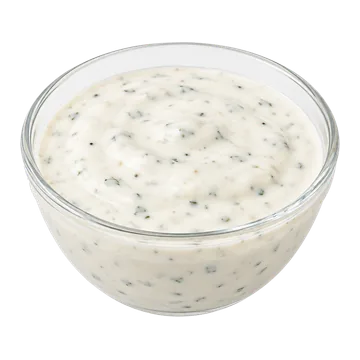 Ranch dressing
Nothing to watch: doesn’t double average intake
2.32 µgper servingglycidol (derived)adds 11–16.6 % to an average adult’s intake (a share of that intake, not of a limit)DOI 10.2903/j.efsa.2016.4426 · grade B ?
How it’s rated
No cap: glycidol has no safe threshold and is judged by margin of exposure; EFSA counts 25,000 or higher as low health concern (reference point T25 10.2 mg/kg body weight/day). A serving carries 2.32 µg of glycidol, a margin of exposure of about 308,374 on its own, and adds 11-17% to the average adult's intake of 0.2-0.3 µg/kg body weight/day (EFSA 2016, middle bound), short of doubling it. The level is derived, not measured: EFSA's mean for glycidol from esters in soya bean oil (171 µg/kg) scaled to the fat in ranch dressing, assuming soybean oil.
Intake: one 30.4 g (30 mL) serving a day, 70 kg adult · Level in the food: 76.2 µg/kg (DERIVED, not measured: EFSA mean glycidol (from esters) in soya bean oil x fat share (0.4454), n = 189)
Measured on: Derived from EFSA 2016 Table 13 'Soya bean oil': N = 189, 30% left-censored, mean glycidol 171 µg/kg MB (157-186), median 120, P95 560, x 0.4454 (SR 173592 total lipid). Assumes soybean oil (provisional).
 Mayonnaise
Nothing to watch: doesn’t double average intake
1.79 µgper servingglycidol (derived)adds 8.5–12.8 % to an average adult’s intake (a share of that intake, not of a limit)DOI 10.2903/j.efsa.2016.4426 · grade B ?
How it’s rated
No cap: glycidol is a genotoxic carcinogen with no safe threshold, judged by margin of exposure (EFSA 2016: T25 10.2 mg/kg body weight/day; a margin of 25,000 or higher is low concern). Derived from soybean oil, not measured in mayonnaise. A serving carries 1.79 µg, 0.0255 µg/kg body weight/day, a margin of about 399,886 on its own. The average adult already takes in 0.2-0.3 µg/kg body weight/day (EFSA 2016, middle bound) and a serving adds 8.5-13% to it, short of doubling.
Intake: one 13.95 g (15 mL) serving a day, 70 kg adult · Level in the food: 128 µg/kg (DERIVED, not measured: EFSA mean glycidol (from esters) in soya bean oil x fat share (0.7485), n = 189)
Measured on: Derived from EFSA 2016 Table 13 'Soya bean oil': N = 189, 30% left-censored, mean glycidol 171 µg/kg MB (157-186), median 120, P95 560, expressed as free glycidol, x 0.7485 (SR 171009 total lipid). Assumes soybean oil (provisional).
- Soybean oil
Nothing to watch: doesn’t double average intake
1.575 µgper servingglycidol equivalentsadds 7.5–11 % to an average adult’s intake (a share of that intake, not of a limit)DOI 10.2903/j.efsa.2016.4426 · grade A ?
How it’s rated
No cap: glycidol is a genotoxic carcinogen with no safe threshold, judged by margin of exposure (EFSA 2016: T25 10.2 mg/kg body weight/day; a margin of 25,000 or higher is low concern). A serving of soybean oil carries 1.57 µg, 0.022 µg/kg body weight/day, a margin of 453,359 on its own. The average adult takes in 0.2-0.3 µg/kg body weight/day (EFSA 2016, middle bound), a margin of 51,000 to 34,000, and a serving adds 7.5-11% to it, short of doubling. European data (189 results, 30% below detection), shown beside the Canadian figures, not averaged with them.
Intake: one 9.21 g (10 mL) serving a day, 70 kg adult · Level in the food: 171 µg/kg (mean (arithmetic), middle bound; median 120, n = 189)
Measured on: EFSA 2016 (EFSA J 14(5):4426), Table 13, food group 'Soya bean oil', glycidol (from esters), expressed as free moiety (= glycidol equivalents), European occurrence data 2010-2015, 30% left-censored; mean range (157-186). NOT Canadian: kept beside Becalski, never averaged.
 Coffee creamer, flavoured liquid
Nothing to watch: rated by margin of exposure
1.44 µgper servingbasis not statedDOI 10.3390/foods12234331 · grade B ?
How it’s rated
No cap: glycidol is a genotoxic carcinogen with no safe threshold, judged by margin of exposure (EFSA: T25 10.2 mg/kg body weight/day; a margin of 25,000 or higher is low concern). One measured creamer (94.9 µg/kg) gives a serving of 1.44 µg, 0.0206 µg/kg body weight/day, a margin of about 494,981. If it were made with palm oil at EFSA's palm-oil average, a serving would carry 8.12 µg, 0.116 µg/kg body weight/day, a margin of about 87,978. That would add 39% to EFSA's highest adult average (0.3 µg/kg body weight/day) and 58% to its lowest (0.2), short of doubling.
Intake: one 15.2 g (15 mL) serving a day, 70 kg adult · Level in the food: 94.9 µg/kg (single sample (n = 1 product), n = 1)
Measured on: Shi et al. 2023, Singapore retail: one commercial creamer, glycidyl esters 94.9 µg/kg (Table 7), refined palm oil on the label. Glycidol-equivalent expression per AOCS Cd 29c-13; food-or-fat matrix basis not stated.
- Corn oil
Nothing to watch: doesn’t double average intake
1.29 µgper servingglycidol equivalentsadds 6.1–9.2 % to an average adult’s intake (a share of that intake, not of a limit)DOI 10.1016/j.jfca.2014.09.002 · grade B ?
How it’s rated
No cap: glycidol is a genotoxic carcinogen with no safe threshold, judged by margin of exposure (EFSA 2016: T25 10.2 mg/kg body weight/day; a margin of 25,000 or higher is low concern). A serving carries 1.29 µg, 0.0184 µg/kg body weight/day, a margin of 553,746 on its own. The average adult takes in 0.2-0.3 µg/kg body weight/day (EFSA 2016, middle bound), a margin of 51,000 to 34,000, and a serving adds 6.1-9.2% to it, short of doubling (the highest single analysis, 159 ng/g, would add up to 10%). Health Canada pilot survey, Ottawa retail, 2011 and 2013.
Intake: one 9.21 g (10 mL) serving a day, 70 kg adult · Level in the food: 140 ng/g (mean of 2 analyses (1 brand x 2 years), n = 2)
Measured on: Health Canada pilot survey, Ottawa retail, one corn oil brand, 2011 (121) and 2013 (159), glycidol equivalents.
1 other measurement of this food
- EFSA 2016, European maize oils 2010-15
Nothing to watch: doesn’t double average intake
5.987 µgper servingglycidol equivalentsadds 29–43 % to an average adult’s intake (a share of that intake, not of a limit)DOI 10.2903/j.efsa.2016.4426 · grade A ?
How it’s rated
No cap: glycidol is a genotoxic carcinogen with no safe threshold, judged by margin of exposure (EFSA 2016: T25 10.2 mg/kg body weight/day; a margin of 25,000 or higher is low concern). A serving of maize oil carries 5.99 µg, 0.086 µg/kg body weight/day, a margin of 119,268 on its own. The average adult takes in 0.2-0.3 µg/kg body weight/day (EFSA 2016, middle bound), a margin of 51,000 to 34,000, and a serving adds 29-43% to it, short of doubling; the maize figure rests on only 36 results. European data (36 results, 6% below detection), shown beside the Canadian figures, not averaged with them.
Intake: one 9.21 g (10 mL) serving a day, 70 kg adult · Level in the food: 650 µg/kg (mean (arithmetic), middle bound; median 475, n = 36)
Measured on: EFSA 2016 (EFSA J 14(5):4426), Table 13, food group 'Maize oil', glycidol (from esters), expressed as free moiety (= glycidol equivalents), European occurrence data 2010-2015, 6% left-censored; mean range (647-654). NOT Canadian: kept beside Becalski, never averaged.
 White bread
Nothing to watch: doesn’t double average intake
0.6 µgper servingadds 2.9–4.3 % to an average adult’s intake (a share of that intake, not of a limit)DOI 10.2903/j.efsa.2016.4426 · grade B ?
How it’s rated
No cap: glycidol (from glycidyl esters) is genotoxic and carcinogenic, so no safe threshold is set and it is judged by margin of exposure; EFSA (2016) counts 25,000 or higher, on a T25 of 10.2 mg/kg body weight/day, as low concern. One 75 g serving is 0.60 µg, 0.0086 µg/kg body weight: +2.9-4.3% of the adult mean (EFSA 2016, adults: 0.2 to 0.3 µg/kg body weight/day, 14-21 µg/day), far from doubling it. The data are European, and 76% of samples were below detection.
Intake: one 75 g reference serving a day (Health Canada TRA A.1), 70 kg adult · Level in the food: 8 µg/kg (mean, n = 75)
Measured on: category: EFSA 2016 occurrence data set, 'Bread and bread rolls' (Table 19, glycidol from glycidyl esters), 76% left-censored; as sold
Flags and context, not rated by dose
 Olive oil, extra virgin
Not rated yet
1.005 µgper serving(unrefined category mean); refined-category mean 11.9DOI 10.3390/foods12234331 · grade B ?
How it’s rated
Not rated: glycidol has no safe threshold and is judged by margin of exposure (EFSA 2016: reference point T25 10.2 mg/kg body weight/day; 'MoEs of 25,000 or higher were considered of low health concern'), but no mean level for extra virgin olive oil has been found. Kamikata 2019: glycidyl esters not detected up to 1.98 mg/kg in extra virgin oil, up to 1.88 in olive oil, 0.31-1.84 in blends (abstract). A Health Canada method paper (Becalski 2012) was validated on 'a virgin olive oil which was free of glycidyl esters' (one sample).
Intake: one 9.07 g (10 mL) serving a day, 70 kg adult · Level in the food: 110.8 micrograms/kg (mean, n = 24)
Measured on: category mean, Singapore market (Shi 2023): unrefined vegetable oils n = 24 mean 110.8 (<quantification limit (quantification limit)-1325.6); refined n = 36 mean 1317.2 (155.4-6204.1). NOT olive-specific
Sources
- BfR. Possible health risks due to high concentrations of 3-MCPD and glycidyl fatty acid esters in certain foods. BfR Opinion No 020/2020, 20 April 2020. · doi:10.17590/20200420-134029
bfr-2020-opinion-020· full text read · BfR - Becalski A, Feng S, Lau BP-Y, Zhao T. A pilot survey of 2- and 3-monochloropropanediol and glycidol fatty acid esters in foods on the Canadian market 2011-2013. J Food Compos Anal 2015;37:58-66 (Health Canada) · doi:10.1016/j.jfca.2014.09.002
doi:10.1016/j.jfca.2014.09.002· full text read · Crown copyright; open-science.canada.ca copy - EFSA CONTAM Panel. Risks for human health related to the presence of 3- and 2-monochloropropanediol (MCPD), and their fatty acid esters, and glycidyl fatty acid esters in food. EFSA Journal 2016;14(5):4426 · doi:10.2903/j.efsa.2016.4426
doi:10.2903/j.efsa.2016.4426· abstract only · abstract on a university repository page - Shi R, Shen P, Yu W, et al. Occurrence and Dietary Exposure of 3-MCPD Esters and Glycidyl Esters in Domestically and Commercially Prepared Food in Singapore. Foods 2023 · doi:10.3390/foods12234331 · PMID 38231853
doi:10.3390/foods12234331· full text read · CC BY (MDPI; per PMC)