Mineral oil aromatic hydrocarbons (MOAH)
Mineral-oil residues that reach food in many ways: from packaging, machine lubricants, processing aids and additives, and the environment.
In the body: Some of these compounds damage DNA, so no level is shown to be harmless.
No intake of it is known to be safe, so there’s no grams figure. Each food shows what a daily serving adds to an average adult’s intake. The one that stands out: Coconut oil. A daily serving adds 11–158%, depending on how much you already take in. The other rated foods and preparations add 40% or less. 6 more reviewed foods and preparations carry it but aren’t rated by dose: shown for context, or not rated yet.
No safe level known.
See also: Mineral oil saturated hydrocarbons (MOSH)
The reference point, not a limit
The agency starts from a dose linked to an effect in studies, in people or in animals, and judges the margin between that dose and what people take in.
- Reference point0.49 mg/kg body weight/day
- That dose, for a 70 kg adult34 mg a day
Not a safe amount or an allowance: harm can’t be ruled out below it. - What an average 70 kg adult takes in0–0.4 mg a day
That dose is 82 to 1,200 times what an average adult takes in. - Basisbenchmark dose (BMDL): the lower estimate of the dose that produced a set size of effect in studies; the number after it is that size (BMDL10 is 10%, BMDL01 is 1%). A starting point rather than a limit
mineral oil aromatic hydrocarbons (MOAH) (3+ rings genotoxic): surrogate reference point benchmark dose lower limit (BMDL10) 0.49 mg/kg body weight/day (PAH8), EFSA 2023 mineral oil opinion (animal benchmark dose lower limit (BMDL10) (surrogate, from PAH8)) - Average adult intake0.0004–0.006 mg/kg body weight/day
- Source ?PubMed 37711880
Reviewed foods that carry it
4 reviewed foods carry it, 2 of them rated by dose. A food counts once, as in the foods list: preparations sharing a page (raw and cooked, canned) count once; one with its own page counts apart. Below, one line for each of 8 preparations.
How often you can eat it ?
No grams figure for Mineral oil aromatic hydrocarbons (MOAH): there is no limit to count grams against. Each food shows the method’s rating instead: how much a daily serving adds to the average adult’s intake.
One realistic serving each, rated by dose, not by presence. The most restrictive rating comes first, then the largest dose per serving.
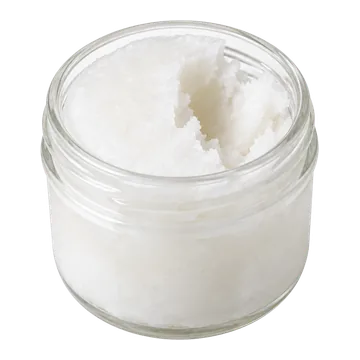 Coconut oil
Go easy: can double average intake
44.3 µgper servinghydrocarbures aromatiques d’huiles minéralesadds 10.5–158.2 % to an average adult’s intake (a share of that intake, not of a limit)DOI 10.2903/j.efsa.2023.8215 · grade B ?
How it’s rated
May exceed: EFSA's 2023 surrogate reference point for genotoxic 3+ ring mineral oil aromatics (MOAH) is a benchmark dose lower limit (BMDL10) of 0.49 mg/kg body weight/day, with a margin of 10,000 or more as low concern, and there is no safe level, so no grams figure. Coconut oil averages 4.43 mg/kg total MOAH (EFSA, 248 samples, 40% non-detects; the middle of 3.69 and 5.17), so a 10.0 g serving carries 44.3 µg (0.00063 mg/kg body weight/day): a margin of 7,743 if 10% is 3+ ring, 77,427 if 1%. Against EFSA's mean adult exposure (0.0004–0.001 lower bound to 0.003–0.006 upper bound mg/kg body weight/day) the serving adds about 11% to 158%, so at the low end it more than doubles intake and at the high end it does not.
Intake: one 10.0 g serving a day, 70 kg adult · Level in the food: 4.43 mg/kg (mean, middle bound derived as (lower bound 3.69 + upper bound 5.17) / 2 (EFSA prints lower bound and upper bound only), n = 248)
Measured on: EFSA CONTAM 2023 mineral oil hydrocarbons, Table 9 (mineral oil aromatic hydrocarbons (MOAH) mean values used for exposure), 'Coconut oil/fat', 248 samples, 40% left-censored, European data; MOAH measured as the total aromatic fraction (all ring sizes).
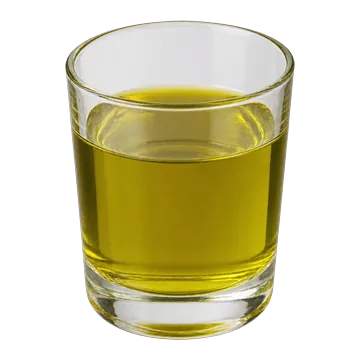 Olive oil, extra virgin
Nothing to watch: doesn’t double average intake
0.011 mgper servingall mineral oil aromatic hydrocarbons (MOAH)adds 2.6–40 % to an average adult’s intake (a share of that intake, not of a limit)PubMed 37711880 · grade B ?
How it’s rated
Only mineral oil aromatic hydrocarbons (MOAH) with 3+ aromatic rings are genotoxic. EFSA surrogate reference point benchmark dose lower limit (BMDL10) 0.49 mg/kg body weight/day (PAH8). Serving carries 0.0111 mg MOAH = 0.000158 mg/kg body weight/day; if 10% is 3+ ring (EFSA scenario 1) MoE = 30,998; if 1% (scenario 2) 309,975; both above the 10,000 line. Added to EFSA's adult average total-MOAH exposure (0.0004 to 0.006 mg/kg body weight/day), a serving adds 2.6% to 40%, below doubling. EFSA itself finds MoE < 10,000 for the whole diet under scenario 1, so the diet-level concern is not an olive-oil one.
Intake: one 9.07 g (10 mL) serving a day, 70 kg adult · Level in the food: 1.22 mg/kg (mean, n = 298)
Measured on: agency category mean, European: EFSA 2023 Table 9 'Olive oil' = virgin/extra-virgin and refined pooled (n = 298, 92% left-censored)
Flags and context, not rated by dose
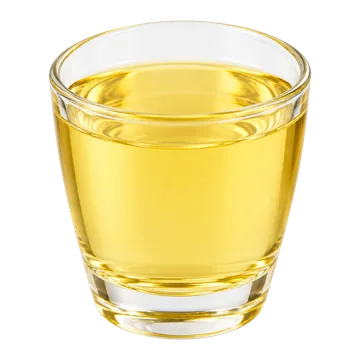 Canola oil
Nothing to watch: rated by margin of exposure
DOI 10.2903/j.efsa.2023.8215 · grade B ?
How it’s rated
No cap: MOAH (mineral oil aromatic hydrocarbons) has no safe threshold and is judged by margin of exposure, using EFSA 2023's surrogate reference point of 0.49 mg/kg body weight/day for the 3+-ring fraction; a margin of 10,000 or higher is low concern. A serving carries 0.7-12.2 µg MOAH. If 10% of MOAH is 3+-ring (EFSA's first scenario) the serving's own margin is 28,002 at the upper bound; at 1% (second scenario), 280,016. Against EFSA's adult average total-MOAH exposure of 0.0004 to 0.006 mg/kg body weight/day, a serving adds 0.18-43.7%, short of doubling; the range is wide because it pairs the serving's lowest figure with the highest background and its highest with the lowest. European data (edible rapeseed oil, 340 samples, 97% below detection), not Canadian retail.
Intake: one 9.21 g (10 mL) serving a day, 70 kg adult · Level in the food: 0.08 mg/kg (mean (lower bound 0.08; upper bound 1.33 stored in scope), n = 340)
Measured on: EFSA 2023 (European data, FoodEx2 food group 'Rape seed oil, edible'), 340 samples, 97% left-censored; mean lower bound 0.08 and upper bound 1.33 mg/kg; not Canadian retail
- Corn oil
Nothing to watch: rated by margin of exposure
DOI 10.2903/j.efsa.2023.8215 · grade B ?
How it’s rated
No cap: MOAH (mineral oil aromatic hydrocarbons) has no safe threshold and is judged by margin of exposure, using EFSA 2023's surrogate reference point of 0.49 mg/kg body weight/day for the 3+-ring fraction; a margin of 10,000 or higher is low concern. A serving carries 0.3-17.6 µg MOAH. If 10% of MOAH is 3+-ring (EFSA's first scenario) the serving's own margin is 19,498 at the upper bound; at 1% (second scenario), 194,985. Against EFSA's adult average total-MOAH exposure of 0.0004 to 0.006 mg/kg body weight/day, a serving adds 0.07-62.8%, short of doubling; the range is wide because it pairs the serving's lowest figure with the highest background and its highest with the lowest. European data (edible maize oil, 37 samples, 97% below detection), not Canadian retail.
Intake: one 9.21 g (10 mL) serving a day, 70 kg adult · Level in the food: 0.03 mg/kg (mean (lower bound 0.03; upper bound 1.91 stored in scope), n = 37)
Measured on: EFSA 2023 (European data, FoodEx2 food group 'Maize oil, edible'), 37 samples, 97% left-censored; mean lower bound 0.03 and upper bound 1.91 mg/kg; not Canadian retail
- Soybean oil
Nothing to watch: rated by margin of exposure
DOI 10.2903/j.efsa.2023.8215 · grade B ?
How it’s rated
No cap: MOAH (mineral oil aromatic hydrocarbons) has no safe threshold and is judged by margin of exposure, using EFSA 2023's surrogate reference point of 0.49 mg/kg body weight/day for the 3+-ring fraction; a margin of 10,000 or higher is low concern. A serving carries 0.5-13.6 µg MOAH. If 10% of MOAH is 3+-ring (EFSA's first scenario) the serving's own margin is 25,164 at the upper bound; at 1% (second scenario), 251,636. Against EFSA's adult average total-MOAH exposure of 0.0004 to 0.006 mg/kg body weight/day, a serving adds 0.11-48.7%, short of doubling; the range is wide because it pairs the serving's lowest figure with the highest background and its highest with the lowest. European data (refined soybean oil, 126 samples, 98% below detection), not Canadian retail. Like for like (lower bound with lower, upper with upper) a serving adds 1.6% to 3.2%.
Intake: one 9.21 g (10 mL) serving a day, 70 kg adult · Level in the food: 0.05 mg/kg (mean (lower bound 0.05; upper bound 1.48 stored in scope), n = 126)
Measured on: EFSA 2023 (European data, FoodEx2 food group 'Soya bean oil, refined'), 126 samples, 98% left-censored; mean lower bound 0.05 and upper bound 1.48 mg/kg; not Canadian retail
- Sunflower oil
Nothing to watch: rated by margin of exposure
DOI 10.2903/j.efsa.2023.8215 · grade B ?
How it’s rated
No cap: MOAH (mineral oil aromatic hydrocarbons) has no safe threshold and is judged by margin of exposure, using EFSA 2023's surrogate reference point of 0.49 mg/kg body weight/day for the 3+-ring fraction; a margin of 10,000 or higher is low concern. A serving carries 1.4-14.8 µg MOAH. If 10% of MOAH is 3+-ring (EFSA's first scenario) the serving's own margin is 23,132 at the upper bound; at 1% (second scenario), 231,318. Against EFSA's adult average total-MOAH exposure of 0.0004 to 0.006 mg/kg body weight/day, a serving adds 0.33-53.0%, short of doubling; the range is wide because it pairs the serving's lowest figure with the highest background and its highest with the lowest. European data (edible sunflower oil, 519 samples, 92% below detection), not Canadian retail.
Intake: one 9.21 g (10 mL) serving a day, 70 kg adult · Level in the food: 0.15 mg/kg (mean (lower bound 0.15; upper bound 1.61 stored in scope), n = 519)
Measured on: EFSA 2023 (European data, FoodEx2 food group 'Sunflower seed oil, edible'), 519 samples, 92% left-censored; mean lower bound 0.15 and upper bound 1.61 mg/kg; not Canadian retail
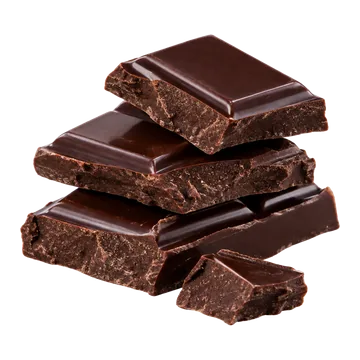 Dark chocolate
Context
How it’s rated
Context only, as for milk chocolate. EFSA itself notes that 'Bitter chocolate' and 'Cocoa powder' show higher means in the national data than in the association data.
Intake: not applicable (flag)
Measured on: EFSA 2023 mineral oil hydrocarbons update, Table 4, 'Bitter chocolate', national data: mineral oil aromatic hydrocarbons (MOAH) mean 0.52 (lower bound) - 2.45 (upper bound) mg/kg, 26 of 33 samples not detected; mineral oil saturated hydrocarbons (MOSH) mean 5.05-7.24 mg/kg (12 of 33 ND). Food-association data (n 17 MOAH): MOAH 0.0-0.50, MOSH 2.85. Europe.
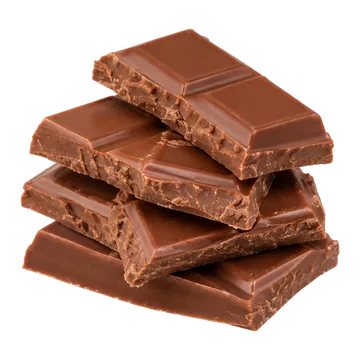 Milk chocolate
Context
How it’s rated
Context only (dataset types mineral oil aromatic hydrocarbons (MOAH) and mineral oil saturated hydrocarbons (MOSH) as context). EFSA applied an margin of exposure (MOE) with a surrogate PAH8 reference point (benchmark dose lower limit (BMDL10) 0.49 mg/kg body weight/day) for 3+ ring MOAH and could not assess 1-2 ring MOAH. No grams figure; no rating.
Intake: not applicable (flag)
Measured on: EFSA 2023 mineral oil hydrocarbons update, Table 4, 'Milk chocolate', national data: mineral oil aromatic hydrocarbons (MOAH) mean 0.09 (lower bound) - 0.94 (upper bound) mg/kg, 184 of 208 samples not detected; mineral oil saturated hydrocarbons (MOSH) mean 2.97-3.80 mg/kg (61 of 208 ND). Food-association data (n 74): MOAH 0.13-0.55, MOSH 3.88-3.95. Europe.
Sources
- EFSA CONTAM Panel. Update of the risk assessment of mineral oil hydrocarbons in food. EFSA J 2023;21(9):e08215 · doi:10.2903/j.efsa.2023.8215 · PMID 37711880
doi:10.2903/j.efsa.2023.8215· full text read · CC BY - EFSA CONTAM Panel (2023) Update of the risk assessment of mineral oil hydrocarbons in food. EFSA Journal 21(9):8215 · doi:10.2903/j.efsa.2023.8215
efsa-2023-moh· full text read · EFSA (publisher terms) - EFSA CONTAM Panel. Update of the risk assessment of mineral oil hydrocarbons in food. EFSA Journal 2023 · doi:10.2903/j.efsa.2023.8215 · PMID 37711880
pmid:37711880· full text read · per PMC record (EFSA Journal, open access)