Selenium
In the body: Too much selenium, over time, makes hair and nails fall out or turn brittle.
The one rated food, Soy drink, unsweetened, fortified, needs no cap on how often you eat it: no amount anyone really eats reaches the daily limit. 3 more reviewed foods carry it but aren’t rated by dose: shown for context, or not rated yet.
Too much of a nutrient. For a food measured against it: the grams that reach the upper intake level, eaten every day.
The limit
- The agency’s figure255 µg/day
- Basisupper intake level (UL): the most to take in every day
upper intake level (UL) for adult men and women, including pregnancy and lactation (EFSA NDA 2023): lowest-observed-adverse-effect level (LOAEL) 330 µg/day (alopecia, SELECT trial) with an uncertainty factor of 1.3. Health Canada DRI UL for adults 400 µg/day (IOM 2000) beside it (human lowest-observed-adverse-effect level (LOAEL) (alopecia, randomised trial)) - Average adult intake35.8–65.6 µg/day EFSA 2023 Table 3: adults 18-65 y, food only (supplements excluded), minimum and maximum of the survey mean intakes across six surveys: women 35.8-50.5, men 42.7-65.6 µg/day; P95 62.7-113.0 µg/day. the range runs from the lowest mean (women) to the highest (men)
- Applies toall sources (food, water, supplements)
- Source ?EFSA 2023
Reviewed foods that carry it
4 reviewed foods carry it, 1 of them rated by dose.
Grams to the limit ?
Grams of each food that reach the limit in its window, for a 70 kg adult. Fewest first: those are the foods to watch.
Known background: an average adult already takes in 35.8–65.6 µg/day. Where the dataset allows, the grams below are the room left after that intake (the median of the surveys’ averages where EFSA gives one, otherwise the highest); beside each, the same limit counted from zero, the food eaten alone.
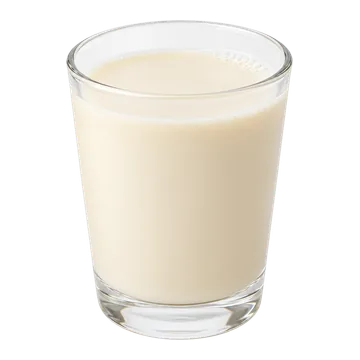 Soy drink, unsweetened, fortified
Nothing to watch: under the limit for a 250 g serving
More than anyone eatsNo realistic amount reaches the limit.4.86 µg per 250 g servingUS food database (USDA Foundation Foods) · grade C ?
This amount varies a lot from one batch to the next: the figures we hold for this food differ twofold or more. Every figure on this site uses the same one, the food’s listed value.
How it’s rated
The counted figure is 13,000 g a day, about 53 servings a day.
No cap: EFSA's 2023 tolerable upper intake level for selenium is 255 µg a day (Health Canada's is 400 µg). A 250 g serving carries 4.9 µg on the USDA listing, 1.9% of EFSA's level; about 13,100 g a day, eaten alone, would reach it. Health Canada's Total Diet Study measured less in fortified soy beverage (2 µg a serving).
Intake: one 250 mL serving (250 g) a day, 70 kg adult · Level in the food: 1.942 µg/100 g (listed value, n = 8)
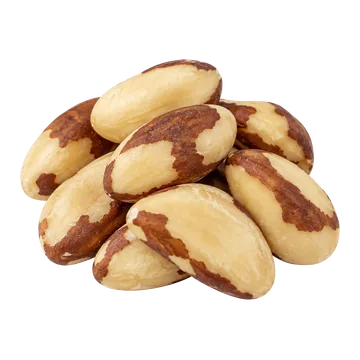 Brazil nuts, raw
Worth knowing
84.1 µgper servingUS food database (USDA Foundation Foods) · grade C ?
How it’s rated
Flagged for selenium: the tolerable upper intake level from all sources is 255 µg/day for adults, including pregnancy and lactation (EFSA 2023; Health Canada 400 µg/day). A 30 g serving carries 84 µg on the USDA listing, 33% of EFSA's level, and about 91 g a day eaten alone would reach it; with EFSA's food-only adult background (mean 35.8-65.6 µg/day) a daily serving comes to 120-150 µg, under it. Selenium varies enormously between nuts: CFIA's import checks found annual means of 2.29 to 7.69 ppm (69 to 231 µg a serving) and one sample at 34 ppm, at which 7.5 g would reach the level.
Intake: 30 g shelled serving (HC TRA O.1; EFSA calls 5 or 6 Brazil nuts a serving) · Level in the food: 280.4 µg/100 g (listed value, n = 8)
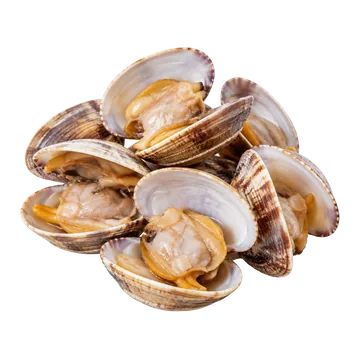 Clams, cooked
Worth knowing
64 µgper servingUS food database (USDA SR Legacy) · grade C ?
How it’s rated
Flagged for selenium: the Health Canada upper limit is 400 µg/day and EFSA's 2023 limit is 255 µg/day. A 100 g serving of cooked clams carries 64 µg on the USDA listing, 25% of EFSA's limit and 16% of Health Canada's; about 398 g a day would reach EFSA's (625 g Health Canada's). CFIA's inspection results, mostly raw meat, give more once corrected for water lost in cooking (about 105 µg a serving, an upper bound); selenium is also an essential nutrient.
Intake: 100 g cooked (HC TRA I.3), one serving a day · Level in the food: 64 µg/100 g (listed value)
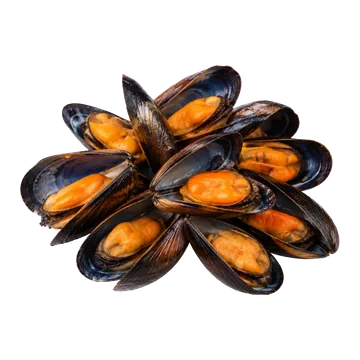 Mussels, cooked
Worth knowing
89.6 µgper servingUS food database (USDA SR Legacy) · grade C ?
How it’s rated
Flagged for selenium: EFSA's 2023 upper level is 255 µg/day and Health Canada's is 400 µg/day. A 100 g serving of cooked mussels carries 89.6 µg on the USDA listing, 35% of EFSA's level and 22% of Health Canada's; about 285 g a day would reach EFSA's (446 g Health Canada's). CFIA's inspection results, raw tissue, give more once doubled for water lost in cooking (about 127 µg a serving, an upper bound); selenium is also a required nutrient.
Intake: 100 g cooked (HC TRA I.3), one serving a day · Level in the food: 89.6 µg/100 g (listed value)
Sources
- EFSA NDA Panel (2023). Scientific opinion on the tolerable upper intake level for selenium. EFSA Journal 21(1):7704 · doi:10.2903/j.efsa.2023.7704 · PMID 36698500
efsa-2023-selenium-ul· secondary source · CC BY-ND 4.0 - USDA FoodData Central, Foundation Foods, release 2026-04-30
fdc-foundation-2026-04-30· dataset · CC0 1.0 (public domain) - USDA FoodData Central, SR Legacy, 2018-04
fdc-sr-legacy-2018-04· dataset · CC0 1.0 (public domain)