Oral allergy to Rosaceae fruit
In the body: An allergy is the immune system reacting to the food.
Not rated by dose: a flag on 4 reviewed foods, among them Fuji apples, Cherries, raw and Peaches, raw.
For some people. Allergies, medicines and medical conditions: a flag for the people the source names, no wider.
The reference value and where it comes from
- The agency’s figureno agency dose value
- Basisoral allergy to Rosaceae fruit (apple)
- Source ?Fernandezrivas 1999
Reviewed foods that carry it
4 reviewed foods carry it; none is rated by dose.
How often you can eat it ?
No food here is rated by dose. Each line says why it’s listed: a flag for the people the source names, advice on handling it, or context.
Flags and context, not rated by dose
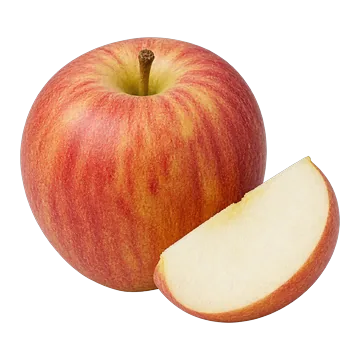 Apple (Fuji), raw
Worth knowing
Fernandezrivas 1999 · grade B ?
How it’s rated
Person-specific: apple can cause oral allergy reactions in people allergic to the rose family of fruit. In allergic patients, 'More than 40% ... tolerated the ingestion of the pulp'; reactions occurred only on whole fruit, and peels gave stronger skin-prick, histamine-release and RAST responses. Skin-on is the riskier form for these patients.
Intake: one 140 g serving a day, 70 kg adult
Measured on: 33 patients allergic to apple, peach or pear (Fernandez-Rivas 1999)
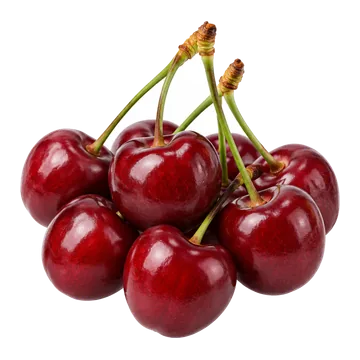 Cherries, raw
Worth knowing
PubMed 7930303 · grade B ?
How it’s rated
Person-specific: people allergic to peach often react to cherry through a shared 13 kd allergen (a lipid-transfer-type component); cherry also carries a cherry-specific 30 kd allergen. Mostly oral symptoms in pollen-related cases; systemic reactions in the LTP form. No cherry-specific prevalence extracted.
Intake: not applicable (person-specific)
Measured on: Prunoideae cross-reactivity (peach, cherry, apricot, plum)
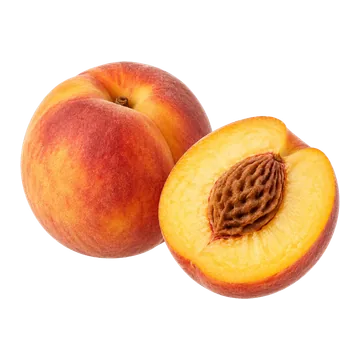 Peaches, raw
Worth knowing
PubMed 26633941 · grade B ?
How it’s rated
Person-specific: affects people sensitised to peach lipid transfer protein (systemic reactions in the Mediterranean area) or cross-reactive to birch and other Rosaceae pollen (mostly oral symptoms). No prevalence figure was extracted.
Intake: not applicable (person-specific)
Measured on: Peach allergy: Mediterranean lipid-transfer-protein (Pru p 3) allergy and birch-pollen oral allergy syndrome
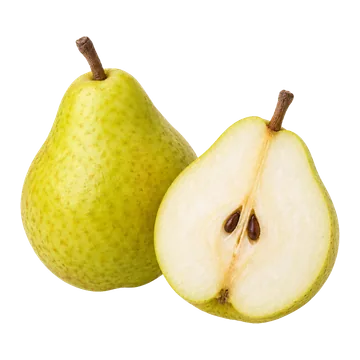 Pears, raw
Worth knowing
PubMed 33919631 · grade B ?
How it’s rated
Person-specific: pear is a Bet v 1 cross-reactive food for birch-pollen-allergic people (Pyr c 1); symptoms are usually oral, and the Mediterranean LTP route (Pyr c 3) also exists. A selected, history-positive sample, so not a prevalence.
Intake: not applicable (person-specific)
Measured on: Netherlands, birch-pollen-related pear allergy; two varieties (Cepuna, Conference)
Sources
- Fernandez-Rivas M, Cuevas M. Peels of Rosaceae fruits have a higher allergenicity than pulps. Clin Exp Allergy 1999;29:1239-1247 · doi:10.1046/j.1365-2222.1999.00628.x · PMID 10469033
fernandezrivas1999· abstract only · Publisher copyright - Different co-sensitizations could determine different risk assessment in peach allergy? Evaluation of an anaphylactic biomarker in Pru p 3 positive patients. Clin Mol Allergy 2015 · PMID 26633941
pmid:26633941· abstract only · CC BY (Europe PMC licence field, PMC4667484) - Birch Pollen Related Pear Allergy: A Single-Blind Oral Challenge TRIAL with 2 Pear Cultivars. Nutrients 2021;13(4):1355 · doi:10.3390/nu13041355 · PMID 33919631
pmid:33919631· abstract only · CC BY (Europe PMC licence field, PMC8073155) - Allergenic cross-reactivity among peach, apricot, plum, and cherry in patients with oral allergy syndrome: an in vivo and in vitro study. J Allergy Clin Immunol 1994 Oct · PMID 7930303
pmid:7930303· abstract only · licence not recorded