Pyrrolizidine alkaloids
Plant toxins, made by some weeds and herbs, that turn up in tea, herbal teas and honey.
In the body: They can damage the liver, and caused liver tumours in rats.
Rated by margin of exposure, one serving: the one rated food needs no watching. 2 more reviewed foods carry it but aren’t rated by dose: shown for context, or not rated yet.
No safe level known. No intake is known to be harmless, so there’s no limit to count grams up to.
The reference point, not a limit
The agency starts from a dose linked to an effect in studies, in people or in animals, and judges the margin between that dose and what people take in.
- Reference point237 µg/kg body weight/day
- That dose, for a 70 kg adult16,600 µg a day
Not a safe amount or an allowance: harm can’t be ruled out below it. - Basisbenchmark dose (BMDL): the lower estimate of the dose that produced a set size of effect in studies; the number after it is that size (BMDL10 is 10%, BMDL01 is 1%). A starting point rather than a limit
benchmark dose lower limit (BMDL10) (liver haemangiosarcoma, female rats, riddelliine), sum of 1,2-unsaturated PAs assumed of equal potency (animal benchmark dose lower limit (BMDL10)) - Margin of exposure that raises concern ?10,000
A margin below this counts as a concern. A margin of exposure is the dose that caused effects in studies divided by what people take in: the smaller it is, the closer people’s intake sits to that dose. - Average adult intake EFSA could not quantify PAs in foods other than honey, tea and herbal infusions; adult black-tea consumers' mean exposure 1.9-32.2 ng/kg body weight/day (lower bound), margin of exposure (MOE) 124,737 to 7,360
- Source ?EFSA 2017
Reviewed foods that carry it
3 reviewed foods carry it, 1 of them rated by dose.
How often you can eat it ?
No grams figure for Pyrrolizidine alkaloids: there is no limit to count grams against. Each food shows the method’s rating instead: how much a daily serving adds to the average adult’s intake.
One realistic serving each, rated by dose, not by presence. The most restrictive rating comes first, then the largest dose per serving.
Named above but not among the foods we review, so no line below: herbal teas.
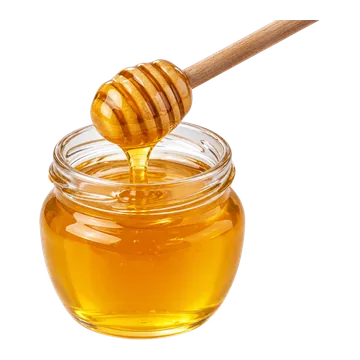 Honey
Nothing to watch: rated by margin of exposure
0.29 µgper servingHow it’s rated
No cap: no safe level is set for pyrrolizidine alkaloids; EFSA's 2017 reference point is a benchmark dose lower limit (BMDL10) of 237 µg/kg body weight/day for the sum of 1,2-unsaturated alkaloids, and a margin of exposure of 10,000 or more is low concern. European retail honey carries 14.5 (lower bound) to 27.5 (upper bound) µg/kg, so a 20 g serving carries 0.29 to 0.55 µg, a margin of about 58,000 to 30,000 for one serving a day. EFSA's adult honey-consumer margins run from over 1,000,000 to 32,000 at mean consumption and 593,000 to 13,500 at the 95th percentile. For the young population they run 790,000 to 8,800 (mean) and 339,000 to 7,600 (95th percentile), so the lower end falls below the 10,000 line. Honey from a single local source gave 50 to 100% higher exposure. These are European data, not Canadian.
Intake: adult honey consumers, EFSA scenario · Level in the food: 14.5 µg/kg (EFSA 2017: "Retail honey contained PA concentrations of 14.5–27.5 µg/kg (lower bound–upper bound)" (statistic not stated in the passage, read as mean; upper bound 27.5 µg/kg in notes; n not given there))
Measured on: EFSA CONTAM 2017 statement, retail honey (European occurrence data submitted to EFSA, 8 to 19 PAs per sample; not Canadian)
Flags and context, not rated by dose
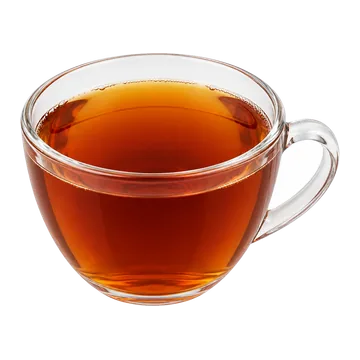 Black tea, brewed
Not rated yet
0.4 µgper servingper cupHow it’s rated
Not rated: no safe threshold is set for pyrrolizidine alkaloids, and the share a serving adds to the average adult's intake cannot be worked out, because EFSA measured them only in honey, tea and herbal infusions. Instead the margin of exposure is shown against EFSA's reference point of 237 µg/kg body weight/day, where 10,000 counts as low concern. For black-tea drinkers, mean exposure of 1.9-32.2 ng/kg body weight/day (lower bound, non-detects counted as zero) gives margins of 124,737 to 7,360 (lower bound) and 94,800 to 5,563 (upper bound, non-detects counted at the detection limit); at the 95th percentile, 14,906 to 3,371 (lower bound). At the high end of exposure the margin falls below 10,000.
Intake: one 250 mL (250 g) cup a day, 70 kg adult · Level in the food: 1.6 µg/L (mean, n = 339)
Measured on: EFSA 2016 exposure report dataset as used in the 2017 CONTAM statement (Member State + Article 36 samples, Scenario A): 'Black tea, infusion', as consumed; sum of the analysed 1,2-unsaturated PAs; EU, years not stated in the text read
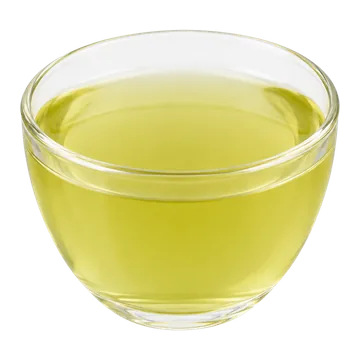 Green tea, brewed
Not rated yet
0.2 µgper servingper cupHow it’s rated
Not rated: pyrrolizidine alkaloids are genotoxic carcinogens with no safe level, so EFSA judges them by margin of exposure from a benchmark dose lower limit (BMDL10) of 237 µg/kg body weight/day, and no share of average intake is computed. Green tea infusion averages 0.8 µg/L at the lower bound (310 European samples), so a cup carries 0.2 µg, 2.9 ng/kg body weight for 70 kg: a margin of about 83,000, above the 10,000 level of concern. EFSA's adult mean exposure from green tea infusion is 0.25–1.6 ng/kg body weight/day.
Intake: one 250 mL (250 g) cup a day, 70 kg adult · Level in the food: 0.8 µg/L (mean, n = 310)
Measured on: EFSA CONTAM 2017 statement, final data set of tea and herbal infusions, 'Green tea, infusion' n = 310 samples, concentrations expressed as consumed (infusion), European monitoring data 2013-2016; lower bound (black tea 1.6 µg/L, n = 339).
Sources
- EFSA CONTAM Panel. Statement on the risks for human health related to the presence of pyrrolizidine alkaloids in honey, tea, herbal infusions and food supplements. EFSA Journal 2017;15(7):4908 · doi:10.2903/j.efsa.2017.4908 · PMID 32625569
efsa-2017-pa· full text read · CC BY-ND (EFSA Journal)