Nitrite
A preservative added to cured meats such as ham, bacon and sausages.
In the body: Too much nitrite changes the blood so it carries less oxygen.
None of the 2 rated foods needs a cap on how often you eat it. The closest is Ham, sliced: about 680 g, eaten alone, reaches the daily limit. 2 more reviewed foods carry it but aren’t rated by dose: shown for context, or not rated yet.
Builds up over time. Agencies set an amount you can take in every week, or every day, for life. A food measured against it shows the grams that reach it.
See also: Nitrate
The limit
- The agency’s figure0.07 mg nitrite ion/kg body weight/day
- For a 70 kg adult4.9 mg nitrite ion a day
- Basisacceptable daily intake (ADI): what you can take in every day for life
acceptable daily intake (ADI) (BMD approach; increased methaemoglobin); EFSA ANS 2017 - Average adult intake0.03 mg/kg body weight/day EFSA 2017: exposure from the additive did not exceed the acceptable daily intake (ADI) for the general population, except a slight exceedance in children at the highest percentile; all sources together (additive, natural presence, contamination) would exceed the ADI in infants, toddlers and children at the mean and in all age groups at the highest exposure
- Source ?EFSA 2017
Reviewed foods that carry it
4 reviewed foods carry it, 2 of them rated by dose.
Grams to the limit ?
Grams of each food that reach the limit in its window, for a 70 kg adult. Fewest first: those are the foods to watch.
Known background: an average adult already takes in 0.03 mg/kg body weight/day. Where the dataset allows, the grams below are the room left after that intake (the median of the surveys’ averages where EFSA gives one, otherwise the highest); beside each, the same limit counted from zero, the food eaten alone.
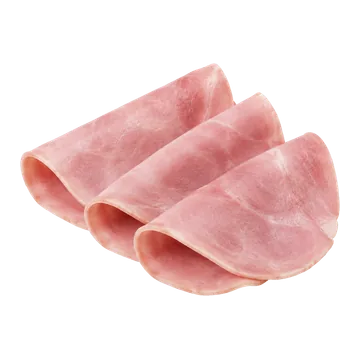 Ham, sliced
Nothing to watch: under the limit for a 55 g serving
680greaches the limit in a dayCounted from zero: this food eaten alone.0.394 mg per 55 g servingNationalporkboard 2009 · grade B ?
How it’s rated
No cap: EFSA's 2017 acceptable daily intake (ADI) for nitrite is 0.07 mg nitrite ion/kg body weight/day, 4.9 mg a day for 70 kg. Eaten alone, about 684 g a day would reach it; a 55 g serving carries 0.39 mg, 8% of the ADI. Background intake from all sources is shown, not subtracted (EFSA 2017, adults: mean 0.03 mg/kg body weight/day, 2.1 mg a day; high exposure 0.05, 3.5 mg a day, EU). One serving adds 19% of the mean and 11% of the high figure.
Intake: one 55 g reference serving a day, 70 kg adult · Level in the food: 7.16 ppm (category mean, 'whole-muscle brine cured cooked' (US retail survey, 467-470 cured meats, 6 categories, 5 cities))
Measured on: Nuñez de González 2012 / Keeton national survey, US retail, 2008-09; as-sold residual nitrite. The product-to-category mapping (ham in 'whole-muscle brine cured cooked') is my inference, not stated in what was read; n for the category not read
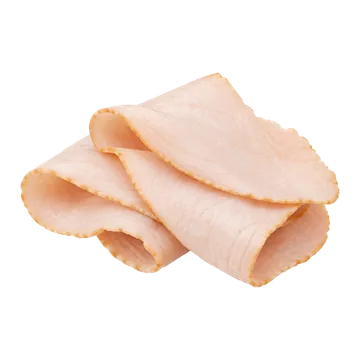 Deli turkey breast
Nothing to watch: under the limit for a 55 g serving
680greaches the limit in a dayCounted from zero: this food eaten alone.0.394 mg per 55 g servingNationalporkboard 2009 · grade B ?
How it’s rated
No cap: EFSA's 2017 acceptable daily intake (ADI) for nitrite ion is 0.07 mg/kg body weight/day, 4.9 mg a day. Eaten alone, about 684 g a day would reach it; one 55 g serving carries 0.39 mg, 8% of the ADI. The figure is a pork-industry-funded US retail survey mean (7.16 ppm, 2008-09) for 'whole-muscle brine cured cooked' products, where placing deli turkey is inferred; uncured (celery-cured) turkey is not shown to carry less. Background intake from all sources (EFSA 2017: mean 0.03 mg/kg body weight/day in adults, 2.1 mg/day; high exposure 0.05, 3.5 mg/day) is shown, not subtracted.
Intake: one 55 g reference serving a day, 70 kg adult · Level in the food: 7.16 ppm (category mean, 'whole-muscle brine cured cooked' (US retail survey; category assignment inferred))
Measured on: Nuñez de González 2012 / Keeton national survey, US retail, 2008-09; as-sold residual nitrite. Whether deli turkey was classed in 'whole-muscle brine cured cooked' is my inference (not stated in what was read), and it applies only to cured, not 'uncured' (celery-cured) turkey
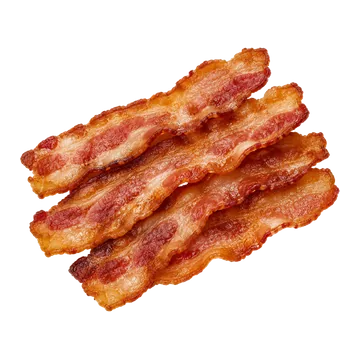 Bacon, pan-fried
Not rated yet for a 15 g serving
No gram figure for this foodWe have no measurement of this in this food, so there is no gram figure.Nationalporkboard 2009 · grade B ?
How it’s rated
Not rated: EFSA's 2017 acceptable daily intake for nitrite is 0.07 mg nitrite ion/kg body weight/day, 4.9 mg a day. The only survey figure found (7.31 ppm) is for uncooked bacon as sold, and this food is cooked bacon; without a sourced cooking factor the as-eaten amount is left missing. For information only, raw bacon at 7.31 ppm would reach the limit at about 670 g a day, and the cooked 15 g serving contains less by an unsourced amount, since EFSA 2017 reports that cooking significantly reduced residual nitrite in a dry-cured sausage study.
Intake: not applicable (flag)
Measured on: as-eaten (cooked) residual nitrite missing: the only figure found is as sold, raw
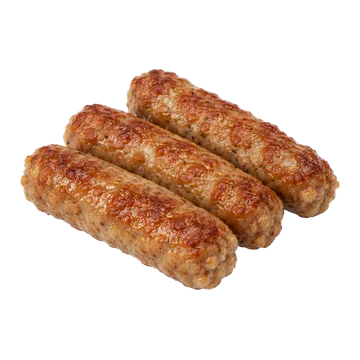 Pork sausage, pan-fried
Not rated yet for a 55 g serving
No gram figure for this foodWe have no measurement of this in this food, so there is no gram figure.How it’s rated
Not rated: EFSA's acceptable daily intake for nitrite is 0.07 mg nitrite ion/kg body weight/day (2017), 4.9 mg a day for 70 kg. No nitrite level for this fresh sausage, which is not labelled cured, was found, so there is no grams figure. From the additive alone EFSA found no exceedance for the general population, except slightly in children at the highest percentile; from all dietary sources together the limit would be exceeded in infants, toddlers and children at the mean.
Intake: not applicable
Measured on: added nitrite (E 249, E 250) in CURED sausages; the imported fresh breakfast sausage is not labelled cured; no agency measurement of residual nitrite in a fresh sausage found
Sources
- EFSA Panel on Food Additives and Nutrient Sources added to Food (ANS), Mortensen A, et al. (2017). Re-evaluation of potassium nitrite (E 249) and sodium nitrite (E 250) as food additives. EFSA Journal 15(6):e04786 (article number 4786). doi:10.2903/j.efsa.2017.4786. PMC7009987. · PMID 32625504
efsa-2017-nitrite· full text read · CC BY-ND 4.0 - National Pork Board (Pork Checkoff), 'A National Survey of the Nitrite/Nitrate Concentrations in Cured Meat Products and Non-meat Foods Available at Retail' (Keeton, Texas A&M; completed 2009-08-04; project 08-124). Funder summary page of the survey behind Nuñez de González 2012.
nationalporkboard-keeton-2009-nitrite· page · licence not recorded