Fluoride
In the body: Too much fluoride over years can lead to skeletal fluorosis, from occasional joint pain or stiffness to weakened bones, muscle wasting and nerve problems; in the United States it is extremely rare. In children whose teeth are still forming, it can mottle the teeth.
Rated by dose, one serving each: none of the 3 rated foods goes past the limit.
Too much of a nutrient. For a food measured against it: the grams that reach the upper intake level, eaten every day.
The limit
- The agency’s figure10 mg/day
- BasisHealth Canada DRI, adults 19-50 y: fluoride AI 4 mg/day (men), 3 (women); upper intake level (UL) 10 mg/day (upper intake level (UL))
- Average adult intake EFSA's tolerable upper intake level for adults is 7 mg/day (2005); EFSA set an adequate intake in 2013.
- Applies toall sources (water, beverages, foods, dental products)
- Source ?Health Canada, dietary reference intakes
Reviewed foods that carry it
3 reviewed foods carry it, 3 of them rated by dose. 4 measurements in all. A preparation measured more than once gets one line, the measurement the dataset leads with or a stricter one, named beside the food; the others fold under it.
How often you can eat it ?
One realistic serving each, rated by dose, not by presence. The most restrictive rating comes first, then the largest dose per serving.
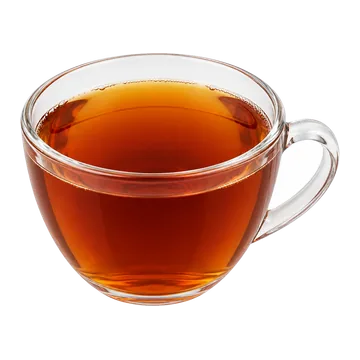 Black tea, brewed
Nothing to watch: under the limit
932 µgper serving9.3% of the 10 mg-a-day limit shown aboveUS food database (USDA SR Legacy) · grade C ?
This amount varies a lot from one batch to the next: the figures we hold for this food differ twofold or more. Every figure on this site uses the same one, the food’s listed value.
How it’s rated
No cap: the tolerable upper intake level for fluoride is 10 mg/day for adults, from all sources (Health Canada, NASEM); EFSA's is 7 mg/day from age 15 (2005). One cup of brewed black tea carries 0.93 mg on the USDA listing, 9.3% of 10 mg (13% of 7); about 11 cups would reach 10 mg and 7.5 cups 7 mg. Measured teas vary a lot: filter-bag black teas from Slovenia averaged 0.89 mg a cup (the strongest 1.20 mg), five Bangkok brands 0.64 mg, and loose-leaf tea 0.21 mg.
Intake: one 250 mL (250 g) cup a day, 70 kg adult · Level in the food: 372.9 µg/100 g (listed value, n = 63)
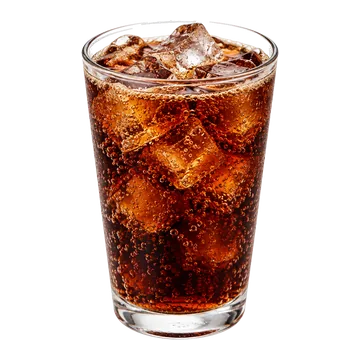 Diet cola
Nothing to watch: under the limit
224 µgper serving2.2% of the 10 mg-a-day limit shown aboveUS food database (USDA SR Legacy) · grade C ?
How it’s rated
No cap: the tolerable upper intake level for fluoride in adults is 10 mg/day (Health Canada). One serving carries 224 µg, 2.2% of it. The concentration comes from a compiled food-composition listing, not a Canadian survey.
Intake: one 375 mL reference amount (375.4 g at 1.00101 g/mL) a day, 70 kg adult · Level in the food: 59.8 µg/100 g (listed value, n = 142)
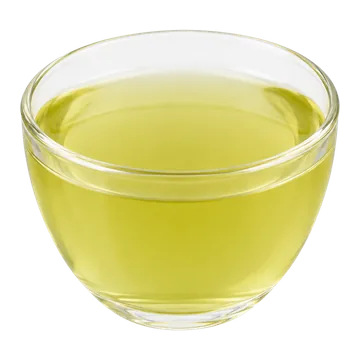 Green tea, brewed
Nothing to watch: under the limit
0.212 mgper servingper cup (250 mL)2.1% of the 10 mg-a-day limit shown abovePavlovic 2023 · grade A ?
How it’s rated
No cap: the upper intake level for fluoride is 10 mg/day for adults (Health Canada/NASEM); EFSA's is 7 mg/day. Loose-leaf green tea averages 0.85 mg/L (9 products, ultrapure water), so one 250 mL cup carries 0.212 mg, 2.1% of 10 mg (3.0% of 7), and 47.2 cups would reach 10 mg. Products ranged 0.34–1.43 mg/L (strongest cup 0.36 mg), and tap water adds its own fluoride.
Intake: one 250 mL (250 g) cup a day, 70 kg adult · Level in the food: 0.85 mg/L (mean of 9 loose leaf green products, n = 9)
Measured on: Pavlovic 2023, 35 commercial teas bought in Slovenia in 2022 (filter bags in shops, loose teas in teahouses); green loose-leaf teas (GL1-GL9), n = 9 products, each infused 1 g in 100 mL boiling ultrapure water for 5 min (a filter bag even for loose leaf), 2-3 replicate measurements per product; mean of the per-product means, computed here from Table 2. mg/L taken equal to µg/g at 1.00 g/mL.
1 other measurement of this food
- Slovenia 2022, 5 filter-bag green teas
Nothing to watch: under the limit
0.723 mgper servingper cup (250 mL)7.2% of the 10 mg-a-day limit shown abovePavlovic 2023 · grade A ?
How it’s rated
No cap: the upper intake level for fluoride is 10 mg/day for adults (Health Canada/NASEM); EFSA's is 7 mg/day. Green filter-bag tea averages 2.892 mg/L (5 products, brewed in ultrapure water), so one 250 mL cup carries 0.723 mg, 7.2% of 10 mg (10.3% of 7), and 13.8 cups would reach 10 mg. Products ranged 2.76–3.08 mg/L (strongest cup 0.77 mg), and tap water adds its own fluoride.
Intake: one 250 mL (250 g) cup a day, 70 kg adult · Level in the food: 2.892 mg/L (mean of 5 filter bag green products, n = 5)
Measured on: Pavlovic 2023, 35 commercial teas bought in Slovenia in 2022 (filter bags in shops, loose teas in teahouses); green filter-bag teas (GF1-GF5), n = 5 products, each infused 1 g in 100 mL boiling ultrapure water for 5 min (a filter bag even for loose leaf), 2-3 replicate measurements per product; mean of the per-product means, computed here from Table 2. mg/L taken equal to µg/g at 1.00 g/mL.
Sources
- USDA FoodData Central, SR Legacy, 2018-04
fdc-sr-legacy-2018-04· dataset · CC0 1.0 (public domain) - Health Canada, Dietary reference intakes tables: Reference values for elements
hc-dri-elements· page · Government of Canada terms (Crown copyright; not OGL) - Pavlovic A, Tavcar G, Ponikvar-Svet M, et al. Fluoride and Aluminium in Tea (Camellia sinensis L.)-Tea Quality Indicators and Risk Factors for Consumers. Molecules 2023;28(17):6396 · doi:10.3390/molecules28176396 · PMID 37687225
pavlovic2023· full text read · CC BY (PMC open access)