Campylobacter
In the body: Food poisoning: diarrhea (sometimes bloody), cramps and fever.
Not rated by dose: a flag on 4 reviewed foods, among them roast chicken breast, Chicken thigh, raw and Chicken liver, raw. The list below has a line for each of 6 preparations.
Depends how you handle it. Safe one way, risky another: cook it, soak it, boil it or freeze it, as the agency says.
The reference value and where it comes from
- The agency’s figureno agency dose value
- BasisHealth Canada safe internal cooking temperatures
- Source ?Health Canada, safe cooking temperatures
Reviewed foods that carry it
4 reviewed foods carry it; none is rated by dose. A food counts once, as in the foods list: preparations sharing a page (raw and cooked, canned) count once; one with its own page counts apart. Below, one line for each of 6 preparations.
How often you can eat it ?
No food here is rated by dose. Each line says why it’s listed: a flag for the people the source names, advice on handling it, or context.
Flags and context, not rated by dose
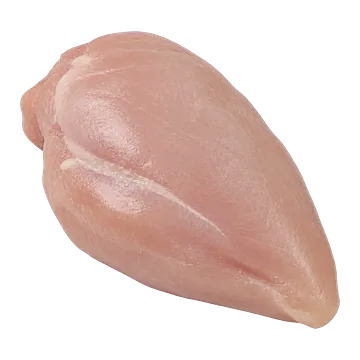 Chicken breast, raw
Worth knowing
How it’s rated
Not dose-rated. Health Canada: cook breasts to 74 C (165 F), never rinse raw poultry
Intake: acute and preparation hazard, not a daily-dose hazard · Level in the food: 43.1 % of retail raw chicken parts positive (prevalence)
Measured on: CFIA National Microbiological Baseline Study in Broiler Chicken, Dec 2012-Dec 2013, retail parts (95% CI 40.3-45.8); skinless boneless breasts not significantly different from skin-on thighs
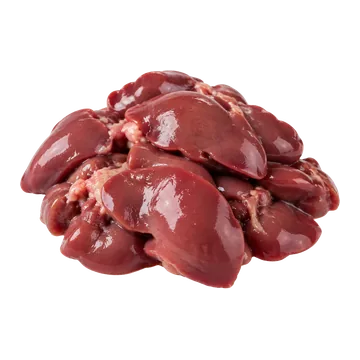 Chicken liver, raw
Worth knowing
PubMed 40840289 · grade B ?
How it’s rated
Flagged for handling and cooking: the risk lies in handling raw livers and in undercooked or pink livers (pâté, parfait); liver cooked through is the safe end. In a Spanish study of raw broiler livers at evisceration (56 flocks, two slaughterhouses; not Canadian retail), 77.9% were positive on the surface and 35.7% in inner tissue, with loads above 10^3 CFU per liver in 40.1% of surface samples and 6.6% of inner-tissue samples. No grams figure.
Intake: not applicable (flag) · Level in the food: 77.9 % of chicken livers positive (surface); 35.7% in inner tissue (prevalence (not a concentration), n = 168)
Measured on: raw broiler livers sampled at evisceration, 56 flocks, two slaughterhouses, Spain (not Canadian retail)
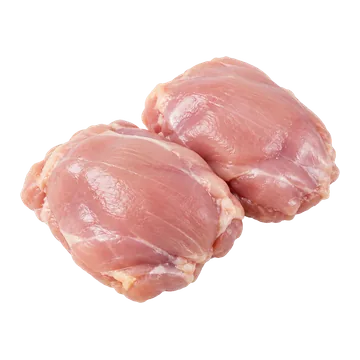 Chicken thigh, raw
Worth knowing
How it’s rated
Flagged: cook pieces to 74°C (165°F), as for Salmonella; preparation decides the risk. CFIA found Campylobacter on 42.6% of raw retail skin-on thighs, with higher counts than on skinless breasts.
Intake: not applicable (a handling hazard, not a dose)
Measured on: CFIA National Microbiological Baseline Study in Broiler Chicken 2012-13, RETAIL fresh skin-on bone-in thighs (n = 406 by the agar-plating arm of Table 16), raw, unweighted; retail whole carcasses 37.9%, breasts 43.3%, parts 43.1%; summer 50.3% against 30.1% in spring (all retail products)
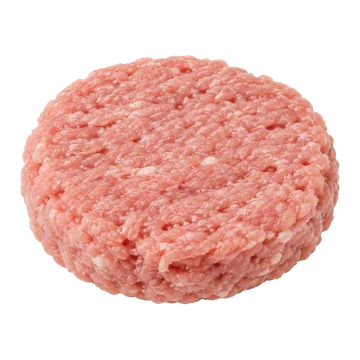 Ground turkey, 93% lean, raw
Worth knowing
PubMed 19343933 · grade B ?
How it’s rated
Flagged for a cooking warning (74 °C): Campylobacter was recovered from 46% (188 of 412) of raw retail turkey meat samples in southern Ontario, 2003-2004 (turkey pieces, not ground turkey; abstract only).
Intake: raw handling and cooking, not a serving
Measured on: Cook, Reid-Smith, Irwin et al. 2009 (same 465 raw turkey meat samples)
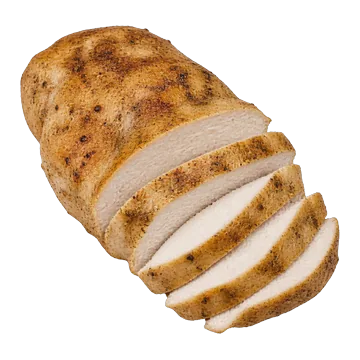 Chicken breast, roasted
Context
Health Canada, Poultry safety · grade A ?
How it’s rated
Context: roasted through, the breast is past this risk. Raw poultry often carries Salmonella or Campylobacter, and Health Canada says cooking poultry to a safe internal temperature kills the bacteria (74 °C for pieces). What still applies is the leftovers rule: refrigerate within 2 hours and reheat to 74 °C.
Intake: acute and preparation hazard, not a daily-dose hazard
Measured on: Health Canada poultry safety advice: cooked poultry; no occurrence figure applies to the cooked food
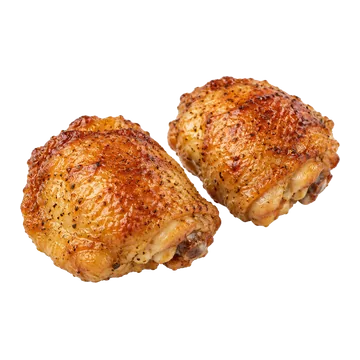 Chicken thigh, roasted
Context
How it’s rated
Context: this thigh is bought cooked and ready to eat. CFIA found Campylobacter on 42.6% of raw retail skin-on thighs, and Health Canada says cooking poultry to a safe internal temperature kills the bacteria, so the risk here is how the cooked chicken is kept: see the leftovers rule.
Intake: not applicable (a handling hazard, not a dose)
Measured on: CFIA National Microbiological Baseline Study in Broiler Chicken 2012-13, RETAIL fresh skin-on bone-in thighs (n = 406 by the agar-plating arm of Table 16), raw, unweighted; retail whole carcasses 37.9%, breasts 43.3%, parts 43.1%; summer 50.3% against 30.1% in spring (all retail products)
Sources
- CFIA, National Microbiological Baseline Study in Broiler Chicken, December 2012 - December 2013 (page dated 2016-08-16)
cfia-broiler-baseline-2012-13· page · Government of Canada terms (Crown copyright) - CFIA (2016-05-12). National Microbiological Baseline Study in Broiler Chicken, December 2012 - December 2013 (study under the federal, provincial and territorial Pathogen Reduction Initiative).
cfia-mbs-broiler-2016· full text read · Government of Canada terms (Crown copyright; not OGL) - Health Canada, Poultry safety (dcterms.modified 2019-02-06)
hc-poultry-safety· page · Government of Canada terms (Crown copyright; not OGL) - Health Canada, Safe cooking temperatures (published 2024-06-04; page details 2020-05-29)
hc-safe-cooking-temps· page · Government of Canada terms (Crown copyright; not OGL) - Cook A, Reid-Smith R, Irwin R, et al. (2009 Mar). Antimicrobial resistance in Campylobacter, Salmonella, and Escherichia coli isolated from retail turkey meat from southern Ontario, Canada. J Food Prot · PMID 19343933
pmid:19343933· abstract only · licence not recorded - Manzanares-Pedrosa A, Szumilas J, Ayats T, et al. (2025 Nov) Campylobacter jejuni and Campylobacter coli in broiler chicken livers: high prevalence and surface contamination, but low load in the inner tissue (title as shown in the PubMed list, truncated). Poult Sci · doi:10.1016/j.psj.2025.105646 · PMID 40840289
pmid:40840289· abstract only · CC BY-NC-ND (Europe PMC licence field, PMC12396429)