Bisphenol A (BPA)
A chemical in some can linings and plastics that can pass into food.
In the body: EFSA’s 2023 limit rests on effects of BPA on the immune system seen in animal studies.
An average adult already takes in 580 to 660 times the daily limit from food as a whole, so no one food is rated against it. 4 reviewed foods carry it, among them canned tomatoes, canned kidney beans and Sockeye salmon, canned.
Builds up over time. Agencies set an amount you can take in every week, or every day, for life. A food measured against it shows the grams that reach it.
This page holds the agency’s limit for BPA. “BPA from can linings” flags the canned foods that can carry it. See also: BPA from can linings
The limit
- The agency’s figure0.2 ng/kg body weight/day
- For a 70 kg adult14 ng a day
- Basistolerable daily intake (TDI): what you can take in every day for life
tolerable daily intake (TDI) (EFSA 2023 re-evaluation) - Average adult intake116–132 ng/kg body weight/day EFSA 2023, from its 2015 exposure data: adults' average dietary exposure is 116 to 132 ng/kg body weight a day (lowest in people 65 and over, highest in women 18 to 45), 580 to 660 times the tolerable daily intake (TDI). EFSA notes the 2015 figures may overstate today's exposure, but the gap is too large for that to change its conclusion.
- Agencies disagreeEFSA cut its BPA limit 20,000-fold in 2023, from 4 µg to 0.2 ng per kilogram a day, and the EU has since banned BPA in most food packaging. Germany’s risk agency (BfR) and the European Medicines Agency publicly disagreed with how the new figure was set; BfR proposed a limit 1,000 times higher. The US FDA’s last review found BPA safe at the levels found in food. We show EFSA’s figure because it is the newest.
- Source ?EFSA 2023
Reviewed foods that carry it
4 reviewed foods carry it; none is rated against the limit, because an average adult’s intake is already past it.
Grams to the limit ?
What one serving of each food comes to, as a share of the daily limit for a 70 kg adult, on top of what food as a whole already brings. The grams that would reach the limit, eaten alone, are only for scale: the limit is already used up, so no food is singled out.
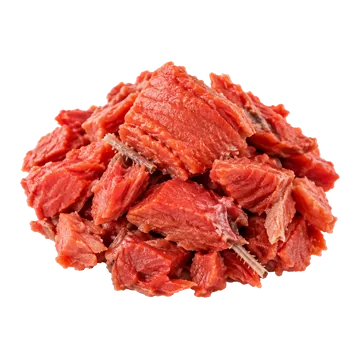 Sockeye salmon, canned
Worth knowing for a 55 g serving
230×the daily limit in one 55 g serving, on top of what food already bringsFor scale: under 1 g a day, eaten alone, would reach it.An average adult’s intake is already at or past this limit before this food, so there is no room left to count grams against.3.2 µg (BPA) per 55 g servingHealth Canada Total Diet Study, BPA · grade B ?
How it’s rated
Flagged: EFSA's 2023 tolerable daily intake (TDI) for bisphenol A is 0.2 ng/kg body weight/day, 14 ng a day for 70 kg. Eaten alone, about 0.24 g of canned fish in one day would reach it on the 5-composite mean of 58.57 ng/g (2.4 g on the 2016 composite alone); a 55 g can portion carries 3.2 µg, 230 times the TDI. EFSA 2023 says mean dietary exposure already exceeds the TDI by two to three orders of magnitude, so what a serving adds could not be settled. Health Canada's levels fell from 51-109 ng/g (2009-2012) to 5.86 ng/g (2016), and the category is canned tuna and salmon together.
Intake: 55 g canned (HC TRA I.4), one serving a day · Level in the food: 58.57 ng/g (mean of 5 composites (2009-2016), n = 5)
Measured on: Health Canada Total Diet Study, DD03 'Fish, canned (tuna and Salmon)', as consumed, 5 composites: Calgary 2009 109, St. John's 2010 65, Ottawa 2011 62, Vancouver 2012 51, Quebec 2016 5.86 ng/g (detection limit 0.38 ng/g; 2016 method detection limit 1.37). Composite food code DD03 is canned TUNA AND SALMON together (the share of each is not stated), so this is a category figure, not a salmon measurement. Can lining, not the fish, is the source.
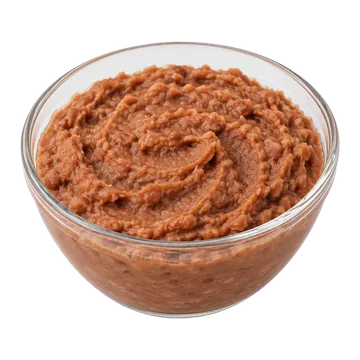 Refried beans, canned
Worth knowing for a 90 g serving
170×the daily limit in one 90 g serving, on top of what food already bringsFor scale: under 1 g a day, eaten alone, would reach it.An average adult’s intake is already at or past this limit before this food, so there is no room left to count grams against.2,330 ng (BPA, 90.35 g × 25.8 ng/g) per 90 g servingHealth Canada Total Diet Study, BPA · grade B ?
How it’s rated
Flagged for bisphenol A from can linings: EFSA's 2023 tolerable daily intake is 0.2 ng/kg body weight/day, 14 ng a day at 70 kg. At 25.8 ng/g (Health Canada Total Diet Study, canned baked beans as a proxy, 4 composites), 0.54 g of canned beans in a day, eaten alone, would reach it, and a 90 g serving carries about 166 times the limit. CFIA surveys of canned beans read much lower (a mean of 1.0 ng/g in pinto beans, 4 samples, still about 6 times the limit), so the size depends on the can lining and brand.
Intake: one 90 g serving a day, 70 kg adult · Level in the food: 25.8 ng/g (mean of 4 composites (24, 18, 25, 36.14 ng/g; 2009, 2010, 2012, 2016; equal-weight), n = 4)
Measured on: related product: Health Canada TDS BPA, GG01 'Beans, Baked, canned' (Food Group 'Canned Legumes'), as consumed, composites from Calgary 2009, St. John's 2010, Vancouver 2012, Quebec City 2016; detection limit (detection limit) 0.38 ng/g
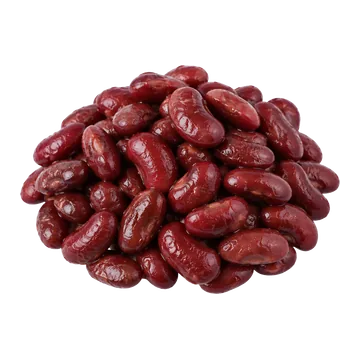 Kidney beans, canned
Not rated yet
No gram figure for this foodWe have no measurement of this in this food, so there is no gram figure.PubMed 26372889 · grade B ?
How it’s rated
Not rated: EFSA's 2023 tolerable daily intake for bisphenol A is 0.2 ng/kg body weight/day, 14 ng a day for 70 kg. No kidney-bean figure was found. On a related product (Health Canada canned baked beans, 18–25 ng/g), 0.56 g to 0.78 g would reach the limit, and 0.14 g at the single highest recent sample (103 ng/g). Not rated because the value belongs to a related product and can-lining BPA is treated as context. Recorded because it is the one hazard on which canned beans differ from cooked beans.
Intake: not applicable (flag)
Measured on: no kidney-bean figure found; Health Canada TDS canned baked beans, a related canned product (bean class and sauce not stated); BPA transfer depends on the can lining
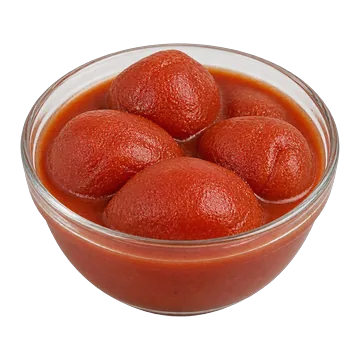 Tomatoes, canned
Context for a 125 g serving
No gram figure for this foodShown for context, not rated by dose: “How it’s rated” says why, so there is no gram figure here.Health Canada Total Diet Study, BPA · grade A ?
How it’s rated
Shown as context, not rated: 3.76 ng/g x 125 g = 0.47 µg, 6.7 ng/kg body weight for 70 kg, about 33 times EFSA's 2023 tolerable daily intake of 0.2 ng/kg body weight/day. EFSA found that average and high dietary exposures in every age group exceed that limit by two to three orders of magnitude, so one food set against a whole-diet, lifetime limit is indicative only. No Health Canada tolerable intake was found.
Intake: one 125 mL serving a day (Health Canada V.1; 125 g by the 1 g/mL convention), 70 kg adult · Level in the food: 3.76 ng/g (mean, n = 7)
Measured on: Health Canada TDS BPA: GG21 canned tomatoes and sauce, 7 records (all 7 detected) 2008 (2.127 and 1.764, Quebec City), 2009 Calgary 8.9, 2010 St. John's 2.8, 2011 Ottawa 2.9, 2012 Vancouver 2.5, 2016 Quebec 5.32; fresh tomatoes (GG20) all below detection limit (detection limit)/MDL in 2009-2012 and 2016
Sources
- EFSA CEP Panel (2023) Re-evaluation of the risks to public health related to the presence of bisphenol A (BPA) in foodstuffs. EFSA Journal 21(4):6857 · doi:10.2903/j.efsa.2023.6857 · PMID 37089179
efsa-2023-bpa· full text read · CC BY-ND - Health Canada, Canadian Total Diet Study - Bisphenol A (BPA) 2008-2012, 2016 (open.canada.ca, dataset 0497695c-dd4c-42d6-8201-45d63509f416, resource a75e3f05-5de9-4ae6-8da6-4d8d1b4bc75c)
hc-tds-bpa· dataset · Open Government Licence - Canada 2.0 - Cao XL, et al. Levels and temporal trend of bisphenol A in composite food samples from Canadian Total Diet Study 2008-2012. Food Addit Contam A 2015 · doi:10.1080/19440049.2015.1088663 · PMID 26372889
pmid:26372889· abstract only · licence not recorded