Vibrio
In the body: Brings watery diarrhea and cramps; it can be severe in people with liver disease.
Not rated by dose: a flag on 3 reviewed foods, among them Pacific oysters, raw, Clams, cooked and Mussels, cooked. The list below has a line for each of 4 preparations.
Depends how you handle it. Safe one way, risky another: cook it, soak it, boil it or freeze it, as the agency says.
The reference value and where it comes from
Reviewed foods that carry it
3 reviewed foods carry it; none is rated by dose. A food counts once, as in the foods list: preparations sharing a page (raw and cooked, canned) count once; one with its own page counts apart. Below, one line for each of 4 preparations.
How often you can eat it ?
No food here is rated by dose. Each line says why it’s listed: a flag for the people the source names, advice on handling it, or context.
Flags and context, not rated by dose
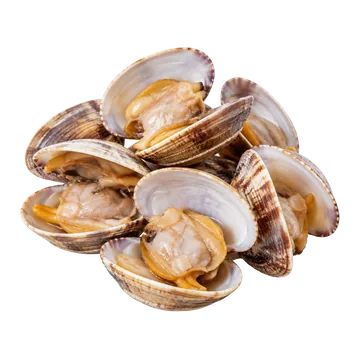 Clams, cooked
Worth knowing
How it’s rated
Flagged for raw or lightly cooked clams: Vibrio parahaemolyticus is a risk of raw or undercooked bivalves, not of thoroughly cooked clams, and there is no dose figure. In Canada in 2015, 82 cases were linked to raw shellfish, mainly oysters; no clam-specific record was found.
Intake: raw or undercooked shellfish
Measured on: Canada 2015: 82 cases of Vibrio parahaemolyticus linked to raw shellfish (oysters primarily); no clam-specific record found
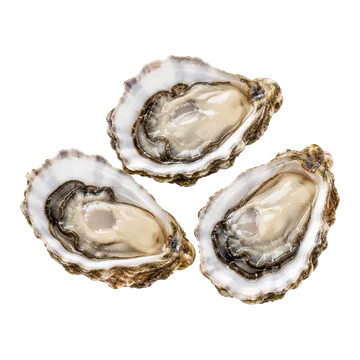 Eastern oysters, raw
Worth knowing
How it’s rated
Flagged for anyone eating raw or undercooked oysters: Vibrio parahaemolyticus is an acute infection risk, with no dose figure; the agency advice is the finding. In 2015 Canada had 82 cases (British Columbia 60, Alberta 19, Saskatchewan 1, Ontario 2), linked mainly to oysters. PHAC names the at-risk groups: pregnant women, people with weakened immune systems, liver disease or low stomach acidity, young children and the elderly. PHAC and Health Canada advise cooking shellfish to an internal temperature of 74 °C (165 °F). The risk does not apply to canned or cooked oysters.
Intake: raw oysters
Measured on: Canada 2015: 82 cases of Vibrio parahaemolyticus, British Columbia 60, Alberta 19, Saskatchewan 1, Ontario 2; onset 26 May to 3 September; 'primarily oysters'; BC oysters harvested for raw consumption on or before 18 August 2015 recalled
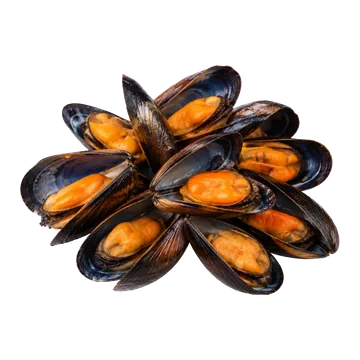 Mussels, cooked
Worth knowing
How it’s rated
Flagged for raw or lightly cooked mussels, not cooked ones: Vibrio parahaemolyticus is a matter of the form eaten, not a dose. In Canada in 2015, 82 cases were linked to raw shellfish, primarily oysters; no mussel-specific record was found.
Intake: raw or undercooked shellfish
Measured on: Canada 2015: 82 cases of Vibrio parahaemolyticus linked to raw shellfish (oysters primarily); no mussel-specific record found
- Pacific oysters, raw
Worth knowing
How it’s rated
Flagged for anyone eating raw or undercooked oysters: Vibrio parahaemolyticus is an acute infection risk, with no dose figure; the agency advice is the finding. In 2015 Canada had 82 cases (British Columbia 60, Alberta 19, Saskatchewan 1, Ontario 2), linked mainly to oysters. PHAC names the at-risk groups: pregnant women, people with weakened immune systems, liver disease or low stomach acidity, young children and the elderly. PHAC and Health Canada advise cooking shellfish to an internal temperature of 74 °C (165 °F). The risk does not apply to canned or cooked oysters.
Intake: raw oysters
Measured on: Canada 2015: 82 cases of Vibrio parahaemolyticus, British Columbia 60, Alberta 19, Saskatchewan 1, Ontario 2; onset 26 May to 3 September; 'primarily oysters'; BC oysters harvested for raw consumption on or before 18 August 2015 recalled
Sources
- Public Health Agency of Canada, Public Health Notice - Outbreak of Vibrio parahaemolyticus linked to raw shellfish, 15 October 2015 (final update)
phac-2015-vibrio-raw-shellfish· secondary source · Government of Canada terms (Crown copyright)