Sulphites
In the body: In sensitive people, sulphites can set off asthma attacks or hives.
Not rated by dose: a flag on 5 reviewed foods, among them French fries, frozen, oven-baked, Lemon juice and Shrimp, cooked.
For some people. Allergies, medicines and medical conditions: a flag for the people the source names, no wider.
The reference value and where it comes from
- The agency’s figureno agency dose value
- Basispriority allergen (Health Canada lists sulphites among the priority allergens)
- Source ?Health Canada, priority allergens
Reviewed foods that carry it
5 reviewed foods carry it; none is rated by dose.
How often you can eat it ?
No food here is rated by dose. Each line says why it’s listed: a flag for the people the source names, advice on handling it, or context.
Flags and context, not rated by dose
 French fries, frozen, oven-baked
Worth knowing
Health Canada · grade B ?
How it’s rated
Flagged for sulphite-sensitive people, including some people with asthma; not scored. Sulphites must be declared on a packaged product's label, so check the ingredient list.
Intake: not applicable (flag)
Measured on: Label-based flag, no measurement: Health Canada's 'Sulphites - Priority allergens' page (page details 2017-09-05) lists 'Dehydrated, mashed, peeled and pre-cut potatoes, and frozen French fries' among foods that often contain sulphites
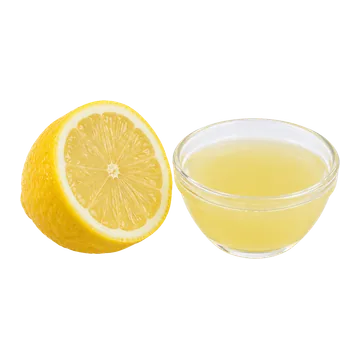 Lemon juice
Worth knowing
Health Canada · grade A ?
How it’s rated
Flagged for people with asthma: Health Canada names bottled lemon and lime juices and concentrates among foods that often contain sulphites, and people with asthma are most at risk. Labelling applies at 10 ppm or more of added sulphites. No measured ppm for lemon juice exists; the CFIA sulphite survey (2015–19) holds no juice. The flag attaches to bottled juice; freshly squeezed juice carries none unless added.
Intake: not applicable (person-specific)
Measured on: Bottled lemon and lime juices and concentrates (the sold, shelf-stable form). Freshly squeezed juice carries none unless added.
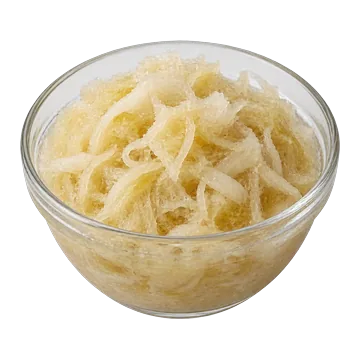 Sauerkraut
Worth knowing
How it’s rated
Person-specific: sulphites are a Health Canada priority allergen, and some shelf-stable sauerkraut differs from refrigerated raw kinds here, a choice the label shows. No quantity is declared on the records.
Intake: one 30 g serving · Level in the food: 13 labels naming bisulfite/metabisulfite (count, n = 60)
Measured on: label observation: 13 of 60 branded canned/jarred sauerkraut records name sodium bisulfite or metabisulfite in the ingredients (FDC branded pull); raw/unpasteurised labels mostly list only cabbage, salt. Re-pull of the same first 60 hits (FDC portal search; same 533-1,040 range and 653.5 median): 13 name a bisulfite or metabisulfite, the 13th spelled "METABISULPHITE" (a Lithuanian import). Schwartz's "REFRIGERATED UNPASTEURIZED" also lists sodium bisulfite, so a raw/unpasteurised label does not guarantee sulphite-free.
 Shrimp, cooked
Worth knowing
Health Canada, Crustaceans and Molluscs - Priority food allergens · grade B ?
How it’s rated
Flagged for people sensitive to sulphites: Health Canada groups sulphites with the priority allergens, and shrimp is commonly treated with sulphites against melanosis (blackening). No measured sulphite level for shrimp was found, so the amount is the missing figure.
Intake: not applicable (flag)
Measured on: no measured sulphite in shrimp found: the CFIA 'Sulphites in selected foods 2015-2019' report does not list shrimp
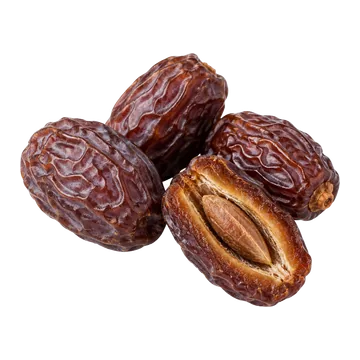 Medjool dates
Not rated yet
CFIA 2015–2019 · grade B ?
How it’s rated
Not rated: sulphites are a priority allergen, a person-specific risk with no dose rating. CFIA found none in 40 imported dates (positives only in cherimoya, longan, lychee and tamarind), and results at or below 10 ppm are treated as unreliable. Dried fruit in general is a known source, so a sulphured dried date would need a label check.
Intake: one 40 g serving
Measured on: CFIA 'Sulphites in selected foods 2015-2019', imported fresh fruit (retail, 6 Canadian cities), 'Dates' 40 samples; positives were found only in cherimoya, longan, lychee and tamarind. Results at or below 10 ppm are treated as unreliable by CFIA. Whether the 40 were Medjool, deglet noor or mixed is not stated.
Sources
- CFIA, Sulphites in selected foods, 2015 to 2019 (report PDF)
cfia-sulphites-2015-2019· secondary source · Government of Canada terms (Crown copyright) - USDA FoodData Central Branded Foods: sauerkraut label records (60 canned/jarred, 9 raw), pulled via API 2026-10-16
fdc-branded-api-2026-10-16· secondary source · CC0 (USDA) - Health Canada, Common food allergens (priority allergens list)
hc-priority-allergens· page · Government of Canada terms (Crown copyright; not OGL) - Health Canada, Crustaceans and Molluscs - Priority food allergens (2017, Cat. H164-156/5-1-2017E-PDF)
hc-priority-allergens-crustaceans-molluscs· secondary source · Government of Canada terms (Crown copyright) - Health Canada. Sulphites - Priority allergens (page details 2017-09-05).
hc-sulphites-priority-allergens· page · Open Government Licence - Canada