Goitrogens (glucosinolates)
In the body: They can get in the way of the thyroid’s uptake of iodine, which matters mainly when iodine is short. With enough iodine, ordinary amounts are not a concern.
Not rated by dose: a flag on 2 reviewed foods, among them cooked cabbage and cooked turnip greens.
Background. Shown, not scored: no dose basis at normal intake, a classification rather than a risk, or legal limits only.
The reference value and where it comes from
- The agency’s figureno agency dose value
- Basisglucosinolates / goitrogens (no agency intake value)
- Source ?Bhandari 2020
Reviewed foods that carry it
2 reviewed foods carry it; none is rated by dose.
How often you can eat it ?
No food here is rated by dose. Each line says why it’s listed: a flag for the people the source names, advice on handling it, or context.
Flags and context, not rated by dose
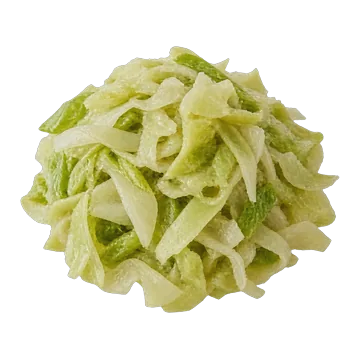 Green cabbage, cooked
Context
Bhandari 2020 · grade B ?
How it’s rated
Shown as context: no agency basis exists for goitrogens, so nothing is rated. Boiling lowers glucosinolates (not measured here).
Intake: not applicable (flag) · Level in the food: 0.77 micromoles/g dry weight (mean, n = 146)
Measured on: food-specific but RAW freeze-dried heads of 146 head-cabbage genotypes (130 green, 16 red) grown in Korea: progoitrin mean 0.77 micromoles/g DW; total glucosinolates not summed here
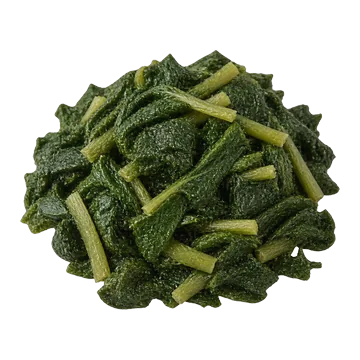 Turnip greens, cooked
Context
PubMed 35159500 · grade B ?
How it’s rated
Shown as context: no agency basis exists for goitrogens, so nothing is rated. Boiling lowers glucosinolates (not measured here).
Intake: not applicable (flag)
Measured on: food-specific but RAW freeze-dried leaves, Spain: progoitrin 1.01-2.09 micromoles/g DW across 3 growing conditions; total glucosinolates 13.23-21.28 micromoles/g DW
Sources
- Bhandari SR, Rhee J, Choi CS, Jo JS, Shin YK, Lee JG. Profiling of individual desulfo-glucosinolate content in cabbage head (Brassica oleracea var. capitata) germplasm. Molecules 2020;25(8):1860 · doi:10.3390/molecules25081860 · PMID 32316621
bhandari2020-gsl· full text read · CC BY 4.0 (MDPI) - Camara-Martos F, Obregon-Cano S, de Haro-Bailon A. Glucosinolates, Ca, Se contents, and bioaccessibility in Brassica rapa vegetables obtained by organic and conventional cropping systems. Foods 2022;11(3):350 · doi:10.3390/foods11030350 · PMID 35159500
pmid:35159500· full text read · CC BY 4.0