Uncooked frozen berries
In the body: Frozen raspberries and strawberries have been behind outbreaks of norovirus, a stomach bug, which EFSA calls an emerging public health risk.
Not rated by dose: a flag on 3 reviewed foods, among them frozen blueberries, Raspberries, frozen and Strawberries, frozen. The list below has a line for each of 4 preparations.
Background. Shown, not scored: no dose basis at normal intake, a classification rather than a risk, or legal limits only.
See also: Uncooked frozen vegetables
The reference value and where it comes from
- The agency’s figureno agency dose value
- Basisfrozen berries eaten without cooking (no Health Canada advice to boil them)
- Source ?PubMed 35905649
Reviewed foods that carry it
3 reviewed foods carry it; none is rated by dose. A food counts once, as in the foods list: preparations sharing a page (raw and cooked, canned) count once; one with its own page counts apart. Below, one line for each of 4 preparations.
How often you can eat it ?
No food here is rated by dose. Each line says why it’s listed: a flag for the people the source names, advice on handling it, or context.
Flags and context, not rated by dose
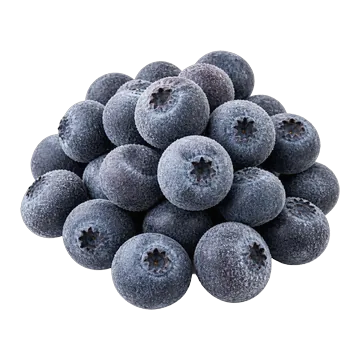 Blueberries, frozen
Context
PubMed 35905649 · grade A ?
How it’s rated
Shown as context. Frozen berries are 'expected to be consumed without cooking' (CFIA 2020), and Canadian measurements are low: CFIA's 2016-2021 retail survey found norovirus GII RNA in 1 frozen blueberry sample among 3,292 frozen fruit samples (15 of 4,218 overall, 0.36%) and no hepatitis A RNA; its 2017-2020 bacterial survey (2,595 frozen ready-to-eat samples) found Salmonella, E. coli O157 and generic E. coli above 100 MPN/g in none, and one Listeria monocytogenes sample under 5 CFU/g in a domestic blueberry. Wild blueberries from Quebec and New Brunswick: 0 of 150 positive for hepatitis E virus. Health Canada's cook-first advice names frozen vegetables, not berries, and no Canadian agency tells people to boil frozen berries; boiling advice for imported frozen berries comes from Ireland and New Zealand.
Intake: frozen product eaten uncooked (e.g. smoothies)
Measured on: agency data: CFIA retail survey 2016-2021 (4,218 berry and pomegranate-aril samples; blueberry n not in the abstract); CFIA 2017-2020 frozen-berry bacterial survey (2,595 samples); Chatonnat 2023 (wild blueberries, hepatitis E only)
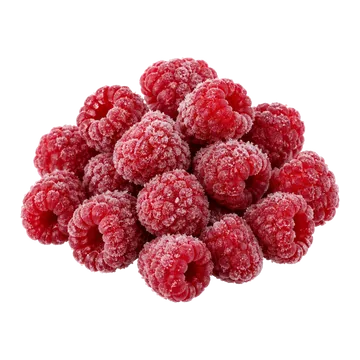 Raspberries, frozen
Context
PubMed 35905649 · grade A ?
How it’s rated
Shown as context, not rated: in a CFIA retail survey (2016-2021), norovirus RNA was found in four frozen raspberry samples (1 of type GI, 3 of type GII) among 3,292 frozen fruit samples of all kinds, and no hepatitis A RNA in any frozen sample. The raspberry sample count is not in the abstract. Overall prevalence was 0.36%, with no significant difference between fruit types. Whether Health Canada advises boiling frozen berries was not searched for.
Intake: frozen product eaten uncooked (smoothies)
Measured on: CFIA retail survey 2016-2021 (Steele 2022): frozen raspberries, norovirus GI RNA in 1 sample and GII RNA in 3 samples (of 3,292 frozen fruit samples of all kinds; raspberry denominator not in the abstract); no hepatitis A RNA in any frozen sample.
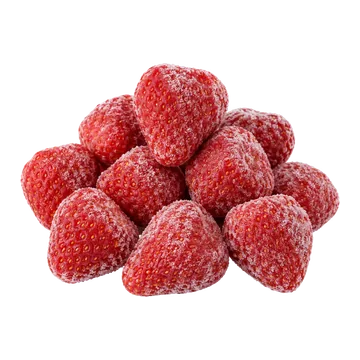 Strawberries, frozen
Context
PubMed 35905649 · grade A ?
How it’s rated
Shown as context, not rated: frozen strawberries had the most positives of any fruit in the CFIA retail survey (5: norovirus GI RNA in 1 sample and GII in 4, among 3,292 frozen fruit samples of all kinds), but the survey found no significant difference between fruit types, and overall prevalence was 0.36%. The strawberry sample count is not in the abstract. The 2016 PHAC hepatitis A outbreak (frozen berry blend) and the 2022 one (strawberries) are outbreak records. Whether Health Canada advises boiling frozen berries was not searched for.
Intake: frozen product eaten uncooked (smoothies)
Measured on: CFIA retail survey 2016-2021 (Steele 2022): frozen strawberries, norovirus GI RNA in 1 sample and GII RNA in 4 samples (of 3,292 frozen fruit samples of all kinds; strawberry denominator not in the abstract); no hepatitis A RNA in any frozen sample. 2022 PHAC outbreak was in strawberries that people had frozen at home.
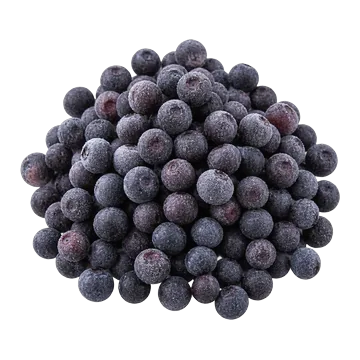 Wild blueberries, frozen
Context
PubMed 35905649 · grade A ?
How it’s rated
Shown as context. Frozen berries are 'expected to be consumed without cooking' (CFIA 2020), and Canadian measurements are low: CFIA's 2016-2021 retail survey found norovirus GII RNA in 1 frozen blueberry sample among 3,292 frozen fruit samples (15 of 4,218 overall, 0.36%) and no hepatitis A RNA; its 2017-2020 bacterial survey (2,595 frozen ready-to-eat samples) found Salmonella, E. coli O157 and generic E. coli above 100 MPN/g in none, and one Listeria monocytogenes sample under 5 CFU/g in a domestic blueberry. Wild blueberries from Quebec and New Brunswick: 0 of 150 positive for hepatitis E virus. Health Canada's cook-first advice names frozen vegetables, not berries, and no Canadian agency tells people to boil frozen berries; boiling advice for imported frozen berries comes from Ireland and New Zealand.
Intake: frozen product eaten uncooked (e.g. smoothies)
Measured on: agency data: CFIA retail survey 2016-2021 (4,218 berry and pomegranate-aril samples; blueberry n not in the abstract); CFIA 2017-2020 frozen-berry bacterial survey (2,595 samples); Chatonnat 2023 (wild blueberries, hepatitis E only)
Sources
- Steele M, Lambert D, Bissonnette R, Yamamoto E, Hardie K, Locas A (CFIA). Norovirus GI and GII and hepatitis A virus in berries and pomegranate arils in Canada. Int J Food Microbiol 2022 Oct 16 · doi:10.1016/j.ijfoodmicro.2022.109840 · PMID 35905649
pmid:35905649· abstract only · Publisher copyright (journal article)