T-2 and HT-2 toxins
In the body: EFSA’s limit rests on a fall in white blood cells seen in animal studies.
The one rated food, Oat drink, unsweetened, fortified, needs no cap on how often you eat it: about 1.3 kg, eaten alone, reaches the daily limit.
Builds up over time. Agencies set an amount you can take in every week, or every day, for life. A food measured against it shows the grams that reach it.
The limit
- The agency’s figure0.02 µg/kg body weight/day
- For a 70 kg adult1.4 µg a day
- Basistolerable daily intake (TDI): what you can take in every day for life
group tolerable daily intake (TDI) for the sum of T-2, HT-2 and their modified forms (EFSA CONTAM 2017); group acute acute reference dose (ARfD) 0.3 µg/kg body weight (benchmark dose lower limit (BMDL10) 3.33 µg T-2/kg body weight/day (leucocyte reduction, 90-day rat study), uncertainty factor 200) - Average adult intake Average adult intake is not shown yet: the agency estimate has not been read.
- Source ?EFSA 2017
Reviewed foods that carry it
1 reviewed food carries it, 1 of them rated by dose.
Grams to the limit ?
Grams of each food that reach the limit in its window, for a 70 kg adult. Fewest first: those are the foods to watch.
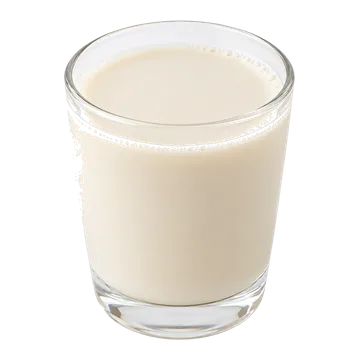 Oat drink, unsweetened, fortified
Nothing to watch: under the limit for a 250 g serving
1,300greaches the limit in a dayCounted from zero: this food eaten alone.0.276 µg per 250 g servingHow it’s rated
No cap: EFSA's 2017 group tolerable daily intake for T-2 and HT-2 toxins is 0.02 µg/kg body weight/day, 1.4 µg/day for 70 kg (acute 0.3 µg/kg body weight, 21 µg). German oat drinks (31 samples) sum to 1.105 µg/L on the lower bound, so about 1,267 g a day (five servings), eaten alone, would reach it, and a serving carries 0.276 µg, 19.7% of the limit. On the sum of the two maxima (9.61 µg/L, possibly from different samples) about 146 g a day reaches it, and one 250 mL serving carries 2.4 µg, 172% of the limit and 11% of the acute dose; modified forms were not measured, so this is a floor.
Intake: one 250 mL serving (250 g, density 1 assumed) a day, 70 kg adult · Level in the food: 1.105 µg/L (sum of T-2 mean (31 of 31 positive, so equal to the mean over all samples) and HT-2 mean over all n (0.833 mean of positives × 30/31 = 0.806); the paper reports means of positives only, n = 31)
Measured on: Dick et al. 2025, Front Nutr 12:1709925: 31 oat-based plant milk alternatives from German local retailers and online platforms, UHPLC-MS/MS (quantification limit (quantification limit) T-2 0.04, HT-2 0.17 µg/L); organic and conventional oat drinks did not differ; free T-2 and HT-2 only, glucosides not measured
Sources
- Dick F, Schuster M, et al. Development of a high-throughput UHPLC-MS/MS multi-method for the analysis of mycotoxins in plant-based milk alternatives as the basis for risk assessment. Front Nutr 2025;12:1709925 · doi:10.3389/fnut.2025.1709925
dick2025-mycotoxins-plant-milks· full text read · CC BY 4.0 - EFSA CONTAM Panel (2017) Appropriateness to set a group health based guidance value for T2 and HT2 toxin and its modified forms. EFSA Journal 15(1):4655 · doi:10.2903/j.efsa.2017.4655 · PMID 32625252
efsa-2017-t2ht2· full text read · EFSA Journal: CC BY-ND 4.0