Phthalates
Chemicals that soften plastics, and can pass from packaging and tubing into fatty foods.
In the body: The limit protects the reproductive system, in particular the developing testes, on animal studies.
Rated by dose, one serving: the one rated food stays under the limit. One more reviewed food carries it but isn’t rated yet.
Builds up over time. Agencies set an amount you can take in every week, or every day, for life. A food measured against it shows the grams that reach it.
The limit
- The agency’s figure50 µg/kg body weight/day
- For a 70 kg adult3,500 µg a day
- Basistolerable daily intake (TDI): what you can take in every day for life
phthalates (DBP, BBP, DEHP, DINP): group tolerable daily intake (TDI) 50 µg/kg body weight/day, expressed as DEHP equivalents (EFSA CEP Panel 2019) (group tolerable daily intake (TDI)) - Average adult intake0.9–7.2 µg/kg body weight/day
- Source ?PubMed 32626195
Reviewed foods that carry it
2 reviewed foods carry it, 1 of them rated by dose.
How often you can eat it ?
One realistic serving each, rated by dose, not by presence. The most restrictive rating comes first, then the largest dose per serving.
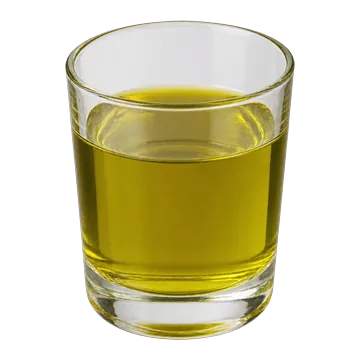 Olive oil, extra virgin
Nothing to watch: under the limit
35.6 µgper servingDEHP-equivalentsadds 7.1–56.5 % to an average adult’s intake (a share of that intake, not of a limit)1% of the 3,500 µg-a-day limit shown abovePubMed 32626195 · grade B ?
How it’s rated
Serving = 35.6 micrograms DEHP-eq = 0.509 micrograms/kg body weight/day = 1.0% of EFSA's group-tolerable daily intake (TDI) 50 micrograms/kg body weight/day; EFSA mean-consumer dietary exposure is 0.9-7.2 micrograms/kg body weight/day, so a serving adds 7-57% (below doubling).
Intake: one 9.07 g (10 mL) serving a day, 70 kg adult · Level in the food: 3,927 micrograms/kg as DEHP equivalents (DEHP + 5xDBP + 0.3xDINP) (mean, n = 16)
Measured on: literature via agency: Nanni 2011 (Italy, 'olive oil', n = 16 of 172 oils) as summarised in EFSA 2019: DEHP 1262, DBP 360, DINP 2884 micrograms/kg (the highest oil-type means for DEHP and DBP; for DINP corn oil is higher, 2982 micrograms/kg); extra virgin olive oil (n = 34) not broken out in the EFSA text; BBP not analysed
Flags and context, not rated by dose
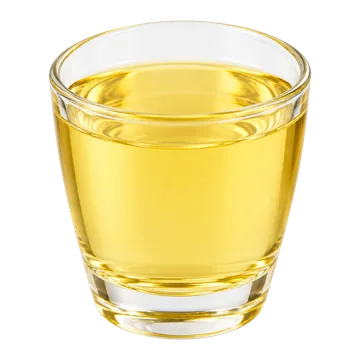 Soybean oil
Not rated yet
DOI 10.2903/j.efsa.2019.5838 · grade B ?
How it’s rated
Not rated: EFSA's 2019 group tolerable daily intake (50 µg/kg body weight/day, as DEHP equivalents, with DBP counted 5 times and DINP 0.3 times as much as DEHP) needs a sum, and the soybean-oil DINP level cannot be recovered from EFSA's text, so the sum cannot be formed. Soybean oil carried DEHP at 77 µg/kg and DBP at 22, the lowest of the oils tested (Nanni 2011, Italy, 16 samples, via EFSA 2019); those two alone give 187 µg/kg DEHP equivalent as a floor. EFSA's whole-diet exposure averages 0.9-7.2 µg/kg body weight/day, up to 23% of the group limit.
Intake: one 9.21 g (10 mL) serving a day, 70 kg adult · Level in the food: 77 µg/kg (mean DEHP (Nanni 2011, Italy, soybean oil n = 16, via EFSA 2019); DBP 22, n = 16)
Measured on: EFSA 2019 summary of Nanni et al. 2011 (Italian market, 172 vegetable oil samples of eight types; soybean oil 16): DEHP 77 µg/kg in soybean oil (the lowest of the oils), DBP 22 (the lowest). DINP for soybean not stated (range across oils 971 sunflower to 2,982 corn).
Sources
- EFSA CONTAM Panel. Update of the risk assessment of di-butylphthalate (DBP), butyl-benzyl-phthalate (BBP), bis(2-ethylhexyl)phthalate (DEHP), di-isononylphthalate (DINP) and di-isodecylphthalate (DIDP) for use in food contact materials. EFSA J 2019;17(12):5838 · doi:10.2903/j.efsa.2019.5838 · PMID 32626195
doi:10.2903/j.efsa.2019.5838· full text read · CC BY - EFSA CEP Panel. Update of the risk assessment of di-butylphthalate (DBP), butyl-benzyl-phthalate (BBP), bis(2-ethylhexyl)phthalate (DEHP), di-isononylphthalate (DINP) and di-isodecylphthalate (DIDP) for use in food contact materials. EFSA Journal 2019 · PMID 32626195
pmid:32626195· full text read · per PMC record (EFSA Journal, open access)