PAH4 (polycyclic aromatic hydrocarbons)
Form when food is smoked, grilled over a flame or charred, and settle on crops from polluted air.
In the body: Several of these compounds damage DNA and caused tumours in animal studies. One of them, benzo[a]pyrene, is classed as carcinogenic to humans.
Not rated by dose: a flag on 4 reviewed foods, among them extra virgin olive oil, Beef steak, top loin, grilled and Pork sausage, pan-fried. The list below has a line for each of 5 preparations.
No safe level known. No intake is known to be harmless, so there’s no limit to count grams up to.
The reference point, not a limit
The agency starts from a dose linked to an effect in studies, in people or in animals, and judges the margin between that dose and what people take in.
- Reference point0.34 mg/kg body weight/day
- That dose, for a 70 kg adult24 mg a day
Not a safe amount or an allowance: harm can’t be ruled out below it. - Basisbenchmark dose (BMDL): the lower estimate of the dose that produced a set size of effect in studies; the number after it is that size (BMDL10 is 10%, BMDL01 is 1%). A starting point rather than a limit
benchmark dose lower limit (BMDL10) 0.34 mg/kg body weight/day for PAH4 (benzo[a]pyrene, chrysene, benz[a]anthracene, benzo[b]fluoranthene), EFSA 2008; a margin of exposure below 10,000 indicates potential concern; no threshold dose (animal benchmark dose lower limit (BMDL10)) - Margin of exposure that raises concern ?10,000
A margin below this counts as a concern. A margin of exposure is the dose that caused effects in studies divided by what people take in: the smaller it is, the closer people’s intake sits to that dose. - Average adult intake19.5–34.5 ng/kg body weight/day EFSA 2008 (Summary, Tables 33 and 34): median across EU countries of mean dietary PAH4 exposure, 1,168 ng/day (19.5 ng/kg body weight/day), and of high consumers, 2,068 ng/day (34.5 ng/kg body weight/day), at EFSA's 60 kg body weight. Margins of exposure 17,500 (average) and 9,900 (high consumers). Low and high here are average and high consumers, not a range over countries.
- Source ?EFSA 2008
Reviewed foods that carry it
4 reviewed foods carry it; none is rated by dose. A food counts once, as in the foods list: preparations sharing a page (raw and cooked, canned) count once; one with its own page counts apart. Below, one line for each of 5 preparations.
How often you can eat it ?
No grams figure for PAH4 (polycyclic aromatic hydrocarbons): there is no limit to count grams against. Each food shows the method’s rating instead: how much a daily serving adds to the average adult’s intake.
No food here is rated by dose. Each line says why it’s listed: a flag for the people the source names, advice on handling it, or context.
Flags and context, not rated by dose
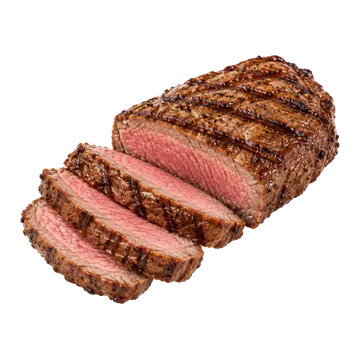 Beef steak, top loin, grilled
Not rated yet
How it’s rated
Not rated: no agency occurrence figure was found for grilled or charred beef, so the EFSA PAH4 reference (benchmark dose lower limit (BMDL10) 0.34 mg/kg body weight/day) has nothing to be applied to. CFIA's PAH reports (2018-19, 2019-20) cover oils and other foods, not meat.
Intake: not applicable
Measured on: PAH4 (benzo[a]pyrene, chrysene, benz[a]anthracene, benzo[b]fluoranthene) in grilled or charred beef: no agency occurrence found
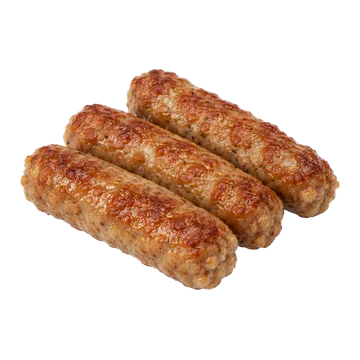 Pork sausage, pan-fried
Not rated yet
How it’s rated
Not rated: PAH4 concerns smoked and charred sausage, and this pan-fried fresh sausage is not smoked; no occurrence figure for it was found. EFSA's 2023 N-nitrosamine opinion cites a Chinese study that found the highest volatile N-nitrosamines in 'grilled and smoked sausage', which is a nitrosamine finding, not a PAH4 one.
Intake: not applicable
Measured on: PAH4 in smoked or charred sausage: no agency occurrence found
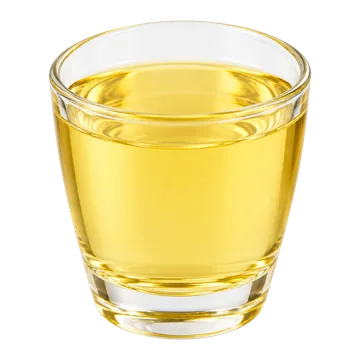 Soybean oil
Not rated yet
0.0025 µgper servingtoxic equivalents (pooled oils, positive samples only)How it’s rated
Not rated: no soybean-specific PAH figure has been found. The pooled mean of positive results for all 78 oils in the CFIA 2018-19 survey, 0.27 ppb toxic equivalents (peanut oil highest, at 0.94), is shown for orientation only: a serving would carry 0.0025 µg toxic equivalents.
Intake: one 9.21 g (10 mL) serving a day, 70 kg adult · Level in the food: 0.27 ppb toxic equivalents (mean of positive results only, ALL oil types pooled (max 2.41), n = 78)
Measured on: CFIA targeted survey 2018-19, 78 retail oils of mixed types (peanut oils highest, canola lowest); no soybean-specific figure in the text
- Canola oil
Context
0.00018 µgper servingtoxic equivalents (positive samples only)How it’s rated
Shown as context, not rated: PAH4 (four polycyclic aromatic hydrocarbons) has no safe threshold and is judged by margin of exposure (EFSA 2008 reference point 0.34 mg/kg body weight/day; a margin of 10,000 or higher is low concern). In the CFIA 2018-19 survey of Canadian retail oils, canola oils had the lowest detection rate (18%) and the lowest average and maximum (0.02 and 0.03 ppb toxic equivalents). A serving at the mean of the positive samples carries 0.00018 µg toxic equivalents, negligible next to any dietary background, and CFIA and Health Canada deemed all levels safe. The survey reports a toxic-equivalent sum, not the plain PAH4 sum that a margin of exposure needs, so the figure is indicative only.
Intake: one 9.21 g (10 mL) serving a day, 70 kg adult · Level in the food: 0.02 ppb toxic equivalents (mean of positive results only (max 0.03))
Measured on: CFIA targeted survey 2018-19, Canadian retail (6 cities), canola oils: detection rate 18%, lowest average and maximum of any oil type; the per-type sample count is in a figure not readable in text (78 oils in all)
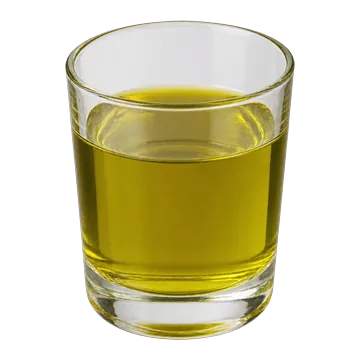 Olive oil, extra virgin
Context
0.0019 µgper servingtoxic equivalents at the mean of positivesHow it’s rated
Shown as context, not rated: CFIA reports polycyclic aromatic hydrocarbons (PAHs) in olive oil as benzo[a]pyrene equivalents, not as PAH4, so the EFSA PAH4 reference (benchmark dose lower limit (BMDL10) 0.34 mg/kg body weight/day) cannot be applied to them. For scale only, against the benzo[a]pyrene BMDL10 of 0.07 mg/kg body weight/day: the mean of positive samples (0.21 ppb) gives a margin of exposure of about 2,570,000 and the highest sample (3.25 ppb) about 166,000, both far above 10,000.
Intake: one 9.07 g (10 mL) serving a day, 70 kg adult · Level in the food: 0.21 ppb toxic equivalents (mean of positive results; 4 polycyclic aromatic hydrocarbons (PAHs) x TEF) (mean of positives, n = 148)
Measured on: food-specific, Canadian retail: CFIA targeted survey 2019-20, 148 olive oils (1 domestic, 133 imported, 14 unspecified; incl. 4 pomace oils), 121 detected (82%), range 0.002-3.25 ppb toxic equivalents; as sold
Sources
- CFIA. Polycyclic aromatic hydrocarbons in selected foods, April 1, 2018 to March 31, 2019 (targeted survey, final report)
cfia-pah-2018-19· full text read · Open Government Licence - Canada - CFIA, Polycyclic Aromatic Hydrocarbons in Selected Foods - April 1, 2019 to March 31, 2020 (targeted survey, final report)
cfia-pah-2019-20· full text read · Open Government Licence - Canada (per site) - EFSA Panel on Contaminants in the Food Chain (CONTAM) (2008). Polycyclic Aromatic Hydrocarbons in Food: Scientific Opinion of the Panel on Contaminants in the Food Chain (Question EFSA-Q-2007-136, adopted 9 June 2008). The EFSA Journal 724, 1-114. doi:10.2903/j.efsa.2008.724.
efsa-2008-pah· full text read · EFSA copyright (2008 opinion; no open licence printed in the PDF text) - IARC, Q&A on the carcinogenicity of the consumption of red meat and processed meat (2015)
iarc-vol114-qa-2015· full text read · IARC 2015, all rights reserved