4-MEI (from caramel colour)
In the body: In mice, high doses caused lung tumours. EFSA treated it as having a safe threshold.
Not rated by dose: a flag on 2 reviewed foods, among them Cola and Diet cola.
Background. Shown, not scored: no dose basis at normal intake, a classification rather than a risk, or legal limits only.
A reference figure, shown for context
A background hazard, shown for scale: no food on this page is rated against this figure.
- The agency’s figure80 mg 4-MEI/kg body weight/day (no-observed-adverse-effect level (NOAEL), mouse)
- BasisEFSA 2011 treated the NTP mouse lung-tumour finding as thresholded and called 625 mg/kg diet (80 mg/kg body weight/day) a no-observed-adverse-effect level (NOAEL); no tolerable intake for 4-MEI was set (no-observed-adverse-effect level (NOAEL) (mouse), no uncertainty factor applied by EFSA)
- Average adult intake0.009–0.092 mg/kg body weight/day EFSA 2011: anticipated exposure to 4-MEI, UK adults, lowest mean to highest 97.5th percentile, from caramel colours at specification limits (children 0.003-0.370).
- Source ?EFSA 2011
Reviewed foods that carry it
2 reviewed foods carry it; none is rated by dose.
How often you can eat it ?
No food here is rated by dose. Each line says why it’s listed: a flag for the people the source names, advice on handling it, or context.
Flags and context, not rated by dose
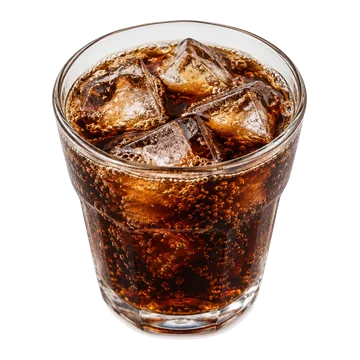 Cola
Not rated yet
68.8 µgper servingSmith 2015 · grade B ?
How it’s rated
Not rated: no agency tolerable intake for 4-MEI exists. EFSA 2011 set a group acceptable daily intake (ADI) for the caramel COLOURS (300 mg/kg body weight/day; Class III 100) and, for 4-MEI itself, only a mouse no-observed-adverse-effect level (NOAEL) of 80 mg/kg body weight/day that it judged thresholded, concluding exposure estimates are 'not of concern'. Information only: 68.8 µg a serving / 70 kg = 0.98 µg/kg body weight against the NOAEL 80,000 µg/kg body weight/day = a margin of about 81,336 (this margin is our arithmetic, not an agency figure). California's Prop 65 No Significant Risk Level (29 µg/day) is a risk-based regulatory level, not an agency tolerable intake, and is not a limit here: this serving is 237% of it. Concentration in µg/g: 0.1761 (183.6 µg/L / 1.0427 g/mL).
Intake: one 375 mL reference amount (391.0 g at 1.0427 g/mL) a day, 70 kg adult · Level in the food: 183.6 µg/L (cola, 1.0427 g/mL) (mean of the brand's lots (Pepsi Regular; maximum 556); n of cans for this brand not stated (110 samples in duplicate, 98 lots, 12 beverages))
Measured on: Smith et al. 2015, PLoS ONE 10(2):e0118138, Table 1 'Pepsi | Regular | All', cans bought in California and the New York area in 2013, UPLC-MS/MS; USA, not Canada, and sold before later reformulation
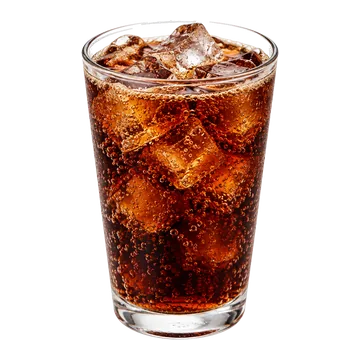 Diet cola
Not rated yet
71.8 µgper servingSmith 2015 · grade B ?
How it’s rated
Not rated: no agency tolerable intake for 4-MEI exists (EFSA 2011: caramel-colour group acceptable daily intake (ADI) 300 / Class III 100 mg/kg body weight/day; for 4-MEI only a mouse no-observed-adverse-effect level (NOAEL) of 80 mg/kg body weight/day, judged thresholded; exposure 'not of concern'). Information only: 71.8 µg a serving / 70 kg = 1.03 µg/kg body weight, about 77,981 times below the NOAEL (our arithmetic). Prop 65's 29 µg/day is a regulatory risk level, not an agency tolerable intake. 0.1913 µg/g.
Intake: one 375 mL reference amount (375.4 g at 1.00101 g/mL) a day, 70 kg adult · Level in the food: 191.5 µg/L (diet cola, 1.00101 g/mL) (mean of the brand's lots (Diet Pepsi; maximum 550); n of cans for this brand not stated)
Measured on: Smith et al. 2015, PLoS ONE 10(2):e0118138, Table 1 'Pepsi | Diet | All', cans bought in California and the New York area in 2013, UPLC-MS/MS; USA, not Canada
Sources
- EFSA ANS Panel, Scientific Opinion on the re-evaluation of caramel colours (E 150 a,b,c,d) as food additives, EFSA Journal 9(3):2004 · doi:10.2903/j.efsa.2011.2004
efsa-2011-caramel· full text read · licence not recorded - Smith TJ, Wolfson JA, Jiao D, et al. Caramel color in soft drinks and exposure to 4-methylimidazole: a quantitative risk assessment. PLoS ONE 10(2):e0118138 · doi:10.1371/journal.pone.0118138 · PMID 25693062
smith-2015-4mei· full text read · CC BY (Europe PMC licence field, PMC4333292)