E. coli (STEC) on raw produce
In the body: Can bring watery or bloody diarrhea and, in rare cases, kidney failure.
Not rated by dose: a flag on 2 reviewed foods, among them Romaine lettuce, raw and Arugula, raw. The list below has a line for each of 3 preparations.
Depends how you handle it. Safe one way, risky another: cook it, soak it, boil it or freeze it, as the agency says.
The reference value and where it comes from
Reviewed foods that carry it
2 reviewed foods carry it; none is rated by dose. A food counts once, as in the foods list: preparations sharing a page (raw and cooked, canned) count once; one with its own page counts apart. Below, one line for each of 3 preparations.
How often you can eat it ?
No food here is rated by dose. Each line says why it’s listed: a flag for the people the source names, advice on handling it, or context.
Flags and context, not rated by dose
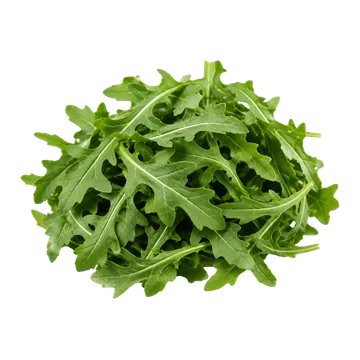 Arugula, raw
Worth knowing
How it’s rated
Flagged for raw leafy greens, which can carry Shiga toxin-producing E. coli and Salmonella. A CFIA survey (2014–2017) of leaf lettuce, spinach and arugula together found E. coli O157 in none of 5,508 samples and a non-O157 VTEC in 1 of 470 (0.2%); Salmonella and Shigella were found in none of 5,038 tested. The counts are for the group, not arugula alone.
Intake: not applicable (flag)
Measured on: CFIA targeted survey 2014-2017 'Bacterial Pathogens in Fresh Leafy Vegetables', retail, 11 Canadian cities, April 2014-March 2017; leaf lettuce, spinach and arugula are reported as one group (no arugula-only counts on the page)
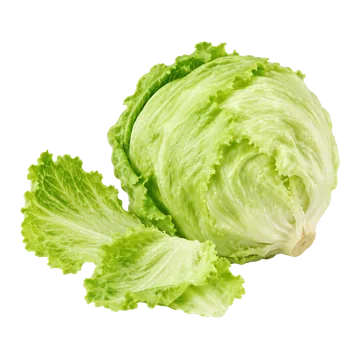 Iceberg lettuce, raw
Worth knowing
How it’s rated
Flagged for handling, not dose: in October 2008 CFIA's advisory named iceberg lettuce as the believed common link in a US E. coli O157:H7 outbreak, chopped shredded iceberg from a Michigan exporter had been imported into Ontario, and two Ontario illnesses shared the outbreak's PFGE pattern, though the notice calls the food link possible, not established. CFIA's routine surveys find it rarely: 0 of 3,310 unsatisfactory in whole leafy vegetables 2020-24, not split by lettuce type.
Intake: not applicable (flag)
Measured on: CFIA 2020-24 targeted surveys of whole leafy vegetables (not split by lettuce type); CFIA 2008 notice on chopped shredded iceberg
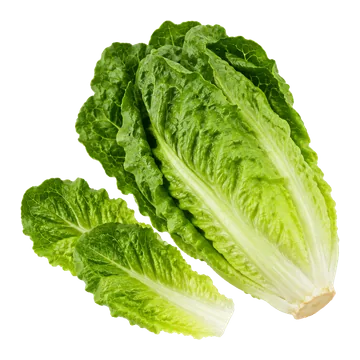 Romaine lettuce, raw
Worth knowing
How it’s rated
Flagged as a handling matter, not a dose: CFIA and Health Canada name E. coli as linked to leafy greens, and romaine outbreaks are real, but prevalence in surveyed retail product is low. CFIA's final report on imported romaine, 2019-24, found E. coli O157:H7/NM in 0 of 4,432 tested; generic E. coli was elevated in 1 of 4,450 (290 CFU/g, a US romaine heart). Non-O157 STEC was not tested there. In CFIA's 2020-24 survey of whole leafy vegetables, STEC turned up in 1 of 599 domestic and 2 of 667 imported samples as investigative results, with 0 of 3,310 unsatisfactory.
Intake: not a dose rule
Measured on: CFIA 2020-24 interim, whole leafy vegetables: SB3092 (domestic) 599 tested, 1 STEC investigative; SB3093 (imported) 667 tested, 2 STEC investigative; E. coli O157 not detected; SB3101/SB3102 generic E. coli investigative in 6 of 2,044. Unsatisfactory: 0 of 3,310. ROMAINE: CFIA final report on imported romaine, 2019-24: E. coli O157:H7/NM 0 of 4,432 tested; generic E. coli elevated in 1 of 4,450 (290 CFU/g, a US romaine heart); non-O157 STEC not tested.
Sources
- Canadian Food Inspection Agency, advice to consumers: outbreak of E. coli O157:H7 in the United States, related cases in Ontario (4 October 2008; chopped shredded iceberg lettuce from a Michigan exporter)
cfia-2008-ecoli-iceberg-notice· secondary source · Government of Canada terms (Crown copyright) - CFIA, 2014-2017 Bacterial Pathogens in Fresh Leafy Vegetables (leaf lettuce, spinach, arugula)
cfia-leafy-veg-2014-17· page · Government of Canada terms (Crown copyright) - CFIA, Food microbiology - Targeted surveys - Interim report (data as of 2024-03-31), Table 4 (hot peppers line)
cfia-micro-targeted-2020-24· full text read · Open Government Licence - Canada