Caramel colour
The brown colouring in colas and some sauces.
In the body: The limit rests on rat studies that found no harm at the highest dose tested, with a safety margin on top.
Not rated by dose: a flag on 2 reviewed foods, among them Cola and Diet cola.
Builds up over time. Agencies set an amount you can take in every week, or every day, for life. A food measured against it shows the grams that reach it.
The limit
- The agency’s figure300 mg/kg body weight/day
- For a 70 kg adult21,000 mg a day
- Basisacceptable daily intake (ADI): what you can take in every day for life
EFSA ANS 2011 group acceptable daily intake (ADI) for caramel colours E 150 a,b,c,d; individual ADI 100 mg/kg body weight/day for Class III (E 150 c) (no-observed-adverse-effect level (NOAEL) 30 g/kg body weight/day (13-week rat studies, Class IV) with uncertainty factor 100) - Average adult intake EFSA 2011: anticipated exposure may exceed the ADIs for Classes I, III and IV at the 95th/97.5th percentile (the 2012 refined assessment found the group acceptable daily intake (ADI) not exceeded; not consulted).
- Two figures300 mg is EFSA’s figure for the four classes of caramel colour together. Within it, EFSA set a stricter 100 mg per kilogram a day for one class, Class III (E 150c).
- Source ?EFSA 2011
Reviewed foods that carry it
2 reviewed foods carry it; none is rated by dose.
Grams to the limit ?
No reviewed food here has a measured level yet, so none has a gram figure. The limit is shown, ready for the first measurement; each line below says what the food is flagged for.
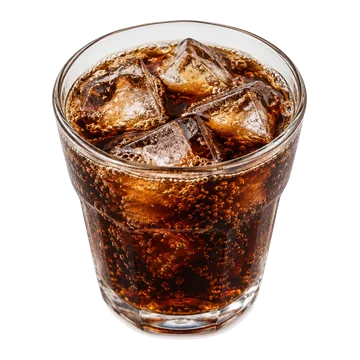 Cola
Not rated yet for a 391 g serving
No gram figure for this foodWe have no measurement of this in this food, so there is no gram figure.How it’s rated
Not rated: no measured colour content per litre was found, and the class of caramel colour in a given cola is not on the label (Canada lists 'caramel'). EFSA (2011) set a group acceptable daily intake of 300 mg/kg body weight/day for caramel colours E 150 a-d, 21,000 mg a day for 70 kg, and 100 mg/kg body weight/day for Class III (E 150 c), 7,000 mg a day. EFSA ties cola-flavoured drinks mostly to Class IV, which falls under the group limit. EFSA also concluded that exposure may exceed the limit for Classes I, III and IV at the 95th and 97.5th percentile, from colours in many foods, not cola alone.
Intake: one 375 mL reference amount (391.0 g at 1.0427 g/mL) a day, 70 kg adult
Measured on: No measured caramel colour content for cola found; EFSA 2011 quotes industry (CIAA/EUTECA) use levels for non-alcoholic flavoured drinks, which are reported use levels, not measurements
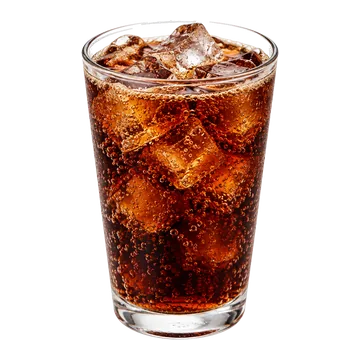 Diet cola
Not rated yet for a 375 g serving
No gram figure for this foodWe have no measurement of this in this food, so there is no gram figure.How it’s rated
Not rated: no measured colour content per litre was found, and the class of caramel colour in a given cola is not on the label (Canada lists 'caramel'). EFSA (2011) set a group acceptable daily intake of 300 mg/kg body weight/day for caramel colours E 150 a-d, 21,000 mg a day for 70 kg, and 100 mg/kg body weight/day for Class III (E 150 c), 7,000 mg a day. EFSA ties cola-flavoured drinks mostly to Class IV, which falls under the group limit. EFSA also concluded that exposure may exceed the limit for Classes I, III and IV at the 95th and 97.5th percentile, from colours in many foods, not cola alone.
Intake: one 375 mL reference amount (375.4 g at 1.00101 g/mL) a day, 70 kg adult
Measured on: No measured caramel colour content for cola found; EFSA 2011 quotes industry (CIAA/EUTECA) use levels for non-alcoholic flavoured drinks, which are reported use levels, not measurements
Sources
- EFSA ANS Panel, Scientific Opinion on the re-evaluation of caramel colours (E 150 a,b,c,d) as food additives, EFSA Journal 9(3):2004 · doi:10.2903/j.efsa.2011.2004
efsa-2011-caramel· full text read · licence not recorded