Benzene
Can form in some soft drinks, from a preservative (benzoate) and vitamin C, faster in heat and light.
In the body: Benzene can cause cancer at high exposure. The limit for food and drink sits thousands of times below the dose that had effects in mice.
The one rated food, Diet cola, needs no cap on how often you eat it: no amount anyone really eats reaches the daily limit. One more reviewed food carries it but isn’t rated yet.
Builds up over time. Agencies set an amount you can take in every week, or every day, for life. A food measured against it shows the grams that reach it.
The limit
- The agency’s figure0.36 µg/kg body weight/day
- For a 70 kg adult25 µg a day
- Basistolerable daily intake (TDI): what you can take in every day for life
Health Canada tolerable daily intake (TDI) for benzene ingested from food and beverages (1991, reviewed 2006, unchanged 2008) (lowest-observed-adverse-effect level (LOAEL) 25 mg/kg body weight/day (mouse, 5 days a week; 18 mg/kg body weight/day for 7 days) with a 5,000-fold factor, then a further 10-fold for multi-route exposure) - Average adult intake Health Canada compares probable daily intakes with the tolerable daily intake (TDI); dietary benzene intake estimates of 1992/1993 quoted on the page are not reproduced.
- Source ?Health Canada 2008
Reviewed foods that carry it
2 reviewed foods carry it, 1 of them rated by dose.
Grams to the limit ?
Grams of each food that reach the limit in its window, for a 70 kg adult. Fewest first: those are the foods to watch.
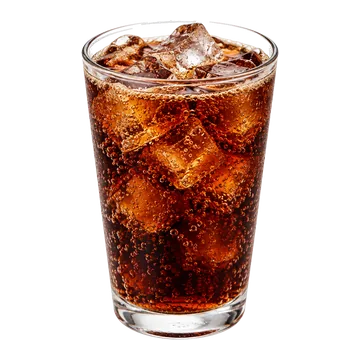 Diet cola
Nothing to watch: under the limit for a 375 g serving
More than anyone eatsNo realistic amount reaches the limit.0.135 µg per 375 g servingHealth Canada 2007 · grade A ?
How it’s rated
The counted figure is 70,000 g a day, about 187 servings a day.
No cap: Health Canada's tolerable daily intake for benzene from food and beverages is 0.36 µg/kg body weight/day, 25.2 µg/day for 70 kg. The diet colas it surveyed averaged 0.36 µg/L (0.55 µg/L at the highest product); they were chosen because they contained benzoate, so this is not a market average. Eaten alone, about 70,071 g a day would reach the limit (45,864 g at the highest product). A 375 g serving carries 0.135 µg, 0.54% of it. The serving is compared with the limit on its own.
Intake: one 375 mL reference amount (375.4 g at 1.00101 g/mL) a day, 70 kg adult · Level in the food: 0.36 µg/L (diet cola, 1.00101 g/mL) (mean of 5 diet-cola products' lot averages (max 0.55); each product n not stated, n = 5)
Measured on: Health Canada 2007 follow-up survey, Table 1(a), ready-to-consume diet colas: Coke diet 0.09, Pepsi diet 0.55, President's Choice Diet Cola 0.37, PC Diet Cola low sodium caffeine-free 0.53, PC New Wave Diet Cola low sodium caffeine-free 0.26 µg/L; detection limit 0.016 µg/L; Canada, early 2007
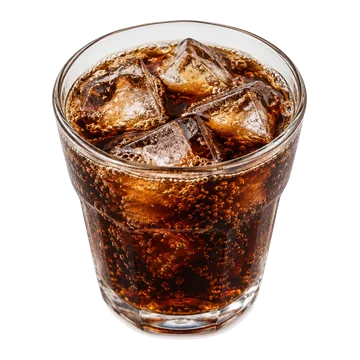 Cola
Not rated yet for a 391 g serving
No gram figure for this foodWe have no measurement of this in this food, so there is no gram figure.Health Canada 2008 · grade B ?
How it’s rated
Not rated: no Canadian measurement of benzene in regular cola has been found. Health Canada's tolerable daily intake for benzene from food and beverages is 0.36 µg/kg body weight/day, 25.2 µg/day for 70 kg. Benzene forms from benzoate with ascorbic acid, and regular cola is not labelled with benzoate in the records seen, but a label is not a measurement. A single US lot of regular cola without benzoate, ascorbate or EDTA had none detected. Diet colas are measured and rated on their own.
Intake: one 375 mL reference amount (391.0 g at 1.0427 g/mL) a day, 70 kg adult
Measured on: No regular cola appears in Health Canada's 2006 or 2007 benzene surveys of soft drinks (the surveys sampled benzoate-containing products and the cola entries are diet colas); FDA's product table (live URL 404) was recovered from the Wayback copy of cfsan.fda.gov/~dms/benzdata.html (data through 16 May 2007): one regular cola, 'Pepsi Cola (no benzoate, ascorbate, or EDTA)', not detected (US, 2006-07; Method 1 detection limit 0.2 ppb)
Sources
- Health Canada, Health Risk Assessment: Benzene in Beverages (hazard characterisation, tolerable daily intake (TDI) 0.36 µg/kg body weight/day)
hc-benzene-hra-2008· full text read · Government of Canada terms - Health Canada, Follow-up Survey of Benzene in Soft Drinks and Other Beverage Products (2007; Table 1(a), µg/L)
hc-benzene-survey-2007· full text read · Government of Canada terms