Agaritine
In the body: IARC rates it not classifiable as a cause of cancer in people (Group 3, 1987). We found no agency limit for it.
Not rated by dose: a flag on one reviewed food, Mushrooms, raw.
Background. Shown, not scored: no dose basis at normal intake, a classification rather than a risk, or legal limits only.
The reference value and where it comes from
- The agency’s figureno agency dose value
- Basisno agency health-based value found; academic finding: agaritine weakly genotoxic in lacI mice, significant only with an agaritine-rich extract (120 mg/kg body weight/day); mushroom diets at 30 and 80 mg/kg body weight/day raised mutant frequency slightly, not significantly
- Average adult intake Shephard 1995 extrapolated about 2 lifetime cancer cases per 100,000 for 4 g/day of mushroom (an academic estimate, not agency advice)
- Applies toraw cultivated Agaricus mushrooms
- Source ?PubMed 7737599
Reviewed foods that carry it
1 reviewed food carries it; none is rated by dose.
How often you can eat it ?
No food here is rated by dose. Each line says why it’s listed: a flag for the people the source names, advice on handling it, or context.
Flags and context, not rated by dose
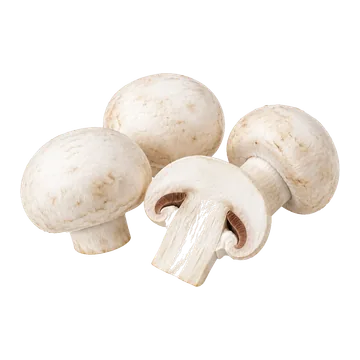 Mushrooms, raw
Context
23.1 mgper servingagaritine (raw)PubMed 12396396 · grade B ?
How it’s rated
Context, never scored: no agency health-based value. Agaritine was weakly genotoxic in lacI mice: a significant mutant-frequency rise only with the agaritine-rich extract diet (120 mg/kg body weight/day); the mushroom diets (30 averaged over the week and 80 mg/kg body weight/day) raised it slightly but not significantly (a lifetime-risk estimate of about 2 cases per 100,000 for 4 g/day of mushroom is an academic extrapolation, Shephard 1995). No grams figure (no limit). Cooking cuts it: boiling extracts about 50% into the broth and degrades 20-25%; frying 35-70%; microwaving to about a third; canning more than 10-fold (14.9-18.1 mg/kg canned).
Intake: one 85 g serving a day, 70 kg adult (raw) · Level in the food: 272 mg/kg (mean (28 supermarket samples; range 165-457; standard deviation 69), n = 28)
Measured on: Schulzova 2002, cultivated Agaricus (A. bitorquis and A. hortensis, the cultivated mushroom species) bought in supermarkets, raw, Czech Republic; another study of two fresh A. bisporus found 212 and 229 mg/kg (Andersson 1999)
Sources
- Schulzova V, Hajslova J, Peroutka R, Gry J, Andersson HC. Influence of storage and household processing on the agaritine content of the cultivated Agaricus mushroom. Food Addit Contam 2002;19(9):853-862 · PMID 12396396
pmid:12396396· abstract only · licence not recorded - Shephard SE, Gunz D, Schlatter C. Genotoxicity of agaritine in the lacI transgenic mouse mutation assay: evaluation of the health risk of mushroom consumption. Food Chem Toxicol 1995 · PMID 7737599
pmid:7737599· abstract only · licence not recorded